
In a fact sheet published on October 27, 2014, the Center for Justice and Democracy announced that the findings from three new studies make it indisputable that damage caps--a popular part of tort reform--are actually hurting healthcare. This decline in healthcare was observed in three distinct areas. First, the reports found that there were actually more medical errors in jurisdictions that had enacted damage caps. This is troubling but, frankly, not very surprising. Without full legal consequences for medical errors, there was a corresponding increase in the "rates of preventable adverse patient safety events." In other words, the presence of caps meant that more patients were becoming victims of malpractice. Second, healthcare costs increased. The big selling point for caps, especially in West Virginia, was that they would help curb increasing costs for patient care. Not so. Indeed, when it came to Medicare Part B spending (i.e., physician spending) there was actually a 4-5 percent increase. As one report concluded: "There is no evidence that limiting med mal lawsuits will bend the healthcare cost curve, except perhaps in the wrong direction." Finally, the reports found no overall increase in the number of physicians. When our Legislature was considering tort reform, physicians claimed that exposure to med mal judgments was forcing physicians to leave the state. The findings of these reports completely undercut those claims. There was simply no correlation between the presence of damage caps and physician supply. The people of West Virginia deserve better. Armed with money and good PR, healthcare professionals convinced the Legislature that tort reform was necessary to fix the healthcare system. Time has proven that they were wrong. If anything, these efforts at "reforming" healthcare have only made things worse--and, no doubt, will continue to do the same in the future. The Legislature should give these new reports careful attention at its interim committee meetings this fall and at its upcoming session in January. Not only should damage caps be repealed, the Legislature should rethink all of the tort reform measures it has enacted. Tort reform was, and is, a bad idea. It's a shame it's taken this long for the truth to come out.
Reflections on West Point - 20 Years Later
Last month, my family and I attended my 20th reunion at the United States Military Academy at West Point. In 1994, I graduated from West Point and began my service in the United States Army. Time sure does fly. It seems like just yesterday that my classmates and I were Plebes (freshmen) who had no idea what we had gotten ourselves into, up well before dawn to deliver newspapers to the upperclassmen, shine our shoes, prepare for class, and make our rooms spotless for morning inspection. It also seems like just yesterday that more than a few of my classmates and I headed off as Second Lieutenants to keep the peace in Bosnia. Since then, many of those classmates have gone on to do much braver and important things than I could ever take credit for. It was great to reconnect with my classmates. To see them now not as bewildered Cadets, but as fathers and mothers, husbands and wives, and for some, Lieutenant Colonels and Colonels. I remember how proud we were to pin on those Second Lieutenant gold bars, now some of those same friends have the silver eagles of the "Full Bird" Colonel. Amazing. More importantly, it was great to see West Point through the eyes of my own kids and to interact with the current members of the Corps of Cadets. These young men and women come from every corner of the country, every race, and every income level. They have voluntarily given up the "college experience" for four years of discipline and hard work before many of them will go directly into harm's way for our country. The fact that I used to be one of them did not stop me from admiring these young people and how uniformly courteous, kind and friendly they were to me and my family. How ready and responsible they seemed at such a young age. The future of our military is in good hands. A story from my mom illustrates what I mean. My mom and dad came down to help out with my niece and younger kids while my wife, my two older boys, and I watched the Army-Ball State football game at Michie Stadium on the Saturday of my reunion. Like any other college football game, the scene around the stadium before the game is crowded and chaotic. My mom was afraid that one of the little kids would get away from her and get lost in the crowd until she had a very comforting idea. She pointed the Cadets out to the kids and explained to them that you could tell who they were because of their uniforms. She told them that if they got lost, they could ask any one of those young men and women for help and they would be safe. In how many places could a grandmother trust her grandkids with a stranger and know things would be OK? I am proud of my school and offer my prayers for the safety and success of the next members of the Long Gray Line. Beat Navy.
Yinzer's Win!
After weeks of close contests and national debate, the fraught competition to decide America's ugliest accent has finally come to a dramatic close. And the winner is that moonlit, magical city-the Paris of Allegheny County, the Venice of the Ohio Valley-Pittsburgh, City of Jagoffs. Dahntahn Picksburgh home of the Pirates, Pens and Stillers, is again a city of champions. We praudly wear the title of America's ugliest accent. Those naut familiar with "the Burgh" may question how one can be praud to be associated with such a dubious honor n'at. Easy...ya have to know Pittsburgh and the people that makeuup this wonderful city to appreciate its uniqueness. When a "Yinzer" (typically identified with a person born and raised in Pittsburgh) breaks bread, or in Pittsburgh's case, shares a perogie and kraut n' stuff, with another Yinzer, what manifests immediately is a sense of comfort. Chances are you are dealing with person who is from hard working, resilient, humble, honest and compassionate family who is happy to share your cumpny (company). Ha ha ha... For many of us born and raised in the Burgh, anytime we hear the words, "Jaunt Eggle", "Tahn Taulk" (bread), gumband, jumbo, woorsh (wash), chipped ham, etc. we cannot help but to have a smile on our face recalling family gatherings or nights aught with friends. Funny, but I did not know that phrases like "go red up your room," "Jaeat yet" or "stay aught of tha jaggers" were unique to Pittsburgh until early adulthood; I thought that others had the accent. Now that I know otherwise, I look forward to those aupertoonities to bond with my fellow Pittsburghers, and represent that sense of Pittsburgh pride with others not so familiar with the city. Pride that appears to be quite contagious and thankfully so - I am truly blessed to live in one of the world's most livable cities. See yinz guyz later!
What Is a Deposition and Why Do We Take Them?
A deposition is a critical part of the litigation process. Merriam-Webster's Dictionary defines deposition as "a formal statement that someone who has promised to tell the truth makes so that the statement can be used in court; especially: a formal statement that is made before a trial by a witness who will not be present at the trial." A deposition has been defined by those in the legal community as a " witness's sworn out-of-court testimony. It used to gather information as part of the discovery process and, in limited circumstances, may be used at trial." Some say that a deposition has two purposes: (1) to find out what the witness knows and (2) to preserve the witness's testimony. A deposition, however, has far more important purposes than simple fact finding. One of the most important purposes of a deposition is to judge the appearance the witness will make before the jury. Is the witness pleasant? Is the witness likeable? Does the witness appear to be forthcoming and honest? Is the witness argumentative and evasive? Judging the appearance that the witness will make before the jury is just as important as learning what factual knowledge the witness may possess. It is the rare case where all of the witnesses agree on the facts. The jury is going to be required to make credibility determinations at trial, determine how much weight to give each witness's testimony and decide who to believe. Knowing how the witnesses will present to the jury provides crucial information, which helps to assess the value of your case, including whether the case should be settled or taken to trial. At Bordas and Bordas, we know that the visual image of a witness when he or she is testifying is just as important as the words they say so we generally videotape depositions. Having a video of the witness's testimony brings life to otherwise plain words on a page. When an attorney, adjuster, judge or juror is simply reading a deposition transcript, important clues such as tone, pauses and hesitation are lost. Whether consciously or unconsciously, people use visual clues to gauge other's credibility and honesty. A video deposition records these important components of a witness's testimony, which are otherwise in a written transcript. Two depositions I once conducted on the same day provide good examples of what would be lost if we did not have the visual component of the testimony. The first witness was a woman in her mid-thirties. She looked at me with pure disdain throughout her testimony, her body was positioned in a defensive posture and her voice in responding to my questions was one of disgust. My questions were met with audible sighs and eye rolls that would not appear in the written transcript. The hostility she was conveying was palpable and it was obvious she was attempting to evade answering any question, whether the question had significance or not. However, when she would address her counsel or answer questions posed by him, her demeanor was entirely different. Her body relaxed and her voice took on a sugary-sweet tone. Upon watching a portion of the video, one of our legal assistants commented to me that a jury would very much dislike this witness and not believe a word she says. However, had we not videotaped the witness, we would have lost that crucial information. Contrast that deposition with the second deposition I took that day, that of the first witness's supervisor. The second witness was pleasant, direct and maintained a relatively relaxed body posture. While I may not have liked all of her answers, I came away from the second deposition believing that a jury would like the witness and place more credence in her testimony than the first witness. By comparing and contrasting witnesses' demeanor during depositions, an attorney is provided with critical information on which witnesses the attorney will want to focus upon at trial. At Bordas and Bordas, we tell our clients to just be themselves and answer the questions posed directly and to the best of their ability. If they do that, they will come across to the opposing side well and defense counsel will walk away from the deposition knowing that the jury will like this person. Whether the deposition is videotaped or not, attempts to avoid direct answers to simple questions serves only to call into question the veracity of the witness's testimony. The first witness in my example above provides a prime example of how hostility and attempts to avoid answering simple and direct questions will ultimately work against the deponent. Her deposition took over twice as long as it should have taken because she tried to avoid answering any questions. In the process, she gave me great information on how she would present to a jury, including great visual evidence and sound bites that cause any reasonable juror to question this witness's credibility. She is also a prime example of why a deposition is so much more than a simple method of learning a witness's factual knowledge. A deposition provides crucial information regarding what witnesses should and should not testify at trial.
A Tribute to Rose Contraguerro
I first met Rose Contraguerro nearly forty years ago when her daughter Mary Ann Ennis became a second Mother to my children. From the moment I met her, Rose became MeeMaw to me...the name she was called by her grandchildren. Rose was a Mother to eleven children. Her husband died young. Saying she didn't have it easy would be an understatement. Even back when I first met her she had a good start on setting a world record for having the most grandchildren. Little did I know that some day one of her grandchildren would become my daughter-in-law. I was drawn to her. She made me feel like I belonged, that I was a part of her family from the minute I met her. Her needs were simple. She wanted to be surrounded by her family; she wanted to love and to be loved. For many years, her home was ground zero for holiday events. She cooked and decorated and hoped every last one of her family showed up to share the holiday. After she became "chair-bound," she still wanted everyone to show up, even if she wasn't the one doing the cooking. She never seemed to be short on patience, there was always a smile on her face and she showed a real interest in each person who crossed her path. She taught several generations of Contraguerro girls how to be a lady and several generations of Contraguerro boys how to treat a lady. Her legacy stretches from one end of Wheeling to the other and beyond our state's boundaries. As Rose aged into her nineties, she became less and less able to move around. I watched her nine surviving children take shifts to make sure she was never alone. When she was hospitalized for the last eleven months, I knew that several of her children were there each day. I knew that for some it meant driving to Washington, Pa. everyday after a long and exhausting day at work. I knew that many patients linger in a nursing home for years without a single visit from a child. What had Rose done to merit this kind of love and devotion? She had little to give of material goods. There was no big inheritance waiting. What Rose had done was to deposit love, great sums of it, in the bank that was each of her children. When she needed it, it was right there waiting where she had deposited it... in the banks that were her children. At a time when she couldn't speak, couldn't hug, couldn't give anything at all, the love she had given to each of them was given back to her. Isn't that what being a Mother is all about... giving until it hurts, giving until there's nothing left to give? And when a Mother does it right, her children learn that being a son or a daughter means giving until it hurts, giving until there's nothing left to give. Rose did it right. She did it best. Having known her was a joy and an honor. Having known her has made all of us better people. She will be remembered. She will be missed. She was loved.
Follow the Steelers' Lead and Enjoy the Rollercoaster Ride of Life
As an avid sports fan, this is one of my favorite times of the year. The leaves are changing color, the NBA season is just starting, the college football playoff race is heating up and every week is important in the NFL. After graduating from law school and moving to Pittsburgh, I have been following the Steelers closely and it has been amazing to watch the public perception of the team change over the past several weeks. Specifically, I enjoy listening to sports radio shows on my way to work, and it is always entertaining to see how quickly the hosts change their "expert" opinion from week to week. Several weeks ago, after a 31-10 loss to the Cleveland Browns, the local sports radio hosts could not stop talking about how horrible Pittsburgh's offense was and how they thought the offensive coordinator needed to be fired. Even though the Steelers were 3-3, countless listeners called in and were just as worried about the team's ability to compete against the NFL's elite in the upcoming weeks. Fast forward three weeks, the Steelers have won three straight games including dominating performances against the Colts and Ravens. Not only have the Steelers been winning, but the offense that everyone was worried about has scored at least 30 points for three straight weeks. Moreover, the Steelers' quarterback, Ben Roethlisberger, has thrown for 12 touchdowns in the past two games, which is a new NFL record. Perhaps the most remarkable statement, in my opinion, came this morning on the same radio show that was calling for the offensive coordinator to be fired a mere three weeks ago. The host of the morning talk show now thinks the Steelers should worry that other teams may offer the offensive coordinator a head coaching position for all of the success he has had this year. A mere three weeks have completely changed the city's outlook on this man's ability to coach. While changes in sports are minor compared to the changes people endure in their everyday lives, I have always believed that sports are an excellent tool to teach children and adults life lessons in a relatively cost free environment. One of my coaches in college always told me that life and basketball are like a rollercoaster ride, with many highs and lows, but successful people and players find a way to enjoy the highs and ride out the lows, realizing, like the Steelers, things can change quickly. Many times, changes in people's lives can be difficult and cause unhappiness and stress. I can think of many examples in my own life where change was not expected and took me down a completely different path than originally anticipated. However, these changes, although sometimes difficult, can lead to the greatest periods of growth in people's lives and often lead to a better result than originally planned. Like the Steelers over the past several weeks, change can occur quickly and life's ups and downs can come and go with little warning. Many times, when people are struggling through times of great change, embracing and overcoming the changes with a positive outlook can lead to some of life's greatest joys. Hopefully the Steelers can stay consistent this upcoming week and their opponent, the New York Jets, do not stumble upon this blog post and find a way to change their recent struggles.
What 5th Grade Vocabulary Can Tell Us About the Practice of Law - Part 2 - 'Associates'
Last week, I posted on how my daughter's fifth Grade class was using sentences about the legal profession to learn how to use their vocabulary words. That first post discussed the word "aggressive." The next vocabulary word my daughter learned about was the word "associate." Her sentence read: "From the newest associates to senior partners, lawyers must research cases to find ways to support their arguments. For this reason, they often spend long hours in law libraries." That one made me chuckle a little bit. As is true for a lot of professions, technology has brought about sweeping changes in the way law is practiced and researched. The days of the law library are nearly gone and now most legal research is conducted on the computer. At Bordas & Bordas, we are at the cutting edge of this technology and have available to us very powerful research tools that would have been unimaginable a generation ago. This technology allows us to quickly and accurately identify the cases, statutes, and rules to help our clients win on important issues. Our use of mobile technology puts these powerful research tools in the hands of our attorneys even if they may be out of town at a hearing or trial. I have experienced firsthand how useful these tools can be, even in the middle of a complex argument. Beyond legal research, we also have the technology to present our clients' cases in the most effective manner possible in the courtroom. We have the tools and expertise to display to judges and juries, in "real time," the documents and records necessary to help our clients win. We have the ability to show deposition video clips during a trial. If a defense witness attempts to change his or her story during trial, we have the ability to show, on a screen in the courtroom, the same witness swearing to a different story earlier in the case. A number of our cases involve working with experts to create medical illustrations to help the jury understand the full nature of the injuries and losses experienced by the victims of a catastrophic injury. We have even created and developed a computer-generated animation that recreated an industrial gas explosion. This animation allowed the jury to visualize a complex set of engineering information and to see what impact the explosion would have had at the time. The days of the law library may be fading away, but the door is open to the use of technology as a powerful tool to help us fight for justice for our clients. We embrace those opportunities at Bordas & Bordas.
Why Do We Celebrate Halloween?
Yesterday, as I was driving home from work, the radio was bombarded with advertising about where to get Halloween costumes, where the best Halloween parties would be and all of the activities associated with the holiday. As I was listening to all of the advertisements, I could not help but wonder, "what exactly does Halloween celebrate?" Moreover, when I thought of other holidays, like Christmas, Easter, Thanksgiving, etc., it was easy for me to quickly point to the purpose of the holiday. However, despite celebrating it in one form or another for my entire life, I could not think of one reason as to why people dress up in scary costumes, children go from door-to-door asking for candy, or why anyone would ever say "trick or treat." My purpose for this blog is to answer all of these questions for myself and help you look smarter when you are handing out candy or are at a Halloween party. There are two reasons why Americans celebrate Halloween: the first is the old Celtic holiday of Samhain and the second is the Christian holiday of All Hallows' Day. Many believe the origins of Halloween can be traced back to the festival of Samhain, which means "summer's end" in Old Irish. Samhain was held yearly around October 31, and the festival marked the end of the harvest season and the beginning of winter. During this time, the ancient Irish and Scottish believed spirits and the souls of the dead could more easily enter our world and could cause havoc such as damaging crops and sickness. As a result, people would leave gifts or offerings to the spirits in order to welcome them. In 19th century Ireland, candlelight prayers would be said before special bonfires and eating and drinking games began. The bonfire would attract insects, which would attract bats, and many believe this is one of the reasons that bats are closely associated with Halloween. Dating back to as early as the 16th century, in modern Ireland, Scotland and Wales, the festival included "mumming and guising." Mummers were short seasonal folk plays that would be performed by actors either going house-to-house or in a public area. Guising was a tradition where children would go door-to-door in disguise and perform a song or recite a verse in exchange for gifts, such as food, coins or treats, for their Halloween party. Whether it was actually believed or not, the tradition was that giving to the children would bring good luck and not doing so would bring difficulties. The traditional lights used by the guisers were turnips hollowed out to act as lanterns. Similar to our modern day pumpkins, a turnip would have a picture of a spirit or goblin carved into it. However, Halloween is also before the Christian holy days of All Hallows' Day, which occurs on November 1st, and All Souls' Day, which occurs on November 2nd. The day before All Hallows' Day was referred to as All Hallows' Eve and major feasts and celebrations would occur throughout these three days to celebrate and honor the saints and pray for the living and recently deceased. "Souling" was a tradition where cakes would be baked and shared with groups of poor children who would often go door-to-door collecting cakes in exchange for praying for the givers' relatives and friends. The tradition of dressing up was created to disguise the wearer of the costume and confuse the souls of the departed who would wander the earth possibly looking for their last chance at revenge before moving on to the next world. Both the Christian and Celtic traditions involved young children, who were usually poor, going door-to-door and asking for some type of gift. It is believed that the phrase "trick or treat" was used in both of these traditions by younger children who would threaten mischief or a "trick" if they did not receive the "treat" they came to the house for. In America, the holiday was originally celebrated as All Hallow's Eve by churches. However, due to the large influx of Irish and Scottish immigrants during the 19th century, many believe the traditions of both of the holidays have been blended together into the current state of American Halloween. Whether you are going door-to-door for candy, handing it out on your porch, or are having a party, I hope you learned something about the holiday and have a safe and happy Halloween!
Some Coaches and Schools Still Get It
For most of my adult life, I have been involved in high school athletics in one way or another. I have always looked at high school sports as an extension of the classroom. At this level, sports should not be just about wins and losses; it should be about teaching young men and women important lessons about life: the value of hard work, team work, and dedication to a goal. Over the years, it seems as if more and more folks have lost sight of the educational role of high school athletics, focusing instead on winning at all costs. Every year we see more and more examples of coaches actually fighting with one another, parents screaming like crazed lunatics from the stands, and game officials being attacked. And yet just when I begin to feel as if high school sports have permanently changed for the worse, a story emerges that shows some coaches and some schools still get it. Last week, our nation was horrified by the news of yet another school shooting. A 17-year-old student at Marysville Pilchuck High School in Washington opened fire in the school cafeteria. Three students were killed, and several others seriously wounded. Had a heroic young teacher not intervened as the shooter was trying to reload, the loss of life would certainly have been far greater. The tragedy ripped at the hearts of everyone in the Marysville community. That same week, the Pilchuck football team was scheduled to play the Oak Harbor High Wildcats. The game would decide the league championship, no small matter in the modern world of high school sports. I'm sure no one was surprised when it was announced that the game would not be played as scheduled. After all, the Pilchuck community was dealing with a tragedy of the worst magnitude, and it's only right that they be given time to grieve the terrible loss inflicted upon them. But the coaches, players and administration at Oak Harbor High saw the circumstances as more than a game to be rescheduled. They saw an opportunity to teach their students, their athletes, and even some of their parents an important lesson about priorities in life. Oak Harbor sent word that they did not want to reschedule the game. Instead, they opted to forfeit, voluntarily accepting second place and handing the league championship to Pilchuck. On top of that, when Pilchuck held a memorial vigil later in the week, every member of the Oak Harbor football team showed up, in uniform, to show their support. I really wish I could get on an airplane, fly out to Washington, and shake the hand of each and every player and coach on the Oak Harbor football team. Through their one act of kindness and compassion, they have shown our entire nation the true meaning of sportsmanship. League championships are important, but they pale in comparison to the importance of teaching our young people to do the right thing. We have seen similar examples set by some of our local high school teams. When Hundred High School was forced to cancel its football season, Cameron High School and Head Coach Scott Holt invited the senior players from the Hundred team to participate in the Senior Night festivities at Cameron. The Hundred players may have lost their season, but they were still able to walk across the football field and be honored by parents, friends, and teammates for their commitment to Hundred High. Similarly, when three players from Buckeye Local were seriously injured while on their way to a game at John Marshall, a sign went up at JM in support of the Buckeye Local family. In addition, in a further demonstration of sportsmanship and respect, Coach Rick Goodrich announced that the JM team would wear the numbers of the injured Buckeye Local players on their helmets throughout the remainder of the 2014 season. I'm sure there are going to be plenty of times in the coming basketball season when I will be disappointed by the actions of players, fans and coaches. It happens every year. Shortly thereafter, someone is going to approach me and ask how, as a basketball official, I'm able to put up with the things we have to deal with, year in and year out. Whenever that happens, I'm going to think about the Oak Harbor football team. I'll think about the sportsmanship shown by the coaches and players at Cameron and John Marshall. I'll think about tiny schools like Bishop Donahue, fighting back from the brink of extinction and re-establishing themselves as a team to be reckoned with throughout the state in all three major sports. And I'll tell whoever is listening that I'm proud to be a small part of high school athletics in the Ohio Valley, because here we still have folks who understand that while teams should always strive to win, the ultimate goal is to teach young people about the things that really matter in life.
What to Do? What to Do?
WHAT TO DO? WHAT TO DO? NURSING HOME CARE A DECISION WE HOPE WE NEVER HAVE TO MAKE In my family, we used to joke around saying, "Mom's going to go into a nursing home," just teasing her and she would laugh. We don't joke anymore, not now, knowing what I know. As a matter of practical discussions, my family has had these conversations where I know that for myself, and many of my family members, none of us would ever want to be a burden to our family. For most people, I would think they would want nothing more than to keep their loved one at home and comfortable as best they can. Sometimes, there comes a point where this is just no longer an option. You've exhausted your resources and seek outside help. The family has taken shifts around the clock in an effort to keep that loved one safe. They are worn down because of some of the endless nights. Some elderly people get dementia and cannot even process that it's their very own son or daughter there helping them and they can become combative and try to leave. Time has no meaning under these circumstances. It can be midday or midnight. Some elderly become incontinent and feeble needing more than medications at their specified times and help with bathing or everyday functioning from using a urinal to brushing their hair, but most important is their safety. The family comes together and makes a decision that is one of the hardest decisions to do especially when your loved one is scared, but again, it's a safety issue and has to be done. This is an ordeal that families live with that decision before during and after the admittance process that they wish they didn't have to make. There is nothing easy about it. But, they are told by the nursing home, we will take good care of him/her. Don't worry, we understand. Really? Then keep them safe! Unfortunately, I have worked on cases where people placed in these nursing homes have fallen and ultimately died. Choked and died. Disappeared and died. Bed sores with such horrific infection - died. Placing a family member into the hands of a nursing home is a very tough decision to make. That decision should be honored with the promises that were made to your family when you entrusted the care of your loved one to a nursing home facility. If you find yourself having to make this decision, I truly hope the nursing home care your loved one receives is top notch as it is so well deserved by our elderly folks that have worked so hard all their lives and raised our local families. And, if you find yourself ever in need of help because these promises were not met and caused your loved one harm, come see us. We've seen it and we understand what your family is going through. We want to keep these things from happening over and over again and make the nursing homes keep their promises.
College Football Mid-Season Edition of the Bordas and Bordas Legal Review
Jamie Bordas and his special guest, Christopher Regan, will be on the Bordas and Bordas Legal Review's college football mid-season edition, airing all this week. Find out from Jamie and Chris who they have in their college football top ten, which teams are likely to make college football's four-game playoff, and how Notre Dame was unfairly treated by the referees at the Florida State game last weekend. Don't miss this opportunity to receive fascinating college football insights from two experienced analysts of the game. You can view the Bordas & Bordas Legal Review locally on Comcast Channel 14 or also online, both streaming and in the archive. The current episode is embedded within this post. You can tune in to Comcast Channel 14 or watch this episode in the Vimeo archives. Check out the WLUTV schedule for other B&BLR show times and programming from WLUTV.
What 5th Grade Vocabulary Can Tell Us About the Practice of Law - Part I - 'Aggressive Protection'
The other night I was helping my 5 th grade daughter with her vocabulary homework. Part of her lesson was a "fill in the blank" section that tested her ability to use her words in a sentence. It caught my eye that the sentences were all about the practice of law. This entry is the first in a series of posts that will address those sentences and what I think they mean in the context of my own experiences as an attorney. The first word my daughter had to use was the word "aggressive." After she filled in the blank, the sentence read like this: "It is a lawyer's duty to act in an aggressive fashion in order to protect the interests of his or her clients. Trial lawyers especially cannot afford to be timid or shy." I completely agree with the authors of the vocabulary textbook on this concept. I believe as a trial lawyer my clients have the right to expect that I will aggressively protect their interests at all times, guided, of course, by the limits of the law and the ethical rules designed to ensure that the system is fair to all involved. This aggressive mentality is why we say at Bordas & Bordas that we are "Fighting for Justice." What I found most helpful about the vocabulary question, however, was the word "protect." It seems as though many believe that lawyers are out to create trouble where none exists. The truth of the matter is that before someone even comes to an attorney for help, something significant has happened to them out in the world. Perhaps a loved one has died at an understaffed nursing home. Perhaps their family is being taken advantage of by a gas and oil company. Perhaps their insurance company is not making the payments they are obligated to make. It's only then that people come to us for help, to see what their options are, and to seek protection. We are lucky enough to live in the greatest country in the world with the greatest legal system in the world. Our laws exist for the protection of all of us as citizens. At our best, even the most aggressive trial attorneys serve to protect our clients and the rights that have been given to them by our legal system.
Contact Us
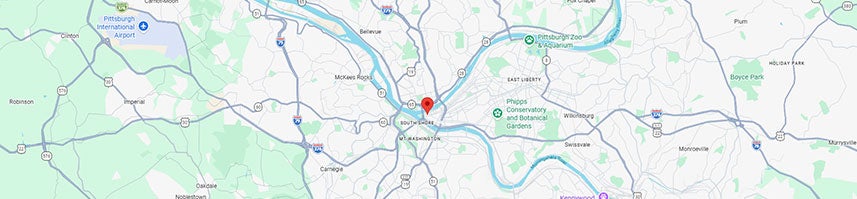
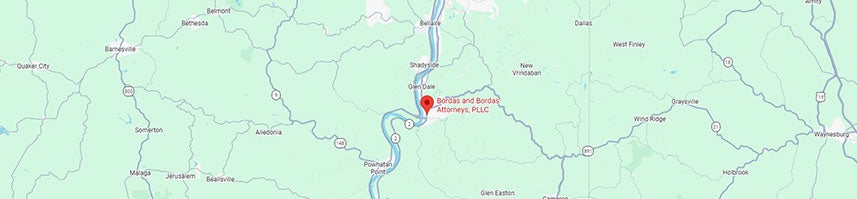
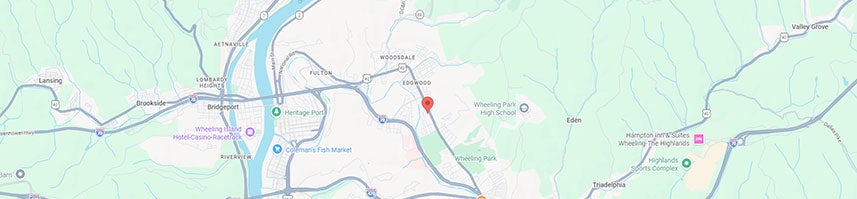
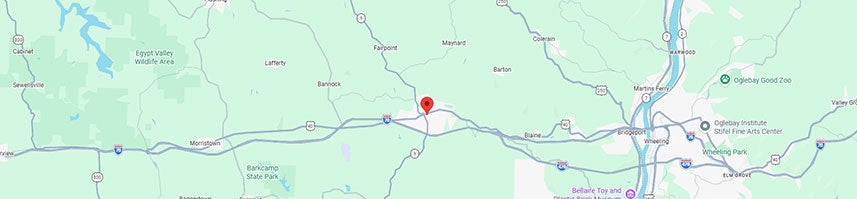
The information you obtain at this site is not, nor is it intended to be, legal advice. You should consult an attorney for advice regarding your individual situation. We invite you to contact us and welcome your calls, letters and electronic mail. Contacting us does not create an attorney-client relationship. Please do not send any confidential information to us until such time as an attorney-client relationship has been established.
The results in a legal case depend on a variety of factors, many of which are unique to each case. Prior results by this firm or any other do not guarantee future results. Case results presented here are illustrations of the type of work done by Bordas & Bordas and not a guarantee that any prospective case will yield any particular amount.
Request Consultation
Call 304-242-8410 or fill out the form below.