Blog / Legal News and Product Recalls

Blog

All Legal News and Product Recalls In the Community Know the Law Legal Options
Hospital sign pointing to the Emergency Room and Main Entrance outside a medical building

$3.77 Million in Medical Malpractice Case Against Wheeling Doctor and PA

WHEELING, WV / PITTSBURGH, PA — An Ohio County, West Virginia jury has returned a $3.77 Million verdict in a medical malpractice case against a doctor and a physician’s assistant at WVU Medicine Wheeling Hospital. Following a four-day trial, the jury found both Dr. Barry Mitchell and Physician’s Assistant Michelle Porembka negligent in their medical care of 64 year old Julie Daley when she presented with abdominal complaints at the Wheeling Hospital emergency room in June 2022. As a result of the medical care providers’ failure to timely and properly treat her condition, Daley ultimately sustained a perforated colon along with necrosis which ultimately lead to her needing to have a permanent colostomy. The jury found that the conduct of both Mitchell and Poermbka fell below the standard of care for medical care providers in their field and that their negligence proximately caused injuries and damages to Mrs. Daley.  Daley was represented at trial by Geoff Brown and Tyler Smith of the Wheeling law firm of Bordas & Bordas. Following the verdict, Smith commented, “We are pleased that the jury recognized that this should not have happened to Julie Daley and that they compensated her for the life-long effects that she will have as a result of the negligence of the medical providers.” Mark Robinson and David Givens of Flaherty, Sensabaugh, and Bonasso represented the medical providers at trial.  Circuit Court Judge Jason Cuomo presided over the case. Brown stated “Our practice is based upon fighting for justice for people who have been injured or wronged by others.  Helping others is at the root of everything that we do and we are glad that we were able to help Julie and her family obtain a measure of justice through this case and this result.” About Bordas & Bordas Founded in 1985, Bordas & Bordas Attorneys PLLC has earned a reputation as one of the region’s premier personal injury and plaintiff litigation law firms. With offices in Wheeling and Moundsville, West Virginia; Pittsburgh, Pennsylvania; and St. Clairsville, Ohio, the firm represents clients in cases involving automobile and trucking accidents, medical malpractice, workplace injuries, nursing home negligence, product liability, wrongful death, insurance bad faith, and more. The firm operates on a contingency fee basis (clients pay only if there is a recovery) and offers free initial consultations. Rooted in its core values of experience, family, community, and results, Bordas & Bordas continues to stand as a trusted advocate for individuals and families across the Ohio Valley and beyond. Visit www.bordaslaw.com for more information.

The Pennsylvania Superior Court Analyzes the Federal Public Readiness and Emergency Preparedness Act in Denying Defendants’ Motion for Judgment on the Pleadings

The Pennsylvania Superior Court Analyzes the Federal Public Readiness and Emergency Preparedness Act in Denying Defendants’ Motion for Judgment on the Pleadings

The Pennsylvania Superior Court Analyzes the Federal Public Readiness and Emergency Preparedness Act in Denying Defendants’ Motion for Judgment on the Pleadings In Boyle v. Meyer, 2025 PA Super 198 (September 9, 2025), the Pennsylvania Superior Court denied a physical therapy company’s motion for judgment on the pleadings based on the immunity provisions contained in the federal Public Readiness and Emergency Preparedness Act (PREP Act). Background of the Case Plaintiff Boyle required physical therapy following open-heart surgery. To minimize the risk of contracting COVID-19, he arranged for OSPTA Home Care to provide in-home services. On November 8, 2020, physical therapist Meyer arrived without gloves, a face shield, or a proper mask — only wearing a thin, disposable surgical mask. Meyer also shook Boyle’s hand without gloves, did not wash her hands before treatment, and performed therapy as usual. Days later, OSPTA informed Boyle that Meyer had tested positive for COVID-19. Boyle soon developed symptoms, was hospitalized for ten days, and continued to suffer complications five months later. Boyle sued OSPTA and Meyer, alleging: Meyer was negligent in failing to wear proper personal protective equipment (PPE). Meyer exposed him to unreasonable risk and performed therapy despite known exposure. OSPTA failed to properly train and supervise Meyer and implement safeguards to prevent the virus’s spread. Defendants’ Motion and PREP Act Defense In response, Defendants admitted Meyer was not wearing gloves or a face shield but stated she wore a surgical mask and used hand sanitizer earlier in the day. They argued they were immune from liability under the Public Readiness and Emergency Preparedness Act, 42 U.S.C. §§ 247d-6d, 247d-6e. Defendants asserted that they met all four requirements for immunity: Public health emergency – The COVID-19 pandemic triggered PREP Act protections. Covered persons – They qualified as both “program planners” and “qualified persons” under the Act. Covered countermeasure – Meyer’s “thin, disposable surgical mask” was a device authorized for emergency use by the FDA. Causal relationship – Meyer’s use of the mask had a causal connection to Boyle’s COVID-19 claim. The trial court denied their motion for judgment on the pleadings. Superior Court’s Analysis On appeal, the Superior Court found several factual disputes that prevented judgment for the Defendants. Specifically: It was unclear whether Meyer’s surgical mask qualified as a “covered countermeasure.” The pleadings did not conclusively establish that the Defendants were “covered persons.” Even if both were true, PREP Act immunity applies only to the use or administration of a covered countermeasure — not to its non-use. Citing Hampton v. California, 83 F.4th 754 (9th Cir. 2023), the Court noted that the PREP Act shields defendants from claims related to administering a covered measure, but not from claims alleging failure to administer one. Because Boyle’s complaint focused on the failure to use proper PPE, inadequate screening, and lack of training, his claims fell outside the scope of federal immunity. Conclusion The Superior Court concluded that the PREP Act did not preempt Boyle’s state-law negligence claims, affirming the trial court’s denial of the motion for judgment on the pleadings. The full opinion in Boyle v. Meyer, 2025 PA Super 198 (September 9, 2025), is available on the Pennsylvania Judiciary website. To learn more about legal issues surrounding immunity and negligence in Pennsylvania courts, visit our post on how the PA Superior Court reviews evidentiary challenges in medical cases.

Lead Risk Prompts Nationwide Recall of Ground Cinnamon

Lead Risk Prompts Nationwide Recall of Ground Cinnamon

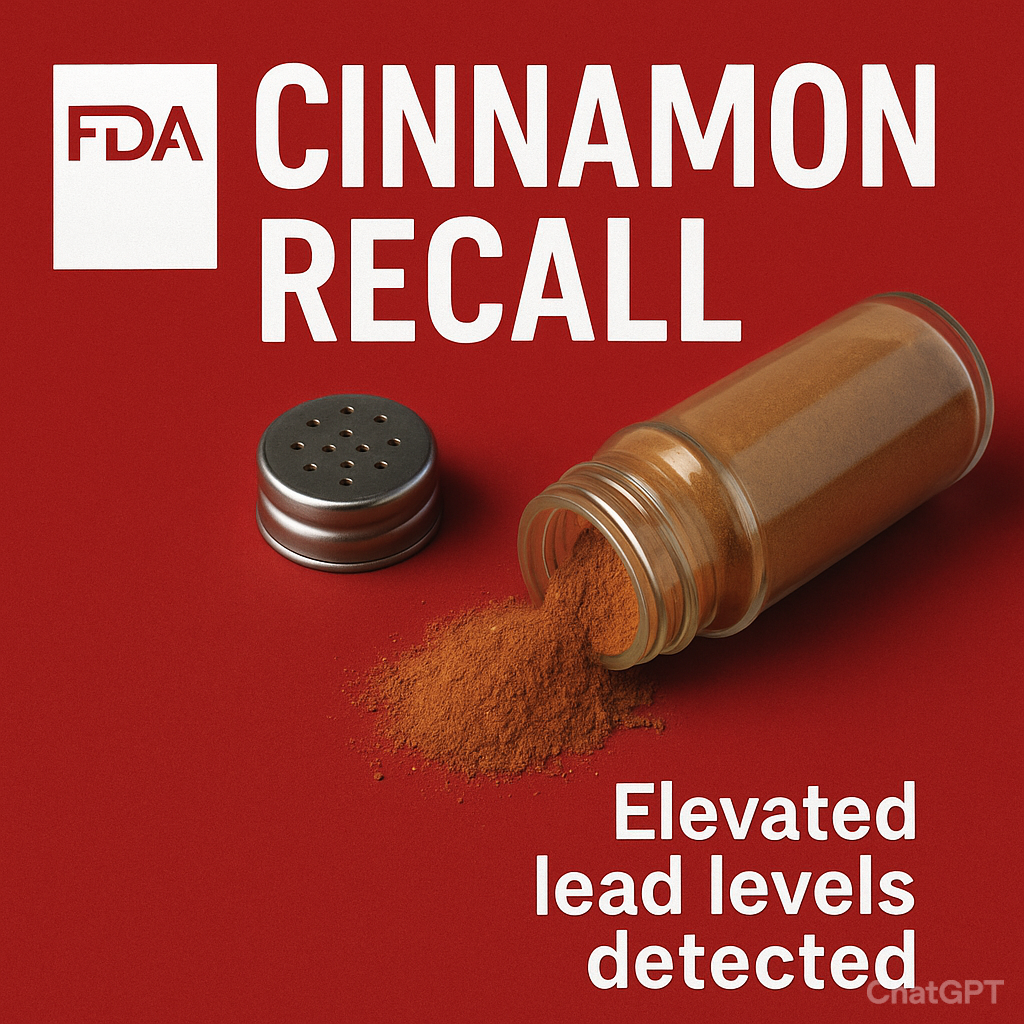
Lead Risk Prompts Nationwide Recall of Ground Cinnamon The U.S. Food and Drug Administration (FDA) has issued a nationwide recall of 12 ground cinnamon brands after testing revealed elevated levels of lead. Roughly 21,690 units were sold through retailers like Dollar Tree and Save-A-Lot before being pulled from shelves. Consumers are urged to immediately throw away any affected products and avoid purchasing them until further notice. See the official FDA recall notice. Why This Recall Matters Although no injuries have been reported yet, the FDA warns that prolonged consumption of contaminated cinnamon can cause lead accumulation in the body. Children are especially at risk, since lead exposure can impact neurological development. Cinnamon is often used in foods like cereals, baked goods, and snack mixes — staples in many households with kids. This makes the recall a major public health concern for families nationwide, including those in West Virginia, Ohio, and Pennsylvania. FDA’s Broader Effort This recall is part of a larger FDA initiative to monitor imported spices more closely. Several cinnamon brands have been flagged in prior alerts, and surveillance is ongoing. For example: The FDA recently added Asli brand ground cinnamon to the list of affected products after new testing revealed unsafe lead levels. Additional products may be named as investigations continue. See the expanded FDA alert. What You Should Do If you purchased ground cinnamon recently: Check your spice cabinet against the recall list. Dispose of any recalled products immediately. Do not repurchase affected brands until the FDA clears them. If you suspect your child or another family member has been exposed, consult a healthcare provider for guidance. For ongoing updates, visit the FDA’s cinnamon recall page. Protecting Consumers This recall is a reminder that product safety issues extend beyond toys, appliances, and vehicles — even everyday food staples can carry risks. Families in WV, OH, and PA should stay informed about recalls and understand their rights if a defective or dangerous product causes harm. At Bordas & Bordas, our attorneys help consumers hold corporations accountable when safety takes a backseat to profit.

Recent Drug Recalls and What They Mean for You

Recent Drug Recalls and What They Mean for You

Recent Drug Recalls and What They Mean for You It seems like you hear about recalls in the news all the time. From defective products to contaminated foods, there are no shortages of these frightening consumer safety alerts. But when the FDA issues a warning about a withdrawn medication, patients like you should take notice. Learn more about the recent drug recalls and what they mean for you with this guide from the knowledgeable dangerous drug attorneys at Bordas & Bordas. Which Drugs Were Recently Recalled? Pharmaceutical companies have a legal responsibility to keep their patients safe from potentially dangerous or defective drugs. The FDA has announced the withdrawal of numerous medications in 2025 that could be harmful to your health. This long list of affected drugs includes common products like Cefazolin, DermaKleen, Zicam, Octagam, and Rizatriptan. Whether the issue was due to the presence of allergens and impurities, mislabeling and mispackaging, or microbial contamination, taking these affected drugs could pose a hazard to your and your family’s health. What Does a Drug Recall Mean for You? Sometimes drug manufacturers make mistakes. But whether these errors are minor, cause severe health issues, or even wrongful death, you have a right to compensation if you or a loved one has been injured by a recalled drug. A drug recall is a measure to protect public health by removing potentially harmful substances from the market. The first step is to learn more about the affected medication and determine whether you should discontinue use and return it to the store or pharmacy. The FDA’s website is a good resource. However, if you become ill, you must seek immediate medical attention, as the recalled drug could be life-threatening. What To Do if Your Prescription Drug Has Been Recalled Taking an over-the-counter medication or one prescribed by your doctor is supposed to make you feel better, not endanger your health. If you recently discovered that a drug you have in your home has been recalled, contact your doctor for advice. You may have to stop taking it immediately and start on an alternative medication. Now, reach out to the law offices of Bordas & Bordas if you live within our multi-state service area. We could help you report any adverse reactions to the FDA’s MedWatch program and get the medical care you need to recover. We hope that you were not seriously injured by the recalled defective drug. But if you were, our team of experienced attorneys could file a product liability lawsuit against the manufacturer on your behalf. Start the Process With Our Experienced Personal Injury Attorneys Now that you have a basic understanding of recent drug recalls and their implications for you, please let us know if you have any questions. We would be happy to review your case with our free, no-obligation initial consultation. Get in touch with a member of our legal team at Bordas & Bordas now. We have won millions in compensation for plaintiffs like you. Let us help you hold the drug manufacturer or their insurance company financially liable for your damages, because we understand how drug recalls could negatively impact your quality of life.

Court Hammer

PA Superior Court Vacates Verdict Over Improper Remarks and Jury Instructions

PA Superior Court Vacates Verdict Over Improper Remarks and Jury Instructions Background of the Case In Lewis v. Reading Hospital, 2025 PA Super 191 (September 2, 2025), the Pennsylvania Superior Court vacated a $869,000 judgement because counsel told the jury that the defense was unable to retain causation expert, and because the trial court gave an instruction and verdict form to the jury that equated the negligence element of factual cause with an “increased risk of harm.” Lewis underwent vascular surgery by Dr. Luo to repair abdominal aortic aneurysms at Reading Hospital.  Following surgery, Lewis complained of severe pain, swelling, and discoloration in his left foot. Dr. Luo determined that Lewis suffered from ischemia but did not think there was a viable surgical or medicinal means of correcting the problem; therefore, he elected to monitor Lewis. Three weeks later, Lewis developed gangrene of his left foot, which had to be amputated. During litigation, Lewis’ expert, Dr. Wu opined that Dr. Luo was negligent for not administering anticoagulant medications, and that such negligence increased the risk of harm, and played a role in causing the need for amputation. The Defendants’ vascular expert, Dr. Wun opined that the use of blood-thinning medications would not have prevented the need to amputate Lewis’ foot and could have worsened Lewis’ outcome. The Court ordered Dr. Wun to identify the medical literature to support his opinion, but Dr. Wun failed to do so. Ultimately, the trial court precluded Dr. Wun from offering any expert opinions. Improper Opening Statement In his opening statement, Lewis’ counsel told the jury that despite more than 3,000 vascular surgeons in the United States, the defense was not going to produce the testimony of a vascular surgery expert at trial. The trial court declined the Defendants’ motion for a mistrial but gave the jury several curative instructions that counsel’s statements were not evidence. Citing Siegal v. Stefanyszyn, 718 A.2d 1274 (Pa. Super. 1998), the Defendants argued that a cautionary instruction was insufficient to cure the prejudice of an improper remark about the lack of an expert opinion witness.  However, the trial court felt that the present case was distinguishable from Siegal. During the court’s conference regarding jury instructions and jury verdict form, the trial court’s charge repeatedly instructed that Defendants were liable if the jury found that their negligent conduct resulted in actual harm to Lewis or an increased risk of harm.  The Defendants objected to the “addition of increased risk to the factual cause discussions” on the record after the charge conference, and the objection was overruled. The jury verdict form asked: Was the negligence of those Defendants you have found to be negligent, a cause of harm or an increased risk of harm to the Plaintiff? Ultimately, the jury issued a verdict in Lewis’ favor in the amount of $869,000. On appeal, the Superior Court held that no instruction could undo the prejudice caused by misleading the jury about the absence of expert testimony, especially when that absence was due to the court’s own preclusion ruling. Faulty Jury Instructions on Causation A party who succeeds in excluding evidence on legal grounds may not mislead the jury by telling it that such evidence never existed in the first place. See e.g., Siegal, 718 A.2d at 1277.  But, where the absence of evidence does not result from a court ruling, a party has more leeway to emphasize that fact to the jury as being indicative of a weakness in an opponent’s position. See e.g., Steltz v. Meyers, 265 A.3d 335, 348 (Pa. 2021). “There are certain instances where the comments of counsel are so offensive or egregious that no curative instruction can adequately obliterate the taint.” Siegal, 718 A.2d at 1277. Here, the Superior Court concluded that there were no curative instructions that could have adequately cured the prejudice of counsel’s improper remarks. The Superior Court also determined that an “increased risk of harm” should not be equated with factual (proximate) cause.  A finding of increased risk of harm instead functions as a means of allowing the fact-finder to link the defendant’s conduct to the plaintiff’s harm, where it might be impossible to establish that an act or omission by a physician directly caused, or was a “but-for” cause of a patient’s harm: uch evidence furnishes the basis for the fact-finder to go further and find that such increased risk was in turn a substantial factor in bringing about the resultant harm; the necessary proximate cause will have been made out if the jury sees fit to find cause in fact. Sutherland v. Monongahela Valley Hosp., 856 A.2d 55, 60 (Pa. Super. 2004) (quoting Hamil v. Bashline, 392 A.2d 1280, 1288 (Pa. 1978)). Ultimately, the Superior Court concluded that by repeatedly equating an increased risk of harm with factual cause in both the jury charges and the verdict form, the trial court’s instructions were erroneous and improperly eased Plaintiff’s burden of proving Defendants’ liability, depriving them of a fair trial. The Superior Court’s opinion in Lewis v. Reading Hospital, 2025 PA Super 191 (September 2, 2025) can be accessed here. Understanding the appeals process in Pennsylvania is key to protecting your legal rights after a trial. Our team at Bordas & Bordas explains how appeals work and what steps may be available if you’re unhappy with a verdict.

Court Hammer

PA Superior Court Bars Parents From Using Parol Evidence in Medical Malpractice Settlement Dispute

PA Superior Court Bars Parents From Using Parol Evidence in Medical Malpractice Settlement Dispute In West v Abington Memorial Hospital, 2025 PA Super 199 (August 28, 2025) the Superior Court granted judgment on the pleadings for Abington, denying the Wests an opportunity to prove that they were fraudulently induced to enter into a settlement agreement for $19 million. Background of the Case The Wests filed a medical malpractice case against Abington Hospital, et al. (West I), claiming damages due to the mismanagement of Amy West’s labor and delivery, resulting in a catastrophic brain injury to her child, Juliana West.  The case settled for $19 million. The Release contained an integration clause, also known as an “entire agreement” or “merger” clause, as follows: It is further understood and agreed that this is the complete release agreement, and that there are no written or oral understandings or agreements, directly or indirectly, connected with this release and settlement, that are not incorporated herein.  This agreement shall be binding upon and inure to the successors, assigns, heirs, executors, administrators, and legal representatives of the respective parties hereto. The Wests initiated the instant action against Abington (West II), claiming they were fraudulently induced to enter into the parties’ settlement agreement in West I due to the hospital’s failure to identify and produce a memorandum from Dr. Joel Polin, then Chair of Abington’s OBGYN Department that addressed Pitocin use in labor and delivery and the risk of uterine rupture resulting from excessive oxytocin (“Memorandum”).  The Wests first discovered the Memorandum on March 9, 2015, when the hospital produced it during discovery in an unrelated case involving the Wests’ attorneys. The Wests claimed that if the Memorandum had been produced in West I, they would have obtained a settlement or jury verdict substantially more than the $19 million settlement they negotiated. The court granted Abington’s motion for judgment on the pleadings, finding that the Wests released Abington from all claims arising from the labor and delivery of their daughter. On appeal to the Superior Court, the Wests’ contended that their current claims were viable because they released only their medical malpractice claims against Appellees, not any right to recover for fraud and unjust enrichment, “as to claims that had not yet accrued in relation to misconduct during discovery.”  They argued the parol evidence rule did not apply because their new causes of action did not require alteration or supplementation of the terms of the Release.  Abington however, argued the Release indicated the parties’ intention to resolve any and all claims related to the West I litigation. Superior Court’s Analysis The Superior Court determined that the Wests’ position relied upon too narrow an interpretation of the terms “arising from,” “in any way connected with,” and “arising out of” appearing in the Release.    The Court found the term “in any way connected with” to be even broader, requiring no cause and result relationship between the past claims and the present suits, but merely some logical association between the malpractice and the new damages claim. In the Court’s view, the Wests’ new claims were not only “in any way connected with” the occurrence underlying the claims the Wests released, but they also originated from the alleged malpractice.  Moreover, this interpretation of the Release was consistent with the Wests’ declaration that they were “making a full and final compromise adjustment and settlement of any and all claims on account of the injuries and damages above-mentioned, and for the express purpose of precluding forever any further or additional suits arising out of the aforesaid claims.” As such, the Wests acknowledged that they were releasing not only West I’s claims for the injuries sustained from Abington’s provision of medical services, but were further forfeiting the right to bring any additional claims arising out of those claims. However, the Wests argued that Abington made fraudulent misrepresentations upon which the Wests justifiably relied in agreeing to settle West I.  To that end, the Wests sought to prove their claims of fraud in the inducement by establishing that there were other understandings directly or indirectly connected with the settlement that were not incorporated in the Release. While parol evidence may be introduced based on a party’s claim that there was a fraud in the execution of the contract, i.e., that a term was fraudulently omitted from the contract, parol evidence may not be admitted based on a claim that there was fraud in the inducement of the contract, i.e., that an opposing party made false representations that induced the complaining party to agree to the contract. Yocca v. Pittsburgh Steelers Sports, Inc., 854 A.2d 425, 437 n.26 (Pa. 2004). A party cannot disavow an integration clause merely by asserting that an unincluded representation was fraudulently made. See Bardwell v. Willis Co., 100 A.2d 102, 104 (Pa. 1953). Final Ruling Ultimately, the Superior Court found that the trial court properly observed that the Wests agreed to accept $19 million in exchange for a release of any and all claims for known and unknown injuries connected in any way with the medical services Abington rendered. As such, the Court concluded that the trial court correctly granted Abington’s motion for judgment on the pleadings because the Wests’ new claims were barred by the Release. The Pennsylvania Superior Court’s opinion in West v Abington Memorial Hospital, 2025 PA Super 199 (August 28, 2025) can be found here. Why This Matters for Families Settlement agreements in medical malpractice cases often involve large sums and life-changing circumstances. Families in WV, OH, and PA need to carefully review settlement language, especially integration clauses, with experienced legal counsel before signing. At Bordas & Bordas, we guide clients through every stage of litigation and settlement, ensuring that their rights are protected and that they fully understand the long-term impact of their decisions.


Consumer Product Safety Commission Says Walmart Knew of Water Bottle Danger for Years Before Recall

Consumer Product Safety Commission Says Walmart Knew of Water Bottle Danger for Years Before Recall In July 2025, Walmart recalled approximately 850,000 Ozark Trail 64-ounce stainless-steel water bottles after reports that the lids could “forcefully eject” and injure users. The U.S. Consumer Product Safety Commission (CPSC) warned that these bottles posed a serious hazard — at least three people suffered devastating injuries, including two cases of partial blindness. However, federal regulators now claim that Walmart was aware of these dangers for seven years before taking action. Walmart Aware of Injuries as Early as 2018 Investigations reveal Walmart had evidence of catastrophic injuries long before the recall. For example: 2018, Georgia: A woman was struck in the eye when hot soup caused the bottle’s lid to blast off. 2018, Washington State: A man’s left eye was ruptured after a cap exploded while opening a bottle filled with hard apple cider. 2018, Massachusetts: A woman suffered severe facial and jaw injuries when a bottle filled with juice burst. Walmart quietly settled lawsuits tied to these incidents but did not issue public warnings or recalls at the time. Warning Labels Instead of Recall By 2020, Walmart began placing warning labels on Ozark Trail bottles, advising customers to use them only for water. Labels cautioned that storing carbonated or perishable liquids could cause pressure to build up and eject the lid like a projectile. This reduced injuries for a while, but by early 2024, another customer was harmed, which finally prompted the CPSC to formally request a recall. Why the Delay Matters Safety experts say Walmart’s seven-year delay underscores how corporations may weigh recall costs against liability risks. The CPSC cannot force recalls without a company’s cooperation, leaving dangerous products in homes for years. The recalled bottles (model #83-662) were sold at Walmart stores nationwide since 2017 for about $15. Consumers are urged to stop using them immediately and return them for a refund. Holding Companies Accountable For families of those injured, Walmart’s delayed response highlights the importance of product liability law. When preventable design flaws cause life-altering injuries, companies must be held accountable. At Bordas & Bordas, we help clients across West Virginia, Ohio, and Pennsylvania pursue justice when defective products cause harm. If you or a loved one has been injured by a recalled item or other unsafe product, our attorneys can help you explore your legal options.

Michael Prascik

Supreme Court Rejects Heightened Standard of Proof in Disability Discrimination Cases Against Schools

Supreme Court Rejects Heightened Standard of Proof in Disability Discrimination Cases Against Schools Federal laws, including the Americans with Disabilities Act (ADA) and the Rehabilitation Act of 1973, protect people with disabilities from discrimination, including in the area of education.  The Individuals With Disabilities Education Act (IDEA) conditions federal funding to states on the promise to provide a “free appropriate public education” to children with certain disabilities.  Recently, in A.J.T. v. Osseo Area Schools, Indep. School Dist. No. 279, the United States Supreme Court rejected a lower court’s ruling that plaintiffs in education-related cases under the ADA and Rehabilitation Act must show bad faith or gross misjudgment by school officials to recover damages, not just failure to provide a reasonable accommodation as in other discrimination cases. Background of the Case The plaintiff in A.J.T., identified by her initials because she is a minor, was a teenager who had a rare form of epilepsy with serious manifestations including seizures so severe in the morning hours that she was unable to attend school before noon.  A.J.T. had previously been permitted to attend educational activities in the evening, but after her family relocated, her new school district denied her request for evening education, such that she received significantly less instruction than non-disabled students.  A.J.T.’s parents filed a complaint under the IDEA and won a ruling ordering the district to provide A.J.T. with evening instruction. A.J.T.’s parents then sued the district under the ADA and Rehabilitation Act, seeking a permanent injunction and compensatory damages.  The federal district court in Minnesota granted summary judgment to the school district and the Eighth Circuit Court of Appeals affirmed the decision.  The appeals court determined that unlike in other discrimination cases under the ADA and Rehabilitation Act, “a plaintiff must prove that school officials acted with ‘either bad faith or gross misjudgment,’ which requires ‘something more’ than mere non-compliance with the applicable federal statutes.’”  Federal appeals courts had disagreed on the appropriate standard, and the Supreme Court accepted the case to resolve the dispute. What the Supreme Court Decided Writing for a unanimous Supreme Court, Chief Justice John Roberts held unambiguously that “ADA and Rehabilitation Act claims based on educational services should be subject to the same standards that apply in other disability discrimination contexts.” The Court observed that children with disabilities and their parents “face daunting challenges on a daily basis,” but that “those challenges do not include having to satisfy a more stringent standard of proof than other plaintiffs to establish discrimination under Title II of the ADA and Section 504 of the Rehabilitation Act.” Chief Justice Roberts noted that the Congress had previously amended the IDEA to overturn caselaw holding that the IDEA was the only mechanism by which a child with a disability could allege that his or her education was inadequate. What This Means for Parents While the Supreme Court’s decision contains nuances that reflect the complexities of the legal framework it interpreted, A.J.T. makes it clear that the unique challenges that can come with educational accommodations in no way lessen the rights of children with disabilities.  As the varying interpretations of the same law by different courts demonstrate, seeking the law’s protections can be complicated and intimidating.  A lawyer experienced in navigating discrimination claims can help make sure your rights are protected.

BB_BeyondTheShild_Header.

Behind the Shield Newsletter – July 2025

With the Fourth of July just around the corner, our entire team wants to wish you a very safe, happy, and memorable holiday. Whether you’re gathering for a cookout or enjoying some fireworks lighting up the sky, it’s a wonderful opportunity to enjoy the best of summer and reflect on the spirit of independence. To get into the holiday spirit, we asked our attorneys for their personal tips on how to best celebrate this patriotic occasion. From backyard BBQs to classic traditions, their advice might just spark some inspiration for your own festivities! Click here to watch the video. Happy 4 th of July! Welcoming our New Attorney We are pleased to announce the addition of a new attorney to our law firm- Teena Miller. We couldn’t be more excited to have Teena our team. Her knowledge, dedication, and commitment to justice will undoubtedly strengthen our ability to serve our clients. Please join us in extending a warm welcome to her! Teena Miller brings over two decades of legal experience to Bordas & Bordas, having practiced law in West Virginia and Ohio since 2000 and 2001, respectively. Her extensive background includes handling plaintiff’s personal injury claims and complex civil litigation. Most recently, she handled plaintiff’s and defendant’s civil claims at The Levicoff Law Firm in Pittsburgh. Prior to that, Miller held a partnership position at Gold, Khoury, and Turak in Moundsville, West Virginia, where she successfully litigated plaintiff’s personal injury cases, including achieving a significant $1.5 million-dollar verdict in Ohio. Miller holds bar admissions in West Virginia, Ohio, the U.S. District Courts for the Northern and Southern Districts of West Virginia and the Southern District of Ohio, and the U.S. Supreme Court. Miller began her career at one of West Virginia’s largest defense firms, Jackson Kelly, where she worked in the Wheeling office handling various types of civil litigation, primarily on behalf of corporations and insurers. This followed her being a Dean’s List student at the University of North Carolina School of Law in Chapel Hill, NC, one of the top 25 law schools in the United States at the time. Miller will work out of the firm’s Wheeling office. When your loved ones are in nursing homes, their safety and well-being are your top priority. It’s vital to know the difference between “nursing home abuse” and “nursing home neglect,” because while both are harmful, they mean different things legally and require different actions. However, we are able to handle cases that involve both of these types of situations. To help everyone understand these important distinctions, Partner Geoff Brown explains the key differences between nursing home abuse and nursing home neglect. This information can be really helpful for any family with a loved one in care. Click here to learn the difference. Our Recent Results What Our Clients Say About Us Personal injury suits can arise out of almost any accident. Learn more about the common types of personal injury cases: Unlocking the Power of Partnership with Bordas & Bordas At Bordas & Bordas, we value collaboration within the legal community. We accept referrals across a wide range of practice areas, and some of our firm’s most significant successes have stemmed from strong partnerships with fellow law firms. Unlike many plaintiffs’ practices, our firm’s substantial size and diverse team of attorneys enable us to undertake major and complex cases. Bordas & Bordas stands ready to meet the challenge. Our firm is capable of going up against major corporations and insurance companies to deliver justice to those who have been wronged. Partner with Us: If you have a case where our firm could be a valuable asset, we encourage you to contact Bordas & Bordas. We are honored to collaborate with our colleagues in the trial bar and are committed to working alongside you to achieve the largest possible results for your clients. To discuss potential referral or co-counsel opportunities, please do not hesitate to contact our firm at 304.242.8410 or reach out to us through our web contact form. Congratulations to the 2025 Anti-Bullying Ambassadors! We are proud to share the names of the 16 students from schools in Ohio, Marshall and Belmont counties who are recipients of the Bordas & Bordas Anti-Bullying Fighting for Justice Award. The award was created in 2014 by Bordas & Bordas founder Jim Bordas and honors each Anti-Bullying Ambassador with a $500 cash prize. The criteria for students nominated includes treating everyone equally, respecting differences in others, and standing up for those who are targeted by others or are discriminated against. 2025 Bordas & Bordas Amateur Golf Classic in the Books We’re excited to share the results from the recent Bordas & Bordas Amateur Golf Classic, which took place on June 7 and 8! Despite the very rainy conditions on the final day, our dedicated participants showed incredible skill and spirit, making it a memorable tournament. A huge thank you goes out to all the participants, generous sponsors, and tireless volunteers who made this event a success. For the eighth consecutive year, proceeds from the tournament will proudly benefit the Oglebay Foundation’s Access to the Parks program. Without further ado, here are the champions from this year’s classic. Quotes to Live By

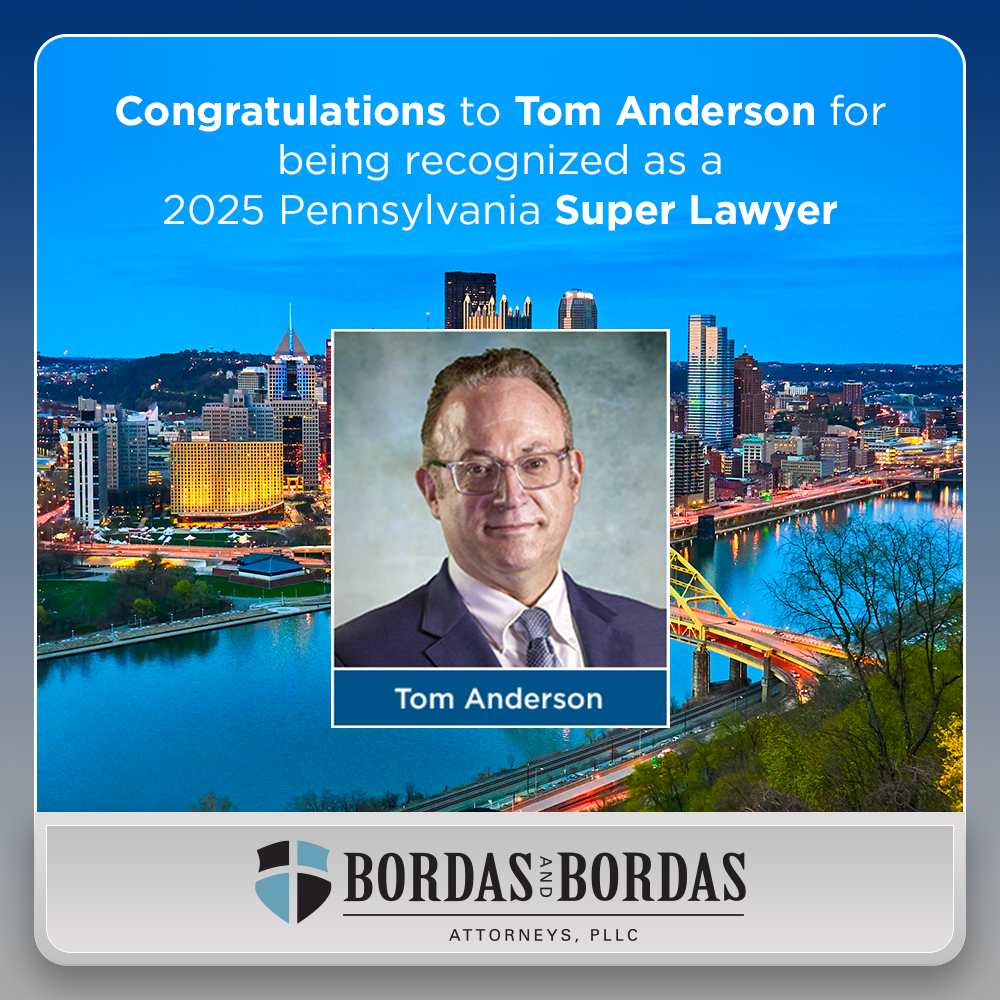
Promotional graphic congratulating Tom Anderson on being recognized as a 2025 Pennsylvania Super Lawyer, featuring his portrait, the Pittsburgh skyline, and the Bordas and Bordas Attorneys logo.

Bordas & Bordas Attorney Tom Anderson named 2025 Pennsylvania Super Lawyer

PITTSBURGH, PA. – Bordas & Bordas is proud to announce that attorney Tom Anderson has been selected to the 2025 Pennsylvania Super Lawyers list. Multi-year Pennsylvania Super Lawyer, Tom Anderson, focuses his practice on helping individuals who have been injured or discriminated against in violation of state and federal laws. Anderson focuses his practice on employment law, personal injury, medical malpractice, premises liability, and commercial law. Anderson has tried many jury trials involving very serious personal injury claims, catastrophic damages, and high exposure employment actions in both state and federal courts. He has obtained seven-figure verdicts and numerous significant settlements. In 2024, a jury in the United States District Court for the Middle District of Pennsylvania returned a verdict of $20,500,000 against American Home Patient/Lincare in a racial discrimination case arising out of its State College, Pennsylvania location. Anderson served as trial counsel for the plaintiff, Patricia Holmes. The 8-person jury awarded Holmes $500,000 in compensatory damages and $20 Million in punitive damages. It found that American Home Patient/Lincare, by and through its employees, including a manager, intentionally discriminated against Ms. Holmes by creating a hostile or abusive work environment because of her race in violation of federal law (Title 42, United States Code, Section 1981.) Super Lawyers, part of Thomson Reuters, is a rating service of outstanding lawyers from more than 70 practice areas who have attained a high degree of peer recognition and professional achievement. The annual selections are made using a patented multiphase process that includes a statewide survey of lawyers, an independent research evaluation of candidates and peer reviews by practice area. The result is a credible, comprehensive and diverse listing of exceptional attorneys. Bordas & Bordas is a plaintiff’s litigation law firm with offices in Pittsburgh, Wheeling, W.Va., St. Clairsville, Ohio, and Moundsville, W.Va. The firm’s attorneys practice throughout the region in diverse areas of law and are licensed in Pennsylvania, West Virginia, Ohio, and Texas.

Law blog banner featuring Bordas and Bordas Attorneys logo alongside attorney Zak Zatezalo's professional headshot.

Igloo Expands Cooler Recall In the Wake of New Injuries

Igloo Expands Cooler Recall In the Wake of New Injuries If you own an Igloo cooler, you may want to give some attention to the Igloo Products Corp. ongoing recall of its 90 Qt Flip & Tow Rolling Coolers. Igloo just expanded that recall to include an additional 130,000 units after receiving additional reports of injuries, including those as serious as fingertip amputations. With this latest expansion. Igloo has now recalled nearly 1.2 million units across the United States, Canada, and Mexico. The issue, according to the recall notice, is that the coolers’ tow handles can pinch users’ fingers against the cooler body, creating fingertip amputation and crushing hazards. Igloo has said that consumers of the recalled 90 Qt Flip & Tow Rolling Coolers should immediately stop using them and contact the company for a free replacement handle. To date, Igloo has fielded some 78 injury reports over these coolers, including 26 cases involving fingertip amputations, bone fractures, and/or serious lacerations. All of the defective coolers were manufactured in the United States by Igloo Products Corp., before January 2024 and all were sold between January 2019 and January 2025 at major retailers including Dick’s, Costco, Target, and Academy and at Amazon.com and Igloocoolers.com. These coolers retailed for between $80 and $140. The latest expansion includes the following additional model numbers: 34692 – Latitude 90 Qt Roller (07/2020–09/2021) 34785 – Latitude 90 Qt Roller (10/2021–12/2022) 34790 – MaxCold Latitude 90 Qt Roller (10/2021–02/2023) If you own an Igloo cooler and want to see if your cooler is included in the recall, check the bottom label for the model number of your cooler on and check the circular stamp near the cooler base for the manufacturing date. All impacted units have tow handles and “IGLOO” printed on the side. To request a replacement handle Igloo cooler owners can contact Igloo toll-free at 888-943-5182 from 8 a.m. to 5 p.m. ET Monday through Friday, email Igloo at: igloo90qt@sedgwick.com, or visit www.igloo90qtrecall.expertinquiry.com. And if you’ve been injured by a defective Igloo cooler, you should contact an experienced law firm right away to explore you claim potential.

Bordas and Bordas Attorneys law blog banner featuring the firm logo on a blue background with the text "Law Blog

Why is it called “the Bar”?

Why is it called “the Bar”? The legal profession is often referred to as “the bar.” While this can be the source of many jokes, many do not know the actual origin of this name for the profession. The term dates back to medieval times, when courtrooms were built with a physical barrier that separated the judge, lawyers, and criminals or parties to the case from the public or others in the courtroom. Modern courtrooms in Europe and the United States generally continue with this tradition, placing a partition or railing between the seating area where the public and press can observe the legal proceedings and the area where the lawyers present the case to the judge and jury. The phrase “passing the bar” is used to describe a future lawyer’s successful completion of all of the requirements to practice law, and specifically, the exam that lawyers must take to establish their qualification to practice. But it quite literally means that the lawyer has earned the right to occupy that space in the courtroom, and is able to move past the physical barrier that sets lawyers apart from spectators in the courtroom. In a similar vein, you may hear the judicial profession referred to as “the bench.” The origin of that phrase is also literal and describes the location of the judge in the courtroom while cases are being heard. The next time you are in a courtroom, take a look around and you will be able to see and know the origin of these descriptions of the legal profession!

Contact Us

Fill out this form below and we'll contact you shortly
*Required Fields