
Here’s a pumpkin, there’s a pumpkin and everywhere I turn is pumpkin. Do I like it? Of course. Who doesn’t? But I think it put me over the edge when I saw pumpkin-flavored shredded wheat. What doesn’t come in pumpkin now? Let’s talk a little bit about these pumpkins. The meaning of the word pumpkin actually means large melon and yes, in all actuality, it is a fruit even though many refer to it as a vegetable. Did you know that their color can be more than just orange? Pumpkins can be yellow, white, green and even red, and we all know from the Barnesville Pumpkin Festival how they can vary in size! Pumpkin candles, pumpkin decorations and endless pumpkin foods! The plain ole pumpkin pie, pumpkin bread, pumpkin seeds and “It’s the Great Pumpkin, Charlie Brown” are enough for me, but somehow we have become obsessed with pumpkin everything. Pumpkins have many health benefits from improving eyesight and aiding in weight loss to boosting your immune system. I admit, generally, they are quite delicious. The thing is, we have expanded so much with pumpkin flavoring that I ask myself—has it been overdone? Too much of a good thing? Does it lessen our appreciation for what used to be? But now, we have lattes and such, and is it really necessary to have pumpkin flavored gum? It used to be that from September until after Thanksgiving, we were surrounded by pumpkins, but is becoming more and more a year round celebratory flavor and scent. My appreciation will continue to be seasonal and for those year round pumpkin lovers, congratulations, I think it’s here to stay! So, enjoy your pumpkin this or that no matter the time of year.

A New Fall Favorite
I’ve mentioned before that Oglebayfest is a regular part of my fall routine. Every October I make my way to Oglebay Park to enjoy as much fun, food and family as I can cram into a three day weekend. But recently I’ve discovered a new fall favorite. Let me introduce you to SpringHouse Farm, located a few miles outside of Washington, Penn. It’s a family-owned, family-run dairy farm. There’s a restaurant and a store where you can buy all of your favorite country fixin’s. There are also events throughout the year that are fun and engaging for children. But October is extra special, jam-packed with the kinds of things that make great childhood memories. Every weekend in October the farm hosts this family-friendly event. There are giant slides for the kids. Of course, this is also a great excuse for parents, grandparents and any other grownups to take part without having to feel embarrassed. There’s also a pyramid made out of hay bales with a maze of tunnels for the kids to explore. On the tamer side, there’s a petting zoo with plenty of goats, sheep and calves. This year there was also a potbelly pig. My granddaughters were all smiles. If you’re a little more adventurous, you can take a hayride up to the pumpkin patch. There’s a maze in a nearby cornfield and games for the kids to play. My little granddaughter, Maddie, had a wonderful time in the sand box. Instead of sand, the box was filled to the brim with kernels of corn--much to Maddie’s delight. The day of our trip was cold and a little windy, but believe me, the girls didn’t seem to mind. I predict they’ll remember our outing for a long, long time, and they’ll both be begging to go back next year!
Where Do Old TVs Go To Die?
Recently, I was cleaning out my basement and discovered that I have five old TVs that either no longer work or won’t work without a receiver. Since I don’t have a cable provider that utilizes receivers, three of the TVs are unusable except for watching DVDs. I decided to search the internet and see where I could take the TVs to be disposed of safely, since according to the EPA, electronic waste contains hazardous materials like lead, mercury and hexavalent chromium, in circuit boards, batteries and color cathode ray tubes (CRTs). In other words, you can’t take them to the landfill because they won’t accept them. Finding a place where I could dispose of my old TVs safely turned out to be quite a chore. Since I had such a hard time, I thought I would share my findings to help someone else that has TVs that need to be disposed of. In my search, I discovered that many of the online sites were defunct businesses, businesses that no longer dealt in the disposal of toxic material, or businesses that were too far away to be of help to me. I did find out that WE Electronics Recycling in Bellaire, Ohio takes them for a $15 fee. However, Best Buy takes them for free up to 31 inches. They will take larger than 31 inches for a $20 fee. If you buy a new TV, they will take the old one away for free. Here is a list of what they recycle. The only downside is that Best Buy only takes three items per day, so I will need to make two trips on two different days. I have one that I have to pay for, but I consider it a small price to pay to have a clean, clutter free basement. I hope this helps!
Unlawful Gun Sale Costs Milwaukee Seller Millions
Last week, a jury in Milwaukee awarded more than $5 million in damages to two police officers who were shot and severely injured with a firearm that Badger Guns unlawfully sold to a straw purchaser. More specifically, the jury, comprised of eight women and four men, found that Badger Guns was grossly negligent in selling a gun to 21-year-old Jacob Collins, who was ostensibly buying the gun for Julius Burton, an 18-year-old male who accompanied him to the store. Mr. Burton was too young to lawfully purchase the firearm on his own, and evidence showed that he was the person who actually selected the gun ultimately purchased. One month after the purchase, Mr. Burton shot Officer Bryan Norberg in the face and Officer Graham Kunisch in the head causing brain damage and the loss of his eye. Burton is now serving 80 years in prison while Collins spent two years behind bars. The jury determined that Badger Guns knew or should have known that it was participating in an unlawful sale and awarded the officers compensatory and punitive damages, which are designed to punish the wrongdoer and prevent others from committing similar acts. Until recently, few cases have held gun dealers responsible for selling a firearm linked to a crime. In fact, only two lawsuits have reached a jury since 2005, when Congress passed the Protection for Lawful Commerce in Arms Act (PLCAA), which provides qualified immunity for gun sellers. In passing the PLCAA, Congress found: (1) The Second Amendment to the United States Constitution provides that the right of the people to keep and bear arms shall not be infringed. (2) The Second Amendment to the United States Constitution protects the rights of individuals, including those who are not members of a militia or engaged in military service or training, to keep and bear arms. (3) Lawsuits have been commenced against manufacturers, distributors, dealers and importers of firearms that operate as designed and intended, which seek money damages and other relief for the harm caused by the misuse of firearms by third parties, including criminals. (4) The manufacture, importation, possession, sale and use of firearms and ammunition in the United States are heavily regulated by Federal, State and local laws. Such Federal laws include the Gun Control Act of 1968, the National Firearms Act and the Arms Export Control Act. (5) Businesses in the United States that are engaged in interstate and foreign commerce through the lawful design, manufacture, marketing, distribution, importation or sale to the public of firearms or ammunition products that have been shipped or transported in interstate or foreign commerce are not, and should not, be liable for the harm caused by those who criminally or unlawfully misuse firearm products or ammunition products that function as designed and intended. (6) The possibility of imposing liability on an entire industry for harm that is solely caused by others is an abuse of the legal system, erodes public confidence in our nation's laws, threatens the diminution of a basic constitutional right and civil liberty, invites the disassembly and destabilization of other industries and economic sectors lawfully competing in the free enterprise system of the United States, and constitutes an unreasonable burden on interstate and foreign commerce of the United States. (7) The liability actions commenced or contemplated by the Federal Government, States, municipalities and private interest groups and others are based on theories without foundation in hundreds of years of the common law and jurisprudence of the United States and do not represent a bona fide expansion of the common law. The possible sustaining of these actions by a maverick judicial officer or petit jury would expand civil liability in a manner never contemplated by the framers of the Constitution, by Congress or by the legislatures of the several States. Such an expansion of liability would constitute a deprivation of the rights, privileges, and immunities guaranteed to a citizen of the United States under the Fourteenth Amendment to the United States Constitution. (8) The liability actions commenced or contemplated by the Federal Government, States, municipalities, private interest groups and others attempt to use the judicial branch to circumvent the Legislative branch of government to regulate interstate and foreign commerce through judgments and judicial decrees thereby threatening the Separation of Powers doctrine and weakening and undermining important principles of federalism, State sovereignty and comity between the sister States. Accordingly, the purpose of the PLCAA was: (1) To prohibit causes of action against manufacturers, distributors, dealers and importers of firearms or ammunition products, and their trade associations, for the harm solely caused by the criminal or unlawful misuse of firearm products or ammunition products by others when the product functioned as designed and intended. (2) To preserve a citizen's access to a supply of firearms and ammunition for all lawful purposes, including hunting, self-defense, collecting and competitive or recreational shooting. (3) To guarantee a citizen's rights, privileges and immunities, as applied to the States, under the Fourteenth Amendment to the United States Constitution, pursuant to section 5 of that Amendment. (4) To prevent the use of such lawsuits to impose unreasonable burdens on interstate and foreign commerce. (5) To protect the right, under the First Amendment to the Constitution, of manufacturers, distributors, dealers and importers of firearms or ammunition products, and trade associations, to speak freely, to assemble peaceably and to petition the Government for a redress of their grievances. (6) To preserve and protect the Separation of Powers doctrine and important principles of federalism, State sovereignty and comity between sister States. (7) To exercise congressional power under article IV, section 1 (the Full Faith and Credit Clause) of the United States Constitution. The PLCAA effectively barred all lawsuits against a manufacturer or seller of a firearm, or a trade association, with the following exceptions: (i) an action brought against a transferor convicted under section 924(h) of title 18, United States Code, or a comparable or identical State felony law, by a party directly harmed by the conduct of which the transferee is so convicted; (ii) an action brought against a seller for negligent entrustment or negligence per se; (iii) an action in which a manufacturer or seller of a qualified product knowingly violated a State or Federal statute applicable to the sale or marketing of the product, and the violation was a proximate cause of the harm for which relief is sought, including-- (I) any case in which the manufacturer or seller knowingly made any false entry in, or failed to make appropriate entry in, any record required to be kept under Federal or State law with respect to the qualified product, or aided, abetted or conspired with any person in making any false or fictitious oral or written statement with respect to any fact material to the lawfulness of the sale or other disposition of a qualified product; or (II) any case in which the manufacturer or seller aided, abetted or conspired with any other person to sell or otherwise dispose of a qualified product, knowing, or having reasonable cause to believe, that the actual buyer of the qualified product was prohibited from possessing or receiving a firearm or ammunition under subsection (g) or (n) of section 922 of title 18, United States Code; (iv) an action for breach of contract or warranty in connection with the purchase of the product; (v) an action for death, physical injuries or property damage resulting directly from a defect in design or manufacture of the product, when used as intended or in a reasonably foreseeable manner, except that where the discharge of the product was caused by a volitional act that constituted a criminal offense, then such act shall be considered the sole proximate cause of any resulting death, personal injuries or property damage; or (vi) an action or proceeding commenced by the Attorney General to enforce the provisions of chapter 44 of title 18 or chapter 53 of title 26, United States Code. The “Badger Guns” case was the first case since 2005 adverse to the gun seller. Earlier this summer, a jury in a similar lawsuit found that an Alaskan gun seller was not liable for a firearm used in a 2006 murder. In that case, evidence demonstrated that the convicted felon, who attempted to purchase the firearm, actually stole it thereby exonerating the seller from any wrongdoing. According to Jonathan Lowy, director of legal action at the Brady Center to Prevent Gun Violence, “Litigation is one of the most promising avenues to save lives...Any victory that’s achieved in court is going to inspire and help the movement to prevent gun violence, and this latest victory is certainly a very important one.” Not surprisingly, both advocates and opponents of gun control view this case as a success story. As well they should – while it is an obvious victory for the victims and their families, it is also a welcomed result to the lawful gun sellers, the firearms industry and 2 nd Amendment supporters because it demonstrates that the PLCAA worked as intended.
October 23, 1965: 50 Years Later and Achieving What Most Never Do
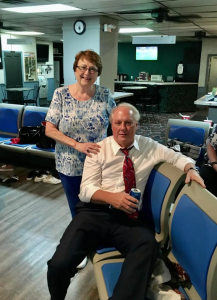
We have all heard the term proud parents, but on the flipside, this is about me being proud of my parents. Other than the obvious reasons why a daughter would be proud of her mom and dad, this is an extra special reason. Why? They have successfully achieved what most never can nor ever do. They are celebrating 50 years of marriage. Congratulations William and Suzanne Campbell on your 50th wedding anniversary, an accomplishment many will ever know. High school sweethearts with two years difference in age, my father joined the United States Air Force when he graduated and my mother had two more years to complete high school. I’m sure she probably thought that was the last she would see of him. On my mother’s high school graduation day, my father proposed. At the youthful ages of just 18 and 20, they were married—just months later on October 23, 1965. Off they went and were stationed for some time in Maine. They lived in just a tiny trailer while my father was in the Air Force. My mother gave birth to my older brother in 1967 and I followed in 1969. In 1973, my parents purchased their home on Table Rock Lane, which they still own and live in to this day. Over the years, my father has built additions and made home improvements to include placing each of the bricks with his own two hands. Mom has always prided herself on her decorative ideas, yet was never afraid to pitch in and do the tougher work with my dad. Now, that’s a home – more than 40 years in the same place! In 1979, they surprised us two kids with a little brother (at the time, we’d rather had new bikes) and that was the completion of our family. Over the years, they’ve experienced good times and bad, sickness and health, births, deaths, raising kids, job changes, difficult decisions and all those little life challenges that come your way. Heck, mom even went to college some years into the marriage. But they survived, and they survived with love. Today, they are happy, healthy and enjoying every minute with each other, ready and willing to climb any mountain that may come their way. I don’t think either would ever know what to do without the other. They have raised three children. Bill, the lawyer. me, a paralegal and my baby brother, Luke, the project manager. Also, they are the grandparents of nine ranging from ages 27 down to three, great-grandparents of two and spend much of their time enjoying each and every one of their grandchildren. Many people accomplish personal goals, career goals, financial goals and social goals, but there are few that I know who ever accomplish this. Fifty years of marriage - to live long enough to see it and then to go all those years and still enjoy it. We are so very fortunate to have the solid family foundation my parents have given us. They have created a legacy and taught our family the value of commitment. Congratulations, Mom and Dad. All my love and many more years to come! You’re Golden— HAPPY 50 th WEDDING ANNIVERSARY!

Stingy Jack and the history of the Jack-o'-Lantern
Carving pumpkins is a fun way to celebrate Halloween, but do we know exactly why we carve these gourd-like orange fruits? Jack-o’-Lanterns were originally an Irish tradition that was brought over to America and has been practiced for centuries. The carving of the pumpkin comes from an Irish myth about a man known as Stingy Jack. Stingy Jack played unfriendly jokes on everyone and anyone. One night, Stingy Jack invited the devil to have a drink with him, but he did not want to pay for it. He convinced the devil to turn himself into a coin, so they could purchase the drinks. After the devil turned into a coin, Stingy Jack put the coin into his pocket next to a silver cross, so the devil could not change back into his normal self. Once Jack finally freed the devil, Jack made him promise that he would not bother him nor claim his soul when he dies. Stingy Jack did not stop his evil games with the devil. The next year, he tricked the devil into climbing a tree to pick a piece of fruit and when he did Jack carved a cross into the tree, so the devil would be trapped once again at his mercy. Jack told him the only way he would free him and allow him out of the tree is if the devil would leave him alone for ten years and PROMISE not to claim his soul. After that, Jack passed away, and even though the devil was not happy Jack tricked him more than once, he kept his promise and refused to claim his soul. As the legend is told, Jack was refused at the gates of heaven because he was mean and cruel during his time on earth. This left Jack with nowhere to go. Jack was lost in the afterworld and is told to be roaming the earth with a burning coal inside a carved out turnip to light his way. The people of Ireland and Scotland started to call his ghostly figure Jack-o’-Lantern. In order to keep Stingy Jack away from your house on Halloween the people would carve scary faces and object in potatoes or turnips. Once the tradition was brought over to America, the pumpkin started to be used to scare off Jack. Halloween is right around the corner, so get out your carving tools and keep old Stingy Jack away from your house this year.
Guest Speaker
I recently had the great honor of speaking to Wheeling’s AARP Chapter 824. I certainly hope the members of that great organization learned something from me, but I am sure that I got far, far more out of it than they did. I particularly admired the obvious care that each member of the group had for one another. Many older Americans face the familiar challenges of dealing with issues related to health care and finance and it seems to me that being able to rely on trusted friends for advice and comfort is one of the great tools for dealing with such challenges. For a couple of hours over a nice lunch, this group of friends had a chance to sit down together, get caught up, and discuss their challenges and joys in a trusting and productive manner. Together, we were able to talk about some of the ways that our legal system and technology can assist and protect senior citizens. We covered a variety of topics, including ways to protect against consumer fraud, the tools that are available to help select an nursing home, and the issues that commonly arise related to estate planning. We discussed the simple fact that the best way to confront many of the challenges that face senior citizens is to be prepared in advance in case tragedy or a difficult situation does arise. Thanks again to AARP Chapter 824 for inviting me to spend the afternoon with them. It is a great organization made up of caring and thoughtful people dedicated to helping each other out.
Your Premiums Should Not Go Up if the Wreck is Not Your Fault
Fundamental fairness and common sense would seemingly dictate that your auto insurance premiums should not go up when you are involved in an accident that is not your fault. Unfortunately, common sense and fundamental fairness are not precepts upon which the multi- billion-dollar auto insurance industry is built. I tried, futilely, during my tenure as an officer of the West Virginia Association for Justice and president of that organization in 2012-2013, to convince the West Virginia legislature that a law needed to be passed to prevent insurance companies from punishing policyholders for presenting claims arising out of accidents caused by someone other than the policyholder. There are many different types of coverage, that most West Virginians carry, that provide protection for policyholders and their families when involved in an accident that is caused by another person. For example, uninsured motorist coverage protects policyholders when they are involved in an accident caused by a driver that did not carry insurance. For example, if you are driving to work and you are stopped at a red light and rear-ended by an uninsured vehicle, you would be able to turn to your uninsured motorist property damage coverage to pay to have your car fixed. You would also be able to turn to your uninsured motorist bodily injury coverage to compensate you for any injuries you suffered in the accident including medical bills, lost wages, pain and suffering, etc. These coverages that you buy to protect yourself and your family are not inexpensive. If you are willing to pay the money to purchase the coverage to protect yourself and your family, why should you be punished when you need to take advantage of the coverage due to an accident that is caused through no fault of your own? The simple answer is you should not. The truth is the insurance companies, at least in West Virginia, can increase your rates for any claim that you present regardless of whether you were at fault or completely free of fault. This is simply unfair and needs to be addressed by the West Virginia legislature. At my last count, at least 19 other states and the District of Columbia had laws on the books that prevent insurance companies from treating policyholders so unfairly. It is time that West Virginia steps up to the plate and protects its citizens from this predatory practice. If I purchase coverage, I should be able to use it without fear of reprisal. Unfortunately, all efforts made to pass this legislation were met with the full brunt of the insurance industry lobby who tried to convince lawmakers that if I am rear-ended on National Road on my way to work I am 80 percent more likely to be in an accident the following week according to their “secret data.”

Seeking the Thrill Creepy, chilling, horrifying, spooky…
Ever since I was a little girl, I loved listening to ghost stories which is probably why I love watching horror movies. It’s predictable, the movie category that is my first choice every time and I will say – it’s got to be a scary one. While this is all in good fun, I’ve often wondered, why do I do this? Call me an adventure seeker or even a little crazy, but if it has to do with Halloween or the supernatural, I get really excited. I actually look for something to make the hair on the back of my neck standup and if it does, I can’t wait to share it with someone. I even have two black cats, one named Thackery Binx, no less. I’ve taken ghost tours on vacations and I’ve visited many haunted houses over the years, seeking the thrill. I love to tell and hear ghost stories. As a child, my family and neighbor friends would set up some pretty elaborate spook houses in my grandmother’s basement. Ketchup was blood and jello was brains. I don’t scare easily, but what rattles me most are the ones that involve true events or something that takes control of another person…. possession – yikes! Those are creepy. But I continue to search for the shiver down my spine. My latest scare adventure involves my family (minus our youngest, certainly don’t want to scare her), heading to a nationally known haunted inn and spending the entire weekend, Halloween weekend no less. This is the real deal The Buxton Inn where ghost sightings have been reported. Unexplained noises in the night with no one around also have happened, along with reports of a cat hopping up on the beds and crawling in and shadow figures…eerie stuff. An apparition in one of the rooms we are staying in was just reported by a recent traveler! My husband is a complete skeptic and I, on the other hand, will probably be talking out loud to these ghosts. The teenagers undoubtedly will be trying to act cool as if they aren’t scared at all while taking it all in. As the date nears, I am preparing and trying to gather enough information about the place to get their minds on high alert and I chuckle wondering who will jump first. I plan on creating a very scary candlelit atmosphere detailed with stories and equipped with a video camera. Perhaps I may even take a “selfie video” emulating the Blair Witch Project and text it to them. If I can’t scare them, I sure can make them laugh. Either way, no matter the outcome, I am planning on making this a weekend the Dodd family will never forget. BOO! And, I will let you know if it’s real or nothing but a little hocus pocus!
Fifteen Minutes of Fame
The world is full of mentally ill people just waiting for their 15 minutes of fame. Watching the news once again proves that. Those poor people in Roseburg, Oregon who were gunned down by a crazed killer is just one more example. What the shooter’s name was doesn’t matter. The victims and their families are what matters. One can only imagine what they are going through right now. If you believe in prayer, pray for those families and for the family of the gunman. Of course, every time something like this happens, gun control inevitably comes up.I am a firm believer in the Second Amendment of the United States Constitution. We do have the right to bear arms for our own protection. We don’t, however, have the right to kill innocent people. We may never know why the man decided to open fire on people he probably never knew. One of the reporters said he was allegedly asking people what religion they were before shooting them. If that was true, what difference does it make what religion anyone chooses to follow? Everyone thinks their religion is right but no one really knows. Most of us follow the religion our parents followed and their parents before them, and so on and so forth. Does it really matter what the sign says over the door? Shouldn’t it make more sense to realize we don’t need to agree and be able to live peacefully together and worship however we see fit? Obviously, something needs to be done, but taking away the rights of everyone for the few who abuse those rights will never work and, indeed, has never worked. If you look back in history, prohibition stopped no one from drinking. They still made liquor, sold liquor and held parties serving liquor. Even today, the drug trade is doing a thriving business despite drugs being illegal. So, if guns were to be deemed illegal, people wanting guns would still get them, particularly those who shouldn’t have them. I don’t pretend to know what would solve the current string of gun-related killings, but I know one thing; work out your own salvation with fear and trembling and leave everyone else alone. Albert Einstein said, “We can not solve our problems with the same level of thinking that created them.” Those words were true then and they are true now.
New Jersey Supreme Court Deals A Blow To Victims Of Medical Malpractice
On September 29, 2015, the New Jersey Supreme Court held that a physician’s failure to disclose to a patient that the physician does not maintain statutorily required medical malpractice insurance coverage does not give rise to a claim for the physician’s failure to secure the patient’s informed consent prior to performing a medical procedure which results in injury to the patient. In Jarrell v. Kaul, the New Jersey Supreme Court was presented with a situation where an anesthesiologist, Richard A. Kaul, M.D., performed a spinal fusion surgery on James Jarrell in October 2005 in an attempt to alleviate Mr. Jarrell’s chronic back pain. At the time of the October 2005 surgery, Dr. Kaul’s medical malpractice insurance policy expressly excluded coverage for spinal surgical procedures. Not only did the October 2005 surgery not alleviate Mr. Jarrell’s pain, his pain increased and he began to experience drop foot. After examination by a board certified neurologist revealed that improperly placed screws from the October 2005 surgery were pinching a nerve, the neurologist performed a second surgical procedure on Mr. Jarrell in January 2006 to remove and replace the fixation devices implanted by Dr. Kaul. Mr. Jarrell and his wife filed suit against Dr. Kaul and the surgical center where the October 2005 procedure was performed asserting medical malpractice/negligence claims and several claims stemming from Dr. Kaul’s failure to possess the statutorily required medical malpractice insurance coverage, including a claim for failure to obtain informed consent and for the surgical center’s permitting Dr. Kaul to perform the procedure at the facility. New Jersey, like Pennsylvania , requires physicians to provide proof of medical malpractice insurance or an approved self-funded alternative plan to compensate victims of medical malpractice in order to obtain and maintain a license to practice medicine in the state. The trial court refused to recognize any claim relating to Dr. Kaul’s failure to comply with financial responsibility statutes or his failure to disclose to Mr. Jarrell that he did not possess the statutorily required insurance and dismissed all claims, with the exception of the pure medical negligence claim, prior to trial. After the jury found Dr. Kaul negligent and awarded $500,000 in damages to Mr. Jarrell for his pain, suffering, and disability, and $250,000 to his wife for loss of consortium, the Jarrells appealed the pretrial dismissal of their remaining claims. In a partial victory for victims of malpractice, the New Jersey Supreme Court did unanimously reinstated the Jarrells’ claims against the surgical center finding the surgical center had a continuing duty to ensure that any physician granted privileges to surgical procedures at its facility maintained the required insurance and to withhold privileges to any physician who does not. The court declined to adopt a strict liability standard for such claims; instead holding that an injured patient is required to prove the facility was negligent in verifying the physician’s continuing compliance with statutory licensing requirements such as maintenance of insurance. This partial victory was tempered, however, by a 5-2 majority of the court’s refusal to recognize that a patient has a right to know that a physician does not maintain medical malpractice liability insurance prior to consenting to treatment by the physician, particularly where the failure to maintain such insurance violates licensing laws! A physician is legally required to explain the risks and benefits of proposed treatment options and obtain the patient’s informed consent to a course of action before proceeding. Ordinarily, this requires a disclosure of the risks associated with the recommended procedure and alternative procedures or therapies. Most people would agree that a physician’s ability to compensate a patient in the event of injury caused by the physician’s negligence is a material information impacting the patient’s decision to allow the physician to proceed in executing the treatment plan. Indeed, an Ohio statute requires physicians practicing medicine not otherwise immune from civil liability to provide written notice to patients that the physician is uninsured prior to performing nonemergency services. O.R.C §4731.143. Five of the seven New Jersey Supreme Court Justices in Jarrell, however, disagree that a patient has the right to know his physician is uninsured for the treatment being provided to the patient. The majority in Jarrell found that a physician’s financial responsibility and compliance with licensing laws are not material facts impacting a patient’s ability to provide informed consent to a treatment plan, including surgery. Upholding the dismissal of the Jarrells’ informed consent claim and finding it non-viable under New Jersey law, the majority callously stated “To be sure, a patient who has been injured due to negligent care by an uninsured physician has sustained a financial loss, but such a loss is not the injury that the informed consent doctrine ever contemplated.” The absurdity of the majority decision is made readily apparent by the dissenters’ synopsis of the case: “The facts here present the quintessential case of lack of informed consent. Dr. Kaul did not have the medical malpractice insurance required by law to perform the invasive surgical procedure on his patient, plaintiff James Jarrell. Performing the procedure without the requisite insurance constituted professional misconduct. Yet, Dr. Kaul never explained any of this to his patient, presumably because plaintiff never would have agreed to the procedure had he been fully informed. Dr. Kaul failed to disclose material facts to his patient. He denied plaintiff the right to decide whether a financially incompetent—or worse yet, a professionally incompetent—physician should perform invasive surgery on him.” The tort reform assault of the last decade or two has resulted in far too many restrictions on a person’s ability to be compensated for injuries caused by the negligence of another, particularly in the area of medical malpractice. At times, “compromises” were made which, in exchange for restrictions on a patient’s ability to recover for injuries caused by medical malpractice, requirements were imposed upon physicians to maintain a certain level of medical malpractice liability insurance. For example, In West Virginia, a physician must provide proof of a malpractice insurance or a self-funded plan in order to obtain the protections of statutory damages caps. W.Va. Code §55-7B-2(j); W. Va. Code § 55-7B-8. As claims accruing after enactment of statutory restrictions on medical malpractice claims continue to mature, Jarrell’s informed consent issue is likely to be addressed in other jurisdictions, including West Virginia and Pennsylvania. Hopefully, when the informed consent issue is addressed in other jurisdictions, the courts will follow the lead of the Jarrell dissent and recognize that “a physician cannot hide material facts and that the patient has a right to make critical choices concerning his health”, choices which include refusing to permit uninsured physician to perform surgery on the patient.
Big Pharma: Increasing Profits at the Expense of Patient Safety Through Off Label Marketing and Inadequate Warnings
The pinnacle of corporate greed was exposed in the lawsuit of Grimshaw v. Ford Motor Co., (1981) 119 CA3d 757, wherein evidence showed that Ford's corporate executives made conscious decisions to avoid correcting dangerous conditions existing in the Pinto because it would be more cost effective to pay out on claims involving death or serious bodily injury. One would have thought that the results of this case would have stunned the corporate world and stifled this form of unethical business practice, but sadly, that does not appear to be the case... Recently, the Huffington Post concluded a series regarding Johnson & Johnson's blockbuster drug Risperdal and the billions of dollars the company made whilst failing to warn prospective patients, particularly young males, about the risk of developing breasts. It is a series that I strongly recommend reading as it illustrates how Big Pharma can break laws, hurt people, get caught, but yet continue to make billions of dollars notwithstanding the payout of claims associated with whistleblower and personal injury lawsuits. Moreover, the series reminds the reader that corporate corruption, most often, will advance unchecked without personal injury and whistleblower attorneys willing to take the inordinate amount of risk associated with these types of lawsuits. This is true simply because our local, state and federal governments simply do not have the resources to investigate the vast majority of the suspected corporate wrongdoings. The Huffington Post's article begins by illustrating the business of health care – "As 100 stock analysts gathered in the ballroom of a luxury hotel to hear good news from top executives at Johnson & Johnson that it had 10 new drugs in the pipeline that might achieve more than a billion dollars in annual sales, far away a whistleblower sat in a sales meeting being drilled on promotional materials she was told should not be left behind for fear that federal regulators might see them." These types promotional materials are designed to unlawfully increase profits at the expense of the patient, while bilking the coffers of federally and state funded programs like Medicare and Medicaid. You see in the United States a pharmaceutical company is not permitted to market a drug "off label;" otherwise known as marketing the use of a medication in a way that was not approved by the United States Food and Drug Administration (FDA). The FDA's decision to limit the marketing of a drug is based upon years of clinical trials and analyzing the data relative to the drug's safety and efficacy. Risperdal, an atypical antipsychotic, a "second generation" antipsychotic, is and was FDA approved for the treatment of schizophrenia and bi-polar disease. Its designed to treat psychosis, a common feature of these illnesses. Therefore, J & J is able to market Risperdal to doctors and patients for those disease processes. However, J & J cannot market the drug to treat depression or anxiety, which involve much larger patient populations, even if the company has data to suggest that the medication can be useful to treat depression and anxiety. This is so because the FDA believes that the data concerning the risks of the medication in these subpopulations outweigh the potential benefits. Nonetheless, these limitations can be troubling to individuals charged with the duty of maximizing corporate profits because it limits the company's ability to market the drug and make money. It should be noted however, that doctors are permitted to prescribe medications off label, if they have a reasonable basis to do so. For instance, if a doctor has a patient with a diagnosis of major depression disorder with psychotic features, then in that instance, a doctor may have a reasonable basis to treat his/her patient with an "off-label" medication such as Risperdal. While the patient does not have the diagnosis of schizophrenia or bi-polar disease, the patient does suffer from psychosis, for which there are no FDA approved drugs on the market to treat. Thus, a physician may be justified in prescribing off label. In these circumstances, it is prudent for the physician to discuss the risks of that medication and the efficacy of the drug with the patient and the patient's family. Notwithstanding the aforesaid laws, in 2013, J & J's pharmaceutical subsidiary, Janssen Pharmaceuticals, was ordered to pay the federal government (tax payer) more than $2 billion to settle charges that it illegally marketed Risperdal. In this "whistleblower" case, the J & J employee was being pressured by Janssen to market Risperdal off label to doctors and she was encouraged to market Risperdal to the elderly for issues such as dementia, which was not approved by the FDA, and to children with mental-health problems. Ironically, while $2 billion dollars may seem like a lot of money, the article highlights that it pales in comparison to J&J's company worth, which at the time, was estimated at $251 billion. More recently, a Pennsylvania jury recently awarded $2.5 million dollars to Austin Pledger, a 21-year-old severely autistic male, who developed 46 DD breasts ("gynecomastia") from taking the drug Risperdal. The jury found that Johnson & Johnson had encouraged Austin's doctor to prescribe it without warning of its risks. Whereas, the FDA had prohibited Johnson & Johnson salespeople from trying to promote Risperdal to doctors to treat children because of its feared side effects, including hormonal disorders. But by the time Austin started growing breasts at the age of 12, Johnson & Johnson was reaping more than half of its Risperdal sales from prescriptions written for children to alleviate all kinds of behavior disorders. As intimated above, there are times when these types of medications may be useful to treat a person's psychosis; and, they may prove to improve the patient's quality of life. That being said, when a physician makes the decision to consider the use of off-label medications, the decision to commence and maintain the use of these potentially toxic medications should be made by a fully informed patient or legal guardian. This is true because the patient and/or the family should know to be on guard for the early manifestations of the signs and symptoms of adverse effects such that they can decide whether the risks of the medications outweigh any potential benefit. Unfortunately, patients and their families are not always advised of the risks of the medications, and opportunities to avoid tragic outcomes are lost.
Contact Us

The information you obtain at this site is not, nor is it intended to be, legal advice. You should consult an attorney for advice regarding your individual situation. We invite you to contact us and welcome your calls, letters and electronic mail. Contacting us does not create an attorney-client relationship. Please do not send any confidential information to us until such time as an attorney-client relationship has been established.
The results in a legal case depend on a variety of factors, many of which are unique to each case. Prior results by this firm or any other do not guarantee future results. Case results presented here are illustrations of the type of work done by Bordas & Bordas and not a guarantee that any prospective case will yield any particular amount.
Request Consultation
Call 304-242-8410 or fill out the form below.