Blog / Know the Law

Unlawful Gun Sale Costs Milwaukee Seller Millions

Last week, a jury in Milwaukee awarded more than $5 million in damages to two police officers who were shot and severely injured with a firearm that Badger Guns unlawfully sold to a straw purchaser. More specifically, the jury, comprised of eight women and four men, found that Badger Guns was grossly negligent in selling a gun to 21-year-old Jacob Collins, who was ostensibly buying the gun for Julius Burton, an 18-year-old male who accompanied him to the store. Mr. Burton was too young to lawfully purchase the firearm on his own, and evidence showed that he was the person who actually selected the gun ultimately purchased. One month after the purchase, Mr. Burton shot Officer Bryan Norberg in the face and Officer Graham Kunisch in the head causing brain damage and the loss of his eye. Burton is now serving 80 years in prison while Collins spent two years behind bars. The jury determined that Badger Guns knew or should have known that it was participating in an unlawful sale and awarded the officers compensatory and punitive damages, which are designed to punish the wrongdoer and prevent others from committing similar acts. Until recently, few cases have held gun dealers responsible for selling a firearm linked to a crime. In fact, only two lawsuits have reached a jury since 2005, when Congress passed the Protection for Lawful Commerce in Arms Act (PLCAA), which provides qualified immunity for gun sellers. In passing the PLCAA, Congress found: (1) The Second Amendment to the United States Constitution provides that the right of the people to keep and bear arms shall not be infringed. (2) The Second Amendment to the United States Constitution protects the rights of individuals, including those who are not members of a militia or engaged in military service or training, to keep and bear arms. (3) Lawsuits have been commenced against manufacturers, distributors, dealers and importers of firearms that operate as designed and intended, which seek money damages and other relief for the harm caused by the misuse of firearms by third parties, including criminals. (4) The manufacture, importation, possession, sale and use of firearms and ammunition in the United States are heavily regulated by Federal, State and local laws. Such Federal laws include the Gun Control Act of 1968, the National Firearms Act and the Arms Export Control Act. (5) Businesses in the United States that are engaged in interstate and foreign commerce through the lawful design, manufacture, marketing, distribution, importation or sale to the public of firearms or ammunition products that have been shipped or transported in interstate or foreign commerce are not, and should not, be liable for the harm caused by those who criminally or unlawfully misuse firearm products or ammunition products that function as designed and intended. (6) The possibility of imposing liability on an entire industry for harm that is solely caused by others is an abuse of the legal system, erodes public confidence in our nation's laws, threatens the diminution of a basic constitutional right and civil liberty, invites the disassembly and destabilization of other industries and economic sectors lawfully competing in the free enterprise system of the United States, and constitutes an unreasonable burden on interstate and foreign commerce of the United States. (7) The liability actions commenced or contemplated by the Federal Government, States, municipalities and private interest groups and others are based on theories without foundation in hundreds of years of the common law and jurisprudence of the United States and do not represent a bona fide expansion of the common law. The possible sustaining of these actions by a maverick judicial officer or petit jury would expand civil liability in a manner never contemplated by the framers of the Constitution, by Congress or by the legislatures of the several States. Such an expansion of liability would constitute a deprivation of the rights, privileges, and immunities guaranteed to a citizen of the United States under the Fourteenth Amendment to the United States Constitution. (8) The liability actions commenced or contemplated by the Federal Government, States, municipalities, private interest groups and others attempt to use the judicial branch to circumvent the Legislative branch of government to regulate interstate and foreign commerce through judgments and judicial decrees thereby threatening the Separation of Powers doctrine and weakening and undermining important principles of federalism, State sovereignty and comity between the sister States. Accordingly, the purpose of the PLCAA was: (1) To prohibit causes of action against manufacturers, distributors, dealers and importers of firearms or ammunition products, and their trade associations, for the harm solely caused by the criminal or unlawful misuse of firearm products or ammunition products by others when the product functioned as designed and intended. (2) To preserve a citizen's access to a supply of firearms and ammunition for all lawful purposes, including hunting, self-defense, collecting and competitive or recreational shooting. (3) To guarantee a citizen's rights, privileges and immunities, as applied to the States, under the Fourteenth Amendment to the United States Constitution, pursuant to section 5 of that Amendment. (4) To prevent the use of such lawsuits to impose unreasonable burdens on interstate and foreign commerce. (5) To protect the right, under the First Amendment to the Constitution, of manufacturers, distributors, dealers and importers of firearms or ammunition products, and trade associations, to speak freely, to assemble peaceably and to petition the Government for a redress of their grievances. (6) To preserve and protect the Separation of Powers doctrine and important principles of federalism, State sovereignty and comity between sister States. (7) To exercise congressional power under article IV, section 1 (the Full Faith and Credit Clause) of the United States Constitution. The PLCAA effectively barred all lawsuits against a manufacturer or seller of a firearm, or a trade association, with the following exceptions: (i) an action brought against a transferor convicted under section 924(h) of title 18, United States Code, or a comparable or identical State felony law, by a party directly harmed by the conduct of which the transferee is so convicted; (ii) an action brought against a seller for negligent entrustment or negligence per se; (iii) an action in which a manufacturer or seller of a qualified product knowingly violated a State or Federal statute applicable to the sale or marketing of the product, and the violation was a proximate cause of the harm for which relief is sought, including-- (I) any case in which the manufacturer or seller knowingly made any false entry in, or failed to make appropriate entry in, any record required to be kept under Federal or State law with respect to the qualified product, or aided, abetted or conspired with any person in making any false or fictitious oral or written statement with respect to any fact material to the lawfulness of the sale or other disposition of a qualified product; or (II) any case in which the manufacturer or seller aided, abetted or conspired with any other person to sell or otherwise dispose of a qualified product, knowing, or having reasonable cause to believe, that the actual buyer of the qualified product was prohibited from possessing or receiving a firearm or ammunition under subsection (g) or (n) of section 922 of title 18, United States Code; (iv) an action for breach of contract or warranty in connection with the purchase of the product; (v) an action for death, physical injuries or property damage resulting directly from a defect in design or manufacture of the product, when used as intended or in a reasonably foreseeable manner, except that where the discharge of the product was caused by a volitional act that constituted a criminal offense, then such act shall be considered the sole proximate cause of any resulting death, personal injuries or property damage; or (vi) an action or proceeding commenced by the Attorney General to enforce the provisions of chapter 44 of title 18 or chapter 53 of title 26, United States Code. The “Badger Guns” case was the first case since 2005 adverse to the gun seller. Earlier this summer, a jury in a similar lawsuit found that an Alaskan gun seller was not liable for a firearm used in a 2006 murder. In that case, evidence demonstrated that the convicted felon, who attempted to purchase the firearm, actually stole it thereby exonerating the seller from any wrongdoing. According to Jonathan Lowy, director of legal action at the Brady Center to Prevent Gun Violence, “Litigation is one of the most promising avenues to save lives...Any victory that’s achieved in court is going to inspire and help the movement to prevent gun violence, and this latest victory is certainly a very important one.” Not surprisingly, both advocates and opponents of gun control view this case as a success story. As well they should – while it is an obvious victory for the victims and their families, it is also a welcomed result to the lawful gun sellers, the firearms industry and 2nd Amendment supporters because it demonstrates that the PLCAA worked as intended.
Posted in:

Related Posts

Bordas and Bordas Attorneys law blog banner featuring the firm logo on a blue background with the text "Law Blog

How Insurance Companies Find Loopholes to Avoid Paying Claims

How Insurance Companies Find Loopholes to Avoid Paying Claims When you pay for an insurance policy, you expect that your insurer will honor and fulfill the terms of said policy when you need it. Unfortunately, that is not always the case. A large number of policyholders find themselves baffled by claim denials or delays, as insurance companies take advantage of technicalities to avoid honoring policies. With how insurance companies find loopholes to avoid paying claims, it is important to know that a denial or delay is not the end. An attorney at Bordas & Bordas may be able to help you. Common Ways Insurers Deny Claims Through many policy loopholes, technicalities, and more, insurance companies try to avoid paying claims in full. There are some common methods insurance companies employ to do this. Vaguely Written Policies Long, drawn-out clauses in policies may be intentionally confusing for policyholders to dissect. If part of a policy seems vague or open-ended, the insurer may have left an opportunity for themselves to make a decision that benefits them over you. This may result in a denial or delay based on the wording. Policy Exclusions Many insurance companies have a list of policy exclusions readily available that policyholders may not be aware of. Should the policyholder file a claim, insurers will often rely on an exclusion as a means to reduce or deny the claim, even if it seems outlandish. Deadlines and Errors Often, with claims, insurance companies set strict deadlines. Policyholders must provide documentation and follow specific procedures while still meeting these deadlines. The intricacy of the process may allow insurers to take advantage of any small issues that occur, giving the insurer an opportunity to deny your claim. Pre-Existing Damages Insurance companies may also argue that certain damages or injuries were not a part of the reported incident. They may allege that the damage existed before the incident, allowing insurers to try and place the responsibility on the policyholder. Intentional Process Delays Some insurance companies intentionally try to make the claims process as long as possible to deter policyholders from pursuing full claims or settlements. Signs of intentional delay may include consistent requests for the same information, going through multiple inspections, as well as purposefully taking long pauses between communications. The Importance of Legal Advice Navigating the insurance claim process in the aftermath of an accident that may have caused injuries or the loss of a loved one can be difficult. Many insurance companies rely on the average policyholder not knowing enough about the loopholes insurance companies use and being unable to fight for the full benefits of their policies. Having an advocate with experience in challenging insurance companies in court may significantly impact how an insurance company responds to your claim. A legal representative may help you learn about the full breadth of your claim, talk you through denials, and help protect you from underhanded tactics. Contact an Experienced Attorney Who Understands the Tricks Used by Insurance Companies To Avoid Paying Facing insurance companies after a denied claim is not a task that you need to handle alone. Considering how insurance companies find loopholes to avoid paying claims, working with experienced legal professionals is essential. Our bad faith insurance attorneys at Bordas & Bordas are dedicated to standing up for you against insurance companies. Schedule a consultation with our team today to learn how we can help you hold insurance companies accountable.

Cyclist riding a road bike on a sunlit curve outdoors

Why Legal Representation Matters During the Holiday Travel Season

Why Legal Representation Matters During the Holiday Travel Season The holidays are the perfect time of year to visit family and friends. These joyous occasions are also some of the most popular and busiest times to travel. The holiday travel months are filled with hazards due to heavy traffic, severe weather, increased driver impairment, and the rush to get home, which increases accident rates. That is why it is so important to understand why legal representation matters during the holiday travel season. Keep reading to learn how having a Bordas & Bordas attorney on speed dial could help you manage increased risks of accidents when most law offices are unavailable. Legal Representation During Holiday Travel Combats Early Settlements Your personal injury claim does not go on vacation, despite periodic court closures and unavailable legal teams during the holidays. Insurers are often busy during this timeframe as well, leading to delayed processing. Adjusters may take advantage of this time of year to rush victims like you into accepting a low settlement while attempting to close your case quickly. Your Bordas & Bordas attorneys would ensure you do not accept a payment that fails to cover long-term medical costs or lost wages, even during the busy holiday season. We Would Help You Handle Increased Risks and Manage Complex Logistics During the travel season, we see higher rates of impaired driving and dangerous, crowded, or icy conditions. Holiday-related accidents require fast action, as surveillance footage can be overwritten and witness memories fade during these busy times of year, making legal representation essential. Our lawyers are well-versed in gathering time-sensitive evidence during the holiday travel season and beyond. Managing Complex Logistics is Essential During the Holidays If you become injured out-of-state, our legal professionals have the experience to navigate complex jurisdictional issues and coordinate care between your vacation location and home. With us on your side, we would handle insurers and legal paperwork, while you focus on your recovery and spending time with loved ones. Taking prompt legal action helps ensure your claim is not compromised by the logistical challenges of the holiday travel season. Legal deadlines and statutes of limitations continue to run, even during the holidays, so it is important not to delay action. Learn the Importance of Connecting with a Skilled Bordas & Bordas Attorney Before the Holiday Travel Season Reach out to the experienced personal injury attorneys at Bordas & Bordas before you embark on your holiday travels. We could help you prepare for the worst by reducing risk and formulating contingency plans, so you have the peace of mind to enjoy the visit. If you are injured during this time of year, our team is ready to guide you through the necessary legal process of filing a claim. When you schedule a free consultation with our team, we can review your case and explain your legal rights to a fair settlement. Give us a call to learn more about why legal representation matters during the holiday season.

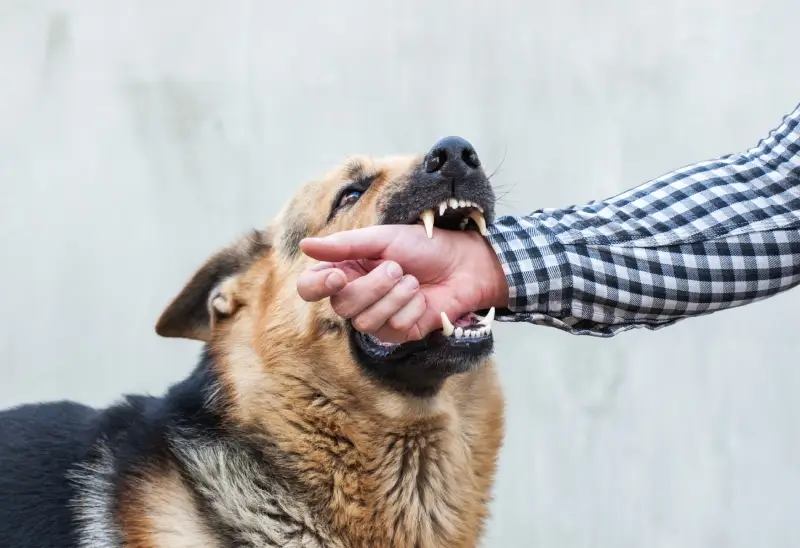
Dog biting a person’s hand

What to Know About Dog Bite Law in Pennsylvania

What to Know About Dog Bite Law in Pennsylvania A neighbor’s pet biting you is more than just frightening. It can also be quite dangerous and cause serious injuries and infections from puncture wounds that require immediate medical attention. If you or your loved one has experienced psychological trauma and tissue damage as a result of a dog bite, you need experienced legal advice from the personal injury team at Bordas & Bordas to help you interpret our state’s regulations. Read on to learn what you need to know about dog bite law in Pennsylvania. Pennsylvania Dog Bite Law Provides Strict Liability for Medical Bills Pennsylvania dog bite law ( 3 P.S. § 459-502) sets a strict liability policy, meaning that in the case of an attack, dog owners are automatically responsible for all of the injured individual’s medical costs, even if the dog has never bitten anyone before. A judge may also classify a dog as “dangerous” if it inflicts severe injury without provocation, attacks a person or a domestic animal, or is used in a crime. However, the owners may not be held liable if you were trespassing, committing a crime, or provoking the animal at the time of the attack. What About Non-Economic Damages? Most people walk away from a dog bite incident with more than just medical expenses. These types of encounters often traumatize victims. If you experience non-economic damages like pain, suffering, or disfigurement, your Bordas & Bordas attorney would work hard to prove negligence, as the owner may have violated state leash laws. We may also show the dog’s dangerous history and potentially prove the owner ignored their pet’s known aggression. Is There a Statute of Limitations on Dog Bite Claims? In Pennsylvania, you have just two years from the date the dog bite occurred to file a lawsuit and hold the owner and their insurance company liable for your losses. If it were your child or another minor who was injured by a dog bite, this deadline would be extended until their 18th birthday. When filing a compensation claim, it is vital to understand state dog bite law and what deadlines may apply. What to Do If You Are Bitten by a Dog in Pennsylvania If you or your child is bitten by a dog, take prompt action. Immediately report the incident to local police or animal control, then seek medical care. If possible, have someone, such as a family member or trusted bystander, document the scene and injuries with photographs or video. Once everyone is safe, connect with the skilled personal injury attorneys at Bordas & Bordas to discuss the next steps and understand how Pennsylvania dog bite law may affect your claim. Talk With Us About Your Dog Bite Claim and State Law Recognizing what to know about dog bite law in Pennsylvania is the first step in filing your claim, and if you still have questions, reach out to the skilled personal injury attorneys at Bordas & Bordas. When you are injured by an aggressive dog, our team stands ready to guide you. We could review your case and explain your legal rights during your free consultation, so schedule a time to have a conversation with our team. A fair and just settlement could cover your medical bills and so much more. Give us a call to learn more.