
In an effort to assist areas impacted by flooding in the southern part of West Virginia, I was blessed to be able to go and deliver much needed supplies to the Kanawha Animal Shelter with Barb, president of Marshall County Animal Shelter board and Janie, volunteer fundraiser for the MCAS. We delivered donations from Marshall County to make sure all the furry babies had what they needed after being in the flood. MCAS also sent van loads of supplies to the Greenbrier Animal Shelter in White Sulphur Springs that was also hit hard by what is being called the “1,000- year flood.” MCAS also brought back animals to help with shelter overcrowding that was a result of the flood. None of the animals brought to Marshall County were found in the flood, but were brought to our area so they can be adopted. This will allow the Greenbrier Animal Shelter to help the animals and their families separated by the flood find each other. It was hard for me to see what the shelter was going through. Everyone was trying to help out the best way they knew how. Volunteers and staff of the shelters were taking supplies out to the hard hit flood areas so the animals could have food, water and shelter. Watching the dog warden come back with mud covered, terrified dogs and cats was unbelievable. We wondered how they survived the flood. We saw pet owners looking for their animals, pet owners having to surrender their animals because they had no home to take them back to and the shelter employees and all the volunteers had to make things work for everyone. The sights we saw where unreal, very sad and made me thankful that the ladies who I went down state with were just like me. All we wanted to do was make sure that any animal that was in need due to the flood had the basics so they knew that they were not forgotten and that they where loved. I want to thank some of my co-workers who gave and who even had a few of their friends give food and other items for the trip. Thank you to my amazing and overly generous bosses, Jim and Linda Bordas, and to Chris Regan and Maggie Tague for the money they gave that was either sent, given or used to purchase medical supplies, food, cleaning supplies and everything else under the sun to help with all the animals in need at the shelters. I want to give a BIG thank you to Jamie Bordas for giving me the time that was needed to make this trip possible. Jamie knows where my heart is when it comes to animals, and giving me the opportunity to help by letting me do this trip was truly and deeply appreciated. This is what the Bordas & Bordas Law Firm is about - helping our fellow neighbors in their time of need. I see it done at Bordas & Bordas every day. No one will truly understand how this trip has affected me personally. I’m just grateful that I got to go and help. In the words of Barb from the MCAS, “It’s not about the ‘stuff’ we delivered, it’s about the things you couldn’t see or measure. It’s about the love, hope and friendship we took.” That’s what it’s all about. Rock on people. And bark on, Bordas dog nation. Rock and bark on.
TIME TO ALLOW VIDEO CAMERAS IN FEDERAL COURT
How is it possible that we can keep up with the Kardashians, but we cannot keep up with the Supreme Court? Although many states permit some form of video recordings of state court proceedings, video cameras and recordings are prohibited in the U.S. Supreme Court and all lower federal courts, save a very limited pilot project for some cases in three U.S. District Courts in San Francisco, Seattle and Guam. Americans should have real-time access to their courts—they should be able to actually observe justice, rather than just read about it. After all, the vast majority of federal court proceedings are open to the public, and all one has to do is find an empty seat and take it. As the Supreme Court brilliantly observed in 1947 in Craig v. Harney, “A trial is a public event. What transpires in the courtroom is public property.” This observation notwithstanding, the federal courts thus far have not recognized an unqualified First Amendment right to televise court proceedings, even though most states have rules allowing cameras in the courtroom. In the Supreme Court’s decision in 1980 in Richmond Newspapers v. Virginia, the Court went so far as to state that the First Amendment did guarantee at least a qualified right of the public and the press to attend and comment on criminal trials, and the following year, in 1981, the Court allowed for states to experiment with television coverage of criminal trials in a unanimous decision in Chandler v. Florida. What the Supreme Court did not address or recognize, however, was any right of access that included a right to audio or video recording of federal court proceedings for broadcast. The Judicial Conference of the United States establishes policy for the federal courts, and it is responsible for the existing prohibition—a position consistent with that taken by Chief Justice Roberts. The bases for denying cameras in the courtrooms have not altered over the years. Opponents continue to assert a belief that cameras are a distraction and that they unfairly affect the outcome of trials, diminishing the dignity of the courts. Whatever the reason, this lack of transparency and access runs counter to the notion that court proceedings typically are, and should be, accessible to the public. Just as we can observe White House news conferences and congressional hearings live, the Court simply ought to make its proceedings available to the public in real time. There certainly is nothing in the Court’s jurisprudence that suggests that the First Amendment would or should restrict this right. Indeed, the “creative dynamic” spoken of in the Court’s Citizens United decision surely is applicable to the situation that presents in an oral argument. That “creative dynamic inherent in the concept of free expression” should be made accessible to all who want to experience it. First Amendment principles cannot realistically defend the Court’s policy on prohibition. In a rare bipartisan moment last year, Congress introduced the aptly named Cameras in the Courtroom Act, H.R. 94. The bill provides that “he Supreme Court shall permit television coverage of all open sessions of the Court unless the Court decides by a vote of the majority of justices, that allowing such coverage in a particular case would constitute a violation of the due process rights of one or more of the parties before the Court.” Despite the simplicity of the proposed legislation and its bipartisan support, the bill failed to gain traction and has not become law. So for now, until there is a bill signed into law by the President, or a policy change, there will be no live-streaming. Most of us will have to rely on those sketch artists’ renderings and our imaginations for a visual of what transpires in the courtroom, at least such is the case in federal court.
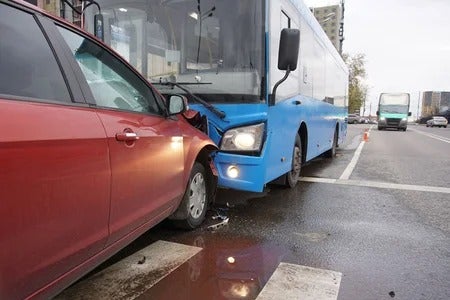
First Of Its Kind Car Crash Raises A Host Of Legal Issues
It was reported last week that a Tesla Model S with the Autopilot system activated was involved in a fatal crash, the first known fatality in which a car that was operating, at least semi-autonomously, crashed without human input. The crash occurred when a tractor trailer drove across a highway, perpendicular to the Tesla. The driver of the Tesla, a 40-year-old Ohio resident named Joshua Brown, was killed when the windshield of his Tesla crashed into the semi’s trailer. Mr. Brown had previously posted multiple YouTube videos of himself testing the Autopilot feature. It was also reported that Mr. Brown was watching a Harry Potter movie at the time of the crash. According to Tesla, Mr. Brown’s death was "the first known fatality in just over 130 million miles where Autopilot was activated," while a fatality happens once every 60 million miles worldwide. It has been reported that the collision was due to a failure by both the driver and the Tesla’s Autopilot system to detect the white side of the tractor trailer against the backdrop of a bright white sky. If the witness reports of the Harry Potter video are to be believed, it would hardly be the first instance of a driver being disengaged from the driving experience while in a Tesla on Autopilot. Other YouTube videos show Tesla “drivers” playing games, taking naps and keeping their hands off the wheel in general. Autonomous vehicles (i.e. those with automated cruise control, lane recognition, automatic braking, etc.), currently being developed by Tesla, Google and others, promise to make our streets safer and vastly reduce the number of collisions, injuries and deaths, and all signs point to the realization of this goal within a decade or two. In the meantime, however, the Brown crash highlights the rocky road and growing pains it is going to take to reach that mountaintop. To a large extent, the early entry companies into this exciting new technology are victims of their own success. The autonomous features work so well that within a very short time, drivers simply trust the vehicle to work and start doing other things, like texting, gaming or otherwise taking their hands off the wheel, all while traveling on a freeway going 60 miles per hour. And while it seems crazy at first blush to think drivers would act in this way, this autonomy and freedom to get other things accomplished during long commutes is the main hook being promoted by the companies developing this technology and driving the excitement and investment in this technology. The Brown crash brings into stark relief the lack of federal rules or regulations over autonomous driving technology. Indeed, automakers do not need National Highway Traffic Safety Administration approval before putting these cars on the highway. Accordingly, for now it will be up to the Courts to determine the legal issues that arise when something like the Brown collision occurs, which presents a host of questions over who is responsible in tragic situations such as these. Does the manufacturer of the vehicle bear responsibility for a defective product? Is it the driver’s fault for trusting in the technology even though it’s promoted as providing autonomy to the driver? “The NHTSA ranks self-driving cars based on the level they cede to the vehicle, with 1 being the lowest and 5 the highest.” In the Brown case, Tesla’s Autopilot technology was developed as a Level 2 technology, which means it was capable of staying in the center of a lane, adjusting speed according to traffic and changing lanes. Tesla also provided instructions and warnings to make it clear that the driver of the car remained responsible for its operation at all times. But what about Google, who is developing Level 4 and 5 technologies that would cede complete control of the car to the software and take the human driver almost completely out of the picture? Where does responsibility lie in crashes involving that technology? Is it with the company who builds the car? Is it with Google, who aims to simply supply the software to auto manufacturers? Undoubtedly, there will be a tremendous amount of additional development on Tesla’s Autopilot to engineer around the circumstances that led to the Brown crash, but what happens when the car is perfected to pick up on everything in its surroundings, but has to make split-second, life and death decisions? For instance, what if a tractor trailer pulls in front of an autonomous car at the last second and the only way to avoid that collision is for the software to cause the car to veer right, onto a sidewalk where an elderly man is walking. Does the car cause you to crash into a likely fatal obstacle or hit the pedestrian and risk his life. Who then, is responsible for the crash once that decision is made for you? On balance, autonomous technology seems poised to fulfill the promise of a much safer drive, but it carries with it a host of legal and moral conundrums that will have to be addressed in order for the technology to fulfill its potential.
What is a burden of proof?
Over the past year, my wife has been hooked on watching some of the recently released documentaries about famous legal cases and crimes. I am sure many of our readers have watched a part of the documentary on Robert Durst called The Jinx, ESPN’s series on O.J. Simpson, or Making a Murderer, which focused on Steven Avery’s trial. As an attorney, many of my friends have asked me random questions regarding the legal issues in these shows. Many of the recent questions have been focused on the fact that O.J. Simpson was found not guilty in his criminal trial, but lost the civil case filed against him. Does this mean he was found guilty of murder? Could he still have gone to jail for losing his civil case? How did one jury find against him, while the other jury found for him? First, it is important to point out the difference between the civil and criminal justice systems. A criminal case is brought by the local, state or federal government in response to an alleged violation of the law and generally pursues a fine and/or jail time. On the other hand, a civil case is brought by a party called the plaintiff to generally collect money owed, money for damages, or request an injunction. While there are many factors that could have played into the juries’ decisions in the Simpson trials, one factor was likely the different burden of proof standards. In a criminal case, the prosecutor has the burden of proving the case “beyond a reasonable doubt.” This means it is the prosecutor’s job or “burden” to prove his or her case to the point where the jury does not have any “reasonable” doubt the defendant is guilty. The defendant does not have to prove his or her innocence and, instead, only needs the jury to have reasonable doubt about whether the crime was committed. This is a very high standard and can be difficult for a prosecutor. The burden in a civil case is much lower and is referred to as a “preponderance of the evidence.” A preponderance of the evidence simply means the greater weight of the evidence or what side of the case is more likely true. For example, while someone obviously cannot put percentages on their belief, if the jury was 51% convinced the individual bringing their civil claim was correct, then that person would win the civil case. Therefore, while many other factors were likely at play, such as the elements of the crimes and claims, the heightened burden of proof was likely a factor in the different decisions. While we will never know, the jury in the criminal case may have thought O.J. Simpson was more likely than not guilty, which would have resulted in a decision against him in a civil case. However, despite thinking he was likely guilty, the jurors could have had reasonable doubts that resulted in the not guilty verdict.
Finding a Little Motivation
Do you find yourself kinking up rather easily these days? Memory not what it used to be? As I lie in bed in the middle of the afternoon on a rather rainy Fourth of July, I got to thinking. Was I actually going to lounge around on a national holiday because of the weather? Where has my energy gone? Was I secretly relieved that the rain may excuse me from having to wear myself down during festivities? Then, as I let the claws of guilt get a hold of me to spring me from my afternoon slumber, I heard my husband declare from across the room, that the stiff body and lack of energy I was feeling was actually rigamortis setting in (thank goodness he could offer such encouraging words of motivation). But it did get me thinking. Memory loss? Yes. Because I am too busy. My mind is constantly focusing on things from family and home, to work, appointments and schedules. Alzheimer’s? No way, just busy that’s all. Tired? Yes. Because I am too busy. I try to fit as much as I possibly can in each day because I never know what wrench may be thrown the next day that could put me in a bind, so I have to stay ahead of the game. Then it hit me. Should I just start taking it easy? Cave to the inevitable. Sorry, I just can’t do it. I feel like if I slow down, I may never get back on track, so I always try to challenge myself. I may have a couple days that I have to recoup, but then it’s on. I get right back on track and set a new goal. I never pictured myself past my 40s, so in the coming years it’s going to get interesting. I just found out I have allergies and as much as it caught me by surprise, it wore me out in the blink of an eye. I don’t know exactly what I am allergic to yet, but I do know I’ve never had allergies before. The symptoms were severe enough that it warranted a trip to the doctors and some serious shots and medications. Things are changing and some things I will have to learn to manage, but others, I will simply keep pushing the envelope. Eat balanced meals, exercise and get rest. Sure, I will do it, but I am still going to have the junk, not beat myself up for missing a workout and I am certainly going to stay up late and do something fun. I mean, I actually said to my daughter last week, “I can’t believe I am taking you to a 9:30 movie on a work night.” Did that really just come out of my mouth? Yes, things are changing. Lessons have been learned along the way and I suppose, as I look back over the last couple years, they may have been some type of predictable omen. Like the time, in a dare from my daughter and her friend, I was asked if could I still do a cartwheel or a backhand spring. I was a cheerleader so, confidently, I said, “Of course.” Now picture it - an attempt at a cartwheel across the front lawn. This wasn’t so pretty and it really, really hurt, but I did it and they were impressed and I was quietly in pain. I’m not going to ever say I can’t, but I will always say I will try. I’m going to use this wealth of knowledge I have developed from living to make the most of it. I can’t beat it. I can make the best of it. Whether it be staying in that bed without feeling the guilt or getting up and going because I want to. It’s my choice and I think the best lesson I’ve learned along the way as I have aged is prioritizing. God, family, friends and home are all on the top of my list, but one thing I never placed at the top of that list was myself. I was always too busy. Lesson learned. Prioritizing oneself doesn’t have to be a selfish motivation; it is a necessity. After all, if we don’t prioritize ourselves then how will we be able to be healthy enough to place the needs of everyone and everything we care so much about at the top? We won’t because we won’t be there to do it if we keep letting ourselves come in last for the sake of everyone and everything around us. – Abraham Lincoln once said, “ In the end, it’s not the years in your life that count, it’s the life in your years.” Keep setting goals. Change with the times. Youth is not in a flawless complexion or an athletic physique. It is not found in the new college grad that just walked in and thinks he/she can now run the office, it’s not in the new mother making you wear a mask before holding her infant, talk to me after you’ve raised at least four; it’s in the soul. We hold all the wisdom of our accomplishments and mistakes. It’s in the book we have written in our minds from all our life experiences. It’s in our memories. Holding onto youth in a healthy way is perfectly OK and it doesn’t mean you have been defeated if you can’t quite do that cartwheel across the front lawn anymore, it just means things are changing and it’s time to find another way to grow and accomplish ambitions. So, when things are changing, don’t let it get you down. Pick yourself up, move it up, move it down, sideways, backwards or forwards. Just keep it going and don’t stop. I guess the mystery of not knowing what remains on our paths ahead can be scary, but being open to change is a great life motivator, too. I guarantee some things may take you by surprise that you wish you would have learned many years ago.
Coal Mine Subsidence - What Are My Rights as a Landowner?
Many local residents are facing, or will soon face, a not-too-uncommon problem - a coal company sending them letters that it is about to start mining activities under their land and home. What can you do? Can you stop the mining? What rights do you have once the mining occurs? The answers to those questions are probably not going to be accurately given to you by the coal company employees. People facing such circumstances would be wise to contact an attorney to learn what their rights really are. Unfortunately, it is most likely true that there is no way to stop the mining from occurring. Decades ago, most of the minable coal seams in the Ohio Valley were severed away from the surface of the land. The result is that many, if not most, people who own surface land in this area probably do not own the coal under their land. Many years ago, an owner of the land either sold the coal and kept the land or kept the coal when they sold the land. Those types of transactions are called “severances.” Even though those transactions occurred, in some cases more than 100 years ago, the terms of those transactions might still control your property. As coal companies bought coal from landowners, they were able to insert language in the deeds, making sure that they had the right to mine the coal. The breadth and scope of that language might limit what you can do today in response to coal mining operations. Some of the language utilized was very broad and, arguably, would give the coal operator the right to mine and remove all of the coal under your land without leaving any support for your surface lands. Once the coal is removed, the land fills to fill the void. That is how subsidence damages occur. If a coal company is planning to mine under your land, it is very important to have a title review done to locate the language used in the coal severance deed affecting your property. While it is fairly likely that the coal company already owns the coal under your land, the language of the severance deed will help you determine what your rights are to be compensated when your home and land are damaged. Courts have a history of upholding damage and support waivers in prior deeds when it can be shown that the damage and support waivers are clear, unambiguous, and reflect that the parties really did intend that the types of damages that may be caused were waived. One must consider when the deed was signed, where it was signed, and the language actually used to decide whether a landowner could pursue common law damages for the damages to their land. Those common law damages might include the cost of repair, even if the cost of repair is more than the value of the property, as well as damages for loss of use, annoyance, and inconvenience. If, however, the damage waiver language is strong and enforceable, the federal government and the states have enacted laws that do require coal companies to provide certain types of compensation to injured landowners. The system is imperfect, but for many individuals, it is their only recourse. The applicable Surface Mining Control and Reclamation laws require, as part of the regulatory and permitting process, coal companies to agree to provide certain types of recourse to landowners, even if a deed waiver is enforceable. Those types of actions might require the coal company to fix the damage to any lands, to replace lost domestic water sources, and to repair and/or compensate for damages to homes and structures. Coal companies typically argue that it is their choice to determine whether to repair structures or to merely offer compensation. Many choose compensation and argue that they are only responsible for paying the landowner for the amount of decrease in the property value caused by the mining damages. As you might expect, in most circumstances, that would leave a landowner severely undercompensated and without the necessary funds to repair or rebuild their home. At least one local judge has ruled that the law in West Virginia is that the landowner gets to make that decision and that if the home can be repaired, they can select the compensation option and receive the full amount necessary to repair the home even if that amount is more than the value of the property. Importantly, federal and state law both provide circumstances where a landowner might be able to recover their attorney fees and certain costs incurred in bringing lawsuits under the mining control and reclamation acts. Coal companies complying with state and federal law are required to give landowners notice of mining operations and are required to conduct certain pre-mine inspections, including interior and exterior inspections of properties and structures that are expected to be damaged by the proposed mining. Importantly, once a coal company conducts a pre-mine inspection of a home, there is a clear presumption that any damages caused to the home after the start of mining were, in fact, caused by the mining. Therefore, it is important that landowners permit pre-mine inspections of their homes to occur. Also, do not forget that you may have mine subsidence damage insurance under your homeowners insurance policy. If you live in an area with recent or active coal mining, it is highly likely that you were offered, or should have been offered, that type of coverage. You should review your insurance policy to see what types and amounts of coverage you might have. If you receive notice that a coal company is about to start mining under your land, you should contact legal counsel as soon as possible to determine your rights. Knowing from the beginning what you will be facing can be invaluable. Our firm recently took a mine subsidence damage case all the way to trial in federal court in West Virginia. Senior Partner Jim Bordas and I were able to receive a $547,000 verdict on behalf of West Virginia residents whose home and land were damaged by coal mine subsidence, and we continue to represent other individuals in ongoing mining cases. If you have been contacted by a coal company that intends to mine under your property, please feel free to get in touch with us for a free consultation regarding your rights.
4th of July Fun Facts
The 4 th of July is the holiday that marks our beautiful country’s independence. On July 4, 1776, the Declaration of Independence was signed and America became an independent nation. In honor of what some call, “America’s 240 th Birthday” here are 10 fun facts that many may not know about the 4 th of July and the Declaration of Independence. 1. Three of our first five Presidents passed away on the July 4: John Adams, Thomas Jefferson and James Monroe. 2. Thomas Jefferson was the first President to host a 4 th of July party at the White House. 3. Only two signatures (out of 56) were signed on the Declaration of Independence on July 4, 1776. 4. The additional 54 were signed on Aug. 2, 1776. 5. Congress deemed fireworks as the official way to celebrate the holiday in 1777 (in honor of the first anniversary). 6. July 4 th is the biggest hot dog holiday of each year. 7. On the first 4 th of July there were 2.5 million people in America. Fast-forward to 2016 and there are now 318.9 million people in America! 8. 4 th of July did not become a federal holiday until 1870. 9. The oldest signer of the document was 70, and the youngest was 26. 10. More than 14,000 fireworks are launched each year. When enjoying your 4 th celebrations, share these fun facts with your friends and family! Here’s to a safe and happy 4 th of July!
False Claims Act
In 1863, President Abraham Lincoln pushed the first federal whistleblower statute through Congress. The False Claims Act (“FCA”), otherwise known as “Lincoln’s Law,’’ contained whistleblower, a.k.a. “ qui tam” provisions that authorized private citizens to sue (on behalf of the government) companies and individuals that were defrauding the government. The Latin phrase, “ qui tam pro domino rege quam pro se ipso in hac parte sequitu r,” means “he who brings an action for the king as well as for himself.” The FCA imposes liability on any person who submits a claim to the federal government that he or she knows (or should know) is false. Total False Claims Act recoveries since the 1986 amendments now total over $17 billion, with nearly $1 billion recovered in the first quarter of FY 2006 alone. In the case of Universal Health Services v. United States ex rel. Escobar, the United States Supreme Court held: (1) The implied false certification theory can be a basis for liability under the False Claims Act when a defendant submitting a claim makes specific representations about the goods or services provided, but fails to disclose non-compliance with material statutory, regulatory, or contractual requirements that make those representations misleading with respect to those goods or services; and (2) liability under the FCA for failing to disclose violations of legal requirements does not turn upon whether those requirements were expressly designated as conditions of payment. The underlying facts of the case involved Yarushka Rivera, a 17-year old female and beneficiary of Massachusetts’ Medicaid program, who for several years before her death, received care from an affiliate of Universal Health, a Massachusetts mental health facility. In 2009, Yarushka had an adverse reaction to a medication that was purportedly prescribed by a physician to treat bipolar disorder. She suffered multiple seizures requiring hospitalization before her death. After her death, an employee of the health care facility advised Yarushka’s mother and step-father that few health care employees were actually licensed to provide mental health care and that supervision of them was minimal. It was determined that only one (1) of the five (5) employees that provided mental health services to Yarushka were properly licensed, including the individual who diagnosed Yarushka as suffering from bipolar disorder. Moreover, it was determined that the professional who prescribed the medication was a nurse, who lacked authority to prescribe medication without proper supervision. The health care facility’s improper practices were systemic such that 23 employees were found to be providing health care services absent the proper license and/or supervision. Many staff members misrepresented their qualifications and licensing status to the Federal Government to obtain individual National Provider Identification numbers, which are submitted in connection with Medicaid reimbursement claims and correspond to specific job titles. Subsequently, Yarushka’s parents filed the instant qui tam suit, alleging that Universal Health violated the False Claim Act under an implied false certification theory of liability. More specifically, it was alleged that Universal Health submitted reimbursement claims that made representations about the specific services provided by specific types of professionals, but that failed to disclose serious violations of regulations pertaining to staff qualifications and licensing requirements for these services. Unaware of these deficiencies, the Massachusetts Medicaid program paid the claims. The Federal District Court dismissed the case because none of the regulations violated was a condition of payment. The US Court of Appeals for the First Circuit reversed in part holding that each time Universal Health submits a claim, it implicitly communicates that it conformed to the relevant program requirements. The appellate court determined that Universal Health submitted false claims because it knowingly misrepresented compliance with a material precondition of payment. Because of differing views regarding the validity and scope of the implied false certification theory of liability amongst several US appellate courts, the Supreme Court accepted review. The Supreme Court found that Universal Health failed to disclose its noncompliance with federal regulations, and misled the federal government when submitting claims for payment by using payment and other codes that corresponded to specific counseling services as well as National Provider Identification numbers corresponding to specific job titles. Thus, the Supreme Court held that a condition of payment need not be expressly stated as such in the statute, regulation, or contract, and that the implied certification theory can be a basis for FCA liability where the claim submitted for payment “does not merely request payment but also makes specific representations about the goods or services provided; and second, the defendant’s failure to disclose noncompliance with material statutory, regulatory, or contractual requirements makes those representations misleading half-truths.” The Court declined to decide whether all claims for payment implicitly represent that the billing party is legally entitled to payment when no representations in the submission for payment are made. Finally, the Supreme Court emphasized that not every requirement of the regulations and contractual requirements that companies and individuals are often required to follow will be material giving rise to a valid claim under the FCA.

Sovereign Immunity in Pennsylvania
When a person looks up the doctrine of sovereign immunity online, they will likely find the phrase, “the king can do no wrong.” While we obviously do not have a king in America, addressing the sovereign immunity doctrine is still something we must consider when bringing claims against federal and state entities. In America, sovereign immunity means that federal and state governments can limit the types of claims brought against them, the amount of damages that can be recovered, when the claims must be filed, and additional benefits to which normal defendants are not entitled. In Pennsylvania, laws such as the Sovereign Immunity Act and the Political Subdivision Tort Claims Act limit a person’s ability to bring a claim against the state and government units. For example, while most personal injury claims in Pennsylvania must be filed within two years from the date the injury occurred, a person generally is required to provide a government unit specific notice of their intent to bring a claim within six months from the date of the injury. Moreover, the Tort Claims Act limits the types of claims that can be brought against a local agency and caps the recovery of damages at $500,000. While I could discuss additional differences and limitations created by sovereign immunity laws, this is not my purpose for writing. My purpose is to ensure that our readers do not unintentionally waive their claims by not acting until it is too late. Many people review the statute of limitation relevant to their claim, without ever considering whether sovereign immunity laws could affect their potential case. While researching various sovereign immunity issues for a recent case, I found many examples of people whose claims were forever barred due to their failure to send appropriate notices or file their claims on time. Therefore, if a person has a claim against any defendant who may be associated with the government, it is important they take extra precaution and act quickly after the incident or their claim may be barred.

No Privacy Expectation In Certain Cell Phone Records
Cell phones have become a part of our everyday lives, an accessory almost as common as the clothes we wear. There are even apps which allow us to determine where our friends are by tracking their cell phone location or assist in finding lost cell phones. That said, my guess is most people would assume that law enforcement agencies cannot access our cell phone data in furtherance of a criminal investigation absent a search warrant issued upon a finding of probable cause. Such an assumption would be wrong as the Fourth Circuit Court of Appeals in U.S. v. Graham, No. 12-4659 (May 31, 2016), the Sixth Circuit Court of Appeals in U.S. v. Carpenter, 819 F.3d 880 (April 13, 2016) and the Eleventh Circuit Court of Appeals in US v. Davis, No. 12-12928 (May 5, 2016), recently issued decisions over a period of seven weeks, each finding that law enforcement agencies can obtain information without a search warrant. Specifically, law enforcement may obtain cell phone tower location records indicating where an individual’s cell phone was at a given time from wireless carriers without first obtaining a search warrant issued upon a finding of probable cause. While cell phone tower records do not provide information regarding the content of the communications themselves or the precise location of the cell phone, they can provide such information as telephone numbers, date, times of texts and the time and length of calls in addition to the location of the cell tower that connected the calls or transmitted the texts. By ascertaining the location of the cell tower transmitting a call or text, law enforcement can narrow down the vicinity of the location of the cell phone at any given time. Each of the cases began when law enforcement obtained information from cellular phone providers under the Stored Communications Act, 18 U.S.C. § 2701, et seq., which requires telephone service providers to produce records pertaining to a subscriber or customer if a court of competent jurisdiction finds there is specific and articulable facts showing there is reasonable grounds to believe the records are relevant and material to an on-going criminal investigation. The information at issue included the locations of cell phone towers which connected calls and/or transmitted texts to/from the defendants’ cell phones. This information enabled law enforcement to place the defendants in the vicinity of crimes at the time the crimes occurred. In each of the cases, the defendants challenged the admission of the evidence as a violation of their Fourth Amendment Right against unreasonable searches and seizures. That is, the defendants argued that law enforcement was required to obtain a search warrant issued upon probable cause to obtain the cell tower information from the wireless providers. The Fourth, Sixth and Eleventh Courts of Appeals disagreed, each finding that there is no reasonable expectation of privacy with respect to cell tower records maintained by wireless providers in the normal course of business. A critical fact relied upon by the courts in finding that a search warrant was not necessary was that the information at issue was information gathered and maintained by a third-party, the wireless provider, in the normal course of the wireless provider’s business. For example, wireless carriers necessarily track their customers’ phones across different cell towers to connect and maintain their customers’ calls. The carriers also keep records of this data for such purposes as finding weak spots in their network and determining whether customers exceed their voice/data plan allotment, among other purposes. Thus, the cell tower data was compared to a mailing address, phone number or IP address which facilitates personal communications, rather than being part of the content of the communications themselves. The courts drew a clear distinction between the need to have a search warrant to obtain the content of the communications themselves from the need to have a search warrant to obtain the non-content information that enables wireless providers to transmit communications. A search warrant is needed to obtain the content of the communications themselves. However, a search warrant is not needed to obtain the non-content information, such as cell tower locations, which wireless carriers maintain in the normal course of business for independent business purposes. Part of the reasoning invoked by the Eleventh Circuit is that the public at large knows that cell towers are used to connect calls, transfer data and cannot track a cell phone’s precise location, only the general vicinity of the cell phone. This knowledges also implies a voluntary relinquishment of information to the wireless carrier in order to facilitate the sending and receipt of calls, texts and data. As the cell phone tower records belong to the wireless carrier, a third party, and not the individual cell phone user, the cell phone user does not have a reasonable expectation of privacy in those records. Without a reasonable expectation of privacy in information voluntarily provided to a third party, a search warrant is not needed and law enforcement’s acquisition of information kept in the normal course of business by a third party wireless carrier from the wireless carrier itself is not a search subject to Fourth Amendment protections. What these decisions mean in our everyday lives is that law enforcement officials do not need a search warrant to access cell tower records when investigating criminal matters and our use of the cell phones which have become such a part of our daily lives may provide law enforcement information regarding our locations that we did not know we were providing.

Flood Waters
In January 2005, storms swept through the northern part of West Virginia, dumping unprecedented amounts of rain. Flash flooding was widespread. The water from overflowing creeks and streams poured into the Ohio River, causing it to rise above flood stage. The river rose so high that storm drains in areas like Benwood and South Wheeling couldn’t discharge. Instead, the water backed up steadily, filling streets, basements and homes. At the time I was pastor at a small church in South Wheeling. I remember standing on the steps in front of the church and watching as the water inched its way closer and closer. I knew I couldn’t stop the water, but I could be ready to help when the water finally receded. My wife and I hopped into a van and began a daylong trip gathering supplies. We drove as far as Morgantown, W.Va., and Washington, PA to buy bleach, brooms, brushes, rags and other cleaning supplies. When the people of South Wheeling were finally able to begin their cleanup, we were ready. Our church was fully stocked with flood relief supplies that we freely gave away. With a dedicated, hardworking group of volunteers, we spent nearly a week on the ground providing help to our neighbors. We even served breakfast and a light lunch and provided a place for people in the neighborhood to gather, rest, talk and pray. It was wonderful to know that we were being God’s hands and feet in this difficult time. Just last week the state was hit by another, even more devastating flood. Over 40 counties have been declared disaster areas. The photos of the communities affected by these flood waters are, to say the least, heartbreaking. You may be wondering what you and I can do. May I offer these suggestions: HELP. Especially if you live in or near the affected areas, you can provide helping hands for those who have suffered damage and loss as a result of the flooding. If you’re coming from outside of these areas, it’s best to contact FEMA, the Red Cross or one of the other organizations that are coordinating relief efforts. GIVE. If you possibly can, consider donating toward the relief and cleanup efforts. My wife served as a volunteer with Red Cross, and if you don’t have any other relief organization in mind that’s certainly a good place to start. There are many other churches and reputable relief organizations that already have mobilized and sent teams to help with the cleanup. Do your homework and give as God leads you to give. PRAY. I can’t overestimate the power of prayer. Especially in times like this, we should come together in prayer to remember, encourage and empower our neighbors who are facing tragic loss. Whether it’s in a large group setting or a quiet moment alone with God, please take time to pray. When President Kennedy spoke here in 1963, he observed that, having come out of the Civil War, our state was “born to turmoil” and faced its share of challenges. But then he added a personal observation: “I know of no state…whose people feel more strongly, who have a greater sense of pride in themselves, in their state and in their country, than the people of West Virginia.” I, too, am a proud West Virginian, and I know that we will rally together as we face this latest challenge. I also know that, with God’s help, we will heal and we will face the future with an even greater strength and sense of pride.

ARE THERE REALLY KNIGHTS IN SHINING ARMOR?
If you read my prior blog, “Ugh! I’m Single and Middle Aged,” then you’re aware that I dipped into the web of online dating. As interesting as that was, I did find someone through this system who I am totally head-over-heels, crazy-stupid in love with. This man is Jim and he is MY “knight in shining armor.” The online dating experiences we had both endured prior to meeting each other had been torturous, meaningless and frustrating. When he and I made contact, it was definitely the start of something I never dreamed humanly possible. Now, the beginning of our first date was absolutely horrible! It was awkward, we struggled with conversation, we both became tensed and I personally thought there wasn’t any chance of survival! I literally thought when we got up from our dinner it would be “Adios and good luck to ya!” But, during our walk back to the vehicle, something clicked or changed and neither one of us to this day really know what, how or why that happened. Needless to say, the remainder of the date (obviously) went very well. As a young girl, I, as I’m sure most little girls do, dream of our perfect man. Mine consisted of someone who would laugh relentlessly with me, who respected me, had my back, defended me, protected me, who would be my “prince charming” and do all the wonderful romantic things like send cards and letters and flowers and such. He would be my best friend and the person I would talk with about anything and everything without reservation or hesitation. I would be myself with him 100 percent through and through. I wouldn’t be embarrassed or ashamed of anything about myself and he would support me. He would admire me for me and wouldn’t try to change or criticize who I was. He would be kind and caring. Personally, my list of the perfect man went on and on. Oh, and of course, he would like everything I liked and have no complaints about any of my horrible traits or habits. (Yeah, right! Right?) I have been so fortunate because I found MY perfect man. Jim is this person and by far, much more than I ever expected from a companion. At times, I think he’s got to be completely insane to put up with me, but he does and I have been so excited about life since he came into mine. He tells me all the time how lucky is he because he never thought he would ever find compatibility or the type of connection we have with each other. Bottom line: Jim treats me like a queen. I have never asked nor have I expected to be put on a pedestal, but this is what he does. He has the kindest and softest heart. He always compliments me and never demoralizes me. He has appreciation and respect for our relationship and doesn’t hesitate to demonstrate it. He makes me laugh and is ALWAYS telling me how fortunate he is to have me in his life. One of the best qualities about Jim is his ability to communicate with me, which to me is the most important aspect in a relationship. He communicates with me on so many different levels, from off-the-cuff humor to the depths of his admiration and love for me. Talking with him is by far the one of the best parts of our relationship. I love to talk and believe that keeping the lines of communication open is the key to a lasting relationship. We just click on so many different levels that we are both sometimes amazed and shocked! Having Jim come into my life has given me so many new reasons to look forward to tomorrow. Through a lifetime of ups and downs with my prior relationships, I truly did not believe that my soulmate was out there, let alone my “knight in shining armor.” With all of that said, it is with honor and pride that I accepted his proposal of marriage during our recent cruise to the Caribbean.
Contact Us
The information you obtain at this site is not, nor is it intended to be, legal advice. You should consult an attorney for advice regarding your individual situation. We invite you to contact us and welcome your calls, letters and electronic mail. Contacting us does not create an attorney-client relationship. Please do not send any confidential information to us until such time as an attorney-client relationship has been established.
The results in a legal case depend on a variety of factors, many of which are unique to each case. Prior results by this firm or any other do not guarantee future results. Case results presented here are illustrations of the type of work done by Bordas & Bordas and not a guarantee that any prospective case will yield any particular amount.
Request Consultation
Call 304-242-8410 or fill out the form below.