
In 2007, EpiPens cost about fifty bucks apiece. Then drug company giant Mylan bought the rights. Now they go for more than six hundred dollars a pair. They do not cost more because they work better. They cost more because Mylan spent millions on lobbying and marketing to create demand, eliminate competition, and obtain a monopoly position with a lifesaving drug. When they were ready, Mylan held the EpiPen like a gun to the heads of American children, and asked, “well, what’s she worth to you?” Because Americans love their children, the money came rolling in. A product that used to make two hundred million dollars a year now makes billions. It accounts for forty percent of Mylan’s profit. The money comes from people who can ill afford to pay so much for about one dollar’s worth of actual medicine, but the lethality of their children’s allergies leaves them no choice. In 1955 Dr. Jonas Salk refused to patent the polio vaccine. He could have been a billionaire. But the idea of squeezing that money out of millions of sick children repelled him. Fifty years later, Mylan’s corporate bosses read articles like Kelly Beatty’s, describing the terror she feels for her children’s lives, and CEO Heather Bresch responds by saying “I am a for-profit business.” America has changed since Salk’s day. It seems like every day there’s a new book or an article on the crisis in the white working class. J.D. Vance’s impressive Hillbilly Elegy is the latest and greatest example. Full of ideas like job training, drug treatment, charter schools, a better safety net, more churchgoing, you name it. But books like that are not for the white working class. They are written by and for the white wealthy class. They are packed with what the white wealthy class wants to hear about the problems of the white working class. They sell briskly. Here’s an idea you won’t find in those books: how about the white wealthy class stops wringing every dollar it can out of the white working class while giving as little as possible in return? How about drug companies quit holding working class children for ransom over life-saving drugs? How about banks quit chiseling money out of low-income families with fees that have nothing to do with service? It'd be a start. The white wealthy class devoured and adored Hillbilly Elegy for a familiar reason — it blames everyone and everything but them for what’s happened to America’s middle class. Wealthy people are comforted by the idea that working people just quit trying hard like they used to, quit going to church like they’re supposed to, quit staying married like they should have, and got on drugs. It’s a comforting illusion for the well-to-do. In West Virginia we know for a fact that drug companies ship pills engineered to be addictive by the miracles of modern science to our poorest communities in numbers exceeding what medical need could justify by orders of magnitude. People crippled by the back-breaking work of mineral extraction, communities ground nearly into dust by the coal companies, are now farmed by the drug companies for the last of what money or benefits they can lay their hands on. Then they die. When drug companies ship millions upon millions of opioid pills to West Virginia they know that high school girls there will end up prostituting themselves to get some of them. They ship them anyway. They are “a for-profit business,” you see. Nothing is needed to salve their consciences except spreadsheets showing rising profits. Before someone says that Mylan needs $600 EpiPens to pay it back for developing the drugs, check the facts. Mylan manufactures generics. It didn’t invent the EpiPen. What Mylan “created” was the lobbying and marketing that put itself in a position to gouge for EpiPens. Forbes called it “ savvy branding.” For over thirty years, the white wealthy class has worked the referees and fixed the games, so that every bit of America’s staggering growth in productivity has gone to them. Money in this country defies gravity, never trickling down but instead flooding up in even greater amounts. Awash in it, the white wealthy class tells its victims to go to church and quit taking drugs without ever acknowledging that it is bleeding working people of the money they earn, systematically impoverishing them while it lectures them about thrift. Astonishingly, the white wealthy class returns not even gratitude in exchange for a 100% share of the nation’s income growth. Instead the CEOs pulling down eight and nine-figure salaries feel put upon when they are forced to address the disasters they cause. Remember Tony Hayward, CEO of BP during Deepwater Horizon? He said, “ I want my life back” as his company simultaneously crushed the economy, and the environment, of an entire region. He walked away with a $17,000,000 pension. Gary Southern, CEO of “Freedom Industries,” sipped bottled water and complained about “a n extremely long day,” after leaving 300,000 people without usable water during the Charleston Water Crisis. And now along comes Bresch, CEO of a company holding children hostage to her $18,000,000 annual salary, to say “no one is more frustrated about this than me.” The white wealthy class is so blind she probably believes that. But a lot of people are more frustrated than the CEOs that are skinning this country six ways from Sunday. So many people work hard, but can’t afford the basics. Everything that comes their way is stripped away by lobbying, marketing, monopolies, and raw corporate power. Nothing, not even the lives of their children, is off the table as the privileged class preserves and expands its wealth and power. The media acts like Mylan has a PR problem -- that's rock bottom for the white wealthy class. But the company's actions should be criminal. Nothing will change for the white working class until they are treated that way.
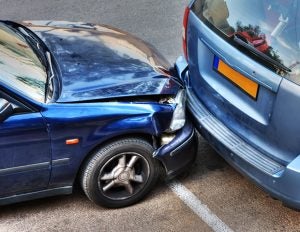
Third Time’s a Charm?
What is it with people rear-ending me? Recently I was rear-ended for the third time in the last several years. The first time was about 15 years ago. I had a Ford Tempo and was yielding to go up the on-ramp to I-70 East when a car came up behind and slammed into me, ripping off my bumper and shoving me into the path of a semi. By the grace of God, I was able to turn into the guardrail and not get hit by the semi. My poor Tempo was totaled, though, because the driver didn’t know the difference between yielding and merging. For an explanation of the two, check out Eleanor Wallace’s blog here. I then got a Ford ZX2. I loved that car! I don’t know how many people know this, but the Ford ZX2 is a second generation Ford Escort. For those of you who are interested in trivia, in 2001, the Escort name was dropped and the 2-door model was then referred to as the Ford ZX2 - same reliable car, just with a sportier flair. I had it for two weeks when I was rear-ended again. I was taking my son to his football game and we stopped at McDonalds to get a breakfast sandwich. I was at a stand-still in the drive-thru waiting for my turn when I was rear-ended again. Not once, but twice! After the initial hit, I turned around to see who hit me and he hit me again because he thought he was pressing on the brake when in fact he was pushing on the gas. That got me 10 weeks of physical therapy because my head was sideways being jerked around like a bobblehead doll when I was hit the second time. I got whiplash. Luckily, I was able to have the car repaired and had many more years of driving it. That brings me to my recent episode. I was not driving my car. I was helping out and driving a car back to the office after it was serviced. I was at a standstill at a traffic light minding my own business waiting for the light to change when I was hit from behind so hard my teeth rattled. I am really grateful the airbags didn’t deploy and that no one was hurt. The person who hit me was freaking out while trying to convince me it wasn’t that bad. I was nice about it, but explained that the car was not mine and that I had to call the police and get a report filed to have the car repaired, particularly since the bumper had a big hole in it and the back lights were broken out! Anyway, who gets rear-ended three times (four if you count the double-tap at McDonalds) in their life-time? Luckily, being rear-ended, although traumatic, was not life-altering for me. Not everyone is that lucky. If you find yourself not knowing where to turn after you have, through no fault of your own, been in an accident, a call to Bordas & Bordas can get you and your vehicle on the right track to being made whole.
Light of the Valley
Jim and Linda Bordas received the Light of the Valley Award this past Wednesday at the White Palace. Enthusiastic attendees came from all over the region and packed the room, testifying to the wonderful influence Jim and Linda have had on so many people in the Ohio Valley. But the real lesson came from the way Jim and Linda turned the occasion into another example of how their family came to be viewed so positively in the first place. Jim’s beautiful acceptance speech, which I hope will be available on this blog in some format for those who could not attend to hear, or at least read, stressed the other “lights” of the life he and Linda have shared. His invocation of Coach Nardone, Hines Rotriga, the late Sam Andy and many others who have given to the Ohio Valley illustrated the cascading good that is done when people dedicate their lives to the service of others. While many lament that some of West Virginia’s children do not make their lives here, Jim and Linda took special note of many young people “who came back” to become the leaders of today and tomorrow in Wheeling and beyond. The moral of the story was that the light of the valley doesn’t burn only from within a particular person. It comes when our positive influences shine light on us, and we work to reflect it back into the world a little stronger than before. Each of the lights Jim and Linda singled out serves as a kind of lens, that makes the Valley sunnier, as good people work together to promote justice, alleviate pain and comfort those who are afflicted. For 44 years Jim and Linda have collected that light, and sent it back out into our community clearer and brighter. It would be impossible to list in a speech or an essay, or even an encyclopedia, all the different people who have been touched by the Bordas family in this Valley and beyond. I’ve been fortunate to have gotten my first job out of school from Jim and Linda, and it’s been the only one I’ve ever needed. The kindness they have shown me and my family over the years would be overwhelming, were it not for the fact that I’ve seen them do it time and time again for their friends, their sons’ friends, employees, clients, and people who were, at one point, perfect strangers, but were lucky enough to find Jim and Linda in a time of need. No one could imitate the magnificent accomplishments and the lives that led up to Wednesday’s recognition for Jim and Linda. Their unique body of work cannot be duplicated. But we can follow their example, collecting the light that is all around us in the Ohio Valley, and shining it back on others who may need it. Thank you, Jim and Linda Bordas, for being Lights of the Valley. --Chris Regan
National Dog Day is Today
Barley and Guinness want to remind you that National Dog Day is Friday, Aug. 26. The animal shelters from two area counties will be holding adoptions in two locations. Ohio County Animal Shelter will be at Wheeling Park’s Ice Rink from 11 a.m. - 3 p.m., while the Marshall County Animal Shelter will be at the Oglebay Park Wagon Shelter above the playground from 11 a.m. to 3 p.m. Please stop at these locations to see the pets the shelters have available for adoption. You can go to either shelter’s Facebook page to get more information. If you are unable to adopt a pet, but would still like to help, they have wish list of items that can be used in the shelters. If you are looking for the love of your life, and for someone who will love you more than they love themselves, you may just find them at one of these two locations on Friday. Hope to see you there. Remember, adopt, don’t shop. Dog Fighting is not a sport, it is abuse and needs to be reported to the your local dog warden and/or your local police department. Please don’t chain your animals to trees or dog boxes. This is no life any animal should have. If you see an animal you think may need help, report it. The life you save just may be theirs. Trust me, the local dog warden is more than happy and willing to check out a questionable situation. They truly care about the welfare of animals. All pet lives matter. Bark on, Bordas Dog Nation, bark on.

A “Whole” Change in Eating Habits
No carbohydrates, no dairy and no sugar really sounds like no fun if you ask me, but the Whole30 craze is catching on locally and nationally. The Whole30 is not just a diet, but also a lifestyle change. Created in 2009 by an adventitious nutritionist, Whole30 challenges people to completely cleanse their eating habits over a 30 day span. This plan eliminates all carbohydrates, fats and sugars from one’s diet leaving me asking what’s left. Recently, I encountered the effects of Whole30 firsthand as my mother tried the fad. My family quickly decided that when the woman who usually cooks dinner can’t eat pasta, pizza or tacos neither can we. We were all in it together…well sort of. In theory, Whole30 is a great idea. Thirty days eating mostly proteins, fruits and vegetables surely resets one’s digestive tract and probably allows one to lose some weight. In reality, eating a bowl of noodles made out of zucchini just does not have the same impact. The day my mom cooked vegetables disguised as pasta did not go over well to say the least. I classify myself as the least picky sibling in my house, and even I was not a fan of this faux pasta. My sisters were horrified almost to the point of tears upon their first bite when they realized the comforting carbs we were used to were missing. Even the sauce was different to coincide with the Whole30 guidelines. Zucchini noodles were a bad first impression of what “healthy eating” was really like. My mom was nice enough to not put us through that again, and she would make regular pasta for just my sisters and me to eat. A few days after the terrible “pasta,” we as a family finally got into a groove of what was a yes-food and what was a no. Of course not all of us went completely Whole30. We still had sandwiches, milk and butter, but for our family dinner each night we would try to follow the guidelines as much as possible. We discovered that we liked types of fish we didn't know existed, coconut oil tastes no different than regular cooking oil and an apple is a more energizing snack than any cookie. I grew to love having fruits in my house to snack on. In most instances, healthy alternatives are faster and taste better. Restaurants are a little tricky for someone attempting Whole30, but it was possible to find grilled chicken or a salad just about everywhere. On top of the Whole30, we also fell victim to the kombucha trend. Kombucha is a tea made from fermented bacteria, and yes, somehow its drinkable. I’m still unsure as to how my mom, a few of her friends and even my picky-eater sisters fell in love with the fungus tea, but they did. I, on the other hand, never tried it and do not plan to. After seeing the Scoby, the yeast and bacteria used to brew kombucha, and smelling it, I vowed to never drink the tea. Supposedly kombucha helps with digestion, joint mobility and energy, but that’s still not enough for me to drink anything with a chunk of fungus in it. After our 30 days, we didn't throw what we learned from the Whole30 right out the window. Still we eat grilled chicken instead of fried and more vegetables with our meals. Thankfully our noodles are real noodles now, but healthier condiments and cooking oils are here to stay. Overall, it was a great chance to open my palette to new foods. Even though I don't think I could follow the cleanse 100 percent as I do love to indulge in ice cream or a sugary snack, I could definitely pick healthier alternatives at least once a day. I’m not sure if any diet really works, but just incorporating healthier options into meals could make a difference. I will continue using coconut oil or snacking on kale chips instead of potato chips, but trust me, I won’t forget dessert.
Too Much of a Good Thing
By this time of year, I am done with humidity, and done with those lazy, crazy, hazy days of summer. Too much ice cream, too hot to exercise, too much lax in the schedule! It was a great summer filled with lots of fun and food and friends, but its time to get back on track. Time to get out the jeans and find out just how much damage you did to your waistline (I already know the answer to that question). There’s something about starting a new school year that puts clarity in your life, even if you don’t have kids. It’s a time to clean out drawers and closets, clean up the house and yard, and get out the crockpot for making soups and stews. I know a lot of folks don’t want to think about winter, and I’m not particularly fond of shoveling snow, but there is something cleansing about fall. Preparing to survive, if you will, another cold and brutal winter. Getting your ducks in a row and stocking the shelves. Getting back into the routine -- it brings order to life.

School Day Blues
Year after year, many parents watch the calendar until the school year begins. That’s never been me. This week, my teenager and my 7-year-old went back to school. In a matter of days, my son goes off to college and it has really taken my emotions for a ride. I’ve always struggled with the first couple weeks surrounding the beginning of the new school year. I dislike the restrictions it places upon us requiring extraordinary diligence and structure evening after evening, meeting all the homework deadlines, athletic commitments and other obligations in addition to our already overbooked lives. It takes me a few weeks to adapt before settling into my comfort zone. This year, I have dreaded the beginning of the school year more so than others. No matter how long I have tried to prepare myself, I am struggling because I have one going away to college. While he is anxiously awaiting the move-in date and has beamed with excitement to experience the new chapters of life on his own, it has left me feeling empty. Although he is only an hour and a half away, it has my heart palpitating knowing he will not be under the same roof. My ideas of showing up on campus to randomly surprise him with a visit don’t seem to go over well with him. I picture it differently in my mind. How do I go weeks without seeing my son? Yet, he has this huge smile of independence on his face. I know, I know. Some may categorize me as smothering, and that’s okay. I suppose I am. We all raise our children with the values we hold dear. We give them the tools to help them succeed and pray they take full advantage of those tools along the way. As smothering as I may be, I am realistic and understand this is life and what we do, but this year it may take me just a little while longer to get into the whole school year thing.
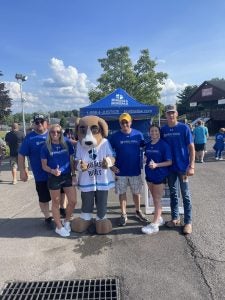
THE HIGHS AND LOWS OF THE 2016 OLYMPICS
Like many Americans, I feel a natural attraction to the summer Olympics. So many athletes representing so many countries in so many different sporting events--all packed into a thrilling and mesmerizing 16 days. To be honest, part of the reason I watch is to see things I never see any other time of the year. I’ve never seen a rugby match before, but this year marked the return of rugby to the Olympic Games. I was amazed at how much rugby resembled American football, but there were plenty of differences that made the game more fast-paced, engaging and fun to watch. Aside from rugby, I also watched ample amounts of volleyball, diving, cycling, wrestling and even synchronized swimming. Every Olympics has its high points--athletes who accomplish incredible feats and embody the ideals that the games stand for. I think of Michael Phelps, who captured six medals this year to become the most decorated Olympian of all time. I may be a little biased, but I also think of Ginny Thrasher, the WVU sophomore who won America’s first gold medal this year and became a cause célèbre on the Mountaineer campus. You may also have seen footage of the two women who collided while running 5000-meter race, only to help each other up and finish the race. That’s an Olympic moment! But there was also low points. It’s always a shame to see athletes work so hard, and then face an injury in the games that prevents them from competing--like the Armenian weightlifter who broke his arm during a lift. Poor sportsmanship was also on display from athletes who refused to shake hands with their Israeli competitors. As I am writing this blog, Ryan Lochte is dominating the Olympic headlines. Unfortunately, it’s not for his swimming. It seems he made a false report of a robbery to cover up an episode of bad behavior at a Rio gas station. Not only will this blemish his own career, but also the reputation of a highly respected and decorated American swim team. Every Olympics will have its highs and lows. We aspire to greatness, as we should, and the Olympics embodies that lofty goal. But we are also human, with all of our human frailties and shortcomings. Where there are highs, there will also be lows. What about you? Was there an Olympic moment in this year’s games that sticks out in your mind?

DON’T IGNORE THE FLASHING LIGHTS OF STOPPED SCHOOL BUSES
Happy Friday! We here at Bordas & Bordas would like to congratulate those of you who are completing your first week of the new school year. That includes students, teachers, faculty and staff. We hope that the new school year has gotten off to a wonderful start! As we look forward to the year ahead, it is important that we all keep in mind a few safety rules. Particularly as it concerns children around school buses. A new bill signed into law earlier this year by West Virginia Governor Earl Ray Tomblin will give law enforcement officers “more capability to pursue drivers who ignore the flashing lights of stopped school buses.” The new law, which was aptly named the “School Bus Stop Sign” bill, provides that “the driver of a vehicle, upon meeting or overtaking from either direction any school bus which has stopped for the purpose of receiving or discharging any school children, shall stop the vehicle before reaching the school bus when there is in operation on the school bus flashing warning signal lights.” “he driver may not proceed until the school bus resumes motion, or is signaled by the school bus driver to proceed or the visual signals are no longer actuated.” W. Va. Code § 17C-12-7(a). The new law then states that, if a vehicle fails to heed a school bus stop sign and the license plate number of the offending vehicle is known, law enforcement officers can infer that the owner or lessee of the car was the person driving the vehicle. The owner or lessee of the car will then be charged for the crime. If there is more than one registered owner or lessee for a vehicle, the first-listed owner or lessee will be the responsible party. Prior to the passage of this new bill, law enforcement officers “had to have eye-witness testimony of the person operating the vehicle in violation before a citation could be issued.” Thus, if you could find the vehicle but you couldn’t identify the driver, a citation could not be issued. Penalties for drivers who fail to heed a school bus stop sign will remain the same under the new law: First Offense · A fine of not less than $150 or more than $500 and/or confinement in jail for not more than 6 months; and · Suspension of driver’s license for a period of 30 days Second Offense · A fine of $500 and/or confinement in jail for not more than 6 months; and · Suspension of driver’s license for a period of 90 days Third Offense · A fine of $500 and confined in jail for not less than 24 hours but not more than 6 months; and · Suspension of driver’s license for a period of 180 days In addition, a driver who fails to stop for a school bus stop sign and causes “serious bodily injury” to any person other than themselves will be guilty of a felony. Upon conviction, the driver will be fined not less $500 but not more than $2,000 and will be confined in a state correctional facility for not less than 1 year but not more than 3 years. A driver who fails to stop for a school bus stop sign and causes death will be guilty of a felony. Upon conviction, the driver will be fined not less than $1,000 but not more than $3,000 and will be confined in a state correctional facility for not less than 1 year but not more than 10 years. Lawmakers were careful to write the bill to insure that charges would fall to somebody else if it could be proven that the car in violation was actually being operated by another person. Thus, the new law merely enables law enforcement to create a presumption that the owner or lessee of the vehicle was driving. For those of us who may need a refresher on when we are required to stop for a school bus stop sign, the State of West Virginia Driver’s Licensing Handbook states, “n all highways, streets, parking lots, private roads or driveways, traffic in both directions must stop before reaching a school bus that has its red lights flashing.” “Only on interstate highways does traffic coming toward a school bus stopped on the other side of the median not have to stop.” A good rule of thumb then is, if there isn’t a median, you should always stop, regardless of the direction you are traveling in. Stay safe out there, folks! And be sure watch for the flashing lights of stopped school buses! Happy Friday!
Insurer Preferred Contractors
One of the first calls a homeowner makes after a fire or water loss is to his or her insurance company seeking help with both cleaning up the immediate mess and eventually repairing the damage. More often than not, the insurer will provide the homeowner with the name of a contractor who will respond to the home to assist with the initial clean up and to secure the home from further damage. Homeowners understandably assume that when their insurer places them in contact with a contractor who will respond to a loss that the insurer will stand behind the contractor’s work, particularly where the contractor is one of the insurer’s “preferred” contractors and is being paid directly by the insurer for work performed at the home. Unfortunately, this assumption is wrong more often than it is right. Insurers take steps from the outset to attempt to distance themselves from liability if something goes wrong, such as where the contractor fails to properly dry the home resulting in mold growth and further damage. When the contractor first arrives at the home, the homeowner is often instructed that certain documents must be signed before the contractor begins work. If the contractor is one of the insurer’s “preferred” contractors, the homeowner will be instructed that he or she needs to sign a document prepared by the insurer “authorizing” the contractor to perform work in the home before work can commence and later “authorizing” the insurer to pay the contractor. What the homeowner rarely realizes though is that in these documents the insurer declares the contractor to be an “independent contractor.” The significance of this designation is that if something goes wrong, the insurer will rely on the document in an attempt to avoid liability for the contractor’s negligence. An argument exists to get around the insurer’s attempt to insulate itself from liability for a contractor’s negligence where there is evidence that the insurer was actually controlling the contractors’ work and/or the homeowner was led to believe that the contractor was working for the insurer by the acts and representations of the insurer and/or contractor. A key component of holding an insurer vicariously liable for damages caused by the contractor’s negligence is demonstrating that the insurer was actually controlling the contractor’s work. Control may be demonstrated by evidence that the contractor was communicating directly with the insurer regarding the scope of work to be performed and did only that work pre-authorized by the insurer. Likewise, evidence that the insurer and contractor are communicating with the homeowner in a manner that would lead a reasonable person to form a good faith belief that the contractor was working as the insurer’s agent and/or representative can be used to find the contractor to be an ostensible agent of the insurer for whom the insurer is vicariously liable. In order to become a “preferred” contractor for an insurer, the contractor often agrees to a lower rate of reimbursement than that which may be charged on the open market in exchange for obtaining the higher volume of work created when the insurer directs insureds to the contractor. The insurer wants its insureds to utilize the “preferred” contractors because the “preferred” contractor has agreed on the lower reimbursement rate and the insurance company saves itself money on the claim. Because the “preferred” contractor is beholden to the insurer for work, it will take direction from the insurer despite the protests of the homeowner and in direct contradiction to the insurer’s documents declaring the contractor to be a “preferred” contract. When this happens and something goes wrong, the loser is the homeowner, particularly where both the insurer and the “preferred” contractor disclaim liability or point fingers at each other. If you ever have the unfortunate experience of suffering a fire or water loss at your home, you are not required to utilize the contractors “suggested” by your insurer. If there is a reputable remediation contractor in your area that you want to use, you have the right to do so even if the contractor is not on your insurer’s “preferred” list. How the remediation contractor is reimbursed for work will be dependent upon the precise terms of the insurance policy at issue. However, rarely does an insurance policy mandate the use of the insurer’s “preferred” contractor. Instead, most policies will pay the reasonable costs of necessary remediation work.

The Discovery Process
So you have hired an attorney, filed a complaint to begin your lawsuit, and are now ready for your attorney to get in front of the judge and jury to have your side of the story told. You call your attorney and ask when the case will be set for trial, and he or she explains to you that many things still need to be completed before trial. To many people, the fact that their lawsuit could take a year or two to resolve comes as a big surprise. My purpose in writing this blog is to describe one of the activities that takes place between filing a lawsuit and having the claim resolved, the discovery process. Discovery is exactly what it sounds like, each party has the opportunity to discover the other party’s facts and documents. Primarily, this is done in four ways: interrogatories, request for production of documents, requests for admission and depositions. An interrogatory is a question asked by one party to the other party. For example, an interrogatory could ask a party to name every person they know who has knowledge of a relevant event or to identify every insurance policy that could provide coverage. The party who is responding to the interrogatory would either answer the question or object. A request for admission can be valuable to limit the issues in a case. One party can ask the other to admit specific facts, such as whether they were the owner of a specific vehicle or admit that a document was signed. The party responding to the request for admission has the option of either admitting or denying the statement. Additionally, the party can qualify an answer or deny only a part of an answer. The answering party may also object or assert a lack of knowledge or information as the reason they are failing to answer. Requests for production allow parties to request relevant documents in the other party’s possession. These documents could range from an insurance policy to e-mails discussing an agreement. The responding party has the option of either producing the requested documents or objecting to their production. If an objection is made, it may need to be accompanied by a privilege log identifying the documents being withheld and the reason they are being withheld. Depositions are another means of discovery that many people are likely somewhat familiar with due to their dramatization on television and in movies. In a deposition, both parties have the opportunity to ask a witness questions. The witness is under oath and everything said is recorded on a transcript. A deposition is another valuable tool for parties to understand the facts of the case. It is also important to lock a witness into their story so they cannot change it at a later date. While this is not a detailed analysis of every aspect or tool that can be used in discovery, I hope this article has provided you with a better understanding of the basics of this process. Of course, hiring an experienced law firm that has the talent and resources to guide you through the discovery process is important. Battles can often times take place in discovery and it is critical that you have someone willing to stand up for your rights. This will lead to a better outcome for you and your case.
Insurance Coverage that is Out of this World
As lawyers, we deal with insurance companies a lot. Insurance companies sell a lot of different types of coverage, from general homeowners insurance, car insurance and health insurance to insurance covering professional athletes and celebrities’ physical features. Did you know, however, that there are companies out there that sell alien abduction insurance? That’s right, if E.T. comes to take you for a ride you can be covered. In all honesty, the plans are bought for fun purposes. The Saint Lawrence Agency in Altamonte Springs, Fla. started selling the polices in 1987 through its UFO Abduction Insurance Company. A single lifetime premium of $19.95 gets you the coverage. Most of us would consider this type of coverage a good natured gag and laugh at the gold embossed certificate of coverage you can hang on the wall. The St. Lawrence Agency’s own website pokes good natured fun at itself. Its slogan has been “Beam Me Up, I’m Covered.” A successful claim would result in $1 per year payout until you die, subject, of course, to a $10,000,000 cap. It has been reported that the St. Lawrence Agency has actually paid out on two of its policies! If only you could live that long! Amazingly, however, there are other companies that take the coverage way too seriously and/or prey on those extreme conspiracy theorists among us. A company out of the London-based insurance market, Goodfellow Rebecca Ingrams Pearson (GRIP), actually sold policies in the 1990s which cost $155 per year in premiums and would pay out $160,000 upon proof of abduction. GRIP reported a claim pay out in the 1996 of $1.6 million dollars, but later admitted that the claim pay out was a publicity stunt. Rumor has it that the Heaven’s Gate Cult also reportedly paid for abduction coverage up to $1 million for each of its members. Those of us of who have had to make insurance claims for damage to our homes or cars can imagine what the claims process would be like for abduction insurance. What type of proof of abduction would you need? How would the claim be investigated? Would Fox Mulder and Dana Scully from the X-Files give you a call? Our firm handles a lot of insurance bad faith litigation. In those cases, we represent individuals who have been treated illegally and in bad faith by their insurance companies. Think of the possible room for expansion for lawyers if people buy this coverage. Our firm has opened additional offices in West Virginia and Pennsylvania over the last few years, maybe the Mars or the Moon could be next. We could fight for justice on a local, national and galactic basis!
Contact Us
The information you obtain at this site is not, nor is it intended to be, legal advice. You should consult an attorney for advice regarding your individual situation. We invite you to contact us and welcome your calls, letters and electronic mail. Contacting us does not create an attorney-client relationship. Please do not send any confidential information to us until such time as an attorney-client relationship has been established.
The results in a legal case depend on a variety of factors, many of which are unique to each case. Prior results by this firm or any other do not guarantee future results. Case results presented here are illustrations of the type of work done by Bordas & Bordas and not a guarantee that any prospective case will yield any particular amount.
Request Consultation
Call 304-242-8410 or fill out the form below.