
For the past few years I have had the pleasure of being a member of the Moundsville Lions Club. My father and grandfather were both members of the Lions Club back in southern West Virginia and I have had the chance to continue the family membership here in the northern part of the state. I have gotten to know and work with many great Lions over the years and I am extremely happy to be a member myself. I wish I could actively participate in more events than I am currently able to. I am the second vice-president of the club and look forward to holding the presidency in the not too distant future. I have had the opportunity to blog a few times about joining the club and various events and programs that the club sponsors. Social organizations like the Lions Club are great opportunities to make friends, network and learn about various topics through our weekly programs. Jim Bordas, our founding partner, was even able to present a discussion at one of our weekly meetings earlier this year. During the meeting, Mr. Bordas graciously donated $1,000 to the club to assist in our various programs. Bordas & Bordas has also been proud to provide support to the Moundsville Club in its recent hosting of the West Virginia Lion’s Club District 29-L Convention held in Wheeling, as well as various other philanthropic events benefitting the community. The Club is quite active in the area. On Oct. 7, the Moundsville Lions are co-sponsors of the yearly Red Cross Blood Drive that will be held at the First Presbyterian Church in Moundsville. This blood drive is touted by the Red Cross as one of its most consistent producers of blood in the area. If you have the chance to come by and donate blood please take the opportunity to do so. The Moundsville Lions Club deserves big congratulations this year as it celebrates its 75 th anniversary! The occasion will be marked at our meeting on Oct. 4 when we will be honoring several individual members of the club who have been active for more than 50 years and many who have been members for 25 years! These gentlemen are community and business leaders and have helped fight for Moundsville and the surrounding communities for a long time. For the past 75 years, the Lions Club has been an active community participant in Moundsville and still has one of the largest active groups in the region. The Club is still going strong and still welcoming new members all the time. I am proud to be one of the younger members of the group and can only hope that I am still around in for the next 50 years. If you are interested in joining the Lions Club you can find out information from the International Lions Club website at www.lionsclub.org. You can also follow the Moundsville Lions Club on Facebook to learn what the club is up to and what events are coming in the future.
Discussing Politics is Taboo with Me
I make an effort to stay away from the discussion of politics with anyone outside of my own home. I have my opinions and I have strong feelings, but I find it somewhat disturbing and almost comical how passionate political conversations can often turn in to an argument, and rather quickly. For this very reason, I shy away from those conversations. In my mind, it becomes counterproductive because it separates people rather than unitING people, which is what we should be able to do maturely in the UNITED STATES. Rather than intelligently discussing the pros and cons of the candidates, people tend to shut down after they have stated their thoughts and are not always open to listening to anyone else. No one said you have to agree, but mutual respect for opinions and feelings should be adhered to. I will, however, give you my take on the importance of being proactive and voting for the candidate of your choice. Make a decision by keeping in mind that we are building a future for our children and their children. Choose the leader that you feel will best bring change to the table for a greater United States of America for years to come. This is your chance to be heard. Your candidate may or may not be elected into office, but if you do not take a position for your voice to be heard through our election process then don’t complain about what is or isn’t being accomplished in our government. Take the time to make a decision based on your very own observations. Educate yourself to be confident in your choice. Use the right that you were given in this great country of ours and vote. If you have not yet registered, you still have time, but that deadline is soon approaching. Your opinion matters. Your voice can be heard. Help make a positive change to impact the lives and futures of so many who are counting on us to fight for the candidate we believe can do that job. GOD BLESS THE USA!
A New Zodiac Sign
What's your zodiac sign? Are you a Libra? Virgo? Aries? After yesterday's announcement of the newest and 13th zodiac sign, Ophiuchus, you may want to double check to see if your sign has changed. Those who read their daily horoscope may have to learn to look for their new zodiac and may be very unhappy about this change. There has been a shift in the dates of the Western zodiac calendar, which has resulted in each zodiac starting later than the originals. For example, the calendar once categorized those born between Aug. 23 and Sept. 22 as Virgos, but now that zodiac is for those with a birthday from Sept. 16 to Oct. 30. Thus some Virgos are now Leos. The Babylonians introduced the zodiac over 3,000 years ago, and now NASA decided to throw everyone off by switching up signs. Though this is not a life or death change, a number of people look at their sign as a guide to life. However, NASA is simply doing their job by studying astronomy and has no time for society’s astrology problems. Has your whole horoscope been a lie this whole time? Are you an Ophiuchus? Take a look: Capricorn: Jan. 20 to Feb. 16 Aquarius: Feb. 16 to March 11 Pisces: March 11 to April 18 Aries: April 18 to May 13 Taurus: May 13 to June 21 Gemini: June 21 to July 20 Cancer: July 20 to Aug. 10 Leo: Aug. 10 to Sept. 16 Virgo: Sept. 16 to Oct. 30 Libra: Oct. 30 to Nov. 23 Scorpio: Nov. 23 to Nov. 29 Ophiuchus: Nov. 29 to Dec. 17 Sagittarius: Dec. 17 to Jan. 20
It's Fall Y'all
With fall here and the cooler weather coming with it, I can always bet that Barley and Guinness will want to be outside more than they will want to be inside. The boys love the cooler weather. They run, jump and play more outside in the fall and winter months. Sometimes I have a hard time getting them to come inside for the night. I have to go out with my flashlight and hunt them down to get them to go to bed. I sometimes feel like I’m out snipe hunting, but eventually they do come in. I think that the boys think it’s a game they get to play with me where I go one way and they take off the other. I know they have their own way of communicating with one another. They seem to laugh a lot at me when I’m out hunting for them (it must be dog humor). Pretty soon the boys will be getting to go up to Seven Springs with us more often. The trails and the paths around the springs are so beautiful this time of year and make for the perfect walk. This past weekend was Mother Earth Day Festival at Seven Springs. Snipe hunting was talked about one year. It is an interesting event. Log onto 7springs.com to learn more about this festival. If you’re into keeping the planet clean or you want to know more about the topic, this is something you might want to attend. They offer a lot of interesting ideas. So enjoy fall with your pets and maybe you can learn how to live off the grid by attending future Mother Earth Day Festivals. Bark on, Bordas dog nation. Bark on.

Mickey Goldmill Meets Trump and Clinton
Before he fought Apollo Creed, Rocky Balboa’s immortal trainer, Mickey Goldmill, knew what to tell him. Mickey told Rocky that he would “eat lightning, and crap thunder.” He told a young, unknown boxer that with the right preparation, he would become “a very dangerous person.” A great trainer has a way of telling his fighters exactly what they need to hear, at exactly the right time. Rocky Balboa came from nothing, and got a fight against the world champion, Creed. Rocky had the talent and the skill. What he needed was the confidence and belief that he could win the fight. Mickey gave him exactly what he needed, at just the right time. The result was a club fighter going the distance against the World Champ, in Rocky I. So what would Mickey say to tonight’s combatants? Many are saying that tonight’s presidential debate will be the most watched event in the history of television. Certainly as big an event as any boxing match ever staged. The stakes Monday outweigh any ninety minutes we’ve ever seen — on the line is nothing less than the US Presidency, control of the world’s most powerful military, and the title: Leader of the Free World. (Image retreived: USA Today) In addition to being a fictional character, Mickey died in Rocky III. So we can’t ask his advice on this clash of the titans. But we can wonder what he might say, and start by asking ourselves, what does each of tonight’s debaters need to hear to win? For Trump, I think the answer is easy and Mickey could give it in one word: behave. Over the last several months, Trump has been painted as a monster. The message “unfit for the Presidency” has been hammered home by Clinton and her myriad surrogates. “Dangerous,” “unhinged,” “reckless,” and “pathological” are all words the Democrats have sought to hang on Trump. So how does he win? Easy. Just behave. Act completely normal, reasonable, and calm for the whole debate. Trump can benefit from the low bar set for him. If he doesn’t behave awfully, insulting people, obviously lying, or otherwise acting the fool, he doesn’t necessarily prove he should be President, but he proves his critics wrong. That could be enough to see him declared the winner of the debate and put the Clinton campaign on the defensive for the rest of the campaign. If Mickey was in Trump’s corner, he’d be telling him over and over again: “just behave, Donnie! Stay cool and don’t let her rattle you! If you act like you belong here it’s all yours.” I don’t know if Trump will listen, but I believe that is what his advisers have been telling him leading up to the debate. What about Clinton? What would Mickey tell her? First of all, the whole situation would be culture shock for Mickey — a notorious sexist. When Adrian started showing up at the gym, Mick said “what’s with this domestic stuff? Tend to business!” But if we get Mick past the traditions of his era, he’d probably be happier to have Clinton as his fighter. That’s an easy call, because above all, Mickey hated laziness, showboating, and wasting time. When Rocky started training in a flashy, Trumped-up joint in Rocky III, Mick called it a “house of ill-repute.” Surrounded by dancers and media and a carnival atmosphere, Mick wanted to “go back to the old gym and get some blood and sweat and tears around us.” When you think about Rocky’s disastrous preparation for his first fight against Clubber Lang in Rocky III, it’s hard not to think today that the flamboyant gym, full of ring girls and media, was designed by Donald Trump. But Clinton still has to come out and fight. She needs a plan and cannot count on simply knowing more, or being more qualified. The plan Mick would create for her is the one that exploits her opponent’s greatest weakness. In this case, that is Trump’s pride. Trump may not be a wizard on public policy or facts and figures, but that won’t lose him this debate: George W. Bush became President despite being thoroughly outmatched by Al Gore on policy details. Trump lacks the experience in TV debates that Clinton has, but unlike her, he is a great performer. His rallies, his TV shows, his countless appearances in front of any camera that would have him testify to his ability to hold an audience and appear to be what they want to watch. His one weakness is his pride and his insecurity — he hates to take even a modest punch. Trump simply cannot stand to be attacked — not on any matter, great or small. He tells people all the time, “you hit me, I hit back.” He always has to prove himself against every slight. His allies call it “counterpunching,” but they know it could be his fatal flaw as a fighter. To win, Clinton just has to agitate Trump. Get his back up with a little comment here and a quick joke there. If she can, even for a moment, make Trump feel as though he is being laughed at or insulted, there will no longer be any worry that he stays calm, or “presidential.” When his pride is at issue, Trump goes off script and on the attack — wildly swinging to avenge his wounded self-image. So Mick would tell Clinton what he told Rock in Rocky II, the rematch with Apollo: this guy “wants to bury you, he wants to humiliate you, he wants to prove to the whole world that you was nothing but some kind of a freak.” Despite being the nominal favorite, Clinton must debate like the underdog, attackingand working to get inside Trump’s guard and under his skin so she can wound his precious pride. If Clinton can do that, Trump will quickly hang his chin out and the well-prepared Clinton will put him on the canvas fast. Unlike the calculating Clinton, Trump will debate “in the moment.” If he sees himself as having lost a point, he will go crazy trying to get it back, and any preparation he’s been able to absorb goes out the window. On the other hand, if Clinton takes a hit, she’ll simply absorb it. What’s one more blow to her at this point? The fight of the century and it’s just twelve hours away. Who will listen to their trainer? Who will swallow their pride and fight the fight they need to fight, instead of the fight they want to fight? We’ll know late Monday night.

Public Fascination with the Art of Caricature
It’s been the basis of many laughs over the years and people are fascinated with the creation of caricatures. We’ve all been somewhere and stopped to observe the artist creating a masterpiece in the form of caricature. Perhaps, you too, have had the opportunity to have this done over the years. They say “a picture is worth a thousand words.” Well, a caricature must be worth a heck of a lot more. These pictures generally will amplify certain characteristics of the subject and exaggerate them in such a way as to create a comical or distorted and unsightly type of effect. When I think of a caricature, I generally think of an amusement park or walking the boardwalk at some beach, but this past weekend, I attended a wedding and interestingly, this was some of the guest entertainment and certainly proved to be fun. I did not realize that this has actually become a normal practice at parties as it had been awhile since the last wedding I attended. Meet my caricature family: Now, if we can’t laugh at ourselves, then we must not be very happy people. I must say, this was so much fun, not just for us, but for every guest in attendance no matter their age. In about three minutes, your party favor was complete with its own caricature of the bride and groom dated on the back for you to take home as a keepsake. The use of caricatures has been around since at least the 16 th century and often was used to ridicule public figures and have remained a typical form of poking fun at those in the public domain. My guess is the reason it has remained such a form of popularity is obvious—who doesn’t enjoy a good laugh? Now, setting aside the perhaps distasteful versions that inevitably exist over the years and could be potentially hurtful, most of us just like a good laugh and look forward to having a little fun. I mean, after all, if we can’t laugh at ourselves, then perhaps we should learn to relax just a tad and take some time to stop and smell the roses. May you find laughter and joy within yourself every single day!
High School Basketball Officials in Short Supply
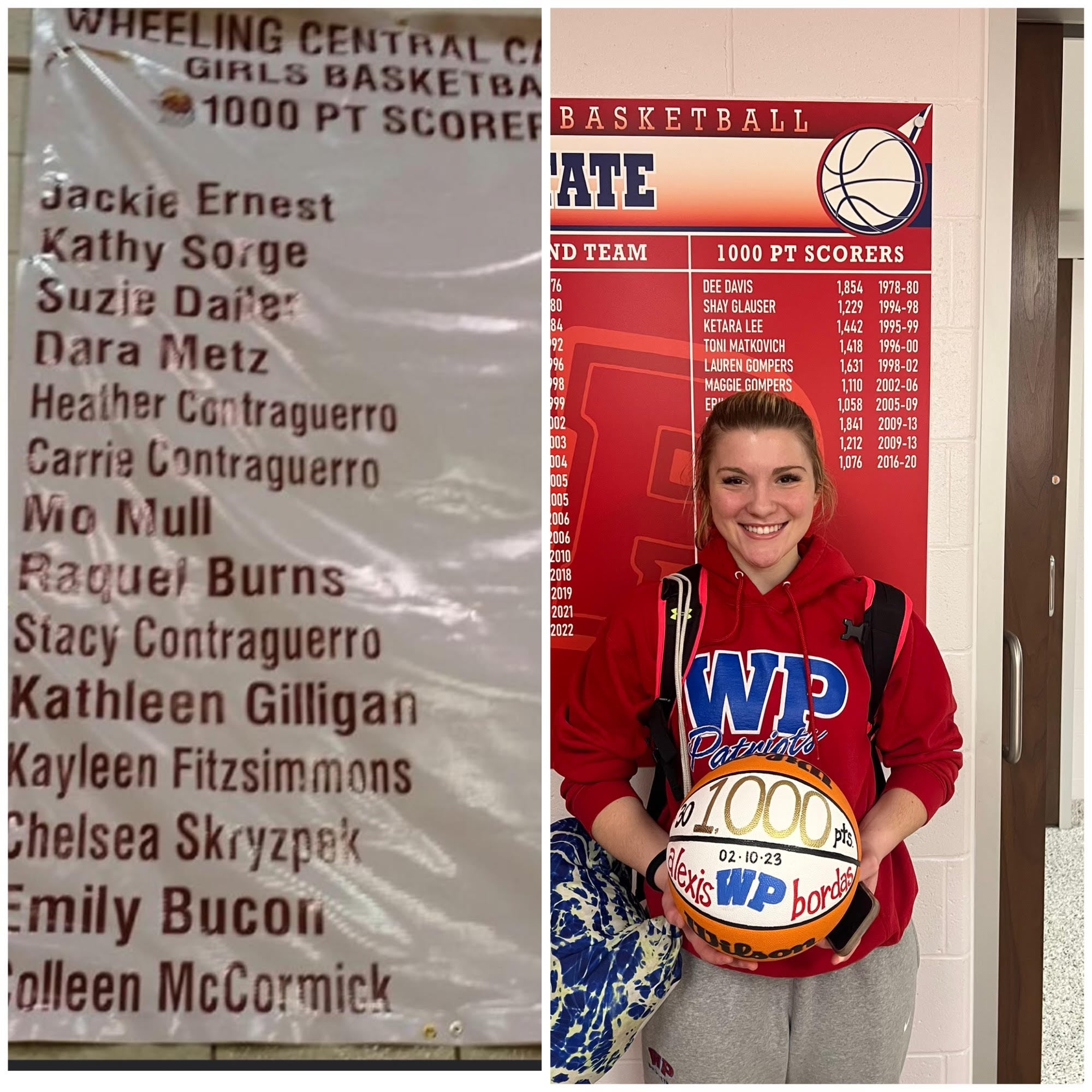
Few among us would argue the fact that in the past 20 years or so, youth sports has seemingly exploded in popularity. Many of us grew up with Little League Baseball being pretty much the only organized sport available in our home towns. By contrast, the youngsters of today have more sports and teams to pick from than I could ever have imagined 40 years ago. Baseball has been joined by football, hockey, soccer, softball, volleyball, lacrosse, and my personal favorite, basketball. Kids 6 years old and younger are now competing in all of these areas, and by the time they reach the fifth grade they are being recruited to play with various “travel teams.” For the most part, I think all of this is good for our young people. I fear, however, that if things don’t change, we may be in for a serious reduction in the opportunities for our kids to participate in competitive sports. I’ve been a basketball official since 1985. My first training class was held on the day after my daughter was born. It’s been in my blood ever since, and it’s hard for me to imagine taking off the stripes and putting my whistle down for the last time. But at 60 years old and counting, I know that day can’t be too far off. The problem is this: as I look around the room during the meetings of our local officials’ association, I see more people who are close to my age than I do young folks. Don’t get me wrong; there are young people who are moving up the ladder in the ranks of basketball officiating. It’s just that for every one of them, there are three “veterans” who will be hanging it up within the next five years. Combine that fact with the explosion in the number of teams and leagues in the Ohio Valley, and you can see the problem. There simply aren’t enough referees available to cover the games being played. Five years ago, there wasn’t a single game, at any level, that had to be cancelled due to the lack of officials available to work the game. This past season (2015-16), schools were forced to cancel more than 50. Fifty times when children were disappointed; when parents missed the chance to see their kids play. Fifty times when there just wasn’t anyone available to work the game. And my guess is it will be worse this year. I’ve never understood why we aren’t absolutely buried in college students looking to take the officiating training course so they could earn some extra money during the year. The course takes 10-12 weeks, one night per week for 2-3 hours per night. Upon completion of the course, the student is eligible to work all levels of basketball except high school varsity in both West Virginia and Ohio. Now, for you college kids who may be reading this, here comes the good part. You can work at your own pace. One night a week or seven days a week, it’s your choice. Each time you are scheduled you can expect to work two, and sometimes three games. You generally start by 5 p.m., and you are done by 7-7:30 p.m. And you get paid, in cash, on the spot. That means you can walk away with $50-$75 in your pocket each day you work, and you can work up to seven days a week during the season. You do the math. During the season, an official working only grade school and junior high games can make $500 or more a month working only three days each week. We are in desperate need of young people to get involved in basketball officiating here in the Ohio Valley. It isn’t just about the money; it’s about the love of the game, and the desire to help our youngsters learn the valuable lessons that only competitive sports can teach. If officiating is something you might be willing to give a shot, please get in touch with me. You can email me at jearef@aol.com, or call me at 304-639-7272. Give it a shot. You just might discover you love it.
Federal Government Takes Unprecedented Steps to Regulate Self-Driving Vehicles
In the wake of a few fatal crashes in Florida and China involving Tesla’s Model S sedans, and as Uber goes live in Pittsburgh with self-driving cars, the federal government, in the form of the U.S. Department of Transportation, is poised to issue a barrage of new regulations aimed at the technology companies and automakers involved in autonomous transportation. The unprecedented manner in which these regulations are being promulgated, in advance of the technology being widely deployed, highlights the manner in which autonomous driving technology has rapidly ascended from science fiction to Google "moonshot" project to a crowded marketplace poised to radically transform our society in the coming years. In fact, Lyft cofounder John Zimmer recently issued a long diatribe in which he declared that most of his ride-hailing company's cars would drive themselves in just five years. Traditionally the Department has sets guidelines for automakers who have vehicles on the road and then used recalls to address defective cars. However, in this instance, faced with a growing number of self-driving car tests on roads across the country and rapidly expanding use of (somewhat concerning) driver assist technology, the DOT will require any new tech to meet a 15-point safety assessment. The DOT is also considering expanded powers to allow administrators to limit the deployment of self-driving vehicles and will issue model policies for states aimed at developing a cohesive set of national regulations for self-driving vehicles. Moreover, government officials have made it clear that the National Highway Traffic Safety Administration will have the power to take any vehicle whose technology poses a safety risk off the road, including those that utilize semi-autonomous driving systems - ones in which the human continues to monitor the road and perform some of the driving tasks. In an editorial posted on the website of the Pittsburgh Post-Gazette, President Obama commented that "egulation can go too far,” and allowed that some argue government "should stay out of free enterprise entirely, but I think most Americans would agree we still need rules to keep our air and water clean, and our food and medicine safe. That’s the general principle here. What’s more, the quickest way to slam the brakes on innovation is for the public to lose confidence in the safety of new technologies." Ford, Google and others are currently testing some form of self-driving cars in California. Google is also road-testing its autonomous fleet in Texas, Arizona and Washington. Testing of Ford’s technology continues in Michigan, while Uber recently began picking up passengers in Pittsburgh in a first-of-its kind experiment. Hopefully the new regulations being promulgated provide adequate guidance to ensure the safety of people interacting with this new technology while retaining ample flexibility to continue to allow this rapidly developing technology to progress to a point where it can become mainstream.
Driverless Cars in Pittsburgh
You have probably already seen Uber’s prototype driverless vehicles around town as they are hard to miss with its rooftop sensors and communications equipment. Uber began accepting passengers last week. For now, an Uber employee stays behind the steering wheel to intercede if the car’s self-driving system makes a mistake or encounters a complication. The operators are instructed to loosely grip the steering wheel at all times and must be ready to take over immediately at any time. Pittsburgh was chosen as a test city for a variety of reasons. Pittsburgh is home to Uber's new Advanced Technologies Center, which is staffed by many former Carnegie Mellon University researchers. Moreover, it is a challenging place to drive with its combination of bridges, tunnels, one-way streets, bicyclists, bad weather, and potholes. "We like to call Pittsburgh the double-black-diamond of driving," said Raffi Krikorian, leader of Uber’s Advanced Technologies Center, using a term for an extremely difficult ski slope. "If we really can master driving in Pittsburgh, then we feel strongly that we have a good chance of mastering it in most other cities around the world." Local transportation activists say they support Uber's effort. "People are bad at driving," said Scott Bricker, executive director of the bicycling advocacy group Bike Pittsburgh. "Recently, a Pittsburgh bicyclist posted video of a self-driving Uber test car giving him space and passing at a slower speed in contrast to a car driven by a person.... If you ask me, taking the human factor out of driving can't happen fast enough." However, not everyone is excited about the new development, particularly those individuals who derive income from driving. “When the self-driving-car revolution firmly takes hold, there will be carnage, according to Wolf Richter of the Wolf Street blog. Not the car-crash kind — though that is a prevalent fear — but on the employment front. “The magnitude of this problem is breathtaking,” he wrote. Citing government figures, he says that 4.1 million jobs (the stat of the day in our daily Need to Know before-the-bell column) are at risk, including chauffeurs and drivers of trucks, cabs and ride-share vehicles. Still others, like Lawrence Mishel, president of the Economic Policy Institute in Washington, D.C. agrees with Uber that automation tends to foster economic growth. If Uber’s technology one day brings down the cost of providing a ride from $10 to $5, people will have $5 in their pocket they didn’t have before. That extra money will lead to an overall better working economy, he said. “The idea that automation is going to eliminate jobs in the economy overall is at best exaggerated and almost certainly is not true,” Mr. Mishel said. What about accidents? Interestingly, a study recently published in the Journal of Science found that autonomous (AVs) should reduce traffic accidents, but noted that they will sometimes need to choose between running over a pedestrian to save its passenger or sacrificing its passenger to save the life of a pedestrian. While the study participants approved of utilitarian AVs, i.e. AVs that sacrifice their passengers for the greater good, the overwhelmingly preferred to ride in AVs that protect passengers at all costs. The vast majority of study participants also disapproved of enforcing utilitarian regulations for AVs and would be less willing to buy such an AV. A representative from the U.S. Department of Transportation's National Highway Traffic Safety Administration (NHTSA) said the administration plans to release updated guidelines on autonomous vehicles and automated safety technology this summer. In April 2016, NHTSA Administrator Mark Rosekind announced that the "NHTSA is developing operational guidance for the safe deployment of automated vehicles. This guidance will provide manufacturers and other stakeholders with guidelines for how NHTSA expects safe automated vehicles to behave in a variety of conditions.” When a driverless car gets in an accident, causes property damages or injuries, or breaks the law who's responsible? There are various candidates: -The manufacturer of the car; -The owner of the car, who decided to operate it in driverless mode and failed to take over in time; -The make of the software, sensors or other systems that went into the car; and/or, -Those responsible for training the owner of the driverless car. Like it or not, the future is here and being paved in Pittsburgh.
How Birthday Money and a Ukulele made A Dream Come True
With all of the political rancor getting worse and worse, I desperately look for uplifting, feel-good headlines in my news feed. Today I actually saw one. It seems that a perky, up-and-coming young star won this year’s America’s Got Talent. You may be asking, so what? Well, for one thing, this newfound talent is only 12 years old. Even more amazing to me is the instrument that she plays--a ukulele. Her name is Grace Vander Wall. Get used to hearing it. I have a hunch she’s going to be around for a long time. Some of you are probably fans of the show and have watched Grace from the beginning. Unfortunately, I didn’t. I saw a headline now and then, but I really didn’t follow the show or Grace’s story. Now that she’s won, she’s getting a lot of attention in the press. In fact, I typed “Grace” into my search engine and her name was the first thing to come up. That’s pretty impressive for a middle schooler from Suffern, NY, a town with only 10,000 people. (Note: when I googled “Suffern,” Grace’s name also popped up. Go figure!) I watched some videos of Grace singing and being interviewed. I have to say I really love this girl’s innocence and authenticity. There’s no fluff here. No gimmicks. Just a girl and her raw talent. That’s refreshing! Many of the songs she performed were old favorites, but some of them were originals that she actually wrote herself. I was also impressed by Grace’s backstory. After watching someone play the ukulele, she used her birthday money to go out and buy one and then taught herself to play it by watching YouTube videos. Hmmm… Resourceful, driven and willing to invest in her own self-improvement. That’s a pretty impressive resume for a tweenager! Being the winner of America’s Got Talent comes with a whopping $1 million prize and a gig in Las Vegas. My hope and prayer is that Grace stays grounded and true to who she is. In that regard, I’m encouraged by an interview where she was asked what she was going to do with the prize money. Some of it, she said, would be donated to charity--probably a musical charity. And what else? Oh, yeah, she wants to buy a tree house! Never change, Grace. That’s the best advice I can give you. You keep on writing, playing and singing, and we’ll keep on watching!
2016: The Presidential Debates to End All Presidential Debates
I can sympathize with anyone who just wants this election to be over. It feels like it has been going on all our lives, and there are still two months to go. But there is one thing I am excited about that hasn’t happened yet – maybe the only really fun we could possibly squeeze out of the rest of this 550-day slog to the 2016 election. That is the upcoming presidential debates – they will be like nothing we’ve ever seen before. Since Nixon-Kennedy in 1960, the debates have featured watershed moments in election after election. Who would look good, who would sound smarter, or cooler under fire? Who would be crushed with some one-liner, doomed to be a punchline for the rest of their lives? You find out at the debates. In fact, the debates have become so important, that they’ve been reduced to a science. Professional gurus prepare the candidates, leading politicians stand-in for opponents at marathon practice sessions. The headliners take days off to prepare, wading through reams of their adversary’s prior statements and speeches, memorizing their talking points and anticipating the moderator’s questions. The stakes are four years in the White House, a personal 747, and a nice title: “leader of the free world.” Four years ago, two of the most disciplined, intelligent, and professional debaters ever to contest the Presidency went at it. Mitt Romney and Barack Obama had many differences, but they were both the kind of man who does his homework and shows up ready to play. Each performed brilliantly in one of the first two debates – Romney dominating the opener, and Obama staging an Ali-like comeback in round two. Jamie Bordas and I covered them in painstaking detail on the Bordas & Bordas Legal Review. It may be many years before we see two debaters that prepared and that skilled again. It certainly will not be what we see this year. This year, we have a matchup unlike any other. Trump v. Clinton will be an unprecedented event, in which the prior rules do not apply, and where the lessons of debates past will be worthless. Make fun if you want, but I am going to tailgate for these debates. Some early thoughts on the matchup: Hillary Clinton should be one of the easiest debaters to prepare for in history. She has a record almost twenty-five years long in public life. Her positions on the issues are known quantities that anyone can learn. The questions she’s had difficulty answering can easily be gleaned from hundreds of hours of interviews on TV and even before Congress. She has many strengths that got her to this point, but simulating credibility in a tricky spot and being lightning-quick on her feet are not among them. For the professional preparers, she’s a dream opponent. Naturally then, Trump has decided not to prepare. Clinton is known for doing her homework, so she will be as ready as anyone, but she has her work cut out for her. Trump presents unique challenges never before seen in presidential politics. Most politicians hate to deviate from what they’ve said before, or to change their positions – that’s the dreaded “flip-flop.” That’s why it’s easier to prepare for them – you know what they’re going to say. Trump has shown no hesitation in changing his positions to suit the moment. He was going to deport eleven million illegal immigrants with a “deportation force,” then we were only going to deport those who committed violent crimes (the Obama policy), then next it was: “they all have to go, before they can come back.” That’s a preparation nightmare because there are arguments and criticisms that apply to all three positions, but you don’t know which one you’ll get, or if Trump will slip away like an agile boxer and say you are attacking a position he doesn’t really hold. But even more challenging are Trump’s rhetorical moves that he’s used throughout the campaign to throw off his Republican opponents and skilled journalists. He says something without really saying it with “many people are saying . . .” He gives an answer that has no content but he delivers it like it does, “the best people will come up with a great plan and people will be very happy with it. Believe me.” He takes people off-guard by doubling down on indefensible positions, like his praise of brutal dictator Vladimir Putin. Trump is a master of changing the subject, usually back to himself, when he wants to get on track. Even when contradicting himself, or known facts, he speaks with absolute certainty and rarely backs down – putting pressure on his competitors, or the moderators, to either call him a liar to his face, or accept his statements and move on. And he uses insults and humor throughout his performance which makes him enjoyable to watch even for people who would never vote for him – that’s the odd charisma that has made him a successful reality TV star. How does Clinton prepare for that? Let me think about it and get back to you.
Rancosky v. Washington National Insurance Company - PA Supreme Court to Decide Type of Conduct Necessary to Show Insurance Bad Faith
In order to hold insurance companies accountable for unfair insurance claims practices, in 1990, the Pennsylvania legislature passed 42 Pa.C.S.A. § 8371, otherwise known as Pennsylvania’s “bad faith” statute, which provides: In an action arising under an insurance policy, if the court finds that the insurer has acted in bad faith toward the insured, the court may take all of the following actions: (1) Award interest on the amount of the claim from the date the claim was made by the insured in an amount equal to the prime rate of interest plus 3%. (2) Award punitive damages against the insurer. (3) Assess court costs and attorney fees against the insurer. Pennsylvania’s general assembly did not define “bad faith” conduct, instead leaving the issue for the Pennsylvania judiciary to decide. Pennsylvania courts have repeatedly held that mere negligent conduct, however harmful to the interests of the insured, is not sufficient to show bad faith. So what constitutes bad faith conduct? Since 1994, Pennsylvania courts have relied upon the framework established by the Superior Court in Terletsky v. Prudential Prop. And Cas. Ins. Co. 437 Pa.Super 108 (1994), which requires a plaintiff to satisfy a two-part test to prove bad faith conduct. To successfully sue an insurance company for bad faith, an insured must first show that the insurance company did not have a reasonable basis for denying benefits under the policy. Once this is shown, the insured must then satisfy the second prong of the test and prove that the insurance company knew or recklessly disregarded its lack of reasonable basis in denying the claim. Rancosky v. Washington National Insurance Company The Rancosky case arose out of a cancer insurance policy, which provides benefits to an insured diagnosed with an internal cancer while the policy is in effect including, inter alia, cash benefits and payment of surgical, hospitalization and treatment costs. In 2003, Ms. Rancosky was diagnosed with ovarian cancer and she attempted to collect benefits under the policy. When a dispute arose, she filed suit alleging bad faith in the Court of Common Pleas of Washington County. The trial court entered judgment in favor Washington National Insurance Company finding that Ms. Rancosky failed to prove the first prong of the Terletsky test. Specifically, the trial court ruled that Ms. Rancosky failed to prove that Washington National Insurance Company had motive or self-interest or ill-will in denying her claim for benefits. Ms. Rancosky appealed to the Pennsylvania Superior Court, who disagreed with the trial court and remanded the case back to the trial court for a new trial on Ms. Rancosky’s bad faith claim. More specifically, the Superior Court held that the trial court erred in applying the Terletsky because the trial court used the “motive of self-interest or ill-will” language as part of the first prong of the Terletsky test, not the second and that because of this error, the verdict could not stand. The Pennsylvania Supreme Court The Pennsylvania Supreme Court will address two (2) questions: (1) Whether this Court should ratify the requirements of Terletsky v. Prudential Property & Casualty Insurance Co. for establishing insurer bad faith under 42 Pa.C.S. § 8371; and, assuming the answer to be in the affirmative, (2) whether the Superior Court erred in holding that Terletsky factor of a “motive of self-interest or ill-will” is merely a discretionary consideration rather than a mandatory prerequisite to proving bad faith? Comment The Supreme Court should ratify Terletsky and hold that factors of “motive of self-interest or ill-will” are discretionary considerations rather than a mandatory prerequisite to proving bad faith. At a bare minimum, the Court should rule that reasonable inferences of motive of self-interest or ill will is sufficient to prove bad faith conduct. This is true because insureds already face substantial obstacles in establishing a bad faith claim in Pennsylvania. As stated above, proof of the insurer’s “careless” conduct is insufficient to establish a claim for bad faith. Second, policyholders must prove bad faith by “clear and convincing” evidence, which is a higher burden of proof that the “preponderance of the evidence,” i.e. “more likely than not” standard typically used in civil damage lawsuits. Lastly, it is often very difficult, if not impossible, to offer direct evidence of an insurance company’s motive of self-interest or ill-will as serving the sole basis for a bad faith claim. However, there are occasions where the circumstances surrounding the insurer’s conduct substantially infers this level of intent. The Pennsylvania Supreme Court has held that a defendant acts recklessly when his conduct creates an unreasonable risk of harm to another and such risk is substantially greater than that which is necessary to make his conduct negligent. Hutchison v. Luddy, 870 A.2d 766, 771 (Pa.2005). In other words, an insurance company should be held accountable for conduct that it knows or should know is creating an unreasonable risk of harm to its insured and that such risk has a high degree of probability of occurring.
Contact Us
The information you obtain at this site is not, nor is it intended to be, legal advice. You should consult an attorney for advice regarding your individual situation. We invite you to contact us and welcome your calls, letters and electronic mail. Contacting us does not create an attorney-client relationship. Please do not send any confidential information to us until such time as an attorney-client relationship has been established.
The results in a legal case depend on a variety of factors, many of which are unique to each case. Prior results by this firm or any other do not guarantee future results. Case results presented here are illustrations of the type of work done by Bordas & Bordas and not a guarantee that any prospective case will yield any particular amount.
Request Consultation
Call 304-242-8410 or fill out the form below.