
We all agree that our veterans deserve the best medical care possible. However, a recent article published by the USA Today illustrates how confusion caused by the massive bureaucracy at the VA can pose a direct threat to patient safety. As reported, the VA cancelled 250,000 orders for diagnostic tests, sometime without consulting the doctors who ordered the tests and sometime without even telling the patient that the test had been cancelled. Apparently, the VA recently realized that “more than 325,000 orders for scans of veteran patients had not been completed nationwide.” Although that problem is bad enough, the VA responded by simply cancelling 250,000 of those orders. The problem, however, is that the VA may not have followed appropriate procedures in cancelling these orders, resulting in a situation where necessary and potentially life-saving orders were “annihilated” along with duplicated or outdated orders. As the article reports, this resulted in a situation where VA employees “canceled thousands of radiology orders without checking first with doctors or patients.” The VA simply cannot allow its massive and confusing administrative system stand in the way of appropriate patient care. The VA must take whatever steps are necessary to ensure that our veterans receive the tests they need when they need them. A link to the full article is below: https://www.usatoday.com/story/news/politics/2018/10/01/va-hospitals-cancellations-diagnostic-exam-orders-draw-scrutiny/1424298002/ Image courtesy of Pixabay.

Flesh Detecting Technology Available for Table Saws
Flesh Detecting Technology for Use with Table Saws has Existed for Over 14 Years, However, Table Saw Manufacturers Continuously and Intentionally Resist Implementing This Available Technology to Prevent Injuries. More than 4,000 Americans suffer amputations, getting their hands mangled using what is by far the most dangerous woodworking tool: the table saw. That amounts to more than 10 amputations per day. The U.S. Consumer Product Safety Commission (CPSC) has indicated that more than 66,900 people received emergency room treatment related to table saw and bench-top related injuries at a cost of approximately $2.3 billion dollars. Stephen Gass and his company SawSafe have designed and manufactured a saw that could tell the difference between wood and human flesh. The technology is based on the fact that wood doesn’t conduct electricity, but humans, made up of mostly salt and water, are great conductors of electricity. The SawStop senses an electrical current in the hot dog. A hot dog with a slight nick after contact with the SawStop blade. In 2003, Gass first petitioned the CPSC to require the rest of the industry to make their saws safer, too. That call for greater safety went unanswered by the CPSC. In 2012, California attempted to enact a law which would require table saw manufacturers doing business in California to install flesh-detecting technology in table saw blades under 12 inches. The Table Saw Safety Act, AB 2218 would have required all new table saws manufactured for sale in California after January 1, 2015 to be equipped with a safety device that substantially reduces injury when human skin comes in contact with the saw blade. The bill passed the State Assembly by a 64-4 margin. Thereafter, the California State Senate Judiciary Committee voted 3-2 to allow the Table Saw Safety Act to go before a vote in the California Senate. Heavy opposition to the bill was brought by the table saw manufacturers, retailers such as Home Depot, Lowe’s, and Sears, and retail business organizations such as The California Chamber of Commerce, the California Manufacturers & Technology Association, the California Business Properties Association, and California Retailers Association. The bill which passed so easily in the Assembly died in the Senate and was never enacted. In 2017, Stephen Gass went back before the CPSC, which is supposed to be a consumer protection commission, to ask why nothing has happened in the last 14 years. CPSC has now recommended creating a mandatory standard requiring other table saw manufacturers to implement sensing technology that will stop its blades to prevent injuries. Others in the industry complain that adding the safety technology will add costs to the saws. However, as CPCS Commissioners in favor of the rule point out, the $200 price difference is dwarfed by the financial cost, and pain and harm caused by 30,000 ER visits and more than 4,000 amputations every year. CPSC’s analysis estimates the annual cost of table saw injuries at around $4 billion. Susan Young with the Industry Power Tool institute contends that the CPSC’s research is flawed and contends that the proposed rule needs even more study. While the government bureaucrats drag their feet, and lobbyists for the industry special interest groups apply pressure to politicians, at least one other table saw manufacturer, BOSCH, has now introduced its version of a flesh sensing blade in its REAXX Potable Jobsite Table Saw. In addition, several juries across the country have held table saw manufacturers liable for their failure to use this injury preventing technology. In 2009 a jury awarded a man who suffered severe, permanent finger injuries after using a table saw, was awarded $1.5 million in damages. More recently, in 2014, as a result of a lawsuit filed in Philadelphia a man received a $2 million settlement for injuries he suffered while using a table saw. Maybe, if the manufacturers and retailers are forced to pay enough money as a result of lawsuits filed by injured workers and do it yourselfers, they will stop fighting to prevent this injury avoiding technology, and make it a standard part of every table saw, just like seat belts and airbags have now become standard safety features in every vehicle manufactured and sold in America, regardless of the price of the vehicle. Images courtesy of SawStop.
Halloween Scare Turns Into Weekend of Family Bonding
It’s become tradition for my family to schedule a long weekend getaway in the fall. These getaways are specific destinations chosen to enhance our Halloween experiences. We love haunted history and actual documented ghost phenomenon. What can I say? We enjoy a good scare and the mysterious circumstances surrounding the stories. It just so happens, one of my daughters has a birthday in the days leading up to Halloween. This year is her 18 th birthday. This specific year was supposed to include our traditional haunted history trip but was tailored a bit more toward her specifically, given her birthday and all. I am the planner and always include some surprises. I try to exceed any expectations during our travels for just a little added bonus. After all, these are our family memories. These are priceless treasured moments; togetherness and time away from the everyday hustle. The location chosen for this fall getaway was Hocking Hills, OH. This would be perfect. Not too far of a drive. We could take our pets, which she cherishes dearly-an added bonus, right? Normally, I wouldn’t permit them on our getaways or vacations. There were going to be a lot of things she would enjoy. There was hiking, boating, haunted walks, houses and areas to explore. Yet, she could relax in the hot tub on the deck in the cool, crisp fall air during the late evening. Plenty of food and unique shopping experiences. Completely unintentional from this trip planner was our first scare. This scare induced a bit of an initial panic. Just what was the inadvertent scare? I booked a cabin in a very remote area. We had no phone connection, no internet, not social media, no texting - nothing. We did not realize until about a half hour before we reached our destination that we were going to be without a connected phone, iPad, or internet for three days. Talk about scaring a teenager to pieces! To my surprise, after the initial seven minute adjustment, everyone adapted quite well without anxiety or meltdowns. The connection loss was forgotten quicker than I imagined. We functioned quite nicely without the interruptions of the outside world. We painted pumpkins and played cards, hiked and fished. We just enjoyed each other with our family pets. Our time was more than plentiful. The lack of sound of the ding of the phone soon was soon forgotten from our minds. I noticed we engaged deeper into our family unit with our one on one conversations and goofing off with each other. Family with no distractions to those phones was a true birthday gift to her. And, we quickly realized that this unexpected ‘scare’ would be one of those added bonuses. We made friends with a lone duck on our lake. Kept an eye out for the black bear and fox. Had a good ol’ fashion swing – ahhh! – the fresh air and not a sound but the echo of nature surrounding us. I do not think any of us would have gone completely without our devices had we simply dared ourselves to do so. The fact that we had no choice made it doable. We went back to basics and that’s just what we did, we embraced it. The only thing concerning to me, which I really tried not to dwell on, or mention to the family at all was, what if something truly happened? Honestly, our cabin was so remote, the navigation couldn’t map our way out in any sort of a rush. After all, how could we call for help if Jason Voorhees, Michael Myers or that crazy clown would have shown up? That was the scariest of all. Guess I would have to rely on my bulldog and shorkie to save us from the scary creatures that roam the woods. Good thing I let them come after all. So, maybe an 18 th birthday spent with your family in an isolated wooded area, wouldn’t be the dream party for many young women, but mine, handled it like a trooper. She made me quite proud. She has not yet succumbed to the superficial reliability of electronics and the necessity to constantly check social media to define her existence. All of this is just one of the many beautiful things about my daughter and makes me quite proud of just how grounded she is and precious to us. She graciously thanked us for the family-oriented weekend and even added she enjoyed living without electronics, at least temporarily. Looking back, other than having a land line or some form of rapid response in the event of an emergency, I’d do it all over again. Get back to who we are without those electronic devices we seem to have we’ve grown do reliant upon. HAPPY HALLOWEEN TO ALL! Image courtesy of Unsplash.

Pennsylvania Supreme Court Issues Ruling on Discovery Rule and Due Diligence
In Nicolaou v. Martin, No. 44 MAP 2017 (Pa. Oct. 17, 2018) (Op. by Baer, J.), the Pennsylvania Supreme Court ruled that it is the jury who determines whether a plaintiff has acted reasonably in pursuing her claim with reasonable diligence once aware that she has been injured due to the negligence of another. In 2001, Nancy Nicolaou was bitten by a tick on her ankle, which caused a rash, numbness and tingling in her left toe, fatigue, and lower back pain. Based on this information, Lyme disease was a primary diagnosis for consideration. From 2001 through 2007, Mrs. Nicolaou treated with no less than four different health care professionals, who all considered the diagnosis of Lyme disease; however, because lab tests were negative for Lyme diseas-*e professionals did not treat her for same. Several years elapsed and Mrs. Nicolauo’s conditioned worsened and she became incontinent and confined to a wheelchair. In 2006, an MRI revealed processes consistent with MS or Lyme disease. Again because repeat Lyme disease lab results were negative Mrs. Nicolauo did not receive standard antibiotic therapy. Instead, the health care professionals treated Mrs. Nicolaou as having MS, and administered steroids. The health care professionals reasoned that Mrs. Nicolaou did not have Lyme disease since all four standard laboratory tests for Lyme disease were negative. Importantly, in all of the laboratory reports, the laboratory advised the health care professional of the very real possibility of a false negative due to limitations of the tests. Notwithstanding her health care professionals’ opinions, Mrs. Nicolaou suspected that she had Lyme disease, and stopped treating with her primary health care professionals in 2007. In 2009, Mrs. Nicolaou commenced treatment with a Lyme disease specialist, who acknowledged that Mrs. Nicolaou might have Lyme disease despite the negative lab tests, and treated her with standard antibiotic therapy for Lyme disease. Ultimately, Mrs. Nicolaou was offered a specialized test to test for Lyme disease, which she deferred because she did not have insurance or the funds to pay for the specialized test. Moreover, she wanted to determine the efficacy of the antibiotics. After a few months, Mrs. Nicolaou’s urinary problems abated and she started feeling better. She accumulated sufficient funds to pay for the specialized test and it was done. On February 13, 2010, almost nine (9) years from the time she was bitten by the tick, Mrs. Nicolaou received her test results, and learned that she did in fact have Lyme disease. Later that day, Mrs. Nicolauo posted a message on her Facebook page stating that her test results were positive for Lyme disease. She also stated that she had been telling everyone for years that she thought she had Lyme disease, and that her doctors had ignored her. On February 10, 2012, Mrs. Nicolaou sued her health care professionals that treated her from 2001-2007, alleging negligence for failing to diagnose and treat her Lyme disease. She further claimed that due to her health care provider’s negligence, her Lyme disease infection became chronic and permanent, confining her to a wheelchair. After discovery was completed, the defendants filed a motion for summary judgment claiming that Mrs. Nicolaou’s claims should be dismissed because she filed her claim beyond the statute of limitations. More specifically, the defendants argued that Mrs. Nicolaou should have known that she had a compensable claim well before February 13, 2010 due to her Facebook post, and the fact that she was getting better on antibiotics administered to treat Lyme disease. The trial court agreed with the defendants and dismissed Mrs. Nicolaou’s claim; and the Pennsylvania Superior Court affirmed. The Pennsylvania Supreme Court agreed to hear Mrs. Nicolaou’s appeal. In Pennsylvania, the statute of limitations for filing an action to recover damages for injuries to the person caused by the wrongful act, neglect, or negligence of another is two years. 42 Pa.C.S. § 5524(2). An exception to this general rule is the discovery rule, whichthe tolls the statute of limitations where the plaintiff is reasonably unaware that she has been injured and that her injury has been caused by another party’s conduct. Fine v. Checcio, 870 A.2d 850, 858 (Pa. 2005). Under the facts of this case, and pursuant to the application of the discovery rule, the Pennsylvania Supreme Court felt the determination of the point in time Mrs. Nicolaou should have reasonably been aware that she had suffered a compensable injury is a factual issue best determined by the collective judgment, wisdom and experience of jurors. Moreover, the Court held that it was for the jury, and not a court, to determine whether a person in Mrs. Nicolaou’s circumstances acted reasonably in delaying the administration of a fifth Lyme disease test to confirm the probable diagnosis. Image courtesy of Unsplash.
New Report Shows That Dozens of Children’s Cereals Are Contaminated with Harmful Weed Killer
Monsanto’s weed killer Roundup is in the news this week, once again, for all the wrong reasons. A new report from the Environmental Working Group (“EWG”) finds that dozens of common breakfast cereals and snack bars – including staples like Cheerios and Quaker Oates – are contaminated with glyphosate, the cancer-causing herbicide found in the weed killer Roundup, at levels higher than what EWG scientists consider protective of children’s health. Nearly every sample of conventionally grown oats tested by the EWG was contaminated with glyphosate at levels considered to be higher than those protective of children’s health. An earlier report found similar results in over thirty oat-based foods. This food contamination comes from use of Roundup on the oat and grain crops from which popular breakfast foods are processed. The EWG’s report found glyphosate contamination of some foods on the order of 1,000 parts per billion (by comparison 160 ppb is considered a benchmark safety level for lifetime risk). Although measured in parts per billion, it is widely known that even small exposures can accumulate and add up over a lifetime to significantly increase one’s risk of developing cancer. As a parent, it is highly concerning to think that all the while my kids have been eating their “heart health” Cheerios, they were getting dosed with carcinogenic weed killer. And while Monsanto (now Bayer AG) and other companies that profit mightily from Roundup use continue to deny any cancer risk from it, just this week the California Court that presided over the country’s first Roundup/cancer trial (resulting in a $289 million verdict in favor of the cancer victim) rejected Monsanto’s Motion to vacate the verdict finding that sufficient evidence existed for the jury to concluded that the plaintiffs’ Roundup exposure caused his non-Hodgkin’s lymphoma. Not everyone is taking this disturbing news lying down. To date more than 156,000 people have signed a petition from EWG and Just Label It calling on General Mills, Quaker and Kellogg’s to eliminate glyphosate from its food. Other companies, including MegaFood, Ben & Jerry’s, Stonyfield Farm, MOM’s Organic Market, Nature’s Path, One Degree Organic Foods, Happy Family Organics, Patagonia, PCC Community Markets and Amy’s Kitchen, have joined this effort as well. If you believe that chemicals linked to cancer have no business being in children’s food, click the link above and add your name to the petition. To see just how much glyphosate is in some of your favorite breakfast foods, click here for a complete listing of the products most recently tested. If you or a loved one believes they may have gotten cancer from exposure to Roundup, you should contact an experienced attorney right away to discuss your rights. Image courtesy of Unsplash.
Who Cares About Premature Deaths When There’s Money to Be Made? Asbestos Usage in the US Finds New Life Under Trump’s EPA
As lawyers who have seen, firsthand, the immense suffering innocent victims have undergone and the excruciating deaths they have experienced from asbestos exposure. It is difficult to fathom how, in this day and age, it could even be possible, but asbestos imports to the U.S. are surging on the basis of the Trump EPA’s signaling that it will do nothing to ban or even reduce the use of asbestos in our country. In fact, just the opposite. This EPA wants to expand the use of this terribly hazardous toxin throughout the U.S. Asbestos imports soared by nearly 2,000 percent between July and August of this year alone on the news, a terrifying trend that is sure to continue under the current administration. In 2016, Congress passed legislation overhauling the federal Toxic Substances Control Act (“TSCA”), giving the EPA new powers to ban and restrict dangerous substances. Asbestos, which has been known for over a century to cause fatal cancers and is the only known cause of mesothelioma (one of the very deadliest cancers), was at the top of the list. The legislative amendments to TSCA now require the EPA to consider all uses of a chemical when evaluating it for safety. However, despite this clear directive, the Trump EPA is ignoring this mandate and appears to be establishing a framework to eventually declare asbestos safe. This is an Orwellian nightmare scenario that has already had the ripple effect of bringing more asbestos into our country and potentially risking tens of thousands of additional lives. The biggest winner so far in this public health gambit appears to be . . . Russia. Go figure? Russia is one of the largest asbestos producers in the world and it has been reported that at least one Russian company, Uralabest, has emblazoned its asbestos packaging with the face of Donald Trump. In response to the administration’s about face on asbestos. But the biggest loser here is clearly the American working public, who will almost certainly face new exposure risks themselves, and carry those risks home to their loved ones, through contaminated clothing and vehicles, for instance. According to the Occupational Safety and Health Administration, there is no safe level of asbestos exposure. So, every one of the fibers contained in the 259 additional metric tons of asbestos that made it to U.S. shores this past August carries the risk of potential premature death for Americans of all stripes. But I guess “thems the breaks” when it comes to “making America great again.” Image courtesy of Pixabay.
October 25: National Chucky, the Notorious Killer Doll Day
In recognition of my birthday today, I am giving a huge shout out to “CHUCKY, THE NOTORIOUS KILLER DOLL DAY.” Dun, dun, dun! I have to say, as cheesy as they are, I love them all. I guess if I had to pick a favorite, it would be the original, Child’s Play. It came out in 1988. It was definitely the scariest. Who would have thought that Charles Ray’s soul transferring into a doll could be so enjoyable? I know he wanted Andy Barclay’s body, but I’m glad he got the doll’s instead. That’s some kind of imaginary poetic justice being stuck inside of a doll for the rest of eternity. If you haven’t heard, they are doing a Child’s Play reboot. I hope it goes back to horror instead of comedy/horror. I like horror flicks the best. Since I am the queen of “B” movies in my household, I have to represent. I have watched them all, even the ridiculously unimaginative ones that are totally unbelievable. My kids make fun of me, except my oldest son, who enjoys them too. His wife tells me what B movies he has watched lately. I just laugh because I know it’s my influence that made him that way. At least one of my children shows good sense. I have whiled away many hours watching movies someone else considered “Bs,” but to me, most of them were excellent. There’s nothing better on a chilly fall day than curling up on the couch and getting ready for some delightfully scary horror flicks. So in honor of my birthday, and, of course, Chucky, the Notorious Killer Doll Day, pop some popcorn, grab a drink, have a seat on the couch and watch Child’s Play Image courtesy of Unsplash.
The Jury: The Voice of The Community
The Seventh Amendment to the United States Constitution says that, in civil cases, “the right of trial by jury shall be preserved.” West Virginia’s Constitution also protects this important right, guaranteeing that “the right of trial by jury, if required by either party, shall be preserved.” But what makes this right so important? The Founding Fathers believed that the right to a jury was absolutely fundamental. Consider the words of Thomas Jefferson: “I consider trial by jury as the only anchor ever yet imagined by man, by which a government can be held to the principles of its constitution.” Patrick Henry was convinced that jury trials empowered the common man and guarded against oppression: “Why do we love this trial by jury? Because it prevents the hand of oppression from cutting you off ... This gives me comfort—that, as long as I have existence, my neighbors will protect me.” Philosopher Lysander Spooner put it even more bluntly: “If a jury have not the right to judge between the government and those who disobey its laws, the government is absolute, and the people, legally speaking, are slaves.” The Supreme Court has recognized that juries are meant to give the people a common voice: “ purpose of a jury is to . . . make available the common-sense judgment of the community.” It is through the jury system that community men and women of all races, creeds, and backgrounds come together and speak with one voice—demanding that those who do harm must be held accountable. To a derelict doctor, a jury can say: “If your negligence causes injury to one of your patients, you will not walk away. You will compensate that patient!” To a company that puts profits over the safety of its workers, a jury can say: “Enough! You will not treat workers like that in our community!” The voice of the jury can be powerful. The voice of the jury can be a force for change. But there are efforts that are meant to silence the jury’s voice. Next time, we’ll take a closer look at what those are. Image courtesy of Unsplash.
Court Dismisses Product Liability Claim
In Chandler v. L’Oreal USA, the United States District Court for the Western District of Pennsylvania has determined that L’Oreal’s Regular Optimum Salon Haircare ® Defy Breakage Salon No-Lye Relaxer (“Defy Breakage relaxer”) is not a defective product and dismisses plaintiff’s claims. Ms. Chandler had been using L’Oreal’s Dark and Lovely ® relaxer regularly for the past decade. On one occasion, the store was out of the product, so she elected to purchase L’Oreal’s Defy Breakage relaxer for the first time. She did not observe the exterior packaging, which showed a female model with straight hair, and contained the following small print language, “IMPORTANT – READ & FOLLOW THE SAFETY INSTRUCTIONS,” which she did not read. The safety instruction, in part, instructed the consumer to perform a “strand test” before relaxing. Because she regarded her hair as “coarse,” she left the product on for 20 minutes in accordance with the instructions for use for that hair type. When she rinsed off the relaxer, some of her hair fell out and went down the drain. Ms. Chander was diagnosed with traumatic alopecia, and despite treatment, her hair had not returned to its preinjury state. Plaintiff sued L’Oreal asserting product liability claims for strict liability, negligence, breach of implied warranty, fraud and violations of Pennsylvania’s Unfair Trade Practices and Consumer Protection Law (“UTPCPL”). Defendants maintained that the plaintiff failed to establish evidence to demonstrate that the Defy Breakage relaxer was defective and that the product’s advertising contained any misrepresentations upon which she justifiably relied. In order to bring a claim for strict liability, negligence, and breach of warranties, plaintiff must prove that the product was defective. A dangerous product can be considered defective for strict liability purposes if it is distributed without sufficient warnings to notify the ultimate user of the dangers inherent in the product. Davis v. Berwind Corp., 647 Pa. 260 (Pa. 1997). Under Section 388 of the Restatement (Second) of Torts, a manufacture has a duty to exercise reasonable care to inform those for whose use the article is manufactured of the facts which make it likely to be dangerous. In both strict liability and negligence claims, the plaintiff must show that the absence or inadequacy of the warnings was the cause of the injury. Igwe v. Skaggs, 258 F. Supp. 3d 596 (W.D. Pa. 2017). In this case, the Court determined that the plaintiff failed to establish sufficient proof to show that the Defy Breakage product’s warnings were inadequate, and no evidence to show that an adequate warning may have prevented her injury. The Court reasoned that the product’s warnings notified consumers that failure to follow the instructions may result in permanent hair loss. Further, the Court held that a more detailed warning would not have made a difference because the plaintiff did not read the warnings on the exterior of the package, and while she read the warnings/instructions inside the box, she ignored them. Plaintiff also asserted a claim for a manufacturing defect, i.e. strict liability and breach of the implied warranty of merchantability. A manufacturing defect can be established by direct evidence of a breakdown in the machine or a component thereof or by circumstantial evidence of a product malfunction as long as plaintiff rules out abnormal use or secondary causes of the injury. Smith v. Howmedica Osteonics Corp., 251 F. Supp. 3d 844 (E.D. Pa. 2017). Under the “malfunction theory,” plaintiff may be able to rely on the following types of circumstantial evidence to show a defect: (1) the malfunction of the product; (2) expert testimony as to a variety of possible causes; (3) the timing of the malfunction in relation to when the plaintiff first obtained the product; (4) similar accidents involving the same product; (5) elimination of other possible causes of the accident; and (6) proof tending to establish that the accident does not occur absent a manufacturing defect. Barnish v. KWI Bldg. Co., 602 Pa. 402 (Pa. 2009). Here, because plaintiff did not retain a portion of the product, it could not be tested to determine if it adhered to the product specifications. Similarly, she failed to establish a defect in the entire batch or line of relaxer products from which she purchased was manufactured. Finally, the Court did not believe that the plaintiff met her burden under the malfunction theory because she only used the product on a single occasion and admits that she did not adhere to all of the provided instructions and warnings in that she did not conduct a strand test to determine how her hair would react to the product or how long it should be applied. “Given these admissions, a reasonable jury could not infer that an unspecified defect caused a malfunction when the more likely explanation is the abnormal use.” Lastly, the Court addressed the plaintiff’s UTPCLP and fraud claims. The UTPCPL provides a private right of action for consumers harmed by unfair methods of competition or deceptive business practices. 73 P.S. Sec. 201-9.2(a). In order to maintain a cause of action under the UTPCPL, a consumer must show that (1) she purchased or leased the good primarily for consumer purposes, (2) she suffered some ascertainable loss, and (3) the loss resulted from an unlawful method, act, or practice under the statute. Toy v. Metro. Life Ins. Co, 928 A.2d 186 (Pa. 2007). Plaintiff is also required to prove that she justifiably relied on the defendant’s wrongful conduct or representation and that she suffered harm as a result of that reliance. Yocca v. Pittsburgh Steelers Sports, Inc., 584 A.2d 425 (Pa. 2004). With respect to fraud, plaintiff must show: (1) a representation; (2) which is material to the transaction at hand; (3) made falsely, with knowledge of its falsity or recklessness as to whether it is true or false; (4) with the intent of misleading another into relying on it; (5) justifiable reliance on the misrepresentation; and (6) that the resulting injury was proximately caused by the reliance. Shuker v. Smith & Nephew, PLC, 885 F.3d 760 (3d Cir. 2018). Here, the Court determined that the plaintiff had not justifiably relied upon any of the alleged misrepresentations on the products’ packaging, as she did not read it. Image courtesy of Unsplash.
Aerial Lift Injuries Are Preventable With the Right Knowledge
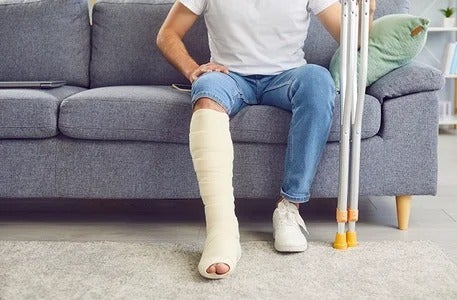
Mobile elevating work platforms, more commonly referred to as aerial lifts, have replaced ladders and scaffolding on many job sites due to their mobility and flexibility. While theses aerial lifts often provide a more safe and efficient way to perform work at heights, unfortunately, these devices are not without their own inherent dangers. One of the known hazards associated with aerial lifts, which can lead to personal injury or death, is contact with ceilings, pipes and other overhead objects which result in trapping and crushing injuries to the operator. Occasionally, operators of these devices have been known to become trapped between the machine and surrounding objects forcing their torso onto the operator controls. As the person’s torso is forced onto the controls, the controls become activated in a manner that further moves the machine and operator towards the obstacle, worsening the operator’s injuries and often resulting in death to the operator. This situation is known in the industry as Sustained Involuntary Operation. Use of a safety system which eliminates Sustained Involuntary Operation gives the operator a vital second chance. In the mid to late 2000s, along with the growth of use of aerial lifts came an increase in the number of serious or fatal accidents, with an increase in reports of operators becoming trapped over the platform controls of the machines. Instead of accepting any blame for these injuries and deaths, or engineering out, or guarding against the known risk of Sustained Involuntary Operation, the manufacturers of these machines often blamed these incidents on operator error, site conditions, and poor operator training. There are two primary ways to eliminate or guard against operator entrapments due to Sustained Involuntary Operation: Physical Guarding and Pressure Sensing Devices. Physical Guarding These are typically steel structures designed to physically protect the operator from colliding with any surrounding structure before a trapping or crushing incident can occur. The idea is, once the operator is alerted to the hazard the steel structure will give the operator protection and allow him/her an opportunity to maneuver the platform back to a position of safety. Pressure Sensing Devices There are several different brands and types of pressure sensing devices, however, in general they all act in a similar manner. A pressure-sensitive edge sits between the operator and the platform control panel. If the operator is pushed against the control during a potential trapping or crushing incident, the pressure sensing device stops the machine from operating, thereby preventing the machine and operator moving towards the obstacle. The technology appears to function in a similar manner to how an elevator door operates while closing. In the elevator door situation, when the pressure sensor comes in contact with an object, the doors automatically reverse and open back up so that the object, usually a person or their limbs doesn’t get trapped and crushed by the closing door. This pressure sensing safety device, for use in Aerial Lifts to prevent Sustained Involuntary Operation, has been available on the market since a company, Nifty, first introduced its SIOPS device in 2009. Although this technology has been available since 2009, many other manufacturers of Aerial Lifts have been slow to adopt and incorporate this safety technology into their products. Moreover, while these pressure sensing safety devices can easily be retro-fitted to many Aerial Lifts already on the market, the manufacturers and equipment rental companies that rent out this type of equipment, have been lackadaisical in their efforts to retro-fit and make safe these existing pieces of equipment. Unfortunately, these manufacturers and equipment rental companies seem content to put profits over safety. Rather than incorporate this lifesaving technology, they continue to conduct business as usually and when a worker gets injured by this industry-wide risk the manufacturers and equipment rental businesses simply blame the worker for inattention or lack of proper training, rather than take responsibility for their failure to utilize this existing safety technology on their equipment. Images courtesy of Niftylift, Genie, & JLG Original Parts. White Paper “Intelligent Secondary Guarding: Advancements in MEWP Safety. Preventing Trapping and Crushing Incidents. Mark Keily, QHSE Director, Nationwide Platforms.
Unfair Debt Collection – Know Your Rights
Abusive debt collection practices can take a terrible toll, emotionally and practically. Beyond the fear, stress and embarrassment, families can have their bank accounts frozen, making it impossible to pay for their most basic needs. Debt collectors frequently place incorrect information on people’s credit reports, impairing their ability to secure credit, housing and even employment on some occasions. Many of our clients have experienced harassing phone calls; demands for payments not truly owed; illegal threats of bogus consequences for failing to pay, up to and including imprisonment; or lawsuits to collect stale debts that are barred by the applicable statute of limitations. These abuses are disturbingly common. Consumer complaint data indicates the most common grievances are mistaken information and what the Consumer Financial Protection Bureau calls “aggressive communication tactics and threats.” Fortunately for West Virginians, strong state remedies exist. Significant penalties are provided, along with the right to recover your actual damages, including for your emotional distress, and your attorneys’ fees. Consider contacting us if you have been subjected to the practices described herein, including: (1) threats that non-payment will result in arrest or garnishing wages without informing the consumer that a judicial order is necessary for any garnishment; (2) the collection of old debt that may be passed the statute of limitations; (3) collection or threatened assessment of attorneys’ fees; (4) the communication with any employer of information relating to an employee's indebtedness; (5) the disclosure of information relating to a consumer's indebtedness to any relative or family member of the consumer if such person is not residing with the consumer; (6) any communication with a consumer whenever it appears that the consumer is represented by an attorney; (7) any false representation of the extent or amount of a debt, or of its status in any legal proceeding; (8) any false reports by creditors to credit reporting agencies and (9) auto-dialed collection calls made to your cell phone without your permission.
October 16: National Bosses Day
Today, October 16, is National Bosses Day. I’m fortunate to work for Jason Causey, who’s not only one of the very best and brightest in his field (representing consumers like you and me), but he’s also very kind and wants to help people in financial difficulty. Bosses Day gives the staff here at Bordas & Bordas an opportunity to show our appreciation to those we work for and with whom we spend so much of our time. Some years we provide a nice breakfast for them, which proves a little difficult since usually several are out of the office attending trials, depositions and hearings. Not sure what’s in store for them this year?? What makes a good boss? Fairness, honesty, understanding, approachability, a good communicator? Sounds like the traits you would want to have in your attorney, right? Also, good traits to have as a parent, child, student, neighbor or friend. The origin of Bosses Day dates back to 1958. Patricia Bays Haroski, an employee at State Farm Insurance Company in Illinois, registered it with the U.S. Chamber of Commerce. Ms. Haroski chose the date because it was her father's birthday. Who was her boss? ....her father. Hope you take time this month to recognize your boss! Image courtesy of Unsplash
Contact Us

The information you obtain at this site is not, nor is it intended to be, legal advice. You should consult an attorney for advice regarding your individual situation. We invite you to contact us and welcome your calls, letters and electronic mail. Contacting us does not create an attorney-client relationship. Please do not send any confidential information to us until such time as an attorney-client relationship has been established.
The results in a legal case depend on a variety of factors, many of which are unique to each case. Prior results by this firm or any other do not guarantee future results. Case results presented here are illustrations of the type of work done by Bordas & Bordas and not a guarantee that any prospective case will yield any particular amount.
Request Consultation
Call 304-242-8410 or fill out the form below.