
Prior to this, the word was we are going to have a wet and cold winter. But according to the Weather Channel, the National Oceanic and Atmospheric Administration (NOAA) is predicting an El Niño winter season, meaning a warmer than average winter. For our area in the northeast, we will see average precipitation or less than average precipitation for the first part of winter and then below average for the second part of our winter season. We have seen an up and down pattern to our temperature thus far but predictions are for warmer than normal temps for most of the country. The Farmer’s Almanac is calling for warmer temps with precipitation for our winter season. I will take that over last winter where we had waterline breaks all over the city and meters freezing at the curbside. Image courtesy of Unsplash.
Be Wary of Internet Trolls When Online Shopping
It’s the time of year where even those who wouldn’t be caught dead at the mall have the occasion to shop. Pretty much everyone finds themselves in need of gifts for family, friends, and coworkers, Secret Santa exchanges, silly White Elephant games, or party favors or hostess gifts. The amount of time that can go into searching for and purchasing all of these presents can really add up, and with the many other obligations that arise during the holidays on top of everyday life, many people find online shopping the fastest and easiest way to get all of their holiday shopping done. In this day and age, most people have at least some experience with online shopping, and for some, it is the only way they buy things. In general, online shopping is a secure and convenient way to quickly purchase anything you need in the comfort of your home or from your phone while on the go. However, particularly around the holidays where more people than ever are shopping online, there are a few things to be mindful of to protect yourself and your bank accounts. First, shop from trusted websites. It can be tempting to run Google searches to look for an item you want at a much cheaper price from a site other than Amazon, eBay, or a major retail store, but purchasing from unfamiliar websites can run the risk of hacking and malware. Strange site addresses, inability to find a legitimate way to contact customer service, poor design, and prices that just seem way too good to be true can all be signs that you should steer clear of typing any personal or credit card information into the site. You are better off sticking to known sites and marking alerts for price drops in items to help find the best deals. In the end, you may pay more for that coat or electronic device, but you can have peace of mind that your identity is secure and you can contact a reliable representative from the company if you have any issues with your orders. Do not use a debit card when making purchases online, use a credit card instead. This will reduce the ability of anyone who may wrongfully obtain your information to actually access your bank account. Instead, you can monitor your credit card statement and quickly dispute any charges you do not recognize. The credit card company will assist you in investigating, and you will not be liable for fraudulent purchases. Disputing fraudulent charges on a debit card is more difficult and riskier to you, as it is your money that has been taken rather than the bank’s, and withdrawals of large sums can put you in a bad spot financially, even if you are eventually able to recover the money. On a similar note, keep a close eye on your credit card. Sometimes purchases may take time to show up on your statement, but regularly checking between the purchases that you have made and the charges on your credit card will help alert you to a potentially fraudulent purchase. Addressing potential fraud as soon as possible will help prevent additional theft or further use of your card and information. Be careful of the information that the website is asking in order for you to make a purchase. Anything other than your payment information and an address to ship the items to can be a red flag. Websites certainly do not need your social security number or birthdate to complete an online purchase. You should also be wary of sites that require extensive set-ups of accounts or make you click through emails or other websites, especially pop-ups, in order to make a purchase. These can indicate phishing schemes. Finally, think about where you want your packages delivered and whether extra security measures should be taken for any particular item you are purchasing. While leaving packages on your front porch from time to time may be no concern for you during most of the year, the holidays are a great time for someone to snatch a few items due to the larger volume of deliveries and better chance that something expensive is contained in the box. Consider having valuable items shipped to an office address or requiring a signature for delivery. You can also try to schedule deliveries to a day when you are certain someone will be home, like a Saturday morning. Having some friendly conversations with trusted neighbors can also help you each to keep an eye on the other’s porches and stay alert to suspicious activities. Taking a few extra precautions while doing your holiday shopping online can help you keep peace of mind over your purchasing and prevent the unlikely, but highly stressful and inconvenient, incidence of identity theft or credit card fraud. Image courtesy of Unsplash.
In Wheeling for the Holidays
Almost Heaven is the perfect term for the “Friendly City” of Wheeling during the holiday season. My opinion may be slightly biased since I have not spent the Christmas season anywhere else. Everyone in the city seems to fully embrace the holiday season. My fondest holiday memories always happened tucked in the hills of beautiful West Virginia. Smelling my grandma’s fresh baked sugar cookies; splattering the countertops with holiday colored icing; building snowmen and sled riding. My favorite holiday tradition is seeing the lights. Wheeling is famous for Oglebay’s magnificent display for the Festival of Lights. There is nothing better than a playlist full of Holiday music and driving through the lights. I’m excited to see how the 3D Glasses add a new layer of fantastic to the already incredible lights. Wishing everyone a Joyous Holiday Season! Image courtesy of Unsplash.
Army West Point to Honor the Soldiers of "The Big Red 1" During Today's Game Against Navy
This afternoon, the Army West Point football team will meet arch-rival Navy for the 119 th installment of the greatest rivalry in all of sports. Although the Army-Navy game is always important, this one is particularly special to me because Army will be honoring the soldiers of the 1 st Infantry Division, better known as The Big Red One. The Big Red One has a long and storied combat history extending back to World War I, when it marched into battle under the command of General John “Blackjack” Pershing (West Point Class of 1886). In fact, the Army Team is honoring the 1 st ID as part of the effort to commemorate the 100 th anniversary of the end of that war. I had the honor and privilege of serving in The Big Red One during my deployment to Bosnia as part of the Division’s cavalry squadron, the 1st Squadron of the 4th US Cavalry. As the First Infantry Museum describes it: Organized on June 8, 1917, for duty on the Western Front in World War I, this first permanent division in the regular Army has seen action in all American wars since 1917, except the Korean, and has performed magnificently in all of its service. Often the first unit of the Army to deploy and engage the enemy, the division has been characterized by an ability to learn systematically from experience and to distill this learning into techniques and methods to improve battlefield performance. Central to this learning has been the training of soldiers and the development of competent leaders at all levels. In the process the “Big Red One” (so called for the red numeral that has adorned its shoulder patch since 1918) has also been characterized by a remarkable esprit that has remained with the veterans long after their active service has ended. https://www.fdmuseum.org/about-the-1st-infantry-division/history-of-the-first-division/ Apart from the remarkable history of The Big Red One, the uniforms to be worn by Army are excellent. https://www.againstallenemies.com/2018/12/2/18122996/army-black-knights-unveil-the-big-red-one-uniforms-ahead-of-army-navy-game As a proud graduate of the United States Military Academy at West Point and as an equally proud Veteran of The Big Red One, I hope you all get a chance to watch the game. Go Army! Beat Navy! No Mission Too Difficult. No Sacrifice Too Great. Duty First! Image courtesy of Big Red One Football.
What is the Discovery Phase of a Lawsuit?
One of the main tasks that attorneys do on a daily basis is to give clients an update on where their case stands after a lawsuit has been filed. After filing a lawsuit and receiving an opposing party’s responsive pleading to the lawsuit, the parties will engage in the discovery phase of litigation. What is the discovery phase you may ask? Discovery is the process wherein each side attempts to gather and obtain more information regarding the facts surrounding the subject lawsuit. One way to gather this information is through “discovery requests.” These discovery requests often include three parts: (1) Interrogatories; (2) Requests for Production of Documents; and (3) Requests for Admission. Interrogatories are questions posed in a written document to the other party and are aimed at gathering information on certain topics that are relevant to the lawsuit at hand. Requests for Production of Documents are requests that require the other party to produce certain documents that your attorney believes may contain certain information that would be helpful or informative to the matter at hand. Lastly, Requests for Admission ask the other party to admit or deny certain facts. As you can tell, all of these three discovery mechanisms are aimed at gathering additional information surrounding the claims and defenses involved in the lawsuit. Another part of the discovery process which many find to be the most important mechanism to fact finding is the taking of depositions. A deposition is a legal proceeding wherein attorneys have the ability to question witnesses in regard to facts or circumstances surrounding the lawsuit that has been filed. During the deposition, the witness is under oath and a court reporter is there to transcribe everything that is said. Often times the deposition will be videoed as well. The purpose of the deposition is again to find out additional facts and information relating to the case so that the parties have all the pertinent information needed to evaluate the case and determine the next step in the process. Sometimes this next step will be to depose another individual with information whose name was brought up in discovery responses or a deposition. Other times, the taking of a deposition will lead to the necessity of serving more discovery requests directed towards specific topics or areas which the attorney believes needs to be further developed. In sum, there are many discovery mechanisms out there that can be used by your attorney to strengthen your case and progress your case to resolution – whether that be through settlement or trial. Therefore, when you hear from your attorney that your case is in the discovery phase – know that your attorney is working hard to move your case along and to obtain all the information necessary to successfully represent you. Image courtesy of Pixabay.
Are Thank You Cards a Thing of the Past?
Whatever happened to sending out thank you cards after a bridal or baby shower, graduation, wedding, or just a special gift from someone? Is this to old fashion for the younger generation? In the past few years, I’ve sent out cards with a check in it or a gift for these events and never received a thank you by the way of a thank you card, e-mail, phone call or text just to let me know that the card or gift was received. But man, oh man they cashed that check in no time flat, and that’s how I knew they did receive my card in the mail. The gifts I’ve sent I have no way of knowing it they every received them or not. Maybe the parents didn’t know their child received a card from someone for their graduation, I get that one, that’s on the child, but for all other events people who receive gifts from a bridal or baby shower or a wedding should know that they need to send out a thank you card. I’m just surprised by how many people these days don’t do this. Growing up my Mum taught all her children that sending a thank you card was the proper thing to do and if you didn’t do it in a timely manner, boy was there heck to pay from Mum. God help you if your dad became involved. I’m not perfect and I’m sure I’ve missed a person or two over my life time with a thank you card, but I’ve always tried to remember to say thank you. Maybe sending a thank you card is out dated, just saying thank you to a person lets them know you received their gift and you appreciated it and that can make all the difference in the world. Rock on People, Rock on Please spayed and neuter you pets. Please remember dog fighting is not a sport it is abuse and needs to be reported to the local authorities.
Hidden Benefits of Auto Insurance—Medical Payments Coverage
If you were to go to your “important papers” file at home and pick up a copy of your auto insurance policy, chances are that you will see all sorts of coverages and endorsements that could not be more confusing if they were written in ancient Greek. Folks may have a very basic understanding of phrases like “underinsured motorist”, “bodily injury liability”, or “personal effects”, but if they are asked how those terms apply to the insurance coverage available to them, most people are in the dark. The purpose of this article is to provide a basic understanding of “medical payments” coverage, and to caution the reader about handling claims under that coverage. Medical payments coverage, or “med pay” as it is known in the industry, is coverage that will reimburse the insured party for medical, hospital, and similar expenses incurred as a result of an injury sustained while riding in a car covered by the policy. The coverage is optional and can range from as low as $500 to as much as $50,000 or more. In general, it doesn’t matter how the accident that caused the injuries happened, or who was at fault. If I am driving home in my car while eating a sandwich and talking on my cell phone and I end up running off the road and into a tree, the expenses I incur for treatment of my injuries are going to be reimbursable under my med pay coverage. All I have to do is send a copy of the bill to my insurance carrier, and they should send me a check. Sounds pretty simple, right? In most cases, it is. However, there are some common pitfalls that most folks aren’t aware of. I’ll talk about one of those pitfalls in this article, and another in a subsequent submission. First, you need to keep in mind that if you are paid med pay benefits because of an accident that was caused by someone else’s negligence, the insurance company has a right of subrogation. Subrogation means that if you recover damages from the party who caused the accident, you are obligated to reimburse your insurance company the money that they paid you under the med pay coverage. Here is an example. Joe Blow runs a red light and plows into your car, resulting in you being taken to the emergency room. You incur a $5,000 bill, so you collect $5,000 in med pay benefits from your own insurance company. You then file a claim against Joe Blow and reach a settlement with his insurance company. At that point, you are obligated to repay your insurance company the $5,000 they paid you under the med pay coverage. In essence, and subject to one or two exceptions, the insurance carrier gets its money back. In nearly 40 years of practicing law, I have yet to have a case where a client was not surprised by the fact that after collecting benefits for which he has paid a premium for years, the insurance carrier is entitled to be repaid. There is sometimes a way to minimize what you have to repay your insurance carrier under these circumstances. In WV, an auto insurer is required to bear its fair share of the expenses you incurred in order to make your recovery against the guy who caused the accident. Generally, those expenses will be attorney fees, which most often amount to a percentage of the overall recovery. Thus, if you paid your attorney 1/3 of the amount you recovered in settlement from the guy who caused the wreck, you can reduce the amount you are required to repay your auto insurer by 1/3 as well. At Bordas & Bordas, we don’t charge our clients a fee against money they recover under med pay coverage, so our clients benefit by collecting 100% of the benefits they are entitled to receive, and only paying back 2/3 of what they collected in the end. That benefit can amount to an extra $5000 or more in our client’s pocket in the end. Watch our blog for a second article about med pay benefits coming soon. Until then, feel free to contact any of our attorneys if you have questions about your medical benefits coverage.
What Does Standard Flood Insurance Cover?
A Standard Flood Insurance Policy under the National Flood Insurance Program (“NFIP”) pays only for the physical damage to your insured property that is “directly” caused by a flood. The amount of payment is determined by either the replacement cost or actual cash value of the damaged property, up to the policy limit. The NFIP offers two types of coverage for homeowners: building property coverage up to $250,000 and contents coverage up to $100,000. Replacement cost is the cost to repair or replace that part of a building that is damaged without regard to depreciation. Actual cash value is the replacement cost value, less depreciation for physical wear and tear. In order to qualify for replacement cost, your home must be a single family dwelling; your home must be your principle residence at the time of loss, meaning you live there 80 percent of the year; and your amount of flood insurance for building coverage must be at least 80 percent of the full replacement cost of your home, or be the maximum amount of insurance available for the property under the NFIP. Personal property is always adjusted at the actual cash value. The following items are covered under a standard building property policy: the insured building and its foundation; the electrical and plumbing systems; central air conditioning equipment, furnaces, and water heaters; debris removal; refrigerators (unless located in a basement), cooking stoves, and built-in appliances; permanently installed flooring (including carpet), paneling, wallboard, bookcases, and cabinets; window blinds; and detached garages (up to 10 percent of building property coverage). All other detached buildings require a separate policy. Personal property coverage protects personal belongings such as clothing, furniture, electronic equipment, curtains, portable air conditioners, portable microwave ovens, portable dishwashers, washers, dryers, food freezers (and the food in them), and certain valuable items such as original artwork and furs (up to $2,500). Neither type of policy covers precious metals, currency or valuable papers such as stock certificates. There is also no coverage for outside belongings such as trees, plants, wells, septic systems, walks, decks, patios, fences, hot tubs, and swimming pools. Likewise, there is no coverage for living expenses such as temporary housing or financial losses caused by business interruption or loss of use of insured property. Unfortunately, there are number of exclusions to consider as well. For example, there is an exclusion for “loss caused directly by earth movement even if the earth movement is caused by flood.” Similarly, damages caused by a sewer backup is only covered if the backup was a direct result of flooding. Many items located in a basement, including bookcases, window treatments, carpet, TVs, and audio systems are not covered. Perhaps, most importantly, damage caused by moisture, mildew, or mold that could have been avoided by the property owner is excluded from coverage. Therefore, a property owner must take prompt action to mitigate damages following a flood. Keep in mind if you feel you have not been treated fairly by your insurer following a flood, you have only one year from the date a notice of disallowance or partial disallowance of your claim was mailed to you to file a lawsuit in federal court. Caution should be taken even if you are having ongoing discussions with your insurer as this time limitation is likely to be strictly enforced by the courts. Accordingly, you should contact counsel promptly after receiving a notice of disallowance that you believe is unfair.
Paying it Forward with Kindness
Recently, I have become very humbled by a couple acts of kindness that I witnessed first-hand. It was a nice reminder that kindness, even among strangers, does still exist. The day before Thanksgiving I was a part of the “Rocking the Kettle” at the Mt. DeChantal Kroger for the Salvation Army. It was humbling to see how many people made it a point to give. Some even shared a quick story or two, and one particular gentleman told me how the Salvation Army provided for him and his family when he was growing up countless times and now that he is able to give back, he makes it a top priority. Acts of giving passed through in those few hours countless times… from the elderly to the very young, all walks of life. I had a very nice surprise when a very young boy and his father brought us out a hot coffee to warm us up for volunteering our time to help out. Nothing more humbling than a warm coffee and a hug from a very young kid as an act of kindness. A few days later, a gentleman paid for my order at a local drive thru. When I reached the window to pay, the employee told me the man in front of me had paid for me. On a day when I was rushing, not in the best mood and my commute to work was not going so good, it was just what I needed to turn my mood around and be reminded that the littlest acts of kindness go a very long way. You can believe I will pay it forward and I hope those of you reading this will have your faith in kindness restored and pay it forward too!
Air Pollution Now Kills More People Than Smoking
According to the World Health Organization (“WHO”) the basic act of breathing is killing 7 million people a year and harming billions more. Calling air-pollution the “new tobacco”, the WHO is sounding the alarm bell for over 90% of the world’s population who suffers the harmful effects of breathing toxic air. Rich, poor, young, old, the toxicity of our biosphere cares not, and virtually no one can escape air pollution in this day and age, creating a needless epidemic of preventable deaths and disability. Study after study is showing further harms from toxic air, including a “ huge reduction” in intelligence, millions of diabetes cases and the first direct evidence of pollution particles in mothers’ placentas. With smoking on the decline globally, air pollution now causes more deaths annually than tobacco according to the WHO. And the cost of the lost lives and ill health is a gargantuan economic burden, calculated to be an eye-popping $5 trillion (with a “T”) dollars a year, according to a World Bank report. The most vulnerable segment of our population is children, who are at the greatest risk of air pollution’s harmful effects, which include respiratory diseases, heart attacks, cancer and brain damage. The source of these harmful diseases stems largely from the very small particulates put into the air through various industrial processes, including transportation and energy production. These micro-pollutants can penetrate the body’s lungs and enter the body’s circulatory system where these particles can be transported and deposited throughout the body and cause all sorts of harm. Unfortunately, some of the most harmful sized particulates are also the smallest and can evade the body’s natural defense mechanisms. Although, globally-speaking, the U.S. fairs relatively better than many other countries, locally, we Ohio Valley residents face some of the greatest risks of any Americans from air pollution, due in large part to the heavy concentration of coal-burning power plants that line the Ohio River Valley, along with the added burden of benzene, a potent carcinogen, from natural gas drilling being injected into our air at levels well-above those considered safe. It is beyond unacceptable for West Virginians to be forced to pay the price for energy operations where the vast majority of the economic benefits are enjoyed by out-of-state, multibillion-dollar corporations while the real costs of such operations are foisted upon the public at-large. But unfortunately, there appears to be no legislative momentum to responsibly regulate the practices that pollute the air and cause such needless suffering amongst populations of all stripes. Here’s hoping that our elected officials soon recognize the danger and act to protect those they were elected to serve. Until then, if you believe you have contracted leukemia, cancer, or some other illness from polluted air, you should contact an experienced attorney right away to explore the matter further. Image courtesy of Unsplash.
Colder Weather Means Soup Season is Here!
As the colder weather starts kicking in so does my excitement for the season…SOUP SEASON!! When I was a child, soup consisted of chicken noodle and tomato. That was it, just those two soups. Now that I am an adult, I have ventured wayyyy out of my element by adding so many vegetables, beans, pasta and meats to my base; the options are endless! Not to mention chili! Turkey chili, white chili and sausage chili. These scrumptious meals-in-a-bowl coupled with buttered crusty bread are more than just dinner or lunch. They are comfort foods to warm us up on a cold day. They are good for our health when you add veggies. You can basically feed an entire family a healthy satisfying meal with minimal cost. So grab your slow cookers and recipes, the season is upon us! Image courtesy of Unsplash.
Giving Thanks in My Eyes
Every time I am writing my monthly blog there seems to be some holiday or special event that has some importance or memory in my life that I write about. So with it being November, and recently Thanksgiving, it might be natural for me to talk about my memories of Thanksgiving parades, the Charlie Brown Thanksgiving special, or eating turkey until I passed out on the couch from all the amino acid tryptophan. However, what I have decided to write about is my ex father-in-law, Ed Wagner, who passed away this past Friday. At first glance Ed was, like many people, not an extraordinary man in any way to the general public. His likes and interests were not extra ordinary. He loved sports, reading the newspaper and scratch off lottery. He was not the president of any business or country, he was not a financially wealthy man, and he never was in a newspaper for some heroic event. Nevertheless, he was an extra ordinary man. If one was to learn about who he was to his family and loved ones, he might appear to be an extra ordinary man. He was a loving husband for 53 years. This in itself makes him extra ordinary person to many people. In today’s world where the divorce rate is between 40 to 50%. To remain happily married for over 50 years is extra ordinary. To be committed to work through the ups and downs of a marriage and remain happily married to his death, made him and his wife, Pat, extra ordinary people. After both of his daughters divorced, he continued to have positive and friendly relationships with his ex son-in-laws. Many father-in-laws may never get along with their son/daughter in laws, even when the same remain married to their child. To still have the ability to keep a positive relationship with the ex in laws after a divorce is extraordinary. He taught his grandchildren how to ride a bike, swim, play games or some other childhood activity with full vigor and love. The tears that flowed at his funeral was evidence he was an extraordinary man to his family and loved ones. What makes me understand in my eyes that he was an extraordinary man was an event with one of my sons. I was up late, around midnight, and getting ready for Thanksgiving, when I heard one of my boys, Aaden, in his bed. I walked in to see what was going on; I realized he was crying. I thought he was not feeling well and asked him what was wrong. Aaden, who is 9, turned to me, with tears in his eyes and said “I miss Pap Pap.” At that point, I realized that Ed Wagner, who may never have been a president of any business or country, was not a financially wealthy man, never was in a newspaper for some heroic event, was an extraordinary man. Image courtesy of Unsplash.
Contact Us
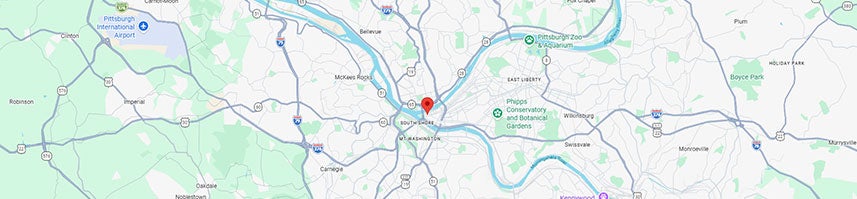
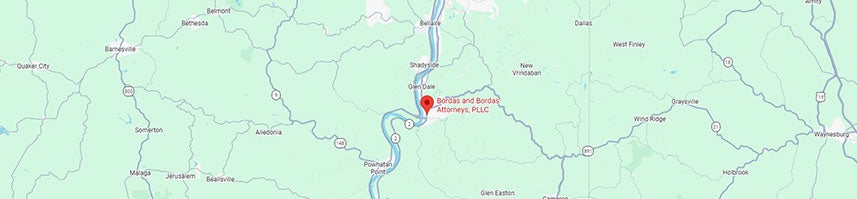
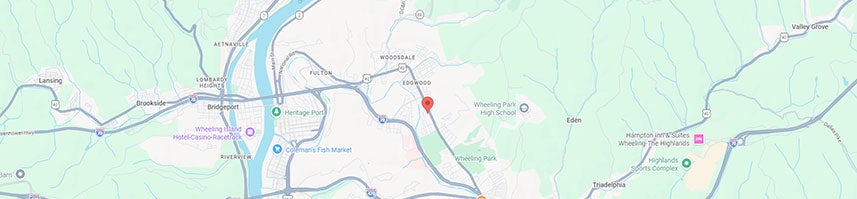
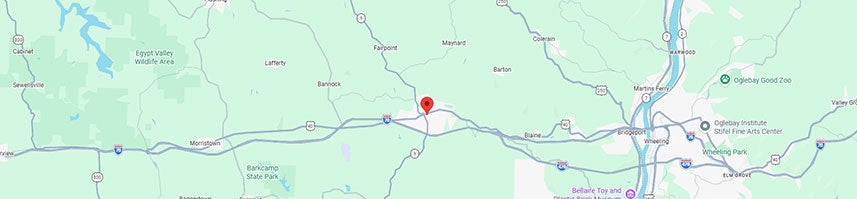
The information you obtain at this site is not, nor is it intended to be, legal advice. You should consult an attorney for advice regarding your individual situation. We invite you to contact us and welcome your calls, letters and electronic mail. Contacting us does not create an attorney-client relationship. Please do not send any confidential information to us until such time as an attorney-client relationship has been established.
The results in a legal case depend on a variety of factors, many of which are unique to each case. Prior results by this firm or any other do not guarantee future results. Case results presented here are illustrations of the type of work done by Bordas & Bordas and not a guarantee that any prospective case will yield any particular amount.
Request Consultation
Call 304-242-8410 or fill out the form below.