
The Beast of the East, a baseball tournament played at fields around the Ohio Valley, is quickly approaching. The Beast of the East is major attraction to teams all over the East Coast and there have even been teams in Canada to have played in the tournament. The 26th annual tournament is set to be one of the biggest yet with 130+ teams scheduled to play in the Beast. The Beast not only draws a numerous amount of teams, but also college scouts looking to recruit some of the top talent in the tournament. The Beast happens to fall on 4th of July weekend this year, which is a big plus for the city of Wheeling. With the players, coaches, and family members of the team coming to Wheeling, they will also be able to partake in the various 4th of July activities around the area. With the combination of great baseball and fireworks all around the area, it should give Wheeling a good representation to the visiting teams. Overall, the Beast definitely benefits Wheeling. With local hotels, restaurants, etc. booming with the burst of people coming in for the Beast,Wheeling will definitely see an economic growth the remainder of this week into the weekend.
Don't Shop, Adopt
It should come as no surprise that we here at Bordas & Bordas are extreme animal lovers. Many of our attorneys and staff are very active in volunteering for our local animal shelters and we strive to support these worthy organizations any way we can. While checking my social media this weekend I saw that a handful of my friends had recently purchased a puppy. With the summer months being warm it only makes sense to get a puppy now because it is easier to housebreak them in July than in the cold month of December. After looking at all the new puppies, I continued scrolling and saw that the Marshall County Animal Shelter had a variety of dogs both young and old up for adoption. It made me stop and wonder where my friends had gotten their new furry friends and whether or not they supported the local animal shelter. I myself have made the mistake of finding my dog through the internet, which is not always the most reliable source because many online animals do come from puppy mills. According to the Humane Society, there are about 10,000 puppy mills in the United States with about 2.4 million puppy mill puppies being sold each year. Comparing that to the 3 million innocent animal shelter dogs and cats that are euthanized each year makes me wonder why people choose to purchase from a website or pet store instead of checking the local animal shelter first. The answer being a variety of things like the breed a buyer is looking for, the age of the animal, or even the fact that they don't want the new pet to have a bad past. With the second anniversary of my internet purchase coming up, I have to be honest and say that although I love my dog, I wish I would've adopted from my local animal shelter. I recently visited the Marshall County Animal Shelter and the amount of dogs and cats waiting to be adopted was truly heart breaking. If I had more time I would most definitely adopt one and give it a forever home. Many people do not like adopting from an animal shelter because of the history of the dog, but what many look past is the fact that this is the animals second chance and if you show him or her a better life than what they had before they will love you forever. Puppy mill puppies are usually overpriced and come home with various health problems that result in a pricey veterinarian bill; not counting the neutering or spaying operation. By adopting from an animal shelter like Marshall County's, one can adopt a cat for an $85.00 fee and a dog for a $100.00 fee both including vaccinations, a flea treatment, spay/neuter operation, a tattoo ID and knowing in their hearts that they have been rescued. So many pets are unwanted and if we spay and neuter them, we as a country can limit the amount of euthanization. This is why Bordas and Bordas founding partners Jim and Linda Bordas have taken a stand for innocent animals and made a generous contribution to The Tiffany Dlesk Spay-Neuter Clinic. By adopting instead of purchasing from an unknown puppy mill owner, you can be assured that you have saved a life. Remember that our pets may only be a part of our life, but to them we are their whole life. If you're looking for a new furry family member, I encourage you to stop down and check out the adorable dogs and cats available for adoption. The shelter is open Monday-Saturday 11-4 and Sunday 12-4.
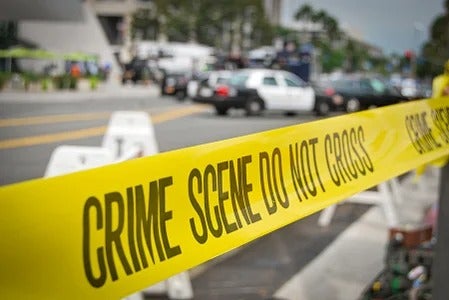
Changing Lanes When Passing Stopped Emergency Vehicles Not Only Prevents Injuries And Saves Lives, It Can Avoid Significant Fines
On June 19, 2014, a West Virginia State Police Trooper was seriously injured when struck by a hit and run vehicle on the West Virginia turnpike in Southern West Virginia. Since 1999, more than 150 law enforcement officers throughout the United States have been killed after being struck by vehicles along the nation's highways. Between the years of 2003 and 2010, 962 workers were killed while working at a road construction site, with the majority of these fatalities resulting from being struck by a vehicle. Needless to say, hundreds of people, including emergency responders and stranded motorists are killed or injured throughout the United States every year when they're struck by a vehicle after pulling over to the side of the road or highway. On average, these "struck-by" crashes kill one tow-truck driver every six days; 23 highway workers and one law-enforcement officer every month; and five firefighters every year. Move Over Laws have been enacted in all fifty statesrequiring drivers to change lanes and to provide law enforcement officers, emergency personal, tow truck drivers, construction workers and others on roadsides with a safe clearance. The failure to "move over" can result in criminal charges, fines and possible jail time. Ohio's Move Over Law requires drivers to shift over one lane when passing any stationary public service vehicle, emergency vehicle or road service vehicle with flashing lightson the side of the road. If changing lanes safely is not possible, a driver is required to slow down, proceed with caution, watch for objects to appear in the lane of traffic and be prepared to stop. Any person violating Ohio's Move Over Law is guilty of a minor misdemeanor. Violators are fined double the amount of$150 for the first violation (a minor misdemeanor), double the amount of $250 for the same violation within a year of the first, and double the amount of $500 for more than two violations in a year. ? Pennsylvania's Move Over Law or "Steer Clear Law" was originally implemented in 2006 and requires drivers to move over or slow down when they encounter an emergency scene, traffic stop or disabled vehicle. Like Ohio, Pennsylvania requires vehicles approaching or passing an emergency response area to move to a non-adjacent lane, if possible, and if not possible, to pass the area at a careful and prudent reduced speed.An emergency response area is defined to be an area where emergency service responders render emergency assistance on or near a road way or where a police officer is conducting a traffic stop. Emergency service responder is broadly defined to include law enforcement personnel, coroners, firefighters, medical examiners, ambulance personnel, towing and recovery personnel, highway maintenance and construction personnel and hazardous material response team members. Violators are fined $250.00 and if serious injury results are subject to license suspension. ? West Virginia's Move Over Law was originally implemented in 2003 and applies whenever there are law enforcement, emergency vehicles, first responders and tow truck on the side of the road. Drivers are required to proceed with caution and move to a non-adjacent lane if possible when traveling on four-lane highways. On non-divided highways and streets, drivers are directed to reduce their speed to fifteen miles per hour, depending on road conditions if changing lanes would be impossible or unsafe. Violators may be found guilty of a misdemeanor, subjected to a fine of up to $500, in addition to possible jail confinement of up to sixty (60) days. If the violation results in property damage, a sixty (60) day license suspension occurs. The license suspension increased to six (6)months for injury to a person and two (2) years for a death. ?Summer means vacations, increased highway traffic and road construction. It also means an increase in the chances of coming across emergency responders. Slowing down and moving when approaching a disabled vehicle, law enforcement officer or any other first responder may prevent an injury, or possibly even death. Slowing down and moving over will definitely prevent the fines and possible loss of driving privileges described above. We at Bordas & Bordas wish you a safe and happy summer driving season.
Cell Phone Privacy and Election Controversy on the Bordas & Bordas Legal Review
Watch this week's episode of the Bordas & Bordas Legal Review in which Jamie and Chris discuss the issue of cell phone privacy and the Supreme Court of the United States' recent decision requiring warrants to be obtained by police before cell phone searches can occur. You'll also learn about the election controversy in Mississippi, in which the establishment GOP, represented by Thad Cochran, fought off a Tea Party challenge from State Legislator, Chris McDaniel. Was there election fraud? You can view the Bordas & Bordas Legal Review locally on Comcast Channel 14 or also online, both streaming and in the archive. The current episode is embedded within this post. Click here to view the program on vimeo, or watch the embedded version if your browser supports it. Click this link to see the WLUTV schedule so you can view a live-stream of WLUTV and check this page for a schedule of when the program airs.
US Supreme Court Opinion in Burwell v. Hobby Lobby Expected Monday
The United States Supreme Court is expected to announce its decision in Burwell v. Hobby Lobby tomorrow morning. You can read advance analysis of the case at the WVSCBlog at WVSCBlog.com or by following this link the WVSCBlog's coverage: Sunday Prayers Before Monday's Decision in Burwell v. Hobby Lobby. The much-anticipated decision has sweeping implications for religious freedom, abortion, birth control, the Affordable Care Act (Obamacare), and the kind of health insurance available to women in the United States
Bordas & Bordas Legal Review Explains Who Regan Is and Analyzes Peacock Trial Verdict
Join Jamie Bordas and guest Chris Regan for another exciting edition of the Bordas & Bordas Legal Review. On this week's show, Jamie Bordas tackles an issue that is certainly one that is "affecting our nation": just exactly who is Chris Regan? Learn about Regan's background and experience and how it allows him to comment knowledgeably on any issue that Jamie raises during the course of the show. The show also covers an issue related to our local area-the verdict in the Craig Tyler Peacock case. Bordas and Regan go over the strategies used by the prosecution and the defense and analyze the verdict thoroughly from a legal perspective. The show also tackles the Washington R*dskins naming controversy currently brought back to the forefront by the Patent and Trademark Office's taking away trademark protection from the NFL team. You can view the Bordas & Bordas Legal Review locally on Comcast Channel 14 or also online, both streaming and in the archive. The current episode is embedded within this post. Click here to view the program on vimeo, or watch the embedded version if your browser supports it. Click this link to see the WLUTV schedule so you can view a live-stream of WLUTV and check this page for a schedule of when the program airs.
Republican Party Betrays Conservatives in Mississippi
The highly-anticipated primary in Mississippi for the Republican Senatorial nomination didn't end the way many expected. But it wasn't just the result (a win for "Gentleman" Thad Cochran), that surprised, it was the methods the mainstream GOP used to claim victory for the six-term Senator. According to widely-publicized reports, Cochran won the GOP nod only by securing the votes of some 35,000 Democrats who were enticed to come out and vote in the Republican primary. And how did that happen? Well, here's one robo-call used by Cochran to help draw Democratic voters to his side: "If we do nothing, tea party candidate Chris McDaniel wins a nd causes even more problems for President Obama," the message continues. "With your help we can stop this. Please commit to voting against tea party candidate Chris McDaniel next Tuesday and say NO to the tea party!" Avoiding "causing problems" for President Obama hasn't been what the Republican party has been all about these past five years (in fact, the Republican Speaker of the house just sued him and other GOP bodies are calling for impeachment) but apparently, that's the message Senator Cochran wanted going out on his behalf. Also looming large in the race is the issue of voter fraud - another big Republican issue we've been hearing about. Apparently, in Mississippi, it is illegal to vote in the Republican primary if you already voted in the Democratic one. But voter rolls seem to show that many of Sen. Cochran's Democratic party supporters did just that: You can see in this image where three voters on just one particular page of the voter roles took "two bites at the apple" to help the establishment candidate win. Listening to conservative stalwart Sean Hannity on the radio yesterday, you could hear the emotion coming through as Hannity repeatedly called the mainstream GOP tactics " despicable," again and again. Hannity pointed out that using Democrats' votes to defeat a conservative candidate, with a healthy dose of voter fraud and the playing of the "race card" were tactics no party should use. Hannity said a conservative could not in good conscience vote for Cochran and McDaniel pointed out that these so-called RINO ("Republican In Name Only") type candidates made true conservatives feel unwelcome being in the GOP at all. He said the whole thing was "unbecoming of the party of Ronald Reagan. Hannity isn't the only conservative who is upset. Look at what dedicated constitutional conservative Mark Levin had to say about the matter: And former Vice-Presidential Candidate Sarah Palin is pressing claims of fraud by the establishment GOP: Of course, this all comes on the heels of well-known RINO Eric Cantor being defeated in a primary in Virginia. Unfortunately for conservatives, the Congress did not get the conservative, tea-party message, and put another moderate, compromising candidate in the Republican Majority Leader position. Establishment Republican Kevin McCarthy has shown to have little or no fire on conservative issues like immigration, gun control, abortion or same-sex marriage. One thing is for sure. These types of incidents, where strong conservative candidates are cheated by the Republican party out of their rightful place in leadership are going to continue to rankle conservative and tea-party voters. As Sarah Palin put it: "If Republicans are going to act like Democrats, then what's the use in getting all gung-ho about getting Republicans in there?" Some wonder if perhaps a third party will be needed so that conservatives have candidates who really care about, and are willing to act on, their issues. As Palin points out, establishment Republicans are more compromising conservative principles than they are living them. Radio host Andrew Wilkow - another constitutional conservative, believes that McDaniel should run as an independent and reclaim the seat for the true party: We all have to stay tuned though. McDaniel has refused to concede the race. Perhaps, with skillful lawyering, this conservative aspiring Senator will be able to utilize the civil-justice system to right the wrongs his supporters have identified in the Mississippi election process. That may be the only way for him to take Sen. Cochran's place on the ballot this Fall and give conservatives a reason to come out and vote. Tune into next week's Bordas & Bordas Legal Review where Jamie and I will continue the discussion on this developing political story.
A Big Win for Cell Phone Privacy
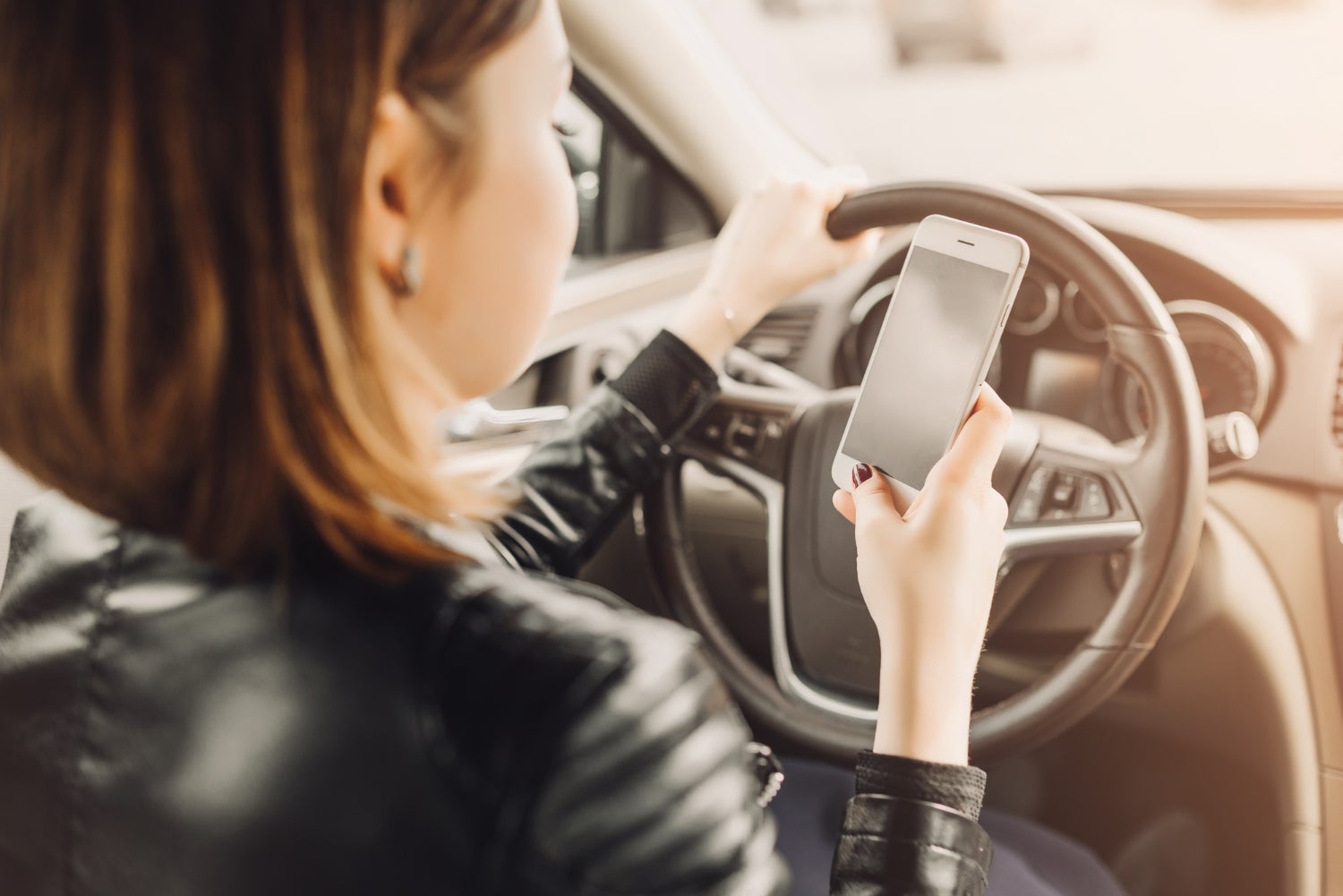
It's a scene we've watched play out hundreds of times on our favorite police drama: someone is arrested for a crime and is then searched. In fact, it's routine procedure in every police department in the country. And it's sensible too. Federal courts have always approved of it. For one thing, conducting an immediate, warrantless search protects police from harm that can be inflicted by any hidden weapons. It also insures that any evidence in the arrestee's possession can be secured and preserved. But now let's add a modern twist. Suppose the arrestee has a cell phone. How far does this power to search go? Can the arresting officer rifle through the call log and the list of names and addresses in the contacts list? What about texts, e-mails and pictures? These were the questions raised in Riley v. California, a case decided yesterday by the Supreme Court of the United States. There were actually two cases heard together, but the more interesting facts come from the Riley case itself. The defendant, Riley, was pulled over for driving with expired license tags. When running Riley's license, it was discovered that his license had been suspended. Riley's car was impounded and then searched, disclosing two handguns located under the hood of the car. Riley was arrested and a personal search was conducted. Police seized a cell phone and found incriminating pictures and videos that tied Riley to an earlier drive-by shooting. It seems to me that a case like this would divide an already divided Supreme Court. Many cases these days are decided on razor-thin votes, with the justices splitting a long well-established ideological lines. But, surprisingly, the Court's decision in this case was unanimously in favor of privacy rights. Chief Justice Roberts, writing for the Court, humorously acknowledged how commonplace cell phones have become: "odern cell phones...are now such a pervasive and insistent part of daily life that the proverbial visitor from Mars might conclude they were an important feature of human anatomy." Roberts also acknowledged that cell phones, especially "smart phones", place "vast quantities of personal information literally in the hands of individuals." Therefore, this case raised far more complicated issues than the run-of-mill search scenario. Two rationales were offered in an effort to justify cell phone searches. First, it was argued that immediate, warrantless searches were necessary to protect arresting officers. The Chief Justice, however, required little effort to dismiss this argument: "Once an officer has secured a phone and eliminated any potential physical threats,...data on the phone can endanger no one." Second, it was argued that it was critical to search cell phones immediately to preserve the integrity of their data. But the Court rejected this argument too, finding that no real risk existed that cell phone data could be lost or corrupted before a proper search warrant could be obtained. The Court spent a considerable amount of time discussing the privacy interests at stake. Cell phones contain vast quantities of private information including financial records, data disclosing our exact physical movements, and "apps" that can reveal intimate details of our interests, activities, and practically any other aspect of our lives. When weighed against the minimal interference with law enforcement, the Court was convinced that the individual's right of privacy should prevail. As the Chief Justice concluded: "Modern cell phones are not just another technological convenience. With all they contain and all they may reveal, they hold for many Americans 'the privacies of life.' ...The fact that technology now allows an individual to carry such information in his hand does not make the information any less worthy of the protection for which the Founders fought. Our answer to the question of what police may do before searching a cell phone seized incident to an arrest is accordingly simple--get a warrant." This case is a big win for privacy rights. No one would suggest that police could rummage through banker's boxes full of documents just because they were in the car when an arrest was made. Cell phones are no different. The fact that all of this data can now fit in the palm of your hand or your back pocket doesn't make it any less worthy of protection. I submit that the justices--conservative and liberal alike--lined up on the same side because protecting cell phone privacy is right as a matter of law and as a matter of common sense. The outcome of this case wasn't just a win for one man. It was a win for all of us.
Local Town Spreads PTSD Awareness
Although I go to college and am currently interning in the beautiful state of West Virginia, my heart will always have a special place for my hometown of Shadyside, Ohio. The Ohio Valley knows us for our excellent football team, our Tiger pride, and especially our famously known main road, "the loop." Every third weekend in June my hometown shuts down the loop and throws a big party for alumni, residents, and visitors from near and far. Everyone is welcome to walk the loop, where food, craft vendors, activities for children, and more are provided. For those of you who don't know, June is Posttraumatic Stress Disorder (PTSD) month. PTSD is a type of anxiety disorder. It can occur after you have gone through an extreme emotional trauma that involved the threat of injury or death. About 67 percent of Iraq and Afghanistan veterans suffer from PTSD. My hometown has tried to bring attention to this disorder by starting the "Miles for Mike" 5k Run/Walk in honor of veteran Sgt. Michael Karkowski, who was diagnosed with PTSD and severe depression after returning home from Afghanistan. Sadly, in 2009 he took his own life. His wife and two children started "Miles for Mike" in October 2013 to help bring awareness to this invisible wound. The 5k takes place on the loop and the east side of town, where the terrain is flat so many can easily participate. Unfortunately, I had another commitment the night of the 5k this year, but heard wonderful things about the turnout. After seeing photos of the event on social media, I had goosebumps; to think that my little hometown of 3,800 people made a commitment and came out to support both the Karkowski family and awareness of PSTD is an amazing feeling. Although it is under tragic circumstances, this family has taken the negative and created a positive event in honor of Mike in the hope that they can help prevent another family from going through the same tragedy. As many soldiers continue to return home, it is important that all family members know about and look for the signs of PTSD. Although I love the Shadyside Tigers, it is nice to see Shadyside put on the map for something other than our athletics. It shows that no matter what the situation, we are a tight-knit community. I am positive that "Miles for Mike" will be a successful event, bringing awareness to PTSD for many years to come.
The Supreme Court Has Done a Disservice to America by Striking Down Campaign Contribution Limits
This past April, Chief Justice John Roberts, Anthony Kennedy, Samuel Alito, Antonin Scalia, and Clarence Thomas voted to strike down campaign contribution limits. Chief Justice Roberts stated: ". . . we conclude that the aggregate limits on contributions do not further the only governmental interest this Court accepted as legitimate . . . . They instead intrude without justification on a citizen's ability to exercise 'the most fundamental First Amendment activities.'" While I respect Chief Justice Roberts' right to his opinion, there is certainly justification for limits on campaign contributions. Campaign finance laws were enacted to protect us from being bought and paid for by the few hundred mega-rich who garner favor, and let's face it, favors, from the people they pay to get elected. Closing our eyes to quid pro quo corruption, or the appearance of quid pro quo corruption, doesn't make it go away. Corruption will not end with the end of campaign contribution limits. It will only grow as the rich pour money into the coffers of people running for office to uphold their interests, not the middle class, and certainly not those at poverty level. Justices Stephen Breyer, Elena Kagan, Sonia Sotomayor, and Ruth Bader Ginsburg dissented. Justice Breyer made no bones about his strong disapproval by stating at the conclusion of his dissent: "The result, as I said at the outset, is a decision that substitutes judges' understandings of how the political process works for the understanding of Congress; that fails to recognize the difference between influence resting upon public opinion and influence bought by money alone; that overturns key precedent; that creates huge loopholes in the law; and that undermines, perhaps devastates, what remains of campaign finance reform." His words are absolutely true. This ruling will open the door for more and more reform until eventually elections will simply be a farce, and only those with the most money will have a political voice. You can read the decision and dissent here. When Shawn McCutcheon, a major Republican Party donor, said, "Ensuring that citizens are able to contribute to multiple candidates or causes who share their views only provides further support to a system in which 'We the People' hold the ultimate reins of power," he wasn't kidding. The problem with that statement is "We the People" are not billionaires or even millionaires. The majority of "We the People" are everyday working people trying to make a living and feed our families. What will happen to our voice? What power can we possibly hold in electing people that will uphold our interests? Well, for starters, educate yourselves before you vote. Find out who gave what to whom and how much. If you know the monkey on the backs of the people that are put into office, it won't come as a surprise when they do things contrary to your interests and the interests of every other hardworking American. You will know why.
Everyone Seems To Get It But Dan
Recently, the U.S. Patent office cancelled several trademark registrations for the Washington Redskins organization because they found the name to be "disparaging to Native Americans." This is a huge step in the right direction in leveraging Washington's owner Dan Snyder into changing the team name to something not so blatantly racist. I use the word leveraging because that is the only way that Mr. Snyder will change the name. No amount of reasoning or pleading will make him understand how offensive his team's moniker really is. Last year the President of the United States said if he were in his shoes and knew the name offended a group of people, he would change the name. 50 United States Senators... fifty... sent a letter to the NFL pleading for them to take action against Washington's organization for its overt use of a racial slur. Larry King recently interviewed Terry Bradshaw and they both agreed the name should be changed. A high school in Oregon has recently changed its name from the Redskins to the Red Hawks. Churches across the nation have urged boycotts of Washington's football team, and the list goes on and on. "Never," that all Dan has to say about it. If the President, half of the sitting U.S Senators, and every living Native American cannot convince you that the name should be changed, then I suppose financial leveraging is the only viable option. Hopefully now that every Tom, Dick, and Harry can print up Washington's logo without worrying about penalty or profit sharing, the message will get through. Nonetheless, it is a pathetic display of moral compass that this is the manner in which the name change had to occur- if it even does. How about this, Mr. Snyder? Walk up to Amanda Blackhorse, the Navajo woman spearheading the lawsuit against Washington's football team, and call her a Redskin to her face. It's just a harmless name that represents your football team's proud heritage right?
Trial Lawyers Uncovered GM's Deadly Ignition Switch, but GM Refused to Listen
By now we've all learned about General Motors' faulty ignition switches, responsible for dozens of deaths (the number is probably much greater) and numerous unnecessary injuries for its customers. Jim Bordas pioneered certain types of automobile product liability cases decades ago, including the first second-impact seatback collapse case won nationwide, in Strope v. Honda, so these reports are something we watch carefully. What interested me most about the news coverage though, is what we didn't hear or read about the history of this issue. GM's own Valukas report is over 300 pages, so it's understandable a lot of reporters didn't read it all. New accounts tended to focus on the summary, where the report chalked up GM's scandalous behavior as its "failure to understand" a "complicated mystery." But when someone tells you something in plain words and you ignore it - that's not a "failure to understand" a "mystery," it's willful blindness that in this case had many, many fatal results. News sources especially liked a yarn GM spun about how, if only the part number had been changed by a lonely, careless engineer, these deaths could have been prevented. You probably heard that one a lot. Amber Marie Rose, killed in 2006 because of GM's faulty switch, did not live long enough to hear GM spin that tale for its present-day PR purposes. If you read through it all, though, you find something interesting. GM did know about the problems with the switch. How did it know? Because trial lawyers told it so. Start on page 103, footnote 419, of the Valukas report, and you realize lawyers told GM what was happening with these vehicles more than ten years ago. More than one lawsuit uncovered the problem and presented detailed evidence to GM of exactly what was happening. But GM didn't listen. Instead, like many large companies, it issued automatic, blanket denials of wrongdoing, and deliberately buried its head in the sand. GM preferred to play to the public, claiming that " alcohol, the failure to wear seatbelts and high speeds " were the real cause of wrecks and deaths caused by its faulty swtich. The Valukas report is replete with how GM and its legal counsel tried to think of anything it could blame these preventable highway deaths on, except the thing it had been sued for: air bags that did not deploy when they should. But GM did settle some of the cases confidentially, while internally refusing to fix the problem. When State Troopers specifically told GM that the ignition switch failures were causing these deaths, GM circular filed the information - engineers and lawyers claim not to have ever heard about documents GM received. Report at 115-116. NHTSA reports also logged complaints against GM for the very problem it claims only now to understand. More lawsuits, from more trial lawyers representing victims followed: GM explained them away and settled confidentially, while refusing to recognize the problem. It gets worse, of course. GM actually made a warranty claim against the switch manufacturer for "ignition switch failures" in 2007, seven years before GM came (sort of) clean about what happened. The Volukas report incuriously reports that "no witness" could be "found" at GM who knew what GM was being paid off for on its warranty claim against Delphi for defective switches, while Americans were dying because of the same defective switches. Report at 128. The Volukas report, of course, was paid for by GM and its investigators were picked by GM. It goes out of its way to say that engineers were "baffled" about events plainly described in lawsuits against the company. The report fairly revels in explaining how people at GM who learned damaging information never shared it, or how computer documents illustrating the defects were never accessed. Four years ago, there had been enough deaths that GM's own lawyers started telling GM it would not only lose the cases, but be subject to large awards of punitive damages. Report at 140-42, 148-149. But we are led to believe by the Report that crippling awards of punitive damages simply do not reach responsible management at GM. The report sums up what happened in classic bureaucratese: GM simply suffered from a "failure to understand" what was happening in its own cars. That's one way to put it. Sinclair wrote that "t is difficult to get a man to understand something, when his salary depends upon his not understanding it." GM understood all right, because trial lawyers told it time and time again what was happening. But GM paid its people not to "understand" and it pays well. Or should I say you paid them. We all paid them. The corporation that did this went bankrupt in 2008-09 and the American people bailed them out. While GM busied itself "not understanding" how Americans were being killed in its cars, no matter how many times it was told, We the People covered its empty bank accounts. After taking the bailout, according to Valukas, GM engineers were looking at actual photographs of Americans killed in their cars without any sense of "urgency": Although he does not specifically remember, Sprague believed that fatalities were discussed; the deaths were apparent based on the files shared and pictures shown.681 The urgency of the situation should have been manifest . . . at the meeting, Wachtel, the Senior Manager of Product Investigations, expressed reluctance to take on the issue by opining that the incident rate was not high. Report at 152. If only more Americans had the good sense to be killed in these cars, perhaps Mr. Wachtel could have brought himself to care. But it was not to be. And what does Mr. Wachtel have to say for himself, to the People who paid his lofty salary: "Wachtel denied attending the meeting at all, saying that he was told after the meeting to assign an investigator to the matter." Report at 152-53. At least mainstream reporting captured GM's name for its own indifference: Wachtel's conduct is a demonstration of what Mary Barra described as the "GM nod": When everyone nods in agreement to a proposed plan of action, but then leaves the room and does little. Report at 154. One thing you can learn in the executive summary is this: "hile the issue of the ignition switch passed through numerous hands at GM, from engineers to investigators to lawyers, nobody raised the problem to the highest levels of the company. As a result those in the best position to demand quick answers did not know questions needed to be asked." Report at 4. But this is not a mistake - it's not a "bug" in GM's programming that top people don't hear about problems like this. It's a feature. The top people all want to keep their jobs and to avoid embarrassment. So they are careful to make sure no one who works from them tells them anything they might have to answer for later. Likewise, GM's Valukas report curiously mentions mainly the names of its defense lawyers and corporate lawyers who assisted in the coverup. It never credits the lawyers for victims that brought this matter to GM's attention more than ten years ago. Mary Barra, GM's CEO, has scapegoated some middle managers, endured her Capitol Hill grilling and moved along. But GM doesn't have any intention of crediting the people who first warned it about what it was doing - trial lawyers - because it's going right back to its business of denying the next problem, starting today.
Contact Us
The information you obtain at this site is not, nor is it intended to be, legal advice. You should consult an attorney for advice regarding your individual situation. We invite you to contact us and welcome your calls, letters and electronic mail. Contacting us does not create an attorney-client relationship. Please do not send any confidential information to us until such time as an attorney-client relationship has been established.
The results in a legal case depend on a variety of factors, many of which are unique to each case. Prior results by this firm or any other do not guarantee future results. Case results presented here are illustrations of the type of work done by Bordas & Bordas and not a guarantee that any prospective case will yield any particular amount.
Request Consultation
Call 304-242-8410 or fill out the form below.