
We still do not have all of the details surrounding what happened to the Malaysian Airline's flight that was shot down over the Ukraine border last week. It seems clear enough, however, that the plane was brought down by a military-grade surface-to-air missile and that the plane, carrying hundreds of innocent civilians, was hit while cruising at over 30,000 feet. I served in the United States Army as a Field Artillery Officer and it was part of my job to direct fire, including rocket and missile fire if need be. Regardless of the circumstances, I had an obligation to do what I could to verify the identity of any target I meant to destroy. Assuming what happened over Ukraine last week wasn't a deliberate act of terrorism, and at the very least, whichever entity fired the missile failed to verify that they were shooting at a legitimate combat aircraft instead of a civilian airliner. Due to the previous statement, fault for this catastrophe lies exclusively at the feet of whomever fired the missile and any command and control system that authorized the shot. Despite the clear nature of the responsibility for these murders, I still hear people trying to blame anybody and everybody for what happened. It was the fault of the pilot for flying too close to the Ukraine. It was the fault of the airlines for approving the flight plan. It was the fault of the President, or the European Union, or anybody else besides the criminals who actually shot the plane down. Why is this so? Psychologists call it defensive attribution. We don't like to think that one day we could be on a routine airplane flight when it is shot down from the sky by criminals so we come up with a list of reasons why it wouldn't happen to us. We tend to think things like, "I would pick a better airline," or "This would never happen to me." It is scary to think that terrible things could happen to us that are simply beyond our control, so we look to shift blame around so we feel better about ourselves. We see it all the time in other walks of life. Someone is assaulted and we think, "This wouldn't happen to me because I would never walk down that street at night." Somebody is victimized by the gross incompetence of a nursing home and some people say, "I would be more careful with my family member," or "I would never send my mom to a nursing home in the first place." A person is taken advantage of by an insurance company or a stockbroker and citizens make a statement like, "I wouldn't have let them take advantage of me like that." People who say these things don't want to place responsibility where it truly lies, because then they would have to face the possibility that it could be them the next time. It could be their family member hurt by the incompetence of the nursing home. It could be their money stolen by a predatory bank or incompetent stockbroker. The only way to make the world a safer place for all of us is to be honest about where fault lies and do what we can to make sure justice is served. It might feel better to blame the victims, but when we do so, we all too often fail to deliver justice.
Inadequate Training, Chronic Understaffing, and Pharmaceutical Marketing in Nursing Homes: Jim Bordas Discusses an AARP Special Report
For those of you that received an AARP bulletin/newspaper, you will note in the July-August 2014 edition that there was a special report on antipsychotics in nursing homes. This article, written by Jan Goodwin, discusses a case involving Patricia Thomas, who went to a California nursing home with a broken pelvis. The only prescriptions that she had used were for blood pressure and cholesterol, and she had an inhaler for a pulmonary disease. By the time she was discharged 18 days later, her daughter claims she wasn't her mother anymore. She was withdrawn, slumped in a wheelchair, head down, chewing on her hand, and her speech was garbled. Within a week, she was dead. She ultimately filed suit against the nursing home, and a representative for AARP learned of the suit and wrote the special report. AARP quoted Charlene Harington, a professor of nursing and sociology at the University of California San Francisco, who stated that as many as 1 in 5 patients in the nation's 15,500 nursing homes are given antipsychotic drugs that are not only unnecessary, but also extremely dangerous for older patients. She continued to say that the problem stems from inadequate training and chronic understaffing, as well as an aggressive push by pharmaceutical companies to market their products. This is a problem with nursing homes, as the law firm of Bordas & Bordas has seen in the numerous nursing home cases we've handled, including Meredith v. Heartland, which resulted in a $50 million verdict in Clarksburg, West Virginia. The Meredith case was one of the largest verdicts in the country the year it was tried. Through our investigation of Meredith and other cases, we have found that nursing homes are grossly understaffed. The homes are run mostly by certified nursing assistants who basically have little or no training; the only requirement in some cases is either a high school diploma or its equivalency. The CNA's are usually grossly underpaid and the nursing homes are understaffed, even at the level of certified nursing assistants. For the most part, nursing homes put profit over people, thus ultimately causing injuries to the people that we entrust to them. The AARP report, while focusing on the misuse of antipsychotic drugs, which often times are used as chemical restraints simply to make life easier on the nursing home employees, goes on to discuss how families are being kept in the dark, and touches upon the justice department's efforts to try to prevent the type of misconduct that has been found in the nursing home industry. The poor care of our loved ones in nursing homes has become so prevalent that this past March, the United States Inspector General of Health and Human Services stated that 1/3 of Medicare patients in nursing homes suffered harm, much of which was preventable. The AARP article further states, "The government, taxpayers, nursing home residents, as well as their families and caregivers should be outraged and seek solutions to the problems that exist in the nursing homes." AARP discusses, as I did above, that most of the patient care in nursing homes falls to certified nurses' assistants, whom they indicate need as little as 75 hours of on-the-job training to get certified. To show the disparity in the rules and regulations for different types of people dealing with the bodily needs of human beings, AARP reports that if you want a license to be a hairdresser you need 1,500 hours of training. Like AARP, I have found that the nursing home facilities appear to be highly medicalized, but doctors are rarely there. Bordas & Bordas, through their investigative work, has found that if doctors are at the nursing home at all, they are there only once a month. The doctors are sometimes telephoned to write orders to admit people to hospitals, but the doctors themselves very seldom see and treat the nursing home residents. Another interesting topic concerning the nursing home business is that most states require a certain minimum number of nursing hours be spent on a patient per day. Unfortunately, these nursing hours can be from the certified nursing assistants who have very little or no other medical training, certainly not licensed practical nurses, registered nurses, physician's assistants or doctors. As is often the case, and mentioned above, particularly with for-profit nursing home businesses, the businesses put profits over people. One of the most common ways that profits can be increased in these businesses is by reducing the number of employees on the payroll, particularly LPNs and RNs who require much bigger hourly pay rates than the minimum wage being paid to certified nursing assistants. The long and short of all of this is that when you are about to put a loved one in a nursing home for either rehabilitation or much longer care, do your homework both on the internet and by personal visitations to the facility. Call lawyers in your area to find out what their knowledge may be of a particular nursing home. Also, when visiting a nursing home, take notice as to your own senses. For instance, is there a foul odor coming from the nursing home from the moment you open the door? Are there call lights on throughout the hallway? Are there people in the hallways and common areas in wheelchairs slumped over? Does there appear to be very few staff around? When you see the staff that are there, are they talking among themselves and does the conversation appear to be about things other than patients? Do you notice that the nursing home employees are gathered in break rooms, lunch areas, and so forth at times that you would not expect them to be there? These things are indications that something is not right with that nursing home and that your loved one may be put in jeopardy if admitted. If there is a foul odor, you should suspect and be alerted to the fact that the residents may not be taken to the bathrooms in a timely fashion or that they are lying in their diapers that have not been changed. The problem with residents not being changed in a timely manner is that this may lead to serious bed sores (decubitus ulcers), sometimes so severe that they may cause widespread infection that may cause death. Another issue with nursing home residents not being treated timely, (i.e., call lights, bells not getting responded to) is that this may cause people who are not sufficiently capable of mobilization to leave the bed to go to the bathroom and suffer serious falls, resulting in injury or death. All in all, I have never met anybody who wants to go to a nursing home. Most people whom I have met who have had the unfortunate need to place a loved one in a nursing home do so only after they have tried everything they can to care for their loved ones. One of the only ways to prevent future abuse and neglect of patients in nursing homes is for the families of abused victims to speak out and file the appropriate complaint with the state agencies or with the courts. My firm feels a public responsibility and duty to discuss these nursing home issues with people, and if the problems that are presented to us are significant enough to warrant legal action, we are willing to appropriately act.
Unsafe Injection Practices at Valley Pain Management Place Patients at Great Risk: Linda Bordas Urges Patients to Seek Testing
The news recently broke that Valley Pain Management in McMechen, West Virginia has been reusing needles and using the same vial of medicine or saline on more than one patient. Even those who use intravenous drugs know that the first rule of "shooting up" is to always use a new needle. So how could medically trained professionals fail to follow this simple rule? Valley Pain Management is run by Dr. Roland Chalifoux, a doctor of Osteopathic Medicine. Dr. Chalifoux practiced in Texas until his license was revoked because of his substandard treatment of patients. He was originally brought up on charges of providing substandard care to thirteen patients. The Board found that the care was bad enough in three of those cases to revoke his license. Meanwhile, as the charges against Dr. Chalifoux were going through the steps necessary to revoke his license, he was taking steps of his own: getting licensed to practice medicine in West Virginia. How did he get a license in West Virginia when he had committed malpractice in Texas? This is another example of either someone not checking with the states where a physician previously practiced or not protecting the citizens of West Virginia from being victimized by someone who either doesn't have the ability to practice medicine or puts patients at risk by putting profits ahead of patient safety. Valley Pain Management has refused to turn over a list of patients treated at their clinic, thereby preventing those who may have been exposed to hepatitis B, hepatitis C and HIV and other serious illnesses from being notified. Failure to promptly notify patients so they can be tested will delay treatment for these serious illnesses. If you have been treated, please get tested. If you know someone else who has been treated at the clinic, make sure they know to get treated. You may save a life.
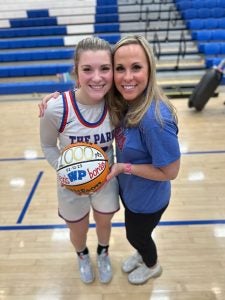
Rudy Mumley OVAC All-Star Football Charity Classic Has Special Meaning for Coach Jamie Bordas
Last year at this time, I was spending a week at Bethany College coaching the West Virginia All-Stars in preparation for the annual OVAC All-Star Football Game. I must admit that serving as the defensive coordinator in that game was one of the highlights of my coaching career. That career began in 1995. Since that time, I have coached in Notre Dame Stadium, coached with some incredible former Notre Dame coaches in an all-star game, served as a high school head coach, and have coached in and won seven state championship games. But the annual OVAC Charity game has a special meaning to me. It brings together the best that our Valley has to offer for one night. On that night, Wheeling Park and John Marshall fans root for the same team. Bellaire and Martins Ferry residents sit side by side as they cheer for the Buckeye state. And, players that battled each other for four years now put aside former rivalries to take on players from the other side of the river. This year, for the first time, I will have a different perspective on the game. After serving on the coaching staff in the game for the first time last year, I now understand the bonding that goes on amongst the players and coaches in the week leading up to the game. Total strangers, or in some instances former enemies, become teammates. During that week, they not only practice together, eat together, and live together, but also become lifelong friends. This game has everything that is great about high school football --- talent, hard work, team work, dedication, and fun. There are cheerleaders, band members, and queens. In short, it is just an unbelievable experience. I am proud that my law firm has been able to sponsor this event for a number of years. But, I now understand so much better exactly why that sponsorship is so important. As I return to the bleachers this year as just another fan at the game, it will be with a smile, fond memories, and a deeper appreciation for everyone involved.
Get Your Jambo On: Bordas & Bordas Legal Review Talks JITH 2014
That time of year has finally arrived. It's time to get your Jambo on. Get the week started the right way with Jamie Bordas and Chris Regan on the Bordas & Bordas Legal Review's very special Jamboree in the Hills edition. Learn about the pitfalls, dangers, and opportunities to wind up on the wrong side of the law in this highly produced, carefully polished, and surprisingly popular television program. You can view the Bordas & Bordas Legal Review locally on Comcast Channel 14 or also online, both streaming and in the archive. The current episode is embedded within this post. Click here to view the program on vimeo, or watch the embedded version if your browser supports it. Click this link to see the WLUTV schedule so you can view a live-stream of WLUTV and check this page for a schedule of when the program airs.
Find a Cause and Help Others
This year finds me unable to run in the race I have participated in for the last two years due to a family commitment. That sent me on a hunt to find some other worthy cause that would allow me to give back to the community in my own small way. I didn't want the summer to go by without participating in something, so I started researching other activities in the local area supporting worthy causes. Drum roll please! I have decided to participate in the 7 th Annual RunWalkRoll Race for Mobility on July 19 th. All proceeds go to the Free Wheelchair Mission. What a worthy cause! Many people unable to afford a wheelchair can receive one through the Mission, not only in the United States but all over the world. To restore dignity and independence to people who are unable to walk is indeed a race worth running. You can sign up by filling out the registration form here: http://www.runwalkandroll.net/docs/2014_race_application.pdf Also, there will be no more walking races for me. I am running this year, along with my son, Adam. We are busy training nearly every day after work and on weekends too. You'll see us running up and down the bleachers at the Bellaire Football Field on any given day or running around the track. Come join the fun! I promise, it's addictive! If running around the track and scaling the bleachers doesn't sound like enough incentive, Bordas & Bordas is going to donate $5.00 for every participant up to 300 people. Come and help me fill up those 300 spots and help those less fortunate become mobile. You will be glad you did.
An Extra Special Day July 15th
My youngest daughter is 5-years-old today. While Mamma is at work, she is busy making Oreo pudding cups with her brother, Charles, and sister, Aleigha. Later, we have a special evening planned: she is getting a new bike and a hula hoop. What's the big deal? Kids celebrate their birthdays all the time, but this is very different; it's extra special to me. On July 15, 2009, in another county and state, my daughter was born and I didn't even know it. She was 5 pounds, 2 ounces and born in the middle of the afternoon. At that time, I think I was away at the beach. I had no idea what the next year would bring and where it would leave me and my family today. In November 2009, my husband and I decided we would like to help the children of West Virginia, which led us into foster parenting. On March 5, 2010, I received a call here at work and that was the day that our daughter came to us. She was 7 ½ months old. Instantly, we readied the house for this infant as our youngest at the time was 9. Over the next 2 ½ years, under the watchful eye of The Honorable Judge Ronald Wilson, we cared for Shauney. During this time we celebrated holidays and birthdays in every way that a family would. Little did we know that we would one day be lucky enough to have her as our very own daughter. In December 2012, that became a reality. My family gathered in front of Judge Wilson where he granted the adoption of Shauney to the Dodd family and here we are today. I look back on her last five years and realize each and every day, whether it's a good day or a rocky one, we have been so blessed to have this gift from God: our little angel, Shauney. July 15 is and always will be a happy day. Happy 5 th Birthday Shauney Rose Dodd!
The Remake on the Lake: Why You Should Care About LeBron James' Return to Cleveland
LeBron is coming home. And you should care. Yes, you. Those of you who have never seen an NBA game should care. Those of you who hate everything about anything associated with Cleveland should care. And especially those of you with kids, you should really care. I have never been enamored with LeBron James. I have always respected his ability as a basketball player. I have been amazed by his combination of size, power, and agility. And, I have been impressed by his championships and MVP awards. But, as someone who grew up in the heart of the Michael Jordan era, I found it difficult to root for LeBron. When MJ was sick in The Finals, he put together an unbelievable performance. LeBron had always made me think that he would check out of the game under similar circumstances. After struggling to try to win a championship early in his career with the Chicago Bulls, Jordan stuck it out until they had all of the pieces in place to turn out six titles. LeBron bolted at the chance to play with other All-Stars. And perhaps most significantly, Michael transcended his sport. Almost everyone wanted to "Be like Mike." Jordan looked and spoke the part in his press conferences, commercials, and even starred in the movie "Space Jam." LeBron seemed as though he couldn't care less about his image and never had non-hoopsters wanting to be like him, other than perhaps when it came to his bank account. All of that changed on Friday. In a move that surprised many that was delivered in an essay that had the power of a two-handed dunk, LeBron announced that he was going home to Cleveland. Athletes change teams in the free agency era of sports as often as some people change socks. But, this was different. This wasn't an athlete leaving for more money, better endorsement deals, or a better shot at winning a championship. This was the best player in the game going to a team for the people in that city. I'm not sure that has ever happened before in professional sports and if it has, you would certainly be hard pressed to say it has happened with such a high profile player. But, that's not why you should care that LeBron is returning to Cleveland to play for the team that drafted him just after he had finished high school at nearby Akron St. Vincent-St. Mary's. The reason you should care is because of all of the life lessons that can be learned from this Remake on the Lake. Forgiveness. Selflessness. Maturity. So many of our youngsters, and adults for that matter, can learn so much about these principles and others. After all, just four short years ago, LeBron left the city of Cleveland behind in one of the most bitter break-ups between player and city in professional sports history. Not only did he betray the city that thought he was the one that would finally end its title drought, but he did it on a national television special where he announced that he was "taking his talents to South Beach." Cavs owner Dan Gilbert responded with stinging words about his prized player. Cleveland fans did worse, burning his jersey and leaving no words behind when describing him. The relationship quickly and unmistakably had turned from love to hate. Now, after two championships, four Finals appearances, and all that South Beach has to offer, LeBron is returning to Cleveland. And that is where the life lessons come into play. LeBron had to forgive Cleveland and Gilbert. And they had to forgive him. How many times in our own lives do we have trouble forgiving others who have hurt us? How quickly are we able to set aside the pain and say let's be friends again? How often do we struggle to give our children an example of someone in recent times who has been a model of forgiveness? We now have that case in point. LeBron had to act selflessly. Let's be honest. How many people would rather live in Cleveland than Miami? How many people would go from playing for a first place team to a team that couldn't make the playoffs? And, how many people would leave playing with two other perennial all-stars to play with a team filled with inexperience? The answer is a guy who is more concerned about others than himself. Finally, LeBron demonstrated incredible maturity compared to that which he showed in 2010. There was no TV special announcing his decision this time. Instead, there was a well-crafted, thoughtful essay that thanked Miami but emotionally described why it was so important for him to go home. He explained why bringing a championship to the people living where he grew up means so much to him. There was his admission that he didn't understand how important these things were four years ago, but he does now. How many world-class athletes do we see admit their faults? How many celebrities care so much about their hometowns? How many famous people write an essay rather than choose the bright lights of national television to make a big announcement? LeBron James did. In short, LeBron correctly did all of the things he had done wrong four years ago. In the process, he exemplified what it means to grow as a person and learn from your past mistakes. I'm not exactly sure what the future holds for LeBron James as a Cleveland Cavalier. But as a person, I am quite certain that he gained a lot of fans. I count myself among them. LeBron reminded us all of a number of important life lessons. All of these have to do with putting others ahead of ourselves. If we can all strive to do that, what a better place the world would be. My hat is off to you, LeBron. It is so rare that we get to be pleasantly surprised by famous athletes. Not only did you surprise us with where you will be playing basketball next season, but you surprised us with just who you really are.

Christ and the Crisis at the Border
In Exodus, chapter two, we learn the story of the birth of Moses. Endangered in his own homeland, his mother hides Moses for three months. As time goes on, she can no longer keep him safe -Pharaoh had declared that all Jewish children would be drowned - so she placed him in a basket of papyrus to hide him amidst the reeds of the Nile. Pharaoh's daughter discovered Moses, took pity on him, and protected him, eventually treating him as her own son. Ex. 2:1-25. Some years later, Moses saw a burning bush, and the rest is history. When I was young, I remember being troubled when our parish priest would read from the Gospel of Matthew and preach about the famous parable of the sheep and the goats. That parable of course teaches us that whatever we do for the least of our brothers, we have done that for Jesus: "For I was hungry, and ye gave me meat: I was thirsty, and ye gave me drink: I was a stranger, and ye took me in: Naked, and ye clothed me: I was sick, and ye visited me: I was in prison, and ye came unto me . . . And the King shall answer and say unto them, Verily I say unto you, Inasmuch as ye have done it unto one of the least of these my brethren, ye have done it unto me." I took the words too literally; and since I had only one brother, a big brother who beat me up regularly, I had a hard time understanding what I was supposed to do for him or what good it would do me to feed him. He was already twice my size. Last night the news covered the situation at the United States' southwestern borders. NBC interviewed a rancher working the borderlands who has placed watering stations on his land. He puts these in his fields because it is not uncommon to find children dead there if he doesn't. There is no shade there and temperatures reach 120 degrees. A county sheriff estimated that for every body found, there are several more of those who die in the desert, but are not found. Another news agency, the right-leaning Breitbart, reported that a four-year-old had crossed the U.S. border alone. Many of the children (and adults) at the border are coming from exceedingly violent places in Central America, not just Mexico. For example, the murder rate in Mexico is more than four times the United States, but in Honduras, it is close to 20 times as high. The primary danger in both places is gang activity related to drug trafficking. As one church organization official put it, "For many people the choice is to flee or to die." Americans might wonder what the problems of these other countries have to do with us. One thing it has to do with us is the fact that we are paying for it. American money pays for both sides of the drug war south of our border, and has for decades. American money is spent by the billions to buy drugs, and this money finances the cartels and the gangs. Likewise, American money pays for the government action against the cartels in the form of weapons and cash given to the impoverished governments of the region. So whether a Central American citizen is killed by a gang member, or the gang member is killed by police, we paid for the weapon and the ammunition. So the children fleeing the violence in Central America and trying desperately to get into the United States are actually running from a situation America created. The appetite for drugs in America, and the war-on-drugs-response of our political leaders are the reason the immigration crisis exists in the first place. This might be one reason Colorado's governor recently called the drug war "a disaster." In any event, what are we going to do? Some people, calling themselves "militia," say that they will go to the border and force crossers back at gunpoint. A militiaman covered a few days ago in the Washington Post explained his view this way, "You see an illegal. You point your gun dead at him, right between his eyes, and you say, 'Get back across the border or you will be shot.'" As a lawyer, I can tell you, that's not legal. A rising star among conservative writers, Charles C.W. Cooke, thinks the key is for the President to communicate a strong immigration policy telling Central Americans that they won't be allowed to remain in America, so there's no point in trying. Many reports indeed indicate that Central Americans believe they will be allowed to stay. But considering the deplorable violence and danger they are fleeing, I wonder if a speech would persuade them to give up? And since when do conservatives think President Obama making a speech would help anything? Before deciding how we might stem the tide of immigration in the southwest, we should first consider whether we are right to turn these people away, particularly the children. Cooke has written, "If sovereignty is to mean anything, then a country is entitled to decide whom it wants to join its ranks and whom it wishes to exclude from them." Well, let's decide, then. Considering that American appetites and American policies are what so many of these people are fleeing in their own countries, what are we saying about ourselves if we send them back into a hell we've created? Is that what "the rule of law" requires? There has been much talk of enforcing immigration law more vigorously to meet the immigration crisis. But different laws apply when the immigrants involved are refugees. If a person crosses the border illegally, simply as a matter of preference about where to live, that is one thing, but if they are in serious danger where they come from, they are eligible to apply for refugee status and protection in this country. The law also entitles them to a legitimate process to determine their rights before they are deported. How should we do justice to these human beings who have placed themselves in our hands? That brings us back to Moses, and a four-year-old child who walked across a desert alone to get into America. Moses was, undoubtedly, a refugee. Due to the circumstances of his birth, he faced immediate harm at the hands of Egyptian death squads. His mother took the only chance she thought she had, and was fortunate enough that a powerful patron, Pharaoh's daughter, took pity on him. Few in America face such a devastating choice. But other mothers and fathers are sending their children away from their homes, often alone, fleeing death and destruction. Here's three questions for us on immigration: Who are "the least of our brothers" right now? What will we do for them; and how will we answer for it?
Recent Philanthropic Efforts of Bordas & Bordas
Bordas & Bordas is happy to call the friendly city of Wheeling, West Virginia home. The attorneys and staff of the firm are committed to giving back to the community that has given and continues to give so much to us. Below are just a few of the many recent philanthropic sponsorships that Bordas & Bordas is honored to be a part of. The Strand Theatre opened its doors to the public on November 15, 1920 at the corner of 5 th Street and Jefferson Avenue in Moundsville, W. Va. It operated regularly for many years until its final curtain call in 1996. Today, the Strand Theatre Preservation Society, a 501c non-profit organization, strives to restore the Theatre's original majesty and grandeur through various productions, tours and musicals. Bordas & Bordas recently contributed to the Theatre's upcoming performance of "Chicago" on August 1 - 3. We are proud to be aligned with such a wonderful organization. The American Cancer Society hosts multiple Relay for Life events in more than twenty countries throughout the course of the year to raise much-needed funds for cancer research and treatment. Monies procured by Relays save more than 400 lives a day. The Ohio Valley boasts many local chapters of this outstanding event, one of which is set to take place at Wheeling Park on August 8. We were happy to contribute again this year. Bordas & Bordas fully supports local sports teams and events year-round and the 2014 Pinto Challenge is no exception to that rule. The Pinto Challenge is a coach-pitch tournament for children seven to eight years old. The event is being held at the I-470 complex on July 16 -20 and will give young players a chance to experience healthy competition in a fun and relaxed atmosphere. Bordas & Bordas was happy to sponsor the tournament. The annual St. Michael Parish Community Festival is a summer tradition in the Woodsdale area and will be held on the weekend of July 10 this year. The generosity of community partners, Bordas & Bordas included, will allow for another successful installment. May 7, 2011 changed everything for all those who knew Eric Carder. While the car crash took the life of the 38-year-old father, husband, son and friend, his loved ones refused to let his memory die with him in the accident. As Carder was an avid golfer, a group of his closest friends established the Eric M. Carder Memorial Golf Tournament in his honor. The event will see its fourth installment on July 11 at Oglebay Park's Crispin course. We are happily sponsoring and participating in the event this year. Bordas & Bordas is honored to be involved with such outstanding organizations and events. We will continue to reach out to community partners who are passionate about making a difference. As always, we encourage everyone to support these very worthy causes in any way possible.

Jamboree in the Hills: A Little Woodstock?
I was so excited when I heard the announcement that Bordas & Bordas was sponsoring Jamboree in the Hills once again. Jamboree has become such an important event for many of my family, friends and for this area in general that I can't help but wish for its continued success. With my firm's announcement, the memories of my first Jamboree in the Hills began to stir in my mind. I have to be honest and admit that rock music has always been the music of my soul. Throughout my life it has been the music that spoke to me, inspired me, moved me and made me want to dance. As a matter of fact, as I sit here writing this blog, I can hear a base guitar, joined by the lead guitar, then the drums and finally Grace Slick of the Jefferson Airplane singing "White Rabbit" in my mind. The fact that I have chosen this song and group probably gave my age away immediately. Yes, I am from the Woodstock generation, the original Woodstock that is. For those of you who don't know, Woodstock was the music festival that drew an unexpected attendance of approximately 500,000 young people on Max Yasgur's dairy farm in the small town of Bethel, New York in August of 1969. It was such a pivotal time in our country's history. The young people in the country, my generation, were not very happy with the status quo and some actually set out to change it, or had the audacity to think they could change it. Our young men were still living under the threat of the draft and a very unpopular Vietnam War was escalating by the day. A lot of the guys I knew and grew up with had already been drafted to fight in that war and unfortunately, a lot of those brave young men did not come home alive. Many of us began to believe we should not have been involved in the Vietnam conflict in the first place. Trying to get the leaders of our country to agree was causing a lot of conflict. Unrest, constant sometimes-violent protests, and forever-long social justice debates were as synonymous with my generation as our slogan of "Peace and Love." In the summer of 1969, I graduated from high school and was chomping at the bit to begin experiencing some of that peace, love and freedom that my generation stood for. I remember lying stretched out on the living room floor in front of the television, watching the news as they showed clips of the now famous music and art festival called Woodstock. As I watched the clips shown on the news, I wanted nothing more than to be in the crowd. The bands in the lineup included many of my favorites, like Creedence Clearwater Revival, Sly & the Family Stone, The Who, Jefferson Airplane, Blood, Sweat & Tears, Crosby, Stills, Nash & Young, Joan Baez, Santana, Canned Heat, and Grateful Dead; it was a downright rock and roll fantasy come true! I was 17 years old and it seemed like the perfect weekend road trip. But rolling around on the hillside of Max Yasgur's farm with a bunch of hippy freaks for a few days was more of a fantasy than a reality. Instead, I was more apt to take a family vacation with my parents riding down through the hills of West Virginia, which is exactly what I did that summer. Riding in the car with my parents reminded me of one thing that I couldn't stand, country music. I did not like country music because it was the music that my mom and dad listened to. Instead of listening to the rock stations I loved, I was forced to listen to their country music stations and suffer in silence. Of course we didn't have iPods back then and although I did have a small transistor radio, as most kids did, it never occurred to me to use earphones. So when the first Jamboree in the Hills was held back in 1977, I didn't give it as much as a passing thought. As a matter of fact, the very first memory I have of Jamboree in the Hills occurred in the emergency room at the Ohio Valley Hospital on one very hot and muggy July afternoon in 1979. I remember there were dozens of people coming in from Jamboree in the Hills suffering from heat exhaustion. My thoughts at that time were, "Why in the world would anybody want to sit or stand in an open field, on a humid afternoon, listening to country music?" This probably seems comical coming from the woman who thought it would be perfectly divine to roll around on a muddy hillside listening to rock music in 1969! During the 80s and 90s, the wide divide between rock music and country music began to narrow and there were even a few artists that I was able to enjoy, like The Eagles, Alabama, The Charlie Daniels Band, Willie Nelson and even Dolly Parton. As the music itself began to evolve, so did my feelings about country music. There were some country songs that I actually did like, along with some fun line dances that you could do without needing a dance partner. Jamboree in the Hills was steadily gaining popularity and it was hard to find anybody who didn't enjoy it. Eventually I came around to wanting to go, not so much for the music, but just to experience the fun. So in 1997, when a friend of mine asked me to join her and offered me a free ticket for the Saturday show, I couldn't refuse. I would finally have a chance to experience this exalted event that was now nicknamed "Jambo." We got up very early on Saturday morning to prepare for the drive to Morristown, Ohio. Fortunately for us, her daughter and a few of her daughter's friends had gotten there earlier for the gate opening to claim a good spot for us on the hillside. I learned later on that they refer to this event as the ever so famous "Redneck Run." I've watched it several times on YouTube videos and it is something to behold; I'm really not sorry that I missed that part. It was such a beautiful sunny morning as we sat, sipped our drinks and watched others arrive to find their area on the hillside. There was such a fantastic party atmosphere, everybody was there to have a good time. As the day progressed and the entertainers took the stage, a lot of people were lavishly enjoying their favorite refreshments and the happiness of the crowd increased. Everyone was just there to have a good time and listen to the music. Thinking back to it, I honestly didn't meet a person there who wasn't friendly. It has been quite a few years since I have actually gone to Jambo, but I have family and friends who attend it yearly and stay at one of the campsites for the entire weekend. Everyone insists that staying in the camp area is a special adventure in and of itself. Nowadays, I enjoy watching it on the television from my recliner in my air conditioned home. Not as much fun, I know, but when they scan over the hill and show the crowd, I can appreciate how much fun they are having. If you have never experienced summer's biggest party, I suggest you do. There is still time to purchase tickets and from what I hear there is an excellent lineup this year! Although I enjoy reminiscing about my first Jamboree in the Hills experience, it never did make up for missing Woodstock in 1969! I feel it's safe to compare Jamboree in the Hills as a smaller, more mature and definitely more organized version of Woodstock with one major difference, country music, but I can rock with that.
What Is a Hero?
When we were children we were always looking up to people like Superman, Batman, Wonder Woman and anyone else who inspired us. But who are our heroes now? Football stars, Olympians, our parents, inventors? A hero is someone who does something to help improve mankind or to execute the intention of helping others in difficult situations. We applaud these people because of the changes they may make in our lives. It's not just the people who make the headlines of the evening news or the front page of the paper that are heroes. Being a hero can be as simple as volunteering at the local homeless shelter or even helping an elderly individual cross a busy street. I've never considered myself a hero until two weeks ago at Boys State when I saved a fellow camper's life. At approximately 2:30 a.m., I woke up to my friend having a seizure. I checked for his pulse, but he did not have one. If you study your surroundings in any building you can almost always find an Automated External Defibrillator, also known as an AED. Earlier that day I remembered seeing an AED in the dining hall, so when my friend wasn't responding, I started running to retrieve it. Upon returning, I administered two shocks that brought his heartbeat back. Right after I had followed the AED's instructions that helped me bring my friend back, the emergency personnel arrived. They immediately called 911 and had him taken to the local hospital. I am happy to say that my friend returned to camp the next day and made it home safely to his family at the end of the week. The concept of a "hero" has changed drastically throughout the different generations. Today, a hero is measured by a person's character, their inner being, and their integrity no matter what their age, race, or gender may be. Whereas before, the term "hero" was a descriptive word primarily describing a male figure. No matter what kind of hero you are, doing the right thing is all that matters in the end. I would like to encourage everyone to take the time to study their surroundings when entering an unknown building; by spotting anything that could help in an emergency situation, you could save a person's life and be their hero.
Contact Us
The information you obtain at this site is not, nor is it intended to be, legal advice. You should consult an attorney for advice regarding your individual situation. We invite you to contact us and welcome your calls, letters and electronic mail. Contacting us does not create an attorney-client relationship. Please do not send any confidential information to us until such time as an attorney-client relationship has been established.
The results in a legal case depend on a variety of factors, many of which are unique to each case. Prior results by this firm or any other do not guarantee future results. Case results presented here are illustrations of the type of work done by Bordas & Bordas and not a guarantee that any prospective case will yield any particular amount.
Request Consultation
Call 304-242-8410 or fill out the form below.