
On March 25, 2015, the Pennsylvania Supreme Court, in Brady v. Urbas, held that evidence regarding informed consent is irrelevant in cases involving claims solely based upon medical negligence. Ms. Brady sought consultation with Dr. Urbas, a podiatrist, for problems with her right foot. Dr. Urbas informed Ms. Brady of the nature of her condition, i.e. “hammer toe,” and they discussed available treatment options, including surgery. Dr. Urbas also informed Ms. Brady of the risks and reasonably anticipated outcomes associated with each alternative treatment, and specifically advised Ms. Brady that even under the most optimal surgical circumstances, bad outcomes could still occur. Ms. Brady memorialized her understanding of the information by signing a consent form. Dr. Urbas performed four (4) operations between March 2008 and January 2010. Ms. Brady’s pain persisted; her toe was shorter and less stable. In August 2010, Ms. Brady consulted a different podiatrist, who performed a bone-graft operation, which returned her toe to almost its original length and function with less pain. In December 2010, Ms. Brady sued Dr. Urbas, alleging that he negligently treated her toe in the three follow-up surgeries performed after March 2008. She averred that she could not have reasonably discovered the harm she suffered until after the fourth surgery because Dr. Urbas’ advice, assurances and recommendations lulled her into a false sense of security and concealed the true nature of her condition. As to the alleged negligence, Ms. Brady asserted that Dr. Urbas failed to determine the cause of her original toe condition, and recommended and performed procedures that were not indicated. Notably, the complaint did not include a cause of action for lack of informed consent. At trial, Ms. Brady filed a motion in limine to exclude any consent-related evidence at trial, including the surgical consent forms she signed before each procedure. Ms. Brady argued that such evidence was not relevant to whether Dr. Urbas performed within the appropriate standard of care. Dr. Urbas responded that the risks and complications of surgery would be relevant to Ms. Brady’s credibility as a witness and to her state of mind at the time of the surgeries, and that the evidence of consent would not be used to prove or disprove informed consent. The trial court denied the motion and permitted admission of the consent-related evidence, stating that the risks and complications associated with the alleged negligent procedures and the course of treatment to alleviate those complications were relevant to determine if Dr. Urbas was negligent. At trial, experts for both sides agreed that the complications Ms. Brady experienced after the first surgery were common, although they differed as to whether Dr. Urbas was negligent in his recommendations, care, and treatment. Dr. Urbas testified that he informed Ms. Brady of the possible complications from the surgery and that the follow-up procedures were reasonable to alleviate these problems. During deliberations, the jury asked to review the consent forms, stating that they needed to know what Ms. Brady agreed to. The court provided the forms, and soon thereafter, the jury returned a defense verdict. Ms. Brady appealed to the Pennsylvania Superior Court, who vacated and remanded for a new trial. The Superior Court established a per se rule of exclusion mirroring the law of Virginia, explaining that “evidence of informed consent is irrelevant in a medical malpractice case.” The Pennsylvania Supreme Court declined to endorse the Superior Court’s broad pronouncement to the degree it may be construed to hold that all aspects of informed-consent information are always “irrelevant in a medical malpractice case. Still, the fact that a patient may have agreed to a procedure in light of the known risks does not make it more or less probable that the physician was negligent in either considering the patient an appropriate candidate for the operation or in performing it in the post-consent timeframe. Put differently, there is no assumption-of-the-risk defense available to a defendant physician which would vitiate his duty to provide treatment according to the ordinary standard of care. The patient’s actual, affirmative consent, therefore, is irrelevant to the question of negligence.
Bordas & Bordas Handles Cases Throughout the United States
Our firm has attorneys who are licensed in West Virginia, Ohio, Pennsylvania, Florida and Texas. The majority of our work is in those states. However, we have also handled cases in many other states throughout the country, including Maryland, Delaware, Virginia, North Carolina, Indiana and New Mexico just to name some of them. People may wonder how it is that we are able to handle cases in these other states. There is a process for being admitted to practice in another state which is called Pro Hac Vice admission. This is a Latin term (so many legal terms are Latin) meaning “for this occasion.” As you might gather from this meaning, the admission is on a case-by-case basis. In order to be admitted on a Pro Hac Vice basis, a lawyer must demonstrate that he is in good standing with the highest court of the state in which he practices and that he has a lawyer in the state in which he is seeking Pro Hac Vice admission who is sponsoring him and will be responsible for the case along with him. Our firm is often times asked to represent individuals or companies in other states for various reasons. One such reason may be that an individual or company that is located close to one of our offices is harmed in another state. The individual harmed knows our reputation and the success we have achieved as a result of living in the local area. Thus, they ask our firm to represent them. In this instance, we handle the case and retain an attorney from the distant state to work with us on the case. The good news for our client is that it does not cost them anymore to do this. The fee that is paid to the out-of-area attorney is paid by our firm, not the client. Another scenario where we are often times called upon to work in a distant state is where an individual, company or lawyer in a distant state has learned of our success in a particular area of the law and therefore wants to draw upon that experience and success. For example, a couple of years ago, I obtained a significant verdict of $10 million in an insurance bad faith case in Belmont County, Ohio. Since that time, I have had individuals from other states who have read about that case contact me to ask me to represent them in insurance cases in other states. Again, in that scenario, we work in tandem with an attorney from another state at no additional cost to the client. Of course, we are selective in determining which cases justify us spending our time in a distant location. However, if a case rises to the level that is justifiable to us, then we are willing and happy to do so. A third type of situation where we are often times asked to represent someone in a distant location is when a current or former client, employee, family member or friend has a friend or relative in a distant location who needs help and they recommend us to that friend or relative. We are always very appreciative when someone recommends us to one of their friends or loved ones. We certainly accept it as a very high form of compliment that they would suggest that someone they know place their trust in us. No matter how we may come to be involved in handling a case in a state outside of our office locations, we almost always enjoy it and come away pleased that we accepted the representation and that we were able to help someone obtain justice. Often times, the experiences that we have in these other jurisdictions are very memorable and we develop friendships that last a lifetime with people we never would have known. Being able to handle these cases is another reason that I am proud of the attorneys at our firm and the work that we do.
Sharing the Road with Big Trucks: How Safe are our Highways?
While I have never been a fan of sharing the highways with large trucks, recent experiences have left me terrified. Is it me or our roads becoming even more dangerous? My most recent experience was driving to Columbus on Interstate 70 to attend a 4-year-old’s birthday party. It was a rainy, foggy, gray day and the spray from the cars and trucks reduced visibility significantly. I spent a 30- to 40-mile stretch with a large truck playing with me to the point that I eventually took an exit and got gas well before I needed to, simply to get away from this large truck because I feared a collision with more or another driver was inevitable. When I first encountered this truck, I was passing another series of large trucks that were traveling well below the speed limit. The offending truck came speeding up behind me getting so close I could see nothing but its grill in my rear view mirror. I moved over as soon as it was safe to do so and the truck proceeded to move over just in front of me, almost hitting me in the process and creating a spray that cut my visibility to zero. I watched it speed off ahead of me until it was slowed down by another series of its slow moving brothers. It then changed lanes suddenly in an attempt to pass the slower large trucks, cutting off and almost hitting another car, which had to brake hard and fast to avoid a collision. The offending truck then slowed to around 50 miles per hour in the passing lane of a 70-mile per hour speed zone creating another back up of passenger vehicles. I don’t think I have been on a highway in recent months where I haven’t witnessed or been the victim of a similar “cut off to pass and immediately slow down” situation. After the offending truck eventually moved over and the series of cars that had been slowed to well under the appropriate speed, including me, passed it, it started speeding again. A dance of “almost run me over,” “pass me,” “cut me off,” and “slow down dramatically until I passed again” began, which lasted until I finally exited the highway to get away from the offending truck. Unfortunately, I was unable to get identifying information to report the driver. Everyone who drove to Columbus from Wheeling that day for the party mentioned how stressful the drive had been and the need for “defensive driving” to make it safely. The most recent statistics available from the National Highway Traffic Safety Administration show that injuries and fatalities arising from crashes involving large trucks are on the increase. During the year 2012, 333,000 large trucks were involved in traffic crashes throughout the United States. Fatalities arising from traffic crashes involving large trucks rose to 3,921, a 4 percent increase from the year 2011 where 3,781 people were killed. Of the 3,921 people killed during 2012, 73 percent were occupants of other vehicles. Another 104,000 people were injured in crashes with large trucks, an 18 percent increase over the year 2011. For the year 2012, 9.3 percent of the 1,123 deaths that occurred on Ohio roads involved large trucks, 9.7 percent of 1,310 traffic fatalities in Pennsylvania involved large trucks and large trucks were involved in 10.4 percent of the 339 traffic deaths that occurred in West Virginia. With winter weather upon us, driving conditions will not always be ideal. With reckless driving by large trucks seemingly increasing, the need for defensive driving also needs to increase. You should always be prepared for a large truck to change lanes, cutting you off without notice. If tragedy strikes and you or a loved one are involved in a crash involving a large truck, the attorneys and staff at Bordas & Bordas are prepared to help. We have the experience and resources available to hold reckless drivers of large trucks responsible for the injuries they cause on our nation’s highways. EndFragment
Bordas & Bordas Legal Review covers Ed O'Bannon Law Suit and GM's Deadly Switch Defects
Tune into this week's episode of the Bordas & Bordas Legal Review where host Jamie Bordas and guest Chris Regan discuss the Ed O'Bannon law suit against the NCAA that seeks to allow college players to be paid for use of their names, images and likenesses. In the second half of the show, Jamie and Chris discuss GM's difficulties with its defective switch that caused more than a dozen deaths across the country, in a variety of Chevy models. Learn about product liability, antitrust law, and a host of other interesting topics on this week's episode of the Bordas & Bordas Legal Review. You can view the Bordas & Bordas Legal Review locally on Comcast Channel 14 or also online, both streaming and in the archive. The current episode is embedded within this post. Click here to view the program on vimeo, or watch the embedded version if your browser supports it. Click this link to see the WLUTV schedule so you can view a live-stream of WLUTV and check this page for a schedule of when the program airs.
The Bordas & Bordas Legal Review Takes on the West Virginia Legislature, Attorney General
Tune in, turn on, stream and download this week's episode of the Bordas & Bordas Legal Review as Jamie Bordas and Chris Regan explain controversial bills currently in the West Virginia Legislature. Two new bills, designed to create ethics and accountability in government, are up for votes this session. Find out why Attorney General Morrisey might be opposing a bill requiring him to recuse himself from cases in which he and his wife have business connections to the litigants, including campaign donations, and cash arising from Mrs. Morrissey's lobbying business. You can also learn about the "super load" that moved through Marshall County last week and the gas boom's implications for legal issues ranging from gas explosions that have become more and more common throughout the Ohio Valley as a result of the fracking boom to oil and gas leasing issues. It is an episode not to be missed. Click here to view the program on vimeo, or watch the embedded version if your browser supports it. Click this link to see the WLUTV schedule so you can view a live-stream of WLUTV and check this page for a schedule of when the program airs.

Kari's Law
I read an article the other day about a woman who was murdered by her estranged husband in the bathroom of a hotel room while her three children were in the other room. Her oldest daughter tried to dial 911 four times, but it didn't work because of how the hotel's phone system was set up. This hotel, along with a lot of other hotels, required you to dial 9 to get an outside line - even if you were trying to dial 911. The child never got through to 911, and her mother died. I was shocked when I read this because I have never considered the possibility that dialing 911 wouldn't be enough. If I needed to dial 911 from a hotel room, would I remember to dial 9 first? Probably not. Especially if it was a true emergency. In those times of panic, it's hard to stay calm and focus and think clearly. We have always been taught to dial 911, and we have always taught our children to dial 911, but now I guess we need to be aware that sometimes we may have to dial 9911. But we can change this. The father of the woman who was killed has started a petition to require hotels and other businesses to update their phone systems so that you don't have to dial 9 before dialing 911. Please go to the website and sign the petition so this doesn't happen to anyone else.

West Virginia Supreme Court Derails Employer's Attempts at Sergeant Shultz-type Defense in Deliberate Intent Cases
We've probably all heard Sergeant Shultz from Hogan's Heroes bellow out emphatically: "I see nothing!" In McComas vs. AFC Industries, LLC, No. 12-0548 (W.Va. October 17, 2013), the employer attempted to invent a Sergeant Shultz-type defense in deliberate intent cases. Thankfully, the West Virginia Supreme Court rejected this attempt to avoid an employer's duty to conduct mandatory safety inspections. The plaintiff, David McComas, was a welder by trade. His employer, AFC Industries, was a company that built railroad cars. McComas, joined by two other welders, were assigned to a part of AFC's plant that had been out of operation and all electrical power had been shut off. When McComas attempted to restart the power at an electrical box, an arc blast occurred. McComas was thrown to the floor, and despite wearing all of the required safety equipment including hat, goggles and gloves, he suffered severe burns to 25% of his body. It turns out that the electrical box had been installed over 50 years before this tragic incident and, incredibly, that AFC had never inspected it. McComas sued AFC for deliberate intent. Ordinarily, employers can't sue for workplace injuries but, instead, can only recover workers compensation benefits. Where, however, the employer acts with deliberate intent, the employee can sue and recover all of the damages he sustained. To recover for deliberate intent, an employee must prove, among other things, that the employer had actual knowledge of an unsafe working condition. AFC claimed that because it had never inspected the electrical box, it was like Sergeant Shultz: it knew nothing. Therefore, it couldn't be liable for deliberate intent. Not surprisingly, the West Virginia Supreme Court rejected this argument out of hand. In fact, the Court pointed out that there was a specific safety standard requiring electrical boxes to be inspected every three to six months, if energized, and every three to six years, if deenergized. Ironically, AFC's own expert conceded this safety standard applied to the electrical box in question. But AFC stubbornly insisted that it had never looked inside the box and, therefore, couldn't possibly have had knowledge of any defects. The Court's response couldn't have been stated in stronger terms. "he Legislature did not intend to allow employers to shirk responsibilities imposed by specific statutes, rules, regulations or standards by turning a blind eye to work place hazards. Willful ignorance...is no defense..." The Court then summarized this principle in a new syllabus point: "When a safety statute, rule or regulation, or a commonly accepted and well-known safety standard within the industry or business, imposes a specifically identifiable duty to inspect upon the employer, and the inspection would have revealed the specific unsafe working condition, the employer may be found to have had actual knowledge of the specific unsafe working condition within the meaning of this State's deliberate intent statute, W.Va. Code, 23-4-2(d)(2)(ii)(B) ." This is an important win for workplace safety. Employers do not get a free pass because they deliberately ignore mandatory safety inspections. To hold otherwise would render these inspections pointless and, even worse, place the lives of thousands of working West Virginians in jeopardy. Sergeant Shultz was never meant to be taken seriously. Neither was AFC's argument that it could avoid its safety responsibilities without any legal consequences. The Court got it right--and it should continue to zealously protect the rights and safety of our workers.

What Really Happens in Lawsuits Before Juries? Jim Bordas Highlights Independent Medical Exams and other Information
Many of our readers may have an interest in what really happens in lawsuits before juries and some of the things juries are not told by the courts and lawyers because they are prohibited at trial from doing so. Along these lines is an editorial printed in the Charleston Gazette written by Robert Angelone, an economist from New Jersey, who tries to clean up some of the "unknown." Our firm has linked to this story for your viewing. We hope you enjoy it. If you do not have time to read the entire article, I will provide you with some highlights. First, people who are injured and file lawsuits are almost always required by the courts to undergo so-called "independent medical exams." These exams are bought and paid for by the insurance industry with the insurance industry usually using the go-to industry doctors. They don't treat patients. They conduct exams and write reports that are almost always favorable to the defense. These doctors are almost always paid thousands of dollars for a single 15-minute exam and report. The real purpose in obtaining and hiring these doctors and putting the reports in evidence or calling the doctors is to limit the amount of damages or the amount of recovery that the injured party may receive from a fair jury. Next, one of the items that the article didn't mention is the fact that oftentimes the defendant who is sitting with counsel in a case brought by an injured victim of a negligent automobile driver has already settled with the plaintiff. The plaintiff is then bringing a suit solely against his own automobile insurance carrier. The unfortunate thing is that juries are not allowed to be told the true nature of the case because of the way the state legislature has structured that part of the law. That is, the injured party sits in the chair with the defense attorney acting as if his estate and his assets are at risk when in fact he has already settled. The insurance company's money is on the line, not the defendant's. Some people, including many of our lawyers, feel that that is a fraud on the court and a fraud on the jury and should be stopped.

Protecting the Rights of Predatory Lending Victims: There's More Work Ahead
Consider the following set of facts. Jerry is solicited by a mortgage broker. The broker convinces Jerry that he should refinance his home and hires an unscrupulous appraiser, who gives an inflated value for Jerry's home. Using this inflated appraisal, the broker dupes Jerry into taking a higher loan--so high, in fact, that the loan is more than the home's actual value. With this higher loan, of course, come higher loan payments. The broker knows that Jerry can't really afford the loan, but no matter. The broker simply pockets his fees and moves onto the next victim. Does Jerry have a claim against the broker? Absolutely. But what if the broker goes out of business, or declares bankruptcy, or simply disappears? What then? Our legislature has provided protection for just such an eventuality. Mortgage brokers are required to post a bond for the protection of all West Virginia consumers, including Jerry. Next question: What happens if Jerry gets a judgment against the broker? Does the insurance company that issued the bond have to pay up? You would think the obvious answer would be yes. But insurance companies are not so fast to part with their money. In Hartford Fire Ins. Co. vs. Curtis, 2000 WL 2460723 (W.Va. 4/17/13), Hartford argued that the homeowner, Jerry Rhodes, would have to try his case all over again. Scott Blass of Bordas & Bordas, together with Dan Hedges, represented Jerry and secured a major win for consumers. The West Virginia Supreme Court held that the bond was a judgment bond. Therefore, getting a judgment against the broker was enough to obligate Hartford to pay. But that's not the end of the story. Jerry also sued Hartford for bad faith, alleging that Hartford acted inappropriately by denying Jerry's claim and compelling him to sue to recover money that was clearly due and owing. Incredibly, Hartford has taken the position that Jerry was not a "first party claimant" who had a right to sue for bad faith. But that's simply not true. The bond was written for the purpose of protecting all of the "Jerrys" who might be victimized by predatory lending practices. It was Jerry who had to sue in the first place. It was also Jerry who had to endure years of delay at Hartford's hands until it was finally ordered to pay. Obviously, then, it was Jerry who had the right to sue Hartford for its illegal tactics in delaying payment of the claim. These bad faith issues are presently before the Fourth Circuit Court of Appeals. As always, Bordas & Bordas is committed to protecting consumers and insuring that their legal rights are vindicated. We are confident that the Fourth Circuit will follow the law and reach a result that enables consumers, like Jerry, to fully enforce their rights and keep insurers, like Hartford, from violating them. This means giving Jerry, along with other West Virginians, the right to sue for bad faith when insurance companies engage in delay tactics and otherwise refuse to honor their contractual obligations. The results in a legal case depend on a variety of factors, many of which are unique to each case. Prior results by this firm or any other do not guarantee future results. Case results presented here are illustrations of the type of work done by Bordas & Bordas and not a guarantee that any prospective case will yield any particular amount.
Bordas & Bordas Previews an Exciting Supreme Court Term
This week's episode of the Bordas & Bordas Legal Review features Jamie Bordas and Chris Regan going through what is sure to be an exciting and controversial term at the United States Supreme Court. If you think our government isn't getting along when it comes to spending, health care, and the debt ceiling, wait until you see the things we really aren't getting along about such that they have reached the level of being set for oral argument in the United States Supreme Court. Whether it is campaign finance, affirmative action, abortion, public prayer, or presidential power, Bordas and Regan will break down the key issues and even give you a couple of predictions as to how these crucial cases may determine how the future of our country will turn out. You can view the Bordas & Bordas Legal Review locally on Comcast Channel 14 or online, both streaming and in the archives. The current episode is embedded above. Pick up this episode through the WLUTV archives, and be sure to check the WLUTV schedule for other B&BLR show times and programming.
The Bordas & Bordas Legal Review on Mesothelioma and Workplace Exposure
Video module not found. Check capitalization and spelling. In general, copy the name of the video page from /Site-Map.shtml. On the September 27, 2013 edition of the Bordas & Bordas Legal Review, managing partner and host Jamie Bordas and attorney Zak Zatezalo tackled the legal and medical ramifications of individuals who contract the deadly cancer mesothelioma from exposure to asbestos in the workplace, or sometimes even at home. Attorneys Bordas and Zatezalo also discussed the potential long term ramifications to individuals exposed to other hazardous chemicals in the workplace, including benzene and vinyl chloride. Don't miss this important episode. You can pick up the most recent episode of the B&BLR through the WLUTV archives and be sure to check the full WLUTV schedule for other programming and show times.
The first U.S. female lawyer: Arabella Mansfield
We take law – and fighting for justice -- very seriously at Bordas & Bordas. n We also like fun facts. n And here’s one for you: Arabella Mansfield was the first female lawyer in the United States. The National Association of Women Lawyers even named its most prestigious award after her: the Arabella Babb Mansfield Award. n Yet did you know she did not practice law? n It’s true. Born in 1846 as Belle Aurelia Babb in Des Moines County, Iowa, she was educated in Mount Pleasant (where Clara Foltz, the first woman lawyer to be accepted to the bar on the West Coast also grew up). n Afterward, she attended Iowa Wesleyan College. (As many men left to fight in the American Civil War, universities were admitting more women.) Belle began using the name “Arabella” there and graduated in three years as valedictorian. n There was a bit of a winding road then, as Arabella taught at Des Moines Conference Seminary (now Simpson College) before returning to Mount Pleasant to marry John Melvin Mansfield, according to Wikipedia. n John encouraged Arabella to follow her ambition and study law. She did so as an apprentice at her brother’s law office. n Iowa law at the time was restricted to “males over 21,” but Arabella took it in 1869 and passed with flying colors. She challenged the state law excluding her from practicing and won. Iowa became the first state in the union to admit women to the practice of law. She was sworn in at the Union Block building in Mount Pleasant. n Challenge met, though, Arabella decided to concentrate on teaching and work as an activist. She worked with Susan B. Anthony and the suffrage movement, chairing the Iowa Women’s Suffrage Convention in 1870. n Unfortunately, she died in 1911 before getting to see the suffrage movement’s ultimate achievement: passage of the Nineteenth Amendment which assures “The right of citizens of the United States to vote shall not be denied or abridged by the United States or by any State on account of sex.” n
Contact Us
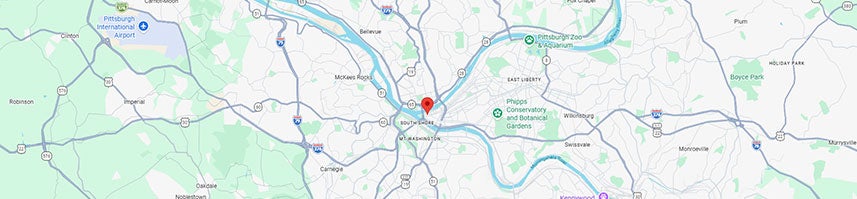
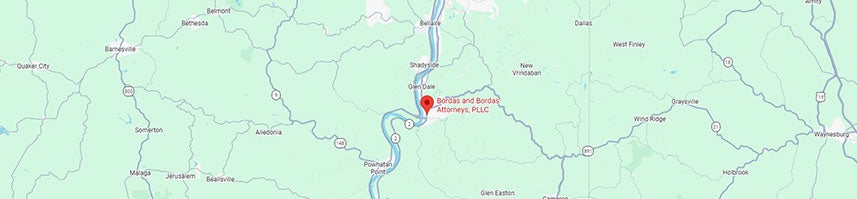
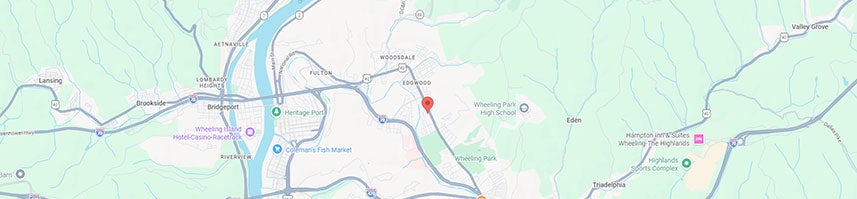
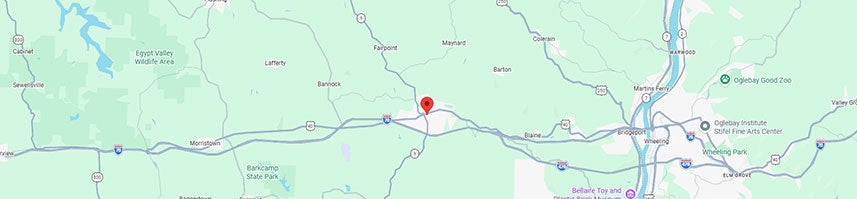
The information you obtain at this site is not, nor is it intended to be, legal advice. You should consult an attorney for advice regarding your individual situation. We invite you to contact us and welcome your calls, letters and electronic mail. Contacting us does not create an attorney-client relationship. Please do not send any confidential information to us until such time as an attorney-client relationship has been established.
The results in a legal case depend on a variety of factors, many of which are unique to each case. Prior results by this firm or any other do not guarantee future results. Case results presented here are illustrations of the type of work done by Bordas & Bordas and not a guarantee that any prospective case will yield any particular amount.
Request Consultation
Call 304-242-8410 or fill out the form below.