Blog / Legal Options

Blog

All Legal Options In the Community Know the Law Legal News and Product Recalls

Chili and Cornbread Recipes

Winter is my favorite time of year to cuddle up under a blanket with a good book and a hot cup of tea. It is also a great time for one of my favorite cold weather meals – chili and cornbread. Chili Recipe Here’s a simple crock-pot chili recipe that I like to use. It is a relatively sweet chili with a kick of heat, and feel free to forego the beans if you belong to the camp that thinks chili shouldn’t include them. Ingredients: 2.5 pounds of beef chuck OR ground turkey 2 tablespoons brown sugar Salt & pepper to taste 2 tablespoons vegetable oil 1 large onion, chopped 5 garlic cloves, smashed 2 small cans of chopped green chilies, drained 2 cans of black beans, drained 2 cans of pinto beans, drained 1 tablespoon ground cumin 3/4 cup chili powder 1 14-oz can diced tomatoes with chilies 2 tablespoons green hot sauce 1. Divide the beef/turkey into small cubes and toss with brown sugar, salt and pepper. Heat the vegetable oil in a large skillet over medium-high heat. Cook your beef/turkey in batches until browned on all sides, approximately 5 minutes. Transfer to your slow cooker or crock pot. 2. Add drained black beans and pinto beans to the slow cooker. 3. Reduce heat to medium and add the chopped onion to the skillet. Cook until soft, approximately 5 minutes. Stir in the garlic, chilies, cumin and chili powder and cook 3 minutes. Add 1.5 cups of water and the tomatoes. Bring to a simmer, scraping up browned bits from the bottom of the skillet. Transfer entire contents to the slow cooker. 4. Place the cover on the slow cooker and cook on low for a minimum of 7 hours. (I generally prefer to allow it to go 8-10.) 5. Stir in 1 tablespoon of brown sugar and the green hot sauce before serving. Cornbread Recipe This is really simple and really good. Make extra and eat the leftovers for breakfast with maple syrup. Ingredients: 1 cup flour 1 cup yellow cornmeal 1/3 cup white sugar 1/3 cup brown sugar 1 teaspoon salt 3.5 teaspoons baking powder 1 egg 1 cup milk 1/3 cup vegetable oil 1. Preheat your oven to 400° F (200° C). Grease a medium round cake pan. (I usually use a 9×2 inch round.) 2. In a large bowl, combine flour, cornmeal, brown sugar, white sugar, salt and baking powder. Stir in egg, milk and vegetable oil until combined. Pour batter into greased pan. 3. Bake at 400° F / 200° C for 20 to 25 minutes, until a toothpick inserted into the middle of the pan comes out clean.

Uninsured, Underinsured Motorists Benefits and Insurance Bad Faith in Pennsylvania

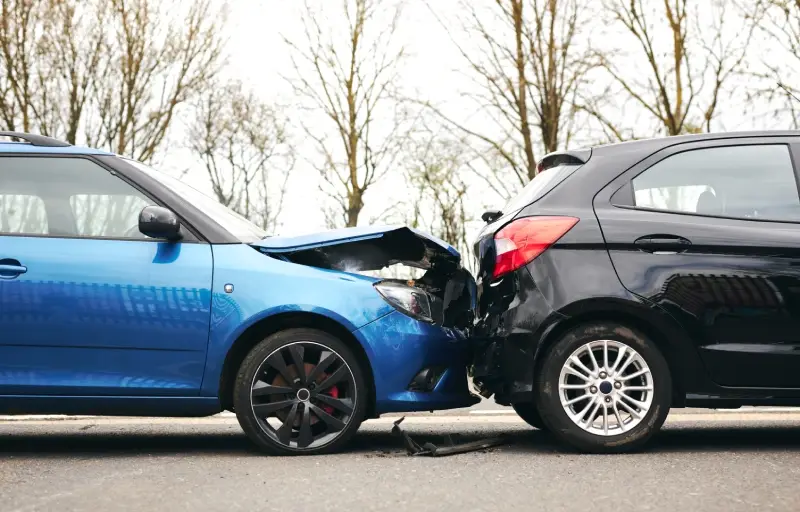
What are uninsured/underinsured motorists (UM/UIM) benefits? UM/UIM benefits are optional first-party insurance benefits that are available to Pennsylvania motorists, who desire an extra layer of financial protection in the event that they and/or their passengers are injured in a motor vehicle accident.  While motor vehicle liability coverage in Pennsylvania is mandatory, there are times when motorists do not carry any liability insurance – they are referred to as “uninsured” motorists.  More frequently, there are motorists who do not carry sufficient liability insurance to cover the damages caused by their careless conduct.   For example, if you're involved in a wreck caused by another and you determine that the other driver only has the state's minimum required limit of liability coverage, which in Pennsylvania is $15,000.00, and it's insufficient to cover your medical expenses, the other driver would be considered “underinsured” —meaning that they have liability insurance, but it's just not enough to cover the damage.  Under these circumstances, if you had UIM coverage, your motor vehicle liability insurance company may be obligated to pay the remainder of your medical bills and, in some cases, reasonable compensation for your injuries and damages up to the limits of your UM/UIM coverage limits. So what is bad faith insurance practice? In the context of UM/UIM insurance, bad faith insurance practice is essentially your motor vehicle liability insurance company’s unreasonable refusal to pay the UM/UIM benefits you are entitled to under the policy and the laws of Pennsylvania.  For example, let’s say that the at-fault driver referenced above only has $15,000.00 in liability insurance coverage and you sustained $25,000.00 in medical expenses.  The at-fault driver paid the extent of his/her liability limits, but you still had $10,000.00 remaining in medical bills.  If you purchased UIM coverage, you would have standing to file a claim for UIM benefits with your motor vehicle liability insurance company.  If your motor vehicle liability insurance company refused to provide you with UIM coverage and did not have a reasonable basis to support its coverage decision, then you may be able to sue your motor vehicle liability insurance carrier for breach of contract (failure to abide by terms of insurance policy) and bad faith. The breach of contract claim would typically involve your request to be paid the benefits you are arguably owed, whereas, the bad faith claim would include your claim for attorney’s fees and “punitive” damages, which are damages essentially designed to punish the insurance carrier for its bad faith refusal to pay benefits, and to deter them from doing this again to other policyholders.  There is a wrinkle in these claims however, as the policyholder has a right to a jury trial in breach of contract case, but this is not so for bad faith claims filed in state court – the bad faith claim is decided by the court.  See, Nebel v. Encompass Home and Auto Insurance Company, No. GD-15-015891 (C.P. Allegh. Co. Oct. 6, 2016 Folino, J.), where the court granted the insurance company’s motion to sever and stay the bad faith portion of a UIM/bad faith claim.

The Role of the Economist in Significant Cases

One type of expert that we work with on a routine basis at Bordas & Bordas is an economist. What role does an economist play in civil litigation? Let’s use an example of a younger wage earner who is significantly injured to the point where he or she is unable to work.  Among the other types of damages that are available in that type of case is compensation for future lost wages, i.e., the money that person would have earned throughout their working lives if not for the wrongdoing of someone else.  This is where an economist comes in. With the assistance of our clients, their former employers and sometimes the IRS, we collect certain information about the injured person’s wages and benefits.  A lot of this information comes from tax returns, employee benefit plans and the like.  We also collect certain information about the clients themselves.  For example, the injured person’s age, education level and skill set is all taken into account.  We organize all of that information and send it off to an economist, who is an individual trained to take that data and determine how much the injured person would have made, in terms of income and benefits, had the person worked for a certain number of additional years.  The economist can factor in likely raises, cost of living adjustments and inflation to further refine the numbers.  At the end of the analysis, the economist can present the jury with a figure that represents the amount of money today that would compensate the injured person for the earnings they would have secured had they continued working.  Obviously, this money can make a huge difference to the family of the injured person, who would otherwise be left in a terrible situation. We’ve also had the privilege of representing businesses in suits against other companies.  In these cases, the economist’s work can be much more complex.  It requires an evidence-based projection of how the business would have done if it had not been interfered with.  The amount of data that goes into such calculations can be hard to collect, organize and find. At the end of the day, an economist can be a very important expert witness.  This is especially true in cases where non-economic damages are limited by law.  Fortunately at Bordas & Bordas, we are used to working with economists as part of our day-to-day work.

Revisiting the JonBenet Ramsey Case Almost Two Decades Later

The case of JonBenet Ramsey is receiving much attention recently in the wake of its 20th anniversary approaching in December. Many networks have conducted interviews including Dr. Phil who had Burke, JonBenet's brother, as a guest on his show (Part 1 airs today). There have been Dateline shows (September 9), and networks such as A&E and Investigation Discovery have aired recent documentaries. There is a new Lifetime movie set to air in November (there was an older Lifetime Movie made previously). Two decades later, this case is still getting major media attention. And its details, although so horrendous and heartbreaking, fascinate me. Mostly because I am haunted by the fact that this murder is still unsolved. I was a young child when the December 26, 1996 murder occurred and only vaguely remember it. I remember a lot of media coverage and tabloid photos at the grocery store checkout line. I was not privy to most of the details as I was only a young teenager. In recent weeks, I have researched a lot about the case, watched all the new and old informative shows, read books and articles. And I have begun to wish that I could actually solve this case myself! Background: JonBenet was a 6 year old beauty pageant winner. Her mom, Patsy, was a former Miss West Virginia who attended WVU. Her father, John, was a well-known businessman worth millions of dollars in 1996. The couple owned several homes. While residing in their Colorado home, on the evening of Christmas, they returned home from their friends' house and went to bed. Just before 6 am when Patsy awoke, she found a ransom note at the top of the steps. The note explained that the perpetrator(s) had JonBenet in their possession and stated that they wanted a sum of money before they would return her to the Ramseys. The note had specific instructions as to what the Ramseys could and could not do and it set forth a two hour window in which the kidnappers would call the Ramsey house. However, no call was ever made and hours after that time window passed, John Ramsey found his daughter dead in the cellar of their basement. She was covered in a white blanket. Her arms were bound over her head and her mouth was duct taped shut. She appeared to have been strangled. The autopsy later revealed that she had been the victim of blunt trauma to her head (no exterior signs present but her skull was fractured) that would have rendered her unconscious and eventually that alone would have killed her; although, the cause of death was stated as affixation from the strangulation. Theories: There are two schools of thought regarding what happened that night. No evidence has been strong enough one way or the other to indict someone for the murder. But those involved most heavily with the research of the case have come up with two main theories. Theory 1- An intruder did it:  This theory is based on the premise that an intruder came into the house sometime either when the Ramseys were gone at their friends' house on Christmas Day or after the Ramseys went to bed the night of December 25. The intruder abducted the little girl from her room and murdered her. Flaws with this theory/unanswered questions: The ransom note: There is a ransom note that suggests that this was a kidnapping. So at what point did the kidnapping go wrong and this become a murder? The ransom note was unusual as ransom notes go. It was long and it requested an odd amount of money (odd because the amount was so low compared with other ransom notes and in light of John Ramsey’s financial success.) It was written on Patsy Ramsey’s notepad, and with her pen. There was another draft that had been started and not finished. This meant that the intruder took significant time to write this note without fear of being caught in the act. This supports the idea that the intruder may have entered the house while the Ramseys were at their friends’ house and wrote the note while he was alone and had more time; however, if this were true, why leave the ransom note to be found at all, once the kidnapping became a murder? No evidence of forced entry: There was no sign that a person broke into the home which meant that if someone did in fact enter the house, it had to be someone who had a key or they entered through an unlocked door or window (again luck that someone would find an unlocked point of entry, or planned by someone in the house, or someone who had been in the house before?) It is unlikely that the average person would have walked around the whole house looking for unlocked doors or windows as the house was very large and there would be more of a chance of being seen by a witness. Why leave the body in the house?: If this was supposed to be a kidnapping and the kidnappers wanted money, then why didn’t they take the body from the house? Once the body was found, and the Ramseys knew their daughter was dead, the alleged kidnappers had no chance to recover their requested money. No ransom call was ever made: There was never a call during the hours the ransom note alleged a call would be made. Critics believe this is because the ransom note was staged by someone inside the house who could not make that purported call, or because it was not a kidnapping, but in fact a murder. Theory 2 – A Ramsey did it (John, Patsy or Burke): Other theorists suggest that someone inside the house that night killed JonBenet and staged the whole thing as a cover-up. Those that think John killed his daughter believe that he had been sexual molesting her (autopsy suggested repeated vaginal trauma) and then murdered her. Those that think Patsy murdered her daughter think that she got angry with JonBenet for wetting the bed (something that she did frequently) and struck her over the head with an object knocking her unconscious. She then staged the rest of the crime to make it look like a murder by strangulation and wrote a fake ransom note. Still there are those that think the older brother, Burke (who was 9 at the time) was playing with JonBenet and got angry and hit her in the head and the parents staged the whole thing to protect him.*Theorists suggest that the December 25th death date that the Ramsey’s chose for JonBenet’s tombstone corroborates this theory because it insinuates that the Ramseys knew their daughter was dead before midnight and spent the whole night staging the cover-up. Which is also why Patsy was still wearing the same clothes as the night before.* Flaws with this theory/unanswered questions: Killer profile: There was no sign of abuse of JonBenet at any point prior to that night and the family did not fit the typical FBI profile of someone who would kill their child. Ransom note and murder weapons: Although the note had been written on Patsy’s pad and her handwriting could not be ruled out as a match to the ransom note’s handwriting, the other pages ripped out have never been recovered. Moreover, the use of Patsy’s paintbrush to make the garrote is undisputed, but the rest of the rope used to tie JonBenet’s hands or the rest of the duct tape roll was never recovered. Why a cover up at all: Had an accident happened, the parents could have just called for help like any other accident with the hopes that JonBenet would be ok, unless there was an intent to kill from the beginning. And there would be no need to stage a cover up for their son as he was only 9. Why make it look like a kidnapping after a murder took place? Why not just dispose of the body elsewhere? Why leave it in your house and then suggest a kidnapping? Although we don't have answers to a lot of the plaguing questions as to what happened to the beautiful little girl, there are a few things we do know: 1- The crime scene was handled poorly which has led to the extreme difficulty in indicting and convicting anyone for this crime. The crime scene was entirely understaffed: Most of the day only one police officer was stationed at the house. This is mostly attributed to the fact that it was Christmas. The crime scene was never blocked off: When the officer arrived, this was a kidnapping, so the house was never secured from entry and exit. People came in freely and moved about the house and touched things. The Ramseys called their friends over who came and even cleaned up the kitchen (which was later found to be detrimental because pineapple was found in JonBenet’s small intestine and there was a bowl of pineapple on the kitchen table. The Ramseys could not account for how the pineapple got on the table or in JonBenet’s stomach). This also meant that there would be several more sets of fingerprints inside the home that could not have been proven to have gotten there during the commission of the murder.  Disrupted DNA: John Ramsey moved the body when he found it. This contaminated the murder scene because once the body was moved, all the evidence left on JonBenet’s body was disturbed. Now John’s DNA would be on his daughter, as was Patsy’s as she supposedly hugged and cried on JonBenet’s dead body. So authorities couldn’t be sure that such evidence got there from commission of the crime or by moving and weeping over the body. 2- The likelihood of this crime ever being solved is low. Without a direct match to the DNA found (there was a small amount of DNA found on JonBenet’s leg later revealed to be the DNA of an unidentified male) or an explanation of its existence (someone explaining how it got there/was planted there), or without a confession, the world may never know who killed JonBenet Ramsey. Patsy, one of the people in the house that fateful night, and a person one theory points to as the murderer, has already passed away. Patsy died in 2006 of ovarian cancer, which leaves only John, JonBenet's father and Burke, JonBenet's brother and/or the alleged unknown killer left to come forth with a confession. 3- This crime and case would play out much differently in 2016 with the advances in technology and forensics. With computer generated handwriting analysis, the ransom note studies could be done much more thoroughly and objectively. The advances in DNA analysis are enormous and too many to mention. Authorities have recently used a new advancement called “touch DNA” that can now help widen their search by not just including suspects, but also those related to suspects when analyzing DNA samples. The ability to track a person’s movements based on GPS in their cell phone or car, could have possibly explained what happened to the duct tape and extra rope, had someone in the house gotten rid of them. Alibis could have been discredited or supported. The District Attorney in this case felt strongly that there was not enough evidence to indict the Ramseys for murder. He is quoted as saying that he didn’t want to be the reason that an innocent person was behind bars. Could it be that he is now the reason that a murderer walks free? A case, a murder, that has broken our hearts, has made us think the unthinkable about parents and what they could do to their child, has made us worry that this could happen to us, has made us endure agonizing photos of horrific things done to a beautiful little girl, has plagued our minds with theories and autopsy findings, has haunted Americans for almost two decades, and may never be solved. JonBenet’s death may never be avenged. Eventually the anniversaries won’t be celebrated. Documentaries won’t be made. But that little girl will still be dead. JonBenet would be 26 years old today, but we will always remember her as the blonde little girl whose life was ended way too soon. Was this murder a cover-up? Was it “the perfect murder?"  Was this murderer “too good to ever get caught?" Or has our very own justice system failed us?

Insurance Coverage that is Out of this World

As lawyers, we deal with insurance companies a lot. Insurance companies sell a lot of different types of coverage, from general homeowners insurance, car insurance and health insurance to insurance covering professional athletes and celebrities’ physical features.  Did you know, however, that there are companies out there that sell alien abduction insurance?  That’s right, if E.T. comes to take you for a ride you can be covered.  In all honesty, the plans are bought for fun purposes.  The Saint Lawrence Agency in Altamonte Springs, Fla. started selling the polices in 1987 through its UFO Abduction Insurance Company.  A single lifetime premium of $19.95 gets you the coverage.  Most of us would consider this type of coverage a good natured gag and laugh at the gold embossed certificate of coverage you can hang on the wall.   The St. Lawrence Agency’s own website pokes good natured fun at itself.  Its slogan has been “Beam Me Up, I’m Covered.”  A successful claim would result in $1 per year payout until you die, subject, of course, to a $10,000,000 cap.  It has been reported that the St. Lawrence Agency has actually paid out on two of its policies! If only you could live that long! Amazingly, however, there are other companies that take the coverage way too seriously and/or prey on those extreme conspiracy theorists among us.  A company out of the London-based insurance market, Goodfellow Rebecca Ingrams Pearson (GRIP), actually sold policies in the 1990s which cost $155 per year in premiums and would pay out $160,000 upon proof of abduction.  GRIP reported a claim pay out in the 1996 of $1.6 million dollars, but later admitted that the claim pay out was a publicity stunt.  Rumor has it that the Heaven’s Gate Cult also reportedly paid for abduction coverage up to $1 million for each of its members. Those of us of who have had to make insurance claims for damage to our homes or cars can imagine what the claims process would be like for abduction insurance.  What type of proof of abduction would you need?  How would the claim be investigated? Would Fox Mulder and Dana Scully from the X-Files give you a call?  Our firm handles a lot of insurance bad faith litigation.  In those cases, we represent individuals who have been treated illegally and in bad faith by their insurance companies.  Think of the possible room for expansion for lawyers if people buy this coverage. Our firm has opened additional offices in West Virginia and Pennsylvania over the last few years, maybe the Mars or the Moon could be next.  We could fight for justice on a local, national and galactic basis!

A Mother's Thoughts on the Gorilla Accident

The story of the little boy who got into the gorilla exhibit at the Cincinnati Zoo has received widespread press in the last several days. I have read numerous accounts, have seen raw footage, have found blogs on the unfortunate death of the massive creature, and most surprisingly to me, have read comments of people criticizing the mother. Appalling! I cannot fathom in my mind, how we have stooped so low as a society that we put blame on a mother for this horrible accident. How can any mother point the blame at another mother for this? How can someone's first response to this horrific accident be blame on the mother rather than pity or thankfulness? Personally, my first response when my husband came into my bathroom that morning to show me the footage was "Thank God that sweet child is ok!" Because that is exactly what that little boy was --- a child, a curious child. A little boy, who if he is anything like my four little boys, hardly ever stays in one place very long! I watched that video in horror. With a lump in my throat and a knot in my stomach, I envisioned my own four-year old on that video with that ginormous animal thrashing him around, with those big gorilla eyes staring into my sweet little boy's scared face. I couldn't shake the awful thought. So after thanking God that little boy was ok, I quietly thanked God that it wasn't me or one of my children that was involved in that accident --- that I didn't have to live through that. Next, I commented to my husband how calm that mother was on the video. I said I would have been screaming like a maniac. Crying. Yelling. I would have been a mess. He told me that it was probably her calmness that saved that little boy's life. And from what I read, he is likely right. It seems that noise and unfamiliar sounds agitate silverbacks. And a raging maniac mom like myself would have caused detriment to that little boy. Well, thank God that boy had a mom like her and not like me! Because if my screaming and crying would have gotten my son killed, then I would certainly be left with one less son. Maybe instead of blaming that mother for her curious little boy getting away from her for a split second, we should be commending her on how she conducted herself and handled the intense situation. I have read Facebook comments that start out "I have 5 kids and I would never have let that happen to my child." Really? I have five kids too. And I assure you I wouldn't LET that happen to my kid either. I guess we assume here that by LETTING that little boy in the exhibit, the mother endorsed his behavior. Much like we LET our child go play at their friend's house. "Sure. Ok. Go ahead over to Johnny's house. Yeah. Go play in the gorilla exhibit!" (Sense the sarcasm here?) How about the articles that state "the mother had two other children with her at the zoo." Is this suggesting that us mothers with multiple kids can't watch our kids as well as those with fewer kids? That we are just statistically less vigilant because we are outnumbered? Imagine the headline if this mom had LET her ONLY CHILD get into that exhibit. Then what would we blame it on?  Her taking a photo to document their memory together? Her tying her shoe? Her blinking? My point being that no matter how many or how few children you have, things, unfortunately bad things, can happen within a split second that can change our lives forever. Because I realize that, I thank God that wasn't one of my children! Maybe those of you who find this mother to be "negligent" or "unfit" have simply gotten to this point in your life with luck on your side. You've never looked into the pool to find your child's head and when you can't see them, suddenly feel like you can't breathe until you see them coming up from under the water and realize they were just swimming in the pool. Perhaps you have never walked out of the bathroom and your 9 month old who had been sitting there playing was gone. He had suddenly crawled away and you frantically search the house to find him just sitting in another area quietly playing with his toys. You must not be the mom who has kids who like to play in the clothes racks at department stores. You certainly don't have a kid who has ever gotten distracted looking at something more interesting to him as you slowly walked away in a public place and leave him a ways behind. You've never experienced the horror of imagining the worst for your child in a situation. LUCKY YOU!!! How especially lucky you must be to have never had any accidents happen to you or your child-an ACCIDENT. By its very definition, an accident is 1- an unfortunate incident that happens unexpectedly and unintentionally...2- an event that happens by chance without apparent or deliberate cause. So how can this mother be to blame for an UNEXPECTED (so she couldn't plan for it), UNINTENTIONAL (so she didn't mean for it to happen) CHANCE (happens because of luck) happening? Let's face it moms, we beat ourselves up enough. We guilt ourselves over everything daily. Isn't that enough torture? Isn't it enough that we lose sleep wondering whether we did all we could, whether we were the best mom we could be? Isn't it enough that we pray for the safety and longevity of life for our kids, that we would sacrifice anything for their health and happiness including our own lives? Shouldn't we be building other mothers up, supporting them, empathizing with them, instead of tearing them down, blaming them? Accidents can happen to anyone at any time. I don't know this mother personally, but I am pretty confident that most mothers that haven't had the misfortune to have experienced such unspeakable and unfathomable pain and worry, are just lucky. It's a product of their better luck, rather than their better parenting. So while those lucky moms are blaming this poor, unlucky mom, I'm counting my LUCKY STARS and praying that my luck doesn't change for the worse some day!

The importance of uninsured and underinsured motorist coverage

Imagine that you are safely driving down the road. You are watching for cars around you, driving the speed limit and making sure you are not distracted.  All of a sudden, another car crashes into your driver’s side door because the driver was texting and ran a red light.  During the crash, you break your legs, hit your head on the side window and break several ribs.  You are now on the long and expensive road to recovery.  Not only have your medical bills added up quickly, but you miss three months of work because you cannot walk or lift anything due to your injuries.  This life-changing event has left you sitting at home and stressed, as you try to figure out how to pay not only your medical bills, but also your mortgage, taxes and electric bill. This is the situation I find many of our clients in when I first talk with them.  One of the first things our law firm would do is find out what type of auto insurance the at-fault driver has and request a copy of their insurance policy’s limits.  Many times, the at-fault party may only have the minimum coverage required by law, which is likely a small fraction of the amount to which the person is entitled.  Even worse, the amount of drivers without insurance never ceases to amaze me. So there you are, in pain, unable to work and possibly not able to recover any compensation from the person who permanently changed your life.  This is where uninsured/underinsured insurance coverage is crucial.  This type of coverage is purchased to provide compensation to a driver whose damages surpass the amount the at-fault party is able to pay.  Therefore, even if the at-fault party did not have insurance, the person who was injured would still be compensated for their damages from their own insurance policy. My purpose for writing this blog is not only to inform you about this type of insurance, but also to encourage our readers to purchase it.  Many people either waive their option to purchase underinsurance coverage or purchase a very limited amount.  In my experience, the small fee necessary for this type of coverage is well worth it to insure a person is covered when they are injured.  The time to think about protecting yourself and your family is now; once the crash occurs, it may be too late.

Distortion of the Human Mind and the Unreliability of Eyewitness Testimony

A darling grade school young lady that I know recently had to do a social studies project. The project took her to the state finals.  This was done on a subject that many of us know to be true, especially those of us in the legal field.  It’s a subject in which focus groups have been performed time and time again to support the theory that eyewitness testimony can quickly become a distortion of one’s memory.  I was quite impressed that this grade schooler was able to accomplish supporting such a study by performing her own focus groups. Live eyewitness testimony coupled with credibility can slam-dunk a case, but not remembering correctly can be destructive.  What if this is a criminal matter?  It might just send an innocent person to jail.  What if this is a matter as small as one child being mistaken for another that took the cookie out of the cookie jar?  Small as it may seem, that child being wrongfully accused may suffer some serious emotional damage feeling that they are untrustworthy and persecuted unfairly. Either way, incorrect eyewitness testimony can be harmful and hurtful. It has been proven that as soon as we start processing and interpreting from our mind, the distortion begins.  This can occur based upon original memory, personal experiences, personal thought processes and others influences and opinions.  Not intended to be deceitful, just human. What can we do to ensure eyewitness testimony? There are some steps you can take to safeguard what you may have witnessed. ·      Take action.  Write a statement immediately about everything you remember.  Even if this is not a formal statement you have given, write it for yourself. ·      Keep a log about any conversations you have and the details that transpired that may have an effect on your recollection so as to ensure another person has not influenced or impacted your memory. ·      Rely solely on what you saw. ·      Do not be let anyone else shape what they think you may have or should have seen. ·      Never add anything or take away anything just because you think it may fit the story and make more sense then, it becomes false. ·      Have confidence that without any fabrications or incorrect additions and/or subtractions, the truth should prevail and you have done your best to have no doubts of your own.

Blankenship Case Exhibits the Need to Fix the System

Don Blankenship will escape his criminal trial without receiving the long prison sentence he deserves. A possible one year in jail, and a fine, are punishments that do not fit his crimes. But rather than rail against the injustice, we need to understand it, and address it, by fixing the laws and the system that made it happen. Don’t imagine the lawyers, or the judge or the jury rigged it. All of those folks performed their roles properly and honestly in this case. Everyone involved did their lawful duty in the epic Charleston trial of the former coal baron. But the resulting sentence points to a larger and more important truth below the surface. For a powerful few in this country, nothing is left to chance. Blankenship didn’t have to try to influence the judge or jury unduly, because people like him set the system up well in advance, and make sure that the law itself is looking after them. When the chips fall their way, there is no surprise because everything has been arranged ahead of time. CEOs like Blankenship have rigged our system in a deep and systematic way. The reason the sentence will be such a letdown was perfectly expressed by Vann Newkirk’s observation that our “system cannot avenge those it was not designed to protect.” Exactly so. Our justice system has been built up over hundreds of years — all of them dominated, to one extent or another, by the power of organized money. A person can receive a long prison term for possessing marijuana, but not for conspiring to violate mine safety regulations. The reason is that those who would conspire to violate mine safety regulations organize their money and demand special protections from the legal system — and they get them. West Virginians overwhelmingly believe that Don Blankenship bears responsibility for the deaths at Upper Big Branch. A clearer case of “industrial homicide” has rarely been seen. Yet again and again, Blankenship’s team expressed frank incredulity and indignity at the idea that he would even be tried, let alone convicted, of anything. Booth Goodwin’s historic prosecution of Blankenship was a tour de force, all the more so given the limited tools we give our prosecutors to work with against CEOs. But the light sentence — destined to be heavier in money than jail time — clearly shows us where ordinary miners stand in our legal system compared to the big bosses. Mine safety regulations are a matter of life and death. But conspiracy to violate them carries a misdemeanor-grade sentence. The system we have cannot avenge those it was not designed to protect. So we must change the system, and bring it into balance with what truly matters — bringing workers home at the end of the day to be reunited with their families — instead of tilting it towards “profit at any cost.” All aspects of the system have this problem. Pensions and health benefits for workers are no safer than the workers themselves. In bankruptcy court, there is always money and more money to pay executives their salaries, bankers their fees and bonuses on top of that. But there is never money for the workers’ pensions. Modest, monthly checks earned over 30-plus years of service at hard labor are suddenly “bloated” or “excessive,” while multi-million dollar bonanzas for single executives are “necessary expenditures” for “key employees.” More often than not, the most-highly compensated personnel have the most responsibility for the financial disasters, just as they have the most responsibility for the the human catastrophes. But they have financed a system that makes sure the price for their mistakes is paid by others. And they are getting their way. Year after year, just as families are broken and bereft of their loved ones who do not survive Blankenship’s vision of how to “run coal,” so are those who survive bereft of the money once thought to have been earned underground.  Organized money operates a system much like the house in a casino; in the end, they get it all. Financial criminals brought this nation to its knees in 2007, and few if any of them have been prosecuted and none received a significant jail sentence despite costing the nation hundreds of billions of dollars and millions of jobs. Meanwhile, thousands of Americans are jailed for failing to have money enough to pay fines for petty violations of the law and regulations. Privatization of our prisons and courts is another means for organized money to extract profit from ordinary working people, and it’s a growth industry in 2016. We need to redesign our system. We need to give prosecutors the tools they need to reach the top — where the decisions really get made. Mine safety is as good a place as any to start.  At the federal level, the Byrd Act remains ready to go — every member of West Virginia’s Congressional delegation should support it as a top priority. If West Virginia’s leaders won’t stand up for miners and their families, who will? At the state level, conspiracies like Blankenship’s to violate mine safety rules should be deemed a felony and carry a stiff sentence. Some say that West Virginia prosecutors wouldn’t have the moxie to take on CEOs like Blankenship. But our U.S. Attorney has set an example for others to follow by boldly placing the responsibility where it belongs: on the wealthy men making the decisions that sent honest, hardworking, decent people into needless peril and death. Others must follow his work. The least leaders can do is deliver to our prosecuting attorneys the legal tools they need to make their convictions count at sentencing time. Working people don’t have the advantage of unlimited bank accounts. They have to educate, organize and vote to beat the Blankenships at their own game. When organized people demand it, we will have a system that protects them from organized money. Let's get started.

Doc with patient

Too Little Medical Liability Insurance Coverage

The vast majority of physicians in the State of West Virginia have professional liability insurance coverage of $1 million. While $1 million may seem like a lot of money to many people, I can tell you from first-hand experience that it doesn’t take much for a doctor’s error to produce medical bills alone exceeding $1 million.  Certainly, if a surgeon or a gynaecologist, through his negligence, seriously injures a child or a young wage earner, the economic loss alone consisting of medical bills, future care and lost income, often times is well in excess of $10 million, and can approach $25 million. The problem with the doctor having only $1 million of coverage is that even if the injured party is successful in pursuing a legal negligence claim (malpractice), there will not be sufficient funds to allow the person or their family to adequately care for the needs of the seriously injured individual. That presents a number of problems. One problem is that if the medical doctor does not have adequate insurance to cover an award that might be very large, then his personal estate is at risk. Two, if the doctor’s personal estate cannot cover the money that the liability insurance didn’t pay, then the injured party and their family have no way to provide for the future care that’s needed and to make up the future lost income. The burden of caring for the severely injured individual falls upon society. That means that now, instead of the doctor who committed the negligence that brought about the injury and failed to purchase adequate insurance, the burden is put on the public at large. I’m advocating that the insurance that’s carried by certain medical doctors should be required to be closer to $10 million; I am not suggesting that all physicians need this type of coverage. Certainly, the physicians that are most likely to cause the greatest harm are surgeons, gynecologists, anesthesiologist, and perhaps radiologists. These are the people that need the additional coverage to not only protect themselves, but to protect the patients and society in general. When trying to determine the reason (notwithstanding cost) that these physicians in these high risk fields of specialization don’t have adequate coverage, one must consider primarily that for the most part the hospitals where these physicians practice do not require them to carry more than $1 million in liability insurance in order to practice at their facilities. In that regards, the hospitals, in my opinion, are making a huge mistake inasmuch as the liability for payment for the injured person’s excess damages are often times transferred to the hospital by claims against the hospital that should mostly fall on the doctor. That seems unfair to me. This is something that the hospital boards across this state and nation need to look at. That is, it would seem that it would cost the physicians in their high-risk specialties little additional money for insurance premiums costing $10 million versus $1 million when taken in light of the high rewards their specialties receive in terms of income. Therefore, if hospitals required those doctors who specialize in high-risk fields to carry $10 million in liability insurance coverage, then the burden on the hospital, the burden on the injured patient, the doctor himself and society in general would be greatly reduced. I would further think that physicians, with the help of the hospitals they practice in, could find a creative way to obtain the additional coverage without unduly reducing the net profit to the physicians. If in fact the physicians and hospitals fail to put into place this additional coverage for the protection of those mentioned above, then legislatures should enact laws to require physicians who practice in these dangerous specialties to carry insurance that will protect the public in general. Certainly, the legislatures in many states, including the State of West Virginia, a number of years ago placed limits on the amount of money that patients injured through the negligence of physicians and hospitals could recover, but allowing for economic damages, then they should take the idea a step further and require physicians practicing at these hospitals in these very high risk specialties to obtain better insurance coverage to at least somewhat protect those patients that are injured through their negligence.

Automotive Related Litigation

As most of you reading this know, our law firm since its inception, has been heavily involved in automotive-related litigation.  We’ve done major truck and car crash cases.  We have litigated product liability cases involving rollovers, roof collapses, defective seatbacks, defective seatbelts, defective glass and tires.  We have investigated failures of airbags as well. In recent developments, the Takata airbag has been under serious attack.  There have been claims made that Takata has kept defects about its airbags hidden well before the company issued a vast number of recalls starting in 2008.  The problem with the Takata airbag is that a flaw in the bag can cause the airbag to explode while it’s inflating.  Unfortunately, the information concerning these exploding airbags has not come to public light in spite of the fact that U.S. Senators have accused Takata of instructing employees to destroy information about the faulty airbags—including video and computer data. One of the more serious problems of these bad airbags is that the defective airbag can cause metal pieces to pierce the steering column during airbag deployment because of the chemical reaction that occurs combined with high surrounding humidity levels.  Honda, who is one of the users of the Takata airbag, is the same company that admitted this past fall to failing to report almost 1,800 deaths and injuries to the U.S. National Highway Traffic Safety Administration since 2003.  Under U.S. law, carmakers are supposed to provide early warning reports accounting for each death or injury linked to possible safety defects.  In spite of the fact that they under-reported over 1,800 injuries and deaths, including Takata airbag inflator explosions. Finally, at the end of November of last year, the National Highway Traffic Safety Administration ordered Takata to increase and enlarge its recall of the defective airbags throughout the country.  The National Highway Traffic Safety Administration concluded that various components of the Takata airbag can fail in all regions of the country.  Unfortunately, the Takata airbag is not only provided in the Japanese automobiles but also in automobiles manufactured by the Chrysler Group, Toyota and BMW which include this airbag. EndFragment

Oil & Gas Blog -Nuisance Claims

Picture this scenario, you just built your dream house on a beautiful piece of property in the country side. Some of your favorite things about the property are the view of the beautiful rolling hills from your deck, the fact that you can allow your children to run free around your property without worrying about their safety, and the peace and quiet you come home to after a long day of work.  One day, you notice several men doing work on the property across the street.  Soon, several men turn into many large trucks that are kicking up dirt on your property.  Next, you are told by your neighbors that an oil and gas company bought the property across the street and will be using it for their operations. Over the next several months, your family is forced to deal with noise and light on your property during all hours of the day and night.  Not only can you not sleep at night, but you wake up to smell odd fumes and odors, walk out on your deck and see your property covered in dust and dirt, only to look up and see a large flare across the street.  Your air conditioner no longer works and you believe that cracks are starting to form in the foundation of your house. Moreover, no one wants to live on your property and, as a result, it is worth less than half of its previous value.  Your little piece of paradise now looks more like an industrial zone and there is no end in sight. Many of our clients have called with similar stories, wondering what rights, if any, they have.  In West Virginia, Ohio and Pennsylvania, individuals have the right to bring a claim for substantial and unreasonable interference with the private use and quiet enjoyment of their land.  This blog will not discuss the technical aspects of the laws of each state, but I do want to let our readers know that they may be entitled to compensation for the loss of their property value, stress and anxiety, annoyance, inconvenience and other issues caused by oil and gas operations. In many cases, the oil and gas company has the right to use neighboring properties for their operations.  However, you may be entitled to compensation for the damages their operations cause to your property.  It would be impossible for me to write a blog discussing the laws of different states and how they may apply to all of the different scenarios that could exist.  Therefore, if you have a question regarding the damages that someone else is causing to your property, always feel free to call our office for a free consultation.  Many times, if I cannot help someone, I do my best to point them in the direction of someone who can.

Contact Us

Fill out this form below and we'll contact you shortly
*Required Fields