Blog / Legal Options

Blog

All Legal Options In the Community Know the Law Legal News and Product Recalls
Handshake

Trucking Regulations Applicable to Smaller Trucks

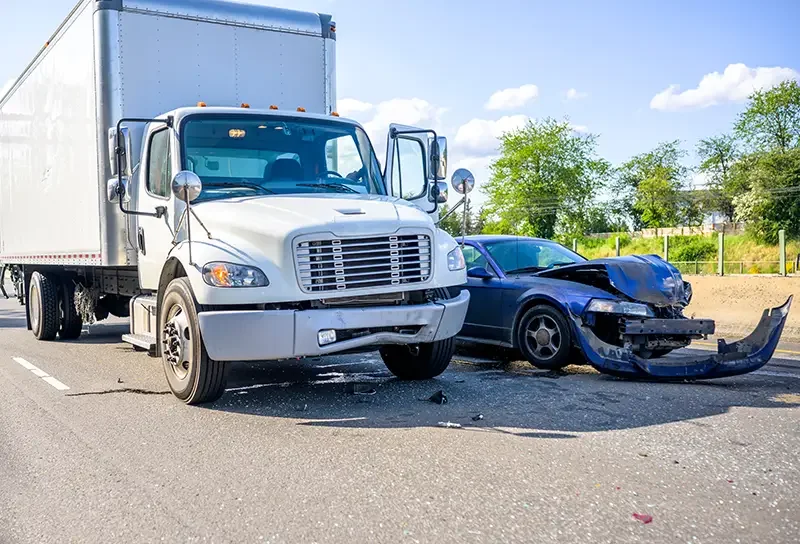
Most people are familiar with the idea that large trucks, commonly referred to as 18-wheelers or commercial motor vehicles (“CMVs”), are regulated by the Federal Motor Carrier Safety Administration (“FMCSA”) and require the driver to possess a commercial driver’s license (CDL). What many people don’t know is that there are many vehicles on the roadway which qualify as CMVs which do not require the operator to have a CDL. While the driver may not need to have a CDL to operate these CMVs, the companies that own the CMVs are still required to comply with many of the Federal Motor Carrier Safety Regulations (FMCSRs) issued by the FMCSA. The FMCSRs are essentially safety rules that are intended to keep the motoring public safe and are designed to prevent accidents and deaths caused by CMVs. The FMCSRs contain two separate and distinct definitions of what constitutes a commercial motor vehicle. Depending on which definition applies to the vehicle involved in your crash will determine which of the FMCSRs may be applicable to you. The first definition of a CMV is found in 49 CFR section 390.5 which states that a CMV is any self-propelled or towed motor vehicle which has a gross vehicle weight or gross combination weight, of 10,001 pounds or more. A second definition of what constitutes a CMV is found in 49 CFR section 383.5, which establishes the requirements for obtaining a CDL. 49 CFR section 383.5 defines a CMV as a motor vehicle or combination of motor vehicles having a gross combination weight rating of 26,001 or more pounds, inclusive of a towed unit with a gross vehicle weight rating of more than 10,000 pounds. This second definition covers 18 wheelers and requires the driver to maintain a CDL. The first definition, however, covers business vehicles, that either alone or in combination with a trailer, weighs more than 10,001 pounds. For example, a standard full-sized pickup truck, has a gross vehicle weight rating of between 6,000 and 10,000 pounds. Add a landscape trailer to the back and that full-sized pickup now meets the definition of a CMV, even though the driver does not need to have a CDL to operate that CMV. A second example of these lesser CMVs would be an armored car you might see delivering money to a bank or grocery store, which are specifically designed and built to weigh less that the 26,001 weight-limit, so that the companies that purchase those vehicles don’t have to hire professional CDL drivers. The significance of knowing and understanding this other definition of CMVs is that while the driver may not need to have a CDL, the company that owns and operates that CMV is still required to comply with many of the provisions of the FMCSA. This knowledge can have a significant impact on your personal injury claim should you be involved in a collision with one of these types of CMVs. For example, an employer must still ensure that a driver is properly qualified to operate a CMV, even if the driver doesn’t need to have a CDL (49 CFR Section 391.11). An employer must maintain a “Driver Qualification File (49 CFR Section 391.49), which contains specific documentation related to a driver’s qualification. The FMCSRs require an employer to investigate the driving record of a driver it employs to operate a CMV every 12 months. (49 CFR Sections 391.25 and 391.27). It also requires an employer to conduct a road test before allowing a driver to operate the company’s CMV (49 CFR Section 391.31). Often, the companies that place these vehicles which qualify as CMVs weighing less than 26,001lbs. on the road either don’t know that they are subject to the FMCSRs or purposely ignore them hoping that the officers investigating the accidents involving them, or the attorneys representing people injured by them, won’t be familiar with this alternative definition of what a CMV is and what obligations that imposes on the employer/owner of the CMV. So, the next time you’re involved in a collision with some type of truck, don’t automatically assume that if the collision didn’t involve an 18-wheeler that the FMCSRs aren’t applicable to your claim. Accidents involving CMVs should not be handled the same as ordinary motor vehicle crashes. The investigation into, and the handling of, a claim involving a CMV requires any attorney knowledgeable in and familiar with the FMCSRs. *Image courtesy of Unsplash/Pixabay

How to Learn About the Truck That Collided Into You

It goes without saying that trucks are massive. And, it also goes without saying that most trucking companies and drivers do their utmost to keep the public safe. There are numerous state and federal organizations, laws and procedures to ensure that the trucking industry safely maintains their trucks and buses and that their drivers are well rested and not operating under the influence of drugs or alcohol. But, we also recognize that things can go wrong, very wrong – just do the math: Force = mass x acceleration. The Federal Motor Carrier Safety Administration (FMCSA) is one of many such organizations. The FMCSA’s primary mission is to prevent commercial motor vehicle-related fatalities and injuries. Activities of the administration contribute to ensuring safety in motor carrier operations through strong enforcement of safety regulations; targeting high-risk carriers and commercial motor vehicle drivers; improving safety information systems and commercial motor vehicle technologies; strengthening commercial motor vehicle equipment and operating standards; and increasing safety awareness. To accomplish these activities, the Administration works with Federal, State, and local enforcement agencies, the motor carrier industry, labor and safety interest groups, and others. To this end, the FMCSA Safety and Fitness Electronic Records (SAFER) System offers company safety data and related services to industry and the public over the Internet. Users can search FMCSA databases, register for a USDOT number, pay fines online, order company safety profiles, challenge FMCSA data using the DataQs system, access the Hazardous Material Route registry, obtain National Crash and Out of Service rates for Hazmat Permit Registration, get printable registration forms and find information about other FMCSA Information Systems. You can also learn about a company’s Compliance, Safety and Accountability also known as its CSA Scores.  The Safety Measurement System uses data from roadside inspections and crash reports over a two-year period, along with data from investigations to identify and intervene with motor carriers that pose the greatest risk to our roadways.  Points are assigned for unsafe behaviors, along with monetary penalties. If you are involved  in a collision with a commercial motor vehicle it is important to speak with an experienced transportation attorney who can make sure that any unfavorable documentation/information on the trucking company is preserved and used in the litigation process if allowable.

bus accident

Proper Truck Accident Investigation, Explained

In all accidents involving large trucks, it is vital that attorneys perform a proper truck accident investigation. At Bordas and Bordas we use comprehensive programs to ensure no stone is left unturned. Among the plethora of steps taken to prepare a truck accident investigation and later litigate a truck crash case we: (1) Preserve all evidence during the truck accident investigation; (2) Obtain police and other agency reports; (3) Obtain witness reports; (4) Acquire coroner reports; (5) Obtain the black box data if the truck was equipped with an ECM (Electronic Control Module); (6) Obtain the subject vehicle’s black box data if it was equipped with an EDR (Event Data Recorder) or SDM (Sensing and Diagnostic Module); (7) Acquire the truck’s GPS (Global Positioning System) data; (8) Learn about the motor carrier and its licenses, insurance, safety record, etc.; (9) Get the full background and history on the driver; (10) Secure a truck accident reconstruction expert; (11) If the truck driver committed a criminal act which caused the accident, we will communicate closely with the prosecuting attorney in charge of any criminal proceedings against the truck driver; (12) Determine the best legal venue determined by substantive law and choice of law issues and (13) Prepare and file the lawsuit. We want the community to understand that commercial trucking companies (and their insurance carriers) face significant costs if they are held liable for personal injuries or fatalities caused by a trucking collision. As someone who defended trucking companies for over 15-years, within minutes after these catastrophic collisions they are sending investigators, lawyers and other personnel to the accident scene. It is their job to control the accident scene, shield the driver from giving damaging statements and preserve evidence in a light most favorable to their clients. From our years of experience handling complex truck collision investigation and litigation, we know how to effectively detect negligence and causes of the truck wreck, such as: Negligent truck safety Negligence in securing cargo Driver log falsification Over Hours of Service Speeding Truck driver fatigue Driver distractions Defective road design Bad weather Failure to enforce training procedures Other factors If you or a loved one has been involved in a collision with a commercial motor vehicle please feel free to call us with any questions you may have or ask us how we can help.

Blog Series: How Do You Determine What My Case Is Worth?

I recently published two blog entries which reviewed the various factors that go into determining the settlement value of a client’s claim. Each of those previously-discussed factors play an important part in determining what an insurance company will be willing to pay in order to settle your case. There is, however, one final consideration that we need to discuss. This factor is often overlooked by injured parties, but I assure you that it is a critical consideration for insurance carriers. The “final factor” in determining the value of your case is the firm that is representing you. When I say this, I’m not simply talking about the firm’s reputation for competence. In order to get the maximum value for your claim, an insurance carrier has to be convinced that if they do not offer you full and fair compensation for your injuries and damages, the law firm representing you will not hesitate to take your case to trial. Believe me, if you don’t think this is an important consideration to the insurance company defending against your case, you don’t truly understand how those companies operate. For the first ten years of my career, I worked as an insurance defense attorney. If a person caused an automobile accident and later got sued, I was the person the insurance company hired to defend the case. My firm worked for Nationwide, Allstate, Liberty Mutual, and dozens of other insurance companies too numerous to recall or list here. Each and every one of the companies we worked for was driven by one prime directive: they wanted to hang onto as much of their money as possible, and they want to hang onto it for as long as possible. So, how does the law firm you choose factor into the settlement value equation? It’s simple, really. The insurance company needs to know for an absolute fact that if they don’t pay the amount you and your attorney are demanding in settlement negotiations, they are going to end up in trial. Insurance companies don’t like going to trial. Why? Because going to trial costs them money. Lots and lots of money. Insurance defense lawyers charge as much as $400 per hour or more to prepare and try cases. When you factor preparation time on top of actual time in the courtroom, defense trial costs can add up to a very big number. Insurance companies don’t like big numbers. They want to hang onto that money. Back in my days as an insurance defense attorney, adjusters frequently asked me about the reputation of the lawyer representing the injured party. “Is this a guy who will take us to trial?” If my response was in the affirmative, the company was almost always willing to pay more. The carriers knew, and they still know, which lawyers will fold, and which ones will take them to trial. I can truthfully tell you that anytime I was handling a case where Jim Bordas was on the other side, the settlement value went up, simply because the carrier knew Jim was not afraid to try cases. He has instilled the importance of that reputation into every attorney here at Bordas & Bordas. Each year, the attorneys in our firm take multiple cases to trial in West Virginia, Ohio and Pennsylvania. Already this year our firm has taken several cases to trial, obtaining, for instance, a multi-million-dollar verdict in a Pennsylvania medical malpractice case. Those are the types of verdicts that cause insurance companies to sit up and take notice, and those success stories translate into higher settlement values for our cases. There’s a story I enjoy telling about a case Jim Bordas tried thirty years ago. I was a partner at the insurance defense firm mentioned earlier, and I was sitting in court with a less-experienced attorney from our firm who was in trial for the first time. Jim had made a settlement demand prior to trial, and the insurance company had rejected it. Without going into a lot of detail, let’s just say that things didn’t go well for us at the outset of the trial. I asked the judge for a break and approached Jim about settlement again. I asked him if the demand he had made before trial was still on the table. He told me it was not, and that the plaintiffs’ demand had increased. I talked to the insurance company, and we paid the increased demand. Raising the price was Jim’s way of telling the insurance company that if you forced him to trial, you would pay a price for doing so. That is the attitude Jim demands of every attorney at Bordas & Bordas. It truly makes a difference.

Insurance

You’ve Been in an Accident – Now What?

One of the most common reasons an individual may hire an attorney is after they are involved in a car accident. When that person meets with an attorney one of the first questions that they may ask surrounds what the insurance claim process is like, how long will it take for their automobile claim to be resolved, how will they pay for their medical treatment, etc. Although these questions from injured individuals come up time and time again, the main confusion people experience in regard to the letters and calls they get from insurance companies after any type of accident is – why are they asking me that specific information? What are they evaluating? What do they take into consideration in determining if they are going to pay anything on my claim? Although each accident and insurance claim is unique and fact specific to that accident and the type of insurance coverage that applies, there are some general considerations that insurance companies may take into consideration when evaluating your claim. Among these are some of the following: 1.      The circumstances surrounding the accident: Who was at fault? Was anyone cited for their actions? Were there environmental factors leading to the accident? How many people were involved? What was the impact of the collision like? 2.       Your injuries: Were you taken to the hospital via ambulance? When did you begin to treat for your injuries? How serious are your injuries? Are your injuries of a permanent nature? What course of treatment must you take part in? How much in medical bills have you accumulated because of your treatment? 3.       The effect of the accident on your daily life: Did you miss any work? If you did not miss any work, were any of your work activities limited? Have you been able to return to work? Have you been required to take a different type of job? 4.       The effect of the accident on your relationship with your family: Were you unable to complete any household responsibilities because of your injuries? Did your spouse have to take on more responsibilities while you recovered from the accident? Were you able to continue to fully care for your children or were alternate arrangements required to be made? As you can tell, there are a number of factors that go into an insurance company’s evaluation of what your claim is worth after an automobile accident, these are just a few examples of the type of evaluation that an insurance company may make when handling an automobile accident claim.

bus-accident

Truck’s Black Box Is Key to Accident Litigation

Black boxes are known as "electronic control modules" (ECMs) or "event data recorders" (EDRs). Most commercial trucks are equipped with an ECM or EDR, and many national or regional carriers also use satellite tracking equipment or trip recorders to monitor their fleet. It is critical to a personal injury case that all electronic data available is preserved. If you are involved in a commercial motor vehicle collision, it is imperative you immediately hire an attorney experienced in handling commercial trucking cases. That attorney will ensure the preservation of electronic data from any of the available sources. Such information is the most reliable and objective source of information about the events that occurred just prior to a crash. What is an EDR or ECM? An EDR is a device that stores data about the physical properties of a vehicle that is involved in an event, which can include an accident or near accident. Information that can be stored and downloaded from EDRs in most commercial trucks includes speed history, excessive RPM, heavy breaking, speed exceptions, hours driven, movement summary, fast accelerations, accident reports, driver identification, idle time, fuel consumption and seating driving time limits. In commercial vehicles that are equipped with global positioning satellite systems, much of the above information can be transferred immediately via satellite to a "home" base. Currently, federal regulations do not require that trucks have EDRs; however, almost all truck engines today have an ECM that functions as an EDR. An ECM is standard equipment on all diesel fuel injection systems. ECMs allow companies to monitor and analyze trip times, speeds, total idle time and the existence and number of hard stops, all of which can help a company save fuel and engine wear and tear by better managing its fleet. An experienced trucking attorney ensures all electronic information is preserved before the trucking company loses and/or destroys it. In many instances, EDR and ECM evidence can corroborate a person’s version of events and bolster their personal injury case. For example, imagine a situation in which an eyewitness claims that the truck driver was speeding. The driver insists that he was below the posted speed limit. EDR and ECM evidence can prove the driver was operating his commercial motor vehicle over the speed limit prior to the crash. Accident reconstruction, particularly in multi-vehicle or severe injury cases, will be an important aspect of proving your case. Information on an EDR/ECM will be used by an accident reconstructionist, in addition to other evidence from the scene, to effectively demonstrate what occurred and who was at fault. This is yet another reason to immediately retain an experienced trucking attorney, who will retain a reconstructionist to go out to the scene and investigate. Physical evidence does not last forever and must be documented. In accident reconstruction, analyzing all available data, including EDR data from other vehicles involved in the crash, is of tantamount importance. Preservation of this evidence must be done as soon as possible. Do not trust that a trucking company will do it. EDR/ECM data can be overwritten if the vehicle is moved or operated after an accident. Critical data, whether it is facts that will assist you in pursuing your personal injury case or help you to assess the potential liability of the trucking company/driver, can be lost if you do not act quickly, and the potential consequences are significant. Bordas and Bordas has the necessary experience to handle your case against any trucking company and their drivers. Please call us with any questions.

Climate Change Litigation is Real, Too

A federal court in California is considering whether San Francisco and Oakland can maintain their case in court against oil and gas producers like ExxonMobil for knowingly selling a product that has already caused costly damages to their communities. The case and the others like it filed by nine more communities across the United States have drawn comparisons to those brought against the tobacco industry in the ’90s. Like big tobacco before it, big oil is reeling from an explosive set of internal documents detailing what and when the industry knew about the dangers of its product. Some have questioned whether those documents amount to “smoking guns” similar to big tobacco’s infamous, “ Doubt is our product” internal memo. As a former lawyer for the U.S. Department of Justice who led the prosecution of the tobacco industry for misleading the public about the deadly nature of its product, I believe they do. First, consider the timeline which is an important element in any evidentiary hearing. 1960s In 1968, the American Petroleum Institute, the oil and gas industry’s largest lobbying organization, received a report it commissioned from the Stanford Research Institute that stated in no uncertain terms that burning fossil fuels was increasing the concentration of carbon dioxide in the atmosphere. This now 50-year-old industry report showed that higher CO2 would result in rising temperatures that could melt the polar ice caps and lead to sea level rise. 1970s In the years that followed, scientists at major oil and gas producers sent similar warnings to their bosses. For example, in 1977, James F. Black, a scientist in Exxon’s Research & Engineering division, delivered a presentation at the company’s headquarters on the impacts of burning fossil fuels which said, “ there is general scientific agreement that the most likely manner in which mankind is influencing the global climate is through carbon dioxide release from the burning of fossil fuels.” 1980s By the early-80s, the industry was investing in research programs intended to explore it’s CO2 problem. Time and time again, their forays into climate science confirmed Black’s initial findings. As Roger Cohen, a scientist at Exxon put it in a 1981 memo, “ it is distinctly possible” that climate change would “produce effects which will indeed be catastrophic (at least for a substantial fraction of the earth’s population).” Soon thereafter, Exxon’s internal memos reveal that its own scientists had once again reached the same conclusion: “ the results of our research are in accord with the scientific consensus on the effect of increased atmospheric CO2 on climate.” Exxon wasn’t alone. Reporters recently uncovered a memo marked “confidential” produced by Shell in 1988 cautioned that, “ by the time the global warming becomes detectable it could be too late to take effective countermeasures to reduce the effects or even to stabilize the situation.” When Dr. James Hansen testified before Congress in 1988, about science and the future of climate change, however, the industry’s tone and stance on man-made climate change quickly shifted from one of certainty in private to “uncertainty” in public. 1990s We don’t have to guess what their objectives were: Another document from 1998 contains a detailed outline of goals under the heading “ Victory Will Be Achieved When” all of which centered around fomenting uncertainty about climate science. Nor do we have to guess at their motives: One internal Royal Dutch Shell memo warned of a “ class-action lawsuit against the US government and fossil-fuel companies on the grounds of neglecting what scientists (including their own) have been saying for years. . ." One would be hard-pressed to interpret that as anything but a tacit admission of guilt, or in this case, liability -- which brings us to today. Oil and gas - like cigarettes or asbestos or lead - are products. And like any other products, the companies that produce, market, and sell them are liable for the damages they cause, especially if they mislead the public about their products’ dangers. We now have the evidence to show that oil companies like Exxon and Shell did exactly that. It’s time we hold them accountable and make them pay for the damages.

Blog Series, Part 2: How Do You Determine What My Case is Worth?

I recently decided I should write a blog discussing the process of evaluating a client’s case for settlement purposes. The first part of that blog entry was published back on Tuesday, May 8. This is Part 2. Factor #3 in the case valuation process is the nature of the injury sustained. Cases where the injuries are obvious and apparent to anyone who looks are generally easier to prove (and settle) than cases of less obvious (but equally painful and problematic) “soft tissue” injuries. To explain, imagine the case where the plaintiff suffers a broken arm in a car wreck. That plaintiff is taken to the hospital, where x-rays of her arm are taken. The doctor looks at the x-rays and can clearly see the fracture. The insurance company can’t really argue about the nature of the client’s injury, because it’s on an x-ray for the whole world to see. Contrast that with the case where the client’s vehicle was violently struck from behind by another car doing 35mph. She was wearing her seat belt, so fortunately she didn’t sustain any broken bones. The problem is that the muscles and tendons in her neck and back were seriously damaged by being ripped back and forth much faster and much farther than nature designed them to go. We know the pain from such damage is both severe and long-lasting, but the injury is not one that shows up on x-rays or similar tests. We can’t just put up some film and point to the injury; it is one that a doctor has to diagnose based upon a variety of clinical factors. Because of that, factor #4 comes into play. Factor #4 is the adverse medical exam. When you file a lawsuit seeking damages for injuries you have sustained, the defense is almost always given the opportunity to require you to undergo an adverse medical examination. Put simply, this means the company can select a doctor to examine you and then write a report expressing his opinion on whether or not you are actually hurt. The doctors chosen by the insurance carriers often derive a very substantial portion of their annual income from doing these examinations for insurance companies. It is not at all unusual for an AME doctor to testify that he makes as much as $200,000 or more each year by testifying for insurance companies. These companies know which doctors are going to give them opinions that are favorable to the defense (i.e., the plaintiff isn’t really hurt), so do I really have to tell you which doctors get the bulk of the insurance companies’ business? I recently tried a case where the AME doctor changed his opinion no less than three times, all because the defense lawyer called him and convinced him to do so. No doctor wants to see $200,000 in annual income go away, and that is exactly what will happen if he starts giving opinions that aren’t favorable to the insurance company that hires him. Because of this obvious bias, most adverse medical exam reports aren’t worth the paper they are written on. Nevertheless, juries will hear from these hired guns, and that fact has to be considered when determining case value. Factor #5 is the whether or not your injury is considered to be “permanent”. Is this something that is going to affect you for the rest of your life, or is it something that will become a distant, unpleasant memory after several months of therapy and treatment? For obvious reasons, a permanent injury results in a higher settlement value for the case under consideration. The last factor I will discuss is one that is often overlooked by clients but can be the most significant factor in obtaining the best settlement value for the client. Keep watching the Bordas & Bordas blog for the “final factor”.

Blog Series: How Do You Determine What My Case is Worth?

The decision to file a lawsuit can be fraught with concern for the person who has been injured due to someone else’s carelessness. One of the biggest worries we lawyers hear about is whether or not the case will actually proceed to trial. For a variety of reasons, many people just don’t want to end up in front of a judge and jury. The truth of the matter is that very few cases actually proceed to trial. Experience has shown that somewhere in the neighborhood of 90% of cases that are filed end up being settled, either through old-fashioned negotiation between the parties, or through settlement mediation ordered by the court. In either case, the injured party has to sit down with his or her attorneys and reach a decision about the value of the case. Unfortunately, there is no specific formula we can use, where numbers and other factors are plugged in, and an answer pops out that tells us what a particular case is worth. Instead, your attorneys will analyze multiple different factors that all play into the ultimate decision as to case value. The purpose of this article and the ones that will follow is to give the reader some insight into some of those factors. In determining the overall value of your case, your attorney is essentially trying to predict what a jury is likely to do with your case if it goes to trial. We are trying to gaze into a crystal ball and look into the future. It’s a difficult task to accomplish, not only because crystal balls don’t seem to work, but also because no two juries are the same. In a civil case in West Virginia, your case will be decided by a jury of six people you have likely never met. I like to tell my clients that I can video my presentation of their case and play the video to two different juries. Jury #1 may award $25,000 while jury #2 would award $100,000, and both juries will think they have done a great job. This is because jury #1 is made up of people who are fiscally conservative, while jury #2 is made up of folks who are more progressive in their financial views. The make-up of the jury is probably the single most significant factor in your ultimate recovery, yet you have almost no control over the folks who are chosen to serve. Taking a case to a jury really is, to a significant degree, a roll of the dice. So, what factors do we consider in determining the settlement value of your case? Factor #1 is liability. Is this a case where the defendant ran a red light in front of four witnesses and plowed into your car? Or is it a case of a crash where the stories of the respective drivers are completely different, and it’s going to be up to a jury to decide who was at fault? It’s easy to see why in the former case your settlement position is going to be a lot stronger than in the latter. In most states, a jury is required to allocate fault between the parties, with the total percentage being equal to 100%. Thus, it’s possible that in the typical car wreck case, the jury would conclude that the defendant was 70% at fault, and the plaintiff was 30% at fault. In such a case, the amount of damages awarded to the plaintiff would be reduced by his share of fault. In the example case, if the plaintiff were to be awarded $50,000 in damages, the verdict would be reduced by $15,000 (30%), so his ultimate recovery would be $35,000. You can see why liability is such an important factor in determining the settlement value of your case. Factor #2 is medical bills. What is the total amount of expenses you have incurred in undergoing treatment for your injuries? Assuming that we are in good shape on the liability argument, it’s likely that a jury is going to at least award you an amount equal to the bills you have already incurred. However, in some cases the defense will argue that a portion of the medical expenses you claim to have incurred were not related to the accident which gave rise to your claim. That kind of argument typically comes up where the plaintiff has a pre-existing injury which was made worse by the accident. The defense always wants to argue that the medical expenses were due to the pre-existing condition, when in fact the plaintiff’s condition was made substantially worse by the crash. These are only a few of the many factors that are considered in determining the overall settlement value of your case. Part 2 of this topic will follow shortly, so keep watching the Bordas & Bordas blog for more information.

Does Negligence on My Part Bar My Injury Claim?

In 1809, an Englishman by the name of Forrester left a large pole lying in the road as he was repairing his home. Another man, Butterfield, was riding on the road. His horse tripped on the pole, causing him to fall. Witnesses said that if Butterfield had not been riding too fast for the conditions, he would have seen the pole. The court found that Forrester was negligent. However, Butterfield was barred from recovering anything because of his own negligence. This became known as the rule of contributory negligence. If a plaintiff was guilty of negligence, no matter how slight, his negligence operated as a total bar to recovery. Contributory negligence soon crossed over to the American legal system. But because the rule was so harsh and led to unfair, inconsistent results, opposition grew. Eventually, in the 1960s, states began adopting comparative negligence--a system under which the plaintiff’s negligence is compared to the negligence of the defendant. West Virginia and Ohio have adopted comparative negligence. In both states, the jury assigns a percentage of negligence to the plaintiff and to any other party whose conduct caused or contributed to the injury. The total negligence must equal 100%. In West Virginia, the plaintiff can recover if his negligence is less than 50%. However, his recovery will be reduced in proportion to his negligence. If, for example, a plaintiff is 10% negligent and his damages are $100,000, he will recover $90,000. But if the jury finds that the plaintiff’s negligence was 50% or more, he will recover nothing. Ohio’s comparative negligence rule is similar. However, in Ohio a plaintiff can still recover even if he is found to be 50% negligent. Like most rules of law, comparative negligence can be difficult to apply and is subject to important exceptions. The lawyers at Bordas & Bordas are well-versed in all the rules of negligence, including comparative negligence. If you have been injured as a result of someone else’s negligence, give us a call for a free consultation--even if it’s possible that you may have been negligent too.

attorney consulting

When Your Vehicle May Also Be To Blame for a Motor Vehicle Accident

Most of you reading this article are aware that there are thousands of automobile crashes every single day in this country, sometimes resulting in very serious injuries or even death. What you may not know is that often times the cause of the injury and/or death may be a defective product connected to the motor vehicle in question.  Unfortunately, it’s easy for injured individuals and the surviving family members to overlook these cases that attorneys call product liability cases, particularly when the focus is on the at-fault driver during the initial case consideration.  It is almost as frequent for attorneys who do not typically undertake product liability cases to overlook the type of vehicle defects that sometimes cause the more serious injuries and death as the people suffering the injuries. Every attorney who undertakes representation of a family who has suffered serious traumatic injuries or death by way of an auto accident should, of course, be asking who is the responsible party for the client’s injuries; that is, not only who caused the automobile crash, but also who is responsible for the client’s injuries. The answers to these questions may not be the same. In attempting to determine if an automobile product defect played a role in one’s injury or death, you should consider a number of factors, including if the car seat was appropriate. During a car crash, seat backs can collapse backwards, causing the driver or passenger to be ejected from the automobile, to cause their hands to come free from the steering wheel, to cause their feet to come away from the brake, causing broken necks, severe brain injuries and in some cases, death. Scott Blass and I tried Strope v. Honda a number of years ago in which that very thing occurred. Judy Strope was the unfortunate victim as she was stopped in traffic, rear-ended by a pickup truck, the seat back collapsed, she was forced into another lane of traffic, t-boned and died. But for the seat breaking and a defective seat belt, Judy would have suffered minor injuries and would still be with us today. That case was successfully tried in Ohio County to a multi-million dollar verdict. Another product area that one should consider are roof crushes. Roof crushes can lead to catastrophic injury and death. They most often happen when a vehicle is broad-sided, rolls over and the roof collapses on the passengers causing severe brain injury and in some cases, decapitation. Scott Blass and I likewise were successful in bring about a multi-million dollar settlement on behalf of a young husband with several children who died in the Northern Panhandle a number of years ago as a result of the roof crush. Air bags, particularly the Takata air bag for example, have seriously injured many people in this country. This is often overlooked by people whose families settle for thousands of dollars in serious injury and death cases when in fact their attorney should be considering a product liability case so as to collect from the real party at fault, the manufacturer. Seat belts, as mentioned above, also are a source of injury and death when not properly installed. Once again, Takata has had a number of problems in this area that brought about injury and death, and it was this very thing that contributed to the death of Judy Strope in the seat back collapse case referenced earlier. Defective car tires are also a problem and can cause blowouts and tread separation. This problem is particularly troublesome in the south where automobile tires are more likely to rot over a long period of time, and especially in vehicles that are not driven or used frequently; that is, a person may have an automobile that is 10 or 15 years old, with only 8,000 or 10,000 miles, and the tires appear to be safe, but may have actually rotted to the point that blowouts may occur, seriously injuring the occupants. Another area that one’s attorney should consider is the gas tank fuel system. Fuel fed fires are another source of injury and often times, horrible deaths. My son, Jamie, has been involved in fuel fed fire cases and successfully settled these cases for many millions of dollars. All in all, the message should be that when a person is seriously injured or whose loved one has suffered death as a result of an automobile accident, there needs to be more investigative work done with respect to the crash than just reviewing who caused the accident. At Bordas & Bordas, we have over 40 years of experience and 17 lawyers licensed in numerous states that have obtained outstanding results in the past for our clients who were severely injured or killed due to product defects. If you feel you have been seriously injured by a defective product, please call us for help.  You have nothing to lose but a few minutes of your time.

signing

When Your Insurance Company Will Not Pay

Insurance companies are extraordinarily proficient at collecting premiums. They are quick to cancel your policy if you are even a day late paying your premium.  Unfortunately, no such proficiency exists when it comes to paying policyholder claims.  Many times, claims are delayed for weeks, months and even years.  Many times, claims are illegitimately denied even though coverage exists. What should you do when you are faced with what you consider to be an inappropriate denial of your claim?  You should call a law firm that is experienced in handling insurance disputes on behalf of policyholders and prosecuting bad faith cases against insurance companies. If your insurance company illegitimately refuses to pay your claim, there are remedies available to you.  Those remedies include damages over and above the amount of the claim itself.  Courts historically have recognized that people do not buy insurance to only find themselves faced with protracted litigation.  Many courts recognize that policyholders should not have to pay a lawyer to obtain the coverage benefits for which they have paid a premium.  Thus, when you are forced to sue your own insurance company, the insurance company not only will be required to pay your claim but also to pay your attorney fees.  Furthermore, there are additional damages recoverable in these situations.  Many courts recognize that you should be compensated for your annoyance, aggravation and inconvenience caused by your insurance company’s illegitimate denial of your claim.  Additionally, in some cases, punitive damages are awarded to punish the insurance company if its handling of your claim was arbitrary, capricious or exhibited a conscious disregard of your rights. The bottom line is, do not take the insurance company’s denial of your claim as the end of the claim process.  If you believe the denial of your claim is inappropriate or the handling of your claim is inappropriate, call an attorney experienced in protecting policyholders’ rights.

Contact Us

Fill out this form below and we'll contact you shortly
*Required Fields