
That time of year has finally arrived. It's time to get your Jambo on. Get the week started the right way with Jamie Bordas and Chris Regan on the Bordas & Bordas Legal Review's very special Jamboree in the Hills edition. Learn about the pitfalls, dangers, and opportunities to wind up on the wrong side of the law in this highly produced, carefully polished, and surprisingly popular television program. You can view the Bordas & Bordas Legal Review locally on Comcast Channel 14 or also online, both streaming and in the archive. The current episode is embedded within this post. Click here to view the program on vimeo, or watch the embedded version if your browser supports it. Click this link to see the WLUTV schedule so you can view a live-stream of WLUTV and check this page for a schedule of when the program airs.

Changing Lanes When Passing Stopped Emergency Vehicles Not Only Prevents Injuries And Saves Lives, It Can Avoid Significant Fines
On June 19, 2014, a West Virginia State Police Trooper was seriously injured when struck by a hit and run vehicle on the West Virginia turnpike in Southern West Virginia. Since 1999, more than 150 law enforcement officers throughout the United States have been killed after being struck by vehicles along the nation's highways. Between the years of 2003 and 2010, 962 workers were killed while working at a road construction site, with the majority of these fatalities resulting from being struck by a vehicle. Needless to say, hundreds of people, including emergency responders and stranded motorists are killed or injured throughout the United States every year when they're struck by a vehicle after pulling over to the side of the road or highway. On average, these "struck-by" crashes kill one tow-truck driver every six days; 23 highway workers and one law-enforcement officer every month; and five firefighters every year. Move Over Laws have been enacted in all fifty statesrequiring drivers to change lanes and to provide law enforcement officers, emergency personal, tow truck drivers, construction workers and others on roadsides with a safe clearance. The failure to "move over" can result in criminal charges, fines and possible jail time. Ohio's Move Over Law requires drivers to shift over one lane when passing any stationary public service vehicle, emergency vehicle or road service vehicle with flashing lightson the side of the road. If changing lanes safely is not possible, a driver is required to slow down, proceed with caution, watch for objects to appear in the lane of traffic and be prepared to stop. Any person violating Ohio's Move Over Law is guilty of a minor misdemeanor. Violators are fined double the amount of$150 for the first violation (a minor misdemeanor), double the amount of $250 for the same violation within a year of the first, and double the amount of $500 for more than two violations in a year. ? Pennsylvania's Move Over Law or "Steer Clear Law" was originally implemented in 2006 and requires drivers to move over or slow down when they encounter an emergency scene, traffic stop or disabled vehicle. Like Ohio, Pennsylvania requires vehicles approaching or passing an emergency response area to move to a non-adjacent lane, if possible, and if not possible, to pass the area at a careful and prudent reduced speed.An emergency response area is defined to be an area where emergency service responders render emergency assistance on or near a road way or where a police officer is conducting a traffic stop. Emergency service responder is broadly defined to include law enforcement personnel, coroners, firefighters, medical examiners, ambulance personnel, towing and recovery personnel, highway maintenance and construction personnel and hazardous material response team members. Violators are fined $250.00 and if serious injury results are subject to license suspension. ? West Virginia's Move Over Law was originally implemented in 2003 and applies whenever there are law enforcement, emergency vehicles, first responders and tow truck on the side of the road. Drivers are required to proceed with caution and move to a non-adjacent lane if possible when traveling on four-lane highways. On non-divided highways and streets, drivers are directed to reduce their speed to fifteen miles per hour, depending on road conditions if changing lanes would be impossible or unsafe. Violators may be found guilty of a misdemeanor, subjected to a fine of up to $500, in addition to possible jail confinement of up to sixty (60) days. If the violation results in property damage, a sixty (60) day license suspension occurs. The license suspension increased to six (6)months for injury to a person and two (2) years for a death. ?Summer means vacations, increased highway traffic and road construction. It also means an increase in the chances of coming across emergency responders. Slowing down and moving when approaching a disabled vehicle, law enforcement officer or any other first responder may prevent an injury, or possibly even death. Slowing down and moving over will definitely prevent the fines and possible loss of driving privileges described above. We at Bordas & Bordas wish you a safe and happy summer driving season.
Cell Phone Privacy and Election Controversy on the Bordas & Bordas Legal Review
Watch this week's episode of the Bordas & Bordas Legal Review in which Jamie and Chris discuss the issue of cell phone privacy and the Supreme Court of the United States' recent decision requiring warrants to be obtained by police before cell phone searches can occur. You'll also learn about the election controversy in Mississippi, in which the establishment GOP, represented by Thad Cochran, fought off a Tea Party challenge from State Legislator, Chris McDaniel. Was there election fraud? You can view the Bordas & Bordas Legal Review locally on Comcast Channel 14 or also online, both streaming and in the archive. The current episode is embedded within this post. Click here to view the program on vimeo, or watch the embedded version if your browser supports it. Click this link to see the WLUTV schedule so you can view a live-stream of WLUTV and check this page for a schedule of when the program airs.
Jury Duty
Jury duty, oh those two dirty little words...or are they? Not too many people get excited when they see that card arrive in the mail--the notification that it's their turn to be a potential juror for the upcoming term in their county. Some people even feel a sigh of relief when their term has passed and they hadn't been called. It has even been joked about in many movies and ridiculed in conversations as to the punishment of jury duty. I ask you to take a different look at things. No matter what type of case you are called to evaluate, do you realize how important a juror is to a case? The jurors ultimately are the decision makers. You decide the case. Of course, you are aided by the guidance and expertise of the judge of that particular court, but you get to listen to the facts of the case and determine the outcome. This is a huge and valuable burden. If you were that plaintiff or that defendant, wouldn't you want someone like yourself to objectively take a look at the circumstances and render a verdict? These cases are so very important to so many families. This is a right, a privilege and a duty that you have been given and when that notification arrives please try to embrace the experience in a positive manner. Many times after I accompany Geoff Brown to trials, when the court permits, I call the jurors and I talk to them. I get their firsthand thoughts and feelings on the matters which were presented and amazingly I hear more often than not that it was a pleasurable, interesting experience that they were glad to take part in. For this great task that you are asked to undertake, please know counsel, parties, and judges all appreciate you. We know that you put your lives on hold for a period of time to see cases through. We know it is difficult to be at the court's mercy and unable to go about your normal everyday living and we know what strains this can put on your personal life for a period of time. However, please know how important these matters are to plaintiffs and defendants alike. After all, should you ever find yourself in need of seeking justice through our judicial system, wouldn't you too like to have a juror on the panel just like yourself? So, I leave you changing those two dirty little words, jury duty, into something different, an act of consideration and an act of kindness, two new words: THANK YOU!
I Work at a Law Firm
I work at a law firm. A really great one. The people within it work tirelessly within each of our now three locations to make certain that justice is served for our clients. I, however, am not a lawyer. I'm not a paralegal. Or a legal secretary. I'm not a legal assistant and I don't handle accounting. I'm quite certain that many of the nearly 40 people that work together to make this law firm the most preferred in the region aren't exactly certain what I do here. They know that from my office comes a lot of noise, laughter, occasional frustration and somehow, someway, exciting and interesting things happen. I am one part of a team of creative minds that help to manage the communications and philanthropic outreach of the firm. What does that mean in real life? Well...it means we wear a ton of hats. Every given day is different. One minute we can be on the phone with Keith Urban's tour manager coordinating a special event for Jamboree in the Hills and the next we can be collaborating with the media to discuss a recent verdict or community issue. Today it could be designing billboards; tomorrow it could be editing a radio commercial or assisting with the Driving For a Cure annual golf scramble for breast cancer survivors. We write press releases, design brochures, coordinate newsletters and execute the social media outreach for the firm. Anywhere across the region, if you see that now very recognizable Bordas & Bordas shield logo, chances are it passed through our hands. But traditional "marketing" isn't all we do on a day-to-day basis. Last year, Bordas & Bordas worked closely with more than 200 local non-profit organizations and charities to support their events and community outreach. From answering phones at the Easter Seals telethon, working with local high schools to honor students in our own Anti-bully campaign, or partnering with the OVAC, the largest high school athletic conference in the county, our office manages those efforts as well. Giving back to our community is what we do here, and I am honored to have even a small hand in helping to make that happen. We spin a lot of plates. And it takes a ton of coordinated effort to keep them all turning. Each attorney and staff member at the firm assists the social media effort by writing blogs, making community appearances at events as well as practicing some seriously good law. I love what I do. And I love even more where I get to do it. I love that my professional runway has brought me here to Bordas & Bordas where I am proud to do my part to creatively share the amazing professional accomplishments of our attorneys, the multiple legal capacities of our firm and the exceptional contributions back to our community.
A Tribute to Craig Pollard, Great Lawyer, Even Better Dad
A question that law students and attorneys are often asked is "so, what made you want to become a lawyer?" The answers to this question are limitless, and certainly a variety of factors influences one's decision to pursue a legal career, but one that I have heard from many of my friends and colleagues is that a family member or other respected person in their life is an attorney. This was not the case for me. Having said that, you may assume that this is because I was not closely acquainted with any lawyers during the time that I was figuring out my career path. Also not the case. My father, who is one of my biggest heroes and role models, is a lawyer, and a good one, at that. You may be wondering, then, how it is that my father's being an attorney did not influence me to become an attorney. Recently, the Legal News in my home county did their weekly " Monday Profile " on my dad. Anyone who knows me will quickly see where I get my wit when you catch his off-beat answers sprinkled in with the serious ones. (Where would he like to be when he is 90? - Anywhere above ground.) This profile highlights my father's many successes in his legal career, from graduating from law school, to getting his first job at the Public Defender's Office, to becoming a partner at a law firm in his hometown, and to this day, still practicing full time and loving every minute of it. My dad also has some great advice about becoming a lawyer, advising those who are considering going to law school to think carefully about that decision before investing the time, money, and emotion in a demanding, but rewarding, educational experience. But more than showing that my father has worked hard to become a great attorney, this profile shows what a great man he is. He has a wide variety of interests, including marine biology, in which he obtained both his undergraduate and master's degrees, and traveling, enjoying both camping in the great outdoors and sightseeing at historic locations. My dad enjoys things we can all relate to, like golfing, listening to music, and hanging out at his favorite local bar & grill. He is also down-to-earth. If he could have ANY car in the world, if money was no object, what would this man drive? A Ford Escape. The same car he drives now. But a new one. Most importantly though, and the thing that sticks out most about this profile of my dad, is that he is a wonderful husband, father, and family man. When asked about all of his happiest memories, proudest moments, and biggest achievements, each and every one centers around his family. What was his proudest moment as a lawyer? When he was sworn in, and his whole family was there for it. Who is one of the three people, living or dead, he would want to have dinner with? His father, who passed away just this past December. What is his greatest achievement? Helping my mother raise my sister and me. My father never once pushed me to become an attorney. He stood back and let me make my own choices, supporting me at every turn. We never had discussions about whether or not I should take the LSAT, apply to this law school or that one, or focus on a particular practice area. If I had asked, would he have helped me? Of course. But he had the confidence in me, the person he raised, to figure things out and make decisions that were right for me. And that right decision turned out to be going to law school and becoming a lawyer. So, to explain what I mean when I say that my father's being an attorney had nothing to do with my decision to become an attorney, I mean just that. But it had everything to do with him being my father, and the man that he is.

A Funny Thing Happened on The Way to The Courthouse
Bordas & Bordas was in trial and I was in a hurry, trying to file a document that had to be hand-delivered to the judge and to our attorneys who were in trial. I was in a very big rush, and one of the clerks asked me a question. When I turned to answer her as I was stepping into the elevator, my car key slipped out of my hand and fell though the small opening at the bottom of the elevator and disappeared into the shaft below. The hole was only about an inch wide. "Oh My Stars!" I said. The clerk looked at me and said "Was that your phone that dropped down into the elevator shaft?" "No," I responded, "It was my car key." Even more unfortunately, it was a car key belonging to my husband's car, and he was out of town. She looked at me and said, "What are you going to do?" I told her "I'll worry about it later, but right now I have to get back upstairs and deliver these documents to the judge and the attorney from our office in trial." The clerk was kind enough to call the building maintenance staff for me to get some help. This is when my story got really interesting. First, I had to call my husband and ask him where the extra key was for his car. He reminded me that I had just dropped the extra key down the elevator shaft, as he had his own keys with him. Things were really starting to look bad for me. The maintenance gentleman told me it was a one in a million shot to retrieve my key. He also said that they would have to call an elevator company out of Pittsburgh to come down to stop the elevator. Things went from bad to worse. I had to call AAA and have them call a tow truck company to unlock my car door for me so I could retrieve my purse from the trunk of the car. I had to tell both the AAA lady and the tow truck driver what happened, and they both couldn't help but laugh at me. If you have ever been in the Ohio County Court House, you know you have to go through the metal detector with the help of our very own Ohio County Sheriff's Department and some wonderful guards, who are there to make sure everyone who enters the court house isn't carrying anything that could harm others. They all just couldn't help but laugh at me too. I stood there waiting for someone to come and save me, and thank the good Lord above for my friend and co-worker Linda Scaggs, who came to save me from some of the embarrassment I'd caused myself. Of course while I was standing there waiting for her, what felt like every single person I knew in the tri-state area came through the elevator, and I had to tell my story to each and every one of them. Some of them were confused how I had achieved such a feat, because the crack in the elevator seemed so small! As I like to tease my friends, I told them that I just had to see if I could shove my key though the slit in the bottom of the elevator, to see if they would it fit and what would happen. Some of them just looked at me and thought I was crazy. Others who knew my sense of humor laughed with me (and at me, I'm sure). When I told some of my friends at the court house what the maintenance man told me about needing to bring in help from Pittsburgh, they told me to call the county commissioner's office and have them contact the maintenance man to ask him to stop the elevator. Apparently at that office, they have a stick that they've used before to retrieve things out of the elevator shaft. They got my keys out! I also had to ask for special permission from the Wheeling Police Department, the Ohio County Sherriff's Office and our wonderful meter maids so I wouldn't be towed until I could finally rescue my car. I can't thank them all enough for helping me out, and for keeping my husband's car from being towed, vandalized or ticketed. You all rock! I also can't thank everyone at the Ohio County Court House for their help in persuading the maintenance department to stop the elevator and use their stick to get my keys back. Thank you also to Jeff the maintenance man who did all this to get my key back for me. I guess if the worst thing that came from all of this was that I'm now the butt of all the jokes at the Ohio County Court House, then I can live with that outcome! The moral to this story is don't use your husband's car when he is out of town. Lesson learned. Until the next time, Rock on Wheeling West Virginia Rock on!
West Virginia Supreme Court of Appeals Blog Launches
Bordas & Bordas has launched a new blog, this one covering the West Virginia Supreme Court of Appeals, at www.WVSCBlog.com. This new site - the only one of its kind in West Virginia, covers the West Virginia Supreme Court of Appeals from a professional perspective, but in a way that strives to be useful to the layperson as well. It is already chock-full of interesting articles about the cases decided so far this year. Chief Editor Jay Stoneking had this to say about the new site: Every year the West Virginia Supreme Court decides hundreds of cases that are as varied as our own life experiences-cases covering contracts, torts, criminal law, family law, abuse and neglect, civil rights and constitutional law, just to name a few. These cases can have a profound impact. Federal courts tend to grab the headlines, but the reality is that the decisions of state courts probably have the most direct, day-to-day impact on the lives of ordinary Americans. All of this begs the question: who is covering our Supreme Court? Certainly, there are news outlets that cover general legal stories. But is there anyone tracking cases as they make their way through the briefing and oral argument stages? Is there anyone previewing cases and identifying the ones that should be watched most carefully? Is there anyone systematically analyzing and providing commentary on the latest Supreme Court opinions? Unfortunately, the answer to each of these questions is no. The purpose of our website is to help fill that void. We will not give full coverage to every case on the Supreme Court's docket. That would be a daunting task. Instead, we will review the docket in advance and select those cases that are likely to be significant to those interested in general civil litigation. This has a broader sweep than you might think. It goes far beyond tort law. Cases dealing with jury selection, discovery, and motion practice are also vitally important. Insurance cases will be covered too, along with related topics such as subrogation, liens, etc. We will also cover jurisdictional cases and any cases addressing important aspects of the rules of procedure or evidence. In short, we hope to publish blogs covering any cases bearing on the practice of a general civil litigator. So who should follow our website? Good question. We are not writing exclusively for lawyers. Far from it. Our website is meant to serve as a source of timely and relevant information for anyone with a serious interest in the Supreme Court. If you have a desire to follow the Supreme Court and its cases, then we invite you to avail yourself of the resources we offer. To provide you with the best possible coverage of the Supreme Court's caseload, we will be using three kinds of blogs. First, we will provide argument previews. These are overviews of cases scheduled for oral argument, providing the reader with the factual background, the legal issue presented, the positions advanced by the parties in their briefs, and a discussion of the case's probable impact. Second, once a case has been decided we will provide an opinion analysis. This includes a thorough review of the Supreme Court's reasoning and a commentary on the case's overall importance and impact. Third, we will provide general blogs from time to time exploring broader legal topics-e.g., legal trends and a look at the Supreme Court itself, including its history, its inner workings and its involvement with the public. We hope these blogs will help to "demystify" the Supreme Court and make it more familiar to lawyers and others who are interested in its work. WWW.WVSCBlog.com should become a go-to resource for attorneys, litigants, interested citizens and even the judiciary as the Court hands down new decisions to analyze and explain each term. Check it out today!
Unfair Debt Collection Practices on the Rise
Debt collection practices continue to come to our attention. Many of our clients have experienced harassing phone calls, demands for payments not truly owed, illegal threats of bogus consequences for failing to pay, up to and including imprisonment, or lawsuits to collect stale debts that are barred by the applicable statute of limitations. These abuses are disturbingly common - in fact, a great many debt collectors built their business on these practices. Abusive debt collection practices can take a terrible toll, emotionally and practically. Beyond the fear, stress and embarrassment, families can have their bank accounts frozen, making it impossible to pay for their most basic needs. Debt collectors frequently place incorrect information on people's credit reports, impairing their ability to secure credit, housing and even employment on some occasions. Debt collection has quickly become the number one source of complaints at the Federal Consumer Financial Protection Bureau. Likewise, Complaints have increased more than 1,400 percent at the Federal Trade Commission. Consumer complaint data indicates the most common grievances are mistaken information and what the CFPB calls "aggressive communication tactics and threats." Reports demonstrate no shortage of appalling anecdotes. In Illinois, an elderly woman was repeatedly called and harassed over a debt allegedly owed by her ex-husband, from whom she had been divorced for more than 30 years. Another woman who was caring for four profoundly disabled foster children nearly had her bank account frozen (despite the fact that it contained nothing but public-benefit funds designated for the children's care) as a result of a judgment that had been vacated years earlier. The up-tick in debt collection problems appears to be a combination of aggressive lending and widespread economic distress. Household debt nearly doubled in the half-decade before the financial crisis of 2008; the reckless lending and deceptive loans of those years contributed to a sharp rise in payment delinquency, which was accompanied by an explosion of new debt buyers and a deterioration of industry practices. Having paid pennies on the dollar for the right to go after a portfolio of purportedly delinquent debtors, many debt buyers fail to determine the validity of the data they purchased. Often, years have passed and misinformation has become engrained into the collection process. Rather than perform due diligence, collectors often adopt a shotgun approach, hoping to frighten a few people into paying opposed to pursuing their rights. The National Consumer Law Center, the National Association of Consumer Advocates, and others have called for further regulation by the CFPB. Fortunately, for West Virginians, strong state remedies already exist. Penalties of nearly $5,000 for each act (i.e. call or letter) that violates state law are provided, along with the right to recovery your attorney fees. Consider contacting us if you have been subjected to the practices described herein, including: 1) threats that non-payment will result in arrest or garnishing wages without informing the consumer that a judicial order is necessary for any garnishment; (2) the use of profane or obscene language; (3) calling repeatedly or continuously, or at unusual times, with intent to annoy, abuse, oppress or threaten any person at the called number; (4) the communication with any employer of information relating to an employee's indebtedness; (5) the disclosure of information relating to a consumer's indebtedness to any relative or family member of the consumer if such person is not residing with the consumer; (6) falsely stating that the call is "urgent" or an "emergency"; (7) collection or threatened assessment of the debt collector's fee, attorney fees or other charges; (8) any communication with a consumer whenever it appears that the consumer is represented by an attorney; (9) any false representation of the character, extent or amount of a debt, or of its status in any legal proceeding; and (10) auto-dialed collection calls made to your cell phone without your permission. This article is for informational purposes only and not for the purpose of providing legal advice. You should contact an attorney to obtain advice with respect to any particular issue or problem. Use of and access to this website or any of the email links contained within the site do not create an attorney-client relationship between Bordas & Bordas and the user or browser.
Trucking Incidents Show the Need for Proper Training, Proper Rest, and Plenty of Insurance
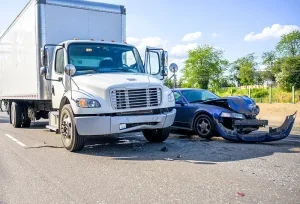
Last month, a truck carrying a large load crashed into the I-70 overpass bending one of the major support beams at the Dallas Pike exit. The same day a runaway dump truck crashed into a garage after destroying several residential fences in Moundsville. Last Saturday, one of Moundsville City Councilmen, Phil Remke, had to use his car to physically obstruct a truck from taking an unauthorized route through Moundsville. Damage to property, danger to people, and wear and tear on our roadways are all becoming increasingly frequent problems throughout the Ohio Valley. Whether it's through handling large construction equipment, as was the case in Dallas Pike and in Moundsville, or all of the associated "ordinary" truck traffic related to oil and gas drilling, the infrastructure in this area is taking a beating. The number, weight and trip frequency for trucks in the area is way up, and in some cases it's beyond what the roads can take. That can be good news for business and a good sign for the economy, but it can also mean serious problems if trucking outfits are not running right and taking the appropriate time and the appropriate rest to maintain a margin of safety for the people who live here. Many people are already being hurt when their lanes become impassable, riven with potholes and broken shoulders or choked with traffic they aren't designed for. Government regulations impose restrictions on the number of hours over-the-road truck drivers may spend in certain defined periods of time on our highways. It's worth considering whether similar limitations need to be considered for driving that may be more local in nature, but nonetheless goes on all day (and sometimes all night). When you see a disaster like the one in Dallas Pike, you really have to wonder if the driver was up to his task at the time he decided to proceed under that low underpass with way too tall a load. Regulated maintenance checks are also essential when dealing with large trucks. According to the driver in the runaway truck incident in Marshall County, the brakes simply "failed" without warning, leaving him streaking down the road into yards and ultimately into someone's garage. When a "get the job done" attitude overrides the need to make sure that equipment is properly tested and road worthy before it leaves the garage, tragedies much more serious than the property destruction last week can occur. Our firm has seen its share of wrongful deaths caused by poor or even non-existent truck maintenance and we'd just as soon never see another one if companies would clean up their acts. In addition, it's important that all trucking outfits be properly insured. Early reports suggest that the repair of the Dallas Pike overpass will be a multi-million dollar repair with a difficult-to-calculate impact on commerce locally and regionally for the closing of highway lanes for a long period of time. The potential for loss of life from runaway trucks and overloaded trucks on the roads is also quite serious and substantial, and carriers need to be fully insured to allow some measure of protection and compensation for the public when incidents do occur. The US Congress is currently considering a bill to increase the insurance limits carried by large trucks that have been the same since the 1980s. It can certainly be hoped that the Congress will strongly consider passing that legislation for the protection of not only Ohio Valley residents, but also those nationwide.

Where Nursing Homes Go Wrong:
Despite the comprehensive laws and regulations that are supposed to protect residents of our nursing homes, too many times things go wrong. There is a financial incentive for nursing homes and the companies that run them to cut corners by hiring too few staff members and underpaying that staff members who do work there. For these and other reasons, the quality of care received by residents of nursing homes falls short of the standard. Although the injuries suffered by the victims of such abuses can take many forms, dehydration, pressure sores, infections, choking, elopement, and falls are some of the more preventable and serious injuries that we see. In particularly tragic cases, nursing home residents may not survive their injuries. To be clear, each and every nursing home has an obligation to provide quality care to every resident in the facility. It is not the fault of the resident or the resident's family when the nursing home falls short of these standards. However, there are some things that we can do to help make sure that nursing homes live up to their obligations. The federal government has published some useful information that may assist you in selecting or evaluating a nursing home. Those resources can be found here: http://www.medicare.gov/nursing/overview.asp. The most important part may be to trust your instincts and ask questions. I realize that depending on each individual circumstance, frequently visiting your relative in the nursing home may be difficult. However, the personal involvement of the family at the home can be very important. If you or a loved one has been injured at a nursing home, we encourage you to learn more about the experienced attorneys at Bordas & Bordas and to contact us to find out what you can do to make nursing homes safer places for some of the most vulnerable members of our community. This article is for informational purposes only and not for the purpose of providing legal advice. You should contact an attorney to obtain advice with respect to any particular issue or problem. Use of and access to this website or any of the email links contained within the site do not create an attorney-client relationship between Bordas & Bordas and the user or browser.

Understanding the Litigation Process: It's Just Like TV, Right? Wrong.
Everyone has seen a television show or movie where an incident happens, a lawsuit is filed, the claim goes to trial and the entire process is concluded within an hour or two. Unfortunately, these fictional depictions lead to the misperception that once a lawsuit is filed, a claim will be resolved almost instantaneously. In real life, the process is not that quick. There are actually multiple phases of the litigation process which must be completed before a claim is brought to trial. Understanding the process is necessary to avoid frustration caused by the length of time it sometimes takes claims to resolve. Initial Pleadings: A lawsuit is started by the filing of a complaint. Once the complaint is filed, it is served upon the defendant and the defendant is provided an opportunity to file an answer. In the defendant's answer it will raise any defenses it believes it may have to the plaintiff's claims. Additionally, during this stage the defendant may file motions challenging whether the plaintiff has a legally recognizable claim and/or may institute a fight over the proper court to hear the claim. Under certain circumstances, a defendant may try to remove a claim from a state court where it was filed to a federal court. When that happens, the question of the proper court to hear the claim ordinarily must be resolved before moving to the next phase of the litigation process which is the discovery phase. Discovery: The discovery phase itself has multiple parts including written discovery, depositions and expert discovery. Written discovery may consist of interrogatories, requests for production of documents and requests for admission. Interrogatories and requests for admission are written questions which must to be answered regarding the factual basis claims and defenses and other relevant information which is needed for the jury to eventually understand and resolve the claim. Requests for production of documents seek disclosure of documents and other evidence which either supports or refutes a claim. Depending on the type of case, there may also be inspections or examinations which take place during the discovery phase. For example, under certain circumstances, a defendant may seek to have a personal injury plaintiff be examined by a doctor of the defendant's choosing. Similarly, in product liability cases such as where a machine or truck or other "thing" is alleged to have malfunctioned, the parties may have that item inspected and tested by experts. Another part of the discovery phase is the conducting of depositions. This is the time where the attorneys can sit down and ask parties and witnesses questions under oath regarding the claim and what the individual knows about the factual circumstances relevant to the claim. Additionally, the parties are provided the opportunity to question the opposing party's expert witnesses under oath regarding the opinions they intend to seek at trial and the basis therefore. Motion Practice: Oftentimes, disputes arise between the parties during the discovery process which require court intervention to resolve. These disputes often involve the sufficiency of discovery responses and whether information requested to be produced is required to be produced under the relevant rules governing the litigation process. Additionally, motions may be filed asking a court to resolve the claims without a trial based upon the evidence produced during the discovery process or to limit the evidence which may be presented to the jury at trial. Only after the discovery process and motion practice process are complete is the case ready to go to trial. Trial: Trial is the phase of the litigation process with which most people are familiar from watching television shows and movies. This is where there is a judge and jury and each side presents its case to a jury and the jury decides who is right, who is wrong and how much money to award in a civil case. Many may think that the litigation process is over once the jury renders its verdict. However, there is yet one more phase of the litigation process to be completed. Post-Trial Motions and Appeals: Once the jury has rendered its verdict, the parties have an opportunity to ask the trial judge to set aside or alter the verdict if the parties can point to an alleged error which occurred during the trial, such as admitting evidence which should not have been admitted under governing law or an improper argument or jury instruction. Once post-trial motions are resolved at the trial court level, the case may be appealed to a higher court. In West Virginia, this constitutes an appeal directly to the West Virginia Supreme Court of Appeals. In Ohio, however, there is an intermediate appellate court which may review the case and either affirm the trial court's decisions or send it back. An Ohio intermediate court decision may be further appealed to the Ohio Supreme Court. Just as ordinary life is not always as depicted in television and movies, neither is the litigation process. The attorneys and staff at Bordas & Bordas have extensive experience in each phase of the litigation process and are here to help our clients understand and navigate the successful prosecution of a claim. This article is for informational purposes only and not for the purpose of providing legal advice. You should contact an attorney to obtain advice with respect to any particular issue or problem. Use of and access to this website or any of the email links contained within the site do not create an attorney-client relationship between Bordas & Bordas and the user or browser.
Contact Us
The information you obtain at this site is not, nor is it intended to be, legal advice. You should consult an attorney for advice regarding your individual situation. We invite you to contact us and welcome your calls, letters and electronic mail. Contacting us does not create an attorney-client relationship. Please do not send any confidential information to us until such time as an attorney-client relationship has been established.
The results in a legal case depend on a variety of factors, many of which are unique to each case. Prior results by this firm or any other do not guarantee future results. Case results presented here are illustrations of the type of work done by Bordas & Bordas and not a guarantee that any prospective case will yield any particular amount.
Request Consultation
Call 304-242-8410 or fill out the form below.