
It's like something out of a movie. Secret drug exchanges. Code words. Cover-ups. Stolen documents. Famous people. There is probably already a script in Hollywood somewhere. Welcome to the life of Alex Rodriguez. I became a fan of the New York Yankees during my last year at West Point and I have folowed them very closely since then. One of my favorite things to do on a warm summer night is to play Wiffle Ball in the back yard with my kids while the Yankees play in the background on the satellite radio. I never thought that my interest in baseball would lead me to one of the most interesting legal documents that I have ever come across. On Monday, Yankees third-baseman Alex Rodriguez filed a federal lawsuit against Major League Baseball, the Commissioner of Baseball, and the Major League Baseball Players Association seeking to have a federal judge overturn the 162-game suspension handed down by the Major League Baseball Arbitration Panel two days earlier. Attached to that lawsuit was the decision of the Arbitration Panel. Both the Complaint and the Panel Decision are available generally on the Internet. Originally, Bud Selig, the Commissioner of Baseball, suspended Rodriguez for 211 games for repeated violations of the league's Joint Drug Prevention and Treatment Program ("JDA") and for attempts to cover up his use of banned substances. Rodriguez and the MLBPA appealed to the Arbitration Panel under the terms of the Collective Bargaining Agreement ("CBA") between MLP and MLBPA. Ultimately, the Panel reduced the Rodriguez suspension from 211 games to 162 games. Amazingly, the decision to suspend Rodriguez for an entire season is the least interesting part of the decision. In fact, the Panel Decision contains something for everyone. For the casual fan of TV legal dramas, the Panel Decision demonstrates that nothing is more dramatic than real life. According to the Panel Decision, the suspension against Rodriguez stem from his involvement with Anthony Bosch, an unlicensed doctor, who provided Rodriguez with hGh, testosterone, and other banned substances. The facts involve shady associates of Rodriguez, secret meetings in hotels using the service elevator, code names for the banned substances, an "indiscreet liaison by one MLB investigator with a former employee," stolen notebooks, and numerous allegations by MLB and Rodriguez that each side attempted to subvert the investigation. Included among the allegations was the charge that Rodriguez induced witnesses to make false statements in a cover-up attempt, that both sides attempted to wrongfully purchase the stolen notebooks, and that MLB threatened one witness with immigration problems if he didn't cooperate. For lawyers, the discussion of the use of electronic evidence is very interesting in its own right. Over the course of their relationship, Bosch and Rodriguez exchanged over 500 BlackBerry Messages ("BBMs") and 556 text messages. This electronic evidence played an important role in the Panel's decision and demonstrates once again how important electronic evidence issues are in the investigation of a case. Interestingly, Rodriguez contested the authenticity of the BlackBerry evidence and asked to have his own expert examine the BlackBerry, a request that the Arbitration Panel denied even though MLB's experts had an opportunity to examine the BlackBerry. The decision by the Panel preventing Rodriguez's experts from examining the BlackBerry forms a key piece of Rodriguez's federal court case. From a legal standpoint, Rodriguez faces an uphill battle in getting the 162-game suspension overturned. No doubt he hurt his own cause by refusing to testify at the arbitration hearing. From the standpoint of a baseball fan, it is amazing to me that a sport so focused on its history has such little recent history to be proud of. Baseball's all-time hits leader banned for life because of gambling. Baseball's all-time home-run leader completely disgraced amid allegations of his own PED use. An entire generation of Hall of Fame candidates under suspicion. Baseball takes a hit, but at least we have some legal fireworks to look forward to.
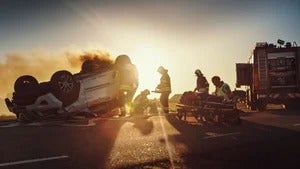
Tractor-Trailer Fatalities on the Rise: Tips for Staying Safe
Our modern world has seen goods and commodities transport on the once mighty and ubiquitous railroad system give way to transport by the private trucking industry, putting more than 11 million trucks on U.S. highways logging over 288 billion (with a "B") miles a year. The interstate these days seems like a trucking industry world that we're all just living (or more pointedly trying to survive) in. Road haulage is one of the most dangerous industries in America, and the danger is ever increasing. In 2009, the Federal Motor Carrier Safety Administration, reported that tractor-trailers and large trucks were involved in 286,000 crashes, which led to over 3,000 deaths and 74,000 injuries. By 2010, the number of tractor trailer collisions had doubled. Data from the U.S. Department of Transportation recorded 500,000 collisions in 2010 that resulted in more than 5,000 fatalities. Not surprisingly, a study by the National Highway Traffic Safety Administration (NHTSA) found that 76 percent of these fatalities from tractor-trailer collisions were the occupants of the passenger vehicle. There are a number of common factors involved in trucking-related collisions, including: Size and weight. A tractor-trailer is more than 25 times heavier than the average passenger vehicle, ranging in weight from 12,100 to 80,000 pounds, which means that it takes a tractor-trailer longer to stop than a car or light truck. A car traveling 55 mph takes 265 feet to stop, while a large truck needs at least another 45 feet. Driver Fatigue. Truck drivers get paid by the mile, not by the hour, and, therefore, sometimes drive longer than they should. Fatigue can decrease driver reaction time and impair driver judgment. In fact, a 2006 government survey suggested that around 13% of tractor trailer collisions are fatigue related. Driver Distraction. As anyone who has spent any time on the Pennsylvania Turnpike can attest, long hours spent in the relative monotony of the interstate system can cause some truck drivers to become distracted and bored. Improper weight distribution. In contrast to the routes they drive, the one thing that is seemingly ever-changing for a tractor-trailer driver is the type and density of the haul load. This can lead to problems in the load distribution and if a load is not properly distributed, the trailer can sway. Passenger vehicle driving. I certainly do not mean to suggest that tractor-trailer collisions are caused exclusively by the tractor-trailer drivers. In fact, as often as not, it is the driver of the involved passenger vehicle who is responsible, aggressively weaving through traffic lanes and cutting in front of tractor-trailers, which forces them to brake suddenly. Winter is possibly the most dangerous time of the year, seeing a significant uptick in the volume of truck traffic trying to make on-time holiday deliveries, coupled with the wintry mix of rainy, foggy, snowy, icy weather conditions, which only adds to the likelihood of a collision. Unfortunately, trucking related fatalities continue to rise. However, hope seems to be on the way. The trucking industry in the United States is in the midst of an estimated $2 billion regulatory upheaval that will fundamentally change the way truck drivers operate on America's highways. The next few years will see the phase-in of mandatory laws requiring all U.S. tractor-trailer operators to carry an electronic on-board recorder (EOBR) in their vehicle. This EOBR is basically a tracking device that can offer real-time monitoring of a host of factors designed to reduce tractor trailer-related collisions, including when a truck's engine is running and its on-duty status, to help ensure that drivers are not working for more than 14 consecutive hours. The EOBR's also contain a number of "apps" to improve safety, like a graphical display that gradually turns from green to red as a driver chews through his permissible time behind the wheel. In the meantime, however, there remain a host of effective steps we passenger drivers can take to protect ourselves out on the road. With the hustle and bustle of the Holiday season, the last thing on most of our minds is driving safety, but it is also one of the most important considerations this time of the year. So, if you have read this far, please go all in with me and give some thought to the following safety tips as you head out on the road this winter. 1. You better recognize. Please respect the operational limitations of the tractor-trailer. The size and weight of these trucks make maneuverability very different than cars or light trucks. This means you have to give yourself plenty of distance both behind and in front of a tractor trailer. The classic, "2-second" following distance we were all taught as teenagers is grossly insufficient when sharing the road with a tractor trailer, so please give yourself a wide berth when following a semi. 2. Don't cut 'em off. Avoid passing a truck and then quickly moving back into the truck's lane or cutting in front of the truck to exit. Often we find ourselves being pushed by speedy drivers behind us, and this can present a particularly perilous situation when we approach a semi in our adjacent lane of travel. You know this situation: a semi on your right and a car or truck barreling down on you from behind. The natural tendency is to pass the semi to get out of the way of the speeding driver as quickly as possible by cutting in front of the truck. But such an unexpected move can force the truck driver to slam on his brakes which puts not only your vehicle, but other vehicles nearby in danger. Always make sure to safely pass a truck, leaving plenty of distance in your wake, before you attempt to move back into the truck's lane. Likewise, avoid passing a tractor trailer quickly to cut directly in front of it to exit. This behavior causes accidents. 3. Know your "No Zones" Tractor trailers have much larger "blind spots" or "no zones", those areas where you cannot be seen in a semi's rear or side view mirrors. The "no-zones" for tractor trailers are around the left rear, right front, and in the back of a tractor trailer, and traveling in these areas puts you at significant risk that a truck driver will pull into your travel lane without seeing you. Remember this maxim: if you can't see the driver in the truck's side mirrors, the driver can't see you. To minimize the risk of riding in the "no zone": Avoid travelling alongside a tractor trailer for longer than it takes you to pass the truck at a reasonable speed (this also minimizes the risk of injury from a tractor trailer tire blowout). Get in the habit of either passing a tractor trailer immediately when you approach one or dropping back in your lane behind the truck to a point where the truck driver can easily see your vehicle in his side view mirror. If you decide to pass, take a few extra seconds to make sure the truck is not signaling any imminent lane changes before you pass. Look for turn signals or even slight drifting towards your lane of travel. Honking the horn as you begin to pass can also help alert a truck driver that you intend to pass. If you decide to pass, don't change lanes too quickly. Sudden movement in a driver's periphery can sometimes cause a tractor trailer to react unpredictably. Instead, use your turn signal beginning from a safe starting distance and give the tractor trailer every available visual indicator of your intentions. 4. Get Back and Stay Back Maintain a following distance of 20 to 25 car lengths behind any tractor-trailer, which allows more distance to maximize braking capabilities. Also give tractor trailers a wider berth when following them uphill. Shifting gears can sometimes be more problematic for a truck driver travelling uphill and trucks on inclines can and do drift backwards. Finally, remain alert to tractor trailers making a right turn. Tractor trailers must "swing wide" to make a sharp right turn at an intersection, and often times must move left in order to swing right. This can be confusing if you are behind a truck, because the natural tendency is to think the truck is turning left, so you keep going. Then, when the truck cuts back right, you're trapped in what is often termed the "right turn squeeze", which can cause significant damage and injury. 5. Get Off The Road in an Emergency In an emergency, pull completely off the road as far as possible. If you can safely set out flares or triangles, place them at both ends to warn approaching traffic. Then move as far away from your vehicle as you can, preferably on the far side of any guardrail, and immediately contact the state and/or local police to alert them to the road hazard. Law enforcement officers are trained how to appropriately warn approaching traffic of the hazard, reroute traffic safely around your broken down vehicle, and have it moved off the road promptly. Under no circumstances is it ever advisable to try and fix a problem yourself while on the side of the highway, even if the problem is as basic as changing a tire. And this is particularly true at night. It is practically as hazardous to stop on a highway shoulder after dark as it is to stop in a highway travel lane, because night vision often plays tricks on people's perception on the roadway. For instance, the lights a truck driver sees in the distance and assumes belong to a vehicle in a moving travel lane may instead belong to a vehicle stalled on the road or on the shoulder. If the driver of a tractor trailer makes this error, he is likely to strike your vehicle when it is stopped on the shoulder, and truck drivers are especially prone to make these errors in judgment at night when they are tired after a long day's drive. 6. Night Time Is Not the Right Time Fatigued driving remains the scourge of commercial transportation. Given the nature of the industry's demands, truck drivers remain exposed to excessive rates of sleep apnea and insomnia. The best way to combat this is to limit your driving between the hours of 10 p.m. and 6 a.m. Trying to drive all night to get to your destination (still a popular tactic for Myrtle Beach vacationers from the Ohio Valley) disrupts the natural circadian rhythms of the human body and can lead to decreased perception and reaction times, as well as sheer exhaustion, all of which are a recipe for catastrophe. The commercial transportation industry and our government are working to improve highway safety and reduce trucking-related collisions. But, regardless of the scope and timing of these new regulations, following the practices outlined above can keep the odds in our favor. So drive defensively, stay alert and be safe this winter and every other time you venture out on the highway.
Be Sure You Like It Before You Put A Ring On It: How A Canceled Engagement Could Cost You More Than Heartbreak
"Cause if you liked it, then you should have put a ring on it." Beyonce's hit song Single Ladies was all over the radio and television in 2008. While the hook got caught in most everyone's head at some point, it actually was pretty good advice. It seems like a significant number of people out there don't take their significant others seriously enough and either run from idea of marriage or do it for the wrong reasons. Getting engaged and getting married is serious business. It takes commitment, hard work, and dedication to one another. Carrie Scanlon touched on these issues in her recent blog about advice she would give her younger self. Unfortunately for one Georgia couple who has recently been in the news, a canceled engagement turned into litigation and a $50,000.00 award against the man who called it off. ABC News and Good Morning America recently reported a story out of Georgia where an appeals court has upheld the decision of a trial court to award a jilted fiancé $43,500.00 in damages and $6,500.00 in attorney's fees after she filed a lawsuit alleging a breach of contract to marry and fraud. It was reported that the couple had been together for nearly four years before the man presented his girlfriend with a $10,000.00 ring which she eagerly accepted. The two already lived together and had a child. Over the course of a seven year engagement (seven years probably should have been a tip off that something wasn't right) the marriage never occurred and the man asked his fiancée and child to move out after he was confronted in April of 2011 with relationship he had with another woman. Of course, testimony revealed that the dumped woman "possibly" had another relationship at some point during the engagement too. Part of the man's defense to the case was that he says he never actually asked the jilted ex to marry him. Georgia, much like many other states, no longer recognizes common law marriage. Common law marriage was a doctrine that provided marriage like property and asset protections when two individuals lived together and essentially acted as though they were married even though they were not. Because there was no common law marriage, the woman in the Georgia case apparently had little recourse even though she had quit her job, sold her home, and stayed home for years to raise the couple's child. She was surely headed for some difficult circumstances and filed the breach of contract to marry case. Many states still recognize a cause of action for these types of heart balm actions. Of course, this type of situation can go both ways. In May of 2012 the Today Show reported on a similar case in New York filed by a man after his fiancée called off their upcoming wedding. The man there sought to recover wedding costs and substantial unpaid living expenses. Twenty-five states and the District of Columbia have abolished the traditional breach of promise to marry law suit. West Virginia abolished stand-alone breach of promise to marry and alienation of affection cases by statute in 1969. Ohio did so in 1978 and Pennsylvania in 1990. With that, you can't just sue someone because they promised to marry you and then called it off. No matter how embarrassed or upset you might be, you can't sue for that alone. The West Virginia Supreme Court, like other states, has made clear that a called off engagement could result in valid law suits if specific money or property or circumstances demonstrate actual damages. Bryan v. Lincoln, 168 W.Va. 556 (1981). In the Bryan case a man actually gave his fiancé $5,000.00 to help her buy a property interest from her ex-husband. In the end, the lady called off the engagement and actually remarried her ex. The lady's lawyers argued that the 1969 law made clear that the man had no case. Our Supreme Court recognized, however, "that the predominate view go no further than to bar actions for damages suffered from loss of marriage, humiliation, and other direct consequences of the breach, and do not affect the rights of the parties relative to gifts passing between them." It was also suggested that causes of action for fraud and unjust enrichment were also valid. In a time when many people live together before marriage, houses are sold, jobs change and people begin to change their lives before they actually get married. When those changes are made specifically because of an engagement or a promise to marry many states would likely permit a law suit to obtain specific monetary damages when the engagement is called off. Perhaps the underlying problem to all of this is the fact that some people just don't take getting married seriously enough. There are plenty of people who get married for the right reasons and have many happy years, but just can't seem to make it work for some reason or another. But in the world of the Kim Kardashians and 72-day marriages, it seems that just as many people don't marry for the right reasons. There is a lot of discussion and criticism these days about who should be able to marry whom when it appears that most people's attention should be better focused on who they should specifically marry. Family is one of the bedrocks of our society and of the Bordas & Bordas, PLLC firm. When we have strong families, more people do the right thing. When we have strong families we have a strong society. Strong families can come in many different forms, but when a marriage starts strong, and for the right reasons, it is much easier keep our lives on track. - Article about the Georgia case referenced above - Today Show: Man Sues Ex-Fiance After she Breaks off Engagement - Today Show video and separate article about the NY case referenced above. - Article about short celebrity marriages - Article from Today Show - 7 Secrets to a Long and Happy Marriage
Recent Philanthropic Sponsorships at Bordas & Bordas
At Bordas & Bordas, giving back to the community where we both work and live is of the utmost importance. Listed and explained below are just a few of the many recent philanthropic sponsorships we are honored to be involved with. Since its inception, the American Red Cross has provided care to those in need through disaster relief, blood donations, health and safety services, and more. The Red Cross' local branch is hosting its 28 th annual Ohio Valley Media Day Blood Drive on Monday, January 27, 2014 at the Wesbanco Arena. It is a chance to encourage increased blood donations for various uses as the month of January is infamous for very little public participation. Bordas & Bordas was pleased to contribute to the cause. The Mt. Olivet Lion's Club is gearing up for its 31 st annual Variety Show to be held on February 28 th and March 1 st, 2014. The Club has lined up several entertaining and fun acts that could make this year's program the best yet. Funds raised by the purchase of a Variety Show program ad go towards projects like food baskets for needy families, eye screenings for school children, and Leader and Pilot dogs for the blind. The Club is a very generous organization that Bordas & Bordas is happy to support. Bordas & Bordas is passionate about continuously contributing to and helping the youth involved with the OVAC. As of late, the firm sponsored the 2013 West Virginia High School Football State Playoffs and the Super Six Championships. The firm happily supported the successful event earlier this month. YMCA - simply the Y for short - is a worthy organization that serves more than 10,000 neighborhoods across the United States. Focusing on the three key areas of youth development, healthy living, and social responsibility, the organization strives to help every child realize and utilize his or her outstanding potential. The local installment, the J.B. Chambers YMCA, is housed right here in Wheeling and boasts health and fitness programs, aquatics, camping, and sports facilities for all to enjoy. Oglebay and Wheeling Park are beautiful staples within our community. From fishing at Schenk Lake to flying down the stories-tall water slide at the pool, Oglebay and Wheeling Park offer attractions for everyone. The Oglebay Foundation is aligned with the Access to the Parks program that allows the youth of our community to enjoy the amenities of Oglebay and Wheeling Park without charging fees for their admission. Access to the Parks provides kids with a photo ID that not only gets them into the parks for free, but enables free equipment rentals (ice skates, golf clubs, etc.), as well. As a longtime supporter, we were again happy to contribute to this worthy cause this year. Bordas & Bordas is honored to be involved with such noteworthy organizations and events. We will continue to reach out to community partners who are passionate about making a difference. As always, we encourage everyone to support these very worthy causes in any way possible.
Who is Responsible for Injuries When Companies Violate the Building Code? You or Them?
For years West Virginia has embraced two contradictory concepts. On one hand, West Virginia law has always given special status and protection to those who are invited onto someone else's property. In fact, a property owner has a legal duty to maintain his property in a reasonably safe condition for the protection of any invitees. On the other hand, West Virginia also adopted the open-and-obvious defense. Basically, this meant that a property owner had an absolute defense in any case where an invitee suffered injury from a danger that was obvious or reasonably discoverable. Naturally, insurance companies took advantage of this defense, arguing that practically any danger or defect on the property was discoverable and refusing to pay claims on that basis. Consider the case of Walter Hersh. After visiting a Martinsburg shopping plaza, Mr. Hersh descended a set of stairs leading to the parking lot. It was undisputed that a Martinsburg city ordinance required the stairs to have a handrail. It was also undisputed that the required handrail was missing. As a result, Mr. Hersh fell and suffered injuries. Did the insurance company pay for Mr. Hersh's injuries? After all, everyone agreed that the stairs violated a safety ordinance. You can probably guess what happened. The insurance company refused to pay and, instead, insisted that the missing handrail was an open and obvious danger. That's bad enough, but the trial court agreed and dismissed Mr. Hersh's personal injury case. Mr. Hersh appealed and, thankfully, the West Virginia Supreme Court put an end to this kind of foolishness. Hersh vs. E-T Enterprises, LP, No. 12-0106 (W.Va. Nov. 12, 2013). The Court formally abolished the open-and-obvious defense. No longer can an insurance company simply point to a hazard, claim that it's obvious, and stubbornly refuse to pay. Some have claimed that abolishing the open-and-obvious defense givens invitees a free pass. Everyone has a duty to protect themselves from harm, they say. Abolishing this defense means that invitees have no accountability for their own negligence. But this simply isn't true. Like every state, West Virginia recognizes a duty of self-protection. The Court didn't abolish that duty. Instead, the Court recognized that it was up to the jury to determine if an invitee negligently failed to protect himself and, if so, to apportion the negligence of all of the parties involved under our state's comparative negligence law. That's the right outcome, and the attorneys from Bordas & Bordas were proud to file an amicus brief on behalf of the West Virginia Association for Justice in this case. Absolute defenses have no place in West Virginia's negligence law. It's the job of the jury--common folks like you and me--to weigh the negligence of everyone involved and to return a verdict that's fair and just under the circumstances.
Jamie Bordas Explains How Co-Counsel Relationships Can Bring Great Results and Valued Friendships
As the year approaches an end, I think back on some of the lawyers from other firms who I have had an opportunity to work with in a co-counsel capacity. It is always very humbling when another firm asks you to work with it to represent their client. This year was particularly special though as I think about some of the great relationships and friendships that I have formed over the past year or two. I fondly recall being in mediations with the father-son duo of Rod and Scott Windom from Ritchie County representing individuals who had lost a loved one as a result of an industrial explosion and another man who had been badly injured.As I have been in many mediations with my own Dad over the years, I enjoyed seeing another father-son team in a similar role. This year saw the conclusion of a mass tort case that I worked on with the Skinner Firm from Charles Town.I will treasure the friendship that I have formed with Andrew Skinner and Laura Davis and admire the quality work that they perform on behalf of their clients. We were able to obtain significant justice for dozens of homeowners who had been fraudulently mistreated by a national home builder. I have been blessed to have the opportunity to work on numerous occasions with Ben Salango from Charleston in representing policy holders who inappropriately had insurance benefits withheld.Ben is one of the brightest young legal minds in the state and a genuinely good guy. We have been able to stand up to these insurance companies together and obtain significant recoveries for our clients. Speaking of Charleston, I have had the opportunity to work with Brooks West on several occasions. Brooks continues to fight hard for his clients and is incredibly creative as a lawyer. I am confident that our new relationship will continue to grow and look forward to working on cases with him. I have had the chance to work with Dorwin Wolfe from Elkins.Dorwin has been a friend of our firm for a number of years.He is immensely talented and has worked and trained closely with Gerry Spence, one of our nation's greatest trial lawyers. I was even fortunate enough to receive a call from an extremely good college and law school friend, Too Keller, from Indianapolis about working on a case involving a defective door that badly injured a woman at a hotel. Too has his own firm now and is one of the best people I have met in my lifetime. I know that his firm will continue to grow and his career will continue to flourish. These relationships are all special in their own ways. But, they all have something in common. They allow me the opportunity to work with some great people. Although they each may have their own reasons for approaching me to work with them, they have all allowed me to work with bright individuals to achieve justice for our clients. I have learned a great deal from each of them and I believe that I am a better lawyer in some way because of each of these relationships. So, as the year winds down, I take this opportunity to say thanks to them. Thank you for giving me the opportunity to work with you. Thank you for fighting for our clients with me. But, most of all, thank you for your friendship.It is truly valued.
'I Love Hot Moms!' How a Picture, a Bad Decision and Facebook Cost One Lawyer His Career and Hundreds of Thousands of Dollars
Surely by now most, if not all, of us finally understand the dangers of social media. Not long ago Bordas & Bordas attorney Michelle Marinacci wrote an informative blog about how employers have used Facebook posts to justify employee firings. More and more stories keep popping up which showing poor social media decision making. A Facebook photograph recently cost one Virginia attorney his job, hundreds of thousands of dollars and his law license. The picture, however, was not of the attorney, it was of one of his clients. The client was the surviving husband of a woman who was killed in a tragic automobile accident involving a truck owned and operated by a concrete company. Following his wife's death, the man retained an attorney and presented a personal injury and wrongful death lawsuit. Sometime after his wife's death, and during the pendency of the lawsuit, the man was photographed at a party wearing a shirt bearing the phrase "I Love Hot Moms!" Of course, the picture was posted to Facebook. An attorney working for the concrete company was ultimately able to view the man's Facebook page when the man himself sent a message to the attorney. Not surprisingly, the attorney then followed up with formal discovery requests to be provided with copies of information and posts from the man's Facebook page. To prove that bad decisions are not limited to clients, the attorney representing the family of the deceased woman immediately advised his staff to have their client "clean up" his Facebook page to avoid such evidence from showing up at trial. The client subsequently erased several pictures from his page.-- article about the case Not surprisingly, the attorney and his client's actions were later uncovered and the photographs were provided to the defense. The attorney did not reveal that he had affirmatively asked the client to clean up his page until after a jury verdict had already been issued. The man had been awarded $6.2 million dollars for the loss of his wife. The trial judge ruled that amount to be excessive under the circumstances and reduced that award to $2.1 million, but an appeals court later restored the full verdict. Once the true nature of the attorney's actions came to light, and additional discovery was conducted, the trial court found it necessary to fine the attorney and his client $722,000 in attorney's fees. The attorney has now resigned from his law firm and ultimately faced state bar disciplinary proceedings. Recently it was announced that the attorney has agreed to a five year suspension for "violating professional rules that govern candor toward the tribunal, fairness to opposing party ad counsel, and misconduct." The Plaintiff made a poor decision when he wore the t-shirt and when he posted the picture to Facebook. I don't know that man and I can't imagine the stress of losing my wife. I can only imagine that his actions relate back to the tremendous stress and sorrow surrounding his loss. While the defendants would likely have used the photographs to argue that he must not have been that torn up about the loss of his wife, his attorney could have, and should have, demonstrated how the loss of his wife turned the man's life upside down and influenced him to do things he never would have done if his wife were still with him. Attorneys are professionals. As with any profession we are supposed to hold ourselves to higher standards and we take oath accordingly. The attorney here made a bad decision. A bad decision that has cost him his profession and a significant amount of money. Attorneys have to have the courage and the fortitude to stand up and do the right thing at all times. The attorneys at Bordas & Bordas pride themselves on standing up and doing the right thing. We are frequently called on to represent individuals who have lost loved ones in tragic and preventable accidents. Our job is not just to investigate the case and get the best possible result for the loved ones left behind, we firmly believe it is our job to help grieving families through all the difficult decisions they will face and to help them move forward with their lives as best they can.
Major Decisions Handed Down by the West Virginia Supreme Court of Appeals on Worker Safety Issues
Catch this week's edition of the regionally beloved Bordas & Bordas Legal Review. Jamie Bordas and guest Chris Regan discuss important cases on worker safety decided by West Virginia's Supreme Court of Appeals this last term. Find out if the "see no evil, hear no evil, speak no evil" defense worked out for one employer and whether or not employers can blame their own employees for on-the-job injuries, even where the employer knew that the employee had been subjected to an unsafe condition. You can view the Bordas & Bordas Legal Review locally on Comcast Channel 14 or also online, both streaming and in the archive. The current episode is embedded within this post. Pick up this episode through the WLUTV archives, and be sure to check the WLUTV schedule for other B&BLR show times and programming.
What Are the Most Common Causes of Car Collisions
The most common causes of motor vehicle collisions are speeding or failing to drive a safe speed for road conditions (including weather), failing to maintain a safe distance between your car and the car in front of you, failing to maintain control of your car, and distracted driving. Any of the above causes alone can cause a traffic collision when a motor vehicle in front of you is forced to make a sudden stop or when another vehicle pulls out in front of you. But frequently a combination of two or more of the causes are at issue and lead to the collision being inevitable.nnFor example, it is easy for people to justify reading a text message while driving because they fail to realize the significance of what can occur in only a few seconds of distraction. Understanding the calculation that 1 mile per hour equals 1.467 feet per second helps put the actual danger in perspective. If you are driving at 50 miles per hour, you are traveling nearly 75 feet per second (73.35 feet exactly). Accordingly, in the 2 seconds it might take one to read a relatively short text, you are traveling nearly 150 feet or 50 yards at such speed. During such time, many unexpected things can occur, including a car in front of you slowing down or coming to a sudden stop. Similarly, another car can start pulling out in front of you. If you are already speeding or failing to keep a safe distance from the car in front of you, any such unexpected events can readily result in a collision.nnWhile we cannot control what other drivers are doing, we can help avoid collisions by properly controlling our own driving, including following the posted speed limit, lowering our speed if weather conditions require it, keeping a safe distance between any cars in front of us, and keeping ourselves focused on the road in front of us rather than being distracted.
Contact Us
The information you obtain at this site is not, nor is it intended to be, legal advice. You should consult an attorney for advice regarding your individual situation. We invite you to contact us and welcome your calls, letters and electronic mail. Contacting us does not create an attorney-client relationship. Please do not send any confidential information to us until such time as an attorney-client relationship has been established.
The results in a legal case depend on a variety of factors, many of which are unique to each case. Prior results by this firm or any other do not guarantee future results. Case results presented here are illustrations of the type of work done by Bordas & Bordas and not a guarantee that any prospective case will yield any particular amount.
Request Consultation
Call 304-242-8410 or fill out the form below.