
In Bruno v. Erie Insurance, the Pennsylvania Supreme Court analyzed the “gist of the case” doctrine, which limits plaintiffs from recasting breach of contract claims as tort claims. Typically, if the tort claim is wholly dependent upon the terms of the contract, then it will fail. In other words, if the defendant has no duty to the plaintiff except for those created by the contract, the gist of the case is contractual. For a negligence claim to be successful in the context of a contract, the allegations of negligence must fall outside the terms of the contract. The Brunos purchased a home and acquired a homeowner's insurance policy from Erie Insurance, which provided a rider covering physical loss to the property caused by mold. This rider obligated Erie to pay the Brunos up to $5,000 for “irect physical loss” to the property caused by mold, or any “ecessary increase in costs” they incurred to maintain their “normal standard of living” should their residence be rendered uninhabitable as the result of mold. The rider also required Erie to pay the cost of testing the air and any part of the covered property in order “to confirm the absence, presence or level of” mold “to the extent there is a reason to believe” mold was present, and, if mold was present, it obligated Erie to pay for the cost of its removal, including the cost of tearing out any part of the property needed to gain access to the mold. The Brunos detected mold during renovations and filed a claim for policy limits with Erie to test the mold. Erie assigned a claims representative to investigate the claim, who in turn retained a private engineer (Rudick), to assist in the investigation. Upon completion of the investigation, the claims adjuster and Rudick advised the Brunos that the mold was harmless; that the Brunos could continue with their demolition and renovations; and, that the claim was being denied on that basis. Relying upon the representations of Erie and Rudick, the Brunos continued with the home improvements; and, soon thereafter, developed respiratory problems, particularly Mrs. Bruno. The Brunos tested the mold at their own expense and determined that the mold was toxic and a health hazard. They reiterated their demand for the $5,000.00 policy limit, which was ultimately tendered by Erie. Later, Mrs. Bruno was diagnosed with cancer, which health care professionals related to her exposure to the toxic mold. Concerned for their safety, the Brunos subsequently vacated the house, which they were later forced to demolish, as the mold could not be eradicated. The Brunos sued Erie and Rudick alleging negligence and professional negligence for failing to recognize the nature and severity of the mold problem at the premises; misleading them regarding the nature and extent of the mold problem; minimizing the dangers and consequences of the mold infestation when it knew or should have known otherwise; and the creation or exacerbation of a dangerous condition. The Brunos did not file a certificate of merit in support of their claims of professional negligence against Rudick. The Brunos were seeking contractual damages as well as damages for pain and suffering, inconvenience, embarrassment and loss of enjoyment of life's pleasures. Both Erie and Rudick filed preliminary objections in the nature of a demurrer. The basis of Erie’s demurrer was that the Brunos’ negligence claim against it was barred by the “gist of the action” doctrine. Rudick grounded its demurrer on the contention that the Brunos’ claim for professional negligence should be stricken due to their failure to file a certificate of merit within 60 days of the filing of their complaint, as required by Pa.R.C.P. 1042.3(a). The trial court sustained Erie’s preliminary objections, noting that, under the Superior Court’s formulation of the gist of the action doctrine, the critical distinction between a breach of contract action and a tort action is that “the former arises out of ‘breaches of duties imposed by mutual consensus agreements between particular individuals,’ while the latter arises out of ‘breaches of duties imposed by law as a matter of social policy.’” The trial court reasoned that “ut for the insurance policy, Erie would owe no obligation as defined by larger social policies embodied by tort laws,” and, thus, it dismissed the Brunos’ negligence claim against Erie. The trial court also granted Rudick’s preliminary objections, holding that privity of contract was not a prerequisite for maintaining a negligence action against the private engineer. Therefore, the Brunos were required to file a certificate of merit supporting their professional liability claims against Rudick; and, because they failed to do so, their claims were dismissed. The intermediate appellate court, the Pennsylvania Superior Court, affirmed the trial court on both accounts; however, the Supreme Court of Pennsylvania reversed. In analyzing the gist of the case doctrine, the Supreme Court held that the general governing principle as to whether the claim is solely one of contract concerns the nature of the duty alleged to have been breached. In this regard, the substance of the allegations comprising a claim in a plaintiff’s complaint are of paramount importance, and, thus, the mere labeling by the plaintiff of a claim as being in tort, e.g., for negligence, is not controlling. If the facts of a particular claim establish that the duty breached is one created by the parties by the terms of their contract — i.e., a specific promise to do something that a party would not ordinarily have been obligated to do but for the existence of the contract — then the claim is to be viewed as one for breach of contract. If, however, the facts establish that the claim involves the defendant’s violation of a broader social duty owed to all individuals, which is imposed by the law of torts and, hence, exists regardless of the contract, then it must be regarded as a tort. Consequently, a negligence claim based on the actions of a contracting party in performing contractual obligations is not viewed as an action on the underlying contract itself, since it is not founded on the breach of any of the specific executory promises, which comprise the contract. Instead, the contract is regarded merely as the vehicle, or mechanism, which established the relationship between the parties, during which the tort of negligence was committed. Thus, the court determined that the homeowner's policy was nothing more than a vehicle, which established the relationship between the parties, during which the Brunos alleged a breach of a general social duty. The Pennsylvania Supreme Court also reversed the decision regarding the requirement of the Brunos to file a certificate of merit pursuant to Pa.R.C.P. 1042.3(a). The court relied on the strict language of the statute that only required the filing of certificates of merit when the professional defendant has a patient/client relationship with the plaintiff. The decision is an important decision for plaintiffs to the extent that had the Brunos’ negligence claim been dismissed, they would not have been able to recover for the damages associated with their injuries and damages associated with toxic mold exposure. In Bruno v. Erie Insurance, the Pennsylvania Supreme Court analyzed the �gist of the case� doctrine, which limits plaintiffs from recasting breach of contract claims as tort claims. Typically, if the tort claim is wholly dependent upon the terms of the contract, then it will fail. In other words, if the defendant has no duty to the plaintiff except for those created by the contract, the gist of the case is contractual. For a negligence claim to be successful in the context of a contract, the allegations of negligence must fall outside the terms of the contract.
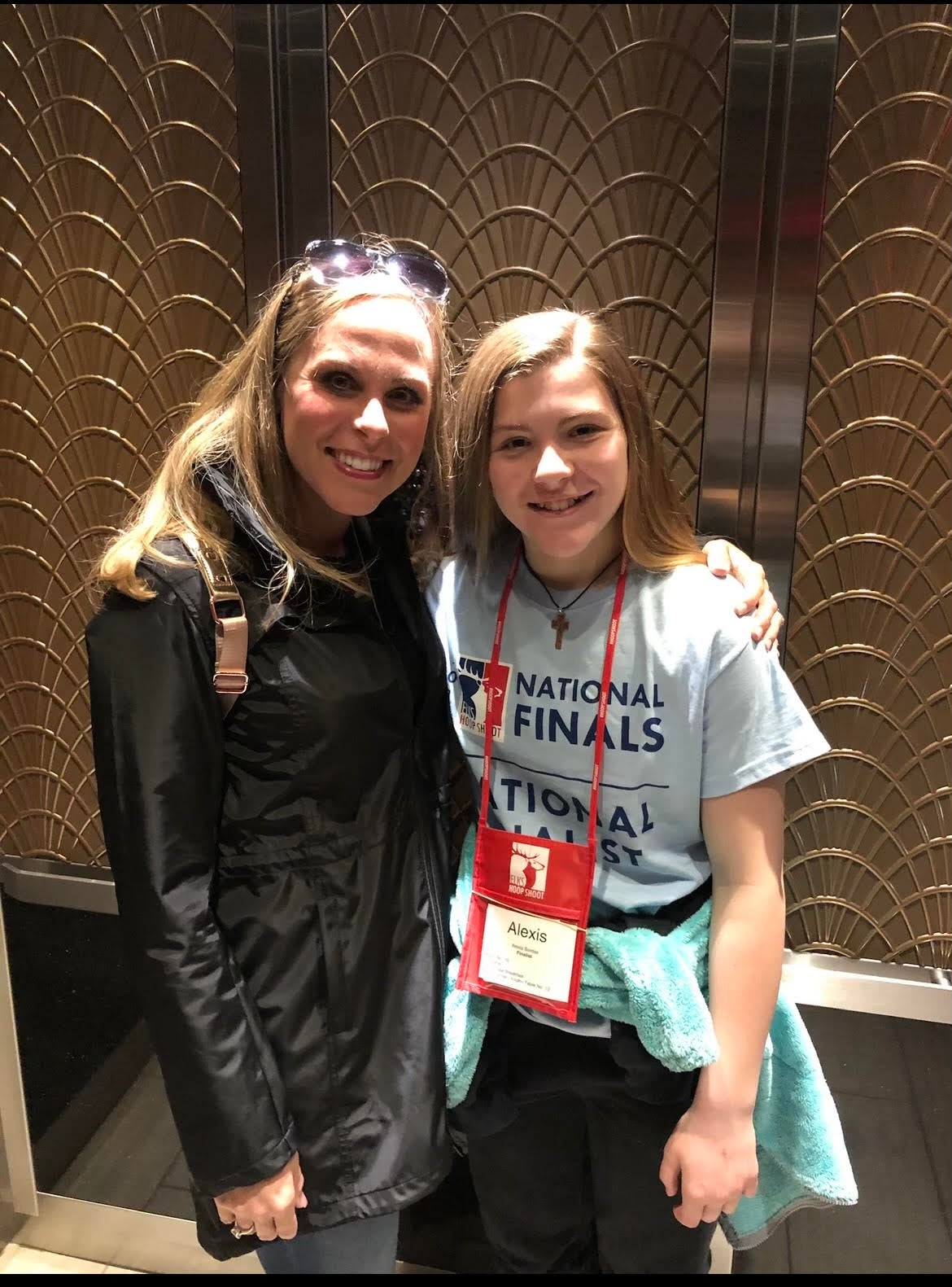
A Valuable Lesson
“If you are early, you’re on time. If you are on time, you’re late. And, if you’re late, don’t bother coming.” This is what my son told me that his Wheeling Central baseball coach told his team the other day about their being on time for their hitting/pitching clinics. These clinics are held about three minutes from my house and my son wanted to be there about 30 minutes early. I, of course, had just gotten home from work and wanted to just relax for a little bit before going back out in the cold. After he spoke those words to me, I immediately put on my coat and took him down the road. I began to think about the individual who is instructing these clinics and how he is giving up his time to help out young enthusiastic players. It isn’t fair to him to have to wait on any one person to begin the clinic. His time is not any less important than mine or my child’s. We all are important with very important and unique situations in our everyday lives, but it’s an expected rule of conduct and just simply polite. Being on time is a very valuable common courtesy to instill in your child and it goes hand-in- hand with treating others respectfully. I am extremely grateful to my son’s coach for helping me teach my son this important life lesson. EndFragment �If you are early, you�re on time. If you are on time, you�re late. And, if you�re late, don�t bother coming.� This is what my son told me that his Wheeling Central baseball coach told his team the other day about their being on time for their hitting/pitching clinics.
Respecting the Courtroom and a little office etiquette….
Have you heard about or read the article regarding the Blackford Circuit Judge in Indiana who issued an order directing an attorney, who made it a habit to appear in court without socks, to wear appropriate business attire, including socks and a tie? Good for you Judge! The Courtroom should be honored and respected ALL the time. On August 25, 2014, The Honorable Circuit Court Judge Dean Young issued an Order specifying for this attorney to wear appropriate business attire for future proceedings in his courtroom. This was not singling out of any sort. This was expected of all counsel in the courtroom. Now, the Judge warned this attorney, in private on a courtroom break, of what was required and was supported by the local rules. Rather than comply, the attorney’s responded by saying, “I hate socks.” Further, the article states the attorney responded by telling the judge that unless he could show him applicable "orders or other legal authority," he would continue his habit of appearing sockless in court." The Judge issued an Order with respect to future proceedings warning this attorney that, “ He will be subject to sanctions from the court which may include a delay ordered by the court in presenting his case, fines, continuances of pending proceeding for which costs, fees and expenses may be awarded opposing parties and/or their counsel, or such other sanctions for contempt that the court may impose in order to maintain appropriate decorum during court proceedings.” I sure do hope this attorney can respect the Courtroom enough in the future to comply. It just seems so disrespectful otherwise. As for jurors, they are not upheld to these standards. Most courtrooms ask that no offensive clothing and poor use of language on the clothing, cut-offs, etc., be worn, which is the usual expectation. That brings us to office etiquette. Times have changed so much from what they were years ago and many businesses have gone to a business casual look and much more liberal, but I don’t think that means it’s a free pass to take it to excess. Certainly, unless you are going into the Courtroom where you may be expected to have suit and tie or a more formal look, men should consider a nice shirt and tie or button down with dress slacks or even a casual pant in the business place and ladies, well, they have a much wider variety to choose from nowadays, but it has gone to an extreme. A rule of thumb used to be if the skirt is six inches above the knee then it’s a no-no or at least something that you may need to doctor up understanding that minis are very common now, but should be accompanied by some thick tights or leggings, gals. And, bare arms are usually not appropriate for either of the sexes. Open-toed shoes used to be taboo, but now they are a pretty common. A nice shoe does not have to be an expensive shoe, but appropriate. If you stop and ask “Should I?” then you probably shouldn’t. It’s not Friday night after-hours at the office. And, when choosing an outfit to wear to work, consider if you would you wear that to your initial job interview? That could answer a lot because if you say, probably not, then I would say you may not want to wear it to the office just because your foot is in the door. It does take time to build up a business wardrobe, but some points to remember are neutral colors make great mix and match outfits. There are many consignment shops that have slightly used professional attire and of course, look for the sales! If you are bored with some of your attire swap it out with a friend and make it a new look for you. You want to have a company that is proud that you represent them. Keep in mind, when you are in the public eye, not only do you leave an impression of who you are, you leave one for the company you represent as well.
Tort Reform
There is an assault upon personal responsibility and accountability occurring in our State Legislature all in the name of purportedly making West Virginia more business friendly. I am not here to debate the merits of any particular “tort reform” proposal. My colleagues are doing an excellent job in exposing the fallacies of the positions being espoused by the tort reformists who have declared a mandate was set forth in the past election to change the West Virginia legal system. I am here to say to those in our State Legislature that if you believe that West Virginians have abandoned their value system in favor of the corporate welfare legislation being pushed through the halls of our State Capitol Complex, you are mistaken. I spent enough years in Charleston, including in the Capitol Complex to know that it’s all about how you frame the message. The smoke and mirrors will soon disappear and you will not be able to credibly reconcile your positions to the ordinary West Virginian who values personal responsibility and taking care of the innocent and infirm beyond all else. A few examples of the inconsistencies in tort reformers’ positions: Social Welfare – Those pushing “tort reform” such as damage caps, limitations on liability for deliberately injuring workers and “comparative fault” legislation are also advocating reduction in social benefit programs, such as food-stamps, welfare, assisted living, and Medicaid. The question that the tort reformers need to answer is who is going to pay the bill when the sole breadwinner of a family is injured or killed by a company which puts profits over safety or an individual who drives intoxicated, but is subject to only nominal liability due to damage caps or statutory immunities created to “create jobs.” These businesses can and do factor in the potential liability as a cost of doing business without regard for the impact their conduct has on the lives of the innocent victim and his family. The wrong-doer will get to go on with life as if nothing happened. The innocent victim, however, is left with no recourse. Injured and unable to work, the victim has no income to pay medical expenses necessary for treatment of the injury, no income to provide housing and food to survive and has lost the benefit of the insurance he paid for to protect himself and his family because, oh, by the way, if the “tort reformers” get their way, the wrongdoer gets a set off for anything covered by the victim’s own insurance as well. He and his family will likely end up dependent upon social welfare programs to survive. But wait, the tort reformers want to eliminate those as well. Now the innocent victim and his dependents are left to depend on family, friends and charitable and religious organizations to survive while the wrong-doer goes about their business as if nothing happened. Punish the criminal – The tort reformists often present themselves as hard on crime. The Bible says you must pay for your sins they say. However, they are not picking and choosing who is punished for their sins and who is protected. Crime must be deterred by increasing jail-time for individuals who commit a crime according to the tort reformists. But when a business commits a crime or intentionally injures someone, it should be immune from punishment in the name of making our State “business friendly”. How can those two positions be reconciled? Protect the innocent and those who cannot protect themselves. Tort reformists also often invoke the Bible to say you must protect the innocent life and those who cannot protect themselves. These are words to the tort reformists designed to evoke emotional responses. I would like for these tort reformists to spend some time answering the calls we take at Bordas & Bordas from people who have lost loved ones or been injured through the negligence of others. I want them to try to explain to someone whose own life or that of a close family member has been forever changed (or lost) due to the negligence of another that, in light of the damage caps in place, holding the wrong-doer responsible is just not economically or emotionally feasible due to the exorbitant litigation costs necessary to counter an aggressive defense. But wait, say the tort-reformers, the caps only apply to non-economic damages for things such as pain and suffering. You can still recover for economic damages such as lost wages or medical expenses. I would like for the tort reformers to have to explain this “reasoning” to the family of a 90-year-old nursing home resident who was given improper medication resulting in brain damage. The nursing home resident will have relatively little economic damages. However, when a similar medication error occurs with a 35-year-old coal-miner with a wife and three children, the economic damages are huge. Same error. Different result. One victim is elderly and infirm. The other victim is young and income generating. The first victim’s recoverable compensation is limited. The other victim is able to recover more than just the minimum allowed by the cap. So, are the tort reformers really protecting the innocent and infirm as they say the Bible instructs them to do? You decide. I was born and raised in Wheeling, West Virginia. I went to Catholic school my entire life. I remain a member of the Catholic Church. The sense of personal responsibility, accepting the full extent of the consequences of my actions and choices, good or bad, and the responsibility to protect those who cannot protect themselves was instilled in me from an early age and has been reinforced again and again throughout my life. My friends and neighbors have similar values. I left West Virginia for several years, but I came back. Many others I know have left and came back. We came back because we believe in personal responsibility and caring for others. We are the people the tort reformists say have been driven from West Virginia. What I have to say is we have not. We are here and the changes you are trying to make to our beloved State are not what we are about. If you want us to listen to you, be consistent with your positions.
Barley gets to be Top Dog for the Weekend
This past weekend my husband and I went to our place in the mountains for him to ski. We always take Barley, Guinness and our grand dog, Jackson, with us, but this weekend my youngest son didn’t have to work the whole weekend, so he kept the two younger pups. Therefore, Barley was the top dog for the weekend. Barley was so happy. We walked, went to the lodge and watched the skiers come down the mountain. He was having a good old time. By the end of the day, you could tell he was missing his brothers. Barley started to look for his canine colleagues and I felt bad for him because he just looked a little lost, but he sat with my husband and watched some TV. When it was time to go to bed, he went up and got into his doggy bed and fell fast asleep, only to be awakened by my husband telling him he would make him a special breakfast the next day and the rest is history. Barley is a very good boy. We are not sure, but we think he doesn’t know he’s a DOG. So here are just a few pictures of him waiting on my husband to cook for him. Funny, my husband didn’t make me breakfast. Something is up. I just know it... I love our time with our pups and it doesn’t matter if it’s one, two or all three of them. Enjoy these pictures of Barley and I hope it brightens your day, I know it did mine. Bark on, Bordas Dog Nation, bark on. Remember, adopt. Don’t shop. Please contact your local animal shelters if you have room in your heart for one more family member who needs a furever home. Also, remember to spay or neuter you pet to help control the animal population.
Cheers to the Leaders
On Saturday, February 7 th,the varsity cheerleaders of Wheeling Park High School won 1 st place in the 5A division of the OVAC cheerleading competition. This is the 18 th win for Park in this competition. The win was especially significant to this squad as they also won the coveted WV State Championship title in the AAA division back on December 13, 2014 for only the second time in the school’s history. As a mother of one of these girls and a former Park cheerleader myself, I can say that this team has worked immensely hard since August preparing for these competitions. Hours of practice, hard work and extreme dedication go into this sport…..yes I consider it a sport, as these girls are competitive athletes. For anyone who has never watched a cheering competition, these girls are incredible. Some have been practicing gymnastics since they were able to walk and they are definitely impressive. The strength and agility these girls possess to jump, tumble and throw each other high in the air repetitively is amazing. However, this immense wear and tear on the body is often accompanied with injuries of every type; almost every girl has had an injured knee, ankle or wrist at one point with some of these injuries requiring surgical intervention. But through it all these girls push on for themselves and the team. And they are a true team – you would think that a group of teenage girls who spend so much time together would be the perfect environment for drama…..not with these girls. They are teammates and friends. Cheerleading has perhaps the longest season of any sport, but the girls never really have an “off” season. Summer months bring cheerleading clinics, camps and gymnastics classes. In the spring many of the girls also participate in track to stay in good cardiovascular shape. More importantly, however, is that these girls work just as hard in their classes in school. Many nights I have watched my daughter come home from a long practice and put in three more hours of school work to prepare for the next day. Her schedule is filled with honors classes and even a college class and she has managed to maintain over a 4.0 average all year. But it doesn’t end there. These girls are known for giving back to the community as well. They participate in Relay for Life, read at the local elementary schools and volunteer for the Miracle League of the Ohio Valley. Needless to say these girls are amazing individuals and unstoppable as a team. They are outstanding in uniform and in the community. I am so very proud of my daughter and every one of her teammates.

Hope Against Forced Arbitration: CFPB Study Due Out Soon
As we noted last year, the Consumer Financial Protection Bureau ("CFPB") has been given Congressional authority to trash mandatory arbitration clauses in consumer contracts for financial products and services, such as automobile loans, credit cards and checking accounts. The Act explicitly empowers the CFPB to adopt regulations that "prohibit or impose conditions or limitations" on the use of arbitration agreements if it finds doing so to be "in the public interest and for the protection of consumers." The CFPB is expected to announce the results of the second phase of its study early this year. The second phase of the CFPB's study is expected to address a number of areas, including: whether consumers are satisfied with arbitration; whether consumers are aware of or have read the terms of arbitration clauses and whether arbitration clauses influence consumers' decisions about which consumer products to purchase. Late last year, the CFPB issued its phase one findings, which indicated consumers very rarely invoke arbitration and prefer class-action proceedings. The study further indicated that the use of arbitration agreements was rampant and potentially abusive to consumers. The abusive nature of arbitration clauses and the need for the CFPB to act was exemplified in a recent decision by the Missouri Court of Appeals. Therein, an 88-year-old “neighborhood staple," Kenny Johnson, rented a refrigerator from Rent-A-Center. After servicing the refrigerator twice, an alleged Rent-A-Center representative came to Mr. Johnson’s home for a third time and beat him, gashed his head and robbed him. He wasn’t discovered for three days. The assailant has been criminally charged. In the fine print of the “agreement” the consumer had to sign to rent the refrigerator was a forced arbitration provision. The forced arbitration provision says that the arbitrator, not a court, will decide when the arbitration clause applies. Here, the consumer argued that he went to Rent-A-Center to get a refrigerator, not to be beat or robbed. Too bad, the court says. Listing some very pro-corporation U.S. Supreme Court decisions, the Missouri court holds that it has to enforce the arbitration clause, and let the arbitrator decide whether the dispute over a physical assault is covered by the consumer’s contract about renting an appliance. In fairness to the Missouri Court of Appeal, it directly stated that it was bound to follow a U.S. Supreme Court decision, “regardless of whether we agree with the reasoning expressed therein.” Of course, the consumer now must deal with the bias of the arbitrator, who is paid by the hour. If the arbitrator finds that the case can’t be arbitrated, he or she only gets paid for an hour or two. If the arbitrator finds that the case can be arbitrated, he or she can bill for many hours. These mandatory arbitration clauses are buried in the fine print of consumer finance, employment, cell phone, credit card, retirement account, and nursing home contracts. Just by taking a loan, a job or buying a product or service, consumers without warning are forced to give up their right to go to court if they are injured by a company. Make no mistake the private system of forced arbitration benefits companies - and disadvantages consumers and employees. In arbitration, there is no publicly accountable judge, jury, or right to an appeal. The arbitrators are not made to follow the facts or the law, and there is no public review of decisions to ensure the arbitrator got it right. Moreover, contracts typically name the arbitration firm that must be employed. That arbitration firm is typically one preferred by the company. These arbitrators have an incentive to favor the company, as they want to continue to be given repeat business by them. Most importantly for corporate America, arbitration is now being used to legitimize broad class action arbitration waivers in all types of consumer agreements, including consumer finance contracts. The practical effect is that companies now use forced arbitration clauses to eliminate the ability of consumers to band together, which is often the only means for consumers to vindicate their rights. Bordas & Bordas welcomes action by the CFPB, but is by no means waiting on it. Bordas & Bordas has successfully beaten back numerous arbitration clauses forced on its clients by banks, creditors, cell phone companies, nursing homes and employers, allowing its clients to proceed in a public court. Despite the increasing number of bad court decisions enforcing arbitration, those of you who have been harmed by corporate America should not assume that these shocking arbitration clauses are valid and are welcome to contact us to discuss your rights. EndFragment As we noted last year, the Consumer Financial Protection Bureau ("CFPB") has been given Congressional authority to trash mandatory arbitration clauses in consumer contracts for financial products and services, such as automobile loans, credit cards and checking accounts. The Act explicitly empowers the CFPB to adopt regulations that "prohibit or impose conditions or limitations" on the use of arbitration agreements if it finds doing so to be "in the public interest and for the protection of consumers." The CFPB is expected to announce the results of the second phase of its study early this year. The second phase of the CFPB's study is expected to address a number of areas, including: whether consumers are satisfied with arbitration; whether consumers are aware of or have read the terms of arbitration clauses and whether arbitration clauses influence consumers' decisions about which consumer products to purchase.
FLATTENED IN THE PARKING LOT
I went to the Kroger over the weekend and since there were no empty spaces close, I had to park nearly at the end of one aisle. I parked and started walking back toward the store, being careful to stay over to the side of the lane to let cars pass while simultaneously watching for cars with drivers in them backing out so I wouldn’t unintentionally be run over. Not everyone does this. I know this from experience when I have been backing out of a parking space at a busy store. Many times when I thought the way was clear, I have had to slam on my brakes in order to miss hitting someone who decided to walk behind my vehicle. The irony is I usually have to suffer through angry glares and (thankfully) unheard comments from these almost-flattened pedestrians. Most people just expect the driver to see them walking behind their car. This made me start wondering if there were any laws to govern the pedestrian and drivers of a parking lot. So I Binged it and did a little research. It seems that the laws vary from state to state. If there are speed limit signs and directional signs, i.e., stop or yield signs, you should be attentive to abide by them just as you do out on the open road. However, because the store parking lot is considered “private property,” the police cannot give you a ticket and usually if there is a fender bender won’t even show up if called and merely suggest that you exchange insurance information with the other driver. As far as I can tell, the person backing out is usually the one who is considered “at fault” because the laws say you must have your vehicle under control at all times. So if you run over a pedestrian while backing out of a parking space you will have to prove that you were doing everything possible to avoid hitting the person. I think there is a major flaw in this law. Unless you are capable of literally pivoting your head completely around on your shoulders, at some point in time you are going to almost run over someone! It’s hard enough while backing out of a tight parking space watching for oncoming vehicles that it should really be the responsibility of pedestrian to be the on the lookout for cars backing out. I suppose it boils down to a simple matter of parking lot etiquette. But though most of us do act appropriately and do practice good driving etiquette in and out of parking lots, there are a few who drive and tromp carelessly through life expecting “the other guy” to do the watching. So unless your car is equipped with one of those new back-up cameras, which in my opinion is one of the greatest inventions since rearview mirrors, be careful and back out slowly, watching for other vehicles and pedestrians. Stealing a phrase from the old TV series Hill Street Blues, “Let’s be careful out there!”

Diabetes: A Blessing or a Curse
I would like to think in my case it surely was a blessing! When you are first diagnosed with diabetes, you totally think it is the “beginning of the end.” You are overwhelmed, i.e., I have to give myself shots every day, test my blood sugar, watch what I eat, see my doctor every three months or sooner . . . lions and tigers and bears, OH MY!! Yes, I did feel a little like Dorothy in the Wizard of Oz, but diabetes made me discover exactly how food works with my body. Since my pancreas decided to no longer do what it was supposed to do, I decided I needed to take charge of my health or it would sooner or later take charge of me. First, I will explain that you need to be aware of how different foods work with your blood sugar because everyone’s body is different. If you are a Type I diabetic, you most likely are insulin-dependent and your pancreas, or actually the “Islets of Langerhans” (i.e., the islets of langerhans contains beta cells which secrete insulin) no longer does its job of converting sugar/glucose into energy. If you are a Type II diabetic, your pancreas becomes a bit lazy and inhibited by weight gain and/or some other weird reason and does not efficiently convert sugar/glucose into energy. Usually, if you lose those extra pounds, most likely your pancreas/islets of langerhans begins to work efficiently again or gets a kick-start to get back to working efficiently. It’s all about the exercising. Each person’s diagnosis is different. I believe that exercise is key! You totally need to put “all your ducks in a row” when you are diagnosed with the big “D,” diabetes, Type I or Type II. This does not mean that you cannot have sugar/glucose, you can, just not a lot of it at one time. As with everything, especially food, moderation is key and you need to eat healthy as in vegetables, fruits, etc. You will feel better when you take care of your body. I know that is easier said than done. For Type II diabetics, exercise will help tremendously. The more you exercise, the better your body uses sugar/glucose and turns it into energy and you will lose weight. Of course, you need to consume less food as well. Since Type I diabetics are using insulin to help control their blood sugar/glucose levels, exercise also helps them. But they need to be careful and be aware of hypoglycemia or, as I call it, “going low.” I can totally feel for anyone diagnosed with hypoglycemia alone, it is not a good feeling when your blood sugar levels bottom out from either too much exercise and not enough food to cover the insulin. You feel shaky, light-headed, confused, and sometimes, at least for me, I have also experienced numbness in my hands, tongue, etc. I know that some diabetics who go low have been arrested because the police thought they had been drinking and were confused. That is why you need to test your blood sugar often to make sure you are not too high or too low. It’s a Catch 22 situation. Well, that’s enough for my blog today. I will keep blogging about Diabetes in the future. EndFragment
When It Comes to Asbestos-Related Diseases, the Failure to Timely Act Can Turn Heartache Into Tragedy
For many working class families with loved ones who served in the Navy, worked in the heating, construction, chemical, coal and other similar trade industries, or simply lived in an older home, the day will unfortunately come when they receive news that a family member has contracted an asbestos-caused disease. Asbestos is a set of six, naturally-occurring silicate minerals that has been used, ubiquitously, throughout the United States since the 1940s, particularly in industrial facilities and in residential homes. For decades, asbestos has been widely used in many industrial products, including electrical wiring, cement, brake linings, gaskets, roof shingles, flooring products, textiles, and insulation. Folks who worked in jobs where they inhaled or ingested asbestos fibers, or household members exposed to asbestos dust brought home from the workplace, are at risk for developing a range of different asbestos-related diseases like asbestosis, lung cancer, or mesothelioma – a terminal cancer of the lining of the lungs, abdominal cavity and heart. Asbestos has been scientifically understood to cause such diseases since the early 20th Century, but, for decades, the truth was concealed from those working in and around it while little, if anything, was done to protect them in the workplace. While the severity of asbestos-related diseases vary widely, the law applies equally to all asbestos claims and for exposed workers, a proper understanding that there are deadlines by which one must file an asbestos claim is critical to protecting a worker's rights and seeking a measure of justice. It is bad enough to receive the news that you or a loved one has contracted an asbestos-related disease, but the most tragic situations occur when a worker waits too long to do anything about it. And unfortunately this situation is far too common, typically for two reasons. First many workers are simply not that sick when they are first diagnosed with non-cancerous, asbestos disease. They might have some trouble breathing at times, or get tired a little easier if they overdo it, but relatively speaking, their lives aren't all that different initially. And so many asbestos victims don't pursue their rights initially. However, asbestos-caused diseases are progressive, which means they worsen over time, or morph into more serious asbestos-related cancers, and what seems like a relatively benign disease initially can become a very serious, even fatal, condition in just a few short years. Exposed workers who sit on their rights, thinking their diagnosis is no big deal, can quickly find themselves and their families left out in the cold just a few short years later, in their hour of greatest need, when the medical bills have piled up and they are no longer able to work. The other tragic situation we commonly encounter is where folks file lawsuits when first diagnosed with a non-cancerous, asbestos-related disease, but have bad experiences with the law firms they choose to represent their interests and mistakenly believe they are stuck with the law firm they first chose if they want to file a second claim for a different asbestos-related disease or an asbestos-caused cancer. Because of the bad experience they had with their lawyers the first time, some individuals choose not to pursue another claim when they develop a much more serious, asbestos-related lung cancer or mesothelioma. And it is typically only after those individuals die, that we receive a call from their families trying to pursue compensation, but by then it is often far too late for our firm to help. So it is important for asbestos victims to understand that they are not required to pursue a second asbestos claim with the same law firm that first represented them, and they should not delay contacting another law firm if their condition worsens or progresses into an asbestos-caused cancer months or years later. With most injury claims, injured parties only have one opportunity to present their claims. Asbestos litigation is unique in that exposed individuals can make multiple claims under certain circumstances in which their asbestos-caused disease worsens or evolves. However, bringing a second asbestos claim does present a number of challenges that must be met to allow the claim to be properly pursued, and for those individuals whose asbestos-related conditions progress into the more serious forms of cancer, it is critical that they have a law firm, like Bordas & Bordas, that understands those nuances and challenges and has the experience and know-how to see those second claims to successful resolution. Getting the news that you or a loved one has contracted an asbestos-related disease is a very difficult situation for any family. Discovering that you waited too long to seek substantial compensation makes the situation immeasurably worse. If you or a loved one have been diagnosed with an asbestos-related disease, no matter how good you feel at the time, please contact an experienced law firm right away to learn more about your rights and how to best navigate the particulars of your situation. If you or a loved one are in the unfortunate position of dealing with an asbestos-related disease that has worsened or progressed into a lung cancer or mesothelioma, please contact an experienced law firm with the resources and know-how to successfully handle the challenges that come with filing a second claim. Any delay in doing so could cost you or your family the opportunity to receive substantial justice for the harm done by being exposed to asbestos. For many working class families with loved ones who served in the Navy, worked in the heating, construction, chemical, coal and other similar trade industries, or simply lived in an older home, the day will unfortunately come when they receive news that a family member has contracted an asbestos-caused disease. Asbestos is a set of six, naturally-occurring silicate minerals that has been used, ubiquitously, throughout the United States since the 1940s, particularly in industrial facilities and in residential homes. For decades, asbestos has been widely used in many industrial products, including electrical wiring, cement, brake linings, gaskets, roof shingles, flooring products, textiles, and insulation. Folks who worked in jobs where they inhaled or ingested asbestos fibers, or household members exposed to asbestos dust brought home from the workplace, are at risk for developing a range of different asbestos-related diseases like asbestosis, lung cancer, or mesothelioma � a terminal cancer of the lining of the lungs, abdominal cavity and heart. Asbestos has been scientifically understood to cause such diseases since the early 20th Century, but, for decades, the truth was concealed from those working in and around it while little, if anything, was done to protect them in the workplace.
Racism still Affects so many on a Daily Basis- This is my Plea: Please be a part of the solution, not the problem
My husband and I are both white. We have three biological children and adopted a beautiful little girl -- she is African American and we are a transracial family. All of us have experienced second looks and some very direct inquiries from time to time; some of which are completely inappropriate and no one’s business, I might add, and some that could be very destructive to our little angel. I like to believe some uncomfortable looks and questions aren’t intended to be directed in a negative manner and probably more likely curiosity than anything else, but keep in mind standing right next to us is our 5-year-old who absorbs each and everything she hears and sees. We try our best to learn more about African American history so when our darling is older we have a reliable source of information we can give her on black heritage, culture and discriminations, all which we know she will have questions about one day. We have a duty to help her be informed about racism and create a positive environment for her going forward in light of what she may have to face someday. I have had a very hard time educating myself on this subject because time and time again, discrimination and racism rise to the top. It breaks my heart learning about black history when often the main subject focuses on slavery, discrimination and what human beings have gone through over the years. I pay much more attention now, which is something I should have done a long, long time ago. At age 5, other children have already brought it to her attention that her skin is a different color and her hair is different. They ask questions and then when they see us, they get really confused. I guess that shocks me because I don’t see the difference. Like each of my children, they all have different hair color, skin tones, height, weight, likes and dislikes, but I look through their beautiful eyes, and those are my children. My little one will tell you, “My Mamma loves my beautiful brown skin because that’s what Jesus chose for me.” And you know what? She’s right. We already know we have challenges to face and obstacles to climb, but we try our best to live every day making a positive impact on all of our children even on the days that we ourselves find it hard to put our best foot forward. I want them to remember special moments like their first walks on a beach, learning to swim or ride a bike on their own, getting that extra special gift at Christmas, or making a team—not, “Why is my skin a different color?” Transracial families can be Black, White, Asian, Indian and Latino, whatever ethnicity and to an outsider, it may be confusing--I understand. All you need to know is each and every one of us are a child of God. He doesn’t discriminate nor should you. My husband and I are both white. We have three biological children and adopted a beautiful little girl -- she is African American and we are a transracial family.
Sharing the Road with Big Trucks: How Safe are our Highways?
While I have never been a fan of sharing the highways with large trucks, recent experiences have left me terrified. Is it me or our roads becoming even more dangerous? My most recent experience was driving to Columbus on Interstate 70 to attend a 4-year-old’s birthday party. It was a rainy, foggy, gray day and the spray from the cars and trucks reduced visibility significantly. I spent a 30- to 40-mile stretch with a large truck playing with me to the point that I eventually took an exit and got gas well before I needed to, simply to get away from this large truck because I feared a collision with more or another driver was inevitable. When I first encountered this truck, I was passing another series of large trucks that were traveling well below the speed limit. The offending truck came speeding up behind me getting so close I could see nothing but its grill in my rear view mirror. I moved over as soon as it was safe to do so and the truck proceeded to move over just in front of me, almost hitting me in the process and creating a spray that cut my visibility to zero. I watched it speed off ahead of me until it was slowed down by another series of its slow moving brothers. It then changed lanes suddenly in an attempt to pass the slower large trucks, cutting off and almost hitting another car, which had to brake hard and fast to avoid a collision. The offending truck then slowed to around 50 miles per hour in the passing lane of a 70-mile per hour speed zone creating another back up of passenger vehicles. I don’t think I have been on a highway in recent months where I haven’t witnessed or been the victim of a similar “cut off to pass and immediately slow down” situation. After the offending truck eventually moved over and the series of cars that had been slowed to well under the appropriate speed, including me, passed it, it started speeding again. A dance of “almost run me over,” “pass me,” “cut me off,” and “slow down dramatically until I passed again” began, which lasted until I finally exited the highway to get away from the offending truck. Unfortunately, I was unable to get identifying information to report the driver. Everyone who drove to Columbus from Wheeling that day for the party mentioned how stressful the drive had been and the need for “defensive driving” to make it safely. The most recent statistics available from the National Highway Traffic Safety Administration show that injuries and fatalities arising from crashes involving large trucks are on the increase. During the year 2012, 333,000 large trucks were involved in traffic crashes throughout the United States. Fatalities arising from traffic crashes involving large trucks rose to 3,921, a 4 percent increase from the year 2011 where 3,781 people were killed. Of the 3,921 people killed during 2012, 73 percent were occupants of other vehicles. Another 104,000 people were injured in crashes with large trucks, an 18 percent increase over the year 2011. For the year 2012, 9.3 percent of the 1,123 deaths that occurred on Ohio roads involved large trucks, 9.7 percent of 1,310 traffic fatalities in Pennsylvania involved large trucks and large trucks were involved in 10.4 percent of the 339 traffic deaths that occurred in West Virginia. With winter weather upon us, driving conditions will not always be ideal. With reckless driving by large trucks seemingly increasing, the need for defensive driving also needs to increase. You should always be prepared for a large truck to change lanes, cutting you off without notice. If tragedy strikes and you or a loved one are involved in a crash involving a large truck, the attorneys and staff at Bordas & Bordas are prepared to help. We have the experience and resources available to hold reckless drivers of large trucks responsible for the injuries they cause on our nation’s highways. EndFragment
Contact Us
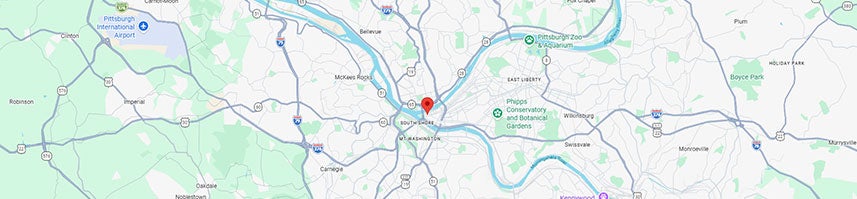
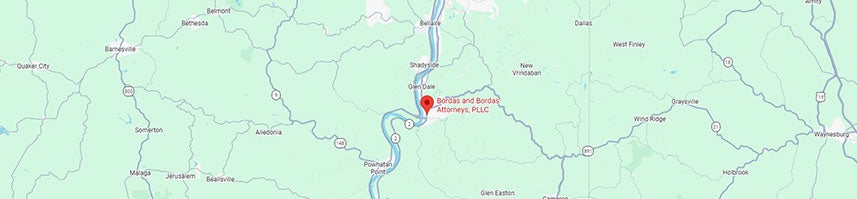
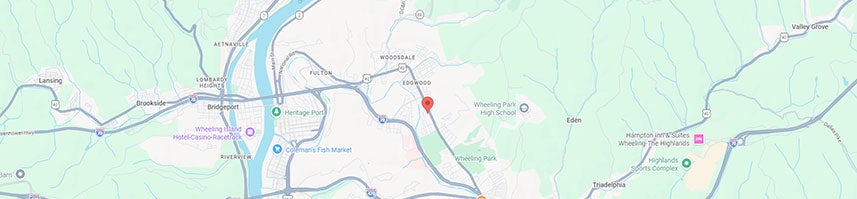
The information you obtain at this site is not, nor is it intended to be, legal advice. You should consult an attorney for advice regarding your individual situation. We invite you to contact us and welcome your calls, letters and electronic mail. Contacting us does not create an attorney-client relationship. Please do not send any confidential information to us until such time as an attorney-client relationship has been established.
The results in a legal case depend on a variety of factors, many of which are unique to each case. Prior results by this firm or any other do not guarantee future results. Case results presented here are illustrations of the type of work done by Bordas & Bordas and not a guarantee that any prospective case will yield any particular amount.
Request Consultation
Call 304-242-8410 or fill out the form below.