
Last week, while I was having my usual breakfast at Bob’s Lunch, I happened to overhear a conversation between two young men who were seated at a nearby table. It seemed obvious to me that they were not from this area, pipeline workers would be my guess, and they were discussing life in Moundsville. “I don’t know why anyone would want to live in this podunk little town,” said one of the men. “I’d kill myself if I had to spend the rest of my life here.” The conversation continued from there, with the men complaining about having nothing to do and nowhere to go in their free time. It was a conversation I have heard many times before, and each time I do, I have to fight off the urge to respond. Instead, I write off such comments as evidence of the foolishness of youth combined with the cynicism of those who have yet to learn of the things that are really important in life. I have lived in Moundsville for all but a few of my 58 years, and I can say without hesitation that I can’t imagine anything better than life in what I have come to call “Small Town West Virginia”. If a person thinks there is nothing to do in this area, he just isn’t looking. Within an hour’s drive, a person can experience everything from old-time bluegrass music by the riverfront to a classic symphony orchestra. We have beautiful parks, hunting, fishing, shooting sports, archery, water sports, golf, running/biking/hiking/ATV trails, zip lines, museums, a prison and a palace, NCAA sports, professional baseball and NFL football. We have Undo’s, Bob’s Lunch, Coleman’s Fish Market, and dozens of other great places to eat, full of history and tradition. We have Jamboree in the Hills, Slim Lehart and Brad Paisley. But the one thing we have that makes life in Small Town West Virginia the best: we have each other. We are family. The “every man for himself” attitude that saturates life in the big city just doesn’t exist here. Sure, we have our differences, our political debates and our neighborhood rivalries. But when tragedy strikes, we are family. That fact was never more apparent than after the tragic fire that struck the St. John Church in Benwood earlier this year. Communities saw family members in need, and they sprang into action. People in McMechen and Glen Dale opened the doors of their churches to displaced parishioners. Teachers and students in Cameron rallied to collect needed school books and supplies. Administrators in Moundsville opened the doors of a closed school building so that children could finish their academic year in safety. Entire communities prayed for their family members in another town. I like to think that people who bash life in communities like ours have yet to understand the difference between “fun” and “happiness”. Sure, big cities may provide more opportunities for a few hours of fun, but I’ll take the lifetime of happiness that comes from being part of a big family in a small community. Give me Small Town West Virginia any time.
Baseball- 50 Years Later
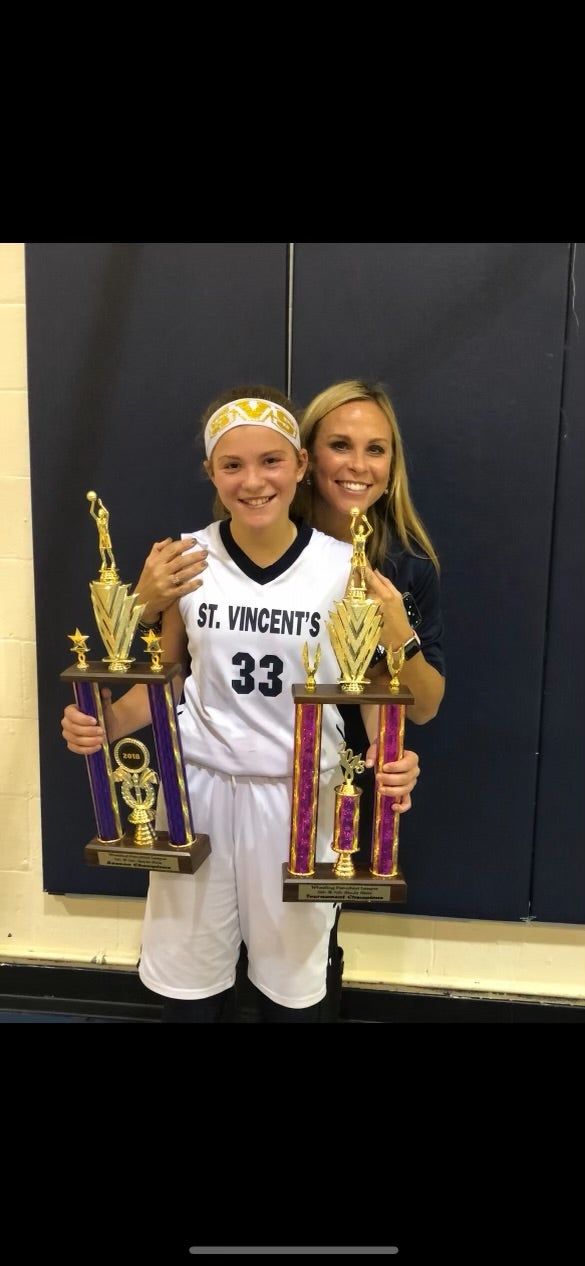
I was recently invited by the Pittsburgh Pirates baseball organization to be a Pirates “Big Leaguer for a Day.” It’s something that the Pirates apparently do every year in appreciation for the support that people and organizations provide to the Pittsburgh Pirates. This year, the Bordas & Bordas law firm entered into a business relationship with the Pittsburgh Pirates. For the first time, we have a suite at the Pirates games and are able to entertain 20 people per game. In addition, the law firm name and logo also now appears on the Clemente wall in right field. It was explained to me that two people from the law firm could participate in the “Big Leaguer for a Day” activities at PNC Park. My law partner, Geoff Brown, and I were chosen as the two participants in this event. I later found out that I was the oldest person on the field. In going to Pittsburgh, Geoff and I weren’t quite sure exactly what would happen once we got to PNC Park. We arrived at the ballfield a little bit before 10 a.m. Geoff and I were escorted to the Pirates visitor’s locker room by very friendly Pirates employees, and upon arriving in the locker room, we saw that our names and the other participant’s names were on their individual lockers. Hanging in each locker was an official Pittsburgh Pirates jersey with the individual’s name on the back of the jersey, a Pirates baseball hat, shorts, batting gloves, shoes and a backpack, all of which we got to keep. When we walked into the locker room, we were greeted by Kent Tekulve, Grant Jackson and Omar Marino, all former Pittsburgh Pirates stars. Jackson and Tekulve, the winning pitcher and reliever in our last World Series championship in 1979, were the coaches of the team that Geoff and I were on. Geoff and I were placed on the white team (we had white jerseys), and there were a number of people placed on the black team (who had black jerseys). We were then treated to a delicious breakfast of eggs, bacon, sausage, rolls, etc. Then the fun began. We dressed in the locker room, put on our new clothes and shoes, took our baseball glove with us, and were led onto the field. We were actually on the real Pittsburgh Pirates baseball field - the field that we saw the Pirates perform on at all the games that we had been to over all these past years. We were split up into three groups. One group took infield practice, one group outfield practice and the other group took batting practice. Geoff and I decided that we first would shag fly balls in the outfield. These weren’t the fly balls that I’d remembered from when I last played baseball as a teenager. The balls were hit higher and longer than any balls I’d ever seen. I had also not shagged a fly ball since I was a teenager. I have played in softball leagues, but I had nothing to do with baseball other than passing with my children and grandchildren and throwing them baseballs to hit as they were participants in baseball leagues. The balls were hit to us by a professional baseball group from Butler, Penn. At first it was quite a daunting task for me. I’m 68 years old, and I was concerned that if I misjudged one of these incredibly high fly balls and the ball hit me in the head, it’d probably kill me. Nonetheless, I attempted to move under every single ball that was hit to me, and quite surprisingly, after remembering that you had to go back a few feet before you came in, was able to catch pretty much everything that was hit to me. That doesn’t mean I wasn’t nervous about every single ball, I was, not only because of the fear of being injured, but also the fear of being embarrassed. The one big surprise for me though was that I could not throw the ball very well once I caught it. I had passed baseballs with my grandson, Carson, just a couple years ago, and was throwing the ball hard, long and straight. Within the last two years though, I had a serious bicycle accident in which I completely broke and separated my right shoulder. At the time, the orthopedic surgeon that was treating me indicated that there would be no need for surgery since I wasn’t going to be a big league baseball player. Little did I realize that I would no longer be able to throw a baseball for any distance or with much accuracy. Surprisingly, I’ve thrown footballs in the last couple of years and the throwing motion of a football is quite different. I have no difficulty at all in passing football with my children and grandchildren. Baseball, though, is a completely different deal. This was quite embarrassing to me because I remembered just a couple years earlier being able to put a lot of steam on the ball and throwing it for a quite a distance. We next took infield practice. The infield practice was actually done on the warning track in the outfield, and the balls that were hit were not any sissy balls. They were hit pretty hard and sometimes took crazy hops. Nonetheless, Geoff was able to handle just about every single ball, and I did pretty well myself. Once again though, I continued having issues with throwing the ball once I fielded it. The next step was batting practice. Before the “Big Leaguer for a Day” event, I had planned on taking batting practice in a batting cage at a local facility. Unfortunately, because I was extremely busy with work at the law firm, I was not able to do that. I thought this would be a real problem inasmuch as I had only hit baseballs one time while at the beach at a batting cage over the last 50 years. While I did okay then, I wasn’t sure I’d even be able to hit the ball during batting practice. The good news was that the pitchers, who were also from the professional baseball school, threw the ball straight and not all that fast. I think the fastest ball that we got was probably 50 miles per hour. I stepped into the batter’s box after choosing what I thought would be the perfect bat for me and began swinging the bat. We each got 15 balls the first go around, and five later on. I was quite surprised that I was able to hit almost every ball pitched to me in addition to being able to even knocking a number of balls into the outfield. I was quite relieved to think that I might not embarrass myself when batting. We all took a break after everyone had a chance to bat and field some ground balls and catch some fly balls, and we met with our coaches. The game then started. We wore the white jerseys and were considered the home team, so the other team batted. Initially, I chose to play in the outfield, but quickly realized that was a mistake because even if I happened to catch the ball, I wouldn’t be able to throw the ball very well to somebody if the runner tagged up. I also would have difficulty throwing the ball if it was hit on the ground. It worked out pretty well because the person that was playing first base had dropped a ball or two during the first inning and was eager to switch positions, so I moved to first base the second inning. My first at bat I hit a very hard line drive to the pitcher, who thankfully was with the baseball school and was able to knock the ball down. I was thrown out, but at least the pitcher wasn’t injured. I think if it would have been one of us, there might have been a problem. I was also happy that I was able to run to first base without pulling a muscle. That was another one of my fears. As you get older and you’ve not done something for quite a while, there are any number of things that went through my mind that could be problematic, including muscle pulls. Another interesting feature of the game was that each time we were up to bat, our name and photograph appeared on the PNC Park scoreboard, our names were announced over the loud speaker and our college fight song was played. It was pretty interesting. The game proceeded, and I even got a couple of hits. We went all the way up to theseventh inning, which was the designated number of innings we would play in the game. My team actually had won the game 3-1. The other team, however, pressed the coaches and our team to extend the game to nine innings. We agreed. We proceeded with the next two innings, theeighth and ninth, and did fairly well until the ninth inning when our opposition scored two runs to tie the game at 3 apiece. I happened to be the second batter up in the bottom of the ninth inning. I got on base with a single, and moved to second on a fielder’s choice. With two outs and still being on second base, my partner was up to bat. Geoff hit a hard ground ball between second and short, and I ran as hard as I possibly could. I actually made it from second to home without collapsing and scored the winning run off Geoff’s hit. Our team won 4-3. We celebrated and had pictures taken and had a great time. The day was a blast. I met many wonderful Pittsburgh people during the course of the day. I was particularly impressed with the individual who was next in age to me, although he was still about six years younger, who owned the Pittsburgh Brewing Company. I could tell that this guy had been a very serious athlete once upon a time. I introduced myself, and sure enough, he not only was an athlete, but had played hockey at Notre Dame, the alma mater of both Geoff, my son, Jamie, my law partner, Chris Regan and three associates at the firm. We hit it off right away. It was also easy to meet and talk to the rest of the people on the team, but this man was my favorite, not only because of his personality, but also because he looked like he could still play baseball like a youngster, even in his early 60s, and he sure enough did. During the course of the day, our Pirates coaches would put stars on our hats if we did something good. The stars each had an “s” in them, which was the star that Willie Stargell, who was a much beloved former Pirate, had instituted during the 1979 World Series campaign. Geoff and I each ended up with 6 stars, and Geoff was truly the outstanding player of the game. At the end of the day, after many pictures were taken, we went back to the locker rooms where the Pirates organization had lunch, soft drinks, beer and massages ready for us. The weather was great. It was a beautiful sunny day. It was fun to be a Pittsburgh Pirate and Big Leaguer for a Day.
Applause to Judge Mazzone
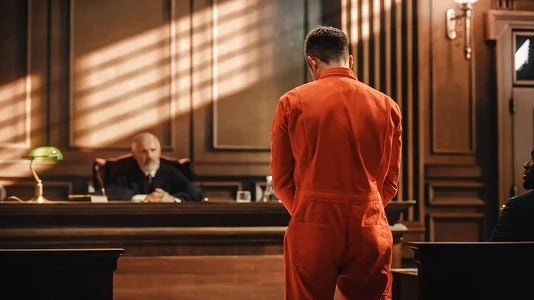
I saw on the news that The Honorable James P. Mazzone placed a new sign on the door of one of the Ohio County Circuit Courtrooms. I previously wrote a blog on this very subject because I have been in and out of so many courtrooms in Ohio and West Virginia throughout the course of my career and have seen more and more judges endorsing these signs out of basic necessity. The parties that are having their cases heard before the Honorable Court should be given appropriate and dutiful attention to these very important matters and Judge Mazzone couldn’t have said it better when the news quoted him as saying: "A lot of blood was shed to ensure the rights that these courtrooms were built to protect and I feel that the least we can do is show respect by dressing appropriately." He also explained that the sign on the door is to save people the embarrassment of being lectured in front of the whole courtroom. So, readers, please remember if this was your matter being before the Court, you, too, would want the same considerations from the judge, the lawyers, their staff and the jurors. Let’s be mindful and honor the legal proceedings that were put in place by our great United States of America!
Trying to tell Barley and Guinness Apart. Better known as “The Boys” in our office
Throughout the years, I’ve been told by tons of people they can’t tell Barley and Guinness apart. Even I sometimes can’t when they are standing side by side. If you have ever come to the office and seen the boys you would understand. Let me try to help you differentiate between the two. Barley is the older of the two boys. He is very laid back and hides more. Barley loves the cooler temperatures and will lie in front of any air conditioning vent he can find. In the winter, Barley will lie outside, belly down on a pile of snow. When inside, lying down in the living room, you can see his breath. It’s always warm in our home, so if you can see Barley’s breath inside you know darn well that he’s a hot-blooded dog. Barley has the most beautiful eyes for a dog. They are human looking. Barley is a little smaller and stockier than his brother, Guinness. Guinness, oh let me tell you about him. Guinness is very upbeat and full of energy. He feels that everyone who walks through the door should be jumped on and kissed all over his or her face. He is overly friendly and loves everyone he meets. Guinness is an ADHD dog; he loses his train of thought very easily, but when it comes to snuggling, he is one of the best. He is not as hot-blooded as his brother, Barley. Guinness will also stand up and look out the doors and windows at the office; he loves looking outside. Guinness is a little taller and his hair is a little thinner and blonder than his brother. Both are very hard to tell apart when they are walking or running away from you together, or when they have their heads down. Just the other day, the groomer asked me again, “Which is Barley and which is Guinness?” The boys are only 14 months apart in age. They really don’t like to be away from each other and if they are, they let each other know how much brotherly love they have when they see each other again for the first time. It’s so amazing to watch. Barley and Guinness are two of the most loving dogs you would ever meet. So if you stop by the office and see our two dogs that look alike, maybe this will help you tell them apart. Bark On, Bordas Dog Nation, Bark On.
Ohio Supreme Court Looks to Clear up Dormant Mineral Act Picture
The Ohio Supreme Court seems poised to start to clean up the muddled application of the Ohio Dormant Mineral Act. The ODMA has provided a mechanism to permit Ohio surface owners who do not own the minerals underlying their property to reclaim those minerals if the owner(s) of those minerals have not taken steps to use or claim those minerals from abandonment. Two of the original ideas behind the statutory scheme were to permit the reasonable extraction and production of mineral rights which had long been forgotten and to clear up ownership issues when the owners of long forgotten mineral rights. One of my prior blogs, “Reclaiming Severed Oil and Gas Rights” touched on the issue and the importance of speaking with a mineral rights attorney. Ohio’s ODMA has been the subject of considerable litigation and appeals. As you can imagine, the Courts of Common Pleas and the Appellate Districts serving Eastern Ohio have been quite busy with this issue. Some of the questions surrounding the ODMA relate to the fact that two different statutory schemes have been enacted. One version of the statute was passed in 1989. Many Courts have held that this version of the act was “self-executing." That means that no effort or action was necessary by the surface owner to reclaim the severed minerals. If a mineral owner had not used the minerals or engaged in any type of “savings event” related to the minerals over a 20 year window, then the mineral rights automatically vested with the surface owner. The earliest that such vestings could occur was March of 1992. The first statute specifically set March of 1969 to March of 1989 as the first 20 year window. The General Assembly added a three year savings window, until March 1992, to permit mineral owners to further protect their interest. In 2006, the law was amended and provided notice provisions designed to further protect and facilitate the ability of mineral owners to prevent abandonment of their rights. Surface owners seeking abandonment are now required to go through notice procedures which may include sending certified mailings to identifiable mineral owners and/or submitting legal notices for publication in local newspapers when such individuals cannot be reasonably located or found. Multiple questions have arisen between the two acts. While the United States Supreme Court found an Indiana statute very similar to the 1989 act to be Constitutional under the Federal Constitution, the Ohio Supreme Court faces the question of whether the 1989 act, without requiring notice to mineral owners, meets the requirements of the Ohio Constitution. After the enactment of the 2006 version of the act, does the 1989 act still apply to minerals which could have been deemed abandoned prior to 2006? Is a lease agreement a “title transaction” that qualifies as a “savings event"? Is there one 20 year winded, 1969-1989, under the 1989 Act or is there a revolving 20 year window after each alleged “savings event”? In Dodd v. Croskey, 2015-Ohio-2362, the Ohio Supreme Court began the process of sorting out some of these open questions. In that case, dealing solely with the 2006 version of the act, the Court held that filing a claim to preserve minerals, filed in response to a notice of abandonment by a surface owner, is sufficient to prevent an abandonment of minerals even if a “savings event” had not occurred in the prior 20 years. This decision seems to me to be a fairly straightforward ruling that has very little controversy under the 2006 version of the law. The more controversial cases will deal with the interplay between the 1989 Act and the 2006 version of the Act. Dodd v. Croskey was just the first in several cases which are expected to clear up the ODMA picture in Ohio, other cases for decisions include, Chesapeake v. Buell, Corbin v. Chesapeake, LLC, Walker v. Noon, Eisenbarth v. Reiser, and Farnsworth v. Burkhart. Stay tuned here as additional decisions come down from the Court.
Planning a Mini Vacation: Free things to do in Washington, D.C.
Yocabet ( and Mecinnac) v. UPMC Presbyterian, et al.
Recently, the PA Superior Court, in Yocabet ( and Mecinnac) v. UPMC Presbyterian, et al. held that data produced to CMS and the PA DOH in connection with an inspection of defendant’s facility is not protected information under the state’s peer review protection statute, 63 P.S. Sec. 425.1-425.4 . Attorney – Client Privilege Yocabet and Mecinnac were husband and wife. Mr. Yocabet was on defendant’s kidney transplant list and Ms. Mecinnac agreed to be tested to determine her eligibility to be a kidney donor for Mr. Yocabet. Ms. Mecinnac tested positive for Hepatitis C, which under federal/state laws invalidates her candidacy as a donor. Remarkably, despite several physicians and transplant review committee evaluations, all purportedly having reviewed Ms. Mecinnac’s lab work, approved the transplant. The surgery occurred without complication. Shortly after surgery, it was determined that Mr. Yocabet had received a diseased kidney and now developed Hepatitis C. The treatment for Hepatitis C results in eventual kidney failure and death. CMS (Medicare) and DOH (Medicaid) performed an investigation in connection with these events in order to determine defendant’s compliance with the Medicare/Medicaid program. CMS found violations, and defendant submitted a plan of correction to comply with the program’s rules and regulations. CMS’ investigative report was made available to the public. Plaintiffs sought to discover the information provided to CMS/PA DOH by defendant in connection with the investigation. Defendant claimed peer review protection and refused to produce the requested information. A special discovery master determined that the information was not protected because defendant was not conducting “peer review” during the CMS/PA DOH investigation. The trial court affirmed and the appeal to the Superior Court followed. The Superior Court affirmed holding that CMS and the PA DOH are not health care providers, and therefore, did not conduct peer review during its investigation. The court further reasoned that protecting the materials from discovery would not facilitate the purpose of the Peer Review Act, namely self-policing. Of interest, the court remanded the case back to the trial court to conduct an in-camera review of board meeting minutes in an effort to determine whether the peer review and/or attorney-client privilege applies.
Talented Area Youth are Ready to Entertain You!
For years, Oglebay Institute has held summer auditions for their Parcel Players of area youth ages 12-18. This is such a positive thing that they have done for our youth. Not only does it give the teens a chance to experience the many aspects of theatre, whether it be a direct acting role or behind the scenes in a technical support capacity, but it brings so many together from all different backgrounds. These kids get to know each other and do something that they all have a profound interest in while learning at the same time. As I’ve proudly discussed before, my daughter, Aleigha, is quite appreciative of the theatre and began auditioning and acting last fall. She has subsequently participated in several theatrical roles since and this summer would be no exception for this little gal. At 7 p.m., July 15-18 at the Towngate Theatre, Aleigha and many other area teens will present an adaptation of Oscar Wilde’s fairy tales: “Telling Wilde Tales” in five short plays. You can catch another show at 7 p.m., Aug. 5-8, a comical presentation of “Fools,” in a 19th century Russian Territory, about a teacher who falls in love with his pupil. Come on out and support the teens. Tickets are only $8 and would be a great way to spend a summer evening. AND THANK YOU, Oglebay Institute, for doing such a wonderful thing to help our kids grow in a positive way. Good luck to the kids and hope to see you there.
This Party was For the Dogs
My daughter, Allie, LOVES BIRTHDAYS. She just turned six, but has already taken great pains to plan for her birthday parties months in advance. Some of her ideas have been good; others have required a gentle re-direction from her mother and I (one year she wanted a Disney Princess “Brave” themed party at Cabela’s). This year, the two of them came up with a great idea that really made Allie happy. While Allie’s party ended up being a luau themed pool party, Allie took the opportunity to collect donations for the Marshall County Animal Shelter. One of the few things that Allie loves as much as birthdays is animals. The idea of collecting toys, food, treats and cleaning supplies for the animals at the shelter really made Allie happy. Rather than receiving toys/gifts from her friends, she asked them all to bring items and materials to donate to the animal shelter. She even made a poster board about the animal shelter to tell everyone why she thought it was important to donate. Allie was thrilled about the amount of items that she collected and could not wait to take them to the shelter. I hate to brag, but it does make me proud to know that Allie enjoyed giving those donated items to the people and animals at the shelter. Allie’s smile was enormous as we dropped the donations and got even bigger when one of the staff members on duty suggested that Allie should come and volunteer at the shelter once she got older. Knowing Allie, I am sure that she will! The Marshall County Animal Rescue League is a great organization that runs a quality shelter in Moundsville. You can visit the website at www.mcwvanimalshelter.com to learn all about the organization, see some of the pets that are up for adoption and learn more about how you can help care for these animals. Included in this blog are a few pictures of animals that have been up for adoptions. You can also read about fundraisers and events used to promote and raise funds for the Marshall County Animal Rescue League. There is also a “ Kitty Cam” that allows you to live stream video from the cat sun room. Bordas & Bordas, PLLC, and Jim and Linda Bordas in particular, have been long time supporters of the shelter. As you can see from the number of animal related blogs, which we have run on our website, our firm is full of animal lovers. The Marshall County Animal Shelter is located at 37 Animal Shelter Drive, Moundsville, WV 26041. You can contact the shelter at 304-845-9770. Allie and I encourage anyone who is interested in getting a pet to check out the shelter and the available animals!

Container Gardening – Big Results In Small Spaces
Now that it has officially ended, I think I can safely say that this past June has been the rainiest I can ever remember in my 41 years here in the Ohio Valley. I can hardly recall a day over this past month where our plans weren’t derailed because of rain. Between a freezing May and this past June, I’m still ready for summer, but as a person with an interest in gardening, I couldn’t be happier. So far this year, our “garden” is absolutely thriving without us having to be out there watering every day, as we typically have to this time of year. My wife and I have been into gardening for at least a decade at this point, and I have found the experience to be both very cathartic and very enriching. It takes effort, no doubt, to get plants to produce as hoped, but I find the rewards far outweigh the work. Gardening has given me a much deeper appreciation for biology, nature and, especially, gastronomy. It’s also been an enjoyable and educational activity to do with our kids. When we lived in Glen Dale, we were fortunate to have a nice, sizeable piece of flat property in which to garden. Not acreage or anything like that, but a big enough area to grow a pretty productive garden that provided enough produce to eat right off the vine and can and store for use during the winter. However, we moved to Wheeling a couple years ago and were not so fortunate in our new home when it came to flat land to plant a garden. But we weren’t about to simply abandon the prospect of fresh produce, we could just walk outside, pick and eat, so we knew we had to come up with an alternative, since we no longer had the luxury of open, flat space, and that’s when I discovered container gardening. I had always believed that one needed a pretty decent amount of space, particularly vertical space, to successfully grow food, to give the roots a chance to dig deep and spread out. But since we started growing in containers, I’ve been consistently impressed at the amount of produce we’ve been able to get out of our plants in a much smaller space. Although we’ve had pretty good success overall using a variety of different sizes and types of containers, we stumbled upon something called the Garden Patch Grow Box a couple years ago that has proven really tough to beat. These Grow Boxes have allowed us to keep gardening at just about the same rate as when we had a plot of land, and they make gardening about as easy as one could hope. With these boxes we haven’t really missed a beat growing full-size tomatoes, peppers, cukes, onions, herbs, beans, squash and a whole variety of other vegetables. The beauty of the Grow Box is that it is self-watering. The Box contains a reservoir at its base that you simply fill with water every so often, so the plants always have a readily available supply of water to feed as much as they need. Granted, come August, we’re out there filling the Boxes with the tomato and other heavy-feeding plants just about every day, but we’re confident that the water is getting used by the plant roots and not simply evaporating away in the baking summer sun. We’ve set up a number of these Grow Boxes on our deck, and we’ve actually been able to grow about the same amount of food in about a quarter of the space we were previously using when we grew directly in the dirt. The Grow Boxes come with a fertilizer strip to use when you first get started, which is nice if you’re new to gardening, but the strip is just basic 10-10-10 fertilizer, and we’ve simply been using good top soil and compost the past couple seasons and haven’t noticed any drop-off in production without the fertilizer strip. We installed a rain barrel, attached to the downspout on our deck as well, which has already paid for itself in terms of reducing our municipal water usage. For anyone thinking about getting into gardening, I have found that containers are actually a very good way to start. Not only can you better control the conditions for optimal growth, but I’ve also found that having your plants very close to, if not inside, your house makes it much easier to remain diligent in watering, controlling insects, and staving off plant disease to give yourself the best chance for success. If there’s one thing I’ve learned about horticulture these past couple years, it’s that containers definitely aren’t just for house plants. For anyone who’s considering container gardening, below are some helpful links to get started. Happy Gardening! http://containergardening.about.com/ http://extension.illinois.edu/containergardening/ http://www.rodalesorganiclife.com/garden/container-gardening
Life, Liberty, and the pursuit of Happiness.
"We hold these truths to be self-evident, that all men are created equal, that they are endowed by their Creator with certain unalienable Rights, that among these are Life, Liberty, and the pursuit of Happiness." There were 56 men from each of the original 13 colonies who risked their reputations, fortunes, and their lives when boldly and publicly declaring their support for liberty and freedom by signing the Declaration of Independence on July 4, 1776. As he signed his name, Benjamin Franklin professed, "We must all hang together, or most assuredly we shall all hang separately!" Linked below are short biographies of all 56 signers of the Declaration. Delaware • George Read • Caesar Rodney • Thomas McKean Pennsylvania • George Clymer • Benjamin Franklin • Robert Morris • John Morton • Benjamin Rush • George Ross • James Smith • James Wilson • George Taylor Massachusetts • John Adams • Samuel Adams • John Hancock • Robert Treat Paine • Elbridge Gerry New Hampshire • Josiah Bartlett • William Whipple • Matthew Thornton Rhode Island • Stephen Hopkins • William Ellery New York • Lewis Morris • Philip Livingston • Francis Lewis • William Floyd Georgia • Button Gwinnett • Lyman Hall • George Walton Virginia • Richard Henry Lee • Francis Lightfoot Lee • Carter Braxton • Benjamin Harrison • Thomas Jefferson • George Wythe • Thomas Nelson, Jr. North Carolina • William Hooper • John Penn • Joseph Hewes South Carolina • Edward Rutledge • Arthur Middleton • Thomas Lynch, Jr. • Thomas Heyward, Jr. New Jersey • Abraham Clark • John Hart • Francis Hopkinson • Richard Stockton • John Witherspoon Connecticut • Samuel Huntington • Roger Sherman • William Williams • Oliver Wolcott Maryland • Charles Carroll • Samuel Chase • Thomas Stone • William Paca According to the Biographical Directory of the United States Congress, 1774-1989 (Washington, D.C.: U.S. Government Printing Office, 1989): · The average age of a signer was 45. Benjamin Franklin was the oldest delegate at 70. The youngest was Thomas Lynch Jr. of South Carolina at 27. · Nine of the signers were immigrants - one was an orphan. · Twenty-two of the signers were lawyers! Eighteen were merchants or businessmen, 14 were farmers, four were doctors and nine were judges - Stephen Hopkins had been governor of Rhode Island. · John Witherspoon was the only active clergyman to attend. Almost all were Protestants. Charles Carroll of Maryland was the lone Roman Catholic. · Seventeen signers fought in the American Revolution, five signers were captured by the British: Edward Rutledge, Thomas Heyward, Arthur Middleton, George Walton and Richard Stockton. Abraham Clark’s two sons were also captured. Francis Lewis's home was destroyed and his wife taken prisoner. Thomas McKean wrote John Adams that he was "hunted like a fox by the enemy - compelled to remove my family five times in a few months." John Hart's farm and mills were destroyed, and he died while fleeing capture. · Fifteen of the signers participated in their states' constitutional conventions, and six - Roger Sherman, Robert Morris, Franklin, George Clymer, James Wilson, and George Reed - signed the U.S. Constitution. · After the Revolution, 13 signers went on to become governors. Eighteen served in their state legislatures. Sixteen became state and federal judges. Seven became members of the U.S. House of Representatives. Six became U.S. Senators. James Wilson and Samuel Chase became Supreme Court justices. Jefferson, Adams, and Elbridge Gerry each became vice president. Adams and Jefferson later became president. · Five signers played major roles in the establishment of colleges and universities: Franklin and the University of Pennsylvania; Jefferson and the University of Virginia; Benjamin Rush and Dickinson College; Lewis Morris and New York University; and George Walton and the University of Georgia. · Adams, Jefferson, and Carroll were the longest surviving signers. Adams and Jefferson both died on July 4, 1826, the 50th anniversary of the Declaration of Independence! Carroll was the last signer to die in 1832 at the age of 95. It is estimated that there are over 1,473,900 active personnel and 1,458,500 reserve personnel in the US armed forces. Freedom is not free! Please pray for our brave soldiers over this holiday weekend – a military that represents our incredibly diverse culture. Always remember…United We Stand Divided We Fall! Happy 4 th of July! God Bless the United States of America! Sources: Robert Lincoln, Lives of the Presidents of the United States, with Biographical Notices of the Signers of the Declaration of Independence (Brattleboro Typographical Company, 1839); John and Katherine Bakeless, Signers of the Declaration (Boston: Houghton Mifflin, 1969); Biographical Directory of the United States Congress, 1774-1989 (Washington, D.C.: U.S. Government Printing Office, 1989).
Prepping for Racing
Every summer I run 5Ks. Every winter I swear I am going to stay on the treadmill and work out. That never happens. So every April, I am busting it out at the track or the walking trail in St. Clairsville getting ready for the summer’s 5Ks. As I am sweating and having an internal dialog about what a stupid decision I made for not getting on the treadmill all winter long, I am thinking about all the good causes I can support. Some of the highlights for this year are: The RunWalkRoll 5K is being held on July 18. This race benefits the Free Wheelchair Mission. This is such a good cause. Helping others to become mobile is such a great thing. Can you imagine not being able to leave your house and all of a sudden you can? This is an amazing organization. Give if you can. I ran this race last year and the run is a little challenging, but fun. Also, Bordas & Bordas is a sponsor. The K-9 Classic is being held on August 15 and benefits the Belmont County Animal Rescue League. I love my pets and wouldn’t dream of missing this one. So many dogs and cats need good homes. If I can support the League to keep animals from being euthanized, I am all for it. All animal shelters accept donations. Check your local shelter’s website to see what items they need. The Butterfly 5K Run/Walk will be held on September 12 at Salt Fork State Park. It is held to fund research for Epidermolysis Bullosa (EB). This terribly debilitating disorder affects one out of every 20,000 live births. It raises blister-like lesions on the skin simply by the friction caused by clothing, or any other kind of trauma. This disorder does not discriminate. Every racial and ethnic group throughout the world, both male and female, is afflicted equally. There are many more 5Ks over the summer that I would like to run in. Unfortunately, due to other commitments, I can’t participate in them all. A few other races I do intend to run in are Glow 4 Goal on August 22 and Awesome Autism 5K on September 5. Please check this list and enter a few. If you haven’t trained, don’t worry about it, you can enter as a walker. The best part of entering these 5Ks is helping out some very worthy causes. For those of you that enter any of these races, other than the Glow 4 Goal, which is held at night, I’ll be wearing my blue Bordas & Bordas shirt. So if you see me, come say hi, and please donate if you can’t participate.
Contact Us
The information you obtain at this site is not, nor is it intended to be, legal advice. You should consult an attorney for advice regarding your individual situation. We invite you to contact us and welcome your calls, letters and electronic mail. Contacting us does not create an attorney-client relationship. Please do not send any confidential information to us until such time as an attorney-client relationship has been established.
The results in a legal case depend on a variety of factors, many of which are unique to each case. Prior results by this firm or any other do not guarantee future results. Case results presented here are illustrations of the type of work done by Bordas & Bordas and not a guarantee that any prospective case will yield any particular amount.
Request Consultation
Call 304-242-8410 or fill out the form below.