
The special interest agendas that have swept through the West Virginia Senate and House of Delegates show no end in sight. The oil and gas industry has been at the forefront of these efforts, mainly in its attempts to legislate the taking of property interests and rights through proposed forced pooling and forced lease integration bills. Most people now understand that the idea of forced pooling and forced leasing is to make individuals and mineral interest owners who may not want to enter into an oil and gas lease, for any reason ranging from poor lease terms to principles, enter into a lease without their approval. New reports this past week demonstrate that Delegate Woody Ireland, R-Ritchie County, is again pushing the forced pooling legislation through the Legislature. News articles have disclosed that Ireland owns significant oil and gas mineral interests and at least six new gas wells are planned on Ireland’s property. As much as 20 percent of Ireland’s income has come from oil and gas exploration and development since 2011. Our state has learned little from the errors of our past. For decades King Coal ran roughshod over our workers and property owners. Now, as we are poised to again step to the forefront of energy production, we seem to be ready to bow down to the special interests who want nothing more than to take our natural resources, turn a profit and head out of town with little to no regard for our local workers and lands. We should all be concerned that private industry is fighting for the right to take our lands and property interests for pipelines and profit with little to no concern for our individuals and the families that have lived in these mountains and valleys for generations. For most West Virginians, our land is our biggest and sometimes only asset. Lands have been handed down for generations of families. That family legacy is now facing an attack unlike any other. Are we going to stand by and permit large out-of-state corporations to dictate to us what our property is worth and who can come onto our land? If forced pooling is unavoidable, we need to fight to allow complete surface protections for those force into production leases and to create a system which really does result in fair market value lease deals that don’t include provisions such as forced arbitration. In addition to forced pooling legislation, bills are being proposed to take away one of the few tools that landowners have against the massive industrialization of our rural communities. I have met with and represent dozens of individuals who have saved their money and built or remodeled their dream homes only to have oil and gas well sites and massive processing and production facilities pop up in their back yards without any warning. Many of these people don’t own the mineral rights associated with their properties have had absolutely no say as to whether or not facilities will be built next to them. Worse yet, the companies building these facilities hide the proposed operations from the local community until the last possible moment. These facilities create tremendous air emissions, light pollution and sound disturbances often 24 hours a day, seven days a week. Hardworking families are kept up all hours of the night. Husbands working shift work can barely make it through their shifts, kids are up all night before school the next day and homemakers cannot keep up with the extra dust and debris covering and entering their homes. One of the few tools these people had and their disposal was the threat of nuisance lawsuits. These cases have allowed aggrieved property owners to seek compensation for the harms they have experienced as a result of having massive industrial plants dropped down beside them. A bill has been sponsored by local Ohio County Senator Ryan Ferns, however, which will seek to tremendously limit the ability of hardworking property owners to fight back. The bill would seek to require actual property or physical personal injury to support a nuisance claim. Furthermore, the new bill would essentially provide that any business operating under the context of a permit, such as oil and gas drilling permits, would not face liability for nuisance actions unless that business was violating a statute, regulation, permit, license or court order. The people that stand to lose the most in these situations are the citizens of our state that live in rural communities, do not own their mineral rights, and have not consulted a mineral rights attorney. These rural communities don’t have sound ordinances; they don’t have work hour restrictions. The people in these communities have little to no standing to dispute the issuance of oil and gas well permits and most often don’t even get notice that such permits are even being filed. Couple that with environmental and regulatory inspector units that are tremendously overworked and understaffed and the tort of private nuisance in the context of the oil and gas industry will be effectively gutted. The people who live near these gas facilities did not ask for the tremendous disruptions and stress that they face. They did not ask for their property values to be nearly wiped away. They live in fear of explosions and catastrophic failures which may injure their families or destroy their property. Most of these people have nowhere else to go and now they could not sell their land even if they wanted to. Sadly, once again, big business has come forward to dictate the terms of how we live our lives and what we have to put up with so it can profit. West Virginians need to stand up and let our representatives know that these actions are wrong. We cannot continue to bow down to the profit driven desires of out of state corporations who do not care about us or our state. If those representatives don’t listen, they don’t need our support at the ballot box.
Snow Days
We all know why kids love it when the snow is falling and sticking on the ground; it pretty much guarantees a school cancellation. But what about us adults? Most of us are working, sitting in our offices and looking out of the window wondering when it will stop. On top of that, we are worrying about the roads for the drive home and the mess of the slush getting tracked into the house. It seems like, as you become older, the snow becomes more of a burden rather than a blessing. It made me think of what I would do if I could have “snow days” as an adult. Would I go outside and make snow angels or go sled riding up at Oglebay? Although the sound of those two things are youthful and inviting, I can pretty much guarantee I wouldn’t be anywhere outside. If I had a snow day, I would most likely be in the house with my sweats and wool socks on. I would spend the day snuggled up on the couch watching Lifetime movies. Have you ever wished for an adult “snow day”? What would you spend your snowy day doing?
Individuals’ Right under HIPAA to Access their Health Information
As reported on this blog previously, the White House, through executive action, has modified HIPAA, otherwise known as the “Privacy Rule.” The new guidelines can be found at the U.S. Department of Human Services. For anyone attempting to secure a copy of their private health information (PHI), they should refer to these guidelines, as they will undoubtedly provide valuable insight. Some major media outlets, such as the New York Times, are heralding the HIPAA amendments as fostering the cost effective and timely production of a patient’s PHI. “The Obama administration is tearing down barriers that make it difficult for patients to get access to their own medical records, telling doctors and hospitals that in most cases they must provide copies of these records within 30 days of receiving a request." Indeed, the changes to HIPAA should facilitate the cost effective and timely production of a patient’s PHI. For instance, while the Privacy Rule allows covered entities (doctors, hospitals, nursing homes, etc.) to require that individuals request access in writing and requires verification of the identity of the person requesting access, a covered entity may not require an individual: Who wants a copy of his/her medical record mailed to his/her home address to physically come to the doctor’s office to request access and provide proof of identity in person? · To use a web portal for requesting access, as not all individuals will have ready access to the portal. · To mail an access request, as this would unreasonably delay the covered entity’s receipt of the request and thus, the individual’s access. Also, the Privacy Rule requires a covered entity to provide the individual with access to the PHI in the form and format requested, if readily producible in that form and format, or if not, in a readable hard copy form or other form and format as agreed to by the covered entity and individual. In certain circumstances, the covered entity also may provide the individual with a summary of the PHI requested, in lieu of providing access to the PHI, or may provide an explanation of the PHI to which access has been provided in addition to that PHI. At what cost? The Privacy Rule permits a covered entity to impose a reasonable, cost-based fee if the individual requests a copy of the PHI (or agrees to receive a summary or explanation of the information). The fee may include only the cost of: · Labor for copying the PHI requested by the individual, whether in paper or electronic form; · Supplies for creating the paper copy or electronic media (e.g., CD or USB drive) if the individual requests that the electronic copy be provided on portable media; · Postage, when the individual requests that the copy, or the summary or explanation, be mailed; and, · Preparation of an explanation or summary of the PHI, if agreed to by the individual. The fee may not include costs associated with verification; documentation; searching for and retrieving the PHI; maintaining systems; recouping capital for data access, storage, or infrastructure; or other costs not listed above even if such costs are authorized by State law. How long does a covered entity have to produce the records? In providing access to the individual, a covered entity (in most cases) must provide access to the PHI requested, in whole, or in part, no later than 30 calendar days from receiving the individual’s request. If the information is archived offsite and not readily accessible -- the covered entity may extend the time by no more than an additional 30 days. Under certain limited circumstances, a covered entity may deny an individual’s request for access to all or a portion of the PHI requested. In some of these circumstances, an individual has a right to have the denial reviewed by a licensed health care professional designated by the covered entity who did not participate in the original decision to deny What records are available to patients and/or their personal representative? Patients and/or their personal representatives are entitled to the PHI contained in an individuals’ "Designated Record Set" (DRS), which is comprised of the following: · Medical records and billing records about individuals maintained by or for a covered health care provider; · Enrollment, payment, claims adjudication, and case or medical management record systems maintained by or for a health plan; or · Other records that are used, in whole or in part, by or for the covered entity to make decisions about individuals. This last category includes records that are used to make decisions about any individuals, whether or not the records have been used to make a decision about the particular individual requesting access. Note: an individual does not have a right to access protected health information (PHI) that is not used to make decisions about individuals. For example, quality assessment or improvement records, patient safety activity records, or business planning, development, and management records are generally excluded from a DRS. When is your PHI not private? Importantly, there are two (2) categories of information are expressly excluded from the right of access are: · Psychotherapy notes, which are the personal notes of a mental health care provider documenting or analyzing the contents of a counseling session, that are maintained separate from the rest of the patient’s medical record. · Information compiled in reasonable anticipation of, or for use in, a civil, criminal, or administrative action or proceeding. That being said, the HIPAA Privacy Rule permits a covered entity to disclose psychotherapy notes, when the covered entity has a good faith belief that the disclosure: · It is necessary to prevent or lessen a serious and imminent threat to the health or safety of the patient or others; and, · Is to a person(s) reasonably able to prevent or lessen the threat. 45 CFR 164.512 (j) To some mental health professionals, the fact that your PHI is not necessarily private is troubling. “The practice of reporting a client to the police if they disclose abuse issues or other criminal behavior is one of the most serious and widespread rights violations we as consumers face today. The reason this practice has been allowed to continue is that the population of individuals who are mentally ill and who have confided in their provider that they have behaviors which may be criminal in nature are very unlikely to file complaints because the complaint process usually involves further disclosure of their private statements.” In other words, many mental health professionals are concerned that individuals who may suffer from mental illness will not seek treatment because of a lack of privacy. Only time will tell whether these concerns have substantial merit. Nonetheless, consumers of mental health services should be aware of their rights before embarking on such treatment.

Did You Know that Smartphones and Tablets are Dirtier than You Think?
Here is a FUN FACT: each square inch of your smartphone or iPad contains roughly 25,000 germs making them two of the filthiest things you come in contact with on a daily basis. Now, will you put the next smartphone call on speaker instead of putting it up to your ear/face? Yes, I hope you do and I think I will, too. Will you clean your iPad or your child’s iPad a little more often? Well, go ahead and read on. Ever wonder what objects are actually cleaner than your Smartphone/iPad? Surprisingly, toilet seats make the list because they're usually sanitized often. Do you take your Smartphone/iPad in to the bathroom with you? Yes, I think we all may have, haven’t we? Well, I would think twice about that now that I brought this FUN FACT up to you. Now, I know we have all cut one of our fingers and placed a band aid on it. Then you discover at the end of the day that the band aid is pretty dirty? Yes, and all of those dirty germs are now on your electronics and everything else you have touched that day, including your smart phone, iPad and your keyboard at work, too. As Jimmy Fallon’s character “Sara” would say “Ew!” GERMS ARE EW! In a 2013 study, British researchers swabbed 30 tablets, 30 phones and an office toilet seat. The tablets had up to 600 units per swab of staphylococcus (also known as staph, which can cause severe stomach sickness) and the phones had up to 140 units. The typical toilet seat had less than 20 units. Another uncomfortable detail: In a 2011 survey, 75 percent of Americans said they use their smartphones while on the toilet to text, email and talk. It’s not just teenagers—91 percent of Generation Y responders said they used their phone on the toilet, as did 80 percent of Generation X and 65 percent of Boomers. Clean your electronics: Reduce your exposure to germs by cleaning your electronic screens with screen wipes or a damp, soft cloth often—or leave them out of the bathroom in the first place. Now that I have grossed you all out, I hope that you will go and clean your smartphone, iPad, etc. right now. I just cleaned mine. Go ahead, clean them and clean them OFTEN!
More Poison Water – Will It Ever Stop?
Flint, Mich. is once again in the news for all wrong reasons. As if the city hasn’t endured enough through impoverishment and a rapid rise in violent crime, thanks largely to “free trade” boondoggles that sent GM and other industries to Mexico, Flint is now under a state of emergency because of lead in its tap water that is poisoning its residents. Nearly two years ago, the state decided to save money by switching Flint's water supply from Lake Huron, to the Flint River, a notoriously filth tributary that runs through town. To Flint’s residents, this announcement seemed like something one would find on the satirical Onion website. In other words, a joke, given the Flint River’s widespread reputation as being highly corrosive and full of toxic waste. Unfortunately, the announcement was all too real, and to no one’s surprise, Flint’s citizens are now paying with their health, as a result of being made to pay for toxic water. Since the entire point of the exercise was to cut corners and pinch pennies, it should come as no surprise that the state completely ignored federal law that required Flint River water to be treated with anti-corrosive agents to have any chance of being potable. According to experts, at a cost of about $100 per day, treatment with these anti-corrosives could have prevented 90 percent of the problems with Flint’s water. Instead, the corrosive water was permitted to course through Flint’s lead-lined pipes, causing widespread leaching of that lead, a highly potent neurotoxin, into the drinking water flowing to resident’s homes. The results have been a predictable litany of neurological and other health problems for Flint’s children, who are most susceptible to lead toxicity, and other residents. Sadly for us West Virginians, poisoning of our precious waterways in service to the almighty dollar is an all too familiar tragedy here at home. For instance, we may never stop hearing about the impact of DuPont’s insidious poisoning of Parkersburg in our lifetimes, give the sheer scale of the illicit dumping of PFOA into Parkersburg’s waterways and the decades-long harm that will continue to plague local residents. PFOA was a chemical that DuPont extensively studied, conclusively learned was toxic to humans, concluded should not be disposed of in public waterways, but did it anyway – for decades. And who could forget about Freedom Industries recent poisoning of Charleston’s Elk River with MCHM, the long-term effects of which are still being studied and shown to be worse than previously disclosed. With barely regulated natural gas fracking and a republican-controlled “open for business” legislature, you can be sure that we will continue to suffer the same kind of tragedies that Flint’s citizens are struggling with. With all this poisoning happening, repeatedly, throughout our great state, you would think that we could find a legislative majority of actual human beings on this issue who might make preservation of our natural resources – the very lifeblood of West Virginian’s survival – a priority in this, or any, legislative session. But even a cursory glance at the Senate GOP’s agenda for the 2016 session would show you how wrong you are. Far from trying to prevent these types of tragedies from continuing to occur, the GOP seemingly wants to do everything it can to guarantee they continue to happen. You won’t find any attempts to strengthen environmental or chemical inspection regulations on their agenda. No attempts to strengthen fracking regulations. No attempt to address the more than 60,000 mystery chemicals, like DuPont’s PFOA or Freedom’s MCHM, whose toxicity has never been studied but that are nevertheless routinely dumped into our environment. Instead, the majorities’ number one priority this legislative session is to try, once again, to strip you, the ordinary West Virginia citizen, of your Seventh Amendment rights to take companies like this to court when they poison the water we all must share. The corporate welfare agenda is certainly well represented by the GOP’s agenda this session, and they seem determined to carve the widest path for large scale corporate profiteering, by taking away your Constitutional Rights and giving Corporate America carte blanche to further exploit West Virginia’s natural riches for its own, personal gain, while allowing Corporate America to also use West Virginia as its own personal toilet down which to flush those inconvenient, “cost-of-doing-business,” truths like the fact that the chemicals they profit from are toxic to life. While the GOP’s priorities may go a long way towards lining their politician’s campaign coffers, they come at the expense of the very electorate they swore an oath to represent. The only way to combat this is to speak up this legislative session and let your local legislators know you support and demand the regulation of corporate polluters and see if they do anything to address these issues. If not, at least you’ll know who not to vote for next time.
Seeking Advice for Vegas
Yes, I am super excited about the firm trip to Las Vegas! I’ve always wanted to have the Vegas experience. I, along with Jeanne Dedo and her husband, have booked a helicopter flight to the Grand Canyon! That has been something else I have always wanted to do – see the Grand Canyon. I really didn’t want to use up an entire day by driving there so I decided to take the helicopter. While I’m pretty nervous about it, I’m also thrilled that I will be seeing the Grand Canyon. I can check two things off of my bucket list with this trip. I am taking my sister with me as my guest. My sister is so much fun and I know she and I will have a blast. We plan to attend one show and we want to ride the High Roller Ferris Wheel. I’ve already started dieting so I can eat anything I want when I’m in Vegas. I looked up the places that have been on Diners, Drive-Ins and Dives and may search out at least one of those to experience. Other than that I have no other specific plans. My sister has found several antique shops, consignment shops and flea markets she would like to visit. If we get around to that, I assume those places are in the old downtown Vegas and I would like to do the zipline! So for all of you seasoned Vegas people out there I need to hear your favorite spots, restaurants, cocktail lounges (female and age appropriate, please) and shows. I’m not much of a gambler, but if you know a place I can actually win – that would be awesome!! And high on my list would be the best place to just people watch – I’m sure there are a lot of interesting people in Vegas! I appreciate any advice you can send my way.
Which Way, West Virginia?
The world and our country are changing. Some of those changes may be welcome, and some of them not so much, but many of them are beyond our power, here in West Virginia, to control. The choices we face are not about whether change is coming, but whether we will capitalize on new circumstances, or simply sit still. Last year, the President of Appalachian Power, Charles Patton, told us that coal consumption would not increase, regardless of whether or not new federal regulations go into effect. Patton made it clear that the controlling factors were economic, not political, stating: “f we believe we can just change administrations and this issue is going to go away, we’re making a terrible mistake.” Charles Patton is not some wild-eyed hippie, living for a world powered by moonlight and karma. He has spent decades in the electric power business – until recently, mainly a coal business. He’s received appointments to boards from the likes of George W. Bush and Rick Perry. As an AEP executive, he works to protect shareholders, and his company, from losing money in energy markets, not on scoring short-term political points. He’s telling us the truth on this. Change is coming to West Virginia. We can’t hold it off, but we can decide how we’re going to handle it. But to do it we’ll need to separate the politics of coal from the economics of coal, so we can get realistic. The first step, as always, will be admitting we’ve got a problem. Too many of our leaders are like Fitzgerald’s “boats beating against the current,” promising to carry us back to the past. These leaders respond to a changing world by getting angry about it, blaming it on someone else, and spinning us fables about the “good old days.” That way lies stagnation, defeat and ultimately, ruin. We can’t afford it. We need a new generation of leadership with its eyes on the future. West Virginia needs its younger eyes to see that the good old days weren’t always good. Leaders who fix their gaze on the past will end up leaving us there. Next we have to make sure our leaders are choosing public service, not self-service. Public servants demand policies that support better wages for workers, not windfall profits for campaign contributors. Self-servants use the law for private gain, hurting the average person who lacks influence. Public servants represent the many people who are trying, but struggling. Self-servants represent the few who are already doing well. We must identify and promote the public servants, and rid ourselves of self-servants. Step three will be to reject and reverse the colonization of West Virginia. West Virginia’s economic history has always been that of a colony – meaning it has been owned more by out-of-state interests than by its own people. The result has been wealth flowing out of state to benefit those owners, while West Virginians struggle to maintain a basic quality of life. This occurred first in timber, then in coal and then in natural gas. But the most frightening phase is the recent colonization of West Virginia’s government. Political colonization of our state by self-servants represents an existential threat to West Virginia’s working families. No matter how hard economic interests have squeezed ordinary folks, with direct control of the law, the elite can, and will, squeeze harder. Nonetheless, politicians who got no traction elsewhere have come to see West Virginia as fertile ground to launch themselves into power and do just that. But they have no interest in solving West Virginia’s problems, because her suffering is how they came to power in the first place. 2016 will be a time for choosing in West Virginia. We know we’ll see one campaign you can sum up this way: “ Obama, Obama, Obama, and coal, coal, coal.” It’s a campaign trying to drive West Virginia while looking out the back window of the car. It’s old, and it’s tired and it hasn’t got much to show for itself. That campaign has been a jobs program for politicians, lobbyists and PR firms – but not for West Virginians. Even now, it’s beating against the current, trying to take us into the past. There’s another way. There’s a way that looks to the future, and the rising generation of West Virginians who are ready to embrace the future. There’s a path made of public service – for keeping our promises to our elderly and retirees, as well as our schoolteachers and children. There are leaders who aren’t in it for a quick buck or a self-serving law. We can put fresh eyes on our problems, put the state back into the hands of its own people and start keeping what West Virginia earns for a change. Which way, West Virginia? Christopher J. Regan is Vice-Chair of the West Virginia Democratic Party and an attorney at Bordas & Bordas, PLLC, in Wheeling. He blogs at www.homeyesterday.com.
Charlotte’s Web at the Towngate Theatre
I was lucky to have been invited to the family/friends preview showing of Charlotte’s Web on Thursday, January 28,2016. Charlotte’s Web is currently being performed at Oglebay Institute’s Towngate Theatre. Let me start out by saying this was absolutely wonderful from beginning to end. Everyone knows the tale of Charlotte’s Web where Charlotte (the spider) and Wilbur (the pig) become fast friends and she saves his life by weaving into her web positive words about Wilbur that amaze all. Enough so that his owners decide not to have him for dinner. He then, in the end, nurtures and saves Charlotte’s 514 eggs for a whole year until they safely hatch. All the actors—youngsters and adults—put on an excellent, excellent performance. This includes our own, Erin and Aleigha Dodd and Hilary Regan. Wonderful performances, absolutely wonderful. You will be amazed by Wilbur, Templeton, Charlotte and I just have to mention the Gander. How the actor portrays this character—well, you just have to see for yourself. I recommend wholeheartedly seeing this play at the iconic Towngate Theatre in the heart of Centre Wheeling. You won’t be disappointed. -Susan Wilson Erin Dodd, our friend and co-worker, invited us to watch she and her daughter Aleigha perform in the classic tale of Charlotte’s Webb, now showing at Oglebay Institute’s Towngate Theatre. I have been to several plays that Erin and Aleigha have been in and knew it would be a great. My friends and I started off the evening with dinner at Market Vines, one of many great places to eat in Wheeling's historic Centre Market district. After dinner, we walked up to the Towngate Theatre. Towngate is located in the old Zion Lutheran Church, which has been turned into a wonderful venue for quality programs, including films, plays and local musical performances. Charlotte’s Web is by far one of the best live performances you will find in the Ohio Valley. All the actors/thespians magically become the characters from the book, complete with costumes and realistic stage props. From the youngest of performers to the more “seasoned”, they were all great! And they’re our friends and neighbors! How fun to see folks you know performing live on stage. If you have forgotten how entertaining a live performance can be, you should go see for yourself. From Wilbur the pig and Templeton the rat, the geese and sheep, and of course Charlotte the spider, you will be taken back to a simpler time. And you may even learn something about friendship and loyalty. Sometimes we overlook the wonderful opportunities in our own backyard. Check it out, you’ll be glad you did. -Marilyn Bell I was lucky to have been invited to the family/friends preview showing of Charlotte�s Web on Thursday, January 28, 2016. Charlotte�s Web is currently being performed at Oglebay Institute�s Towngate Theatre.

Leaving Your Vehicle Running While Unattended is Illegal in Several States
If you don’t have a garage or a remote starter, you need to let your vehicle run for a while to warm up and defrost the windows. So, sometimes when it is really cold and icy, it makes sense to go back in the house to wait and stay warm. In some states, the police refer to this practice as “puffing”. The vehicle will have puffs of smoke coming out of the tailpipe and that is what the police look for when they see puffing. If you are not in your vehicle, while it is “puffing” you can possibly be fined. While not every state has a specific law against leaving a vehicle running while unattended, Ohio and West Virginia do have laws. In 2004, the State of Ohio enacted a law that states, "No person driving or in charge of a motor vehicle shall permit it to stand unattended without first stopping the engine, locking the ignition, removing the key from the ignition..." The fine in Ohio is $150. In West Virginia, the law states: “No person driving or in charge of a motor vehicle shall permit it to stand unattended without first stopping the engine, locking the ignition, removing the key and effectively setting the brake thereon and, when standing upon any grade, turning the front wheels to the curb or side of the highway. Any person violating the provisions of this section is guilty of a misdemeanor and, upon conviction thereof, shall be fined not more than one hundred dollars; upon a second conviction within one year thereafter, shall be fined not more than two hundred dollars; and upon a third or subsequent conviction, shall be fined not more than five hundred dollars.” Now, anyone could get into the driver's seat, including children, and cause who knows what, either intentionally or accidentally. Just as there can be civil and/or criminal liability for knowingly letting someone drive who is impaired or intoxicated, there is also a possibility for liability in being so reckless as to leave a vehicle unattended when running where anyone could get into it and begin operating it. While there are criminal laws against leaving a vehicle running while unattended, there is also a possibility for civil liability. Insurance coverage might not apply to a vehicle stolen because the owner left it running while unattended. This is something you need to check your auto insurance policy or ask your agent to find out for sure. Also, if anyone is injured or any property damage occurs as a result of someone operating the vehicle who should not have been, but was able to simply because it was left running may have a claim against the owner of the vehicle (or the person who left it running unattended) for negligence. In some cases, it could even be considered grossly negligent and could result in greater liability and even punitive damages. So, be aware of this law about leaving your running vehicle unattended in the states of Ohio and West Virginia. Anyone could get behind the wheel of your vehicle and steal it while you leave it unattended with the keys inside and the car running . . . it is just saying, “LOOK HOW EASY IT IS, GO AHEAD, STEAL ME.” NOW, THAT’S REALLY SOMETHING TO THINK ABOUT, ISN’T IT?
Transitioning Phase
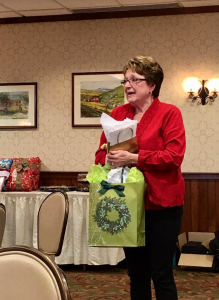
Many of you who regularly read our blogs may know that over the course of the last year and a half, due to the encouragement of my daughter, Aleigha, I have done some acting at the Towngate Theatre. We have experienced what many mother-daughter duos never have the opportunity to enjoy together. We have acted in the same theatrical presentations, but this time in the upcoming production of “Charlotte’s Web,” it’s a little different in that most of the time while we are on stage, we are side by side. I encourage you to come and see “Charlotte’s Web”. There is no better way to find some good, family fun on a blustery, cold winter weekend. Most people are familiar with the loving development of the friendship between Charlotte and Wilbur and the life lessons it teaches. We, the cast, have done our best to put a few of our own antics in there to be sure and have the audience laughing. I find this role in “Charlotte’s Web” to be a personal transition for myself in the theater. You see, in previous roles that I’ve played, I have based my characters off of my own personality. This time, however, I am coming out as someone completely different, both from a physical capacity and personality differences (And no, I am not the pig or the spider). While challenging myself for this phase of my acting, Aleigha and I have had the opportunity to practice at home together and she has actually been teaching me a few tricks. I have had the opportunity to work under the watchful eye of Mr. Tim Thompson as our ever so knowledgeable director and his co-director, Bob Gaudio, whom I have acted with in past shows. Their encouragement and patience has helped all of us succeed. They not only want to see us succeed for a genuinely awesome show to offer the public, they care that each actor/actress has a memorable experience as each character develops into a final masterpiece. The show opens at 7 p.m., Jan. 29 at the Towngate Theatre. Additional performances are scheduled for 7 p.m., Feb. 5, and for you early birds, there are 3 p.m. shows on Jan. 30-31 and Feb. 6. The children attending will receive a keepsake photograph and will have the opportunity to go on stage and meet the cast after the show. You may purchase tickets by calling 304-242-7700. We hope to see you there. Wear your denim and enjoy a good ole’ County Fair!

NFL is making a BIG Statement For Women
I woke up one recent morning to hear that the Buffalo Bills had announced the hiring of the first female coach for their special teams. This comes on the heels of having our first female referee in the league. What a huge step for the Bills to take. It shows people around the world that women can know as much about the game of football as well as any man. Hopefully this will open new doors for us in other leagues, too. Way to go, ladies! You’ve made your mark in the NFL history books and have paved the way for the rest of us if we choose to start down that path to coach or referee a game in a professional sport. We now know we can. I wouldn’t be surprised if this happened in hockey and baseball, too…women stepping onto the ice and fields for NHL and MLB. As a lady who loves her sports, I wish females who have already been appointed the best of luck. I hope you can go farther than any women has ever dreamed of going in the NFL. My dad taught me the fundamentals of football. He said if you wanted to watch the game you should know the rules, the positions and the names of the players on the team you’re rooting for. Since I am from Pittsburgh, the Steelers will always be my team. That was instilled in me at a very young age. I will always be grateful to my dad for that. I, in turn, taught him a thing or two about the game and the rules of hockey. Let’s Go Pens! Rock on, people, rock on!
Criminal Law and Sports
As I am sure most people reading this are aware, there was an intense and physical football game recently played between the Pittsburgh Steelers and Cincinnati Bengals. Pittsburgh’s star receiver, Antonio Brown, was ruled out against the Denver Broncos due to a vicious hit he took from a Cincinnati player named Vontaze Burfict. Burfict is the same player who the Steelers accused of celebrating after Le’Veon Bell suffered a season ending injury and appeared to have intentionally kneed Ben Roethlisberger in the shoulder after tackling him. Jim Bordas and I were recently talking about the game, and Jim made the joking comment that the hit on Brown was almost criminal, which made me wonder if anyone has been prosecuted criminally based on their actions while playing a professional sport. Some of the possible events that came to mind were a baseball player suffering a severe injury after intentionally getting hit by a pitch, a hockey player taking a fight too far, or even a fight similar to what happened between the Indiana Pacers and Detroit Pistons in 2004, which was nicknamed the “Malice at the Palace.” Based on my limited research, I found very few cases that have been filed against athletes for actions taken while they were playing a professional sport. One story I found said, in 1969, Wayne Maki of the St. Louis Blues intentionally swung his hockey stick at Boston Bruins player Ted Green during a preseason exhibition game in Ottawa, which fractured Mr. Green’s skull. Both players were involved in two fights during the relevant game and both were charged with assault after the game. No conviction resulted from either case, but the Canadian court noted that sports were not immune from criminal prosecution. The first United States sports case I found was where a player was criminally prosecuted occurred in 1975. In this case, Dave Forbes, who played for the Boston Bruins, knocked down a player on the other team and began to continuously punch the player in the back of his head. Although this appears to be a clear case, Dave Forbes was acquitted on all counts. In my limited research, Todd Bertuzzi was the only person I found who actually pled or was found guilty based on an act that took place while playing professional sports. Bertuzzi sucker-punched Colorado’s Steven Moore, which resulted in two broken vertebrae, a concussion, deep lacerations from when Mr. Moore was driven into the ice and stretching of the nerves in his neck. Bertuzzi pled guilty to the assault charge after arranging a plea bargain with the prosecutors. As a part of his plea, he was required to do 80 hours of community service and was on probation for one year, which actually prohibited him from playing in any hockey game that Moore was also playing in. Personally, I think an athlete knows what he or she is signing up for when making the decision to participate in a violent sport and any criminal punishment should be saved for only the extreme circumstances when an athlete goes well beyond the rules of the sport. What do our readers think, should athletes be punished criminally when they cross the line? If so, what does crossing the line look like in a hard hitting game such as football?
Contact Us
The information you obtain at this site is not, nor is it intended to be, legal advice. You should consult an attorney for advice regarding your individual situation. We invite you to contact us and welcome your calls, letters and electronic mail. Contacting us does not create an attorney-client relationship. Please do not send any confidential information to us until such time as an attorney-client relationship has been established.
The results in a legal case depend on a variety of factors, many of which are unique to each case. Prior results by this firm or any other do not guarantee future results. Case results presented here are illustrations of the type of work done by Bordas & Bordas and not a guarantee that any prospective case will yield any particular amount.
Request Consultation
Call 304-242-8410 or fill out the form below.