
Some recent events caused me to remember something I saw over the summer. I’m no tennis fan, but I happened to catch a few moments of the Wimbledon tennis tournament. The TV coverage showed the door the players use to get to Centre Court, one of the most famous venues in all of sport. Above the doorway is a quote that reads: “If you can meet with Triumph and Disaster And treat those two impostors just the same.” I’d never heard that quote and wondered where it was from. My law partner, Chris Regan, would have known that the quote comes from a poem called “If” by Rudyard Kipling. I had to Google it. The entire poem is worth reading. It’s about winning with grace and losing with class. It’s about living fearlessly while keeping things in perspective. It’s about growing up and realizing that the highest highs and lowest lows will come to us all, but the ability to persevere (“Hold on!”) is the only thing that counts. There is a similar quote from President Theodore Roosevelt. He said: “It is not the critic who counts; not the man who points out how the strong man stumbles, or where the doer of deeds could have done them better. The credit belongs to the man who is actually in the arena, whose face is marred by dust and sweat and blood; who strives valiantly; who errs, who comes short again and again, because there is no effort without error and shortcoming; but who does actually strive to do the deeds; who knows great enthusiasms, the great devotions; who spends himself in a worthy cause; who at the best knows in the end the triumph of high achievement, and who at the worst, if he fails, at least fails while daring greatly, so that his place shall never be with those cold and timid souls who neither know victory nor defeat.” Kipling and Roosevelt offer good advice. Sometimes it takes a special person to remind us of things we should never forget. Keep the faith.
Mom's Famous Rolls
We all have our favorite recipes we get out for the holiday season, some of which may have even been in the family and passed down for generations. As Thanksgiving quickly approaches I would like to share my favorite recipe that my mom passed down to me with you. When I was growing up, my mom would bring out her bread machine and make her famous rolls for every Thanksgiving and Christmas meal we hosted. While the following recipe is not exactly how mom made them (as it does not include the prep work that the bread machine did), the ingredients are the same and I guarantee it will leave the family asking for more. Mom’s Famous Rolls Ingredients: 2 cups whole milk ½ cup +1 tablespoon sugar, divided 1/3-cup butter 2 teaspoons kosher salt 2 packages of active dry yeast, preferably bread machine yeast 2/3-cup warm water 8-9 cups all-purpose flour 3 beaten eggs Instructions: 1. Combine milk, ½ cup sugar, butter and salt in a medium saucepan. Heat over medium heat until butter is melted. Remove from heat and allow to cool to lukewarm temperature. (Hint: I usually rub some ice cubes along the sides of the pan or put the pan in a sink full of ice cubes to cool the mixture down) 2. While the milk mixture is cooling, dissolve the yeast and 1 tablespoon of sugar in warm water and let stand for about 10 minutes. (If yeast does not bubble then you need to repeat this step.) 3. In a large mixing bowl, combine 3 cups of flour and milk mixture. Beat on low for 30 seconds, scraping sides of bowl constantly. Add yeast mixture and beat on high for 3 minutes. 4. Add beaten eggs. 5. Stir in as much remaining flour as needed to form a soft dough. The dough should come away from the sides of the bowl, but it will still be sticky to your fingers when you touch it. Place the bowl in a warm place and cover with a clean towel; allow to rise for 1 hour. 6. Punch down dough. Lightly flour your work surface and turn dough out onto surface and divide in half. 7. Spray two 9X13 glass plans with cooking spray. Roll first portion of dough into a rectangle and then cut into 12 equal-sized pieces. Shape each piece into a ball and place in prepared pan. Repeat for remaining dough. 8. Cover each pan with a clean cloth and allow it to rise in a warm place for approximately 30 minutes. Preheat your oven to 375°. 9. Bake for 15-18 minutes or until golden brown. 10. When they are done, remove from the oven and rub a stick of butter over the tops of the rolls. From my family to yours, I hope you all enjoy these scrumptious rolls as much as my family does. Happy Holidays everyone!
Barley and Guinness and the Christmas Parades
The boys are so excited about riding the float in the Christmas parades this year. Barley and Guinness will be in St. Clairsville’s parade tonight, Wheeling’s parade on Friday night, Moundsville’s parade on Saturday afternoon and will wrap up their tour on Nov. 26 in Pittsburgh’s parade. The boys are getting ready by picking out want they want to wear. They will be sporting bells, hats and everything red and green. They couldn’t be more excited for the all of the parades! Please come on out and cheer on the Bordas & Bordas dogs, also known as "the boys" at the office. Our very own Justice the Legal Beagle will be present too! Giving high fives and hugs to the kids along the way. He’s a hot dog. So get ready for some great parades coming to your town and make sure you give a shout out to Barley and Guinness when you see them. They can’t wait to see you all there. Bark on Bordas Dog Nation. Bark on.
A Little Kindness Goes A Long Way
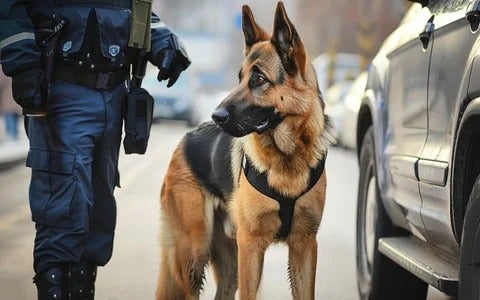
I was at a Moon River Studio paint and sip event on Wheeling Island one evening waiting for my friend to arrive when I notice a lady walking around looking like a deer in headlights. I went over to her and asked if she was alone for the class or if she was waiting for someone. She said she was there alone, so I asked if she wanted to come and sit with me and wait for my friend to arrive. With a great big smile on her face she said that would be great and explained that she was new to the area. We sat and talked a little until my friend arrived and then we both listened to her tell us about her twins and her husband. We had a nice conversation and enjoyed the paint and sip that evening. I once saw a young man and his dog at one of the intersections asking for money. I rolled down my window and asked him the last time he had a full bag of dog food for his canine friend. He said he never had anyone ask about his dog before. I then pulled over and asked what kind of food he feeds to his dog. He told me and I asked him what he would like from Subway, Wendy’s or McDonald’s. I returned with a bag of food and drinks for him and his dog. I also got the dog a new leash and dog bowls. The young man was very grateful and so was his dog. Why have I told you these two stories? It’s because I’m blessed that I could help someone out, be it with my actions or with a bag of dog food. All it takes is a little bit of your time to turn someone’s day around. A smile can go a long way for someone who is having an awful day. We all need to be a little more understanding of the world and the people around us. I know that there are people out there pulling scams, but sometimes you just have to trust your gut instinct and go with it to help someone. God will let you know when and where that might be, for God speaks though all of us at different times in our life though our actions. My mother always said treat people the way you want to be treated, but don’t expect everyone to treat you that way because there are some people in our world who are just downright mean. No matter what you do for them they will always want more or it will never be right, but that doesn’t mean you treat them any differently. They don’t have the relationship with God that you do. She also told me that there are givers and takers in this world and encouraged me to always be a giver and never a taker. She also said to never let anyone tell you or make you feel that you’re not worthy. There will always be someone out there who has the need to put you down, talk down to you or talk about you. They are no better than you, and we all put our pants on the same way. In the end, God will be the judge of us all. I pray that I live up to my mother’s words and expectations. There is good in all of us. Sometimes you need to dig a little deeper with certain people to find it. Always be kind and humble even when it kills you. Rock on, people. Rock on.
The Role of the Economist in Significant Cases
One type of expert that we work with on a routine basis at Bordas & Bordas is an economist. What role does an economist play in civil litigation? Let’s use an example of a younger wage earner who is significantly injured to the point where he or she is unable to work. Among the other types of damages that are available in that type of case is compensation for future lost wages, i.e., the money that person would have earned throughout their working lives if not for the wrongdoing of someone else. This is where an economist comes in. With the assistance of our clients, their former employers and sometimes the IRS, we collect certain information about the injured person’s wages and benefits. A lot of this information comes from tax returns, employee benefit plans and the like. We also collect certain information about the clients themselves. For example, the injured person’s age, education level and skill set is all taken into account. We organize all of that information and send it off to an economist, who is an individual trained to take that data and determine how much the injured person would have made, in terms of income and benefits, had the person worked for a certain number of additional years. The economist can factor in likely raises, cost of living adjustments and inflation to further refine the numbers. At the end of the analysis, the economist can present the jury with a figure that represents the amount of money today that would compensate the injured person for the earnings they would have secured had they continued working. Obviously, this money can make a huge difference to the family of the injured person, who would otherwise be left in a terrible situation. We’ve also had the privilege of representing businesses in suits against other companies. In these cases, the economist’s work can be much more complex. It requires an evidence-based projection of how the business would have done if it had not been interfered with. The amount of data that goes into such calculations can be hard to collect, organize and find. At the end of the day, an economist can be a very important expert witness. This is especially true in cases where non-economic damages are limited by law. Fortunately at Bordas & Bordas, we are used to working with economists as part of our day-to-day work.
Giving Thanks While Facing Adversity
This may be one of those years where you may find it difficult to focus on the good in your life. If you are one who is having trouble finding some positive in the midst of the many stormy days and sleepless nights that you’ve faced this year, give thanks anyway. Sometimes it’s a sacrifice to be thankful, especially when you have had a year that has been challenging. We face challenges that test our emotional strengths that can rip our hearts and sometimes bring us to our knees whether it be due to sickness, finances, family matters, business dealings and even death, BUT be thankful for these struggles. When you show you are thankful for the test or tests that you are called upon to face, it shows you have a deep faith in God, our Father. He will help you bear the burden and pain every second, every minute and every hour of your day. Be thankful for this as you gather around your Thanksgiving table with friends, family or even just yourself. Because no matter what daily demands are hurled your way and no matter the circumstances, with HIM you can conquer them all. Have a wonderful holiday season. This may be one of those years where you may find it difficult to focus on the good in your life. If you are one who is having trouble finding some positive in the midst of the many stormy days and sleepless nights that you�ve faced this year, give thanks anyway.
Autumn
I hate autumn. I know, the leaves are pretty when they change color. If you have ever driven down through the mountains of West Virginia in Oct. you can see some breathtaking views. The air has turned a little cooler and it is a refreshing change from the overbearing humidity of Aug. and a few days in Sept. It feels good to get out of our air conditioned houses and offices and stroll down the street on these pleasant days. We can open our windows and let the fresh air fill our homes. We experience literally a breath of fresh air! But these are the only good things I can think of about autumn. Unfortunately, those pretty colored leaves only last few a weeks before a chilling wind blows them off the trees and the tree limbs turn bare and dead looking. The ground is then covered with leaves that must be raked. Then the weather turns balmy and the chill in the air reminds us that winter is just around the corner. Snow, cold, slushy, icy roads. Sigh. Undoubtedly the Pilgrims and Native Americans observed the first Thanksgiving to help to improve their bad moods about autumn.

The Strangest Wedding I've Ever Attended
My iPhone recently informed me that I was out of room to store any more pictures. This prompted me to go back through my photos to see if there were any that I could get rid of. In scanning back through the photos, I came across the photographs I took of the strangest wedding I've ever attended. Last summer, I had a chance to go out to California so one of my kids could attend an educational opportunity. Right down the road from our hotel was the stadium of the San Rafael Pacifics minor league baseball team. It's just the type of small minor-league stadium that I love. Sack races for the kids. Popcorn. Lawn Chairs down the left field line instead of seats. When we showed up for the game, I noticed something unusual. The area behind home plate was decorated for a wedding. Just like in the movie Bull Durham, one of the Pacifics' players got married right there on the field. Following the vows, the player's teammates formed a cordon for the bride and groom using an arch of raised bats. At the conclusion of the ceremony, the bride threw out the first pitch wearing her wedding dress. The groom took off his tux, put on his uniform and played in the game. My kids thought it was great. I've been to a few weddings and a lot of baseball games. I'd never before been to one event that was both.

Social Media: The Good and The Bad
Does anyone else need to buy a t-shirt that says, “I SURVIVED THE ELECTION OF 2016 AND STILL HAVE ONE FRIEND LEFT”? This was one of the longest, most brutal, hateful, controversial, mind boggling elections that I have ever lived through. This might be a bit dramatic, but for the first time I can understand what people went through during the Civil War of this country, when families and friends found each other on the “other” side of the issues. Social media has been a good thing for the most part. It has opened up communication amongst us. Long forgotten friends have found each other. Families can keep in touch with each other on a day-to-day basis. But on the downside, there are things that we feel, those deep inner thoughts that nobody used to know about, things that we used to keep silent that have unfortunately found an outlet as we sit behind our keyboards or a cell phones. We feel safe in our own space there, not afraid to put forth our most secret thoughts, thoughts that could comfort another person and rally support for another person’s position, but on the downside, could shock, anger and hurt others. We have the ability to type these thoughts into a void without having to look another person in the eye and with a click send them into cyberspace to share with the world, usually people we know and love. All of those silent and sometimes terrible thoughts that we never shared with anyone but kept them inside our own minds we now put right out there for everyone’s eyes to see and read. I know I have been guilty of this on numerous occasions. I usually like to keep my posts on social media lighthearted and funny. But on several occasions, I have read something in my news feed that has offended me or has sparked a flash of anger and before I think about it I’m tapping away and clicking that “send” button. And when I see it up there in print and instantly regret what I have shared I can delete it, but the harm has been already been done. Because in that instant I clicked the “send” button it appeared in my news feed and others have read it, absorbed it, acknowledged it as my thoughts and words and no amount of deleting it from social media can erase it from that person’s mind. The damage is done. Perhaps what we really should practice is a new version of the “count to 10” routine. Type it or write it out in draft away from that notorious “send” button. Then think about what we have written for 10 minutes. If we still feel the need to post it we must be prepared to have a reaction. And that reaction may be affirmation or derogatory comments from others who you have angered in return. At the end of the day, what we all need to remember is the people we are on social media with are usually friends and family. People who we liked enough to invite into our circle on our social media page when we located them. Even though we hate to admit it, all of us have differing opinions and strong reasons to back up those opinions. It is just human nature. President Obama said that our “democracy is a messy business” and it sometimes gets loud and rowdy, but I feel that we can do a better job at respecting each other so much more when we debate the differences, keep an open mind and keep it civil without the name calling, berating, the downright viciousness, hatred and division that was demonstrated in this past election. Together we are strong. God Bless America.
Your Vote Does Matter
Voting is one of our most precious American rights, but yet many of us do not understand the process by which our President, the leader of the free world, is selected. Many of the Founding Fathers were well schooled in ancient history and its lessons. So, it is no accident that the structure of the Electoral College can be traced to the Centurial Assembly system of the Roman Republic. Under that system, the adult male citizens of Rome were divided, according to their wealth, into groups of 100 (called Centuries). Each group of 100 was entitled to cast only one vote either in favor or against proposals submitted to them by the Roman Senate. In the Electoral College system, the States serve as the Centurial groups (though they are not, of course, based on wealth), and the number of votes per State is determined by the size of each State's Congressional delegation. The Electoral College was created for two reasons. The first purpose was to create a buffer between population and the selection of a President. The second as part of the structure of the government that gave extra power to the smaller states. Direct election was rejected not because the Framers of the Constitution doubted public intelligence, but rather because they feared that without sufficient information about candidates from outside their State, people would naturally vote for a "favorite son" from their own State or region. Many of the founders believed that the electors would be able to insure that only a qualified person becomes President. They believed that with the Electoral College no one would be able to manipulate the citizenry. It would act as check on an electorate that might be duped. The founders also believed that the Electoral College had the advantage of being a group that met only once and thus could not be manipulated over time by foreign governments or others. The Electoral College consists of 538 electors. A majority of 270 electoral votes is required to elect the President. Each state’s entitled allotment of electors equals the number of members in its Congressional delegation: one for each member in the House of Representatives plus two for your Senators. Under the 23rd Amendment of the Constitution, the District of Columbia is allocated three electors and treated like a state for purposes of the Electoral College. The process for selecting Electors varies throughout the United States. Generally, the political parties nominate Electors. On Election Day, the voters in each State choose the Electors by casting votes for the presidential candidate of their choice. The winning candidate in each State—except in Nebraska and Maine, is awarded all of the State’s Electors. In Nebraska and Maine, the state winner receives two Electors and the winner of each congressional district receives one Elector. This system permits the Electors from Nebraska and Maine to be awarded to more than one candidate. There is no Constitutional provision or Federal law that requires Electors to vote according to the results of the popular vote in their States. Some States (not Pennsylvania), however, require Electors to cast their votes according to the popular vote. These pledges fall into two categories—Electors bound by State law and those bound by pledges to political parties. The U.S. Supreme Court has held that the Constitution does not require that Electors be completely free to act as they choose and therefore, political parties may extract pledges from electors to vote for the parties’ nominees. Some State laws provide that so-called "faithless Electors"; may be subject to fines or may be disqualified for casting an invalid vote and be replaced by a substitute elector. The Supreme Court has not specifically ruled on the question of whether pledges and penalties for failure to vote as pledged may be enforced under the Constitution. No Elector has ever been prosecuted for failing to vote as pledged. Since the founding of the Electoral College, there have been 156 faithless Electors. Seventy-one of these votes were changed because the original candidate died before the day on which the Electoral College cast their votes. Three of the votes were not cast at all. These three Electors chose to abstain from casting their Electoral vote for any candidate. The other 82 Electoral votes were changed on the personal initiative of the Elector. Sometimes Electors changed their votes in large groups, such as when 23 Virginia Electors acted together in 1836. Many times, these Electors stood alone in their decision. Four times in our Nation's history the President won the election despite not having the popular vote. In 1824, John Quincy Adams was elected president despite not winning either the popular vote or the electoral vote. Andrew Jackson was the winner in both categories. Jackson received 38,000 more popular votes than Adams, and beat him in the electoral vote 99 to 84. Despite his victories, Jackson didn’t reach the majority 131 votes needed in the Electoral College to be declared president. In fact, neither candidate did. The decision went to the House of Representatives, which voted Adams into the White House. In 1876, Rutherford B. Hayes won the election (by a margin of one electoral vote), but he lost the popular vote by more than 250,000 ballots to Samuel J. Tilden. In 1888, Benjamin Harrison received 233 electoral votes to Grover Cleveland’s 168, winning the presidency. But Harrison lost the popular vote by more than 90,000 votes. In 2000, George W. Bush was declared the winner of the general election and became the 43rd president, but he didn’t win the popular vote either. Al Gore holds that distinction, garnering about 540,000 more votes than Bush. However, Bush won the electoral vote, 271 to 266. Throughout our history as a nation however, more than 99 percent of Electors have voted as pledged. Please go out and vote. Your vote does matter!
Securing Access to Medical Records
Medical records are a very important source of information for the work we do every day at Bordas & Bordas. In nursing home and medical malpractice cases, the proof of the negligence is often contained in the medical records. In our trucking disaster cases, the severe and significant injuries suffered by our clients are documented in those records as well. Some people might not realize it, but the law guarantees a person’s access to their own medical records. As long as the request is properly made and, in most cases, a reasonable fee is paid, a healthcare provider cannot deny a person’s access to their own medical records. If the healthcare provider refuses to comply with a legitimate request, the law allows the patient to utilize to the court system to guarantee access. The ability to request records extends not only to the patient, but to any duly authorized representative, which provides one more reason, among many others, to consider drafting a health care power of attorney. In situations where the patient has died, the power to request medical records resides in the duly appointed representative of the decedent’s estate. However, just because a health care provider supplies some of the medical records doesn’t mean they have turned over everything. Fortunately, we have a very experienced staff that knows what to look for. Are there missing lab results? Are all of the nurses’ notes included in the production? Did we get all of the relevant admissions or just some of them? It is often the case that we will have to seek out additional or supplemental records that were not produced the first time around. Fortunately, the law guarantees patients and their representatives access to these records, which can often make the all the difference in the case.
Get Your Tickets
A little while ago, I started doing something that I wish I had started doing years ago. Every time I go to a game, concert or event, I save my ticket and pin it to a corkboard in my basement. I got the idea when I was cleaning out some drawers a few years ago and came across some of the tickets that I had saved in a Ziploc bag. Back then I wasn’t saving everything. Just some tickets from some of the more memorable events I’ve attended. Some of them were old Army-Navy tickets. Some of them were Notre Dame football tickets from when I was in law school. It didn’t seem right to throw them away, so I kept them and began to pin them up. Over the years, I’ve collected some pretty good ones. Whenever I’m traveling, I like to attend minor league baseball games if at all possible. So far, I have tickets saved from some pretty unusual teams like the Vermont Lake Monsters, the Las Vegas 51s, the Durham Bulls, the Lowell Spinners, the Columbus Clippers, the Harrisburg Senators, the Hagerstown Suns and many more. Whether it’s a ticket from a game, a concert, the zoo, the aquarium, a show or another type of event, I save them all. Each one of the tickets reminds me of where I was, what I was doing and who I was with at the time. My favorite ticket is my ticket to the 1982 Major League Baseball All-Star Game in Montreal. My parents saved that one for me because I was just 11 years old when we went to the game. I grew up in Burlington, Vt., which isn’t too far from Montreal. My parents took me up there and I can still remember it. That ticket is especially valuable because the host team, the Expos, doesn’t even exist anymore. Collecting these tickets is a fun hobby. I wish I had started sooner. I’m also afraid that my hobby is about to come to an end. More and more tickets don’t exist in hard copy anymore. Like so many other things, they exist on our phones. It’s probably not too many more years before you just can’t get a paper ticket anymore.
Contact Us
The information you obtain at this site is not, nor is it intended to be, legal advice. You should consult an attorney for advice regarding your individual situation. We invite you to contact us and welcome your calls, letters and electronic mail. Contacting us does not create an attorney-client relationship. Please do not send any confidential information to us until such time as an attorney-client relationship has been established.
The results in a legal case depend on a variety of factors, many of which are unique to each case. Prior results by this firm or any other do not guarantee future results. Case results presented here are illustrations of the type of work done by Bordas & Bordas and not a guarantee that any prospective case will yield any particular amount.
Request Consultation
Call 304-242-8410 or fill out the form below.