Blog

All In the Community Know the Law Legal News and Product Recalls Legal Options
Two people fill out paperwork.

The Lost Art of Letter Writing

In my lifetime, I’ve seen many new technologies that were meant to save us time. I remember how awesome it was to watch my mom heat up a meal in our new microwave oven. I remember saving my money so I could get rid of my slide rule and buy my first calculator. I’ve been an eyewitness to computers, smart phones, and the explosion of the internet. All of these innovations have made it faster and easier to get through our daily routine. But these time-saving technologies come with a price tag. We always seem to be in a hurry. Don’t get me wrong. I’m not pointing fingers. Goodness knows I’m as guilty as the next guy. But stop and think about it. As a generation, we consume a steady diet of 30-second sound bites and short, snappy posts on social media. We don’t have time for anything more. If we can’t compress what we have to say into 140 characters, why bother? This kind of hurry-up mentality has caused us to lose something important along the way. It may sound strange, but we’ve lost the art of letter writing. And believe it or not, that’s a big deal. Like us, earlier generations longed to communicate. Years ago, you see, writing letters was the only practical way of sending a message from person to person. But the pace of life was slower then. Writing a letter wasn’t done in a rush. It took time. It was slow and methodical, sometimes tedious. And unlike twitter or Facebook, a letter was usually written with one specific reader in mind. This freed up the writer to be honest and vulnerable. We don’t see the kind of shallowness that’s so common on social media today. There was a bond of trust, meaning that the writer was willing to share real hurts, real struggles, real hopes and dreams. If you’re lucky enough to lay your hands on a whole series of letters, you actually feel like a part of the conversation. In all honesty, I’ve never really thought much about letter writing. I’m not much of a writer myself. But not long ago, as I went through my dad’s belongings, I discovered a box filled with old family letters. As I read through them, I found myself drawn into their lives and getting to know them more deeply. Hearing them tell their stories in their own words was truly eye opening for me. Here, I realized, was a treasure of the rarest kind. Join me in my next blog as I unpack some of these letters. *Image courtesy of Unsplash/Pixabay

Handshake

Trucking Regulations Applicable to Smaller Trucks

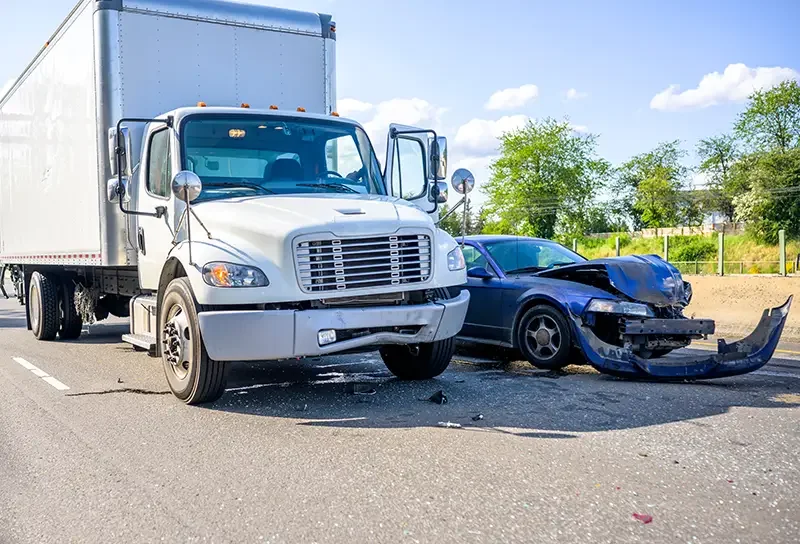
Most people are familiar with the idea that large trucks, commonly referred to as 18-wheelers or commercial motor vehicles (“CMVs”), are regulated by the Federal Motor Carrier Safety Administration (“FMCSA”) and require the driver to possess a commercial driver’s license (CDL). What many people don’t know is that there are many vehicles on the roadway which qualify as CMVs which do not require the operator to have a CDL. While the driver may not need to have a CDL to operate these CMVs, the companies that own the CMVs are still required to comply with many of the Federal Motor Carrier Safety Regulations (FMCSRs) issued by the FMCSA. The FMCSRs are essentially safety rules that are intended to keep the motoring public safe and are designed to prevent accidents and deaths caused by CMVs. The FMCSRs contain two separate and distinct definitions of what constitutes a commercial motor vehicle. Depending on which definition applies to the vehicle involved in your crash will determine which of the FMCSRs may be applicable to you. The first definition of a CMV is found in 49 CFR section 390.5 which states that a CMV is any self-propelled or towed motor vehicle which has a gross vehicle weight or gross combination weight, of 10,001 pounds or more. A second definition of what constitutes a CMV is found in 49 CFR section 383.5, which establishes the requirements for obtaining a CDL. 49 CFR section 383.5 defines a CMV as a motor vehicle or combination of motor vehicles having a gross combination weight rating of 26,001 or more pounds, inclusive of a towed unit with a gross vehicle weight rating of more than 10,000 pounds. This second definition covers 18 wheelers and requires the driver to maintain a CDL. The first definition, however, covers business vehicles, that either alone or in combination with a trailer, weighs more than 10,001 pounds. For example, a standard full-sized pickup truck, has a gross vehicle weight rating of between 6,000 and 10,000 pounds. Add a landscape trailer to the back and that full-sized pickup now meets the definition of a CMV, even though the driver does not need to have a CDL to operate that CMV. A second example of these lesser CMVs would be an armored car you might see delivering money to a bank or grocery store, which are specifically designed and built to weigh less that the 26,001 weight-limit, so that the companies that purchase those vehicles don’t have to hire professional CDL drivers. The significance of knowing and understanding this other definition of CMVs is that while the driver may not need to have a CDL, the company that owns and operates that CMV is still required to comply with many of the provisions of the FMCSA. This knowledge can have a significant impact on your personal injury claim should you be involved in a collision with one of these types of CMVs. For example, an employer must still ensure that a driver is properly qualified to operate a CMV, even if the driver doesn’t need to have a CDL (49 CFR Section 391.11). An employer must maintain a “Driver Qualification File (49 CFR Section 391.49), which contains specific documentation related to a driver’s qualification. The FMCSRs require an employer to investigate the driving record of a driver it employs to operate a CMV every 12 months. (49 CFR Sections 391.25 and 391.27). It also requires an employer to conduct a road test before allowing a driver to operate the company’s CMV (49 CFR Section 391.31). Often, the companies that place these vehicles which qualify as CMVs weighing less than 26,001lbs. on the road either don’t know that they are subject to the FMCSRs or purposely ignore them hoping that the officers investigating the accidents involving them, or the attorneys representing people injured by them, won’t be familiar with this alternative definition of what a CMV is and what obligations that imposes on the employer/owner of the CMV. So, the next time you’re involved in a collision with some type of truck, don’t automatically assume that if the collision didn’t involve an 18-wheeler that the FMCSRs aren’t applicable to your claim. Accidents involving CMVs should not be handled the same as ordinary motor vehicle crashes. The investigation into, and the handling of, a claim involving a CMV requires any attorney knowledgeable in and familiar with the FMCSRs. *Image courtesy of Unsplash/Pixabay

At beach

Thank You For Making Summer Safe

As we move into August, and closer to the end of summer and start of the school year, we want to thank some of the people who help to make summer safe, special, and memorable for everyone. A big thanks to instructors, coaches, and those who officiate tennis, golf, softball, baseball, swim team, and other summertime recreational sports for giving kids the opportunity to learn and improve on physical activities and for instilling in them an appreciation for teamwork and healthy competition. These are skills that benefit children in more than just a game or match, and these summer sports help keep kids healthy and active while they are out of school. Similarly, those who work at summer camps of all kinds can be thanked for keeping kids watched over and safe while parents go to work, and for helping kids learn new hobbies, make new friends, and have fun during summer months. Many older teenagers and adults who serve in these roles are giving up some of their own free time to do so, often for little or no pay, and their participation is greatly appreciated. Thank you to lifeguards and others who help keep families safe while they enjoy their favorite outdoor activities. Police officers, firemen, and community officials are especially to be thanked for the extra time and service they often provide to help organize and patrol community events such as farmers’ markets, parades, fairs, and carnivals. These individuals perform services that range from helping lost children reunite with parents, to preventing and stopping real violence, and all of these roles are important in bringing communities together for special summertime events and ensuring the safety of all who attend. Those responsible for planning and organizing such events are also to be thanked. Many spend the majority of the year planning and coordinating an event that may only be a few days long so that everyone who attends can have a great time. A thank you is also owed to teachers and others who work to make summer school or summertime tutoring and other assistance possible for children who need it, so that they can continue to progress as needed and prepare for the next school year. This is an often overlooked summertime role, but one that is very important to many. No matter what your contribution to the season, we are grateful to those who dedicate themselves in some way to make sure that we all, and especially children, have the enjoyable, safe summer that is looked forward to and deserved! *Image courtesy of Unsplash/Pixabay

Arbitration Agreements Can Be Bad News for Employees – What You Need to Know

Arbitration Agreements Can Be Bad News for Employees – What You Need to Know In my work representing injured workers, I am increasingly seeing a disturbing pattern of employers having employees sign arbitration agreements. If you have signed an employment contract in the past 15 years, chances are you have also signed away your rights to sue your employer if you get fired for bad reasons, have been discriminated against at work or have been seriously injured on the job. But more and more I am encountering these same agreements for at-will employees of all types. Arbitration generally means that your lawsuit will not be heard by a court or a jury of your peers. Instead, your lawsuit will be decided by a third party, or sometimes a three-person panel, called an arbitrator. If you signed an arbitration agreement, the decision of the arbitrator is generally binding on both you and your employer. Over the past couple decades, employers and companies have pushed more and more for arbitration in a variety of circumstances including consumer contracts, nursing home admissions and more recently employment. The reason for this is two-fold. For one, there is typically no appeal process in arbitration.  Once the arbitrator decides, that’s it. But the bigger reason that the employers and/or companies favor arbitration is that most often the arbitrators have a pro-business leaning and companies tend to fare much better against litigants in arbitration. For people seriously injured at work, arbitration could potentially cost you millions of dollars in deserving compensation. As mentioned, it has almost become common practice for some employers to include employment arbitration agreements inside of standard employment forms and documents. Because of this, many employees often sign these agreements without realizing the ramifications. Employees often do not know that they have signed away their rights to bring a lawsuit, because the employment arbitration agreement was included as a clause within an employment contract, or in an employee handbook. That’s why it is critical to read through all the clauses in an employment contract before you sign it. If you get a document that says you have read and understand everything contained in an employee handbook, be sure to read and understand everything before singing. You can also ask your new employer if any of the documents you are signing contain an employment arbitration agreement. If faced with an arbitration agreement,  you will have to decide whether you are willing to sign away your rights. Keep in mind that your employer may rescind your job offer if you refuse to sign the arbitration agreement. Even at-will employees can potentially be fired for refusing to sign. But consider your bargaining power as well. If a certain employer has been courting you for months, they may be willing to give up or modify the scope of the arbitration agreement. If you feel concerned about an overly-broad or restrictive arbitration agreement, you may want to speak with an experienced attorney before attempting to negotiate. *Image courtesy of Unsplash/Pixabay

Driving

Summer Travel Tips

Having recently traveled outside of the country for my honeymoon, I found myself thinking about the various procedures and processes one has to engage in in order to make it to their foreign destination. Not only must you be aware of what appropriate documentation you need to fly to and from your destination, you also have to become somewhat familiar with the basics regardingyour destination city or country. Based on my recent trip, I have a few tips for your summer travel. First, before your scheduled departure date it’s important to do some elementary research on your chosen airline. How far in advance do you need to be at the airport? Are there any rules regarding how many checked bags and/or carry-on bags you can take with you? What can, or can’t you bring with you in a carry-on? Second, make sure to take a look at your boarding pass. If you have “SSSS” on your boarding pass you’ll need to plan ahead for additional time to get to your gate because this term which will be highlighted on your pass means that you have been selected for additional security screening which can include anything from a full pat-down to an x-ray of any and all electronics you may have with you. Although most people dread seeing the “SSSS” on their pass it can be a relatively harmless security procedure although it does add time on to the security process. Third, make sure to check that your departure gate has not changed. This recently happened to my husband and I when we were at the airport in the Bahamas. We made it to the airport early so that we could timely get through customs and to our gate. However, after about an hour of sitting at our gate, we looked up at the screen to notice that the destination city listed had changed and was clearly not going where we were scheduled to go. Luckily, we had enough time to get to our new departure gate; but it was a reminder to always check to make sure you are still where you need to be. Lastly, although this is likely common sense for you regular travelers, before you depart for another country you should do some research on the language spoken at your destination, the form of currency used, as well as how will you be able to communicate with those at home (if that’s in your plan!) while you are away. Having this knowledge will provide you with some peace of mind and will ensure that you are prepared for what comes your way upon arrival. Happy travels!

Nature

Need a New Series to Binge Watch? Read this blog.

I’ve been watching a lot of documentaries lately either on Netflix or Amazon Prime. So many interesting and life-learning documentaries are out there. You can find a documentary on many, many subjects. Take, for instance, “Finders Keepers.” This is about a man that keeps his amputated leg, stores it in a grill in his storage unit and then doesn’t continue paying for the storage unit. The contents go up for sale and someone ends up with the amputated leg because the individual bought the grill. It’s a crazy story – but true! My favorites are the documentaries about true crimes. True crime stories are my favorite books also. “The Evil Genius” was a good one. It is about the Pizza Bomber that took place in Erie, Pennsylvania. The event happened in 2003 and was national news – how did I never hear of it before? Last week I watched one titled “Iris” about a 93-year-old fashionista and how she spent her entire life buying clothes and jewelry. No crime involved in this one unless you think about all of the money that had to have been spent on her wardrobe! If it’s one of those evenings where you just can’t seem to find anything interesting to watch on TV, check out a documentary. You’ll be glad you did.

Pennsylvania’s Response to the Opioid Crisis

Sadly, like many other states, Pennsylvania has experienced an alarming rise in drug overdose deaths, and its overdose death rate is more than twice the national average. In fact, more deaths now occur as a result of overdosing on prescription opioids than from all other drug overdoses combined, including heroin and cocaine. “The Office of the Attorney General arrests on average more than four drug dealers a day," Attorney General Josh Shapiro said in a statement. "Our arrests of medical personnel and others for illegally diverting prescription drugs are up 72 percent. Our national investigation with 41 attorneys general of the pharmaceutical industry and the opioid painkillers fueling this epidemic is ongoing and active." The opioid epidemic is tied closely to another epidemic in our country, that of chronic pain—although the ties are very complex. Opioid prescribing for chronic nonterminal pain has increased in recent years, although evidence for its long-term effectiveness is weak and its potential for harm is significant. The Agency for Healthcare Research and Quality reviewed studies on the effectiveness and risks of long-term opioid treatment of chronic pain. The results are eye-opening: No randomized trials or comparative observational studies meeting the reviewers’ criteria were found that addressed opioids’ effectiveness for chronic pain or comparing their effectiveness to other treatments, making it impossible to know whether long-term treatment with opioids adequately addresses patients’ symptoms or improves their functioning or quality of life. At best there was weak evidence regarding optimal dosing strategies with these medications. According to Governor Wolf’s administration, “proper treatment of chronic pain includes an interdisciplinary and multi-model approach that is tailored to help the patient control pain and relieve suffering.” Specific treatment options should be based on best evidence whenever possible. People who experience chronic pain should know and have discussions with their physicians and family concerning alternatives to opioid therapies. For instance, there are non-opioid medications such as acetaminophen, non-steroidal anti-inflammatory medications, anti-seizure medications, and local anesthetics. In addition, there is growing interest in the use of cannabinoids for the treatment of a variety of chronic pain conditions. Cognitive-behavioral therapy and mindfulness- based therapy can provide improved symptom control, physical functioning, adaptive coping and self-efficacy. Moreover, treatment of comorbid depression and anxiety can improve biopsychosocial functioning. Physical therapy, including aquatic therapy, and massage therapy can be a critical component in improving pain control and physical functioning in most patients. Even supportive modalities such as yoga and Tai Chi may be very effective in improving pain and physical functioning in some patients. Interventional therapy, such as epidural steroid injections, radiofrequency procedures and spinal cord stimulation, can also provide effective pain relief in patients experiencing specific pain disorders. Pennsylvania has established 11 prescribing guidelines for health care providers including: Worker’s Compensation Prescribing Guidelines; Treating Chronic Non-Cancer Pain; Emergency Department Pain Treatment Guidelines; Opioids in Dental Practice; Opioid Dispensing Guidelines; Obstetrics and Gynecology Opioid Prescribing Guidelines; Geriatric Pain; Use of Addiction Treatment Medications in the Treatment of Pregnant Patients with Opioid-Use Disorder; Safe Prescribing Benzodiazepines for Acute Treatment of Anxiety and Insomnia; Safe Prescribing Guidelines for Orthopedics and Sports Medicine; and Safe Prescribing of Opioids in Pediatric and Adolescent Populations. The following guidelines address the use of opioid pain medication for chronic noncancer pain. They are intended to help healthcare providers improve patient outcomes and to supplement, but not replace, the individual provider’s clinical judgment. 1. Before initiating chronic opioid therapy, clinicians should conduct and document a history that includes a detailed review of the patient's pain experience, including assessment for co-existing: depression, anxiety disorders and sleep disorders; past and current substance use disorder, as well as risk assessment for development of aberrant drug-related behavior following chronic opioid administration. Evaluation should include assessment for conditions that increase the risk of harm from chronic opioid administration, including sleep-disordered breathing, pulmonary disease, and concurrent use of centrally-acting sedating medications. 2. Appropriate testing to confirm the underlying diagnosis should be completed before starting chronic opioid therapy. 3. A urine drug screen should be obtained and reviewed before initiating chronic opioid therapy. In addition, Pennsylvania state law requires clinicians to obtain and review a report from the Prescription Drug Monitoring Program (PDMP) before prescribing all controlled substances. Care should be taken to obtain PDMP data from all relevant states, which usually can be accomplished through the Pennsylvania PDMP program. 4. Medical records from past health care, including the results of relevant laboratory and radiological studies, should be obtained and reviewed, as they often are a valuable source of information regarding past care, including response to medications, specifically opioids. 5. The initial patient evaluation should include documentation of a diagnosis, treatment plan and goals of therapy. Goals of therapy should be specific and measurable, and should be integrated into ongoing patient monitoring throughout treatment. To view the Guidelines for Initiation, Continuation and Discontinuance of Opioid Therapy, click here. While not specifically referenced in above referenced guidelines, health care professionals should consider encouraging patients with chronic pain being managed by opioids to include their family members in their treatment plans, as valuable information can be gleaned from these sources that may improve the treatment plan, and therapeutic outcomes. For more information on the above topics, check out these links: https://www.drugabuse.gov/about-nida/noras-blog/2014/09/opioids-chronic-pain-gap-in-our-knowledge http://6abc.com/health/gov-wolf-declares-a-disaster-emergency-over-opioid-crisis/2924563/ https://www.pilot.health.pa.gov/topics/Documents/Opioids/Non-cancer%20Pain%20Guidelines%20Final.pdf


PSA: Do Not Leave Dogs in Hot Cars!

Every year dogs are left in cars with the window rolled down just a little bit in the hot and humid weather. This was the case over the weekend at the Highlands in Wheeling, WV. The person was form out of town and stated that they do it all the time where they’re from. Well you don’t do it here. I thank God that the Ohio County Sheriff Office and our very own Doug The Dog Warden were there in record time, I asked them if I could have five minutes alone with this person, but the dog wardens’ wife said when they got to the car that she was asked to please stay in the truck. I know that she and I were thinking the same exact thing. I can’t preach this enough, DO NOT leave your four-legged or your two-legged children in the car even for a few minutes in this hot and humid weather, this is a life or death situation for them. Please check the back seat to make sure you haven’t forgotten your child in their car seats if you don’t hear them, they are more than likely are sleeping. Do a double check if you have children that you take to a sitter or any type of day care especially this time of year. Write yourself a note if need be if you normally don’t take your child and you must do it on that day. Please if you have an outside animal make sure they have shaded area where they can get to, so they can get out of the hot sun and they also need access to plenty of clean cool water to drink. Dogs can have heat stroke just like you and me. Be mindful of your pets and if you see a dog who has been left in a car call your local authorities to handle the situation. I’ve called before and trust me they are right on it to get the dog out and to make sure they are safe and if they need to get them to a vet. We in Ohio County are blessed to have a fantastic dog warden and Sheriff’s Department who take every call very seriously in the situation of a dog being left in a hot car. If you think you can do this and get away with it here in Ohio County, you’re dead wrong, you will be charged with animal cruelty and if I had my way your name would be on the front page of the newspaper, and you would never be allowed to have another dog the rest of your life. Adopt don’t shop and dog fighting is not a sport it is abuse and needs to be reported to the local authorities. Bark on Bordas Dog Nation Bark on.

Gun loading

The Importance of Responsible Gun Ownership

I’m sure that by now, most folks who are reading this column have seen the video of the latest “stand your ground” shooting that occurred in Florida. That video serves to confirm a fear I have expressed to many of my friends since our state passed its “constitutional carry” law a few years ago. Let me get a few things out of the way from the outset. First, I am an outdoorsman. I fish, I hunt, and I own guns. In fact, I own lots of guns. Handguns, rifles, shotguns, muzzleloaders, you name it. I also have a permit to carry a concealed weapon that I have held for over 25 years. I very rarely actually carry a handgun with me, but I have done so on rare occasions in the past. When WV passed its “constitutional carry” law in 2016, I was worried about the effect of having more guns out among the public, particularly in the hands of people who were not necessarily trained in their safe and proper use. I specifically recall a conversation I had with one of my buddies, telling him I could foresee someone being shot in the parking lot at Wal-Mart in a dispute over a parking space. Fast forward now to July 2019 in Florida. From all news accounts, a 47-year-old man named Michael Drejka became upset over the fact that a lady had illegally parked her car in a handicapped parking space outside a convenience store while her boyfriend had gone inside. Drejka approached and chastised the woman, telling her she should move the car. Reports also had him using foul language directed at the lady. A customer who had overheard the conversation went into the store and reported what was happening, and the boyfriend, Markeis McGlockton, went out to investigate. McGlockton approached Drejka and shoved him to the ground, quite violently. Drejka then sat up and pulled out a pistol that he had a license to carry. Even before the pistol was brandished, McGlockton had taken no further steps toward Drejka. He didn’t pounce on him, kick him, or stand over him in a threatening fashion. He just stood there, and when Drejka pulled the pistol, McGlockton took a step or two backward. Drejka took aim and fired once, striking McGlockton in the chest. He stumbled into the store, fell to the ground and died. I don’t want anyone to misunderstand what I am suggesting here. First, the young woman had no business parking in a handicapped spot. People who do that deserve to be fined, and heavily so. Second, Mr. McGlockton was guilty of a crime (battery) when he forcefully shoved Drejka to the ground. At that point the police should have been called, and McGlockton should have been arrested, charged and prosecuted. What cannot be reasonably argued, however, is that McGlockton did not deserve to die when he shoved Drejka to the ground. Drejka overreacted, and because he had a firearm on his person when he did, three children will grow up without a father. I support the Second Amendment. I’m fine with handguns, and I’m fine with concealed carry permits. My fear has always been that the easier we make it for people to carry a gun, the more likely it is that we will have people being killed in situations where the use of deadly force is completely unjustified. The right to carry a firearm necessarily includes the duty to do so responsibly. Michael Drejka should be prosecuted. If he is not, we are going to see more situations that used to be little more than shouting matches escalate into gunfire and death. We can’t allow that to happen.

How to Learn About the Truck That Collided Into You

It goes without saying that trucks are massive. And, it also goes without saying that most trucking companies and drivers do their utmost to keep the public safe. There are numerous state and federal organizations, laws and procedures to ensure that the trucking industry safely maintains their trucks and buses and that their drivers are well rested and not operating under the influence of drugs or alcohol. But, we also recognize that things can go wrong, very wrong – just do the math: Force = mass x acceleration. The Federal Motor Carrier Safety Administration (FMCSA) is one of many such organizations. The FMCSA’s primary mission is to prevent commercial motor vehicle-related fatalities and injuries. Activities of the administration contribute to ensuring safety in motor carrier operations through strong enforcement of safety regulations; targeting high-risk carriers and commercial motor vehicle drivers; improving safety information systems and commercial motor vehicle technologies; strengthening commercial motor vehicle equipment and operating standards; and increasing safety awareness. To accomplish these activities, the Administration works with Federal, State, and local enforcement agencies, the motor carrier industry, labor and safety interest groups, and others. To this end, the FMCSA Safety and Fitness Electronic Records (SAFER) System offers company safety data and related services to industry and the public over the Internet. Users can search FMCSA databases, register for a USDOT number, pay fines online, order company safety profiles, challenge FMCSA data using the DataQs system, access the Hazardous Material Route registry, obtain National Crash and Out of Service rates for Hazmat Permit Registration, get printable registration forms and find information about other FMCSA Information Systems. You can also learn about a company’s Compliance, Safety and Accountability also known as its CSA Scores.  The Safety Measurement System uses data from roadside inspections and crash reports over a two-year period, along with data from investigations to identify and intervene with motor carriers that pose the greatest risk to our roadways.  Points are assigned for unsafe behaviors, along with monetary penalties. If you are involved  in a collision with a commercial motor vehicle it is important to speak with an experienced transportation attorney who can make sure that any unfavorable documentation/information on the trucking company is preserved and used in the litigation process if allowable.

women's are smiling

No Longer a First-Time Grandma

I previously shared with you my first experience of being called “grandma.” Now, I can say I am no longer a “first time” grandma. After a lot of thought, discussion, and down-right guilt-trips (by our dog-you know, those sad eyes that make you feel so guilty when you’ve done nothing to feel guilty about), we decided it was time for him to have a brother and playmate. It was a very difficult decision to make because I now had the experience of the “puppy days”. By “puppy days,” I don’t mean the cute, roly-poly, clumsy, puppy breath things. I mean the going outside every two hours, the constant energy, the rushing home to make sure their needs are met, the messes, and the chewing on everything because they are teething. Although I honestly was enjoying the quiet and for the most part relaxing evenings, we agreed that an addition to the family would be in the best interest of our dog, and us by extension. A happy dog makes a happy (less destroyed) home! So, we began our search. Of course, we wanted to rescue a dog from the shelter, so we spent hours researching the local shelters; but we had never done this before and didn’t want this to have a negative impact on our dog or the “adopted” dog who may have already been traumatized. We honestly didn’t know how our dog was going to react. We finally agreed that our new addition would need to be a puppy. My daughter looked at a lot of puppies, but there was one that really caught her eye…and they weren’t very far from us. The “meeting” of the dogs was set up, with my daughter telling me that she was “NOT coming home with a puppy.” Well, you don’t have to be a mom to know that any animal lover who meets an available puppy IS going to come home with a new puppy. The “meet and greet” went very well. Both the dog and the puppy behaved well and seemed to like one another – so we came home with my second “granddog.” I think our dog thought this was just a “play date” and once he realized the puppy was staying, he did as any older sibling would do – “No, that’s mine!!  I’m not sharing my toys, my food, my mom, my grandma…” The first week was very difficult. Through the sleep deprivation and exhaustion, we had many moments where we questioned whether we had made the right decision. Then we would see them playing together, running in the yard, and the smile on their faces, and that reassured us that it was going to work out great. We know it is going to take work, patience, discipline, and time, but the outcome is going to make it all worth it! So, to all you first-time puppy owners, I encourage you not to give up. I believe puppies are more work than babies, but they will grow up and will no longer require the exhausting care-giving that newborns require. So, just as any new parent, nap when they nap; provide training and discipline (which can be more exhausting than exercise); do what it takes to drain their energy; enlist the help of family and friends; give yourself breaks; and most of all enjoy watching them grow! Remember, they grow up faster than babies!

July 20, 1969 – One Giant Leap for Mankind

July 20 th is the anniversary of the first manned mission to land on the Moon. In 1961 President John F. Kennedy announced the goal he had set. The goal was before the end of the decade a man will land on the Moon and return safely. He accomplished this goal July 20 th, 1969 from the Kennedy Space Center. The “Space Race” was ended with the launch of the Apollo 11. An estimated 600 million people around the world tuned in to watch the historic event. Not only did President Kennedy deliver on his promise of sending a man to the moon he also made well on his promise of bringing them home safely. Neil Armstrong, Buzz Aldrin and crew returned safely home from the Moon and became legends. The astronauts were celebrated with a vast amount of parades and personal appearances. The famous quote from Neil Armstrong, “That's one small step for a man, one giant leap for mankind” is still etched into the American psyche. The Apollo project was one of the United States most expensive projects costing roughly $25.4 billion. But well worth the money, the Moon landing inspired new generations to become scientists. Also, the technology of the Apollo 11 led to the development of space stations and new spacecrafts. The moon landing was deemed impossible, but NASA scientist made it possible.

Contact Us

Fill out this form below and we'll contact you shortly
*Required Fields