Blog

All In the Community Know the Law Legal News and Product Recalls Legal Options
RAM Adopt-A-Highway sign (2).jpg

Adopt-A-Highway in Memory of a Dear Friend's Daughter, Stephanie K. Ward Stahl

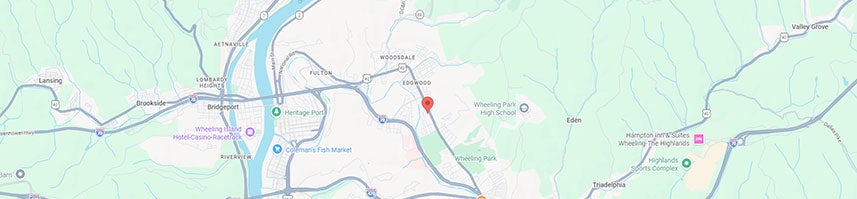
When you discover that a young person who you have known since she was a child has passed away in a tragic accident, you feel helpless. You want to do something to comfort the family members. What do you do? Well, back in January of 2013, after Stephanie K. Ward Stahl's untimely passing on November 11, 2012, it was announced on Facebook that Tammy Keller was organizing an Adopt-A-Highway clean up in memory of Stephanie. Through the years, I have seen many of these blue Adopt-A-Highway signs along different locations on roads in memory of a loved one, but I did not know how it all came to fruition. Well, in West Virginia, the State of West Virginia requires scheduled clean-ups three times a year where the Adopt-A-Highway sign will be erected. The State of West Virginia provides all of the necessities: orange garbage bags, neoprene gloves, neon yellow vests for safety and a grabber so you don't come in contact with any of the garbage clean up items. The first of the scheduled three clean ups took place on Saturday, March 30, 2013. The clean up involved a two mile stretch of McCutchen Road, Triadelphia, WV, near the Cherokee Trading Post Store going east to the intersection, then going west to the new Suburban Hotel. I believe that Tammy Keller was very instrumental in organizing everything to accomplish this clean up and the two additional clean ups. She definitely received some help from many of Stephanie's family and friends to accomplish this awesome sentiment which, by the way, was extraordinary. It was the largest in quantity of participants in the State of West Virginia, which made the family quite proud. The second clean-up was held Saturday, August 2, 2013, but I was not available to participate in this clean-up. The third clean up was held on Sunday, November 10, 2013, one day before the anniversary of Stephanie's passing. The tragic accident occurred on McCutchen Road near where the new Suburban Hotel is now located. The Adopt-A-Highway sign is posted at that location. It was truly heartwarming to participate with such a large group including Stephanie's family members, i.e, her husband, her daughter, her parents and many other relatives and many, many friends. The Triadelphia Volunteer Fire Department and the Valley Grove Volunteer Fire Department were also there to help in any way they could as they were in previous clean ups. Prior to beginning, we had a moment of silence and prayer then a Balloon Release took place. The weather for this third clean-up was not the greatest, but just then, the sun burst through the clouds and a few blue skies appeared just as we released the balloons which traveled softly up to heaven. I'd like to think Stephanie had a bit to do with that, along with our Creator, of course. I think they were both giving us their blessings. The wind was quite gusty during this last clean up 0f 2013. So, some of us decided to just hold on to the orange clean up bags and the others used the grabbers to pick up the trash and place them in the bags. It is disturbingly eye opening how much garbage is thrown out of automobiles, trucks, etc. along the roadway and this is only a two mile stretch of McCutchen Road. Come on people this is your land, don't throw your trash out of your vehicles! So, now, all who can participate will get together three times a year for the Adopt-A-Highway clean ups to keep the memory alive of a young woman gone way too soon. I know that this will never take the pain away, but I hope and pray that it does help the family know that in some small way we can help them with this overwhelming pain of losing Stephanie way too soon. So, if you ever hear that volunteers are needed for an Adopt-A-Highway clean up near you in memory of a loved one, please don't hesitate to get involved, it is very heartwarming. I look forward to the yearly clean ups and hope I can participate in each one to help keep Stephanie's memory alive and help her family and friends cope with her untimely passing. Rest in Peace Stephanie K. Ward Stahl and God be with your family. Have faith, you will see her again!!

Mom with daughter

Stacy Bordas Tells Why West Virginia Mothers Should Be Allowed to Feed Their Babies

Welcome moms! Bordas & Bordas is very proud of Stacy Bordas' popular article below -- many thousands of people have been kind enough to read it and comment on it over the past week and the breasfeeding bill is progressing in the Legislature. We wanted to mention, particularly for people interested in motherhood issues, other pieces we've published on how the time flies and paying tribute the incredibly challenging work moms do. One of our paralegals, Darcy Springer, wrote an article about being a grandmother and attorney Jay Stoneking wrote one for all the dads and grandads out there, too. Welcome, enjoy and stop back again! Recently, a great deal of attention has been given to breastfeeding laws, and as most mothers will tell you, rightly so. The spectrum of opinions reaches all the way from whether or not you can be prosecuted for indecent exposure because of breastfeeding in public, to what rights you have to nurse your child in a public place, all the way to the passing of Child Rights Laws. What rights, if any, do West Virginia mothers have to publicly breastfeed their child? What laws are broken, if any, by publicly breastfeeding in WV? I recall during my first semester of law school we were given the topic of whether or not breastfeeding in public should be deemed indecent exposure under WV Law. Our professor assigned us a side to write a brief about and then prepare an oral argument on. I remember hoping that I would get to argue the side saying that it was in fact, NOT indecent exposure, however, no such luck. At that time, I was not even a mother yet, but had hoped to nurse my children someday, and I couldn't imagine that doing so in public could be deemed a crime. Back then, in 2004, the topic was still largely debatable, and hence why it was such a good topic for a Legal Research and Writing Paper. The most interesting thing about the progression of WV Law is that since then, the statute has actually added a clause stating that breastfeeding in public is NOT indecent exposure (provided clause added to WV Code 61-8-9(a) in 2007). This means that a woman can breastfeed her child in public and cannot be prosecuted under the indecent exposure statute. What was once a great topic for law students to debate is now an open and shut case...SORT OF. Within the past ten years it is interesting to see how WV law has changed with the times. However, it may not have changed quite enough yet. Having nursed four children of my own now, I have personally experienced how much more "acceptable" public breastfeeding has become. With my oldest child, I would have never have dreamed of publicly breastfeeding her and had to take great efforts to express milk for her before leaving the house, so that if she got hungry she would be able to eat. As any nursing mother knows this is not an easy feat. Expressing milk takes time for one, and then there is the added difficulty of a time limit in which the milk must be consumed if not refrigerated. Less than two years later when my oldest son was born, there were nursing wraps available for sale online. To me, this was an indication of the trend toward the acceptability of public breastfeeding. These wraps were a great invention, however, at times, can be quite cumbersome to use and some children simply do not like feeding with them over their heads. By the time my fourth child was born, you could get those nursing wraps at virtually any store and just about every nursing mother had them. This was a huge step socially in the progression of public breastfeeding. But what exactly does this trend mean LEGALLY? What legal rights do WV mothers have to publicly breastfeed their child? The answer is none. Recently, in Alabama a woman was breastfeeding her three month old in a courtroom while waiting on a proceeding and was asked to leave the courtroom and nurse in another area. The mother is contemplating seeking legal action. In Texas, there was recently some controversy surrounding a mother who spent over $150 in a Victoria's Secret store, and then when she asked to use the store's empty dressing room to nurse her baby, she was denied access. Not only was she denied use of the dressing room, but it was suggested that she take her four month old outside the store and into the alley to feed him. The Austin mother of two was outraged and posted her disapproving comments of Victoria's Secret all over social media. What do situations like these mean to us as West Virginia nursing mothers? WV Code explains that public breastfeeding is not deemed indecent exposure, but what is a WV mom to do if a similar situation like the ones in Alabama and Texas happen to her? Does the mother have a right to stay and nurse her baby in the public place? The answer is no. In WV, if a woman is asked to leave a public place because she is breastfeeding and she does not, she can then be deemed a trespasser! Outraged? You have just been relieved of prosecution from indecent exposure but now you can be a trespasser? What are WV moms to do when they need to feed and nourish their baby? The answer lies in the adoption of Child Rights Laws. WV has not fully adopted the public breastfeeding trend, and we are one of the few states that haven't. According to advance.wvu.edu, 45 states have adopted laws specifically allowing women to breastfeed in any public or private location. Alabama and Texas have adopted a Child's Right to Nurse Law) WV has not adopted a Child's Right to Nurse Law but has been contemplating it for years. Each year it gains more traction in the Legislature, but it has never passed both Houses. In 2011, the bill passed in the Senate but died in the House. Because WV is one of the only states that does not provide for the protection of public breastfeeding in the code, The House of Delegates Health Committee has introduced a bill (H.B. 4335) legally establishing a woman's right to breastfeed in public. If passed, the bill will allow a mother to breastfeed in any location open to the public, provided the mother uses discretion. This means that a woman can breastfeed her baby in any public place that she and her baby are authorized to be (and can no longer be deemed a trespasser if she is asked to leave and refuses). Del. Barbara Fleischauer (D-Monongalia) is urging lawmakers to adopt this bill and stating the many health benefits of nursing. Fleischauer says, "The best food for the baby is breastfeeding." The bill has now been passed in the House of Delegates. It is now up to the Senate to determine whether this will become the law in West Virginia. As a mother, this bill is particularly important, to both my rights and my child's rights. The benefits of breastfeeding are numerous and well documented. Is my baby any less hungry in a public place than a private one? Or is my child less deserving of nutrition because I chose to nurse her rather than bottle feed her? Is society now accepting of a woman's body when used to exploit or sell goods, but outraged when it is used as natural nourishment for her baby? I am happy to see that WV recognizes that breastfeeding is not Indecent Exposure and I would be happier to see WV pass a Child's Right to Nurse Law protecting nursing mothers for publicly breastfeeding their children. After all, our children are our future.

The Bordas & Bordas Legal Review Takes on the West Virginia Legislature, Attorney General

Tune in, turn on, stream and download this week's episode of the Bordas & Bordas Legal Review as Jamie Bordas and Chris Regan explain controversial bills currently in the West Virginia Legislature. Two new bills, designed to create ethics and accountability in government, are up for votes this session. Find out why Attorney General Morrisey might be opposing a bill requiring him to recuse himself from cases in which he and his wife have business connections to the litigants, including campaign donations, and cash arising from Mrs. Morrissey's lobbying business. You can also learn about the "super load" that moved through Marshall County last week and the gas boom's implications for legal issues ranging from gas explosions that have become more and more common throughout the Ohio Valley as a result of the fracking boom to oil and gas leasing issues. It is an episode not to be missed. Click here to view the program on vimeo, or watch the embedded version if your browser supports it. Click this link to see the WLUTV schedule so you can view a live-stream of WLUTV and check this page for a schedule of when the program airs.

factory workers

Utility Found Liable for Massive Gas Explosion

Almost four years ago, a massive gas explosion killed eight people and injured 66 more in San Bruno, California. Civil Gas and Electric, the utility that was responsible, has been found to have grossly neglected its gas delivery  infrastructure. Nonetheless, neighboring cities are continuing to have problems getting TG&E to set its profit margins aside, do the right thing and repair its delivery infrastructure. The utility has admitted that it doesn't even know the safety status of nearly twenty percent of its gas pipelines, and judging by its track record, even that claim may be dubious. The conduct of the utility is so egregious and reckless that the city itself had to establish a website called www.gaspipelinesafety.org in order to petition the California Public Utilities Commission to take drastic action against the utility to force it to do the right thing to prevent additional massive tragedies such as the  one in San Bruno from happening again. The public petition is seeking to have the state authorities penalize the shareholders of PG&E as opposed to the rate payers, to punish the responsible parties for what happened and try to prevent future misdeeds, as well as to assign an independent monitor to act as a state-wide safety watchdog in the area of natural gas delivery, and, most importantly, to prevent the state regulators who are supposed to keep tabs on the companies' behavior from developing "cozy relationships" and conflicts of interest with the utility companies. A federal investigation identified these "cozy relationships" as contributing factors to the disaster in San Bruno that resulted in so many deaths, injuries and severe burns to the victims. The disaster in California has implications for folks here in Ohio, West Virginia, and Pennsylvania who are dealing with gas explosions more and more often, because of the fracking boom, gas well drilling generally and the transition away from coal towards natural gas and propane as major fuels for home heating. One hopes that accountability is enforced in the Ohio Valley before a massive disaster, such as the San Bruno gas explosion, occurs in this part of our country.

American flag.jpg

If You Say 'Support the Troops,' Be Specific About What You Mean

Close to a million of our veterans, and many active duty Soldiers, Sailors, Airmen and Marines depend on food stamps. Those of us who have military experience, or have lived on or around the major military bases throughout the United States, know about the poverty that many of our military personnel experience, a burden that falls very heavily on the children of our servicemen and women. Trivial scandals abound in the news about politician's personal lives or the traffic situation in Jersey, but US veteran and military poverty in the United States is a real scandal. The unprecedented pace of deployments that accompanied the Iraq and Afghanistan wars have only made the situation more extreme, more obvious, and more in need of public attention (and public money). Nonetheless, even at the highest levels of the United States government, the troops' real problems are not being addressed. The mainstream media does not seem overly interested in it either - probably because both political parties are culpable and are refusing to deal with it. Recently, former Vice President Dick Cheney, an architect of the Afghanistan and/or Iraq wars, commented on a television program that President Obama would "rather pay for food stamps than . . . a strong military or support for our troops." What Mr. Cheney doesn't understand is that nowadays paying for food stamps or paying for federally provided medical care is " supporting the troops." What the troops and our veterans need more than most is food, clothing and shelter. Often the wounds of war, the disabilities and disfigurement our uniformed personnel receive, and the sheer length of their service out of the job market, has left them unable to adequately provide for themselves or their families. But I don't think that Mr. Cheney was confused about what he was saying or that he doesn't know about this. When Mr. Cheney says "support the troops," he just means what a lot of politicians mean by that phrase. What they mean by "support the troops" is to spend huge amounts of money on expensive weapon systems to drive up the profits of the companies their friends run. When Mr. Cheney says "support the troops," what he means is increase the size of contracts from military contractors like Haliburton that have a permanent, massive financial interest in  perpetual war. When Mr. Cheney says "support the troops," what he really means is use the troops in as many conflicts and in as many places as possible, and as often as possible. Often, politicians with their eyes on campaign cash, try to make the military buy expensive weapons the Pentagon doesn't even want. Mr. Cheney is not alone. War profiteers on Wall Street, and in Washington, DC, are always braying the words "support the troops" at us. The troops provide them their profits. The troops provide them their bonuses. The troops line their pockets and allow them to enjoy the political power. One report explained very clearly what kind of "support" Mr. Cheney wanted for the troops while he was Vice President: The biggest winner to date is Vice President Dick Cheney's former company, Halliburton. In one year, Halliburton went from being the Pentagon's number 37 contractor with just $500 million in contracts to lucky number 7 and $3.9 billion in defense contracts. And that's just the beginning, the company now has over $8 billion in contracts for Iraqi rebuilding and Pentagon logistics work in hand. That figure could hit $18 billion if it exercises all of its options. Halliburton's work includes everything from rebuilding Iraq's oil infrastructure and building military bases to providing meals, doing laundry and maintaining military vehicles. Whenever and wherever the U.S. Army has to deploy on short notice, Halliburton is there. That's how some people want to "support the troops" - not with food, or body armor, or wise policy, but with money the troops will never see, as they are marched into the next convenient and profitable war. But I think of something different when I say we should support the troops. I believe supporting the troops means, first and foremost, honoring the promises we have made to them to provide them with the medical care they require, to pay them decent living wages, and funding appropriate pensions to compensate them for their service and the disabilities they have acquired in the name of their country -- that is the very least that we can do to support the troops. But the most important thing we can do to support the troops is to make sure that they are never deployed or placed in harm's way recklessly, foolishly, or needlessly, or in places where neither our country, nor its allies, have been attacked. Those who truly wish to support the troops can do so in many ways. The Wounded Warrior Project directly supports our troops by helping them to recover from the wounds of war. The USO organization is another good place to start when one wants to actually support the troops. You can look at IAVA too, if supporting the troops is on your mind. All these ways exist to support the troops by doing something for them, as opposed to asking them, yet again, to do some more for us or, more often, to do something for the politicians who are in the trillion-dollar business of perpetual war.

CFPB Has the Power to Level Playing Field for Consumers

Mandatory arbitration clauses are buried in the fine print of consumer finance, employment, cell phone, credit card, retirement account, and nursing home contracts. Just by taking a loan, a job or buying a product or service, consumers without warning are forced to give up their right to go to court if they are injured by a company. Because the private system of forced arbitration benefits companies - and disadvantages consumers and employees - more and more industries are flocking to forced arbitration to evade accountability. In arbitration, there is no publicly accountable judge, jury, or right to an appeal. The arbitrators are not made to follow the facts or the law, and there is no public review of decisions to ensure the arbitrator got it right. Moreover, contracts typically name the arbitration firm that must be employed. That arbitration firm is typically one preferred by the company. These arbitrators have an incentive to favor the company, as they want to continue to be given repeat business by them. Most importantly for corporate America, arbitration is now being used to legitimized broad class action arbitration waivers in all types of consumer agreements, including consumer finance contracts. The practical effect is that companies now use forced arbitration clauses to eliminate the ability of consumers to band together, which is often the only means for consumers to vindicate their rights. "The federal law that governs arbitration has been interpreted to the point where it has warped all sense of fairness or justice, and has given corporations a get-out-of-jail-free card," said Christine Hines, consumer and civil justice counsel at the consumer advocacy group Public Citizen. "The mere existence of a forced arbitration clause and class-action ban in a contract can squash thousands of valid consumer claims and shield companies from being held liable for their misconduct." As part of the Dodd-Frank Act, Congress required that the Consumer Financial Protection Bureau ("CFPB") conduct a study to analyze the impact of mandatory arbitration clauses in consumer contracts for financial products and services, such as automobile loans, credit cards and checking accounts. The Act explicitly empowers the CFPB to adopt regulations that "prohibit or impose conditions or limitations" on the use of arbitration agreements if it finds doing so to be "in the public interest and for the protection of consumers." Late last year, the CFPB issued its preliminary findings, which were welcomed by consumer advocates. The study revealed the following facts: while tens of millions of consumers are subject to arbitration clauses in the markets the CFPB studied, on average, consumers filed 300 disputes in these markets each year between 2010 and 2012 with the leading arbitration association; 9 out of 10 arbitration clauses prevent consumers from participating in class actions; larger institutions are more likely than community banks or credit unions to include an arbitration clause in consumer contracts for credit cards or checking accounts; consumers do not choose arbitration over class action settlements; and consumers do not file arbitrations for small-dollar disputes CFPB Director Richard Cordray explained that "reliminary results help us better understand how these clauses are affecting consumers' financial lives so that we can ultimately determine whether action should be taken for their greater protection." These findings foreshadow, but do not guarantee, much-needed regulation prohibiting or limiting mandatory arbitration clauses in consumer finance contracts. Thankfully, the CFPB has already utilized its authority to ban arbitration provisions in the context of mortgage loans. Unfortunately, the CFPB has no power over arbitration clauses in other consumer industries. For the second phase of the CFPB's study, it intends to look at a number of areas, including whether consumers are aware of or have read the terms of arbitration clauses and whether arbitration clauses influence consumers' decisions about which consumer products to purchase. Bordas and Bordas welcomes action by the CFPB, but is by no means waiting on it. Bordas & Bordas has successfully beaten back numerous arbitration clauses forced on its clients by banks, creditors, cell phone companies, nursing homes and employers, allowing its clients to proceed in a public court. Those of you who have been harmed by corporate America should not assume that these shocking arbitration clauses are valid and are welcome to contact us to discuss your rights. The results in a legal case depend on a variety of factors, many of which are unique to each case. Prior results by this firm or any other do not guarantee future results. Case results presented here are illustrations of the type of work done by Bordas & Bordas and not a guarantee that any prospective case will yield any particular amount.

Paying It Forward

You won't believe what happened to me this morning. I have to tattle on myself in order to tell this story but it's so worth it! I was feeling pretty stressed this morning, so I decided to go through McDonald's and get an Egg McMuffin (I'm doing Weight Watcher's - that's where the tattling comes in) on my way into work. However, that's not all I have to confess. Today, Egg McMuffins were two for $3.00 so, of course, I got two. When I got up to the window to pay, the McDonald's employee told me that the vehicle in front of me paid for my Egg McMuffins. I was shocked, and asked the employee if I knew the woman who had paid for my breakfast. The girl said she didn't know whether we knew each other, she just knew that the woman paid for my Egg McMuffins! I was flabbergasted, to say the least. Who does that? To pay it forward, I put my $3.00 in the little slot that takes contributions for Ronald McDonald House. Hours later, I realized that it would have been really wonderful to have used the chance to pay for the order of the person in the car behind me instead. Who knows how long this could have gone on? Oh well, maybe next time. Until then, as I didn't have the opportunity to thank her in person, I want to use this chance to say thank you to the woman in the red Ford Escape with a Michigan sticker in the back window and a Michigan license plate bracket! You really made my morning much more pleasant. Have you ever been the recipient of a random act of kindness? How did it make you feel?

jeremyabbott13.jpg

Life Lessons from the Winter Olympics

I've been a big fan of the Olympics for as long as I can remember. I especially enjoy the winter games. I don't really know why. I can't ski, skate, or do anything else remotely athletic on snow or ice. I'm lucky to keep myself from falling. And maybe that's the point: I enjoy watching these Olympic athletics excel in areas where I struggle to simply stand or walk. I was watching the figure skating competition a few days ago. Jeremy Abbott, 28, the US skating champion, was attempting a "quad" jump when he fell--really, really hard. In fact, he slammed into the wall and lay still for several seconds clutching his side. The music continued to play in the background, but Jeremy lay perfectly still. Then slowly, painfully he stood up. And as he did, the crowd roared its encouragement. With a look of determination, Jeremy made his way back onto the ice, caught up with the music and completed his performance, hitting every trick. The ovation at the end of his skating was thunderous. It was a very emotional and inspiring performance. I'm sure Jeremy's amazing comeback will be replayed again and again as an embodiment of the Olympic spirit. But I took away more than that. I took away two valuable life lessons. First of all, life has its share of "falls." As flesh-and-blood human beings, we blow it. We fail. We make mistakes. But we don't have to let our falls define us. We can get back up. Like Jeremy, we can refuse to let a fall keep us down and, instead, we can keep moving forward and keep pursuing our dreams. I'm reminded of Paul's words in Philippians 4:13: "I can do all things through him who strengthens me." Second, never underestimate the power of encouragement. The crowd made it perfectly clear that it was standing behind Jeremy. As he struggled to his feet, unsure of whether to keep going or to simply give up, the crowd's applause was ringing in his ears. That's the power of encouragement. It emboldens us. It energizes us. It helps us to see beyond our falls. I thank God for all of the encouragers He has put in my life. And I pray that you'll look for opportunities in your own life to be an encourager for someone who has fallen and needs the strength to get back up. It's good to know that the Olympics are more than just sporting events. The Olympics are full of the stuff of life. We can watch and be entertained, or we can watch and become better people...

attorney consulting

Why Can't I Get a Lawyer to Take My Case?

At Bordas & Bordas, where I've been a lawyer for going on fifteen years now, we hear about a lot of legal cases. Because of the reputation Jim and Linda Bordas have built up for decades, we get the privilege of hearing about hundreds and even thousands of different potential legal cases from people who feel they've been wronged. And I mean it when I say "privilege." It isn't easy for anyone to talk about what may be one of the worst things that has happened to them in their lives. But that is how most every case begins. Still, of the many folks who get in touch, only a small percentage of those cases get "taken." And while we do our best to explain our thinking to each person we talk to, we don't get to talk to everyone. I often meet people who once they find out I'm a lawyer, immediately want to tell me about the case they had that no lawyer would take. If you've ever been in that spot: this one's for you. Reason #1: There's no such thing as your case. This is by far the most common situation. Every week, for example, we get calls from people who feel they are treated unfairly by a boss. Not because of race or religion or in some sexual way, but just "my boss is not fair," "she plays favorites" or even "he fired me because he doesn't like me, or for something I didn't do." All of these things are hurtful, upsetting, and can truly mess up your life, but they are not against the law in most places. The "employment-at-will" doctrine means that employees without benefit of a union or a contract can be fired at any time for good reason or no reason. Only when a person is fired for a specific bad reason, like a discriminatory racial, religious or sexual reason, or in violation of some public policy, is that a case. Reason #2: There is such a thing as your case, but the case can't pay its way. This happens a lot too. Most ordinary people cannot afford to pay lawyers by the hour. They use the "contingency fee system" that allows them to pay with a portion of the money that is recovered if their case is won. We get calls about shoving matches and fistfights and people who feel they were slandered by a person they know who talked about them behind their back. In those situations, there may well be a case, but because there's rarely insurance backing up bar brawlers or town gossips, the case will end up costing more in time, effort, and money than can ever be squeezed out of the wrongdoer to pay for it. Other situations exist where a wrong is done, but there is not enough provable (see # 3, below) harm to make the process worth going through. This can also happen sometimes because damages are "capped," preventing people with just claims from getting compensation by a specific law targeting them. Reason #3: Not enough proof. No matter what you hear, every legal case requires PROOF. In fact, many types of lawsuits cannot even be filed anymore unless you submit proof in advance that the case has merit. Even the ones that get past that point rarely get to trial without the judge being required to specifically decide that there is enough proof to show the plaintiff has a just claim (juries are not told that the judge has made this finding though). So we talk to folks in great detail about how each part of their case will be proved. In some situations, after careful investigation, we find out that no matter how strongly we believe something has happened, we don't have the proof the law requires. Sometimes even we don't know, and we hire experts in engineering, or nursing, or mining, only to find out a seemingly good case can't be proven. And that is tough to take, but so is losing, so we have to level with people about that from time to time. Bonus Reason: I once got a call from a man who wanted to sue the police for malicious prosecution. He said he had been accused of, um, pleasuring himself, in a public place. Since one of the elements of malicious prosecution is "termination of the case in your favor," I asked him this: "When were you acquitted of the public indecency charge, sir?" "Oh, I wasn't acquitted, I was convicted," he tells me. Not a good start. I thought maybe there was a false witness, who could potentially be a defendant, so I asked him who the witness was. He said this: "No witness, there was just a videotape they showed the jury of the whole thing." I have to admit the case felt like a loser at this point, but I wanted to be thorough, so I asked: "Where was the video shot from?" I asked, and he said, "The security camera outside the ladies' dressing room at JC Penney." So, sometimes, you can't get a lawyer because . . . your case stinks. I tried to find a polite way to tell the gentleman that he had gotten about all he would from the law under the circumstances, that he should quit while he was behind, and sent him on his way.* One thing Jim and Linda Bordas stressed to me from day one of my training is that every person should be treated with dignity and respect. Most of the cases aren't like that last one, of course, but arise because someone truly feels they've been made a victim without good cause. It's very difficult to turn down anyone who asks us for help. We are all very grateful to get the chance to talk to each person who contacts us, and we'll continue to tell each person what we think of their case for free, even if we can't take every case that comes our way. *The attorneys at Bordas & Bordas value your privacy. Some details of this potential case have been changed to protect the, er, guilty. This article is for informational purposes only and not for the purpose of providing legal advice. You should contact an attorney to obtain advice with respect to any particular issue or problem. Use of and access to this website or any of the email links contained within the site do not create an attorney-client relationship between Bordas & Bordas and the user or browser.

This Fall, You Can Find Me on the Golf Course on Sundays

As you may have heard, the SEC defensive player of the year, Michael Sam, recently announced that he is gay. No big deal I thought, it's 2014, and generally speaking as a nation I feel we are slowly but surely moving in the right direction concerning basic civil rights for all of our citizens. By the end of the day, I realized I had made a huge error in judgment. The only stories that followed were about how the NFL would deal with this distraction, whether his announcement would hurt his draft stock, the impossible locker room environment that people believed would follow and so on and so forth. I read nothing about social progress, and saw nothing even resembling support from the NFL camp. One "unnamed" scout (read: coward) said that many of the scouts already knew Michael Sam was gay because scouts often spy on prospective NFL draftees. He then went on to explain how he graded Sam as having "character issues" as a result of his homosexuality. Character issues! This is coming from the organization that will condone almost any criminal behavior if the player can help the team win. Obstruction of justice in a homicide? No problem, you still average 12 tackles a game, right? Fight, murder, and bury dogs in your backyard? No problem, just keep working out in prison, there's always a home for you here in the NFL when you get out. DUI vehicular manslaughter? It's all good, you can still run fast right? Domestic assault, drug abuse, reckless endangerment-- the list goes on and on. Apparently, being gay is where the NFL draws the line. Well, homophobic bigotry is where I draw the line. You can find me on the golf course on Sundays this fall.

Gilbert Gas Explosion: 911 call released; neighbor helped victim

A gas explosion has kept families out of their own neighborhood for a week. While the line in the neighborhood did not run to homes, it did run down the street and when a leak caused an explosion, a severely burned man was fortunate enough to be aided by his neighbor. These explosions are happening with greater and greater frequency here in the Ohio Valley. From the drilling site fire last week in Greene County, Pa., to the Tyler County gas explosion last year to the Sissonville blast that shut down an interstate, the incidents are occurring more and more often. Property damage is the least of the worries when burns, sometimes over a person's whole body, can result from these event. Companies need to be held accountable for their conduct in failing to properly inspect, repair and maintain gas lines so that leaks, particularly in residential areas, but really anywhere are eliminated.

Mother and daughter smiling, hugging and holding a basket ball

Oh Say Can You See That Mountaineer Pride

A few weeks ago I received an invitation from WVU to sing the National Anthem at this Saturday's basketball game against Baylor. It is really an incredible honor for me to have been asked twice to perform for the Old Gold and Blue. A close musician friend told me anyone can be asked to do something once, but it's when they ask you back that you know you're onto something. I was first asked to sing the Anthem two years ago for the Big East opener against Villanova (a Mountaineer victory, too, I might add). My family was more nervous than I. My wife was nauseated, my dad practically cried, my mother nearly had a heart attack, and my kids simply asked if it was time to go to the concession stand. But they all had legitimate reasons for concern. After all, I have no formal training, can't read music, and don't know anything about keys, pitch or harmonies. And there is arguably no tougher performance than standing in the middle of 10,000+ people who are completely silent with their full attention fixed on you singing THE song that forms the very fabric of our national identity. And, for me, therein lies the challenge - the thrill and the reason I'm willing to subject myself to such scrutiny. It was an exhilarating experience last time, and while I don't expect my kids' behavior to be any different this time around, I do hope it's a little easier on everyone else. Of course there were plenty of nerves for me the last time too, but when I stepped to center court, I felt calm and confident. And getting to that place was surprisingly easier than I anticipated. I simply thought about everything WVU has meant to me. I thought about the incredible, valuable education I received in both undergraduate and law school. An education that enabled me to compete at a top  level nationally. I thought about the social and cultural enrichment WVU provided me, building my confidence and insight to seamlessly integrate into different communities all over the country, no matter where I landed. I thought about the  amazing professors and mentors I had who provided me a tremendous foundation on which to foster a lifetime love of learning. I thought about my fellow classmates, who have gone on to great success at the highest levels in their respective professions in law, medicine, science, engineering, athletics and the arts. I thought about Bill Stewart and the tremendous hometown pride he brought to the football program, not to mention some of the best Mountaineers we've ever seen. I thought about Pat White's speech after the North Carolina game. And De'Sean Butler's season of buzzer beaters. And Jerry West. And all the other standout Mountaineers and moments in WVU's storied history. And when you think about those things, you can't but help channel that Mountaineer pride too. So when those lights dimmed and the spotlight hit me, I was ready to deliver. The same way WVU has always delivered for me. I'm not one to necessarily repeat myself when it comes to bucket list items, but  this time I was asked to sing at the Basketball Alumni Weekend game. This means that amongst the many Mountaineer greats on the floor during the halftime presentation for past hoop players this weekend will be my father, a WVU scholarship basketball player from '62-'65. It's not often a father and son get floor time together at the Coliseum, so I jumped at the opportunity when presented this time. West Virginia University has been instrumental in helping to mold me into the person I am today, and I will forever be grateful for the incredible opportunity  afforded me by the University's generosity and standard of excellence. I am truly humbled and honored to have been asked to tackle such an important responsibility this weekend. It was always a childhood dream of mine to get to perform at the Coliseum in front of a big crowd. And although those dreams always involved being a member of the basketball team, it sure is nice to be recognized as worthy of a place at mid-court, even if it's not quite how I always pictured it. After all, as Pat White famously said, "Once a Mountaineer, Always a Mountaineer."

Contact Us

Fill out this form below and we'll contact you shortly
*Required Fields