
Recently, the United States District Court for the Middle District of Pennsylvania, in the case of Phillips v. State Farm Mut. Auto. Ins. Co., dismissed a plaintiff’s insurance bad faith claim, holding it was reasonable for an insurance company to refuse to pay some of its insured’s claims upon its own medical expert’s opinion rather than the plaintiff’s treating physician. Phillips filed a claim with State Farm following an automobile accident. Her auto insurance policy provided her with $100,000 in first-party, no-fault medical benefits and required State Farm to pay for medical expenses arising out of the use of her car. When State Farm refused to pay some of Phillips’ claims, she filed complaint against State Farm alleging that State Farm violated 75 P.a.C.S. § 1716 by failing to pay first-party benefits (Count I), breached the insurance contract by failing to pay those first-party benefits (Count II), acted in bad faith (Count III), and breached the insurance contract by failing to pay underinsured motorist benefits (Count IV). At issue before the District Court was State Farm’s motion to dismiss Phillips’ complaint for failure to state a claim upon which relief can be granted. First, State Farm sought dismissal of Count III, arguing that Phillips failed to plead a bad faith claim. Second, State Farm sought dismissal of Phillips’ demand for attorney’s fees as part of her Count II breach of contract claim, alleging attorney’s fees are not recoverable in such a claim. In Pennsylvania, in order to prevail on a bad faith claim pursuant to 42 Pa.C.S.A. § 8371, a plaintiff must “present clear and convincing evidence (1) that the insurer did not have a reasonable basis for denying benefits under the policy and (2) that the insurer knew of or recklessly disregarded its lack of a reasonable basis.” In this case, the District Court agreed with State Farm, holding that Phillips did not allege sufficient facts to support a bad faith claim. Specifically, Phillips claimed that State Farm acted unreasonably and recklessly disregarded its lack of a reasonable basis to deny her claim for medical benefits by accepting the opinions of its defense medical examiner over her treating physician. The District Court determined that an insurance company may reasonably rely upon the findings of an “independent” medical examination even in the face of contrary medical opinions. It further held that while an insurance company may be found negligent for relying upon the opinions of its examiner over the opinions of an insured’s treating physician, those facts do not give rise to a bad faith claim. Thus, in Pennsylvania, it is insufficient to simply claim that an insurance company was unreasonable in accepting its retained examiner’s opinion to support its denial of an insured’s claim. To support a bad faith claim, a plaintiff needs to show that the insurance company knew that it had no reasonable basis to accept its examiner’s opinion. For instance, if there were facts to show that the insurance company knew that its examiner was incompetent and/or relied upon insufficient information when he/she offered his/her opinion, then a plaintiff may have sufficient facts to support such a claim. With respect to Phillips’ claim for attorney’s fees, 75 Pa.C.S. § 1716 provides that “Benefits are overdue if not paid within 30 days after the insurer receives reasonable proof of the amount of the benefits. If reasonable proof is not supplied as to all benefits, the portion supported by reasonable proof is overdue if not paid within 30 days after the proof is received by the insurer. Overdue benefits shall bear interest at the rate of 12% per annum from the date the benefits become due. In the event the insurer is found to have acted in an unreasonable manner in refusing to pay the benefits when due, the insurer shall pay, in addition to the benefits owed and the interest thereon, a reasonable attorney fee based upon actual time expended. While the District Court determined that while Phillips correctly argued that she may recover attorney’s fees under Count I of her complaint because she alleges a violation of 75 Pa.C.S. § 1716 and that statute expressly provides for attorney fee awards, she could not show that that attorney’s fees are recoverable in a breach of contract claim. Therefore, the District Court dismissed her claim for attorney’s fees as part of breach of contract claim.
Shock for Republicans, and a Strike for the Schools, as Teachers Refuse to Sell Out Students
There’s nothing worse for a corrupt politician than meeting someone who can’t be bought. It’s like watching a cat fall in a bathtub: you see first shock, and then anger, as though the world itself has betrayed him. A sellout simply assumes that everyone else is also selling and he bristles at a world where money is not the only currency. The Republicans designed Senate Bill 451 as straightforwardly as any protection racket. A five-percent raise for West Virginia’s educators, inextricably linked to a series of proposals to weaken her public schools. The text of the bill explicitly stated that if any part of its “omnibus” provisions were found unconstitutional or illegal, the raise would be taken away. “That’s a nice paycheck you’re getting, teach. Be a shame if something happened to it. . . .” It must have seemed like a sure thing for Senate President Mitch Carmichael and the GOP. “We’ll make them an offer they can’t refuse.” But it turns out that West Virginia’s teachers and school service personnel weren’t selling. On Tuesday, February 19 th, they went on strike for the second time in as many years. They had every reason to do so. Republicans filled the omnibus bill with poison pills. It contained provisions weakening the right of teachers to unionize and negotiate in the future. It diverted public money into private hands in the form of so-called charter schools that have allowed private businesses to walk away with hundreds of millions in tax dollars leaving students and communities with nothing. It sought to deprive veteran teachers of benefits they had earned over years of service. It’s not hard to figure out what this is all about. The three largest pots of money in state government are the roads, the schools, and Medicaid. That’s why your typical Republican idea involves taking money from one of these three pots out of the public’s hands and transferring it to some private businessman. Charters and other privatization schemes are the chief method for doing this in the education arena. Privatization of public schools yields predictable results. Wealthy families take full advantage, and concentrate their kids in schools with vast resources. Middle class families have to go into debt just to get a whiff of the middle-of-the-road schools. What little public money is left is what the poor kids get: the worst facilities, locations, lowest-paid staff, and then they are concentrated away from the lucky winners. And charters have ways of weeding out the kinds considered “undesirable” by the architects of these cash grabs. The Republicans thought they could buy all this hardship for West Virginia’s kids with a raise for the state’s educators, but the teachers and school service personnel declared on Monday evening that the kids and their schools were not for sale. The out-of-state organizations, like ALEC, that run these bills on a river of special interest money must be stunned to find a group of people they can’t pay off to get what they want. It’s pretty clear that part of Carmichael’s motivation to push this without the governor has to do with payback from last year’s strike. That’s why his version of the bill included the anti-union and anti-strike provisions. Republicans proposed those changes as a way of saying “we’ll negotiate in good faith as soon as you lay down your arms.” Agreeing to terms like that would be an unconditional surrender – accepting not only the plundering of the education budget this year, but in every year to come. Now that the strike has begun, West Virginians need to come together and understand the stakes. Killing the bad bill is not enough. The Legislature needs to reform education the right way, with students put first instead of private business. West Virginia’s teachers remain some of the lowest paid in the country and that needs to change. The raise must go through without the poison pills. Moreover, the PEIA system needs to fixed once and for all to guarantee its future solvency with adequate revenue. Even if the oil and gas drillers have to pay another point or two on their millions and billions, West Virginia’s kids deserve that money to fund their educations. The opioid epidemic and the poverty in West Virginia have made social workers and psychologists out of educators. New funds need to be appropriated to add counselors and trained professionals to help kids with drug issues in their homes cope at school so they can learn when they’re in class. The current ratio of students to counselors should be cut in half by adding enough new personnel so that every child can get the special help they require. Funding must also be increased for students with disabilities. It is a persistent injustice that children with physical, mental, or emotional disabilities are often left behind because politicians will not adequately fund the equipment needed to integrate those kids into regular classrooms. Research shows they can succeed if accommodations are made. Every student is a precious resource and our political leadership needs to treat each child as equally deserving and worthy of education. Before anyone says “well, how are we going to pay for all that,” remember that hundreds of millions of dollars in tax cuts for wealthy businesses are always at the top of the Republican agenda. They say we have the millions and millions to do that, so it stands to reason we have the money to do what’s right for West Virginia’s children. The kids have waited long enough for their priorities to be the top priorities. The educators and their strike represent the overwhelming majority of West Virginians’ interests. If teachers can’t strike to do what’s right for the schools and the children, how can any working people hope to stand up for better wages, decent hours, or affordable medical care? Everyone who works benefits when a strike succeeds. Let everyone in this state who earns a wage come together to support this strike for as long as it takes to secure the reforms we need. Some school days will be missed. But solidarity in the face of injustice and unity in support of what is right will be the best lesson West Virginia’s children ever learn. Christopher J. Regan is the former Vice Chair of the West Virginia Democratic Party and an attorney with Bordas & Bordas, PLLC in Wheeling.
3M’s Defective Dual-Ended Combat Arms Earplugs Put US Troops at Risk
As the father of a United States Marine and a plaintiff’s personal injury attorney I get particularly worked up, and offended, when I hear stories about government contractors making money at the expense of our troops, particularly when it involves defective equipment our troops rely upon for their safety. 3M Company (hereinafter “3M”) sold Dual-Ended Combat Arms Earplugs (CAEv2), which were standard issue for several branches of the armed services during foreign conflicts between 2003 to 2015. The two-sided earplugs were intended to perform two functions: when used in the closed or blocked (Olive End In) – they block out sound like traditional earplugs. When used in the open or unblocked (Yellow End In) they should block or significantly reduce loud impulse sounds such as gunfire and explosions, while still allowing the wearer to communicate with other soldiers. The earplugs were initially manufactured by Aearo Technologies which was acquired by 3M in 2008. Since 2000 Aearo Technologies knew that test results demonstrated that the noise reduction rating for the earplugs was 0, meaning the combat earplugs had no noise reduction benefits. Despite the earplugs failing safety test after safety test, 3M moved forward with selling the defective product to the US Government. 3M and Aearo Technologies manipulated the test results to meet the US Government’s required product standards. 3M was aware that the earplugs were not long enough to be properly inserted into a soldiers’ ear canal. Due to the incorrect length, the earplugs would become loose and ultimately become completely useless to the user. Due to these defective earplugs, there has been a noticeable increase in tinnitus (ringing or buzzing in the ears) and hearing loss, among our troops and veterans. 3M recently settled a False Claims Act claim* with the US Government, for $9.1 million dollars**, involving the sale of defectively designed combat earplugs. While the above settlement resolved the fraud claim brought by the government, that settlement does not provide compensation for those members of the military who suffered personal injury as a result of using the earplugs. Those suffering from hearing problems such a tinnitus and/or a hearing loss, as a result of the defective earplugs while in combat or in training, may be eligible for compensation separate and apart from the government’s settlement. * **
West Virginia Legislators Seeks to Further Empower Coal Companies and Hurt Landowners
Several blogs on this page have talked about the limits that landowners run into when trying to get reasonable compensation or repairs for their property when affected by mine subsidence. While the West Virginia Supreme Court recently issued rulings which seem to provide even more protections to coal operators there was one glimmer of hope for individual landowners. West Virginia mining laws provide limited protections to landowners, but one such law was recently interpreted to make clear that it is the landowner that gets to decide whether the coal company will actual fix their home or merely pay them the decrease in value caused by the mining damage. The actual repairs are most often much more expensive than the decrease in value. Lobbyists for the coal industry have succeeded in getting members of our legislature to seek changes to the law giving that right to decide between fixing and/or paying a decreased value claim back to the coal companies. Hidden amongst a bill supposedly related to “Coal Mine Safety” is a provision that seeks to change what the WVSCA stated last year. The House version of the bill, HB 2875, seems to be stalled in committee, but there is rumor that the WV Senate may be presenting a similar bill before the deadline to submit bills runs. Most people find it unbelievable that a deed from over 100 years ago can include coal mining damage waivers that would still be enforced today. People have bought and built their dream homes only to have the ground literally ripped out from underneath of them. With all the protections the coal companies have, allowing a landowner to decide that they want their home fixed should not be on attack from our elected officials. Given the immense value the coal company gets from selling the coal under someone’s house, they should not be asking for more power to deprive those homeowners from recourse or repair.
Roundup Case Update
A federal judge overseeing lawsuits alleging Bayer AG’s glyphosate-based Roundup weed killer causes cancer on Monday tentatively allowed pieces of controversial evidence that the company had hoped to exclude from upcoming trials. U.S. District Judge Vince Chhabria during a hearing in a San Francisco federal court called his decision “probably most disappointing for Monsanto,” the Bayer unit that manufactures the world’s most widely used herbicide. The company denies allegations that glyphosate causes cancer and says decades of independent studies have shown the chemical to be safe for human use. Chhabria on Monday said plaintiffs could introduce some evidence of Monsanto’s alleged attempts to ghostwrite studies and influence the findings of scientists and regulators during the first phase of upcoming trials. He said documents which showed the company taking a position on the science or a study introduced during the first phase were “super relevant.” The company had hoped the judge would take a harder line on such evidence following a Jan. 3 order by Chhabria restricting evidence of corporate misconduct. At the time, that decision lifted Bayer’s shares nearly 7 percent. Monsanto had argued much of this evidence was a “sideshow” that would only distract jurors from the scientific evidence. Plaintiffs’ lawyers contended some evidence of corporate misconduct was inextricably linked to their scientific claims. The judge appeared to agree with them, saying it was difficult to draw the line between scientific evidence and allegations of corporate misconduct, and questioned whether it would be fair for the jury to not hear about the company’s alleged attempts to influence scientists. The parties did agree that other internal documents, including emails of Monsanto employees discussing lobbying efforts, do not belong in the initial trial phase. Under Chhabria’s order, that evidence would be allowed only if glyphosate was found to have caused plaintiff Edwin Hardeman’s cancer and the trial proceeded to a second phase to determine Bayer’s liability. U.S., China face major differences amid trade talks The order applies to Hardeman’s case, which is scheduled to go to trial on Feb. 25, and two other upcoming cases. There are some 620 Roundup cases before Chhabria, out of more than 9,300 nationwide. Plaintiffs’ lawyers believe corporate misconduct evidence was critical to a California state court jury’s August decision to award $289 million in a similar case. The verdict sent Bayer shares tumbling at the time, though the award was later reduced to $78 million and is under appeal.
The Government Should Not Have Been Shut Down
The 2018 US Government shutdown turned out to be the longest one on record, and it should also be the last one. The US Government should not shut down. There are simply too many bad consequences suffered by Americans in all walks of life for shutdown politics to go on any longer. The ground stops at LaGuardia Airport and around the Northeast brought this most recent shutdown to an end on Friday, January 25 th. Our air traffic control system took stress after stress until finally it couldn’t take any more and it had to stop putting planes in the air, or risk catastrophe. But this is only the most visible consequence of shutdown politics. Long before the air traffic control system buckled, hundreds of thousands of Americans lost their paychecks. Some will never recover the money they earned. Some on the hard right celebrated the idea that “government workers” weren’t getting paid. “What does the government really do for us anyway?” But a closer look at those who were not paid for the entire month of January shows that they include FBI agents investigating crimes, Coast Guard men and women protecting our waterways and borders, and food inspectors ensuring that what we eat and drink is safe. And those are some of the workers who are expected to get backpay when a shutdown ends. Others are not so fortunate. In addition to hundreds of thousands of people who work directly for the Unites States Government, many more are contractors for the government. These include contractors providing logistic services to our police and military. They also include the employees of companies who provide food service at national museums and parks. Some are janitors, secretaries, some are laborers, some are accountants, and some are even lawyers. Those who are making their living doing contract work, keeping the United States running, are not guaranteed to receive any backpay. Shutdown politics unfolds on television like a spectacle and quickly gets wrapped up in who will win, the left, the right, the Democrats or the Republicans. Lost amidst the talking points and speech making by politicians is the simple fact that most Americans know that missing a month’s worth of pay can spell both short-term and long-term disaster for a family’s finances. In the short term, your paycheck may not be coming, but that doesn’t mean your credit cards, utility bills, doctor bills, and pharmacy bills don’t have to be paid. In the long term, one of the worst aspects of the modern American economy is when a family gets behind, even by a hundred dollars or a hundred and fifty dollars, the financial system tends to pile up late charges, fees, and penalties that escalate household debt to the point where far more than was borrowed (and a reasonable interest charge) is owed. Government shutdowns massively exacerbate this problem enriching banks and wealthy investors at the expense of ordinary, hardworking Americans. Just because there wasn’t an airline catastrophe, a terrorist attack, or an outbreak of foodborne illness this time around, doesn’t mean it’s an acceptable risk to run every time politicians are not getting along. The fundamental change that is required in our politics is that we negotiate only over the things we don’t agree on and that bargains and compromises are made between competing goods that each party believes in. What should not be allowed is to thrust upon the negotiating table something that nobody wants, like a government shutdown or a debt/default crisis, or some other method for inflicting pain on the country as a negotiating tool. It is an illegitimate form of political bargaining, akin to hostage taking. When political leaders insist that their method for getting what they want is going to be to inflict pain on everyone in the country until they get it, those leaders are failing the basic test of leadership. Politics in intended to be a forum for the peaceful resolution of differences through persuasion, bargaining, and compromising. Allowing it to devolve into the ugly scenario of government shutdown after government shutdown is a price that our country and its working families can no longer afford to pay.
Pennsylvania Supreme Court Invalidates “Household Exclusion” Contained in Automobile Insurance Policies
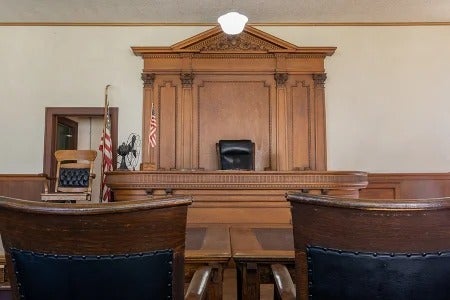
Under Pennsylvania’s Motor Vehicle Financial Responsibility Law (“MVFRL”) automobile insurance companies are required to offer policyholders the right to purchase uninsured (“UM”) and underinsured (“UIM”) coverage to protect themselves and members of their families. UM coverage applies when an insured suffers injury or damage caused by a third-party tortfeasor who is uninsured. UIM coverage applies when a third-party tortfeasor injures or damages and insured and the tortfeasor lack sufficient insurance coverage to fully compensate the insured. In addition, under Pennsylvania law an insured may elect to stack coverage. Stacking refers to the practice of combining the insurance coverage of individual vehicles to increase the amount of total coverage available to an insured. Under section 1738 of the MVFRL, an insured may waive coverage providing stacking of UM or UIM coverage. If an insured decides to waive the stacked coverage, then the insured’s premiums are reduced to reflect the different cost for unstacked coverage. In order for an insured to waive stacked coverage, the insurer must provide the insured with a statutorily-provided waiver form, which the named insured must sign if they want to reject stacked coverage. Many automobile insurance company policies contain what is commonly referred to as a “household exclusion”. This exclusion typically states that the UM/UIM coverage does not apply to bodily injury while occupying or from being struck by a vehicle owned or leased by you or a relative that is not insured for UM/UIM coverage under this policy. This exclusion typically comes into play where an insured owns both a motor vehicle as well as a motorcycle or has multiple vehicles insured in the same household with different insurance companies. Most insurance companies writing policies in Pennsylvania will not insure both automobiles and motorcycles on the same policy. The insurance company thereby forces the insured to purchase two (2) separate insurance policies: one covering the automobile and a separate policy covering the motorcycle. In the event the insured is injured in a collision, the insurance company will typically invoke the “household exclusion” to prevent the insured from collecting the UM/UIM benefits available under the other vehicle’s policy of insurance. Accordingly, by splitting the insurance policies between the different vehicles and then invoking the “household exclusion” the insurance companies have historically avoided the stacking of those different insurance policies, without having obtained a waiver of stacked UM/UIM coverage from the insured. In the recent case of Gallagher v. GEICO Indemnity Company, the Pennsylvania Supreme Court held that the “household exclusion”, often buried in the policy, acts as a de facto waiver of stacked UM/UIM coverage without complying with the statutory requirements set forth in the MVFRL. Accordingly, by including the “household exclusion” within their policies, the insurance companies were selling illusory coverage, meaning the insured was paying for coverage which they could never receive the benefit of. The Supreme Court held that the “household exclusion” effectively strips an insured of the default UM/UIM coverage they are entitled to under the MVFRL, without meeting the requirements of obtaining a signed waiver from the insured. Since the “household exclusion” violates the MVFRL, that exclusion is unenforceable as a matter of law. For years, insurance companies have been relying on the “household exclusion” to deny deserving claimants of these UM/UIM benefits, which insureds had paid premiums for. With this recent ruling from the Pennsylvania Supreme Court, insured’s can finally begin to receive the amount of compensation for which they had previously paid for. The above case also highlights why it is important to speak to an attorney after having been involved in an accident, to learn about your rights and what you are entitled to recover under any and all available insurance coverages. Image courtesy of Pixabay.
PA Superior Court Examines Whether Jury Verdict Regarding Damages in Personal Injury Claim Can Stand
House Bill 2073 Seeks Additional Protections from Oil and Gas Operations
House Bill 2073 was introduced on January 9, 2019 and was referred to the House Energy Committee. The stated purpose of the bill is to implement recommendations that were made as a result of studies that the legislature required when it passed the Natural Gas Horizontal Well Control Act. Importantly, the proposed law requires the continuous monitoring of air, noise, dust and particulates. It would also move the required set-back for well operations from 625 feet to 1,500 feet from the outer limits of disturbance of the well site. The proposal would add real time monitoring of many issues which have caused tremendous nuisance and stress to landowners. It would also require that data resulting from these monitoring programs be made available for public study. If passed as written the law would limit permitted noise ranges and prohibit “light from artificial illumination, flares or other sources” from shining directly on any residence or livestock. These are the types of laws that our legislature should be getting behind. Laws that seek to reasonably regulate an industry that has grown tremendously without giving due regard to the property rights of West Virginia citizens. These are the types of laws that show that our representatives are looking out for the citizens and the people of West Virginia. These laws allow the reasonable extraction of minerals while balancing the rights of our citizens. I will continue to follow this law and hopefully report on its passage as the legislative session continues. Image courtesy of Unsplash.
Could WV Soon Face Ohio’s Dormant Mineral Act Mess?
Ohio courts have struggled for the last 8 to 10 years with a tremendous amount of litigation related to its Dormant Mineral Act. The Act, in theory, allowed surface owners to reclaim previously severed oil and gas interests if the owner/holder of those severed mineral interests had not done certain things with their minerals over a 20-year period. Ohio has had two different versions of the law and has fought through myriad of legal issues attempting to resolve ownership disputes and disputes as to whether land owners followed the proper procedure or gave the proper notice to mineral owners. It has been so much of a mess that many attorneys now simply refuse to work on the issues. The law and the resulting disputes have trigged many different types of cases and fights such that many oil and gas companies are withholding all lease payments as the issues work themselves out. House Bill 2373 was introduced on January 14, 2019 and has been referred to the House Energy Committee before it will pass along to the House Judiciary Committee. Should surface owners be able to acquire rights to the oil and gas under their property if they don’t already own it? Should the state support the taking of mineral rights away from families and individuals who have owned those rights for decades? Will it even make a difference with as far as the gas industry has progressed in West Virginia? West Virginia has already has laws that permit the development of oil and gas right when the rightful owners cannot be found. That law even provides a mechanism to permit a surface owner to get the benefit of those minerals if the owners cannot ultimately be found. While it may be a way to stream line the determination of oil and gas mineral ownership, it could also be opening new cans of worms. This is certainly a bill to keep an eye on this legislative session in West Virginia. Image courtesy of Unsplash.
The One Thing West Virginians Don’t Need is an Intermediate Appeals Court
With the kickoff of the 2019 Legislative session underway, West Virginians will, once again, be hearing the drumbeat of calls for an intermediate appeals court – an entirely new layer of judges and courts to hear appeals from trial courts before an appeal can be heard by the West Virginia Supreme Court of Appeals (“WVSCA”). Under West Virginia’s historical courts system, the WVSCA is the only appeals Court in West Virginia, and it hears all civil and criminal appeals from West Virginia’s circuit courts. And the system still works wonderfully after all these years, particularly after some modest changes to Court protocols a few years back helped streamline and bring clarity to the system as a whole. But that hasn’t stopped the annual bevy of partisan fearmongering about West Virginia being a “judicial hellhole” and the dire need to “reform” the judicial system by creating a new appeals system from scratch. So, no doubt, West Virginians will once again find ourselves awash in this attempted brainwashing propaganda this legislative season. However, when one looks at the facts about our current Court system, and the entities and reasons behind these calls for a new appellate system, it is plain as day that West Virginia should not give over their hard-earned tax dollars for a system intended only to allow corporate bad actors to get away with harmful conduct. Before I get to the facts, it is critical to understand that the puppet masters behind the calls for a new appellate court are always the same – namely large corporations, with the insurance industry being chief amongst them. Being held accountable in a court of law for their harmful conduct negatively impacts these companies’ bottom lines, so anything that can delay or deter that day of reckoning is seen as beneficial to their corporate profit-taking. And an intermediate appeals court would accomplish that very nicely, by making it more costly, time-consuming and difficult for the American public to obtain justice when they are wronged. Accountability keeps us all safer, which helps us to best fulfill our human potential, by acting as a deterrent when people and corporations understand that they will face consequences if they unlawfully harm another. And straightforward, timely access to the Court system is fundamental to our American way of life. The fact that corporate America, and their paid-for political puppets, are the only one calling for an intermediate appeals court should, by itself, make ordinary West Virginians and small business owners very wary of the need for the same. But partisanship aside, the facts simply do not justify or remotely support spending the tens of millions of dollars of tax payer money that will be required to implement an intermediate appeals court. West Virginia simply does not have an unmanageable litigation overload. Over the last 20 years, appeals have declined more than 67% in West Virginia. Civil case appeals account for just 13% of all appeals filed, and even those have declined 56% since 2004. In 2017, there were only 174 civil appeals filed. Civil case filings as a whole have also declined more than 10% since 2010. Furthermore, appeal by right is guaranteed in West Virginia. Since 2011, the WSCA has not refused a single appeal. At the same time, according to the 2015 WVSCA Statistical Report, the Court has increased the number of decisions on the merits of a case from 670 in the 2006 – 2010 timeframe to 5,003 from 2011 - 2015, an increase of more than 700%. If there is one thing I’ve come to deeply appreciate in my nearly two decades in the legal field it is the crucial importance of the Seventh Amendment right to trial by jury. I’ve come to see that right as being as fundamental to one’s right to protection of self and loved ones from the harmful forces in this world as the right to bear arms, if not more so. That gun won’t do your loved ones much good when you’ve been poisoned to death by some corporation’s decision to put out a drug it knew was unsafe or swindled out of your home by some unscrupulous Wall Street banker. But that trial by a jury of your fellow West Virginians sure can. So please remember the facts and the real reasons behind these calls for an intermediate court this Legislative season, and if you agree this is not a good idea, please contact your local West Virginia representatives and urge them to vote NO on an intermediate appeals court.
Tax Season is Upon Us!
This tax season is the most exciting one in decades. We have our first chance to see the impact of the tax reform that President Trump signed into law at the end of 2017. The policy debate now gives way to the facts. Did the middle class really receive the tax cut they were promised? Or did all the benefits go to corporate America and the ultra-wealthy? One thing we know already – our politicians were not creative enough to pay for this tax cut. The federal deficient is expected to hit a record $1 trillion (when written out in long form, is $1,000,000,000,000. Yes, that’s 12 zeroes) for the year 2019. Enough about policy. The most important thing to do as you prepare your 2018 tax return is to throw out all of your preconceptions about whether you qualify for a particular tax break. The rules have changed. For example, the number of people who are able to claim the deduction for charitable giving is expected to decline from 37 million last year to 16 million this year. Sadly, the realization of the loss of this deduction is expected to have a direct impact on charitable donations going forward. While the fever for change to our tax law was fueled by the claim that the tax code would be simplified to the point that a tax return could be done on a mere post card, something altogether different emerged from Congress. Surprise, the tax code is even more complex. Therefore, millions of Americans will continue to turn to paid tax preparers. Unfortunately, most folks are unaware that nearly all states have more regulatory requirements for hairdressers than tax preparers. Certified public accountants, tax lawyers, enrolled agents credentialed by the IRS, and certain unpaid volunteers are the only tax preparers subject to testing and regulatory oversight. The lack of oversight has led to widespread and endemic problems across the industry. Mystery shopper testing done by the government agencies and consumer advocacy groups over the last several years have revealed high levels of errors and instances of fraud, ranging from 25% to over 90%. Accordingly, Bordas & Bordas recommends tax-payers consider a credentialed preparer, such as a Certified Public Accountant (CPA), an enrolled agent, an attorney, or a preparer who has voluntarily completed the IRS Annual Filing Season Program. A directory of credentialed preparers is available on the IRS website. Often a CPA can prepare your return for similar or even lower pricing than the chain store fronts. A free or inexpensive alternative for low-income taxpayers is a free tax preparation site. These include VITA sites (1-800-906-9887 or https://irs.treasury.gov/freetaxprep/) and AARP Tax-Aide sites ( www.aarp.org/findtaxhelp). Choosing a VITA or AARP Tax-Aide site saves eligible taxpayers the cost of a tax preparation fee. Many VITA sites can also help taxpayers open a bank account or get a low-cost prepaid card, which enables taxpayers to get refunds faster via direct deposit without paying a fee. We wish you a good return this year! Image courtesy of Unsplash.
Contact Us
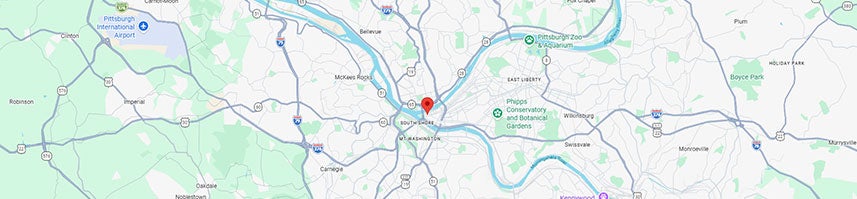
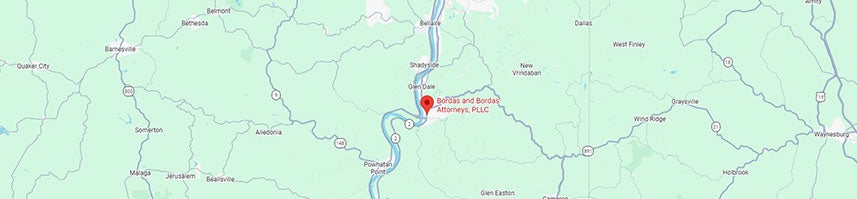
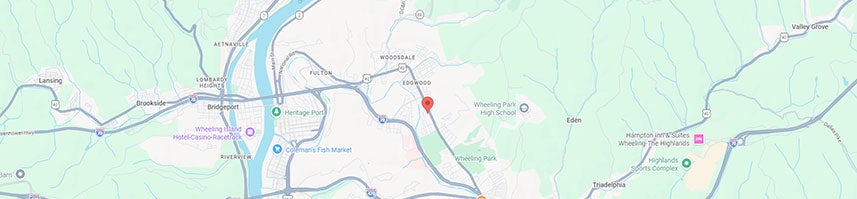
The information you obtain at this site is not, nor is it intended to be, legal advice. You should consult an attorney for advice regarding your individual situation. We invite you to contact us and welcome your calls, letters and electronic mail. Contacting us does not create an attorney-client relationship. Please do not send any confidential information to us until such time as an attorney-client relationship has been established.
The results in a legal case depend on a variety of factors, many of which are unique to each case. Prior results by this firm or any other do not guarantee future results. Case results presented here are illustrations of the type of work done by Bordas & Bordas and not a guarantee that any prospective case will yield any particular amount.
Request Consultation
Call 304-242-8410 or fill out the form below.