
By now, I'm sure many of you have been subjected to the ongoing marketing blitz about testosterone therapy for treating "low T". Touted as a way to make men feel more alert, energetic, mentally sharp, and sexually functional, millions of American men are using a prescription testosterone gel, patch, or injection to boost testosterone levels. Although testosterone therapy isn't approved for age-related conditions and the natural, age-related decline in testosterone levels, a FDA loophole permits aggressive direct-to-consumer marketing urging men to talk to their doctors if they have certain "possible signs" of testosterone deficiency, including common things like feeling tired. As a result, testosterone replacement has exploded into a multi-billion dollar industry over the course of the last two decades. In fact, according to researchers at UCLA, testosterone replacement has been marketed so successfully in recent years that sales of Androgel, a testosterone therapy, eclipsed sales of Viagra in 2013. However, a growing body of evidence has raised alarming concerns that testosterone treatment could be deadly. A number of recent studies have found that men taking testosterone have more cardiovascular problems, including heart attacks, strokes, and deaths from heart disease. Testosterone therapy is also suspected to stimulate the growth of prostate cancer cells. Concerns first arose in 2010, when the National Institute on Aging (NIA) halted a testosterone trial after cardiovascular-related problems were reported in the testosterone group. Another study from the Veteran Affairs system soon followed linking testosterone therapy to an increased risk of heart attack, stroke and death. But the largest study to date, a PLOS ONE study of 55,000 men, suggests a doubling of heart attack risk within 90 days after beginning testosterone therapy. This study found an increased risk in men younger than 65 with a history of heart disease, and in older men even if they didn't have a history of the disease. The theory underpinning these alarming cardiovascular findings involves the effect of testosterone in blood. According to the PLOS ONE researchers that conducted the study, testosterone is believed to promote clotting, which can be particularly problematic for older men, who tend to have thinner blood vessels, but is of concern for all men taking testosterone replacements. According to Dr. Carl Pallais, an endocrinologist and assistant professor of medicine at Harvard Medical School, "here is a bit of a testosterone trap Men get started on testosterone replacement and they feel better, but then it's hard to come off of it. On treatment, the body stops making testosterone. Men can often feel a big difference when they stop therapy because their body's testosterone production has not yet recovered." This effect tends to promote long-term, indefinite testosterone supplementation and concomitant exposure to its side effects. For now, doctors are urging caution in decision-making when it comes to "off-label" testosterone therapy and men are being urged to: consider other reasons why they may be experiencing fatigue, low sex drive, and other symptoms attributable to low testosterone (i.e. not eating a balanced, nutritious diet, exercising regularly or sleeping well) ruling out relationship or psychological issues that could be contributing to a change in sex drive or investigating underlying cardiovascular issues as a source of erectile dysfunction get an accurate assessment of their testosterone levels - testosterone level should be measured at peak time between 7 am and 10 am and any low levels should be confirmed with a second test on a different day follow-up with your physician periodically if you are on testosterone replacement for lab tests to check for any prostate or blood chemistry problems Keep in mind that, despite the marketing hype, testosterone therapy is not a fountain of youth. There is no proof that testosterone replacement restores youthful levels of physical fitness or sexual function, promotes longevity, prevents heart disease or prostate cancer, or improves memory or mental sharpness. If you are considering testosterone therapy, it is best to temper your expectations and approach this therapy with diligence and caution. If you are looking to boost testosterone levels naturally, consider mastering weightlifting movements, like squats, dead lifts, power cleans and other compound movements that promote a natural increase in the body's production of testosterone. This article is for informational purposes only and not for the purpose of providing legal advice. You should contact an attorney to obtain advice with respect to any particular issue or problem. Use of and access to this website or any of the email links contained within the site do not create an attorney-client relationship between Bordas & Bordas and the user or browser.
Remember the VA Scandal? Here are Some Ways to Solve the VA Hospital Problems RIGHT NOW
Remember when we learned the VA was doing a horrible job taking care of our wounded veterans? People were angry, even on normally sedate media channels like NPR. For a few days, it was on the news all the time. But then the media suddenly forgot about it and decided that what we really needed to be angry about was the way Sgt. Bowe Bergdahl was recovered from Afghanistan. What happened to the VA? Is it fixed? Or is this just another example of how the media seeks to keep Americans perpetually angry and afraid, without ever actually proposing any real solution? Well, I haven't completely forgotten last week even if cable news has, so here's a couple of ideas on the VA. 1. Link Veterans' Care to Politicians' Care. This would work perfectly if we could get it done. Make sure that no Congressman, no President and no federal judge can get medical care anywhere but in a VA hospital and you will see those places cleaned out and fixed up before the sun comes up tomorrow. Since the 1992 Presidential election, health care has been one of the main issues in this country - Congress debates year after year about how to deliver high-quality health care to Americans. But there's no debating the lavish care Congress hands out to itself. Every one of our elected officials makes 5-6 times what a front-line soldier makes and gets about ten times the health benefits. Reversing that would be a good goal, but just equalizing Congress' care with that of our soldiers, sailors, airmen and marines would be a great start. 2. Fund the VA the Way We Fund the War The medical care our veterans receive is a national scandal. While the press attention has heated up just in the last few weeks, the fact is that we have seen decades and decades of sub-standard, indifferent, and inadequate treatment for America's armed servicemen and women. Eric Shinseki, the current Secretary of Veterans Affairs, a war-wounded veteran himself, has resigned in the wake of revelations that our men and women in uniform are dying while waiting for the care they need, deserve and are legally entitled to, as veterans. Though few Congressmen these days have ever served in uniform, let alone been wounded as Shinseki was, they did not hesitate to lambaste his leadership of the chronically underfunded Department of Veterans Affairs. VA funding in the past several years has averaged at something less than $100,000,000,000.00. A hundred billion dollars sounds like a lot of money, until you realize we have 22,000,000 veterans, meaning they are getting less than $5,000 worth of care each. For the tens of thousands of wounded the Iraq and Afghanistan wars have produced and an aging population of veterans from other wars, that isn't even coming close. It's hard to believe, but the Congress has engaged in repeated efforts to cut the VA budget, sometimes for purely political reasons. Meanwhile, Congress easily found, (okay borrowed), somewhere between two and three trillion dollars ($2-3,000,000,000,000.00) to fund the war. So we apparently can come up with the money when we need it. The veterans need it and they should get it before we spend any more money on new wars. 3. Get a Real Leader at the VA President Obama finds himself once again in a difficult position and in need of a bold and bipartisan move. Can he finally make one? General Shinseki has lost the confidence of the congress and has to be replaced. While it may seem that there are many choices, in fact, there is in fact only one man for this job and that is former Vice President Richard Cheney. Unlike former President George Bush, Mr. Cheney continues to show great interest in the day-to-day running of the country, commenting frequently on what needs to be done next. His vigorous and active position on the sidelines should be converted to a position of authority immediately and in the most appropriate place, the Department of Veteran's Affairs, overseeing medical care for America's wounded warriors. Few political leaders have done more to swell the ranks of our veterans than Mr. Cheney. Moreover, he enjoys a powerful reputation as a man who is a " realist," who " understands the military," and who can " get things done." No mission could possibly be more important for him than one, final, mission: to clean up our nation's system of providing quality medical care to the hundreds of thousands of Veterans who need it, as a result of their service to our country. Mr. Cheney remains close to our servicemen and women. One veteran wrote him a powerful letter, before he died, making a lot of strong points about just how closely connected Mr. Cheney is to America's veterans and their situation. In any case, there's no question that Cheney knows how to work successfully with the "other side " when he is motivated to get a job done. Mr. Cheney has repeatedly claimed that " weakness " in the White House has endangered Americans and their interests in the world for the past six years. While he may not be a 2016 candidate for the White House himself, owing to his age, he can certainly serve, as he has before, in the cabinet, bringing his lifetime of service, experience, and most of all, toughness, to the problems faced by the VA. Politics cannot possibly enter into the moral debt we owe our veterans. But putting Dick Cheney, himself, at the head of the agency tasked with caring for our war wounded veterans would be the ultimate bi-partisan choice -- one person we can all agree on who deserves the opportunity to use his talent to do one final service for his country. A man of his ability should not criticizing from the peanut gallery. Get him in the fight.
Bordas & Bordas Legal Review Wraps up Sterling, Blasts the VA Scandal and Covers Snowden and NSA Surveillance
This week's packed episode of the Bordas & Bordas Legal Review hits a number of topics, including the unfolding Donald Sterling situation, the scandalous treatment of our veterans at VA hospitals and Edward Snowden's explosive NBC interview. The scope and depth of treatment the issues receive on the Bordas & Bordas Legal Review is comprehensive and a cure for the sound-bite focused drive-by media. Check it out today! You can view the Bordas & Bordas Legal Review locally on Comcast Channel 14 or also online, both streaming and in the archive. The current episode is embedded within this post. Click here to view the program on vimeo, or watch the embedded version if your browser supports it. Click this link to see the WLUTV schedule so you can view a live-stream of WLUTV and check this page for a schedule of when the program airs.
Bordas & Bordas Legal Review Takes on Donald Sterling and the Latest NFL Lawsuit
Jamie Bordas and Chris Regan return after a brief hiatus with a brand-new episode of the Bordas & Bordas Legal Review. This week's edition covers the legal aspects of the NBA's promise to force Donald Sterling to sell the LA Clippers as well as another lawsuit filed against the NFL by its players. This latest suit involves the irresponsible and illegal providing of painkillers to players, as well as misrepresentation of side-effects, long-term effects and player injuries by "team doctors." You can view the Bordas & Bordas Legal Review locally on Comcast Channel 14 or also online, both streaming and in the archive. The current episode is embedded within this post. Click here to view the program on vimeo, or watch the embedded version if your browser supports it. Click this link to see the WLUTV schedule so you can view a live-stream of WLUTV and check this page for a schedule of when the program airs.
An Increased Budget for the Protection of Our Children
Last month, thanks to the courageous leadership of several state legislators, the West Virginia legislature passed a budget that included $200,000.00 in additional funding for the creation/operation of child advocacy centers (CACs) throughout West Virginia. For those who are unfamiliar, CACs provide support, therapy and protection for victims of child abuse in our state. Here in the Wheeling/Moundsville area, we are fortunate to have our own CAC, Harmony House, which serves children in various surrounding counties as well. The purpose of the proposed funding increase was, among other things, to provide for the creation of CACs in counties in which such centers do not currently exist, thus frequently leaving abused children with no source of assistance and treatment. When the budget proposal reached his desk, Gov. Tomblin was confronted with what was as close to an impossible decision as I can imagine. The proposed budget, including the CAC funding increase, required a dip into the WV "Rainy Day Fund" in order to achieve the constitutionally-mandated balance. Gov. Tomblin was concerned - and rightly so - that the amount to be taken from the Rainy Day Fund was too great. His only option to reduce the amount taken from the Fund was to make the difficult decision to veto some of the proposed budget allocations. Thus, several agencies suffered significant cuts to their projected budgets. Sadly, the $200,000.00 earmarked for CACs was cut. As is always the case when budgets are cut, lots of folks were unhappy. Some argued that women's and children's causes were disproportionately victimized by the cuts, and leaders/supporters of those causes wanted to know why. Jim Justice, the billionaire whose Greenbrier resort is the beneficiary of a multi-million dollar tax credit to aid tourism, was quoted as saying there is "nothing negative" about the investment, citing the multiplier effect of tourism dollars. While I too believe that tourism investment is positive for our state, I would argue that there's also "nothing negative" about preventing child abuse. There's certainly "nothing negative" about providing a 6-year-old boy a shelter where he won't be beaten every night. And there's "nothing negative" about making a grade-school girl feel safe enough to tell that she has been molested for the last five years. But there's more. One of the largest and most important, yet often overlooked, public health studies of our time, the Adverse Childhood Experiences (ACE) Study conducted by the Centers for Disease Control (CDC), concluded: what happens to you when you are a child has a direct impact on your health as an adult. The ACE Study surveyed adults for the number of adverse childhood experiences they had endured (child sexual abuse, domestic violence in the home, etc.) and looked at their current health condition. What the study found is a correlating relationship: for each additional adverse experience the individual had, there was an increased likelihood for most major chronic health problems-heart disease, chronic lung disease, liver disease, cancer, and diabetes. The same data suggests a strong correlating relationship between ACEs and mental health diagnoses, substance abuse, and behavioral problems. In fact, an individual with 4 or more ACEs has a reduced life expectancy of 20 years. Studies analyzing the impact of child abuse on adult economic well-being claim maltreatment may impede earning capacities by about $5,000 per year. Another recent CDC study estimated the lifetime cost of child maltreatment at $201,012 per victim. This includes costs for childhood and adult medical care, productivity loss, child welfare, criminal justice, and special education. West Virginia Child Protective Services identified 22,830 victims of child abuse in the last 5 years. Using the CDC's estimates, this equates to a total cost of 4.5 BILLION dollars just for victims identified in the last five years, a price tag greater than this year's entire general revenue budget. And yet there is hope. In West Virginia there are evidence-based programs that prevent child abuse, such as in-home family education. And we have programs that identify abuse when it occurs and provide evidence-based treatment that helps children heal. But these are the same programs for which the Governor pulled out his red pen-Child Advocacy Centers, Domestic Violence Programs, In-Home Family Education, Family Resource Networks and the Children's Trust Fund. Think about this multiplier effect: children who grow up in homes free from abuse then become adults with less substance abuse issues, fewer major health problems, and less criminal behaviors. Our state saves on Medicaid, the corrections system, and substance abuse treatment. And we have more productive members of our workforce, providing more tax revenue to the state. That's a multiplier effect our State can believe in-true justice reinvestment-there's "nothing negative" about that. Fortunately, our lawmakers are sometimes afforded the opportunity to reconsider their budgetary decisions. In the case of the CAC funding cuts, the legislature met in special session earlier this month and overwhelmingly voted to pass a budget which restored the previously-vetoed funding. This time, when the proposed budget reached the Governor's desk, he signed it. The job of the Governor is a difficult one, particularly when it comes to budget time. No one is happy when their budget is cut, or when their cause is denied a desperately-needed funding increase. Our Governor should be commended for having the courage to reconsider his earlier veto. History has shown that Governor Tomblin does his best to act in the best interest of all of the citizens of West Virginia. Sometimes, doing so requires that he prioritize budgetary requests. Nothing should be a higher priority in West Virginia than protecting our children. In restoring CAC funding to the levels originally proposed, the Legislature and Governor Tomblin have confirmed that fact. I applaud their actions.

Bordas & Bordas Receives $500K Verdict in the Death of 80 Year Old Woman
St. Clairsville, OH -- On May 9, 2014, a jury returned a verdict of $500,000 in the Courtroom of Belmont County Common Pleas Court Judge Frank Fregiato, in favor of Bordas & Bordas, PLLC client, Christine R. Alexander and against the Country Club Retirement Center. The case involved the disappearance of Alexander's 80-year-old mother, Luella Edge. Retirement home officials found that Edge was missing from the home in the early morning hours of April 30, 2010. Edge had resided in her Wheeling home for 58 years before moving to the retirement center, where she stayed for one day before she disappeared. A search for Edge was immediately organized by Belmont County Sheriff Fred Thompson, which included search dogs, family, and other civilians. The Country Club Retirement Center is located in a wooded area in Bellaire, Ohio. On November 20, 2010, Edge's remains were found approximately 790 feet from the retirement home. Bordas & Bordas partners Geoff Brown and Jamie Bordas represented the family at trial. Brown said it is regrettable that Edge's family will have to live with the unfortunate consequences surrounding her death. "It is even more unfortunate that the family had to go through such tremendous stress and anxietyassociated with the disappearance of Luella, especially when they trusted that she would be under constant care at the Country Club Retirement Center," Brown said. "We were proud to represent our clients in this case. Hopefully, this will help bring about some change in the way that our older citizens are treated in assisted living facilities," Jamie Bordas, managing partner of Bordas and Bordas said. "Although we cannot bring Ms. Edge back, we are happy that the jury came to a rightful decision and that justice was served." This verdict is one of many recent significant verdicts obtained by the Bordas firm on behalf of clients, including previous verdicts such as $10,000,000 against The Personal Service Insurance Co. in Belmont County, Ohio; $7,000,000 against American Electric Power Service Corporation and Ohio Power Company in Timmons v. AEP; $5,800,000 against Ohio Power Company in McLaughlin v. OPCO; $5,100,000 against Richard Gentile, M.D. in Turkoly v. Gentile and over $2,700,000 in Brown v. Quicken Loans. Bordas & Bordas is a plaintiff's litigation law firm of 16 attorneys based in Wheeling, West Virginia that also has offices in Moundsville, WV and St. Clairsville, Ohio and practicing throughout the region in diverse areas of law. For more information, please contact Geoff Brown, Jamie Bordas, or Carrie Scanlon, Director of Communications and Philanthropy, at 304.242.8410, or visit bordaslaw.com.
Texas Jury Returns $2.9 Million Verdict for Family Harmed by Natural Gas Drilling
In what is believed to be the first, but likely not the last, verdict of its kind, a jury has found a natural gas company responsible for $2.9 million in personal injury and property damages it caused by exposing a Texas family to harmful emissions of volatile organic compounds, toxic air pollutants and diesel exhaust from its fracking operations. The factual scenario underpinning this verdict is likely familiar to many of us here in the Ohio Valley who have had a front row seat for the ever-expansive natural gas drilling effort that has been going on in our back yard over the past several years. In late 2008, Robert, Lisa and 11-year old Emily Parr started experiencing serious health problems. Lisa Parr told CNN. "My central nervous system was messed up. I couldn't hear, and my vision was messed up. My entire body would shake inside. I was vomiting white foam in the mornings." In 2009, Lisa's husband, Robert, and their daughter, Emma, also became ill, suffering a multitude of mysterious symptoms, including nosebleeds, vision problems, nausea, rashes and blood pressure issues. At the time the Parrs had little appreciation for the size and scope of drilling operations near their property. Lisa Parr dismissed her migraine headaches, nausea and dizziness as the flu. "Being that the wells were not on our property, we had no idea that what they were doing on the property around us was affecting us," Mrs. Parr said. Unfortunately, her symptoms persistently worsened, and she came to recognize that something more serious was involved. The Parrs soon learned that Aruba Petroleum placed 22 natural gas wells within a 2-mile radius of their property in Decatur, Texas, just about an hour northwest of Dallas. The closest well to the Parr's property was only 791 feet away. Lisa Parr said that she knew by July 2010 that the "loud operation" next door to their ranch was toxic. "One night, our whole house was vibrating and shaking. We lease that property for our cattle and so I went over there to make sure our cattle wasn't around there, and when I went over there my nose and throat started burning. "My doctor, an internal specialist, found 20 chemicals in my body and he said, 'Lisa you must move immediately. You will spend more time and money on hospitals, chemotherapy, and a mortician ... and you need to get an environmental health doctor immediately.' " Fracking is a shorthand term for hydraulic fracturing, a process by which drillers pump massive volumes of water mixed with sand and chemicals into a shale or rock formation. The wells can be deeper than 8,000 feet, and the process fractures the shale around the well, allowing the natural gas in the shale to flow freely and be captured. The process is not without its problems. For one, the natural gas that flows from the shale rock is also accompanied by "flowback water", which contains a mix of the toxic chemicals found underground and used to frack the well in the first instance. When companies cut corners and do not dispose of that flowback water properly, local water supplies can quickly become contaminated. Another danger involves air pollution from drilling activities. Many gas drilling operations are powered with diesel fuel; while others let gas seep out from their equipment. Both practices can cause air pollution and with dozens of wells operating in the same vicinity, the impact to surrounding residents can quickly become hazardous to their health. Diesel fuel contains benzene, a known carcinogen that causes leukemia and other forms of cancer. Levels of benzene that significantly exceed the permissible exposure limit have been measured in the air surrounding a number of drilling sites throughout the Ohio Valley, suggesting that the same problems the Parrs experienced in Texas are likely to impact residents here at home under current industry practices. Increased regulation would go a long way towards helping address some of these problems. Pennsylvania recently became the first state to enact containment regulations wherever there is flowback from natural gas wells. Pennsylvania also requires containment systems able to handle 110 percent of the volume of the largest tank on site. Hopefully West Virginia and Ohio are soon follow suit. Either way, as Lisa Parr astutely surmised, the issue boils down to company responsibility. Mrs. Parr was quoted as saying, "e are not anti-fracking or anti-drilling. My goodness, we live in Texas. Keep it in the pipes, and if you have a leak or spill, report it and be respectful to your neighbors. If you are going to put this stuff in close proximity to homes, be respectful and careful." Here's hoping that this significant verdict serves as an industry-wide wake-up call to all players to be just that type of responsible corporate citizen. Until then, if you believe your, or your family's, health or property have been adversely affected by natural gas drilling activities, you should contact experienced counsel like Bordas & Bordas right away to determine your rights of redress This article is for informational purposes only and not for the purpose of providing legal advice. You should contact an attorney to obtain advice with respect to any particular issue or problem. Use of and access to this website or any of the email links contained within the site do not create an attorney-client relationship between Bordas & Bordas and the user or browser.
In Fond Memory of Elliott 'Spike' Maynard, Justice of the West Virginia Supreme Court of Appeals
I awoke this past Friday morning to a Facebook post by a former colleague from my time at the West Virginia Supreme Court of Appeals and was deeply saddened to learn of the passing of Justice Elliott "Spike" Maynard. That sadness, however, was quickly replaced by a flood of fond memories of the gentleman who welcomed me from the minute I began my tenure at the Court and with whom I had shared countless laughs and our fair share of spirited disagreements over the law, sports, history and life in general. Regardless of the circumstances surrounding his departure from the Supreme Court or my disagreements with some of his legal decisions, I will always be grateful to have known Justice Spike Maynard the man. I think the post from which I learned of his passing said it best: "As a former employee of the Court, I have been asked many times what I thought of Justice Maynard. Everyone always wanted to hear something salacious, but all I could ever say was that he was incredibly kind to me." There is no doubt in my mind that this sentiment has been echoed by many in recent days. When I arrived at the Court in February 2005, we were the new kids on the block and there were some who were not happy that we were there. Not Justice Maynard. He went out of his way to make me feel welcome and to offer whatever assistance he could provide to acclimate me to the Court and its procedures and policies. He took time to get to know me as a person and always, always treated me with respect even when we disagreed over legal philosophies and decisions. Justice Maynard treated everyone he worked with, from his fellow Justices, to the other Justices' staffs, to the clerks, to the administrative staff with respect and dignity. No job was too small to be deemed insignificant or trivial. Everyone contributed to putting forth the best possible product and no contribution was too small to be acknowledged or recognized by him. In the nearly four years I worked at the Court during his tenure, I do not believe I ever heard him raise his voice or say an unkind word to any Court employee. Justice Maynard was part of a group I had lunch with often, which afforded me the opportunity to get to know him as a person, develop a friendship with him and appreciate the fact that he truly was a kind man who cared about those around him. I was always amazed me that he would know the names of our waitress or waiter wherever we dined and would ask them specific questions regarding their lives or families because he had taken the time on previous visits to get to know the individual as a person. Over the years, Justice Maynard would make an effort to cheer me up if he saw I was having a bad day, offer advice on men or simply make a nice comment on a new outfit I was wearing. He was the first to offer fatherly advice. Justice Maynard was an example of the philosophy that regardless of your position in life, you should treat others with respect and kindness and regardless of another's position, they are worthy of your respect and kindness until they do something to prove otherwise. Justice Maynard was extremely proud of his military service and truly loved his country. The stories he would tell were always entertaining. He loved history and he loved the law. He was also extremely stubborn. One of my favorite memories of Justice Maynard was an argument we had over lunch one day over my ancestry. Yes, we argued over my ancestry. We were having a discussion about family histories and I stated that I was a third generation American as my great-grandparents were Lebanese immigrants. Being the stubborn and literal person that he was, Justice Maynard argued that was not possible because Lebanon did not exist at the time my great-grandparents immigrated to the United States. My response was that I only knew what I had grown up knowing my entire life - we were Lebanese. This discussion just happened to be on a day that the Court was holding oral arguments. Before he returned to the bench that afternoon, Justice Maynard took the time to print information off of the internet about the Republic of Lebanon gaining independence in 1943 and to bring to me in my office to prove his point. I could only shake my head and laugh. Once Justice Maynard took a position, he stuck with it. He would argue his point relentlessly but never did so in a mean, derogatory or insulting way. He would listen respectfully to my side but would stand steadfast on his. Many times, particularly with legal arguments, in the end we often just had to agree to disagree. Whether you agreed with Justice Maynard's legal decisions or politics or not, those things alone do not make a man. I was there during the last years of Justice Maynard's service to the citizens of West Virginia and while I did not always agree with him, I can say a few things with absolute certainty. Justice Maynard loved West Virginia. Justice Maynard loved America. Justice Maynard loved the law. Justice Maynard was always kind and respectful to those around him. Justice Maynard will be missed by those who had the privilege to know him as a person and those who had the privilege to work with him, including me. Rest in peace Justice Maynard.

Negative Publicity - One of the Few Weapons Left Against Arbitration
Mandatory arbitration clauses are mainstream and can be found buried in the fine print of virtually any consumer agreement. By virtue of buying a product or service, consumers are forced without warning to give up their right to go to court if they are harmed by the company providing the service or goods. For example, cell phone companies may obtain their customer's consent to arbitration through fine print clauses that assume consent when a cell phone is turned on and used by the consumer. Unfortunately, these tactics work in our current legal environment. No longer does a consumer even need to sign a contract to waive their constitutional right to go to court. Why is this important? In arbitration, there is no publicly accountable judge, jury, or right to an appeal. The arbitrators are not made to follow the facts or the law, and there is no public review of decisions to ensure the arbitrator got it right. Moreover, contracts typically name the arbitration firm that must be employed. That arbitration firm is typically one preferred by, if not beholden to, the company. In fact, these arbitrators have an incentive to favor the company, as they want to continue to be given repeat business by them. Most importantly for corporate America, arbitration is now being used to legitimize broad class action arbitration waivers in all types of consumer agreements. The practical effect is that companies now use forced arbitration clauses to eliminate the ability of consumers to band together, which is often the only means for consumers to vindicate their rights. Arbitration is quite simply a "get-out-of-jail-free card" for corporate America. General Mills, the maker of iconic food brands such as Cheerios and Betty Crocker, recently sought to cash in on the windfall that is arbitration. It quietly added new terms to its website that required consumers downloading coupons, "joining its online communities" (i.e. liking it on Facebook), participating in sweepstakes and other promotions, and interacting with General Mills in a variety of other ways to agree to arbitration in lieu of suing the company in the event of a dispute. Those terms, which were quickly exposed by The New York Times, were widely debated and berated by consumers on social media last week. Consumer advocates from across the country joined in by organizing a letter writing campaign to Congress. And, in a stunning about-face that took place over only a few days, the industry giant announced the withdraw of its controversial plan to make consumers give up their right to sue it. Public sentiment was so strong that General Mills had no choice other than to beat a hasty retreat and let consumers know that their voice was heard and their rights would not be eliminated. American consumers should be proud. No legal argument against arbitration has ever been this effective. The U.S. Supreme Court on the other hand should take note of what it has created. Unfortunately, its cases over the past decade have emboldened corporate America to pull these types of "fast-ones" on the public at large. Leaving, poor publicity as one of the few and, perhaps, the best weapon against forced arbitration. Unfortunately, General Mills still does not get it, claiming on its website "arbitration clauses don't cause anyone to waive a valid legal claim. They only specify a cost-effective means of resolving such matters. At no time was anyone ever precluded from suing us by purchasing one of our products at a store or liking one of our Facebook pages. That was either a mischaracterization - or just very misunderstood." To the contrary, General Mills -- your tactics were very much "understood" by your consumers. Our thanks to the New York Times for breaking the story and the thousands of advocates that so enthusiastically banded together to act swiftly and protect the rights of millions of consumers to obtain a jury trial, when necessary. --- Now, Congress it's your turn.
Remarks from John Artimez on Don Sterling and the First Amendment
Late last week, an audio recording was released in which the owner of an NBA team is heard making a series of racist comments to his girlfriend. The owner, who I won't name simply because I don't like giving even a millisecond of additional publicity to people like him, was heard telling his girlfriend that he didn't want her bringing black people to his team's games. Seriously. This man, who makes millions upon millions of dollars each year due in large part to the work of black men (around 70% of NBA players are black), coached by a black man (Doc Rivers, a certain NBA hall-of-famer), doesn't want his girlfriend being seen in the company of black men. Wow. Every time I read about a person making this sort of statement, I begin to wonder about whether the whole "freedom of speech" concept should be reined in just a bit. I think of how conflicted a black soldier must feel when he reads the latest racist rant in the media and realizes he is putting his life on the line every day to preserve the freedom of people who feel he is less of a man than they are. I think of the emotional pain inflicted upon grieving family members when the funeral of a loved one is picketed by members of the hopefully now defunct Westboro Baptist Church, carrying signs espousing their twisted, vile, hateful beliefs. Media reports suggest the man charged in the recent killing of three innocent people at a Jewish Community Center was a white supremacist, spurred on in part by a torrent of hate speech he read on a white supremacy website. The list could go on and on. The point is that speech can cause real damage, all the way from emotional harm to death. Would it not, then, make sense to try and limit the harm caused by such ignorant rants? Can we not draw the line, as is done in many other countries (Israel, for example, bans certain types of anti-Semitic speech), at hate speech? Each time I go through this mental debate, I arrive at the same conclusion: we cannot, and we should not, place limits on speech of any sort. Although the First Amendment has obviously been a part of our heritage for a long time, freedom of speech really came to the forefront during the Civil Rights movement in the 1960's. Attempts by some states to punish civil rights leaders who were seen as advocating "revolution" in the United States consistently failed when evaluated in the light of the First Amendment. The same First Amendment protections have been applied to women seeking equal rights in a male-dominated society, and to gay/lesbian couples seeking the same rights and protections as those guaranteed to heterosexual couples in our country. Once a person considers the history of free speech in the United States, the fact that it should remain in place exactly as it is, without limitation, becomes clear. We have to look deeper into the reason for free and open speech, well beyond the fact that it allows a person to express whatever opinion he or she may hold, regardless of how offensive it may be. We must recognize it is through free speech that racist and homophobic beliefs are exposed to the world as the ignorant ravings they are. The suppression of such thoughts only causes them to grow; hate and ignorance fester like an infected boil in the dark, damp corners of the minds that harbor them. It is only through bringing these opinions into the light of day that they can be evaluated, dissected, and ultimately silenced. Free speech can cause a tremendous amount of pain, anguish, and heartache, yet it is an invaluable part of our society. Voltaire had it right when he said "I disapprove of what you say, but I will defend to the death your right to say it." And so, I close with my own little bit of free speech, directed to Mr. Sterling: You, sir, are a foolish, and soon-to-be-irrelevant, bigot.

Killing Coal or Killing Coal Miners: New Coal Dust Rule Issued by MSHA
The Mine Safety and Health Administration has finalized a regulation for how much coal dust coal miners can be exposed to while in coal mines. Reaction was swift to come from all quarters, with leaders like West Virginia Senator John Rockefeller saying the rule did not go far enough to protect our coal miners from black lung disease. The Senator said: "While this is a big step forward, it is by no means the end of our fight to eradicate this scourge of coal miners," Rockefeller said. "And, just as important is our effort to provide healthcare and financial support to those who are already suffering. I'll do all I can to make sure these miners and their families get the benefits they need and so rightfully deserve." But others had a decidedly different view, with one coal company claiming it would immediately sue to prevent the new regulation from going into effect. The company said that "this rule clearly seeks to destroy the coal industry, and the thousands of jobs that it provides, with absolutely no benefit to the health or safety of miners, whatsoever." How can we know what to believe when a comprehensive rule making process, including input from all sides and reflecting the views of top doctors and scientists, is pitted against expert industry groups, with each side saying exactly the opposite thing about what's going on? Well, consulting history is one way to start. First of all, it's important to know what we're talking about when we talk about black lung. The Gazette recently explained the disease in plain English: "Black lung, or coal workers' pneumoconiosis, is actually a collection of debilitating and potentially fatal ailments caused by breathing coal dust. Miners inhale tiny dust particles that are released into the air by coal-cutting machines. As the dust collects over time, lungs become black, scarred and shriveled. Miners often develop a cough, or shortness of breath. Frequently, as the most serious and fatal forms of the disease progress, miners have to fight for every breath." Over 75,000 coal miners have died from black lung since 1968. The coal dust rules have not been changed in almost thirty years. In that time, as West Virginians know, the mines have become ever more heavily mechanized, with more machines and fewer miners in the ground, as companies try to mine more efficiently and profitably. But the better and faster the machines, the more coal dust there is in the mines and the finer the particles are - smaller particles can get around and through filters more easily. Moreover, the deaths of so many miners has allowed doctors to extensively study the disease and its causes - a somewhat sickening byproduct of the huge number of cases. In fact, some university doctors focus their whole careers on the causes and treatment of the disease. One such doctor, Robert Cohen of the University of Illinois, lauded the new rules, calling it a "huge step forward." But at the same time, some are attacking the rule, saying that the coal dust levels prescribed "cannot be achieved by existing technology." And it's reasonable to think that industry sources would know what they are and aren't capable of. So are we improving conditions for miners, or "killing jobs?" Again, to understand the industry stance, you have to look at history. In 1968, in Farmington, West Virginia, the No. 9 coal mine exploded, killing 78 miners. The bodies of 19 of those miners have never been recovered. The disaster sparked national outrage and a movement to establish some basic regulations of coal dust in the mines, to protect miners from such death and destruction. A recent book published about No. 9 explained the coal industry reaction to the desire of the widows and the lawmakers to rein in the company practices that led to the explosion: The coal industry wanted no regulation. Coal companies did not want to pay for equipment to measure dust levels or adopt new practices that would minimize dust. Cloyd D. McDowell, president of the Harlan County, Kentucky, Coal Operators' Association, argued that a lung specialist from Great Britain had told doctors at a UMW hospital in his state that breathing coal dust alone would not cause black lung disease. 'Coal dust per se may or may not be harmful to the health of miners'" 'arbitrary.'" No. 9 at 130-31. Of course, coal dust is the direct cause of black lung, and Mr. McDowell and his English doctor friend were much more concerned about the health of coal company profits than they were about the health of coal miners. Another coal company executive named James Garvey proposed "more studies" and claimed also that there was no proof that coal dust being breathed, day-in and day-out by miners, was the cause of black lung. And even a West Virginia Senator, Randolph Jennings, who had always catered to the coal industry's needs, questioned whether the Congress would pass any regulation of coal dust at all. He was worried about the "economic effect" on coal companies. So what we learn from history is that it repeats itself. No matter what scientists or doctors propose to protect the health and safety of coal miners, the industry is always against it, whatever the regulation happens to say. The quotations in the paper today from coal companies and their patrons in government could be exchanged word for word with what they said in 1968 - "too expensive," "not feasible." This was their position in 1968 when mass deaths from black lung and mine explosions were occurring and it remains true in 2014. The experience is not unique to coal. Not all that long ago in our nation's history, industry said that asbestos was safe, tobacco was healthy, and that seatbelts were dangerous. As Upton Sinclair said "It is difficult to get a man to understand something, when his salary depends upon his not understanding it." Mesothelioma, lung cancer, and thousands of roadway deaths taught us that industry was not telling us the truth. Labor Secretary Tom Perez had a good response to coal company claims that the issue requires more "study". As he said, "We have, quite literally, studied the issue to death. ... We have the tools to prevent this devastating disease. Now it's time to muster the will to do it." The time to act has indeed come for the people of this state and this country, but history tells us that for some, the time to do better for our miners never comes. It's always around the corner, past the next industry study, or after industry has sued the government to void the rules. So we can be glad that, however haltingly, however belatedly, MSHA took some action to make our miners safer. Now that the rule is final, the companies can put some of the ingenuity they put into squeezing out profits into squeezing some more coal dust out of the air our coal miners have to breathe to bring coal up to us from underground.
Now Hiring: Legal Assistant/Paralegal/Secretary
Bordas & Bordas, a 16-attorney Wheeling, WV plaintiff's litigation firm is seeking an experienced legal assistant/paralegal/secretary. Salary commensurate with experience. Excellent benefits offered. Send email with resume to receptionist@bordaslaw.com or fax to 304.242.3936 in order to apply.
Contact Us

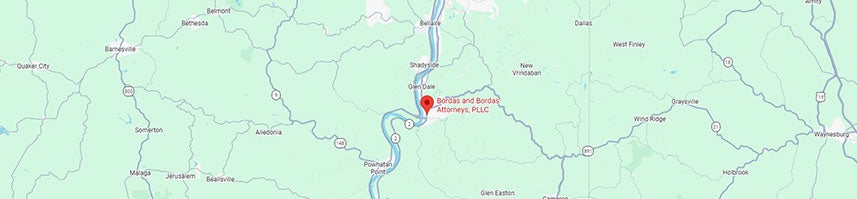


The information you obtain at this site is not, nor is it intended to be, legal advice. You should consult an attorney for advice regarding your individual situation. We invite you to contact us and welcome your calls, letters and electronic mail. Contacting us does not create an attorney-client relationship. Please do not send any confidential information to us until such time as an attorney-client relationship has been established.
The results in a legal case depend on a variety of factors, many of which are unique to each case. Prior results by this firm or any other do not guarantee future results. Case results presented here are illustrations of the type of work done by Bordas & Bordas and not a guarantee that any prospective case will yield any particular amount.
Request Consultation
Call 304-242-8410 or fill out the form below.