
Every year on March 17, millions of people across the country celebrate St. Patrick's Day. They wear the green, throw back their beers, and claim to be Irish whether they really are or not. Throughout my life, I have joined right in. I guess in part that is because of my heritage with my ancestors, who had last names such as Haggerty, Finnegan, and Gainer. In some ways, it is largely because I attended the University of Notre Dame for seven years, where it is nearly impossible to not feel Irish. But, most of all, it is probably for the same reason as most people --- St. Patrick's Day at its core is just downright a lot of fun. So, this year, I asked myself why St. Patrick's Day is so much fun and why did it become the day among all others where people dress up, drink green beer, and carry on. I think the answer lies in the nature of Irishmen themselves. Before I explain further, this may be a good place to point out that St. Patrick himself was not Irish. "What?!" you may say. That's right. He was born in England and later sold into slavery in Ireland. Ultimately, he brought the teachings of the Catholic Church to Ireland and became the Patron Saint of Ireland. But, there are many Patron Saints of many countries and many causes. I am willing to bet that most people can't name more than five Patron Saints and, if they can, they certainly can't name the date of their feast day each year. So then, why all of the hoopla on St. Patrick's Day? Back to the Irish themselves. When Irish immigrants began increasing in number in America, they looked for a way to celebrate their heritage. What better way to do it than to celebrate on the day of their country's Patron Saint. But again, lots of countries have Patron Saints, so why did seemingly everyone else join in? Quite simply, the Irish have personalities unlike anyone else. The Irish make sure that there is a party and when they do they are the life of the party. They have personalities that draw us to them. It helps explain why John F. Kennedy was elected President, it helps explain why we laugh at Bill Murray, and it helps explain why Regis Philbin had such a successful run on television. The Irish tend to have personalities bigger than the room they are standing in. They tend to tell better stories. They tend to be able to drink more, smoke more, and stay out later, yet still be able to beat the other guy the next morning. To put it quite simply, they live life to the fullest. So, if for one day each year, we join the party, and in some cases, maybe even are the life of it, so be it. It may not have started as our party. Many may not even be Irish. But, then again, heck, neither was St. Patrick. So, have a good time being Irish, be careful, and .... May the road rise up to meet you. May the wind always be at your back. May the sun shine warm upon your face, and rains fall soft upon your fields. And until we meet again, May God hold you in the palm of His hand.
Where Nursing Homes Go Wrong:
Despite the comprehensive laws and regulations that are supposed to protect residents of our nursing homes, too many times things go wrong. There is a financial incentive for nursing homes and the companies that run them to cut corners by hiring too few staff members and underpaying the staff members who do work there. For these and other reasons, the quality of care received by residents of nursing homes falls short of the standard. Although the injuries suffered by the victims of such abuses can take many forms, dehydration, pressure sores, infections, choking, elopement, and falls are some of the more preventable and serious injuries that we see. In particularly tragic cases, nursing home residents may not survive their injuries. To be clear, each and every nursing home has an obligation to provide quality care to every resident in the facility. It is not the fault of the resident or the resident's family when the nursing home falls short of these standards. However, there are some things that we can do to help make sure that nursing homes live up to their obligations. The federal government has published some useful information that may assist you in selecting or evaluating a nursing home. Those resources can be found here: http://www.medicare.gov/nursing/overview.asp. The most important part may be to trust your instincts and ask questions. I realize that depending on each individual circumstance, frequently visiting your relative in the nursing home may be difficult. However, the personal involvement of the family at the home can be very important. If you or a loved one has been injured at a nursing home, we encourage you to learn more about the experienced attorneys at Bordas & Bordas and to contact us to find out what you can do to make nursing homes safer places for some of the most vulnerable members of our community. This article is for informational purposes only and not for the purpose of providing legal advice. You should contact an attorney to obtain advice with respect to any particular issue or problem. Use of and access to this website or any of the email links contained within the site do not create an attorney-client relationship between Bordas & Bordas and the user or browser.
Another Brick in the Wall of Gas Explosion Disasters in NYC
The massive, deadly gas explosion in New York City continues a trend that becomes more disturbing every day. Aging infrastructure and a persistent failure of gas utilities to inspect, evalutate and maintain their lines are causing lethal explosions across the country. Grieving residents of East Harlem are now just another community left devastated by neglect of the critical safety rules that would allow gas to be a safe, cheap and efficient rule, if companies could only be influenced to follow them. Three people are now confirmed dead and nine more are still missing. This photo gives only a glimpse of the scale of the catastrophe. A steady drumbeat of disasters has marked time, from the enormous catastrophe in San Bruno four years ago, to the recent disasters right here in our area, including the Tyler County explosion, the Sissonville explosion and fire and this year's Greene County explosion and fire. These disasters have all proven to be preventable and caused by neglect of safety rules and industry best practices. Update: Residents had been reporting gas smells for some time, but nothing was apparently done. " Like several other neighbors, Rivera said they started smelling gas Tuesday night. "The smell of gas was there since yesterday night," he said." Explosions like the NYC blast often revolve around the simple failure of gas utilities to pay attention to their lines after they are installed. In some cases, decades pass without any of the needed inspections and maintenance being done. This can occur even as regulated monopoly utilities seek rate increases from the public based on the need to do this work -- which is then not done. More about gas explosions, their causes and the disturbingly high rates at which they are occurring can be found here. This specialized blog really gives you an idea of what a serious problem this is.

Federal Fair Labor Act Standards - Protecting the Interests of Waiters and Waitresses in Our Favorite Restaurants
We interact with them on an almost daily basis. They can make or break our dining out experience. Often times, they will recognize you as a regular customer and know what you want before taking your order. At the end of your meal, you leave a "tip" for great service. Have you ever wondered what happens to these tips, or realized that your tip may be your waitress's primary form of compensation for a job well done? More often than not, the waiters and waitresses in our favorite restaurants must rely on the tips left by their customers because their paid wage may be as low as $2.13 per hour. Under the Federal Fair Labor Standards Act ["FLSA"}, 29 U.S.C. 201, et seq., an employer may take a "tip credit" and pay its waiters and waitresses a mere $2.13 per hour in direct wages, unless applicable state law requires a higher amount. As exemplified by a recent Department of Labor investigation and action against Philadelphia sports bar and restaurant chain Chickie's & Pete's, restaurants often abuse the FLSA's "tipped employee" provisions and ignore other statutory provisions which require additional wages be paid to tipped employees. Chickie's and Pete's recently agreed to pay over $6.8 Million to resolve the Department of Labor enforcement action and numerous federal civil actions filed by current and former employees. Allegations of misconduct against the popular chain include paying its servers a flat $15 per shift wage rather than an hourly rate and failing to pay overtime when servers worked more than 40 hours in a workweek. The $15 per shift flat rate often fell far below the $2.13 per hour minimum wage required by the federal government. Appallingly, Chickie's and Pete's also required their servers to contribute between 2 and 4 percent of the server's daily sales to a "tip pool" which was paid to the manager at the end of shift in cash. If a server did not have enough cash to satisfy the "tip pool" contribution because the server's tips were from credit card transactions, the server was required to make ATM withdraws or borrow cash from co-workers. Rather than distributing the "tip pool" funds among employees entitled under applicable laws to share in the tips, Chickie's and Pete's allegedly retained 60% of the funds in what has come to be known as "Pete's tax". While the abuses uncovered at Chickie's and Pete's are egregious, they are not isolated. In recent years and aided by civil enforcement actions, the U.S. Department of Labor's Wage and Hour division has stepped up efforts to enforce FLSA requirements in the restaurant industry. The FLSA contains specific provisions governing "tipped employees", i.e. employees who customarily and regularly receive more than $30 per month in tips. In order to legally claim a $5.12 "tip credit" and pay an hour wage of only $2.13 per hour, an employer must specifically inform the tipped employee: (1) that the employer is invoking the $5.12 tip credit; (2) that the employer may not claim a credit which exceeds the amount of tips actually received; and (3) that all tips are to be retained by the employee except for contributions to valid tip pooling arrangements. A tip pool may be instituted to distribute tips amongst employees who customarily and regularly receive tips, but may not include such employees as dishwashers, cooks and management personnel. Under the FLSA, an employer invoking the tip credit must be able to demonstrate that a tipped employee receives at least a minimum hourly wage exceeding $7.25 when tips are considered in conjunction with the $2.13 hourly wage or make up the difference. While an employer is permitted to make certain deductions from tipped employees' wages, those deductions are limited. An employer is permitted to deduct credit card fees from tips where the tip is placed on a credit card, but only an amount proportionate to the tip itself. For example, if a $10 tip is given on a $50 bill and the credit card company charges a 3% fee, the employer may only deduct $0.30 from the tip given to the server, not the $1.80 applicable to the entire credit card transaction. Under no circumstances, however, may an employer utilize deductions which result in the tipped employee receiving less than the $7.25 per house federal minimum wage, regardless of whether the deductions are for credit card fees, breakage or walk-out reimbursements. Overtime is also required to be paid for all hours worked in excess of 40 hours per work week. Overtime is calculated at the full federal minimum wage and not the lower "tip credit" wage. Waiters and waitresses at our favorite restaurants are entitled to be fairly compensated for the hard work that they do day in and day out. While Chickie's and Pete's is the latest high profile restaurant chain to find itself the subject of legal actions arising from its treatment of tipped employees, it is not the first and it will likely not be the last. Two years ago, celebrity chef Mario Batali and his business partner settled claims arising from their practices with respect to tipped employees at their eight New York restaurants for $5.25 Million. While larger, high profile restaurants may attract the most publicity for their illegal wage and hour practices involving their tipped employees, the law applies to everyone and relief is available where our restaurant workers are not receiving the compensation they deserve or are having their tips improperly taken from them.
Gas Explosion in NYC Just Another in a Long Series of Such Disasters
The massive, deadly gas explosion in New York City continues a trend that becomes more disturbing every day. Aging infrastructure and a persistent failure of gas utilities to inspect, evalutate and maintain their lines are causing lethal explosions across the country. Grieving residents of East Harlem are now just another community left devastated by neglect of the critical safety rules that would allow gas to be a safe, cheap and efficient rule, if companies could only be influenced to follow them. Three people are now confirmed dead and nine more are still missing. This photo gives only a glimpse of the scale of the catastrophe. A steady drumbeat of disasters has marked time, from the enormous catastrophe in San Bruno four years ago, to the recent disasters right here in our area, including the Tyler County explosion, the Sissonville explosion and fire and this year's Greene County explosion and fire. These disasters have all proven to be preventable and caused by neglect of safety rules and industry best practices. Explosions like the NYC blast often revolve around the simple failure of gas utilities to pay attention to their lines after they are installed. In some cases, decades pass without any of the needed inspections and maintenance being done. This can occur even as regulated monopoly utilties seek rate increases from the public based on the need to do this work -- which is then not done. More about gas explosions, their causes and the disturbingly high rates at which they are occurring can be found here. This specialized blog really gives you an idea of what a serious problem this is.
'The Sun Will Come Out Tomorrow'
The sun will come out tomorrow. Remember Annie? I watched the motion picture countless times as a child. Whether or not you like the show, the reality is still true. Whatever your circumstances are today, they are most likely to change tomorrow. Things in my life the past year have not turned out exactly the way I would have chosen them to have turned out. For various reasons, the past twelve months have been some of the most challenging yet transformative months of my life. There have been times when I have been extraordinarily happy. I have also experienced times when I wasn't so happy and it was difficult to understand why the situation was turning out the way it was. Despite these difficulties, I have changed into a different person than I would have been if I had not been allowed to live through some of these circumstances. I'm sure you can attest to the same things. My intention isn't to bore you with my life, but to tell you that no matter the season you're going through, the world keeps turning. The sun really will come out tomorrow. Even if it's a cloudy day, you can rest assured that the sun is still there. We see it here every day at Bordas & Bordas. Many of our clients are experiencing days when they only see the clouds and not the sun. However, through our efforts to get justice for them, they can see a little bit of sun shining through those clouds. Life does go on and the sun will rise. (In fact, it's been shining the whole time I've been writing this blog.)
Fatal Tower Collapse in Clarksburg, West Virginia: What's the Real Cost of Your Cell Phone?
On February 1st of this year, Kyle Kirkpatrick, Terry Lee Richard and Michael Dale Garrett died when a cell tower collapsed in Harrison County, WV. Mr. Kirkpatrick and Mr. Richard, aged 32 and 27, respectively, were working on a communications tower in order to add additional tenant equipment to it when it suddenly collapsed. The two workers died at the scene. Mr. Garrett, a volunteer fireman who was responding to the scene of the accident, was killed by debris when a second tower collapsed after having been weakened by the destruction of the first tower. He was only 28 years old. All three of these men were struck down in the prime of their lives. None of them deserved to die. Accidents like the one that took their lives are becoming part of the way that communications companies do business, and those business practices should make you look twice at the real cost of your monthly cell phone bill. A 2012 investigation conducted by FRONTLINE and ProPublica discovered that between the years 2003 and 2011, 93 workers were killed on communications towers, a rate of death ten times the national average for construction workers. 50 of the workers killed were at cell cites. According to the Occupational Safety and Health Administration , there have been fourteen injuries or fatalities on communications towers nationwide since September 2013, more incidents than the past two years combined. Here's something else that's rising at the same time: the number of U.S. smartphone subscribers. PBS reports that the number of U.S. smartphone subscribers has shot up by a factor of 44, from 3.5 million in 2005 to 156 million in 2013. That number is only expected to rise. In an interview with the West Virginia Gazette, Randy Gray, a former OSHA inspector, attributes the sharp increase in accidents to rising demand from cell phone companies racing to replace older 3G cell networks with 4G or 4GLTE data networks. As he explains, "Let's say AT&T or Verizon takes out a contract and they put a deadline for completion, then the pressure is on at that point. Because if they don't meet that contract, then they start getting penalties for not completing it on time. That's when things exist like taking shortcuts - So what if we don't put those safety harnesses on today because those harnesses are going to slow us down." When unsafe working practices are not only condoned, but incentivized, dangerous working conditions for workers result. However, no increase in cell call quality can justify the reckless loss of human life. Although pressure from major cell companies is the driving force behind these unsafe labor practices, because of a complex set of subcontracting arrangements, the major phone carriers avoid scrutiny or blame when accidents occur. This can be seen in the web of companies involved in last month's tragedy in West Virginia: S&S Communications was servicing a tower owned by SBA Communications, presumably at the behest of some larger telecommunications company. Although the investigation hasn't been concluded yet, if this accident is anything like past accidents suffered by S&S workers, it probably was a result of too much haste and too little concern for worker safety. February's tragedy was not S&S's first fatal accident. In 2009, the company was sanctioned after an employee fell to his death from a 330-foot communications tower in Oregon County, Missouri. The company was cited for the employee's failure to use a safety harness or a backup safety tether at the time of his death. Although OSHA is investigating both SBA Communications and S&S Communications for the deaths of Mr. Kirkpatrick, Mr. Richard and Mr. Garrett, no information has been released regarding what major carrier had originally requested the work be done. That's not surprising: OSHA has never issued a violation to a large cellphone carrier. In an open letter to communication tower industry employers published a few weeks ago, David Michaels, the Assistant Secretary for OSHA, stated that "Tower worker deaths cannot be the price we pay for increased wireless communications... Every single one of these tragedies was preventable." As he concluded, "It is imperative that the cell tower industry take steps immediately to address this pressing issue: no worker should risk death for a paycheck." At Bordas & Bordas, we agree.
Interesting Things That Have Happened to Me at the Office
As most of you who are reading this know, I have been at Bordas & Bordas for almost 27 years. I wrote about a lot of the technological changes that have occurred since 1987 and I have to say, I am proud of myself, the dinosaur, for keeping up! However, I have a few stories that actually have nothing to do with law, but are funny, some more in retrospect than they were at the time. One day, when I had been here about a year, I came to work and Jim Bordas met me at the door. He told me I had to go downtown and bail our maintenance man out of jail. I had never even been in a police station, let alone bail someone out of jail. I was running around frantically trying to find out where I needed to go and how much money I needed and what he had been charged with, etc., etc. Jim was no help - he didn't know how to go about it, but just that I needed to go do it. As I was walking out the door, mumbling to myself, Jim said "APRIL FOOL!" After my heart settled down to a regular rhythm, we both got a good laugh out of it. Linda Bordas' brother came to visit one time and brought his pet pig with him. I don't remember the pig's name, but at that time we had Ivy and Daisy in the office, the Bordas' Springer Spaniels. So I got a Snausage treat for the pig. Unfortunately, he had not had lessons in manners like Daisy and Ivy did and he just grabbed the treat, biting my finger in the process. I had to go the doctor and get a tetanus shot. Can you imagine having the doctor ask how I hurt my finger and hearing "I got bit by a pig?" Well read on, it gets better! Some time later, I came to work the morning of our staff Christmas Party at Oglebay. It was a snowy morning and I came in the side door, dressed in my Christmas best, with expensive color-coordinated hose to match my outfit, slipped on the door jamb and fell with a tremendous bang. I hit so hard, the building shook. I cracked my head on the floor (no comments about how that shouldn't have hurt my head) and somehow cut my leg and tore my beautiful hose. Off to Doctor's Urgent Care this time. The doctor came in, checked my head, looked at my leg, cleaned up the cut and then asked me if I had had tetanus shot and when. I looked at Sandra, the secretary who had taken me to the doctor and said "I think it was when the pig bit me." He looked alarmed since I had also hit my head. Sandra, thank goodness, told him I was all right, I really did get bit by a pig at work. I told him I was upset about my hose being torn so he put a Christmas bandage on my hose. Another time (and you are going to wonder how I've survived all this time), one of the staff was playing with the dogs. The rug had moved until it was halfway up the door. I came up the back steps this time and opened the door, took a step in and down I went. I had no idea what had happened. One minute I was walking in the door, the next minute I was on the floor. After taking stock of all my body parts, I decided I was not hurt, but that I should take some Motrin to ward off pain. I asked Jeanne Dedo to please make me some instant oatmeal so I could have something on my stomach when I took the Motrin. Jeanne was terribly upset about my fall and went to get me the oatmeal. She came back with the oatmeal in a cup, stirring it like crazy. She stirred and stirred and stirred. Finally, I said, "Jeanne I think it is stirred enough." We still get a laugh out of that. Now the most embarrassing story of all! The office where I worked had a wooden shelf. One day I was leaning against it and got a splinter. You can take a guess where. Mary Jo Graebe worked with us at that time and she and several other employees had gone to lunch at TJ's. I called the restaurant and asked to speak with Mary Jo. I told her what had happened and asked if she could stop and get some tweezers and alcohol so when she got back, she could remove the splinter. It was pretty imbedded! We all got a laugh out of that too. And no, I didn't keep the splinter as a souvenir. Just remember, this is all over a long period of time. I am half-way afraid to say this, but I have been office-accident free for quite a while! I think if most of us who work in any job in any company for many years would look back, we would find a lot of things to remember and laugh about. Frequently, we tend to focus on the not so funny things, the negative things, in our lives and in our jobs. But if we really stop to think, there are good, funny, and sometimes touching things to remember too.
Goodwill Donation Stations
This is a rather silly pet peeve but when I drive to work every morning, I pass one of those barns that are there to collect "goods" for the Goodwill store. Invariably, there are pieces of upholstered furniture there or mattresses or some other things that are beyond use. It's my belief that people have left these items there because they don't want to have to pay to take them to the landfill or don't want to pay the extra amount their refuse collector would charge to haul these unusable things away. I have also driven by this station when people have dropped off upholstered items and it is either pouring down rain or snowing. Sometimes there are also appliances sitting outside the station when it is pouring down rain! According to the Goodwill website "Goodwill was founded in 1902 in Boston by Rev. Edgar J. Helms, a Methodist minister and early social innovator. Rev. Helms collected used household goods and clothing in wealthier areas of the city, then trained and hired those who were poor to mend and repair the used goods. The goods were then resold or were given to the people who repaired them. The system worked, and the Goodwill philosophy of 'a hand up, not a hand out' was born." Also included on the Goodwill website are guidelines for the acceptance of donations. The first Don't listed on the website is: Leave items unattended outside a collection center. Invariably the items I mentioned above are sitting at the station at 6:30 a.m. The hours for dropping off donations appears on a sign at the station and does not include hours after dark and before dusk. The second Don't listed is: Donate broken or soiled items. Some of the furniture and particularly mattresses I have seen are beyond soiled. The last item listed under Don't is: Give items that have been recalled, banned, or do not meet current safety standards. I must admit, I never really thought about this but it makes sense that recalled items shouldn't be used by anyone given the fact that there is some danger associated with any recalled item. There is also a portion of the Goodwill website that allows you to calculate the impact of your donation: http://www.goodwill.org/get-involved/donate/donation-acceptance-guidelines/. I calculated the impact of 5 pairs of shoes and found that the donation of those shoes allowed a jobless person 27 minutes of a job search class; 2 lamps and a chair will give a person 49 minutes of a job search class; and a working computer allows for 5.7 hours of a job search class. What's not included in that calculator is how much time is taken away from an individual's job search class when Goodwill has to pay to have items hauled away that are useless. Goodwill is not a place to dump unusable items when people don't know what else to do with these items. The cost of disposing of these items and the time it takes volunteers to handle these large items is money lost for the cause. You can feel good about yourself when you donate things that less fortunate people out there can make great use of but I don't know how anyone can feel good about themselves when they use the Goodwill Donation Station as a garbage dump. Let's obey the rules for the Goodwill Donation Stations and really GIVE to this great cause. If you have any questions about how to get involved, the main web address for Goodwill is: www.goodwill.org. If you prefer to visit in person, you can find Wheeling's local Goodwill store at 2200 Main Street, #1, and the St. Clairsville location at 50613 Valley Plaza Drive.

Adopt-A-Highway in Memory of a Dear Friend's Daughter, Stephanie K. Ward Stahl
When you discover that a young person who you have known since she was a child has passed away in a tragic accident, you feel helpless. You want to do something to comfort the family members. What do you do? Well, back in January of 2013, after Stephanie K. Ward Stahl's untimely passing on November 11, 2012, it was announced on Facebook that Tammy Keller was organizing an Adopt-A-Highway clean up in memory of Stephanie. Through the years, I have seen many of these blue Adopt-A-Highway signs along different locations on roads in memory of a loved one, but I did not know how it all came to fruition. Well, in West Virginia, the State of West Virginia requires scheduled clean-ups three times a year where the Adopt-A-Highway sign will be erected. The State of West Virginia provides all of the necessities: orange garbage bags, neoprene gloves, neon yellow vests for safety and a grabber so you don't come in contact with any of the garbage clean up items. The first of the scheduled three clean ups took place on Saturday, March 30, 2013. The clean up involved a two mile stretch of McCutchen Road, Triadelphia, WV, near the Cherokee Trading Post Store going east to the intersection, then going west to the new Suburban Hotel. I believe that Tammy Keller was very instrumental in organizing everything to accomplish this clean up and the two additional clean ups. She definitely received some help from many of Stephanie's family and friends to accomplish this awesome sentiment which, by the way, was extraordinary. It was the largest in quantity of participants in the State of West Virginia, which made the family quite proud. The second clean-up was held Saturday, August 2, 2013, but I was not available to participate in this clean-up. The third clean up was held on Sunday, November 10, 2013, one day before the anniversary of Stephanie's passing. The tragic accident occurred on McCutchen Road near where the new Suburban Hotel is now located. The Adopt-A-Highway sign is posted at that location. It was truly heartwarming to participate with such a large group including Stephanie's family members, i.e, her husband, her daughter, her parents and many other relatives and many, many friends. The Triadelphia Volunteer Fire Department and the Valley Grove Volunteer Fire Department were also there to help in any way they could as they were in previous clean ups. Prior to beginning, we had a moment of silence and prayer then a Balloon Release took place. The weather for this third clean-up was not the greatest, but just then, the sun burst through the clouds and a few blue skies appeared just as we released the balloons which traveled softly up to heaven. I'd like to think Stephanie had a bit to do with that, along with our Creator, of course. I think they were both giving us their blessings. The wind was quite gusty during this last clean up 0f 2013. So, some of us decided to just hold on to the orange clean up bags and the others used the grabbers to pick up the trash and place them in the bags. It is disturbingly eye opening how much garbage is thrown out of automobiles, trucks, etc. along the roadway and this is only a two mile stretch of McCutchen Road. Come on people this is your land, don't throw your trash out of your vehicles! So, now, all who can participate will get together three times a year for the Adopt-A-Highway clean ups to keep the memory alive of a young woman gone way too soon. I know that this will never take the pain away, but I hope and pray that it does help the family know that in some small way we can help them with this overwhelming pain of losing Stephanie way too soon. So, if you ever hear that volunteers are needed for an Adopt-A-Highway clean up near you in memory of a loved one, please don't hesitate to get involved, it is very heartwarming. I look forward to the yearly clean ups and hope I can participate in each one to help keep Stephanie's memory alive and help her family and friends cope with her untimely passing. Rest in Peace Stephanie K. Ward Stahl and God be with your family. Have faith, you will see her again!!

Stacy Bordas Tells Why West Virginia Mothers Should Be Allowed to Feed Their Babies
Welcome moms! Bordas & Bordas is very proud of Stacy Bordas' popular article below -- many thousands of people have been kind enough to read it and comment on it over the past week and the breasfeeding bill is progressing in the Legislature. We wanted to mention, particularly for people interested in motherhood issues, other pieces we've published on how the time flies and paying tribute the incredibly challenging work moms do. One of our paralegals, Darcy Springer, wrote an article about being a grandmother and attorney Jay Stoneking wrote one for all the dads and grandads out there, too. Welcome, enjoy and stop back again! Recently, a great deal of attention has been given to breastfeeding laws, and as most mothers will tell you, rightly so. The spectrum of opinions reaches all the way from whether or not you can be prosecuted for indecent exposure because of breastfeeding in public, to what rights you have to nurse your child in a public place, all the way to the passing of Child Rights Laws. What rights, if any, do West Virginia mothers have to publicly breastfeed their child? What laws are broken, if any, by publicly breastfeeding in WV? I recall during my first semester of law school we were given the topic of whether or not breastfeeding in public should be deemed indecent exposure under WV Law. Our professor assigned us a side to write a brief about and then prepare an oral argument on. I remember hoping that I would get to argue the side saying that it was in fact, NOT indecent exposure, however, no such luck. At that time, I was not even a mother yet, but had hoped to nurse my children someday, and I couldn't imagine that doing so in public could be deemed a crime. Back then, in 2004, the topic was still largely debatable, and hence why it was such a good topic for a Legal Research and Writing Paper. The most interesting thing about the progression of WV Law is that since then, the statute has actually added a clause stating that breastfeeding in public is NOT indecent exposure (provided clause added to WV Code 61-8-9(a) in 2007). This means that a woman can breastfeed her child in public and cannot be prosecuted under the indecent exposure statute. What was once a great topic for law students to debate is now an open and shut case...SORT OF. Within the past ten years it is interesting to see how WV law has changed with the times. However, it may not have changed quite enough yet. Having nursed four children of my own now, I have personally experienced how much more "acceptable" public breastfeeding has become. With my oldest child, I would have never have dreamed of publicly breastfeeding her and had to take great efforts to express milk for her before leaving the house, so that if she got hungry she would be able to eat. As any nursing mother knows this is not an easy feat. Expressing milk takes time for one, and then there is the added difficulty of a time limit in which the milk must be consumed if not refrigerated. Less than two years later when my oldest son was born, there were nursing wraps available for sale online. To me, this was an indication of the trend toward the acceptability of public breastfeeding. These wraps were a great invention, however, at times, can be quite cumbersome to use and some children simply do not like feeding with them over their heads. By the time my fourth child was born, you could get those nursing wraps at virtually any store and just about every nursing mother had them. This was a huge step socially in the progression of public breastfeeding. But what exactly does this trend mean LEGALLY? What legal rights do WV mothers have to publicly breastfeed their child? The answer is none. Recently, in Alabama a woman was breastfeeding her three month old in a courtroom while waiting on a proceeding and was asked to leave the courtroom and nurse in another area. The mother is contemplating seeking legal action. In Texas, there was recently some controversy surrounding a mother who spent over $150 in a Victoria's Secret store, and then when she asked to use the store's empty dressing room to nurse her baby, she was denied access. Not only was she denied use of the dressing room, but it was suggested that she take her four month old outside the store and into the alley to feed him. The Austin mother of two was outraged and posted her disapproving comments of Victoria's Secret all over social media. What do situations like these mean to us as West Virginia nursing mothers? WV Code explains that public breastfeeding is not deemed indecent exposure, but what is a WV mom to do if a similar situation like the ones in Alabama and Texas happen to her? Does the mother have a right to stay and nurse her baby in the public place? The answer is no. In WV, if a woman is asked to leave a public place because she is breastfeeding and she does not, she can then be deemed a trespasser! Outraged? You have just been relieved of prosecution from indecent exposure but now you can be a trespasser? What are WV moms to do when they need to feed and nourish their baby? The answer lies in the adoption of Child Rights Laws. WV has not fully adopted the public breastfeeding trend, and we are one of the few states that haven't. According to advance.wvu.edu, 45 states have adopted laws specifically allowing women to breastfeed in any public or private location. Alabama and Texas have adopted a Child's Right to Nurse Law) WV has not adopted a Child's Right to Nurse Law but has been contemplating it for years. Each year it gains more traction in the Legislature, but it has never passed both Houses. In 2011, the bill passed in the Senate but died in the House. Because WV is one of the only states that does not provide for the protection of public breastfeeding in the code, The House of Delegates Health Committee has introduced a bill (H.B. 4335) legally establishing a woman's right to breastfeed in public. If passed, the bill will allow a mother to breastfeed in any location open to the public, provided the mother uses discretion. This means that a woman can breastfeed her baby in any public place that she and her baby are authorized to be (and can no longer be deemed a trespasser if she is asked to leave and refuses). Del. Barbara Fleischauer (D-Monongalia) is urging lawmakers to adopt this bill and stating the many health benefits of nursing. Fleischauer says, "The best food for the baby is breastfeeding." The bill has now been passed in the House of Delegates. It is now up to the Senate to determine whether this will become the law in West Virginia. As a mother, this bill is particularly important, to both my rights and my child's rights. The benefits of breastfeeding are numerous and well documented. Is my baby any less hungry in a public place than a private one? Or is my child less deserving of nutrition because I chose to nurse her rather than bottle feed her? Is society now accepting of a woman's body when used to exploit or sell goods, but outraged when it is used as natural nourishment for her baby? I am happy to see that WV recognizes that breastfeeding is not Indecent Exposure and I would be happier to see WV pass a Child's Right to Nurse Law protecting nursing mothers for publicly breastfeeding their children. After all, our children are our future.
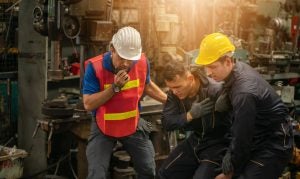
Utility Found Liable for Massive Gas Explosion
Almost four years ago, a massive gas explosion killed eight people and injured 66 more in San Bruno, California. Civil Gas and Electric, the utility that was responsible, has been found to have grossly neglected its gas delivery infrastructure. Nonetheless, neighboring cities are continuing to have problems getting TG&E to set its profit margins aside, do the right thing and repair its delivery infrastructure. The utility has admitted that it doesn't even know the safety status of nearly twenty percent of its gas pipelines, and judging by its track record, even that claim may be dubious. The conduct of the utility is so egregious and reckless that the city itself had to establish a website called www.gaspipelinesafety.org in order to petition the California Public Utilities Commission to take drastic action against the utility to force it to do the right thing to prevent additional massive tragedies such as the one in San Bruno from happening again. The public petition is seeking to have the state authorities penalize the shareholders of PG&E as opposed to the rate payers, to punish the responsible parties for what happened and try to prevent future misdeeds, as well as to assign an independent monitor to act as a state-wide safety watchdog in the area of natural gas delivery, and, most importantly, to prevent the state regulators who are supposed to keep tabs on the companies' behavior from developing "cozy relationships" and conflicts of interest with the utility companies. A federal investigation identified these "cozy relationships" as contributing factors to the disaster in San Bruno that resulted in so many deaths, injuries and severe burns to the victims. The disaster in California has implications for folks here in Ohio, West Virginia, and Pennsylvania who are dealing with gas explosions more and more often, because of the fracking boom, gas well drilling generally and the transition away from coal towards natural gas and propane as major fuels for home heating. One hopes that accountability is enforced in the Ohio Valley before a massive disaster, such as the San Bruno gas explosion, occurs in this part of our country.
Contact Us
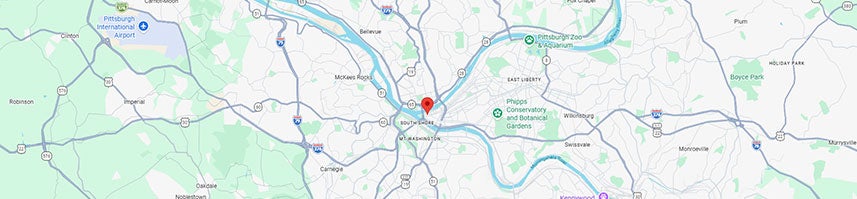
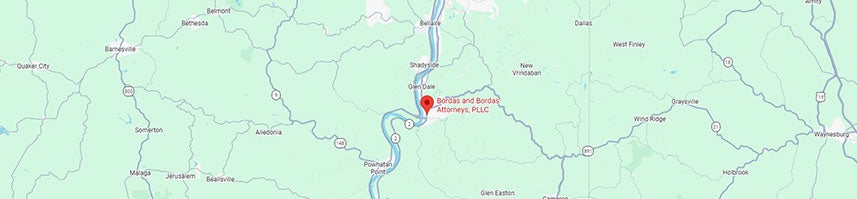
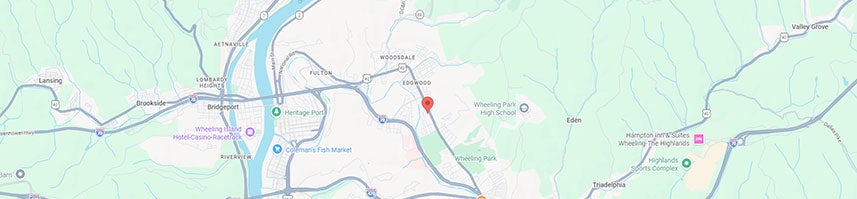
The information you obtain at this site is not, nor is it intended to be, legal advice. You should consult an attorney for advice regarding your individual situation. We invite you to contact us and welcome your calls, letters and electronic mail. Contacting us does not create an attorney-client relationship. Please do not send any confidential information to us until such time as an attorney-client relationship has been established.
The results in a legal case depend on a variety of factors, many of which are unique to each case. Prior results by this firm or any other do not guarantee future results. Case results presented here are illustrations of the type of work done by Bordas & Bordas and not a guarantee that any prospective case will yield any particular amount.
Request Consultation
Call 304-242-8410 or fill out the form below.