Blog / In the Community

Blog

All In the Community Know the Law Legal News and Product Recalls Legal Options
roof

Seeking the Thrill Creepy, chilling, horrifying, spooky…

Ever since I was a little girl, I loved listening to ghost stories which is probably why I love watching horror movies. It’s predictable, the movie category that is my first choice every time and I will say – it’s got to be a scary one. While this is all in good fun, I’ve often wondered, why do I do this?  Call me an adventure seeker or even a little crazy, but if it has to do with Halloween or the supernatural, I get really excited.  I actually look for something to make the hair on the back of my neck standup and if it does, I can’t wait to share it with someone.  I even have two black cats, one named Thackery Binx, no less. I’ve taken ghost tours on vacations and I’ve visited many haunted houses over the years, seeking the thrill.  I love to tell and hear ghost stories.  As a child, my family and neighbor friends would set up some pretty elaborate spook houses in my grandmother’s basement.  Ketchup was blood and jello was brains. I don’t scare easily, but what rattles me most are the ones that involve true events or something that takes control of another person…. possession – yikes!  Those are creepy.  But I continue to search for the shiver down my spine. My latest scare adventure involves my family (minus our youngest, certainly don’t want to scare her), heading to a nationally known haunted inn and spending the entire weekend, Halloween weekend no less.  This is the real deal The Buxton Inn where ghost sightings have been reported. Unexplained noises in the night with no one around also have happened, along with reports of a cat hopping up on the beds and crawling in and shadow figures…eerie stuff.  An apparition in one of the rooms we are staying in was just reported by a recent traveler! My husband is a complete skeptic and I, on the other hand, will probably be talking out loud to these ghosts.  The teenagers undoubtedly will be trying to act cool as if they aren’t scared at all while taking it all in. As the date nears, I am preparing and trying to gather enough information about the place to get their minds on high alert and I chuckle wondering who will jump first.  I plan on creating a very scary candlelit atmosphere detailed with stories and equipped with a video camera.  Perhaps I may even take a “selfie video” emulating the Blair Witch Project and text it to them.  If I can’t scare them, I sure can make them laugh. Either way, no matter the outcome, I am planning on making this a weekend the Dodd family will never forget.  BOO! And, I will let you know if it’s real or nothing but a little hocus pocus!

Fifteen Minutes of Fame

The world is full of mentally ill people just waiting for their 15 minutes of fame. Watching the news once again proves that. Those poor people in Roseburg, Oregon who were gunned down by a crazed killer is just one more example. What the shooter’s name was doesn’t matter. The victims and their families are what matters. One can only imagine what they are going through right now. If you believe in prayer, pray for those families and for the family of the gunman. Of course, every time something like this happens, gun control inevitably comes up.I am a firm believer in the Second Amendment of the United States Constitution. We do have the right to bear arms for our own protection. We don’t, however, have the right to kill innocent people. We may never know why the man decided to open fire on people he probably never knew.  One of the reporters said he was allegedly asking people what religion they were before shooting them. If that was true, what difference does it make what religion anyone chooses to follow? Everyone thinks their religion is right but no one really knows. Most of us follow the religion our parents followed and their parents before them, and so on and so forth. Does it really matter what the sign says over the door? Shouldn’t it make more sense to realize we don’t need to agree and be able to live peacefully together and worship however we see fit? Obviously, something needs to be done, but taking away the rights of everyone for the few who abuse those rights will never work and, indeed, has never worked. If you look back in history, prohibition stopped no one from drinking. They still made liquor, sold liquor and held parties serving liquor. Even today, the drug trade is doing a thriving business despite drugs being illegal. So, if guns were to be deemed illegal, people wanting guns would still get them, particularly those who shouldn’t have them. I don’t pretend to know what would solve the current string of gun-related killings, but I know one thing; work out your own salvation with fear and trembling and leave everyone else alone.  Albert Einstein said, “We can not solve our problems with the same level of thinking that created them.” Those words were true then and they are true now.

Big Pharma: Increasing Profits at the Expense of Patient Safety Through Off Label Marketing and Inadequate Warnings

The pinnacle of corporate greed was exposed in the lawsuit of Grimshaw v. Ford Motor Co., (1981) 119 CA3d 757, wherein evidence showed that Ford's corporate executives made conscious decisions to avoid correcting dangerous conditions existing in the Pinto because it would be more cost effective to pay out on claims involving death or serious bodily injury. One would have thought that the results of this case would have stunned the corporate world and stifled this form of unethical business practice, but sadly, that does not appear to be the case... Recently, the Huffington Post concluded a series regarding Johnson & Johnson's blockbuster drug Risperdal and the billions of dollars the company made whilst failing to warn prospective patients, particularly young males, about the risk of developing breasts.  It is a series that I strongly recommend reading as it illustrates how Big Pharma can break laws, hurt people, get caught, but yet continue to make billions of dollars notwithstanding the payout of claims associated with whistleblower and personal injury lawsuits.  Moreover, the series reminds the reader that corporate corruption, most often, will advance unchecked without personal injury and whistleblower attorneys willing to take the inordinate amount of risk associated with these types of lawsuits.  This is true simply because our local, state and federal governments simply do not have the resources to investigate the vast majority of the suspected corporate wrongdoings. The Huffington Post's article begins by illustrating the business of health care – "As 100 stock analysts gathered in the ballroom of a luxury hotel to hear good news from top executives at Johnson & Johnson that it had 10 new drugs in the pipeline that might achieve more than a billion dollars in annual sales, far away a whistleblower sat in a sales meeting being drilled on promotional materials she was told should not be left behind for fear that federal regulators might see them."  These types promotional materials are designed to unlawfully increase profits at the expense of the patient, while bilking the coffers of federally and state funded programs like Medicare and Medicaid. You see in the United States a pharmaceutical company is not permitted to market a drug "off label;" otherwise known as marketing the use of a medication in a way that was not approved by the United States Food and Drug Administration (FDA).  The FDA's decision to limit the marketing of a drug is based upon years of clinical trials and analyzing the data relative to the drug's safety and efficacy.  Risperdal, an atypical antipsychotic, a "second generation" antipsychotic, is and was FDA approved for the treatment of schizophrenia and bi-polar disease.  Its designed to treat psychosis, a common feature of these illnesses.  Therefore, J & J is able to market Risperdal to doctors and patients for those disease processes.  However, J & J cannot market the drug to treat depression or anxiety, which involve much larger patient populations, even if the company has data to suggest that the medication can be useful to treat depression and anxiety.  This is so because the FDA believes that the data concerning the risks of the medication in these subpopulations outweigh the potential benefits.  Nonetheless, these limitations can be troubling to individuals charged with the duty of maximizing corporate profits because it limits the company's ability to market the drug and make money. It should be noted however, that doctors are permitted to prescribe medications off label, if they have a reasonable basis to do so.  For instance, if a doctor has a patient with a diagnosis of major depression disorder with psychotic features, then in that instance, a doctor may have a reasonable basis to treat his/her patient with an "off-label" medication such as Risperdal.  While the patient does not have the diagnosis of schizophrenia or bi-polar disease, the patient does suffer from psychosis, for which there are no FDA approved drugs on the market to treat.  Thus, a physician may be justified in prescribing off label.  In these circumstances, it is prudent for the physician to discuss the risks of that medication and the efficacy of the drug with the patient and the patient's family. Notwithstanding the aforesaid laws, in 2013, J & J's pharmaceutical subsidiary, Janssen Pharmaceuticals, was ordered to pay the federal government (tax payer) more than $2 billion to settle charges that it illegally marketed Risperdal. In this "whistleblower" case, the J & J employee was being pressured by Janssen to market Risperdal off label to doctors and she was encouraged to market Risperdal to the elderly for issues such as dementia, which was not approved by the FDA, and to children with mental-health problems.  Ironically, while $2 billion dollars may seem like a lot of money, the article highlights that it pales in comparison to J&J's company worth, which at the time, was estimated at $251 billion. More recently, a Pennsylvania jury recently awarded $2.5 million dollars to Austin Pledger, a 21-year-old severely autistic male, who developed 46 DD breasts ("gynecomastia") from taking the drug Risperdal.  The jury found that Johnson & Johnson had encouraged Austin's doctor to prescribe it without warning of its risks. Whereas, the FDA had prohibited Johnson & Johnson salespeople from trying to promote Risperdal to doctors to treat children because of its feared side effects, including hormonal disorders.  But by the time Austin started growing breasts at the age of 12, Johnson & Johnson was reaping more than half of its Risperdal sales from prescriptions written for children to alleviate all kinds of behavior disorders. As intimated above, there are times when these types of medications may be useful to treat a person's psychosis; and, they may prove to improve the patient's quality of life.  That being said, when a physician makes the decision to consider the use of off-label medications, the decision to commence and maintain the use of these potentially toxic medications should be made by a fully informed patient or legal guardian.  This is true because the patient and/or the family should know to be on guard for the early manifestations of the signs and symptoms of adverse effects such that they can decide whether the risks of the medications outweigh any potential benefit.  Unfortunately, patients and their families are not always advised of the risks of the medications, and opportunities to avoid tragic outcomes are lost.


It's Fall Y'all and Halloween is Just Around the Corner

This is my favorite time of year. I love to see the trees turn beautiful colors, knowing that football season is in full swing, and it’s the beginning of hockey season. Barley and Guinness (better known as “the boys” in the office here at Bordas & Bordas) love to run and roll in the fallen leaves. Plus one of my favorite things happens in fall-- Halloween. I love fall’s crisp clean air, craft shows, apple cider by a big roaring fire and pumpkin everything, even though I’m not a big fan of pumpkin. Then there is Halloween.  The time of year you go and get the life scared out of you!  I hate to be scared, but I love getting scared at haunted houses, haunted hayrides, graveyard haunts and ghost hunting.  My poor husband hates when I say I want to go to a haunted house or anything to do with that kind of stuff. He just rolls his eyes and says, “have fun.”  He rarely goes with me. As a kid, I dressed up and ran from house-to-house knocking on doors yelling, “trick-or-treat” and getting candy. The really good houses gave out full size candy bars and with our pillow cases in hand as our treat bags, my friends and I would return home to dump the candy out and head out again.  Halloween was so much fun.  I wish I could still trick-or-treat, but it’s frowned upon when you get to be a certain age.  I think last year was it for me... LOL. Stop and think back to your favorite Halloween costume or your favorite haunted house-hayride-graveyard event and who you were with from the neighborhood you grew up in, your Halloween parade and party at school. Kids today don’t get to have as much fun as we did growing up (at least I don’t think they do). Ok Bordas & Bordas blog readers. Please tell us where you feel the best place in your area is to attend a haunted event?  I’ve been to the West Virginia Penitentiary   Haunted House in Moundsville, but I’m looking for more events to attend this season with some friends here at work. I would love to post pictures of the area’s best haunted places on the Bordas & Bordas blog all month long. Hope to see you out having fun. Happy Halloween and enjoy the fall y’all! Rock on people, rock on.

What it Means to Be an “At-Will” Employee

Most offer letters or employee manuals specifically state that a person’s employment with the company is on an “at-will” basis. What does that actually mean?  What rights do “at will” employees have against employer termination?  Does it matter if an employee has performed well and reported for work as scheduled? The protections vary from state to state, but they have this in common:  the protections are limited, and the employer has the upper hand. According to the National Conference of State Legislatures, employment relationships are presumed to be “at-will” in all U.S. states except Montana.  In fact, the United States is one of a handful of countries where employment is predominately at-will. Generally, an at-will employee may be terminated by his or her employer at any time for any reason, with or without cause, as long as the reason is not an unlawful reason.  What this means is that an at-will employee can be fired without cause, as long as the employer is not terminating the employee for an unlawful reason, such as race discrimination, gender discrimination, sexual harassment, religious discrimination, disability discrimination, and in many states, sexual orientation discrimination. Of course, it has been argued—and it is true--that the at-will arrangement is somewhat of a two-way street, given that employees in an at-will arrangement can quit the company without notice and for any reason or for no reason at all.  To be sure, the 13 th Amendment—with its prohibition on involuntary servitude--insures that no one has to be enslaved to a job and forced to work.  That said, most workers would gladly agree to give the standard two weeks’ notice before leaving, if in exchange, the employer would agree only to terminate an employee for cause.  That kind of job security is not presented in an ordinary at-will arrangement. An at-will arrangement also means that the terms of employment can be changed without notice to the employee or adverse consequences to the employer.  In other words, an employer can unilaterally change a position from full-time to part-time, an employer can change the compensation package, including salary and benefits, and it may reduce or even eliminate paid time off. There are exceptions created by common law and statute, to the at-will doctrine that protect employees from adverse action; these exceptions vary from state to state.   For example, most jurisdictions recognize an exception that protects employees against adverse employment actions that violate a public interest.  For instance, in most, if not all states, it would be unlawful to fire an employee because he or she exercised a right to apply for worker’s compensation benefits.  Refusing an employer’s request to commit perjury is another example of the public policy exception to at-will employment—an employee is protected from being fired in such a situation.  In addition, whistleblowing may provide specific exceptions, particularly where public employees are concerned. Employers and employees are free to modify the at-will rules by entering into a formal contract of employment.  Contracts, however, are the exception, not the rule, and primarily are reserved for higher paying executive positions.  Not infrequently, however, when a dispute arises regarding an at-will employee’s rights, the former (or soon to be former) employer may be willing to enter into a settlement agreement to avoid liability or a formal challenge by the employee.  If that should occur, it would be advisable to seek advice from a qualified professional before entering into any agreement.

Do You Know Your Blood Type?

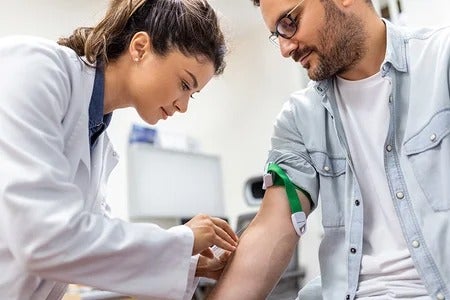
Well, did you now that blood type is inherited, just like eye color. Certain blood types are more common in certain countries. In China, over 99 percent of the population has Rh+ blood. Different kinds of animals have different kinds of blood types: dogs have four; cats have 11 and cows have about 800. WOW, these could be great answers on Jeopardy. Human blood is grouped into four types: A, B, AB, and O. Each letter refers to a kind of antigen, or protein, on the surface of red blood cells. For example, the surface of red blood cells in Type A blood has antigens known as A-antigens. THE Rh FACTOR:  Each blood type is also grouped by its Rhesus factor, or Rh factor. Blood is either Rh positive (Rh+) or Rh negative (Rh-). About 85 percent of Americans have Rh+ blood. Rhesus refers to another type of antigen, or protein, on the surface of red blood cells. The name Rhesus comes from Rhesus monkeys, in which the protein was discovered. BLOOD TRANSFUSIONS:  Blood types become very important when a blood transfusion is necessary. In a blood transfusion, a patient must receive a blood type that is compatible with his or her own blood type—that is, the donated blood must be accepted by the patient's own blood. If the blood types are not compatible, red blood cells will clump together, making clots that can block blood vessels and cause death. Type O– blood is considered the “universal donor” because it can be donated to people of any blood type. Type AB+ blood (that’s me) is considered the “universal recipient” because people with this type can receive any blood type. See chart below. BLOOD TYPE % OF AMERICANS WITH THIS TYPE WHO CAN RECEIVE THIS TYPE + 37 percent O+, A+, B+, AB+ O– six All blood types A+ 34 A+, AB+ A– six A+, A–, AB+, AB– B+ 10 B+, AB+ B– two B+, B–, AB+, AB– AB+ four AB+ AB– one AB+, AB– Some people think blood type tells about your personality: Type A is calm and trustworthy; Type B is creative and excitable; Type AB is thoughtful and emotional; and Type O is a confident leader.  What do you think about the above? So, you too can discover what your blood type is as well by giving blood.  It’s not hard to do.  You can help someone in need of a blood transfusion by calling Central Blood Bank at 1-866-366-6771.  Or, go to the Central Blood Bank’s website at www.centralbloodbank.org and schedule your donation right now online.   I hope this blog was informative for you and you take that step and donate your life saving blood in the very near future.  I am donating again on Monday, October 26, 2015, at Wheeling Hospital-Auditorium B . Come and JOIN ME!

Dog Training 101

Although I have owned Siberian Huskies for 12 years, and dogs in general pretty much most of my life, I never really felt the need to take any of them to obedience class…until Scarlet. Earlier this year I decided I wanted to become involved in the show ring, and set out to find the perfect show puppy.  I had long admired the dogs from Ravenwood Kennel, decided to get in touch with the owner, Mary Alice.  Mary Alice informed me she had one little red/white female available.  So I made the 3 hour drive to Mary Alice’s home, and after watching her run and play in the kennel, I decided that she was the one for me.  Mary Alice casually informed me that the puppy was very ornery and spoiled.  We got her home and decided that we would name her Scarlet, and her registered name became Ravenwood’s Gone With The Arctic Wind.  After only about a week of her being home, we began to see how ornery she was.  As she grew, she liked to shove and knock our Jack Russells around, even going so far as to sit on them.  She tried to make herself “taller” than us by standing on our laps when we were sitting on the couch and looking down at us.  She would jump up on the couch just as I was about to sit down and take my seat.  After doing some research, we learned that these are all signs of dominant, or “alpha” behavior.  Siberian Huskies by nature are very intelligent dogs, but also very stubborn.  I knew we needed to get some help, and quick, or she would never make it in the show ring with the attitude and bad habits she was developing.  I contacted the Upper Ohio Valley Obedience Training Club in Bellaire, Ohio.  Scarlet and I signed up for basic obedience classes which take place once a week in the evenings.  I leave work on Tuesdays at 5 p.m., drive part way back to Cameron to meet my husband or son with Scarlet, then turn around and head to Bellaire for class at 6 p.m.  Sounds like a crazy hassle, I know, but we have enjoyed our one hour class every Tuesday evening and I am simply amazed at how much she has learned and how far she has come in a very short time.  She now knows “sit”, “stand”, “come” and “down”—some of these without even giving verbal commands.  She is doing very well with “heel” and loose lead walking.  We are working on “stay” right now and our homework for next week is to teach her a trick.  She is developing good manners, has a better attitude with our other dogs, and things have improved a lot at home.  Patience, repetition, and good eye contact is the key to successful training and, oh yes, lots of praise and treats! Some of the benefits of dog training are: ·      It provides owners with the skills and knowledge to deal with common, normal dog behaviors, such as housetraining or chewing. ·      It teaches basic good manners for your dog—from politely greeting guests when they arrive to walking nicely on a leash. ·      It provides socialization which is critical to the psychological health of adult dogs. ·      It has been shown to be the single more important thing that keeps a dog in its “forever” home. ·      It builds a mutual bond and enriches the relationship you have with your dog. Scarlet will “graduate” next Tuesday from Basic Obedience, and our trainer, Gary, has recommended that we go on to more advanced training, so we will be enrolling in Basic Obedience II.   I’m confident that once she completes that training we will be ready for handling and conformation classes so that we can eventually get her in the show ring.  If you have a “problem” dog, or just want to have fun with your dog and see how much they (and you) can learn, I would encourage you to enroll in obedience classes, whether it is with the Upper Ohio Valley Obedience Training Club (www.uovotc.org) or with another trainer.  If Scarlet can learn, any dog can learn.

Moundsville Middle School

As many of you are aware, I’ve been involved with high school athletics for most of my adult life. I was first certified as a basketball official back in 1985, and 30 years later I’m still at it.  Over the years, I’ve become increasingly frustrated with what I have perceived as people losing sight of what high school sports should be about.  Our society has become so obsessed with winningthat we have forgotten what our children are supposed to be learning from their participation in sports:  the importance of teamwork, the value of hard work and determination and the ability to overcome adversity.  A child makes a mistake in a game, and adults boo him or her.  An official makes (what fans perceive to be) a mistake, and the reaction is frequently vulgar and insulting and sometimes even violent.  Winning has become the most important goal; teaching our young people too often becomes a distant second. Fortunately, there are still some coaches in high school athletics who “get it”.  They understand that coaching a team is more about building character than it is about amassing a winning record.  Two such coaches can be found right here in Marshall County.  I’m talking about Coach Donnie Gilbert, Jr., at Moundsville Middle School, and Coach Rob Chavanak at Sherrard Middle School.  You see, last month, Moundsville and Sherrard were scheduled to play a football game at Monarch Stadium.  The Moundsville team had just added a new player to the roster, a young man by the name of Isaiah Leasure.  Isaiah had inquired about becoming a member of the team, and Coach Gilbert welcomed him without hesitation.  He was issued equipment and a jersey; was given the obligatory sticker on his locker, indicating he was a member of the team; and he took his place at the team lunch table.  No big deal, you may think, until you consider the fact that Isaiah has a neuromuscular condition that requires him to use a motorized wheelchair. With the game against Sherrard coming up, Coach Gilbert saw an opportunity to teach an important lesson in life.  He contacted Coach Chavanak and asked about keeping the teams on the field for an extra down or two at the end of the game so that Isaiah could play.  Coach Chavanak did him one better, suggesting instead that Isaiah be put into the game in the waning moments.  No one cared about whether or not the game was close; no one cared about who ended up winning or losing.  The thoughts of these two coaches centered only upon helping to make a young man’s dream come true, while teaching other young men the incredible power of a simple act of kindness. Isaiah got into the game in the fourth quarter, and his number was called.  The quarterback handed him the ball, and he carried it 65 yards for a touchdown.  Players from both teams celebrated as coaches, officials and fans looked on through glistening eyes.  It was a moment that I’m sure no one involved will ever forget.  Coach Gilbert told me afterward that it had changed his life.  I don’t doubt that for a second. I am so very, very proud to live in a community where things like this still happen, where our children are still taught the importance of kindness and compassion.  So, you may ask, who won the game?  That’s the best part of the story.  Both teams won.

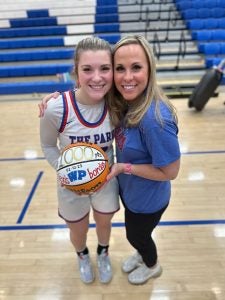
Mother and daughter smiling, hugging and holding a basket ball

The Best and the Worst of Fall

I have mixed emotions every year as fall rolls around. On the positive side, there’s college football.  I’m a lifelong Mountaineer fan, and I try my best to get to one ball game a year in Morgantown.  The rest of time I’m glued to the television, jumping, yelling and cheering like I was actually in the stands with the rest of the 65,000 rowdy fans.  My wife and daughters also enjoy game day and all of the fun, food and friendship that goes along with it. I’m also a fan of Oglebay Fest, a fall ritual that takes us to Oglebay Park every October.  I almost never buy anything, but it’s entertaining going from booth to booth checking out the newest arts and crafts.  Mostly, though, I go for the food.  I make it a point to get a steak hoagie smothered in cheese sauce with a side of home fried potatoes.  As if that’s not bad enough, I’m pretty sure I’m addicted to kettle corn.  I always leave the park with a big bag--big enough to feed me, my wife and the girls for the whole week. There are other things that make fall worthwhile to me.  I enjoy the colors of fall, especially the splashes of yellow, red and orange leaves on every hillside.  I like bonfires, weenie roasts and s’mores.  But let’s be honest, who doesn’t?  And, of course, fall wouldn’t be fall without Thanksgiving.  Fall reminds us of our earthly gifts and blessings.  For me, Thanksgiving is the high point of fall--a time to remember God and his faithfulness in our lives. But fall can be a bit of a drag too. Let’s start with those beautiful, colorful leaves.  Eventually, they drop to the ground.  That means somebody gets stuck raking them up. Ugh!  What a horrible job!   Unfortunately, I have a giant pin oak tree in my front yard.  It drops half of its leaves in the fall, and then drops the rest in the early spring.  That means I end up raking the leaves twice a year. I’ve blogged before about the pumpkin invasion that happens every fall.  Pumpkin food.  Pumpkin drinks.  Pumpkin everything!  I know there are many pumpkin lovers among you, but I’m not one of them.  I eat one piece of pumpkin pie at Thanksgiving and that’s it.  I’m done.  Thankfully, fall also means pecan pie which, in my mind, helps offset the terrible pumpkin onslaught. Fall also brings cold weather.  It’s not really the cold that bothers me.  It’s the constant changes in the weather--hot, then cold, then hot again.  You don’t know what to wear from one day to the next.  This kind of “revolving door” weather also plays havoc on my immune system.  It seems like every fall I get a bad cold or one of those long, drawn out flu bugs.  Get the Excedrin and the nasal spray ready! So… What about you?  What earns a spot on your list of “best” things about fall?  Or the “worst” things?

My Dad: The History Teacher Who Played a Part in Space History

Anyone who knows me, knows how much I love my Dad and how very proud I am of all that he has accomplished in his life. Most people know my Dad, Wilson W. “Bud” Wood, as a former history/social studies teacher at John Marshall High School, where he taught for 25 years.  However, many people may not know that prior to moving to West Virginia, he worked for Bendix Corporation at Cape Kennedy in Florida.  While pretty much everyone from my generation is familiar with Cape Kennedy, younger folks may not know that Cape Kennedy, now known as Cape Canaveral, is the launch site for all of the manned space missions in the U.S., from Saturn to Gemini to Apollo and the space shuttles.  Dad began working for Bendix, a multi-national manufacturing and engineering company, in 1965. At Cape Kennedy, Bendix employees worked in one of three divisions: life support; assembling, disassembling and reassembling the astronauts’ breathing and air conditioning equipment in a sterile environment; or the division responsible for maintaining the “crawler”, which transported the rocket and space capsule to its launching pad.  I can still vividly recall the images of those huge rockets being moved, seemingly inches at a time, into launch position at the Cape.  During his years at Bendix, Dad worked in the Life Support Division as a technician.  He was responsible for the astronaut breathing units and also supported the fuel handlers with their safety suits and breathing units.  As a child, I don’t think I fully appreciated the importance of the work that my Dad did, but it has really hit home to me as I have grown older.  Our nation sent men into the void of space, and ultimately to the moon, and it was my Dad who was responsible to make sure they had air to breathe along the way.  As he did his job, Dad quite literally held the lives of our astronauts in his hands. During his career, Dad worked on Apollo Space Missions 7 through 14 and finally on Apollo 17.  As a technician he was always situated close to the launch pad, with extra breathing and air conditioning units available in the event of an unforeseen problem.  Dad has told me countless stories about the sleepless nights he endured as engineers worked through the near-tragedy of Apollo 13, and the immense pride he felt upon being chosen for the Apollo 11 mission in 1969, when the U.S. put the first man on the moon.  If it wasn’t for my Dad, Neil Armstrong, Buzz Aldrin and Michael Collins would have been in big trouble up there. Dad tells me that several other people from our local community, including folks from Moundsville and Glen Dale, worked at Cape Kennedy as firefighters, engineers, technicians and safety inspectors to name just a few.  Needless to say, I never get tired of listening to the stories my Dad tells me of his time at Cape Kennedy and I could not be more proud of his contribution to our historic space program.

courtroom

Pope’s Visit to Washington

Last week, my wife, Linda, and I were two of the fortunate people who were able to attend the mass celebrated by Pope Francis in Washington, D.C. Linda and I were quite excited when we left Wheeling and made our way to our nation’s capital, hoping that we would be close enough to actually see him and feel like we were truly participating in the proceedings. The trip to D.C. was extra special for Linda and me because one of our friend’s sons was being married in the same church that the Pope celebrated the mass in on Saturday.  Thus, we would be able to see the outside mass being celebrated by the Pope, and a few days later, be able to participate in the wedding celebration inside the church. We chose to stay in Alexandria because of its close proximity to Washington D.C. and its old world charm.  We walked the three blocks from our hotel to the subway station and took the subway to the location of the celebration of the mass.  When we arrived approximately two hours early, we were met with an incredible line of people attempting to make their way through the security check points.  Unfortunately, the lines moved very slowly in the hot afternoon sun.  We finally arrived at the security check point only to have a number of priests move in front of us because they were running late for the celebration and had to be promptly ushered through so that they would have time to change into their vestments they would be wearing to participate in the celebration of the mass.  Nonetheless, we made it through the security checkpoint, our bags were searched, the security wand was waived over our bodies, we showed identification and our tickets and we were ushered on to the next staging area. We found the section our tickets permitted us to sit in and were able to locate two vacant seats only two rows from the front.  We were able to get somewhat close to the Pope as he was processing through the crowd while in the Pope Mobile.  Then, after waiting approximately another hour and listening to the beautiful choir music and magnificent orchestra, the mass began.  We were able to see the side of the alter, although we could only see the Pope from the Jumbotron.  The mass lasted about an hour and a half, mostly because almost everyone at the location was Catholic and received communion.  Even though there were different stations for communion with different Eucharistic ministers participating, it was still quite a process. The mass ended and the processional song was “Holy God We Praise Thy Name,” which may not mean much to some of you who are reading this blog, but it is the very same recessional song that we sing at daily mass at St. Michael’s church here in Wheeling. There was such great anticipation and excitement about attending the event, and actually being that close to the Pope, who has touched so many lives throughout the world, that the end of the event was almost shocking.  We had traveled a good distance, waited in long lines, participated in the celebration of the mass, and it was something that we wanted to go on and on and on, but like all good things, it came to an end all too quickly. Not surprisingly, when Linda and I returned by subway to Alexandria, we were exhausted from having traveled from Wheeling to D.C. and standing and sitting in the hot sun for most of the afternoon.  I can’t imagine how Francis, this gentle man of 78 years, has the stamina and the energy to maintain the incredible schedule that he maintains and that he had while he was here in the United States.  Surely, if you’ve ever traveled overseas, you know that the trip itself is enough to cause you to want to rest in your bed for an extra day.  Can you imagine flying from Rome, meeting with people non-stop, having to bring your A game at every single event, meeting with dignitaries and people of every age, race, sex, color, creed and status, and then to jet back to another continent almost immediately upon finishing your whirl-wind trip? I’m hoping that the message of love, forgiveness, mercy, kindness and caring that the Pope brought to America is contagious and that it lasts not just a few hours or a few days, but is something that we as a nation can grab hold of and build on.  I personally think it can be passed on person-to-person, step-by-step, day-by-day.  I also think that if we follow the Pope’s message and love our neighbors as ourselves and look for opportunities to do good, that together the people in this world can turn many of the negatives into positives and will have a much better place to live.

The Battle Against Heroin

According to a report released earlier this summer by Trust for America’s Health and the Robert Wood Johnson Foundation, West Virginia has the highest rate of overdose deaths in the United States—more than double the national average. In 2011 to 2013, there were about 34 drug overdose deaths per 100,000 West Virginia residents in 2011 to 2013. The national average was only 13.4. Even when compared to the second-highest state, New Mexico, which was at 28.2 overdose deaths per 100,000 residents, West Virginia was still way ahead. And the Ohio Valley is no exception. In 2014, the Ohio Valley saw an increase in overdose deaths. This increase led to the creation of a federal task force, as well as U.S. Attorney Bill Ihlenfield’s Ohio Valley Addiction plan, with the hopes of combating the region’s drug problems. Of particular importance, however, is the increase in heroin overdoses and related deaths.  In 2014, it was estimated that two to three heroin overdoses occurred each week in the Ohio Valley. Young adults, which are more susceptible to developing an addiction to heroin, were the hardest hit. In June, high school students from the Ohio Valley unveiled the newest heroin awareness public service announcement (PSA) called #ThisIsHeroin. The PSA was created as part of Ihlenfield’s Ohio Valley Addiction plan. Wheeling Park student Noah Clune wrote and produced the entire PSA.  In an interview with WTRF, Noah stated: “I want to increase awareness to everyone of what’s happening in the Ohio Valley because we . . . have a serious problem.” “The heroin epidemic,” as it is being called, has pressured some states to adopt laws on the use of naloxone in schools. Naloxone, also known by the brand name Narcan, can reverse the effects of an overdose; it works almost immediately to get the overdose patient breathing again. Five states have adopted laws this year on the use of naloxone in schools. Rhode Island, for example, requires naloxone to be available in all middle, junior high and high schools. Other states allow schools or encourage schools to buy it. With the increase in drug overdoses and related deaths, including those resulting from heroin, should West Virginia follow suit?

Contact Us

Fill out this form below and we'll contact you shortly
*Required Fields