Blog / In the Community

Blog

All In the Community Know the Law Legal News and Product Recalls Legal Options
fire-truck-hero

Summer Safety Tips

Now that summer is well underway, it is a good time to revisit and think about some safety tips to survive the heat, summer activities, and ensure that everyone has a fun, healthy, and safe summer. Stay hydrated. While this is a year-round tip, summer heat, humidity, and hours spent outside in the sunshine make it even more important. Don’t wait until you are thirsty to consume plenty of water. Particularly if you know you will be outside for long periods of time, and when you might be exerting yourself through sports and physical activity, make sure you have had a good amount of water to drink before you head out for the day. Keep a bottle with you to sip from throughout the day, and ensure that children are regularly taking in water as well. Wear sunscreen. In general, we are now all fairly well aware of the many dangers that sun exposure poses to our skin and the importance of wearing sufficient sunscreen regularly. However, many people still think that the standard SPF 15 or 30 will be sufficient to protect them from harmful UV rays. While the CDC recommends use of an SPF 15 at minimum, many dermatologists recommend SPFs of much higher, particularly on one’s face. Additionally, even with application of sunscreen, other protective methods such as hats, sun-protective clothing and swimwear, and umbrellas should also be used, and sunscreen should be reapplied frequently, especially after swimming, sweating, or toweling oneself off. Take breaks from being in direct sunlight to cool off, reapply sunscreen, and give your skin a rest from the rays. Be smart on the water. Swimming and open-water sports, such as boating, waterskiing, tubing, kayaking, or canoeing are a great way to relax and enjoy nice weather outdoors, but these activities should be undertaken in a safe and conscientious manner. Make sure that everyone joining you is able to swim, or keeps their water enjoyment to a level that is safe and comfortable for them and their abilities. For lakes, rivers, or other open-water scenarios, lifejackets are a must, and should be worn whenever possible. Each state has its own laws and regulations about life jacket availability and use, especially for children, and you should always check those out before heading out on the water to be sure you will be in compliance. It is also important to stay alert and aware while near the water. Even though it can be fun to have a nice cold beer while out on the water or in between dips in the pool, alcohol consumption poses a real danger for accidents and drowning. Make sure to have a designated driver of any boat or watercraft, and stay on dry land if you feel any effects of alcohol, which can alter your judgment, reaction time, and muscle movement, all of which are important to remain safe on or near the water. Similarly, taking photos is a fun way to document your good times, but be conscious not to become so distracted with taking videos or selfies that you put yourself at risk of losing control. Enjoy fireworks safely and legally. Fireworks are a unique show that make summer special, but every year they contribute to injuries, deaths, or close calls. States have specific laws for purchase, possession, and use of consumer fireworks, and there may be various levels of regulations depending on the area where you may want to set off fireworks. Laws may also be seasonal or by date. You should take a look into any regulations that apply to your area before purchasing or attempting to set off fireworks on your own. A better option may be to check where fireworks will be set off in your area by professionals, as shows are usually free, pretty spectacular, and can be enjoyed from a safe distance!


Two people fill out paperwork.

What Does a Legal Internship Involve?

It is summertime, and that means that school is out for a couple of months, including for many law students. Summer break is an important time for law students to have some time away from the classroom and switch their book learning out with some “real life” legal experience. What does that typically involve? Every legal internship will vary depending on a number of factors, including the type of legal environment in which the intern is employed, the legal intern’s current stage of law school and prior experience in the legal field, and the intern himself. But there are certain elements of most legal internships that are common, particularly when the internship takes place at a law firm. Legal interns are not allowed to practice law until they have graduated law school, passed the bar, and met any other requirements of their state of admission. This limits what they are able to do during the course of their internship – they cannot argue in court or attend depositions on their own, sign and file legal documents with the court, or deliver legal advice to a client, for example. But there are still many tasks that interns can complete and case events an intern can attend, and the insight and work of an intern can be a tremendous help to the lawyers they are working with! A large portion of many legal internships will involve research and writing. Much of law school is geared towards these tasks, but many law school courses do not necessarily help the law student see how their research and writing would be applied in the context of actual litigation or other typical practice work. Legal internships are a great way for law students to bridge the gap between what they have learned in a law school textbook and how they will apply that knowledge to help a client advance or defend their case. Legal interns can look up various cases, statutes, and other legal literature that is at issue in a particular case and draft memos that help the attorneys working on the case to understand what the law says on those issues and how to craft arguments that will help their clients. Legal interns can also help draft motions or briefs that will ultimately be filed with the court, as well as demand letters or mediation statements. Typically, the intern will work with the attorney to define the issues and the answers that are needed, and once the intern has drafted the documents, the attorney will review and discuss the work with the intern. While the attorney will ultimately approve and file the document, the intern’s work can be invaluable to ensure that the best research and arguments have been identified and digested, and can save busy attorneys a lot of time with their research and writing work. Legal interns can also usually attend court hearings, depositions, mediations, client meetings, and other case events with their supervising attorney. This is another great way for the intern to observe how the legal knowledge and principles they are learning in their law school studies come into play to advance a case or client’s position. The intern can often take notes, identify additional research that might be helpful or questions that need to be answered, and discuss their thoughts with the attorney on the case. This can also be a good opportunity for the intern to ask more specific questions about a particular case event, such as how objections work in a deposition or how an attorney prepares to deliver an oral argument before a court in motions practice. Watching attorneys interact with clients and other lawyers is also an important skill that many law students may lack until they have the opportunity during an internship. Interns will also often help review and organize case files and discovery material. Making timelines or summaries of medical records, pulling excerpts from deposition transcripts, identifying additional topics or questions to explore in discovery, and many other tasks that may not be typically thought of as legal work, but are essential to a successful, well-organized case. In addition to the various assignments and tasks that the intern is actually completing during their work day, legal internships can benefit law students in other ways as well. Many legal interns will get the chance to get to know attorneys in a particular practice area and ask them questions about their work that can help the intern decide what type of lawyer they may like to be after graduation and bar practice. They can ask lawyers questions about courses to take during law school, job application and interview advice, or tips for studying for the bar exam. Interns may also enjoy the opportunity to attend some networking and social events as well, such as bar association mixers or continued legal education events, which can help them branch out in a legal market and learn networking skills, which is an important aspect of the legal profession. Last, and not least, most jobs will try to ensure that interns can enjoy some fun during their time at work, whether it be some lunches out in the city of their employment, an office outing to a sporting event or other social event, or some other event to help the intern appreciate that, while the legal profession can be time-consuming and that attorneys tend to work hard, there is room for socializing and fun with colleagues as well.

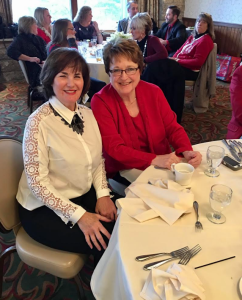
Linda Scaggs and a woman at a dinner smiling

The Foods I Love to Hate

Am I the only person who is not a fan of s’mores? I like chocolate, graham crackers and marshmallows by themselves, but I don’t want them mooshed together, especially melted. They are sickeningly sweet and make my teeth grit. You know the feeling, like fingernails down a blackboard. I think it’s the melted marshmallow. It turns sweeter when it’s heated. If you mix that up with melted chocolate, it’s just so sweet and cloying. I actually feel sick eating them, which is why I abstain. I’ve had s’mores twice. Once as a child and once as an adult. The reason behind that is sometimes you don’t like something as a kid but will like it as an adult, but I am still not a fan. I also don’t like pancakes with syrup. Pancakes should be treated like glorified toast--butter only. I love them with eggs. They are really good dipped in the yellow. I have to say that syrup ruins a good pancake. It makes them fall apart and get mushy. I don’t want to resort to eating them with a spoon. Syrup ruins the entire pancake eating experience. One of my bigger food aversions is coconut and sauerkraut. They are both equally disgusting. If I was stranded on a deserted island with only coconut trees, I’m pretty sure I would die, unless fresh coconut tastes better than the kind you buy in a bag. I can eat a small amount of sauerkraut if it’s cooked all day in pork. Other than that, no. Just no. My biggest food aversion is nuts. It is my opinion that nuts do not belong in food. Rice with slivered almonds is not a good combination. Dressing with chestnuts—no thank you. All candy bars in existence should not have nuts in them, or at least provide a nut-free version. How wonderful the world of candy bars would be if there were no nuts in any of them. Nuts belong salted in a can and that’s it, except walnuts. Walnuts should be drummed out of town because they taste so bad. Nothing tastes better with a walnut in it. Cracking walnuts is fun. Eating them is not. Other than these five things, I’m pretty easy to please. I’ll try anything at least once. If it’s fried, baked or grilled, I’m there. Strange-looking desserts? Bring it. But, by all that is holy, hold the nuts!

Law Day 2019: Keeping Our Kids Safe from Drugs

I was honored to be a part of organizing the Law Day 2019 luncheon in St. Clairsville, Ohio.  Juvenile Court Judge Al Davies was this year’s guest speaker. Like West Virginia, Ohio has been rocked by the opioid crisis.  Not surprisingly, this means  drug use among children has been on the rise.  But Judge Davies shed a ray of light on this otherwise dark picture. Most juvenile courts have a series of drug and alcohol programs as well as sentencing options that incorporate treatment and counseling. The drawback to these programs is that they deal with the issue of addiction after the fact.  But what about before the onset of addiction?  Is there any way to reach youngsters before they’ve been pulled into a culture of drug and alcohol abuse and end up in juvenile court? In 2016, the juvenile court in Belmont County, Ohio, partnered with schools, law enforcement, and volunteers throughout the county to establish the “Belmont County Schools Staying Clean” program.  Students can sign up at the beginning of each school year.  Being a part of this volunteer program provides students and their families with education, resources and mutual support.  It also gives students a way to confront peer pressure—citing their membership in the program gives them a real and meaningful way to say “no” to those who would invite them to experiment with illegal drugs. There’s plenty of fun for the kids.  Throughout the year, students are invited to a variety of sponsored activities and events.  But there’s a serious side too.  Random drug tests are performed throughout the school year.  The results are kept confidential and are not released to juvenile court officials or to the schools.  However, any positive test results are released directly to the student’s parents.  The idea is to promote family involvement as a way of dealing with drug issues as early and effectively as possible. The statistics Judge Davies shared are very encouraging.  At this point the “Belmont County Schools Staying Clean” program is up and running in eight middle schools and high schools throughout Belmont County.  Membership in the first year reached 700.  By the next year, the number of students participating in the program had nearly doubled—i.e., 1,313.  And membership continues to climb.  This year’s membership topped 1,500.  There’s also an educational program for fourth graders called “Too Cool For Drugs” that tries to reach students before they enter middle school. And the results?  As membership in these programs has increased, there has been a corresponding decrease in drug court numbers.   Reaching kids where they are, and engaging their schools, families, and communities in the effort, is working.  And that’s good news for our kids. The success of this program should be an encouragement to other communities.  Yes, the standard drug and alcohol programs used by juvenile courts are a help in combatting drug use among our children.  But what’s even more effective is when the court system joins hands with other interested organizations and volunteers to proactively reach into the schools.  I hope other communities will see what the juvenile court has done in Belmont County and follow its example.  Our kids deserve it! For more information, go to www.belmontcountyjuvenilecourt.com/programs.

A Great Night of Baseball

I would like to extend a big thank you to the Washington Wild Things for a great night of baseball. Last Friday was “Friday Night Lights Presented by Bordas & Bordas” at Wild Things Park. It was a fantastic night of baseball. I would like to extend particular thanks to Stu Williams and his whole family for hosting us and making us feel welcome. The weather was perfect. The stands were filled with families enjoying the game. Mascots were everywhere, including Justice the Legal Beagle, Spike of the Wheeling Nailers, and, of course, the Wild Thing itself! The food was fantastic and the fireworks after the game are some of the best around. Over the years, I’ve taken my family to dozens of Wild Things games and we’ve always had a great time. Minor league baseball is a great way to experience the game. There’s no traffic. The ticket prices and concessions are very reasonable, and you can get your kids right down by the action. Of course, I don’t mind admitting my biases when it comes to minor league baseball. In fact, when I’m traveling for my cases, I try to make a point of stopping by to check out the local team. Many of our experts and witnesses come from different cities and towns around the country. When I have witnesses in Columbus, Ohio, I’ll try to catch a few innings of the Columbus Clippers in their beautiful downtown ballpark. I’ve worked with an excellent medical billing expert in Ashville, North Carolina, home of the Ashville Tourists. One of my favorite clients lives just a few miles down the road from the Hagerstown Suns in Hagerstown, Maryland.  Anytime I’m in Charleston, WV for work, I’ll stop in to visit the West Virginia Power. I have a worksite safety expert who lives in Toledo, Ohio, the home of the Toledo Mud Hens. After taking the deposition of a defense expert witness at Duke Medical Center, I watched it rain on the field of the Durham Bulls. Checking out these teams, even if it’s just for a few innings and a hot dog, provides a break from stresses of travel and helps me focus on the work I’m doing for my clients. So, I can speak from experience when I say that the Wild Things, their team, their staff, and their stadium rank right up there when it comes to providing a great baseball experience. Stop by and visit the next time they are in town.

elder couple

What do you Want First - the Good News or the Bad News?

Have you ever had the thought—what if the news channels selected a time period in which they completely blocked off all communications surrounding the tragedies the world experienced daily? Would that shift be enough to divert your attention from the toxic negativity to the more productive and rewarding news making a substantial impact upon each of us as individuals and who we are as people in our communities? Think about it. You may be having a perfectly normal day, content with your life as it relates to your inner circle and then you see on the news. Story after story—catastrophic news—a series of unfortunate events. Immediately, you are affected and sometimes you are completely unaware of what that affect has made upon you. Maybe you suddenly feel low. Maybe you aren’t as comfortable going places in public, travelling, or suddenly you aren’t sleeping quite the way you ought to? Feelings that take away from the experiences that allow us to have a more carefree outlook on the world and our personal surroundings, thus changing who we are. Every action has a reaction. I believe we could all benefit from a little more exposure to positivity. Regularly, the news is overtaken by scandals, acts of criminals, terrorists, and it affects all aspects of who we are as human beings. Whether it bring someone’s inner being down or even has a bit more sinister affect encouraging a mentally ill person to be publicized as a copycat criminal. Do we even know who we really are anymore? How long would it take for communities to reap the benefits of the renewed and uplifted individuals if we changed what we were surrounded by for a period of time? A day? A week, month, or year? Sadly, the people out there doing good aren’t getting the recognition they deserve but because they are good, they don’t expect it. I’d like to see that change too. Showing appreciation should be a priority. Now, I am not blaming the media. It’s not their fault. These are the top stories. These are the top stories that draw people in, and they watch. It’s tough to just walk away from a breaking story that gives you a bird’s eye view; promising to see the photos and get the scoop on the latest scandal or crime. People struggle to walk away. Naturally, this has an impact on our everyday lives. Our communities need to turn the tables, setting examples, encouraging the heroes; placing less focus on the darkness that seems to want the spotlight. We need an adjustment. Let’s expose ourselves to more positives, find the silver lining in the clouds that may surround us. Who knows, perhaps it just might wear off on us and we can all be better people as a community perhaps making a difference small or large, who knows, but collectively, we can make a difference as a whole. Afterall, every action has a reaction. It’s your choice. Do you want the good news or the bad news?

The Importance of Alleviating Stress

With summer coming quickly upon us, I see so many people posting on social media the types of diets and fitness plans they are trying out in order to lose weight or tone up. However, just as important as our physical bodies is our mental health. Nurturing our mental health may be even more important due to the fact that our brains are the main hub of what makes us tick. Taking steps to sustain our mental health and managing stress in our lives can benefit us greatly by avoiding potentially dangerous physical outcomes. The main goal of managing stress is to practice techniques to trigger relaxation responses. These techniques include practicing meditation, breathing awareness, moderate exercise, taking time for a favorite hobby and of course, getting a good night’s sleep. Even a change in your surroundings such as cleaning, freshening up your living space, rearranging furniture or buying new throw pillows can help boost your mood. Understanding where your stress originates can help you decide your course of action as well. Issues related to mental health can impact people in different ways and there are many avenues to get the support you need.

The Meaning of the Memorial Day Poppy

Memorial Day has arrived and the small town I grew up and still reside will be holding the usual events, including the Memorial Day parade. As a child, I remember walking from our home to the main street, carrying a bag to fill up with the candy that would be thrown from the participants of the parade. However, what stood out to me as a child were the little paper poppies that were given out. My mom made sure to hand over a donation and we received our poppies. I was a child and thought they were so pretty, but never asked what the poppy symbolized and why we received them on Memorial Day. As I grew older, I found out why. During WWI, a Canadian soldier named John McCrae, was serving in Belgium. He was in an area where the landscape was destroyed due to the war when he noticed a place on the battlefield near trenches where the soldiers had buried their fallen brothers. On that site were thousands of little red flowers, the poppies, which had bloomed. He was so overcome with emotion by this sight of the poppies that he composed a poem “In Flanders Field”. The poem was written from the perspective of the dead on the battlefield. Three years later, a YMCA Military volunteer, Moina Michael, read the poem which was published in the Ladies Home Journal magazine. She described the experience as “deeply spiritual” and made a vow to always keep the faith and from that point forward wear a red poppy as a sign of remembrance to those who lost their lives. In 1920, Moina met with a delegate to the Department of the American Legion who promised to present her campaign to its convention. They were so interested and moved by the story that they agreed to endorse the movement to have the Poppy adopted by the National American Legion. Today, we still celebrate and honor those who lost their lives in the line of duty by wearing our poppies on Memorial Day.

Memorial Weekend – A Time to Give Thanks and Spend Time with Family

My family and I spent the last weekend cleaning off the porch, getting the patio furniture out and planting flowers. Spring is such a wonderful time. The weather is getting warmer, the flowers are blooming, and you just want to be outside. As soon as it starts warming up, my family loves to grill and eat outside. Also, because they love to hunt, we often grill wild game, so I thought I would share one of our favorite recipes for quail, pheasants, duck, etc…. (see below) that we will be making this weekend. Like a lot of people, we will be grilling out this Memorial Weekend and spending time as a family. However, we will also remember and give thanks to all men and women who served in our Armed Forces and sacrificed their lives to protect our freedoms. So, however, you choose to celebrate the long weekend, just remember to take some time to reflect on the true meaning of Memorial Day. Recipe for Bacon-Wrapped Quail with Bourbon-Pepper Jelly Glazed Recipe courtesy of Emeril Lagasse Ingredients: 8 quail, about 5 1/2 ounces each, dressed 1 teaspoon salt 1 teaspoon freshly ground black pepper 8 strips thick-cut bacon 1/2 cup pepper jelly 3 tablespoons bourbon 1/2 teaspoon Worcestershire sauce Method: Season each quail with 1/8 teaspoon of the salt and 1/8 teaspoon of the pepper. Wrap the bacon around the quail and secure with a toothpick. Preheat a grill to medium-low. In a bowl whisk the pepper jelly, bourbon, and Worcestershire sauce until smooth. Place the bacon-wrapped quail on the grill and cook, turning frequently, for 10 to 12 minutes, or until bacon is beginning to caramelize in places and the quail have grill marks on all sides. Brush the quail with the glaze and continue turning, glazing, and cooking until birds are nicely glazed and grilled on all sides and the flesh is just cooked through, about 10 minutes longer. Set aside to rest briefly before serving 2 quail per person.

How Do You Celebrate Memorial Day?

As Memorial Day weekend quickly approaches, I am reminded of some of the ways my family celebrated the holiday weekend when I was growing up. Most of the time we would go camping for the long weekend and have a family BBQ at the campground. There were a few Memorial Day weekends I remember traveling with my family to New Hampshire to visit the gravesites of loved ones who had passed and plant flowers for them. Many families celebrate Memorial Day weekend in honoring the service men and women who fought for our freedom who are no longer with us today. My grandfather was a veteran so when we would visit his grave on Memorial Day, we always placed a flag at his grave as well. Memorial Day was originally known as Decoration Day and originated in the years following the Civil War. In the late 1860’s Americans begun holding springtime tributes to the fallen soldiers. They would decorate their graves with flowers and recite prayers. In the year of 1966 the federal government declared Waterloo, New York the official birthplace of Memorial Day. Waterloo was chosen because it hosted an annual community-wide event where the local businesses closed their shops and residents decorated the graves of soldiers with flowers and flags. Much like the tradition that is carried out today. So, however you choose to celebrate Memorial Day, I hope it is filled with great memories of loved ones.

Live Appointment TV Watching

What’s more fun - binge watching shows or live watching? Before Game of Thrones, I’d have said binge watching is the way to go. Sadly, Sunday night the wildly popular Game of Thrones came to an end. After 8 seasons the show wrapped up leaving a huge hole in my Sunday night TV routine. Like most, I was not satisfied with the ending of the show. But thanks to Game of Thrones I found the value in classic appointment TV. New-aged streaming services have made binge watching the new norm. Although I’m a huge fan of binge watching, I have found new joy of live TV. I have always tune in for live programming like the news or talk shows, but anything else I usually set aside to binge later. I have found watching a show live adds more to the experience. Live tweeting with other watchers or sharing your thoughts and opinions in a group chat with friends in real time, is way better than waiting for your friends to finish watching binge watching before you can discuss. Also, a show like Game of Thrones, which is insanely popular, waiting to watch later leaves the opportunity for spoiler to ruin the show for you. So, thank you Game of Thrones for ripping my heart out with the ending but more importantly bringing people together a group of people to see who would claim the Iron throne.

4 Baseball Myths Explained

Spring has sprung and April’s showers have graced us with some beautiful May flowers. Along with the warming temperatures and longer days that we’re enjoying comes the return of another seasonal rite – baseball & softball season. Thousands of youngsters will find themselves rounding the bases, tagging runners, or even picking flowers in the outfield over the next few months as little league baseball and softball seasons hit full speed. It can be argued that the game of baseball has more clichés than any other, and while we all know the object and basic rules of the game, some clichés that you’ve heard since your childhood years to explain the game of baseball, the same one’s that you may have repeated over and over to those sitting next to you, or even jeered to an umpire are just dead wrong. The following are just a few of the baseball rule myths that we seem to hear the most, with the actual baseball rule or interpretation included. Myth #1: A tie goes to the runner I think we’ve all heard this one at one time or another. A play at a base is so close that it appears that the runner and the ball arrive at the same time. In reality, the baseball rule book never addresses a ‘tie’ at a base. It is simply up to the umpire to determine if the runner was touching the base before the ball arrived in the fielder’s glove. Myth #2: A batted ball that hits home plate is foul THUD! That unmistakable sound of a batted ball that hits home plate. It seems to disorient everyone around it while the batter, pitcher, catcher and fielder decide what to do in the chaos. Inevitably, the play should continue, but usually, a voice comes from the stands, “that ball hit the plate, ump!” Why yes…yes it did. When fielded in fair territory, it becomes a fair ball. Myth #3: When running through first base, a runner must turn right to avoid being tagged out on his way back The inning is off to a good start. A solid hit and the runner beats the throw to first base. After running through the base, the player then walks back to the base in fair territory to enjoy his moment of glory. Again, that infamous voice from the crowd tells the first baseman to, “TAG HIM!” A player who overruns first base is legally entitled to return to the base in any direction that he’d like as long as, in the umpire’s judgement, he did not make a legitimate move toward second base. Myth #4: A player must make an attempt to get out of the way in order to be awarded first base after he’s hit by a pitch This one is fairly simple. The batter is SUPPOSED to make an attempt to avoid being hit by the ball. Again, this defaults to the umpire’s judgement. In every single instance of my umpiring career, I would award first base in this instance. Many players at the youth level lack either the quickness, awareness, or simply freeze at the sight of a baseball speeding toward them. Besides, do you really want to be the one protesting after a child is struck with a baseball? Here’s hoping that this enhanced your knowledge of the rules of the game of baseball. Now, sit back, relax and enjoy the memories that our young people are making on the diamond this year. Most importantly, on behalf of Bordas & Bordas, best of luck to all area little league baseball and softball players this season. Play ball!

Contact Us

Fill out this form below and we'll contact you shortly
*Required Fields