Blog / In the Community

Blog

All In the Community Know the Law Legal News and Product Recalls Legal Options

Coffee Drinkers Beware

Coffee drinkers beware. Your coffee may soon come with a cancer warning label. A California superior court judge in Los Angeles recently ruled that, under the California Safe Drinking Water and Toxic Enforcement Act of 1986, businesses must give customers a “clear and reasonable” warning about the presence of high levels of a chemical known as acrylamide, which is considered both toxic and carcinogenic. Acrylamide is created when coffee beans are roasted. The lawsuit, which was filed in 2010 by a nonprofit organization called Council for Education and Research on Toxics, targeted several companies that make or sell coffee, including Starbucks, 7-Eleven, and several other well-known coffee chains. The coffee companies argued that there is not enough acrylamide in coffee to harm consumers. However, the judge ruled that the coffee companies did not show that acrylamide was safe at present levels. They also did not show that drinking coffee has any benefits. The case is not over yet though. The coffee companies had until Tuesday, April 10, to file their objections to the judge’s ruling and then there will be a final decision. The judge will decide what the penalties and remedy should be if the case has not been settled before then. However, as one writer observed, this case is just “the latest example of a judge being called to weigh in on scientific matters. The same thing is happening with climate change.” While California is the only state to have addressed this issue, some believe it is only a matter of time before cancer warnings on coffee products spread to other states. Coffee companies who sell nationally and internationally may find it to be more cost-effective to change their packaging altogether rather than create separate packaging for California. I guess we will just have to wait and see what coffee companies decide to do.

April is National Child Abuse Prevention Month

On April 4, 1983, President Ronald Reagan issued a proclamation dedicating April 1983 as National Child Abuse Prevention Month. In that proclamation, President Reagan recognized that children can be abused, harmed, and exploited in a number of different ways, including physically, sexually, and emotionally. He called upon the public to take action to prevent, rather than to remedy the mistreatment and neglect of children, asserting that “action taken after cruelty has occurred is often too late.” He invited governors, other political and public leaders, and those involved in private groups to join together in efforts to increase vigilance against harm toward children and to protect the future of the United States. President Reagan’s 1983 proclamation built upon steps that the United States government had already been taking to increase awareness, prevention, and treatment of child abuse and neglect nationwide. In 1974, President Nixon signed the Child Abuse Prevention and Treatment Act, the first federal child protection legislation enacted in the United States. CAPTA provided funding to state programs designed to combat child abuse and sent a message to the nation that the government was issuing a nationwide response to this problem. CAPTA has continued into the present day in supporting state efforts in this regard. A number of additional national funding efforts followed, and many laws, programs, and agencies have arisen in the years since the initial passage of CAPTA which have further developed and strengthened efforts to prevent and address child abuse and neglect in all of its devastating forms all over the country. This year, April marks the 35 th Anniversary of President Reagan’s proclamation and the 35 th recognized National Child Abuse Prevention Month. While we as a nation have come a long way in recognizing the severity of this problem and taking steps to prevent child abuse and protect our children, there is always more that can and must be done. There are many different ways in which you can get involved in these efforts, from as simple as paying attention to children you encounter in your life to donating your time or money to causes that protect children or becoming an advocate in a legal or political forum. Educate yourself on youth protection and recognizing the signs of abuse and neglect, and what steps you can take if you think a child may be suffering. Donate to recognized causes for prevention of child abuse or child mentorship programs, or even consider becoming a mentor yourself. Write to your state and federal representatives in support of laws that protect children and their rights, and that provide funding to help innocent children who have been harmed. Regardless of differences in political or social opinions, we can all agree that children deserve to be loved, protected, and kept safe, and April is a month that reminds us how important it is to focus on that goal.

Mother and daughter smiling, hugging and holding a basket ball

Take Me Out to the Ballgame

As I sit here watching the snowflakes fly outside my office window, I am reminding myself that it is baseball season. I always look forward to hearing that the teams (the Pirates in particular) are heading to Florida in preparation for the upcoming season. I don’t know if that’s because I know that is a sign that spring is around the corner (this year, apparently the joke is on me) or because I’ve actually become a fan of the game. Hailing from a family where motorsports is king, baseball wasn’t something that was a big deal in our household. I recall going to my first Pittsburgh Pirates game at Three Rivers Stadium with my church youth group. I was probably about 12 or 13. It was a hot, mid-summer afternoon, our seats were not under cover and it seemed as though play went on forever. I knew the object of the game was for the players to hit the ball and make it around the bases, but I didn’t really know about the game. I was thankful for the experience, but I can’t say I was anxious to do it again. Fast forward several years to my sophomore year at Bethany College. As a communications major, it was required that I complete on-campus media experiences. I had been a member of the newspaper staff writing news and feature stories the first semester, but my advisor thought it would be a good idea to change things up a bit, so covering baseball became my new assignment for the spring semester. I was mortified! For starters, how could I write about something I knew nothing about? Secondly, the head coach was a little high strung and he yelled a lot and I was going to have to cover the baseball games? I was mortified! After some sleepless nights and a whole lot of stressing (and in an effort not to appear as a total butt when the first article was published) I told the coach that I really didn’t know a whole lot about the game. I asked that he please be patient and that I would do my absolute best to catch on as best I could and as quickly as possible. In that instance, I figured honesty was the best policy, right? Fortunately for me, he took in all in stride and apparently looked at the situation as a teaching opportunity. By the end of the season, I’d written many articles on the topic, learned the rules of the game, field positions, how to keep score, etc. I even tried batting, but that didn’t go so well. And while all of that was happening, I became a fan. Here we are, 25-plus years later, and I am still following the Pittsburgh Pirates. I always enjoy attending the games – much more than I did that very first time. Having a better understanding of baseball has certainly contributed to that. I was a fan of Andrew McCutchen and, of course, was sad to see him leave Pittsburgh. And PNC Park – what a beautiful place with a stunning view of an amazing city! How could I not love the Buccos? My fingers are crossed for a successful season. Bethany’s baseball coach, my long-time friend, is still coaching at the College, but I’m told he has mellowed since the early 90s. Thanks for the lessons, Carv. Spring wouldn’t be the same without baseball, even if it is snowing.

Are Your Creditors Treating You Fairly?

Unfair debt collection practices continue to plague our region. Many of our clients have experienced harassing phone calls; demands for payments not truly owed; illegal threats of bogus consequences for failing to pay, up to and including imprisonment; or lawsuits to collect stale debts that are barred by the applicable statute of limitations. These abuses are disturbingly common. Abusive debt collection practices can take a terrible toll, emotionally and practically. Beyond the fear, stress and embarrassment, families can have their bank accounts frozen, making it impossible to pay for their most basic needs. Debt collectors frequently place incorrect information on people’s credit reports, impairing their ability to secure credit, housing and even employment on some occasions. Debt collection has become the number one source of complaints at both the Federal Consumer Financial Protection Bureau and the Federal Trade Commission. Consumer complaint data indicates the most common grievances are mistaken information and what the CFPB calls “aggressive communication tactics and threats.” Reports demonstrate no shortage of appalling anecdotes. A West Virginia family recently had their furniture, clothes and personal belongings taken to the town dump after a bank and its debt collector foreclosed on the wrong home. Another West Virginia woman was sued for a medical debt that she had already paid in full. The prevalence in debt-collection problems appears to be a combination of aggressive lending in prior years contributing to a rise in payment delinquency and an explosion of new debt buyers and a deterioration of industry practices. Having paid pennies on the dollar for the right to go after a portfolio of purportedly delinquent debtors, many debt buyers fail to determine the validity of the data they purchased. Often, years have passed and misinformation has become engrained into the collection process. Rather than perform due diligence, collectors often adopt a shotgun approach, hoping to frighten a few people into paying opposed to pursuing their rights. Fortunately, for West Virginians, strong state remedies exist. Penalties of over $1,000 for each act (i.e. call or letter) that violates state law are provided, along with the right to recover your actual damages, including for your emotional distress, and your attorneys’ fees. Consider contacting us if you have been subjected to the practices described herein, including: threats that non-payment will result in arrest or garnishing wages without informing the consumer that a judicial order is necessary for any garnishment; the collection of old debt that may be passed the statute of limitations; collection or threatened assessment of attorneys’ fees; the communication with any employer of information relating to an employee's indebtedness; the disclosure of information relating to a consumer's indebtedness to any relative or family member of the consumer if such person is not residing with the consumer; any communication with a consumer whenever it appears that the consumer is represented by an attorney; any false representation of the extent or amount of a debt, or of its status in any legal proceeding; any false reports by creditors to credit reporting agencies and auto-dialed collection calls made to your cell phone without your permission.

Consider Donating to Easter Seals This Sunday

April is World Autism Awareness Month and, as you may have seen on our Facebook page, last Tuesday members of the Bordas & Bordas firm proudly wore blue in support of World Autism Awareness Day. Autism affects an estimated 1 in 45 children nationally and is one of the fastest-growing developmental disabilities. Advocacy groups such as Autism Speaks seek to spread awareness and acceptance of people with autism with their “Light It Up Blue” campaign. While we wore blue, landmarks, buildings and other structures were lighted up blue to show support of World Autism Awareness Day. Autism Speaks is a national organization. However, a number of local organizations also provide advocacy services for people with autism. One such organization is Easter Seals. Easter Seals has been helping individuals with disabilities, and their families, for more than 80 years in the Ohio Valley. Its mission is to provide “exceptional services, education, outreach, and advocacy so that people living with autism and other disabilities can live, learn, work and play in our communities.” Easter Seals offers programs such as early intervention, outpatient medical rehabilitation, medical services, and a variety of educational programs. I have seen firsthand the impact Easter Seals can have on a child, and, as a nonprofit organization, it is in need of our help. This Sunday the 15th, Easter Seals will hold its 44 th annual telethon to raise money for its various programs. The telethon will be held from 3:00 p.m. to 6:00 p.m. on WTRF-CBS. All funds raised will stay local and be used to help individuals here in the Ohio Valley. I ask everyone to consider donating. Any donation, even a small one, can go a long way to helping support this great organization. If you are interested in learning more about Easter Seals, please feel free to call them at (304) 242-1390 or visit their website at http://www.easterseals.com/wv/.

Moms - Your Best Is Good Enough!

I have recently read an article about a woman named Celeste Erlach who wrote her husband a letter asking for help raising their two small children, a baby and toddler. Apparently, this letter went viral. In her letter she went into detail about needing some rest but wasn’t getting help from her husband as he kept pushing the bassinet toward her side of the bed until she took over. This incident pushed her to the point where she wrote this famous letter to her husband. After I read the article, I came to the conclusion that the most disturbing part for me was the fact that she was afraid of people pinning her as an inadequate mother. It was then when I looked back on my own experience with my three children and the struggles I endured. I also wanted to be the “perfect mom” and impress our families and friends with the impression I could do it all. I am here to let young moms know that you don’t have to be perfect. Perfect moms don’t exist and the only thing that should be expected from us is that we do the best we can. Asking for help does NOT mean you are inadequate and you shouldn’t feel guilty in doing so. We need to take care of ourselves because if we don’t we are no good for our children. This means letting up on ourselves as well because I believe we are our own worst critic at times. My words to all moms, be kind to yourselves and don’t be so judgmental on other moms. We all have our trials and they will pass. Get up, dust yourself off and continue on with the great adventure we call motherhood.

Driving

"Two-Step Program" Required Upon Gaining CDL Before Driving Solo

In today’s world, a potential applicant needs to be 18-years of age before they can apply for a commercial driver’s license. Depending on the applicant, this could lead to a young, inexperienced and potential unprepared driver being permitted to get behind the wheel of a large commercial motor vehicle. A new bill aimed at allowing the interstate operation of commercial vehicles by 18 to 21-year-olds has hit the floor of Congress, with support from various lawmakers, the International Foodservice Distributors Association (IFDA) and the American Trucking Associations (ATA). The “Developing Responsible Individuals for a Vibrant Economy” or “DRIVE-Safe” Act, creates a “two-step” program for 18 to 21-year-olds who gain their commercial driver’s license (CDL) must complete before being given the green light for solo interstate operation. I believe this proposed bill is sound and necessary for the safety of our roadway!!! The program’s rules outlined in the bill include, but are not limited to: The completion at least 400 hours of on-duty time; Another 240 hours of driving time completed with an experienced driver in the cab with them and; Trucks utilized by these drivers must be equipped with safety technology including active braking collision mitigation systems, video event capture, and a speed governor set at 65 miles per hour or below. The proposed bill will strengthen many current industry training programs beyond current federal requirements to ensure safety and that drivers are best prepared. If you are involved in a tractor- trailer collision, please note there are many additional rules and regulations that govern the industry. It is important that you contact an attorney immediately to discuss specifics of your accident so the attorney can investigate and determine what, if any rules/regulations were violated, thereby resulting in your unfortunate event. Please call Bordas and Bordas with any questions.

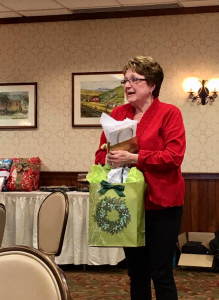
Linda Scaggs holding gifts

The First Woman To Run for President of the United States

In 1872, Victoria Woodhull ran for President; she was the first woman in the United States to run, and her party was called the Equal Rights Party. She couldn’t even vote for herself, however, since it was nearly 50 years before the 19 th Amendment to the Constitution gave women the right to vote. Not only was she the first woman to run, but her running mate, Frederick Douglass, was the first African-American ever nominated for vice president. Victoria Woodhull was a colorful and convention-defying woman. She was born in Homer, Ohio is 1838, and was an activist for women’s rights and labor reform. She also advocated “free love,” by which she meant the freedom to marry, divorce, and bear children without government interference; these freedoms for women were radical concepts during her time. She rallied against the hypocrisy of society’s tolerance for men who had mistresses. Woodhull made her first fortune as a traveling healer and clairvoyant. When she was young, her father put her and her sister, Tennessee, to work telling fortunes, contacting spirits, selling life elixirs, and offering cures for diseases ranging from cancer to asthma. She claimed to have made a small fortune with this business during the Civil War, but there were setbacks. For example, her sister/business partner was indicted for manslaughter in Illinois after one of her cancer patients died. The sisters moved to New York City, where they met railroad baron Cornelius Vanderbilt and worked as personal clairvoyants and healers for him. They also got stock tips from Vanderbilt, from which they profited well during a gold panic in 1869. With the financial backing of Vanderbilt, Woodhull and her sister became the first female stockbrokers on Wall Street, operating their own brokerage firm. They never gained a seat on the New York Stock Exchange, though, something that no woman would achieve until 1967. The sisters also began to publish their own newspaper. In April 1870, Woodhull announced her candidacy for president, campaigning on a platform of women’s suffrage, regulation of monopolies, an eight-hour work day, and welfare for the poor, among other things. She was nominated at the Equal Rights Party’s May 1872 convention. Although the party also nominated famed abolitionist Frederick Douglass as her running mate, he himself never acknowledged the nomination. Ulysses Grant won the 1872 presidential election, serving his second term. Woodhull returned full-time to her advocacy, and following the election, she published an article in her newspaper aimed at exposing the popular preacher, Henry Ward Beecher, as an adulterous hypocrite. Beecher had condemned Woodhull’s free love philosophy in his sermons, which infuriated Woodhull, especially given his extramarital affair with a married woman. Beecher had many supporters, and the backlash was immediate. Beecher’s supporters helped the authorities secure information to issue arrest warrants for Woodhull and her sister on charges of sending obscene material through the mail. The “obscene material” was the exposure of the affair in her newspaper. Woodhull ultimately was acquitted, although she remained in jail for about a month. Eventually, Woodhull moved to England, where she met and married her third husband. In England, she became a champion for educational reform. She died at the age of 88, in 1927.

Suburban Estate

Was it Really the Nails?

God first announced His plan for sending a savior in the garden of Eden. When Adam sinned, God promised to send someone to “crush” the wily serpent and to provide a final remedy for sin. Again and again the prophets repeated this promise.  But the savior would not come as a conquering hero. No, the prophets said he would come as a suffering sin-bearer who would willingly lay down his life. When Jesus arrived on the scene, the crowds saw a teacher, a healer, and a miracle worker. But Jesus fully understood His mission. He knew that His life was on a divine trajectory that would lead Him to the cross. “I lay down my life,” He said, “so that I may take it up again.” To make the point perfectly clear, He added: “No one takes it from me, but I lay it down on my own.” The old hymn reminds us that as He hung on the cross “He could have called ten thousand angels.” Jesus, the Son of God, had every heavenly resource at His command. But He was determined to fulfill His life’s purpose.  So He endured the scourging, the beatings, the humiliation and, yes, even the cross. He did it all willingly. He did it with a faithful and obedient heart. He did it with you and me in mind. It wasn’t nails that held Jesus to the cross. It was love!

Cameras Can Sometimes Be the Best Witnesses

Over the years a debate has ensued between Fleet Owners about the necessity to install inward and outward facing cameras on all commercial tractor trailers. Safety directors have become proponents of installing these cameras, believing they are vital tools for commercial drivers going forward, outweighing any privacy or other concerns drivers and/or Fleet Owners may have. Over the last two years nationally recognized trucking companies have installed such cameras on their tractor trailers.  The belief is that truck drivers were getting blamed for accidents where they were not at fault. With that being said, the same argument holds true if the truck driver is at fault. These cameras ultimately serve as a silent witness because they tell an unbiased full and complete story as to how the accident happened. If injured in a trucking accident, it is vital for you to immediately contact an attorney who can prepare and send a preservation letter to the applicable commercial carrier so that any video footage is saved. The longer you wait, the greater likelihood the video footage is destroyed! Carriers have been known to record over unfavorable footage, or simply fail to save it without a preservation letter. These cameras, if present, can be your most valuable witness at trial. The cameras may show evidence of the truck driver’s negligent behavior, forcing the driver’s employer and/or applicable insurance carrier to take notice and effectively manage the risk in those situations. The camera provides an honest, up-front evaluation regarding exposure, and never lies! If you have any questions regarding this issue please call Bordas and Bordas and we will be happy to discuss.

Jo Ann Robinson and the Montgomery Bus Boycott

March is Women’s History Month. We celebrate the lives of remarkable women, both the well-known and those whose stories have been largely forgotten. One such woman is Jo Ann Robinson, a largely unsung heroine who played a key role in the historic 1955 Montgomery Bus Boycott. Jo Ann Gibson Robinson was born on April 17, 1912, in Culloden, Georgia, the youngest of 12 children. She distinguished herself early as the valedictorian of her high school class, and she later became the first person in her family to graduate from college. She attended Fort Valley State College and fulfilled her dream of becoming a public school teacher in Macon, Georgia. She taught in Macon for five years while earning a master’s degree from Atlanta University. In addition, she pursued English studies at Columbia University in New York. After teaching in Texas, Robinson accepted a position at Alabama State College in Montgomery, Alabama. It was in Montgomery that she became active in the Women’s Political Council (“WPC”). WPC was a local civic organization for African American professional women that was dedicated to fostering women’s involvement in civic affairs, increasing voter registration in the city’s black community, and aiding women who were victims of sexual assault. In 1949, soon after arriving in Montgomery, Robinson was verbally attacked by a public city bus driver for sitting in the front “whites only” section of the bus. This event had a profound effect on her, and the following year, when she was elected president of WPC, Robinson made desegregating the city’s buses one of the organization’s top priorities. Her precise response was an attempt to start a protest boycott. The WPC repeatedly complained to Montgomery city leaders about unfair seating practices and abusive bus driver conduct, but their complaints went nowhere. Nonetheless, Robinson continued as an outspoken critic of the treatment of African-Americans on public transportation.  She also was active in the Dexter Avenue Baptist Church. Following Brown v. Board of Education (1954), and Rosa Parks’ arrest in December 1955 for refusing to give up her seat to a white person who was standing, Robinson and a few associates leaped into action. That same evening, with Mrs. Parks’ permission, Robinson stayed up copying over 50,000 handbills at her church, calling for a one-day bus boycott because of the treatment of Rosa Parks. The handbills were distributed around the city in black communities. The one-day boycott was a success, and for this reason, the campaign was continued, this time with the involvement of Dr. Martin Luther King Jr. In order to protect her position and her colleagues at Alabama State, Robinson purposely stayed out of the limelight, working diligently in the background organizing and providing transportation for boycotters. Robinson became the target of several acts of intimidation. In February 1956, a local police officer threw a stone through the window of her house. Two weeks later, another police officer poured acid on her car. Finally, the Governor ordered the state police to protect the boycott leaders. Although African Americans represented over 75 percent of Montgomery’s bus ridership, the city resisted complying with the protesters’ demands. The boycott lasted for over a year because the bus company simply would not give into the demands of the protesters. Initially, the demands did not include changing the segregation laws, rather, the group demanded simple courtesy, the hiring of black bus drives, and a first-come, first- seated policy, with whites entering and filling seats from the front and African Americans from the rear. Ultimately, however, the NAACP sued the city in federal district court seeking to have the busing segregation laws totally invalidated, and they succeeded. The boycott continued until December 20, 1956, when the U.S. Supreme Court declared segregated seating on buses unconstitutional. The Montgomery bus boycott was one of the first successful protests of segregation in the deep south, inspiring other nonviolent civil rights protests. It also established Dr. King as a prominent national figure. Robinson was especially proud of the role that women played in the boycott’s success, saying: “Women’s leadership was no less important to the development of the Montgomery Bus Boycott than was the male and minister-dominated leadership.” Not long after the boycott ended, Robinson resigned from her position at Alabama State College and moved on to Grambling College in Louisiana, and later to public schools in Los Angeles, California. Robinson published a memoir entitled The Montgomery Bus Boycott and the Woman Who Started It in 1987. In it, she expressed her great pride in the success of the boycott.  She remained actively involved in her community and in local politics until her death in Los Angeles on August 29, 1992.

Mooney Bill - Bad for West Virginia

Legislation introduced by Congressman Alex Mooney (R-WV-2), and being considered in a U.S. House of Representatives Committee this week, would exempt attorneys and law firms from rules designed to protect West Virginians from abusive debt collection practices. As attorneys we know that this legislation is tragically misguided. H.R. 5082, the Practice of Law Technical Clarification Act of 2018, would severely weaken the federal Fair Debt Collection Practices Act by carving out an exception, just for attorneys that immunizes them from liability when they abuse the debt collection process in court. It would also prevent the Consumer Financial Protection Bureau from exercising its supervisory and enforcement authority over lawyers and firms engaged in abusive debt collection practices. According to the Urban Institute’s findings, 42 percent of West Virginians have debts in collections, nearly 10 points above the national average. More than half of the residents of Braxton and Clay counties, in Representative Mooney’s district, have debts in collections. If his bill should pass, hundreds of thousands of West Virginians will likely be exposed to harmful and aggressive debt collection practices previously made illegal under federal law. Every year thousands of cases are filed in the courts against West Virginia consumers to collect debts. The majority of these cases are filed by lawyers representing debt buyers— out-of-state businesses that buy delinquent debts for pennies on the dollar. Many of the debts cannot be verified as actually owed by a particular defendant, or include inflated amounts due, or indeed, have already been completely satisfied. Yet consumers rarely have the resources to contest these cases. As a result, many cases result in a default judgment for the collector, allowing the debt buyers to seize the assets and wages of the consumer-defendant.  These judgments will generally have a long-lasting impact on the consumer’s credit report, making it more difficult for consumers to obtain housing, a loan, find a job or even secure insurance. Some Recent Examples of Abuses Against West Virginia Consumers Include Parents being harassed and threatened for debts owed by their adult child A bank foreclosed on the wrong property and took the owners’ furniture, clothes and other belongings to the town dump--and it was the wrong house! Harassing a woman for debts she did not owe after her identity was stolen Debt collectors lying to consumers by telling them to pay up or the police were on their way to arrest them if they didn't pay in full immediately Consumer getting sued for a medical debt she had already paid in full The current federal consumer protection law provides a remedy for consumers who have been abused in these ways, and allows them to sue lawyers who bring these cases in unfair, deceptive, or abusive ways. But Congressman Mooney’s bill—H.R. 5082—eliminates these protections for consumers, simply for the benefit of the attorneys who are hurting consumers. If it passes, his bill would allow lawyers to subject West Virginians to numerous unfair litigation tactics currently prohibited under this federal law. In short, Congressman Mooney’s bill will hurt those he is supposed to represent. This effort to shield attorneys and law firms from the consequences of breaking the law will come at the expense of West Virginia consumers, their families, and the majority of debt collectors and attorneys that abide by the law. Lawyers occupy a privileged role in our justice system and should be held to the highest ethical and professional standards. For that reason, to support West Virginia consumers and ethical attorneys engaged in debt collection, we urge Rep. Mooney to pull his support for this bad bill. -- Jason Causey, of Bordas and Bordas, represents consumers throughout West Virginia and Ohio; Margot Saunders, who lives in Hurricane, WV, has been an attorney with the National Consumer Law Center for over 25 years, a national public interest law firm representing low-income consumers before Congress and the federal agencies.

Contact Us

Fill out this form below and we'll contact you shortly
*Required Fields