Blog / In the Community

Blog

All In the Community Know the Law Legal News and Product Recalls Legal Options
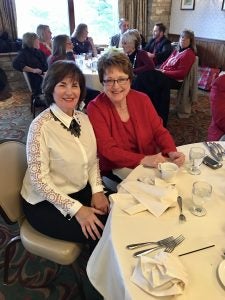
Linda Scaggs and a woman at a dinner smiling

The Best No-Bake Peanut Butter Pie

If you’re looking for a quick, delicious dessert to make during these summer months, but without baking, you’re going to love this! I found the recipe for this no-bake peanut butter pie via Pinterest and each time I’ve made it, it’s been a hit. You will need: 8 ounces cream cheese (softened) 1 cup creamy peanut butter 1 cup confectioners’ sugar 1/4 cup milk 1 teaspoon vanilla extract 2 – 8-ounce containers of frozen cool whip, thawed 9- inch store bought chocolate Oreo pie crust Chocolate syrup for garnish (optional) Peanut butter chips for garnish (optional) Follow these steps: Using an electric mixer beat cream cheese, peanut butter, sugar, milk and vanilla extract in a large bowl until creamy. Fold in 1 of the 8-ounce containers of cool whip. Reserve the other container of cool whip for serving. Spread mixture into prepared pie crust. Chill pie in the refrigerator for at least 4 hours or overnight. Before serving, top pie with remaining cool whip. Garnish with chocolate syrup and peanut butter chips if desired. It’s delish! See for yourself.

Hammer

Summerford v. Abington Memorial Hospital

Marvin Summerford, age 88, presented to the emergency department of Abington Memorial Hospital ("AMH") with concerns for pneumonia. He was admitted to AMH, and the next day, he suffered cardiac arrest. Mr. Summerford survived and was transferred to the ICU. The next day, a feeding tube was inserted and an order was placed for an x-ray to confirm proper placement. The x-ray revealed that the tube had been inadvertently inserted into the lung and was therefore removed. The feeding tube was re-inserted, and another x-ray was ordered to confirm proper placement. Again, the feeding tube was not properly placed. After the third try to properly place the feeding tube, Dr. Kristin Crisci, a radiologist, incorrectly confirmed proper placement. Unfortunately, the tube was in Mr. Summerford’s lung when tube feedings began; consequently, his condition deteriorated, and there was a delay in diagnosing the improper placement of the feeding tube. By the time the error was recognized, Mr. Summerford had died. After a five-day jury trial, the jury returned a verdict on May 13, 2016 in favor of Mrs. Summerford’s daughter and against AMH and Dr. Crisci in the total sum of $5,000,000 ($1.5 million for the wrongful death claim and $3.5 million for the survival action claim). The jury apportioned liability as follows: AMH 25% and Dr. Crisci 75%. The verdict was molded to add Rule 238 delay damages for Mrs. Summerford and against the defendants, resulting in a molded verdict in the amount of $5,947,157.53. The defendants raised several issues for appeal, two of which requested judgment notwithstanding the verdict (JNOV) claiming that Summerford failed to present substantial competent evidence to support her negligence claims. Pennsylvania law provides that a motion for a non-suit may be granted only where it is clear that no other conclusion could be reached under the evidence presented. Bowser v. Lee Hosp., 399 Pa.Super. 332,337,582 A.2d 369,371 (1990). The Superior Court quickly disposed both issues by stating that there was sufficient evidence to support both the negligence claim against Crisci and the corporate negligence claim against AMH. Crisci argued that she is entitled to a new trial because AMH’s radiology expert testified that a first year resident could have identified the misplaced tube on x-ray. Here, the Superior Court referred to precedent, which holds that: very unwise or irrelevant remark made in the course of a trial by a judge, a witness, or counsel does not compel the granting of a new trial. A new trial is required when the remark is prejudicial; that is, when it is of such a nature or substance or delivered in such a manner that it may reasonably be said to have deprived the defendant of a fair and impartial trial. Commonwealth v. Goosby, 450 Pa. 609, 611, 301 A.2d 673, 674 (1973) (citations omitted). Further, the Superior Court noted that the trial court properly disallowed AMH’s expert to offer an opinion regarding the standard of care because the opinion was not contained in the expert’s report. Finally, the court explained that the expert’s testimony when taken in context was referring to the quality of the x-ray, and not the interpretation of same. Thus, the court found no merit to Crisci’s claim. Next, Crisci argued that the trial court erred in allowing AMH’s radiology expert to testify that Crisci’s negligence “increased the risk of harm” to Summerford. The Superior Court held that the trial court’s discretion concerning the allowance of expert testimony was broad, and that it was appropriate for the court to limit AMH’s radiology expert to “increased risk of harm,” and prohibiting him from opining that Crisci’s negligence caused Summerford’s death. Finally, the defendants argued that the $5,000,000 jury award was excessive, punitive and clearly exceeded what the evidence warrants. In this case, the jury’s award was based solely upon a noneconomic award. Mr. Summerford was 88-years-old at the time of the time of his death; he had suffered from dementia, syncope, hypertension, pulmonary insufficiency, congestive heart failure, coronary artery disease, and other maladies; and, he suffered cardiac arrest prior to the negligent conduct, which defendants argued reduced significantly his chances of mortality. Specifically, the defense expert, John Kirby, M.D. testified that an 88-year-old person normally has a life expectancy of 4.55 years, but that Mr. Summerford had a zero percent life expectancy before the feeding tube in dispute was placed into Mr. Summerford at AMH. Regarding the wrongful death claim, the defendants argued that Mrs. Summerford produced very little evidence to demonstrate the value of loss of the decedent’s life to the family. Mr. Summerford lived in a nursing home in Pennsylvania while Mrs. Summerford lived in California or Georgia for most of her adult life. The defense argued that while Mrs. Summerford visited her father whenever she could get to Pennsylvania, the visits were infrequent. Furthermore, while Mrs. Summerford testified that she spoke with her father on the telephone several times each week; there were notes in Mr. Summerford’s nursing home records concerning the lack of family involvement and interest in his care. In response, Mrs. Summerford testified that she spoke with her father 2-3 times each week for 40 years. She also demonstrated her father's importance to her and her family by introducing family photographs of their time together at her graduation and at other times with her children and grandchildren. She also testified she and her sister would rendezvous with her father over the years; and, that one of her sons attended high school in Pennsylvania while living for an extended period of time with decedent, and another one of her sons lived with Mr. Summerford for four years while attending college. According to the law of Pennsylvania, the grant or refusal of a new trial due to the excessiveness of the verdict is within the discretion of the trial court. Appellate courts will not find a verdict excessive unless it is so grossly excessive as to shock one’s sense of justice. Each case is unique and dependent on its own special circumstances and a court should apply only those factors which it finds to be relevant in determining whether or not the verdict is excessive. Tindall v. Friedman, 970 A.2d 1159, 1177 (Pa.Super. 2009) (citations omitted), reargument denied, June 1, 2009. Here, the Superior Court found that Mrs. Summerford’s evidence was sufficient to submit to the jury for consideration of damages under the Wrongful Death Act. 'The duty of assessing damages is within the province of the jury' and, thus, as a general matter, a compensatory damage award 'should not be interfered with by the court unless it clearly appears that the amount awarded resulted from caprice, prejudice, partiality, corruption or some other improper influence.' Gradel v. Inouye, 491 Pa. 534,421 A.2d 674, 680-81 (1980) (quoting Tonikv. Apex Garages, Inc., 442 Pa. 373,275 A.2d 296,299 (1971)). Further, the court found that the jury's award of $1.5 million is consistent with other Pennsylvania verdicts for wrongful death claims. See, Rettger, supra; Hyrcza v. W Penn Allegheny Health System, Inc., 978 A.2d 961 (Pa. Super. 2009). Therefore, the court determined that the trial court’s decision to deny defendants’ request for remittitur was proper. The measure of damages awarded in a survival action includes, inter alia, the decedent's conscious pain and suffering. Kiser v. Schulte, 648 A.2d 1, 4 (Pa. 1994). In awarding damages for pain and suffering, a jury may consider, inter alia, the severity of the injury, the duration and extent of the physical pain and mental anguish which the decedent experienced, as well as the health and physical condition of the plaintiff prior to the injuries. See, Pa.R.C.P. 223.3. The defendant has the burden of convincing the court that the award deviates substantially from what is considered reasonable compensation. Hyrcza, supra. The determination of the amount to be awarded for pain and suffering is primarily a jury question." Gunn v. Grossman, 748 A.2d 1235, 1241 (Pa. Super. 2000); see also, Whitaker v. Franliford Hosp. of City of Philadelphia, 984 A.2d 512 (Pa. Super. 2009). In this case, there was testimony that Mr. Summerford essentially drowned in the tube feedings and suffered significantly as a result. Therefore, the Superior Court agreed with the trial court that the verdict was not “so grossly excessive as to shock our sense of justice.”

Civility Must Live On

It’s been awhile since I have written anything that could be fairly characterized as “political commentary”. Some folks who know me well tell me that I get too caught up in the political goings-on in our country. My wife went so far as to persuade me to swear off all political commentary on Facebook for a year. I confess to having fallen off the wagon once or twice since then, but I have largely kept my promise. This blog entry is my not-so-sneaky way of getting around the political commentary ban, this one time. Sorry, sweetheart. To say that I am very concerned with the decline of civility in our country, particularly where political discourse is concerned, is a gigantic understatement. There was a time when we recognized that people of good conscience could disagree on issues of importance. We respected differing opinions, and civil discussion and debate often resulted in compromise that was good for everyone. Sadly, those days are long gone, replaced with ugly rhetoric, name-calling, and a stubborn refusal to give up an inch to the “other side”. The result: lots of anger, more name-calling, and stalemate. Recent events that played out on the national stage are a perfect illustration. White House Press Secretary Sarah Sanders, along with several members of her family, was asked to leave a Virginia restaurant without being served. The restaurant owner made no bones about the fact that her decision was based upon Ms. Sanders’ position in the current administration. Shortly after that incident, Congresswoman Maxine Waters gave a speech in which she encouraged people to publicly accost members of the Trump cabinet or staff. “Tell them they’re not welcome anymore, anywhere.” Waters later refused to back off of her comments, noting that people should “absolutely harass” Trump staffers. Now, before you all jump to the conclusion that I am a Trump supporter, let me set you straight. I’m not. Not even close. I hate the fact that the leader of our great nation thinks it acceptable to belittle those who disagree with him, resorting to grade-school name calling like “slippery” this, “lyin’” that, or “crooked” the other thing. It’s embarrassing to see the President of the United States act like a grade school bully. Even worse is the fact that when our President acts that way, much of the nation follows. He sets the bar, and right now, I think the bar is very dangerously low. I mean low to the point that I fear serious incidents of widespread violence based solely upon political differences are not far off. People who support the comments by Congresswoman Waters argue that President Trump frequently called for violence against opponents in his campaign rallies. That is a truth that cannot be ignored, but it doesn’t mean that the rest of the nation has to sink to that level. For those who oppose the president, isn’t the fact that he supports such actions reason enough to completely reject them? For those who support him, are you not the same folks who called President Obama “the most divisive president in the history of our country”? Does anyone honestly believe that public harassment and name-calling will lead to an end of the ever-widening division between those of differing political ideologies? One of the best political quotes of recent years came from First Lady Michelle Obama, when, speaking of the need to remain civil in our political disagreements, she said, “When they go low, we go high”. We should all take that comment to heart, because the course we are presently following can only lead to a very ugly and destructive end. Let’s all resolve to “go high”. Civility must live on. Without it, the very future of our great nation as we have known it for 200+ years is at risk.

Juneteenth—The Other Independence Day

The Fourth of July, America’s birthday, isn’t our only Independence Day. June 19, known as “Juneteenth,” celebrates the end of slavery. There is a common misconception that Abraham Lincoln freed the slaves with a stroke of his pen on January 1, 1863, during the Civil War. The Emancipation Proclamation, signed by President Abraham Lincoln, did no such thing in reality. The Civil War raged on for over two more years, until the surrender of Confederate Robert E. Lee to General Ulysses S. Grant in April of 1865. In fact, many enslaved people, particularly in the western-most confederate state of Texas, did not even know of the existence of the Emancipation Proclamation until the war ended. Even if they had known, there was no one to protect them from being hunted down or even murdered if they simply tried to escape. The Union simply did not have in place, until the end of the war, sufficient forces to enforce the terms of Lincoln’s Emancipation Proclamation. On June 19, 1865, Union soldiers came to Galveston, Texas, and General Gordon Granger read aloud a general order freeing the quarter-million enslaved persons residing in the state. The forces were finally strong enough to influence and overcome any resistance. Many of those enslaved in Texas had never ever heard of the Emancipation Proclamation in any event.  June 19, 1865, was the first news most learned of their freedom. The President’s executive order, known as "General Order Number 3", began as follows: “The people of Texas are informed that in accordance with Proclamation from the Executive of the United States, all slaves are free.  This involves an absolute equality of rights and rights of property between former masters and slaves, and the connection heretofore existing between them becomes that between employer and free laborer.” The reaction to this profound news ranged from pure shock and disorientation to immediate jubilation. There were 250,000 former enslaved persons in Texas on June 19, 1865, and June 19 th was coined “Juneteenth,” celebrated in African-American communities during the late 19 th century. In more recent times, there has been a movement to revive this celebration; it is a legal state holiday in Texas. Today, 39 states and the District of Columbia recognize Juneteenth, although all do not grant it full legal holiday status. A Congressional resolution also underscores the historical significance of “Juneteenth Independence Day.” In recognizing the history of American freedom, Juneteenth is as deserving of recognition as Independence Day. It represents a time of celebration and reflection. As Robert Meyers, chairman of the National Juneteenth Observance Foundation put it: “We have gotten there in different ways and at different times, but you can’t really celebrate freedom in America by just going with the Fourth of July.”

Father Son Outdoors

Summer Safety Tips

The summer is a great time to be outdoors doing fun activities and enjoying the nice weather. But there are some things to keep in mind to ensure that you and your family are having a healthy and safe summer while still having fun. Wear sunscreen. By now, everyone is well aware of the many dangers that the sun can pose to our skin and the importance of wearing sunscreen. However, many people still think that the standard SPF 15 or 30 will be sufficient to protect them from harmful UV rays. While the CDC recommends use of an SPF 15 at minimum, many dermatologists recommend SPFs of much higher, particularly on one’s face. Additionally, even with application of sunscreen, other protective methods such as hats, clothing, and umbrellas should also be used, and sunscreen should be reapplied frequently, especially after swimming, sweating, or toweling oneself off. Be smart about watersports. Boating, waterskiing, tubing, kayaking, or canoeing are a great way to relax and enjoy nice weather outdoors, but these activities should be undertaken in a safe and conscientious manner. Lifejackets are a must and should be worn whenever possible. Each state has its own laws and regulations about life jacket availability and use, especially for children, and you should always check those out before heading out on the water to be sure you will be in compliance. Additionally, even though it can be fun to have a nice cold beer while out on the water, it is important to remain alert and aware while participating in water sports. Make sure to have a designated driver of any boat and stay on drive land if you feel the effects of alcohol, which can alter your judgment, reaction time, and muscle movement, all of which are important to remain on the water. Similarly, taking photos is a fun way to document your good times, but be conscious not to become so distracted with taking videos or selfies that you put yourself at risk of losing control of a kayak, boat, or yourself. Enjoy fireworks safely and legally. Fireworks are one of the things that makes summer special, but every year they contribute to injuries, deaths, or close calls. States have specific laws for purchase, possession, and use of consumer fireworks, and there may be various levels of regulations depending on the area where you may want to set off fireworks. Laws may also be seasonal or by date. You should take a look into any regulations that apply to your area before purchasing or attempting to set off fireworks on your own. A better option may be to check where fireworks will be set off in your area by professionals, as shows are usually free, pretty spectacular, and can be enjoyed from a safe distance!

Erin Fish

Uninvited House Guests

Nothing like starting off your workday with one of these! Really gets your heart pumping! I caught a glimpse of a shadow in the early morning light. When I investigated the direction of the shadow, I saw it, lying peacefully on the floor of the bedroom. After the initial shock and panic, I grabbed a towel and threw it over the intruder. In my panic, I grabbed a boot from the closet and started pounding on the towel. To my horror, the bat crawled out from under the towel and slid under the bed. With superhuman strength, I dragged the bed out from the wall and there it came, soaring like an eagle. Wings outstretched, not making a sound. It was really impressive. After some early morning screaming, it landed, and I grabbed another towel and covered it. This time, I tucked in the towel as to prevent another escape. I knew all I had to do was gather up the towel and take it outside, but I just couldn’t. So yet again, I called my wonderful neighbors – at 6:30 in the morning. Without delay, Scott, my hero, came to my aid. He gathered the creature in the towel and took it outside, across the street, and freed it. Again, up it soared. Reluctantly happy to say – it wasn’t injured. Ok, so last month I had a wood spider the size of my hand – which Scott again captured. This month – a bat. What will it be next month?? I shudder to think. Here’s some interesting information I found on the Internet. Bats may be legally protected in certain states, so it is important to understand that anything beyond releasing the bats can be a violation of state law. (Again, glad I didn’t injure the bat). Local jurisdictions may also have rules about wildlife and they may specifically address bats. If a bat comes into the house, it is usually accidental. Perhaps the bat has come from the attic and wandered into the living space by squeezing under a door to the attic. In warmer weather, bats may be attracted to homes after dark as the light attracts the bats, knowing that their food source – insects –  will be attracted to light as well. Bats can be encouraged to leave a structure by turning off lights, turning on outside lights and providing a way for the bat to escape, such as by opening a door or window. This is very effective. If a few strays are found in an area, the professional can pick them up with heavy gloves and relocate them. Bats should not be killed by the homeowner or the professional. There are no products available for bat control. Most bats in buildings in West Virginia are either big brown bats (Eptesicus fuscus) or little brown bats (Myotis lucifugus). Although less common, northern long-eared bats (M. septentrionalis) and Indiana bats (M. sodalis) have also been documented in West Virginia. What Not to Do – No lethal means can be used for bat control. If big-eared bats are encountered, consult with the WVDNR, Wildlife Diversity Unit. Big-eared bats are easily identified by the large ears (greater than one inch) and lumps on their noses. No glue boards or fly paper may be used in areas where bats are likely to encounter these items. Do not exclude bats when flightless young are present even if it is within the official safe dates.

DEA's National Prescription Drug Take Back Day Hits Record High

As most of you know, we are facing an ongoing drug epidemic in the United States today. Although prevalent in our communities, there are those trying to do their part to combat this epidemic. On a national level, the DEA has attempted to take control of this epidemic by various measures, one being the implementation of “National Prescription Drug Take Back Day.” What is "National Prescription Drug Take Back Day" you may ask? According to the DEA, it is a day where Americans all across the country can drop off any unused, unwanted or expired prescription medications at which time local, state and federal partners of the DEA collect these prescriptions and destroy them. The purpose of Take Back Day is to prevent individuals from either stealing these unused prescriptions from family or friends and/or from abusing these medications personally. According to the DEA’s website, this year’s Take Back Day brought in record numbers of prescription pills being dropped off and led to the destruction of close to one million pounds of drugs. Because of this success, the DEA plans to continue with Take Back Day and has set an October 27, 2018 date for the next planned event. If you are interested in finding your local authorized collector to drop off any unused or expired prescription medications, the DEA’s website will allow you to search within your area to find a location. On a more local level, this past March, the Wheeling community participated in Drug Take Back Day which was sponsored by Cardinal Health, the Ohio County Sheriff’s Department and Elm Grove Pharmacy and was garnered as a success by those who organized the event. It will be interesting to see if Drug Take Back Day becomes more prevalent as the battle against the prescription drug epidemic wages on.

elderly woman

The Benefits of Pink Himalayan Sea Salt

As I get older I have been trying to be more cautious about my health, including diet, skin care and removing toxins. This means performing what seems to be never-ending research on products my family and I use every day. A few weeks ago, I was looking for a night light and came across “pink Himalayan Sea Salt” lamps at a local shop. As I was buying groceries, I come across pink Himalayan Sea Salt in the organic spice section. So, of course, I begin to wonder what the big hype is about this salt. What makes it so special? Here is what I found out: Regular table salt (the kind most of us consume) is stripped of very important minerals during the refining process. Basically, salt is not really unhealthy until it becomes processed and refined. However, Himalayan sea salt is mined from ancient sea beds which is untainted by toxins and provides a rich source of 60+ trace minerals. Detoxifies the body by balancing systemic pH Improves hydration by providing trace minerals Improves mineral status of the body Reduces muscle cramps by improving minerals and hydration Helps balance blood sugar Supports hormone balance for everyone, no matter what hormonal issues you face Helps balance blood pressure because it provides unrefined, mineral-rich salt in an ionic solution Improves sleep by supporting blood sugar and hormone balance Acts as a powerful antihistamine Supports weight loss by balancing hormones and improving energy Supports thyroid and adrenal function. I have read many variations of using Himalayan Sea Salt from consumption to pouring some into your bath water for a detox bath. Of course, the simplest way to enjoy the health benefits of Himalayan salt? Just swap Himalayan salt for the refined stuff in your salt shaker!

workplace

Stopping Sexual Harassment in the Workplace

An employer has a responsibility to maintain a workplace that is free of sexual harassment. It’s not only a legal obligation, but it makes good business sense as well. If an employer allows sexual harassment to flourish in the workplace, that employer pays a high price in employee morale, productivity, and even lawsuits. Prevention is the most effective weapon against sexual harassment. Today, there is finally momentum for significant change in the United States regarding workplace sexual harassment and paving a way for victims to come forward. Allegations against powerful or high-ranking individuals are increasing, causing employers to examine their own practices in an effort to address the prevalence of sexual harassment. So, what is sexual harassment? It is any unwelcome sexual advance or conduct on the job that creates an intimidating, hostile, or offensive working environment. Basically, any conduct of a sexual nature that makes an employee uncomfortable has the potential to be sexual harassment. To state is simply, it comes in many forms. The harasser can be the victim’s supervisor, manager, or co-worker. An employer may even be liable for harassment by a non-employee (for example, a customer or vendor), depending on the circumstances. It is an equal opportunity offense. Sexual harassment is gender-neutral, and women also can sexually harass, and sexual harassment may also be same-sex harassment. Employers who have anti-harassment policies, clear policies, and make their employees aware of a zero-tolerance approach, may protect themselves from claims and lawsuits. It is also important to have a strong internal complaint mechanism and process in place, so that employees can come forward without fear of retaliation. In fact, one of the most significant things that an employer can do is to create a harassment reporting procedure that makes employees fall safe coming forward. Education is another weapon to prevent sexual harassment. Training employees on an annual basis explaining what sexual harassment is and explaining that employees have a right to a workplace free of sexual harassment can go a long way to prevention. Similarly, making clear that management will not tolerate retaliation against anyone who complaints about sexual harassment—which is also illegal. Without doubt, sexual harassment can be eliminated in the workplace. It’s time.

woman at a dinner smiling

New Orleans Tricentennial

The start of January 2018 marked the 300 th Birthday of the “Crescent City” of New Orleans. My family and I are planning a return visit this summer and I can almost taste the food already. The city is titled as the birthplace of Jazz music and is home to my favorite food on the entire planet! Creole food is the traditional food New Orleans is famous for. It is often spicy but always guaranteed to be full of flavor. Aside from spicy food there is also desserts that are as equally delicious. My personal favorite being Beignets. Having a beignet would not be complete without having also my favorite coffee a café au lait. Aside from the food, the overall spirit of the city is remarkable. The city faced severe devastation after Hurricane Katrina and yet they were still able to persevere and rebuild this beautiful city. New Orleans is so rich with history and really lives up to its name “The Big Easy.” This year being the Tricentennial year, the city is full of activities and planning a visit will be well worth it.

Medical Professionals Need Signed Certificate Before Conducting DoT Exams

The Federal Motor Carrier Safety Administration ("FMCSA") has recently issued a statement that a medical professional does not become a certified medical examiner until he or she receives a signed certificate and is placed on the national registry. The FMCSA provides that in addition to a medical provider passing a written examination, the agency conducts a thorough validation process before it will issue a signed certificate. The validation process includes ensuring that test results are accurate, that training has been posted and the medical professional’s credentials are current. A DoT medical examination performed before a certification is provided to the medical professional is considered invalid. There have been growing concerns that potentially thousands of drivers have undergone invalid medical examinations since December 1, 2017. The FMCSA National Registry of Certified Medical Examiners website went down on December 1, 2017 and was “under construction” for at least five months. The website outage prevented medical providers, who passed their certification testing, from joining the national registry. These were doctors who had taken the necessary training and passed the certification test, however, could not legally perform DoT physicals because they could not be added to the registry. The FMCSA has continuously stressed that any physicals performed by a medical profession who did not have a written certificate and/or were not on the national registry is considered invalid. Those drivers would need to be re-examined immediately by a certified medical examiner to receive a medical card. This leads to the questions of just how many new medical professionals jumped the gun and began conducting DoT physicals without a written certificate, or being on the national registry. The fear is that many medical professionals believed they were added to the registry after passing their certification and began examining drivers since December. It is unclear how many drivers may have been affected, but the carrier still has the obligation to ensure that a medical professional performing a DoT certification is properly certified and on the national registry. There are other search tools available to help drivers, motor carriers and state driver’s license agencies verify that a health care provider is in fact certified and listed on the registry. Certified Medical Examiners can continue to conduct DoT physicals and issue paper Medical Examiner’s Certificates, Form MCSA-5876 to qualified drivers. Medical examiners are instructed to segregate all examinations completed during the outage and be prepared to upload them to the national registry system with no penalties when it is back online. Truck drivers, who are preparing for a DoT exam, can use the OOIDA website to read reviews on certified medical examiners.

Doc with patient

The Myth of the "Independent" Medical Examination

Sasquatch. The Abominable Snowman. The Easter Bunny. All are well-known fantasies that have been talked about for longer than any of us have been alive. Today, I want to add another, less well-known but equally fictitious name to the group: the “independent” medical examination. For those who have yet to be exposed to this mythical creature, allow me to explain. When someone is injured in an accident that was caused by another person’s negligence, it is not at all unusual for a lawsuit to be filed as a result. In most cases, the attorneys representing the injured party will make an effort to resolve the claim without filing suit, simply because doing so is more efficient and less costly to everyone, including the client. Unfortunately, insurance companies in today’s climate have very little incentive to be fair and reasonable. Their goal is to hang on to their money for as long as humanly possible, and to pay the injured party the least amount of money they can. Accordingly, it frequently becomes necessary for a lawsuit to be commenced. When an injured party files a lawsuit, the Rules of Civil Procedure afford the defendant an opportunity to have the plaintiff examined by a doctor chosen by the defense. The rules refer to this as an “independent medical examination”, although there is absolutely nothing about it that is “independent”. The doctors who perform the examination are selected and paid for by the insurance company or its lawyers. Most insurers use the same doctors to do these exams over and over again. Many doctors have formed separate businesses, apart from their regular medical practices, just to handle the large volume of such exams they are asked to perform each year. I recently handled a case in which the defense doctor testified that he earned nearly $500,000 per year performing “independent” medical examinations. Remember, that is in addition to what he earns as a practicing physician. Now, just sit back and think about this for a moment. Insurance companies want to make sure that they pay you as little as possible for your injury claim, so their incentive is to find a doctor who is likely to conclude that the injured party isn’t hurt nearly as badly as he or she claims, or maybe isn’t even hurt at all. The company is free to pick whoever it wants to do the exam, so once the company knows which doctor is most likely to give it what it wants, guess which doc gets the vast majority of the exams? So now, this doc is generating $250,000 – $500,000 per year doing the exams, so what do you think the chances are that the doc is going to say something in his report that the insurance carrier doesn’t like? How many IME docs are anxious to kill the goose that is laying the golden eggs? Now you see the problem. Several months ago, I tried a case in Wood County for a client who had been hurt in a rear-end auto accident. She sustained a significant injury to the muscles in her neck, and the injury just wasn’t healing. She slept most nights on a chair in her living room. She had multiple muscle massage devices she used in the hopes of finding some relief. The insurance company hired a doctor from Pittsburgh to examine her. To my surprise, the doctor’s first report concluded that she had been hurt in the wreck, and the injury was likely to be permanent. A few weeks later, we received an “amended” report from the doc, in which he said he couldn’t say for sure if the injury was permanent. He later admitted he made the change after speaking to a representative of the insurance company. And if that isn’t bad enough, when it came time to take the case to trial, the doctor appeared and testified that the woman really hadn’t been hurt at all in the car wreck. On cross-examination, the doctor admitted that his second change of heart had come about after a second conversation with the folks from the insurance company. “Independent” medical examination? Not hardly. I can honestly tell you that in the last 20 years of my practice, I can’t remember a single time when an IME doc testified that my client was actually hurt. Think about that for a minute. I’m sure I have represented thousands of people in that span of time, and I’m equally sure that hundreds of them have been subject to an IME. Does anyone honestly believe that not a single one of those folks was actually injured? Or is the more likely explanation that the IME docs are giving the insurance company exactly what it wants? The answer is pretty obvious. Sasquatch. The Abominable Snowman. The Easter Bunny. The Independent Medical Examination. All exist only in the minds of those who want to believe.

Contact Us

Fill out this form below and we'll contact you shortly
*Required Fields