Blog / Legal News and Product Recalls

Time for West Virginia's Newly Elected Officials to Put Their Money Where Their Mouths Are On Job Safety

Last month West Virginia voters sent a message for change, seating a Republican legislative majority for the first time in 80 years. Candidates on both sides of the aisle ran big on jobs. Candidates that campaigned on staunch opposition to the EPA's efforts to mitigate the impact of climate change resonated with voters that believe that the President and his supporters have waged a war on coal, and voters resoundingly placed their trust in the Republican Party this election season to honor their campaign promises of retaining and adding good jobs here in West Virginia. When it comes to a good job, I think we can all agree that, at a minimum, a good job has to be a safe job. The real job creators, the ones worth voting for, understand this and fight hard to uphold laws designed to ensure a safe working environment. One of the many things that makes me proud to be a West Virginian is the way West Virginia has historically stood up for workplace safety. Among the most important ways West Virginia has helped protect its workforce is by enacting W.Va. Code § 23-4-2, which allows a jury to determine the value of the harms and losses to an employee who is hurt on the job because an employer knowingly risked that employee's safety. Ordinarily, state workers' compensation laws provide employers with immunity from civil lawsuits by injured workers. In exchange for that immunity the injured worker simply has to be hurt "on the job," without having to prove an employer's fault, to receive workers' compensation benefits. However, a number of states have taken measures over the years to strip an employer of its immunity and hold the employer responsible for the entirety of the harms and losses an employee sustains when the employer acts with intent to harm the employee or forces an employee to act in violation of a specific safety law. Under those scenarios, some states allow an employee to seek compensation for harms and losses, like past and future pain and suffering, mental and emotional anguish and the death of a loved one, that are ordinarily unavailable or limited under worker's compensation law. Deliberate intent laws protect a worker's fundamental right to a safe job by deterring employers from pressuring workers to engage in unsafe conduct and making the employers pay full freight if they maim or kill a worker because they cut safety corners. Deliberate intent laws are a hugely important mechanism to ensure a safe workplace, because OSHA fines, the only other mechanism in place to address unsafe workplaces, are typically too small to prompt any meaningful reform. On the other hand, being made to answer for the entire scope of the harms and losses to an employee can prove much costlier to those employers willing to risk a worker's safety by knowingly placing him in harm's way. So, unsurprisingly, the past couple of decades have seen a highly organized, concerted, nationwide effort by Corporate America to eliminate state's deliberate intent laws. Ohio, for instance, has succumbed to a barrage of lobbying efforts over the years that have gutted Ohio's deliberate intent law and effectively repealed it. Although deliberate intent remains on the books in Ohio, "reform" efforts have rendered it nothing more than a paper tiger in terms of deterring unscrupulous employer behavior. Currently, in order to have the full measure of the harms and losses to an injured worker valued by a jury, Ohio requires an employee to prove, by the much higher legal standard of clear and convincing evidence, that the employer had an actual, who is specifically gunning for you in the workplace, this is a practically impossible standard for employees to meet, and the current law provides no true incentive for employers to closely adhere to safety laws. West Virginia's deliberate intent law has been subjected to the same type of "reform" efforts over the last decade, but we have successfully resisted such efforts, thus far, thanks to legislators that have remained steadfast and worked hard to protect the fundamental right of every employee to a safe workplace. But you better believe the West Virginia legislature will continue to be pressured to repeal West Virginia's deliberate intent law, likely with a renewed vigor now that corporate lobbyists and organizations, like the notorious Koch brothers, have turned West Virginia red. Safe jobs allow us to raise families. Safe jobs allow us to be productive, supportive members of our communities. Safe jobs give us the freedom to grown and learn so we can be the best employees we can be. Safe jobs give us pride in ourselves and in our great State. Those things quickly evaporate for workers seriously injured because their employer knowingly put them in harm's way. Politicians who are really about job creation recognize this reality, and will do everything they can to uphold West Virginia's deliberate intent law. For all of you voters who chose candidates on the basis of their position on jobs, keep a close eye on their approach to West Virginia's deliberate intent law. That is the litmus test that will reveal whether your elected official actually walks the walk. Elected officials that don't fully support your right to a safe workplace don't deserve your support at the polls next time.   Last month West Virginia voters sent a message for change, seating a Republican legislative majority for the first time in 80 years. Candidates on both sides of the aisle ran big on jobs. Candidates that campaigned on staunch opposition to the EPA's efforts to mitigate the impact of climate change resonated with voters that believe that the President and his supporters have waged a war on coal, and voters resoundingly placed their trust in the Republican Party this election season to honor their campaign promises of retaining and adding good jobs here in West Virginia.

Posted in:

Related Posts

Hospital sign pointing to the Emergency Room and Main Entrance outside a medical building

$3.77 Million in Medical Malpractice Case Against Wheeling Doctor and PA

WHEELING, WV / PITTSBURGH, PA — An Ohio County, West Virginia jury has returned a $3.77 Million verdict in a medical malpractice case against a doctor and a physician’s assistant at WVU Medicine Wheeling Hospital. Following a four-day trial, the jury found both Dr. Barry Mitchell and Physician’s Assistant Michelle Porembka negligent in their medical care of 64 year old Julie Daley when she presented with abdominal complaints at the Wheeling Hospital emergency room in June 2022. As a result of the medical care providers’ failure to timely and properly treat her condition, Daley ultimately sustained a perforated colon along with necrosis which ultimately lead to her needing to have a permanent colostomy. The jury found that the conduct of both Mitchell and Poermbka fell below the standard of care for medical care providers in their field and that their negligence proximately caused injuries and damages to Mrs. Daley.  Daley was represented at trial by Geoff Brown and Tyler Smith of the Wheeling law firm of Bordas & Bordas. Following the verdict, Smith commented, “We are pleased that the jury recognized that this should not have happened to Julie Daley and that they compensated her for the life-long effects that she will have as a result of the negligence of the medical providers.” Mark Robinson and David Givens of Flaherty, Sensabaugh, and Bonasso represented the medical providers at trial.  Circuit Court Judge Jason Cuomo presided over the case. Brown stated “Our practice is based upon fighting for justice for people who have been injured or wronged by others.  Helping others is at the root of everything that we do and we are glad that we were able to help Julie and her family obtain a measure of justice through this case and this result.” About Bordas & Bordas Founded in 1985, Bordas & Bordas Attorneys PLLC has earned a reputation as one of the region’s premier personal injury and plaintiff litigation law firms. With offices in Wheeling and Moundsville, West Virginia; Pittsburgh, Pennsylvania; and St. Clairsville, Ohio, the firm represents clients in cases involving automobile and trucking accidents, medical malpractice, workplace injuries, nursing home negligence, product liability, wrongful death, insurance bad faith, and more. The firm operates on a contingency fee basis (clients pay only if there is a recovery) and offers free initial consultations. Rooted in its core values of experience, family, community, and results, Bordas & Bordas continues to stand as a trusted advocate for individuals and families across the Ohio Valley and beyond. Visit www.bordaslaw.com for more information.

The Pennsylvania Superior Court Analyzes the Federal Public Readiness and Emergency Preparedness Act in Denying Defendants’ Motion for Judgment on the Pleadings

The Pennsylvania Superior Court Analyzes the Federal Public Readiness and Emergency Preparedness Act in Denying Defendants’ Motion for Judgment on the Pleadings

The Pennsylvania Superior Court Analyzes the Federal Public Readiness and Emergency Preparedness Act in Denying Defendants’ Motion for Judgment on the Pleadings In Boyle v. Meyer, 2025 PA Super 198 (September 9, 2025), the Pennsylvania Superior Court denied a physical therapy company’s motion for judgment on the pleadings based on the immunity provisions contained in the federal Public Readiness and Emergency Preparedness Act (PREP Act). Background of the Case Plaintiff Boyle required physical therapy following open-heart surgery. To minimize the risk of contracting COVID-19, he arranged for OSPTA Home Care to provide in-home services. On November 8, 2020, physical therapist Meyer arrived without gloves, a face shield, or a proper mask — only wearing a thin, disposable surgical mask. Meyer also shook Boyle’s hand without gloves, did not wash her hands before treatment, and performed therapy as usual. Days later, OSPTA informed Boyle that Meyer had tested positive for COVID-19. Boyle soon developed symptoms, was hospitalized for ten days, and continued to suffer complications five months later. Boyle sued OSPTA and Meyer, alleging: Meyer was negligent in failing to wear proper personal protective equipment (PPE). Meyer exposed him to unreasonable risk and performed therapy despite known exposure. OSPTA failed to properly train and supervise Meyer and implement safeguards to prevent the virus’s spread. Defendants’ Motion and PREP Act Defense In response, Defendants admitted Meyer was not wearing gloves or a face shield but stated she wore a surgical mask and used hand sanitizer earlier in the day. They argued they were immune from liability under the Public Readiness and Emergency Preparedness Act, 42 U.S.C. §§ 247d-6d, 247d-6e. Defendants asserted that they met all four requirements for immunity: Public health emergency – The COVID-19 pandemic triggered PREP Act protections. Covered persons – They qualified as both “program planners” and “qualified persons” under the Act. Covered countermeasure – Meyer’s “thin, disposable surgical mask” was a device authorized for emergency use by the FDA. Causal relationship – Meyer’s use of the mask had a causal connection to Boyle’s COVID-19 claim. The trial court denied their motion for judgment on the pleadings. Superior Court’s Analysis On appeal, the Superior Court found several factual disputes that prevented judgment for the Defendants. Specifically: It was unclear whether Meyer’s surgical mask qualified as a “covered countermeasure.” The pleadings did not conclusively establish that the Defendants were “covered persons.” Even if both were true, PREP Act immunity applies only to the use or administration of a covered countermeasure — not to its non-use. Citing Hampton v. California, 83 F.4th 754 (9th Cir. 2023), the Court noted that the PREP Act shields defendants from claims related to administering a covered measure, but not from claims alleging failure to administer one. Because Boyle’s complaint focused on the failure to use proper PPE, inadequate screening, and lack of training, his claims fell outside the scope of federal immunity. Conclusion The Superior Court concluded that the PREP Act did not preempt Boyle’s state-law negligence claims, affirming the trial court’s denial of the motion for judgment on the pleadings. The full opinion in Boyle v. Meyer, 2025 PA Super 198 (September 9, 2025), is available on the Pennsylvania Judiciary website. To learn more about legal issues surrounding immunity and negligence in Pennsylvania courts, visit our post on how the PA Superior Court reviews evidentiary challenges in medical cases.

Lead Risk Prompts Nationwide Recall of Ground Cinnamon

Lead Risk Prompts Nationwide Recall of Ground Cinnamon

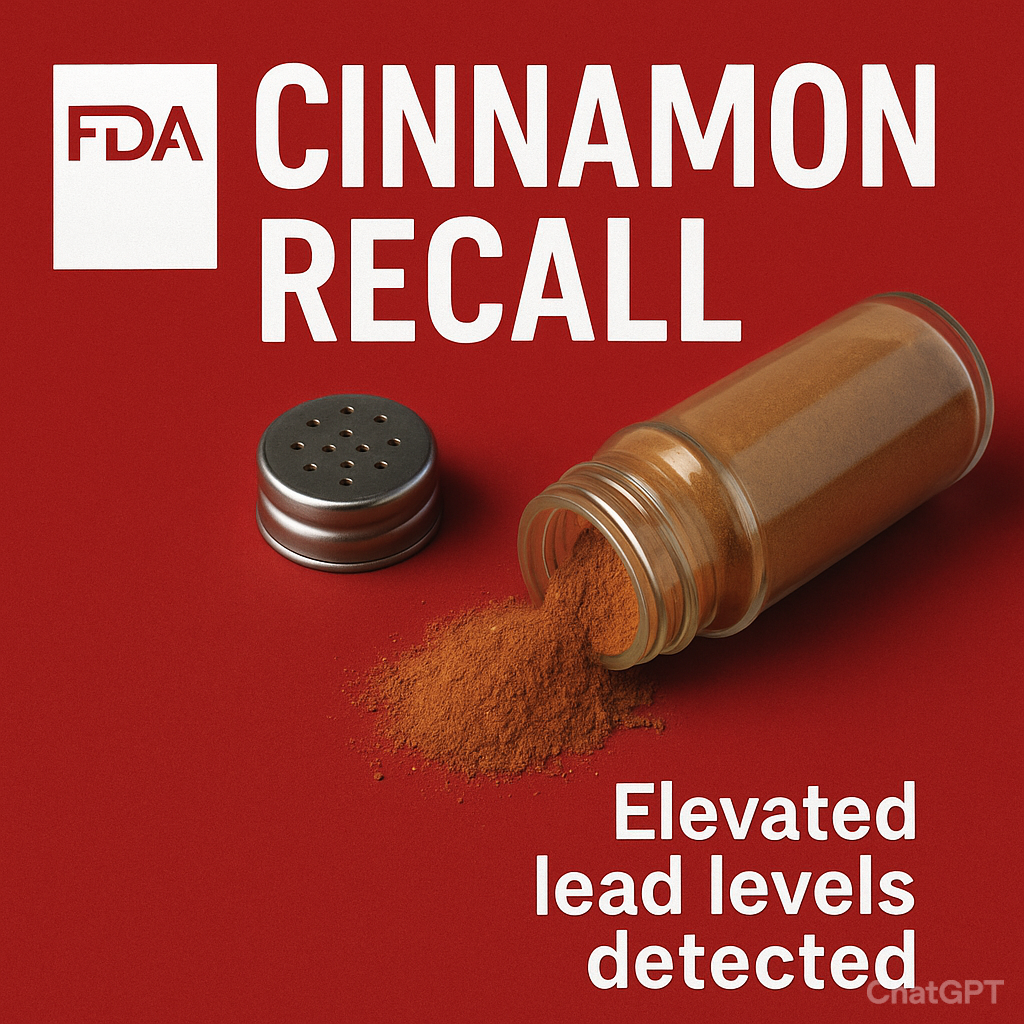
Lead Risk Prompts Nationwide Recall of Ground Cinnamon The U.S. Food and Drug Administration (FDA) has issued a nationwide recall of 12 ground cinnamon brands after testing revealed elevated levels of lead. Roughly 21,690 units were sold through retailers like Dollar Tree and Save-A-Lot before being pulled from shelves. Consumers are urged to immediately throw away any affected products and avoid purchasing them until further notice. See the official FDA recall notice. Why This Recall Matters Although no injuries have been reported yet, the FDA warns that prolonged consumption of contaminated cinnamon can cause lead accumulation in the body. Children are especially at risk, since lead exposure can impact neurological development. Cinnamon is often used in foods like cereals, baked goods, and snack mixes — staples in many households with kids. This makes the recall a major public health concern for families nationwide, including those in West Virginia, Ohio, and Pennsylvania. FDA’s Broader Effort This recall is part of a larger FDA initiative to monitor imported spices more closely. Several cinnamon brands have been flagged in prior alerts, and surveillance is ongoing. For example: The FDA recently added Asli brand ground cinnamon to the list of affected products after new testing revealed unsafe lead levels. Additional products may be named as investigations continue. See the expanded FDA alert. What You Should Do If you purchased ground cinnamon recently: Check your spice cabinet against the recall list. Dispose of any recalled products immediately. Do not repurchase affected brands until the FDA clears them. If you suspect your child or another family member has been exposed, consult a healthcare provider for guidance. For ongoing updates, visit the FDA’s cinnamon recall page. Protecting Consumers This recall is a reminder that product safety issues extend beyond toys, appliances, and vehicles — even everyday food staples can carry risks. Families in WV, OH, and PA should stay informed about recalls and understand their rights if a defective or dangerous product causes harm. At Bordas & Bordas, our attorneys help consumers hold corporations accountable when safety takes a backseat to profit.