
Pennsylvania's Supreme Court Elections


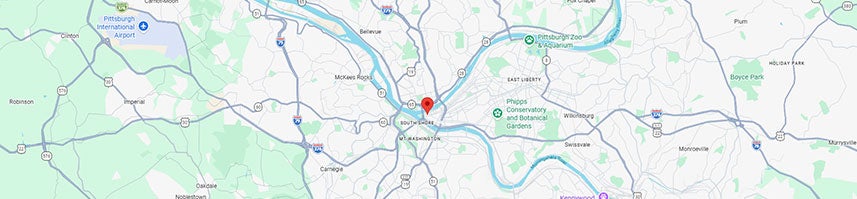
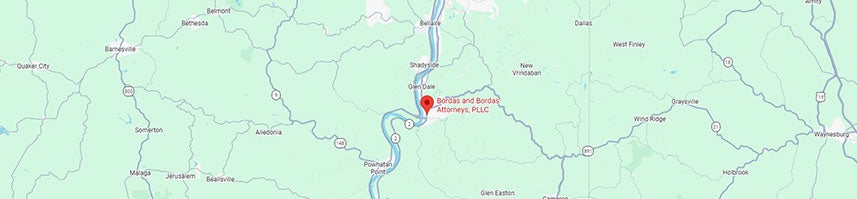
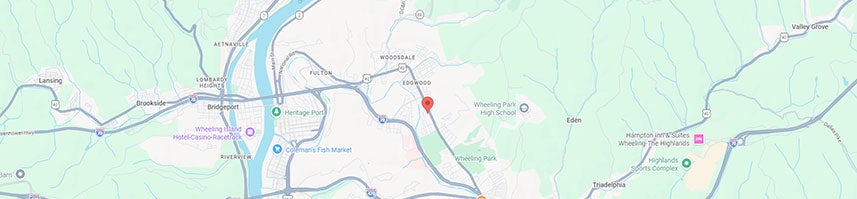
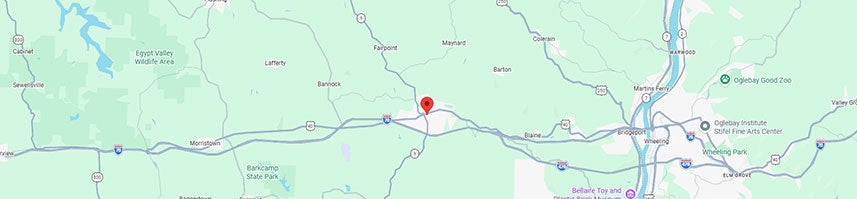
WHEELING, WV / PITTSBURGH, PA — An Ohio County, West Virginia jury has returned a $3.77 Million verdict in a medical malpractice case against a doctor and a physician’s assistant at WVU Medicine Wheeling Hospital. Following a four-day trial, the jury found both Dr. Barry Mitchell and Physician’s Assistant Michelle Porembka negligent in their medical care of 64 year old Julie Daley when she presented with abdominal complaints at the Wheeling Hospital emergency room in June 2022. As a result of the medical care providers’ failure to timely and properly treat her condition, Daley ultimately sustained a perforated colon along with necrosis which ultimately lead to her needing to have a permanent colostomy. The jury found that the conduct of both Mitchell and Poermbka fell below the standard of care for medical care providers in their field and that their negligence proximately caused injuries and damages to Mrs. Daley. Daley was represented at trial by Geoff Brown and Tyler Smith of the Wheeling law firm of Bordas & Bordas. Following the verdict, Smith commented, “We are pleased that the jury recognized that this should not have happened to Julie Daley and that they compensated her for the life-long effects that she will have as a result of the negligence of the medical providers.” Mark Robinson and David Givens of Flaherty, Sensabaugh, and Bonasso represented the medical providers at trial. Circuit Court Judge Jason Cuomo presided over the case. Brown stated “Our practice is based upon fighting for justice for people who have been injured or wronged by others. Helping others is at the root of everything that we do and we are glad that we were able to help Julie and her family obtain a measure of justice through this case and this result.” About Bordas & Bordas Founded in 1985, Bordas & Bordas Attorneys PLLC has earned a reputation as one of the region’s premier personal injury and plaintiff litigation law firms. With offices in Wheeling and Moundsville, West Virginia; Pittsburgh, Pennsylvania; and St. Clairsville, Ohio, the firm represents clients in cases involving automobile and trucking accidents, medical malpractice, workplace injuries, nursing home negligence, product liability, wrongful death, insurance bad faith, and more. The firm operates on a contingency fee basis (clients pay only if there is a recovery) and offers free initial consultations. Rooted in its core values of experience, family, community, and results, Bordas & Bordas continues to stand as a trusted advocate for individuals and families across the Ohio Valley and beyond. Visit www.bordaslaw.com for more information.
The Pennsylvania Superior Court Analyzes the Federal Public Readiness and Emergency Preparedness Act in Denying Defendants’ Motion for Judgment on the Pleadings In Boyle v. Meyer, 2025 PA Super 198 (September 9, 2025), the Pennsylvania Superior Court denied a physical therapy company’s motion for judgment on the pleadings based on the immunity provisions contained in the federal Public Readiness and Emergency Preparedness Act (PREP Act). Background of the Case Plaintiff Boyle required physical therapy following open-heart surgery. To minimize the risk of contracting COVID-19, he arranged for OSPTA Home Care to provide in-home services. On November 8, 2020, physical therapist Meyer arrived without gloves, a face shield, or a proper mask — only wearing a thin, disposable surgical mask. Meyer also shook Boyle’s hand without gloves, did not wash her hands before treatment, and performed therapy as usual. Days later, OSPTA informed Boyle that Meyer had tested positive for COVID-19. Boyle soon developed symptoms, was hospitalized for ten days, and continued to suffer complications five months later. Boyle sued OSPTA and Meyer, alleging: Meyer was negligent in failing to wear proper personal protective equipment (PPE). Meyer exposed him to unreasonable risk and performed therapy despite known exposure. OSPTA failed to properly train and supervise Meyer and implement safeguards to prevent the virus’s spread. Defendants’ Motion and PREP Act Defense In response, Defendants admitted Meyer was not wearing gloves or a face shield but stated she wore a surgical mask and used hand sanitizer earlier in the day. They argued they were immune from liability under the Public Readiness and Emergency Preparedness Act, 42 U.S.C. §§ 247d-6d, 247d-6e. Defendants asserted that they met all four requirements for immunity: Public health emergency – The COVID-19 pandemic triggered PREP Act protections. Covered persons – They qualified as both “program planners” and “qualified persons” under the Act. Covered countermeasure – Meyer’s “thin, disposable surgical mask” was a device authorized for emergency use by the FDA. Causal relationship – Meyer’s use of the mask had a causal connection to Boyle’s COVID-19 claim. The trial court denied their motion for judgment on the pleadings. Superior Court’s Analysis On appeal, the Superior Court found several factual disputes that prevented judgment for the Defendants. Specifically: It was unclear whether Meyer’s surgical mask qualified as a “covered countermeasure.” The pleadings did not conclusively establish that the Defendants were “covered persons.” Even if both were true, PREP Act immunity applies only to the use or administration of a covered countermeasure — not to its non-use. Citing Hampton v. California, 83 F.4th 754 (9th Cir. 2023), the Court noted that the PREP Act shields defendants from claims related to administering a covered measure, but not from claims alleging failure to administer one. Because Boyle’s complaint focused on the failure to use proper PPE, inadequate screening, and lack of training, his claims fell outside the scope of federal immunity. Conclusion The Superior Court concluded that the PREP Act did not preempt Boyle’s state-law negligence claims, affirming the trial court’s denial of the motion for judgment on the pleadings. The full opinion in Boyle v. Meyer, 2025 PA Super 198 (September 9, 2025), is available on the Pennsylvania Judiciary website. To learn more about legal issues surrounding immunity and negligence in Pennsylvania courts, visit our post on how the PA Superior Court reviews evidentiary challenges in medical cases.
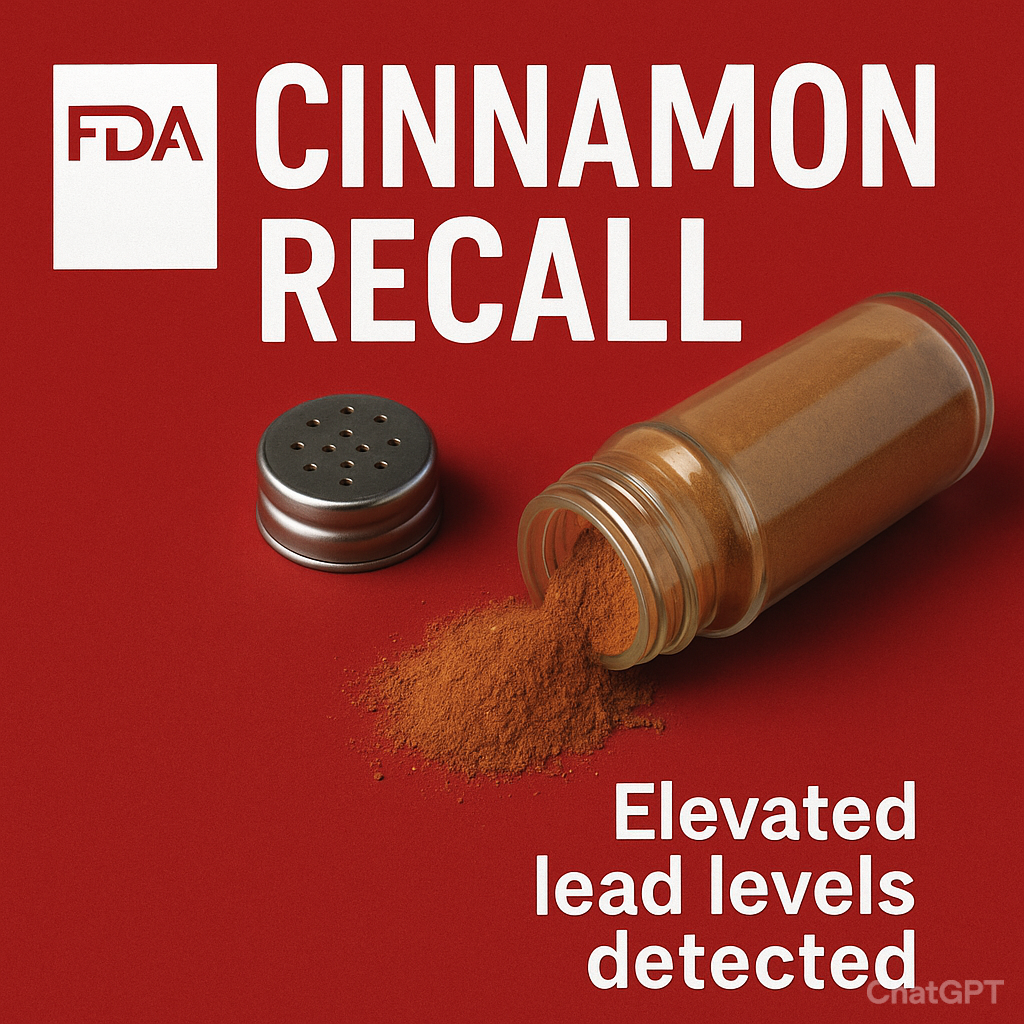
Lead Risk Prompts Nationwide Recall of Ground Cinnamon The U.S. Food and Drug Administration (FDA) has issued a nationwide recall of 12 ground cinnamon brands after testing revealed elevated levels of lead. Roughly 21,690 units were sold through retailers like Dollar Tree and Save-A-Lot before being pulled from shelves. Consumers are urged to immediately throw away any affected products and avoid purchasing them until further notice. See the official FDA recall notice. Why This Recall Matters Although no injuries have been reported yet, the FDA warns that prolonged consumption of contaminated cinnamon can cause lead accumulation in the body. Children are especially at risk, since lead exposure can impact neurological development. Cinnamon is often used in foods like cereals, baked goods, and snack mixes — staples in many households with kids. This makes the recall a major public health concern for families nationwide, including those in West Virginia, Ohio, and Pennsylvania. FDA’s Broader Effort This recall is part of a larger FDA initiative to monitor imported spices more closely. Several cinnamon brands have been flagged in prior alerts, and surveillance is ongoing. For example: The FDA recently added Asli brand ground cinnamon to the list of affected products after new testing revealed unsafe lead levels. Additional products may be named as investigations continue. See the expanded FDA alert. What You Should Do If you purchased ground cinnamon recently: Check your spice cabinet against the recall list. Dispose of any recalled products immediately. Do not repurchase affected brands until the FDA clears them. If you suspect your child or another family member has been exposed, consult a healthcare provider for guidance. For ongoing updates, visit the FDA’s cinnamon recall page. Protecting Consumers This recall is a reminder that product safety issues extend beyond toys, appliances, and vehicles — even everyday food staples can carry risks. Families in WV, OH, and PA should stay informed about recalls and understand their rights if a defective or dangerous product causes harm. At Bordas & Bordas, our attorneys help consumers hold corporations accountable when safety takes a backseat to profit.
The information you obtain at this site is not, nor is it intended to be, legal advice. You should consult an attorney for advice regarding your individual situation. We invite you to contact us and welcome your calls, letters and electronic mail. Contacting us does not create an attorney-client relationship. Please do not send any confidential information to us until such time as an attorney-client relationship has been established.
The results in a legal case depend on a variety of factors, many of which are unique to each case. Prior results by this firm or any other do not guarantee future results. Case results presented here are illustrations of the type of work done by Bordas & Bordas and not a guarantee that any prospective case will yield any particular amount.
Call 304-242-8410 or fill out the form below.