Blog / In the Community

Second Circuit Sends Message to Public Schools

Bullying is a serious and widespread problem in American schools. It affects the school performance, emotional well-being, mental health, and social development of school children throughout the United States. Tonja R. Nansel et. al., Cross-national Consistency in the Relationship Between Bullying Behaviors and Psychosocial Adjustment, 158 Archive of Pediatric and Adolescent Med. 730, 733-35 (2004). Studies have shown that students with disabilities are subject to increased bullying that is often directed at the disability. In a case of first impression, the United States Second Circuit Court of Appeals in T.K., S.K., individually and on behalf of L.K., v. NEW YORK CITY DEPARTMENT OF EDUCATION, affirmed the decision of a United States District Court, which ordered the New York City Department of Education to pay for a disabled student’s private education because it failed to provide a free appropriate public education (FAPE) in accordance with the Individuals with Disabilities Education Act (IDEA). L.K., was a third grade 9-year-old girl suffered from a learning disability. As such, she was placed in a Collaborative Team Teaching (CTT) classroom, which involved teaching students who are learning disabled alongside those who are not. Her Individualized Education Program (IEP) required a 1:1 special education itinerant teacher (SEIT), and speech, physical and occupational therapy. During the school year, L.K. suffered from multiple incidents of repeated bullying by classmates such as: pinching, pushing, tripping, stomping on her toes and teasing, laughing at her and refusing to have contact with her. Over the course of the school year, L.K. became increasingly unhappy, withdrawn and, as L.K.’s father described, “emotionally unavailable to learn” due to classmates’ bullying. L.K. came home crying and complained to her parents on an almost daily basis about being bullied by other students. L.K.’s tardiness and absenteeism was becoming a major disruption to her ability to learn. It reached a point that L.K. brought dolls to school for support on a more frequent basis due to the bullying and ostracism by others. According to L.K.’s SEITs, L.K. internalized negative comments by peers, and expressed her sadness, frustration, anxiety and discomfort with her being bullied. Often times, L.K and her SEIT would count the days to the end of the school year. Accordingly, L.K.’s SEITs believed that the bullying adversely affected L.K.’s academics and her social and emotional well-being. Also, several doctors observed that many students constantly ignored L.K., and found that the minimal interactions L.K. did have with her classmates were mostly negative. They found that L.K. seemed anxious, sad and frustrated as her head was often down. She was not volunteering in class, as she had done before the bullying had started, and she needed more prompting from an aide. Moreover, medical experts observed that the teachers neither intervened nor delivered consequences to students. Hence, a private physician who knew L.K. for several years assessed her and recommended a different, more supportive educational environment than her current classroom. L.K.’s parents sent letters to the school’s principal and tried to speak with her about the issue. The principal acknowledged receiving the letters and admitted having knowing about an incident of bullying; however, she could not recall what, if anything, she did to investigate it. Not satisfied with the school’s district’s response, L.K.’s parents applied for L.K.’s admission to the Summit School, a private school that specializes in providing educational services for children with learning and emotional challenges. L.K. was accepted and her parents made a deposit. In the meantime, public school representatives met with L.K.’s parents to discuss a behavior intervention plan (BIP) for L.K. that would create strategies for her behavioral difficulties that interfered with learning. During this meeting, the parents requested copies of any incident reports regarding harassment of L.K., but none were provided. The school officials rejected L.K.’s parents’ attempt to discuss the bullying. The principal refused to discuss classmates’ bullying with L.K.’s parents, and did not identify any alternative time to discuss it. The IEP team met to develop L.K.’s IEP and during this meeting, school officials again refused to discuss the bullying. The parents objected generally to L.K.’s same type of placement, and specifically to placement with the same students who were bullying her. No other placement was offered and L.K.’s parents were not aware of any option other than the same class L.K. attended. The parents rejected the IEP and placed L.K. at the Summit School the next school year. L.K.’s parents filed an administrative complaint demanding that the school district pay for L.K.’s private school tuition. After exhausting all administrative remedies, L.K. and her parents brought the case before Judge Jack B. Weinstien, Senior United States District Judge. The central question raised by this case was whether school personnel was deliberately indifferent to, or failed to take reasonable steps to prevent bullying that substantially restricted a child with learning disabilities in her educational opportunities in violation of the IDEA. After completing an exhaustive analysis of: First Amendment cases, Title IX of the Civil Rights Act and IDEA, Section 504 of the Rehabilitation Act, Due Process cases under Section 1983 and various similar cases decided by the 2nd, 3rd, 7th and 9th U.S. Circuit Court of Appeals, the U.S. District Court held that when responding to bullying incidents, which may affect the opportunities of a special education student to obtain an appropriate education, a school must take prompt and appropriate action. It must investigate if the harassment is reported to have occurred. If harassment is found to have occurred, the school must take appropriate steps to prevent it in the future. Having applied L.K.’s facts to this rule, the U.S. 2nd Court of Appeals, affirmed the District Court’s finding that the school district did not take appropriate steps to prevent L.K. from being bullied, and therefore, affirmed the District Court’s ruling that the school district must pay for L.K.’s private tuition. Gary Mayerson, the attorney who represented the L.K. and her parents throughout all stages of the litigation, hailed the result in T.K. as a landmark civil rights decision that will go far to address the nation’s bullying problem: “The Second Circuit’s courageous decision affirming Judge Weinstein’s Judgment stands for the proposition that every student has the right to attend school free from physical or psychological abuse and every parent has the right to expect that when they communicate concerns about bullying, those concerns will be timely addressed and acted upon.”

Posted in:

Related Posts

What to Do After a Truck Accident in West Virginia, Ohio and Pennsylvania

What to Do After a Truck Accident in West Virginia, Ohio and Pennsylvania A recent trucking accident on I-70 near Wheeling caused serious injuries and brought traffic to a standstill. These kinds of accidents are all too common in West Virginia, Ohio, and Pennsylvania, especially on major highways like I-70 and I-79. If you’re involved in a crash with a commercial truck, knowing what to do next is critical for your health and your legal rights. Protecting Yourself Legally and Medically If you’re involved in a truck accident: Call 911 immediately. Document the scene (photos, notes, witness names). Seek medical attention—even if injuries seem minor. Commercial trucking accidents are far more complicated than regular car crashes. The trucking company, driver, and even cargo loaders may all play a role in what happened. That’s why it’s so important to protect yourself early. Truck crashes often involve federal trucking regulations in addition to local laws. The Federal Motor Carrier Safety Administration (FMCSA) requires drivers to operate with “extreme caution” in hazardous conditions, a regulation often cited in legal cases. Don’t Navigate This Alone Trucking companies have their lawyers working to limit what they pay. Victims need someone in their corner who understands both state and federal laws across the tri-state region. An experienced attorney can help preserve evidence, negotiate with insurers, and ensure you’re treated fairly.  At Bordas & Bordas, we fight to protect victims and ensure they’re not taken advantage of during this complex process. Learn more about truck accident claims

Bordas and Bordas Attorneys celebrating 40 years of justice from 1985 to 2025 with the message "Fighting for Justice for 40 Years.

Fighting for Justice for 40 Years

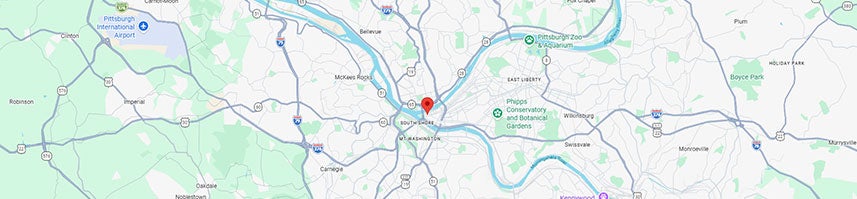
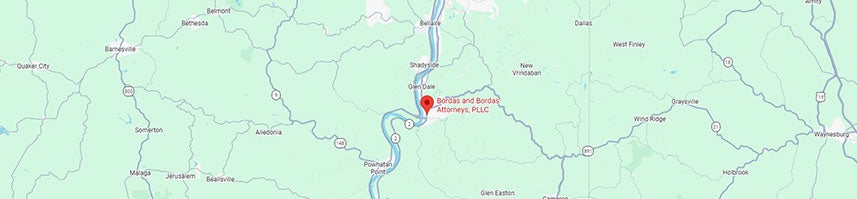
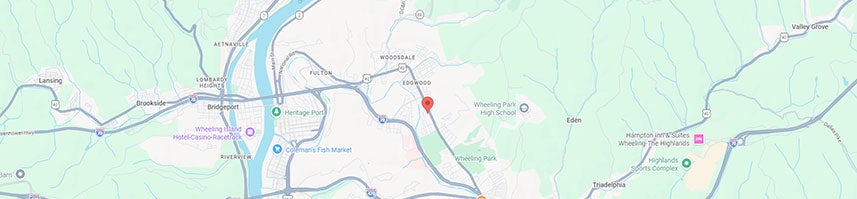
Fighting for Justice for 40 Years In 2025, Bordas & Bordas is proudly celebrating 40 years, a testament to our unwavering commitment to serving our community and fighting for justice. Since our founding in 1985 by Jim and Linda Bordas, we’ve grown from a small practice into one of the region’s premier personal injury law firms with offices in Pittsburgh, Pennsylvania, Wheeling and Moundsville, West Virginia, and St. Clairsville, Ohio. The story of Bordas & Bordas Attorneys PLLC began with a unique partnership. Linda, a former hospital pharmacist turned lawyer, and Jim, who has been described by many as a giant in the legal profession, combined their expertise and passion for justice to open the doors of Bordas & Bordas upon Linda’s graduation from law school in 1985. Their remarkable record, including never losing a trial together, fueled the firm’s early success. Linda’s medical background proved invaluable, particularly in medical malpractice cases, where she became a leading force, securing landmark verdicts and expanding patient rights. Jim spent his career fighting battles for his clients that others couldn’t or wouldn’t fight. For over four decades, he built a reputation of success through landmark jury verdicts and settlements. In 2000, the Bordas legacy continued with the addition of Jim and Linda’s oldest son, Jamie, who became the firm’s managing partner in 2005. Jim cherished working alongside Jamie, creating a strong bond, and ensuring the firm’s values would endure. Linda remains a partner at Bordas & Bordas and continues to provide guidance and advice as we continue to fight for justice. Our Core Values: The Shield of Bordas & Bordas Our logo, a shield with four quadrants and a central cross, symbolizes what we hold dear: Experience: Four decades of dedicated legal service. Family: A firm built on strong family values and lasting relationships. Community: A commitment to serving and giving back to our community. Results: A proven track record of securing substantial recoveries for our clients. Christian Values: The Cross in the center represents the moral compass that guides our work. Our Commitment to You A lot has changed in 40 years, but one thing remains the same: Our reputation for taking on any opponent in the courtroom. This is backed by years of success and record-breaking results, including numerous multi-million-dollar verdicts and settlements across a wide range of personal injury practice areas. We understand the challenges clients face, which is why our cases are handled on a contingency fee basis. This means clients pay no fee unless we secure a recovery for them. We offer: Free initial consultations. No retainer required. We advance all case expenses. Our work has garnered national attention, with features on programs like 60 Minutes, Inside Edition, and CNN, showcasing our dedication to seeking justice for our clients. Learn more about our results by clicking here. As we celebrate 40 years, we reaffirm our commitment to providing exceptional legal representation and upholding the values that have guided us since 1985. We are grateful for the trust our clients have placed in us and look forward to serving our community for many years to come.

Bordas & Bordas Presents 16 High School Seniors with Anti-Bullying Award

Bordas & Bordas is proud to announce the names of the 16 students from schools in Ohio, Marshall and Belmont counties who are recipients of the Bordas & Bordas Anti-Bullying Fighting for Justice Award. The 2025 award recipients: Hayley Hoffer, Barnesville High School Reegan Williams, Bellaire High School Madison Marsh, Bridgeport High School Camden Frye, Cameron High School Dessie Morris, East Richland Christian High School Jadyn Parker, John Marshall High School Zoe Zatezalo, The Linsly School Nathan Luong, Martins Ferry High School Mia Boatman-Salas, Shadyside High School Andrew Roberts, St. Clairsville High School Gianna Parker, St. John Central Academy Emilie Blawut, Union Local High School Josann Frizzell, Wheeling Central Catholic High School Sydney Kobasko, Wheeling Central Catholic High School Ciera Faulstick, Wheeling Park High School Isabelle Thomas, Wheeling Park High School “Congratulations to the senior students who have been named 2025 Bordas & Bordas Anti-Bullying Ambassadors,” said Managing Partner Jamie Bordas. “Nominations from educators and community members highlighted the significant contributions these young adults have made through their actions and attitudes in both their schools and communities.” The award was created in 2014 by Bordas & Bordas founder Jim Bordas and honors each Anti-Bullying Ambassador with a $500 cash prize. The criteria for students nominated includes treating everyone equally, respecting differences in others, and standing up for those who are targeted by others or are discriminated against. “We are proud to recognize these individuals who serve as positive examples for their peers. We wish the Anti-Bullying Ambassadors and the class of 2025 the best of luck in their future endeavors,” said Bordas. Bordas & Bordas is a plaintiff’s litigation law firm with offices in Pittsburgh, Wheeling, W.Va., St. Clairsville, Ohio, and Moundsville, W.Va. The firm’s attorneys practice throughout the region in diverse areas of law and are licensed in Pennsylvania, West Virginia, Ohio, and Texas.