Blog / Know the Law

Pennsylvania’s Spoliation and Adverse Inference Laws

Recently, in Marshall v. Brown’s IA, LLC (“ShopRite”), the Pennsylvania Superior Court vacated judgment as a result of the trial court’s failure to provide the jury with an adverse inference jury instruction. While shopping at ShopRite, Ms. Marshall slipped on water and fell, aggravating a pre-existing injury to her hip and back. ShopRite employees summoned medical assistance, and an incident report was prepared immediately thereafter. The incident report revealed that Ms. Marshall stated that she was getting a pepper in the produce department when she slipped and fell on water. Approximately two weeks later, ShopRite received a letter of representation from Ms. Marshall’s counsel requesting that ShopRite retain surveillance video of the accident and area in question for six hours prior to the accident and three hours after the accident. Additionally, the letter cautioned:

If any of the above evidence exists, and you fail to maintain same until the disposition of this claim, it will be assumed that you have intentionally destroyed and/or disposed of evidence. Please be advised that you are not permitted, and are in no position, to decide what evidence plaintiff would like to review for this case. Accordingly, discarding any of the above evidence will lead to an Adverse Inference against you in this matter.

While Ms. Marshall’s slip and fall was captured on the store’s video surveillance system, ShopRite decided to preserve only thirty-seven minutes of video prior to Ms. Marshall’s fall and approximately twenty minutes after, and permitted the remainder to be automatically overwritten after thirty days. Ms. Marshall filed a claim against ShopRite alleging that it was negligent in failing to keep its premises safe by failing to remove water on the floor that it knew or should have known was present and posed a risk to its customers. The case proceeded to a jury trial, and in his opening statement, counsel for ShopRite told the jury that it wasn’t possible to tell from the video if there was water on the floor, how it got there or when it got there. ShopRite’s Risk Manger testified that it was ShopRite’s “rule of thumb” to preserve video surveillance from twenty minutes before and twenty minutes after a fall, but offered no explanation why it deviated from its typical practice. It was his opinion that the video produced was sufficient to see the defective condition if it could be seen at all, and because the substance on the floor could not be seen on the retained portion of the video, he maintained it “would be a fool’s errand” to go back several hours as requested. He added that it was impractical and costly to retain the requested six hours of pre-incident videotape. ShopRite also offered evidence of its reasonable care in keeping the store premises safe for customers. Managers testified that employees were trained in the importance of preventing slip and falls, and described financial incentives for employees who located and cleaned up spills. The store also uses the Gleason system, an electronic monitoring system whereby an employee walks around the store every hour on a designated route that passes thirty-five buttons. As the employee inspects the floor in each area near the button, he or she uses an electronic wand to press the button indicating whether there was a wet spill, dry spill, or the area was clear. The system creates a log for each of the walk-throughs. Ms. Marshall fell almost fifty minutes after the last Gleason inspection. At trial, Ms. Marshall contended that ShopRite’s conscious decision not to retain the video evidence constituted spoliation, which entitled her to an adverse inference charge to the jury. Specifically, Pa.S.S.J.I. 5.60, relating to spoliation of evidence, provides:

If a party disposes of a piece of evidence before the other party had an opportunity to inspect it, and the party who disposed of the evidence should have recognized the evidence was relevant to an issue in this lawsuit, then you may find that this evidence would have been unfavorable to them, unless they satisfactorily explain why they disposed of this evidence.

ShopRite argued that because the video did not show water of the floor, the destroyed video would have no relevant evidence. Moreover, ShopRite claimed that by following its retention policy, it did not act in bad faith in deleting the additional video requested. The trial court determined that Ms. Marshall’s counsel’s request to preserve the video did not make it relevant. The court also concluded that ShopRite did not act in bad faith; and therefore, refused to give the requested adverse inference charge. However, the court permitted Ms. Marshall’s counsel to argue to the jury that it should infer from ShopRite’s decision not to retain more of the video prior to Ms. Marshall’s fall that the video was damaging to ShopRite. In his closing argument, counsel for Ms. Marshall told the jury that ShopRite intentionally decided to eliminate the requested portions of the video because it was harmful to them, and that the water was on the floor long enough that, with reasonable care, they should have seen and remedied it. ShopRite maintained that because one could not discern water on the floor in the existing video, it could not be reasonably expected to show water during any other portion of the video. Ultimately, the jury found in favor of ShopRite, and Ms. Marshall’s appealed the decision claiming that the trial court erred in refusing to give the requested spoliation instruction to the jury. The Pennsylvania Superior Court found that where a party destroys or loses proof that is pertinent to a lawsuit, a court may impose a variety of sanctions, among them “entry of judgment against the offending party, exclusion of evidence, monetary penalties such as fines and attorney fees, and adverse inference instructions to the jury.” Hammons v. Ethicon, Inc., 190 A.3d 1248, 1281 (Pa.Super. 2018). The Adverse Inference doctrine “attempts to compensate those whose legal rights are impaired by the destruction of evidence by creating an adverse Inference against the party responsible for the destruction.” Duquesne Light v. Woodland Hills Sch. Dist., 700 A.2d 1038, 1050 (Pa.Cmwlth. 1997). The duty to retain evidence is established where a party “knows that litigation is pending or likely” and “it is foreseeable that discarding the evidence would be prejudicial” to the other party. Where spoliation has occurred, the trial court must weigh three factors in assessing the proper penalty: “(1) the degree of fault of the party who altered or destroyed the evidence; (2) the degree of prejudice suffered by the opposing party; and (3) whether there is a lesser sanction that will avoid substantial unfairness to the opposing party and, where the offending party is seriously at fault, will serve to deter such conduct by others in the future.” Gavin v. Loeffelbein, 161 A.3d 340, 353-54 (Pa.Super. 2017). Ultimately, the Court determined that the missing video was relevant because it may have shown when the spill occurred, or whether other customers may have slipped, and/or it could have been probative as to whether ShopRite’s inspection and safety precautions were being followed. Moreover, the Court found that ShopRite intentionally, unilaterally and arbitrarily preserved thirty-seven minutes of footage prior to the fall without any explanation as to why it deviated from its usual practice, why thirty-seven minutes in particular were preserved, or who made that decision. In fact, ShopRite’s Risk Manger disavowed any knowledge of who made the decision to retain only a portion of the video. The Court further explained that the thirty-seven minutes prior to Ms. Marshall’s fall did not even include the fifty minutes that elapsed after the last Gleason inspection of the area. Furthermore, conspicuously absent was testimony from anyone at ShopRite that he or she watched the video for the six-hour-period prior to the fall before determining that it did not contain any relevant evidence. Finally, the Court held that the trial court’s finding that there was no spoliation because ShopRite did not act in bad faith was based on an incorrect application of the doctrine. The Court explained that spoliation may be negligent, reckless, or intentional; a party’s good or bad faith in the destruction of potentially relevant evidence goes to the type of sanction that should be imposed, not whether a sanction is warranted. Thus, the Court held that ShopRite’s conduct herein constituted spoliation, and remanded the case back to the trial court for a new trial.    

Posted in:

Related Posts

Bordas and Bordas Attorneys law blog banner featuring the firm logo on a blue background with the text "Law Blog

How Insurance Companies Find Loopholes to Avoid Paying Claims

How Insurance Companies Find Loopholes to Avoid Paying Claims When you pay for an insurance policy, you expect that your insurer will honor and fulfill the terms of said policy when you need it. Unfortunately, that is not always the case. A large number of policyholders find themselves baffled by claim denials or delays, as insurance companies take advantage of technicalities to avoid honoring policies. With how insurance companies find loopholes to avoid paying claims, it is important to know that a denial or delay is not the end. An attorney at Bordas & Bordas may be able to help you. Common Ways Insurers Deny Claims Through many policy loopholes, technicalities, and more, insurance companies try to avoid paying claims in full. There are some common methods insurance companies employ to do this. Vaguely Written Policies Long, drawn-out clauses in policies may be intentionally confusing for policyholders to dissect. If part of a policy seems vague or open-ended, the insurer may have left an opportunity for themselves to make a decision that benefits them over you. This may result in a denial or delay based on the wording. Policy Exclusions Many insurance companies have a list of policy exclusions readily available that policyholders may not be aware of. Should the policyholder file a claim, insurers will often rely on an exclusion as a means to reduce or deny the claim, even if it seems outlandish. Deadlines and Errors Often, with claims, insurance companies set strict deadlines. Policyholders must provide documentation and follow specific procedures while still meeting these deadlines. The intricacy of the process may allow insurers to take advantage of any small issues that occur, giving the insurer an opportunity to deny your claim. Pre-Existing Damages Insurance companies may also argue that certain damages or injuries were not a part of the reported incident. They may allege that the damage existed before the incident, allowing insurers to try and place the responsibility on the policyholder. Intentional Process Delays Some insurance companies intentionally try to make the claims process as long as possible to deter policyholders from pursuing full claims or settlements. Signs of intentional delay may include consistent requests for the same information, going through multiple inspections, as well as purposefully taking long pauses between communications. The Importance of Legal Advice Navigating the insurance claim process in the aftermath of an accident that may have caused injuries or the loss of a loved one can be difficult. Many insurance companies rely on the average policyholder not knowing enough about the loopholes insurance companies use and being unable to fight for the full benefits of their policies. Having an advocate with experience in challenging insurance companies in court may significantly impact how an insurance company responds to your claim. A legal representative may help you learn about the full breadth of your claim, talk you through denials, and help protect you from underhanded tactics. Contact an Experienced Attorney Who Understands the Tricks Used by Insurance Companies To Avoid Paying Facing insurance companies after a denied claim is not a task that you need to handle alone. Considering how insurance companies find loopholes to avoid paying claims, working with experienced legal professionals is essential. Our bad faith insurance attorneys at Bordas & Bordas are dedicated to standing up for you against insurance companies. Schedule a consultation with our team today to learn how we can help you hold insurance companies accountable.

Cyclist riding a road bike on a sunlit curve outdoors

Why Legal Representation Matters During the Holiday Travel Season

Why Legal Representation Matters During the Holiday Travel Season The holidays are the perfect time of year to visit family and friends. These joyous occasions are also some of the most popular and busiest times to travel. The holiday travel months are filled with hazards due to heavy traffic, severe weather, increased driver impairment, and the rush to get home, which increases accident rates. That is why it is so important to understand why legal representation matters during the holiday travel season. Keep reading to learn how having a Bordas & Bordas attorney on speed dial could help you manage increased risks of accidents when most law offices are unavailable. Legal Representation During Holiday Travel Combats Early Settlements Your personal injury claim does not go on vacation, despite periodic court closures and unavailable legal teams during the holidays. Insurers are often busy during this timeframe as well, leading to delayed processing. Adjusters may take advantage of this time of year to rush victims like you into accepting a low settlement while attempting to close your case quickly. Your Bordas & Bordas attorneys would ensure you do not accept a payment that fails to cover long-term medical costs or lost wages, even during the busy holiday season. We Would Help You Handle Increased Risks and Manage Complex Logistics During the travel season, we see higher rates of impaired driving and dangerous, crowded, or icy conditions. Holiday-related accidents require fast action, as surveillance footage can be overwritten and witness memories fade during these busy times of year, making legal representation essential. Our lawyers are well-versed in gathering time-sensitive evidence during the holiday travel season and beyond. Managing Complex Logistics is Essential During the Holidays If you become injured out-of-state, our legal professionals have the experience to navigate complex jurisdictional issues and coordinate care between your vacation location and home. With us on your side, we would handle insurers and legal paperwork, while you focus on your recovery and spending time with loved ones. Taking prompt legal action helps ensure your claim is not compromised by the logistical challenges of the holiday travel season. Legal deadlines and statutes of limitations continue to run, even during the holidays, so it is important not to delay action. Learn the Importance of Connecting with a Skilled Bordas & Bordas Attorney Before the Holiday Travel Season Reach out to the experienced personal injury attorneys at Bordas & Bordas before you embark on your holiday travels. We could help you prepare for the worst by reducing risk and formulating contingency plans, so you have the peace of mind to enjoy the visit. If you are injured during this time of year, our team is ready to guide you through the necessary legal process of filing a claim. When you schedule a free consultation with our team, we can review your case and explain your legal rights to a fair settlement. Give us a call to learn more about why legal representation matters during the holiday season.

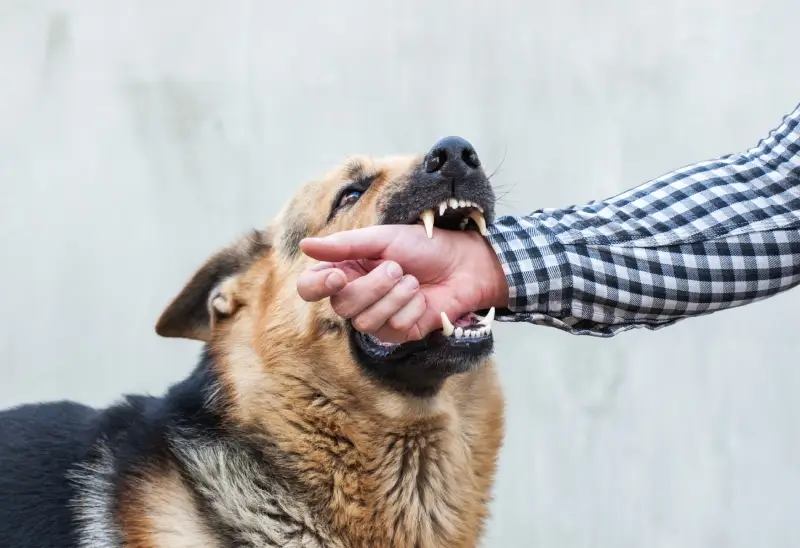
Dog biting a person’s hand

What to Know About Dog Bite Law in Pennsylvania

What to Know About Dog Bite Law in Pennsylvania A neighbor’s pet biting you is more than just frightening. It can also be quite dangerous and cause serious injuries and infections from puncture wounds that require immediate medical attention. If you or your loved one has experienced psychological trauma and tissue damage as a result of a dog bite, you need experienced legal advice from the personal injury team at Bordas & Bordas to help you interpret our state’s regulations. Read on to learn what you need to know about dog bite law in Pennsylvania. Pennsylvania Dog Bite Law Provides Strict Liability for Medical Bills Pennsylvania dog bite law ( 3 P.S. § 459-502) sets a strict liability policy, meaning that in the case of an attack, dog owners are automatically responsible for all of the injured individual’s medical costs, even if the dog has never bitten anyone before. A judge may also classify a dog as “dangerous” if it inflicts severe injury without provocation, attacks a person or a domestic animal, or is used in a crime. However, the owners may not be held liable if you were trespassing, committing a crime, or provoking the animal at the time of the attack. What About Non-Economic Damages? Most people walk away from a dog bite incident with more than just medical expenses. These types of encounters often traumatize victims. If you experience non-economic damages like pain, suffering, or disfigurement, your Bordas & Bordas attorney would work hard to prove negligence, as the owner may have violated state leash laws. We may also show the dog’s dangerous history and potentially prove the owner ignored their pet’s known aggression. Is There a Statute of Limitations on Dog Bite Claims? In Pennsylvania, you have just two years from the date the dog bite occurred to file a lawsuit and hold the owner and their insurance company liable for your losses. If it were your child or another minor who was injured by a dog bite, this deadline would be extended until their 18th birthday. When filing a compensation claim, it is vital to understand state dog bite law and what deadlines may apply. What to Do If You Are Bitten by a Dog in Pennsylvania If you or your child is bitten by a dog, take prompt action. Immediately report the incident to local police or animal control, then seek medical care. If possible, have someone, such as a family member or trusted bystander, document the scene and injuries with photographs or video. Once everyone is safe, connect with the skilled personal injury attorneys at Bordas & Bordas to discuss the next steps and understand how Pennsylvania dog bite law may affect your claim. Talk With Us About Your Dog Bite Claim and State Law Recognizing what to know about dog bite law in Pennsylvania is the first step in filing your claim, and if you still have questions, reach out to the skilled personal injury attorneys at Bordas & Bordas. When you are injured by an aggressive dog, our team stands ready to guide you. We could review your case and explain your legal rights during your free consultation, so schedule a time to have a conversation with our team. A fair and just settlement could cover your medical bills and so much more. Give us a call to learn more.