Another school year has started again for thousands of children in the Valley. As all parents and grandparents know, there is nothing more precious to us than our children. I love seeing children with their mothers waiting for the school bus in the morning, talking to their buddies, holding their mother's hand and waiting for the bus dressed in their new school clothes with their new book bags and waiting to meet new friends and engage in new activities in school.
When I was a child, I loved going to the store to pick out the new notebooks that I would be using in class with my favorite action adventure hero, sports star or movie hero on the cover. It was great fun getting new pencils and crayons and going shopping with my grandparents to get new shoes and clothes that I would be wearing for the first time the first week or two of school. Although I was not then particularly fond of school itself, I was very excited about starting a new year and seeing the friends I missed over the summer and meeting new friends.
I am now blessed with having a number of grandchildren attending preschool, kindergarten, first grade and fifth grade. My wife was excited about buying the grandchildren new clothes and was excited to see how they reacted to the clothes she purchased. Of course, I think my grandchildren are the cat's meow and I am excited when they are excited. I am happy when they are happy and sad when they are sad. At this point in their lives, most are excited about the start of school although disappointed that summer is over.
A lot of us look forward to being parents from the time we are children. We all take pride in and celebrate the birth of new children - their parties, receptions,
baptisms, hospital visits, guessing games as to when a child may be born and the weight and the length of the child.
We recently experienced the great wait in England for the Prince's child to be born. The pregnancy and birth were chronicled by newspapers worldwide. Most of us saw television coverage of the announcement with the Brits cheering and celebrating the birth of a new royal.
In America, we all feel that our children and grandchildren are royalty and we likewise celebrate in our own ways the birth of children. For males, for the babies of former football players it's another football player. A football is oftentimes one of the first gifts given to a newborn baby and in some places like Massillon, Ohio a football is placed in the crib of every newborn. Mothers who have newborn daughters begin planning their daughter's wedding from the time the little girls are first born. For Christians, the baptism of an infant is a very special and meaningful event and one that is celebrated by family and friends. In Italy, the celebration of baptism sometimes goes on for several days with a carnival-like atmosphere.
With the school year in full swing, we as adults need to be particularly mindful of a number of safety concerns. First, we need to remember that there are school kids walking along the sidewalks, waiting for busses and crossing the streets. In some cases, older kids are driving cars to and from school. What this means is that it is very important that we all take extra precautions to drive more carefully, to pay extra attention to the traffic laws and to remember that children are sometimes like deer - one or two will cross the highway and if they do there is likely to be another following behind. Children are reckless and do not appreciate danger the way that adults do. Teen drivers do not have the patience, experience and attention that many of the rest of us do and therefore can be a problem while driving. They are oftentimes running late for classes and do things that many of us would consider reckless and stupid. Not that we do not do those dumb things ourselves - it just seems they are more prone to do these things at their young age.
Over the years, my law firm has represented a number of children and parents of children who have been horribly injured and some even killed by the reckless conduct of adults who have failed to obey the speed limits and other laws that would have protected our school children. I have experienced some of the saddest moments in my legal career in talking to the parents of children who have been crippled or killed because someone was not paying attention when they should have been. Some of them had their children injured because a driver was late for an appointment, had not gotten enough sleep or decided to speed around a stopped bus and caused the injury or death.
With the knowledge that we need to pay particular attention to the kids who need to be protected from themselves, drivers should be aware that there are harsh fines and penalties for people violating their driving responsibilities. As we all know, driving is a privilege that carries with it a number of responsibilities. We, as drivers, are responsible for our actions. We have choices to make. The primary choice to make is to obey the laws of the road. There are a number of requirements and obligations that a driver's license holder needs to be aware of in order to maintain the privilege to operate a motor vehicle in West Virginia.
We all should be constantly aware that the injury to children can be reduced by a number of steps taken. Under no circumstances should an infant in a rear-facing safety seat be placed in the passenger seat. There is a very high risk of injury or
fatality to children who are placed in this situation. Even if the airbag is shut off or there is no passenger side airbag, the safest place for children twelve and under is the rear seat. I think based on experience I have had in auto accidents involving injury and death of children and others, the best place in the car may be the middle of the rear seat. All children should be belted. The reason I like the middle seat is because the front seats in vehicles sometimes collapse in rear-end impacts. This could crush legs and other body parts. If for some reason a person must place a child in the front passenger's seat because there is no other mode of transportation, then a number of steps should be taken. First, the child's safety seat should be forward-facing and the child should be properly secured in the seat. The passenger's seat should be pushed all the way back to maximize the distance between the child and the airbag. This is in spite of the fact that it is strongly recommended that all children twelve and under should be buckled and placed in the rear seat.
There are also considerations that we should be occasionally reminded about. They are as follows:
1. Never leave your keys in the car or ignition.
2. Avoid parking in isolated areas with little foot or auto traffic.
3. Try to keep your car in good running condition and make sure you have enough gas to get to and from your destination.
4. Do not leave your children in the car.
5. West Virginia law mandates that children up to the age of nine must be properly seated in a federally approved child safety seat. The child safety seat must be used for children up to the age of three years. Although the use of a safety belt was formerly legally sufficient for children three years of age and older, that is no longer the case. Children receive the best possible protection by continuing to ride in a safety seat or booster seat until they outgrow them.
For more information about the topic of child safety seats, call the Governor's Highway Safety Program at
304-558-8814304-558-8814.
Most of our cars have head restraints that are designed to reduce whiplash injury in rear end collisions. If your head restraints are adjustable, they should be positioned to fit against the back of your head, not your neck.
All new model cars have factory-installed seatbelts in them. It is required that front seat passengers wear seatbelts. I recommend that backseat passengers where seatbelts at all times. It has been my experience and it is also reported in the literature that the majority of those killed in automobile collisions were not wearing seatbelts. It is also important to know that both the driver's seat and front passenger' seat should be slightly tilted backward with as much distance from the air bags and the dashboard as possible. This will allow room for the
airbag to deploy before making contact with the front seat occupants.
Most of us have read (as if we didn't know) that flooded roadways are hazardous to drivers and passengers. I have seen firsthand what happens to people who attempt to drive across a flooded roadway. As incredible as it may seem, it is reported throughout safety books and governmental documents that as little as six inches of water can float much larger vehicles while two feet of water will carry most vehicles away. Once the vehicle floats off the roadway into deeper water it may roll uncontrollably while filling up with water, trapping the driver and all passengers inside. Unfortunately in the United States, motorists trapped inside their vehicles accounts for half of all flash flood fatalities. This is because the victims drive their vehicles directly off the edge of the road without knowing that the road is no longer there. Flooded roadways are especially dangerous at night when it is much more difficult to recognize flooded conditions. If you are caught in a situation where there is water on the road and you are in a flooded area and your vehicle stalls, leave the car immediately and seek higher ground. It is better to be wet than dead.
In the Northern Panhandle we must share the roadway with trucks. This has become a big problem with tractor trailers hauling water and equipment to various fracking sites. It is good to remember that although trucks should be driven by trained, specially licensed drivers, that is not always the case. Since we must share the road with heavy trucks, we should be aware of certain things.
1. A fully loaded tractor trailer like the ones that we see traveling Interstate 70 at 55 mph (most travel in excess of 65 mph) needs three times the distance a car needs to stop.
2. Trucks are more difficult to maneuver. They are longer, heavier and require much more room to turn.
3. Trucks have larger blind spots. Particularly, the larger the vehicle the larger the blind spot.
While talking of trucks, some of the basic things we all need to be reminded of is to not underestimate the size or speed of a truck. Do not slam on your brakes in front of a truck. Try not to cut off a truck in traffic or on the highway to reach your exit. Pass the truck on the right during a turn.
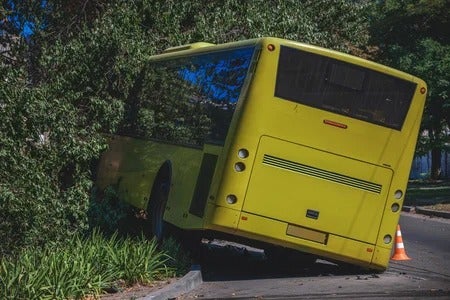
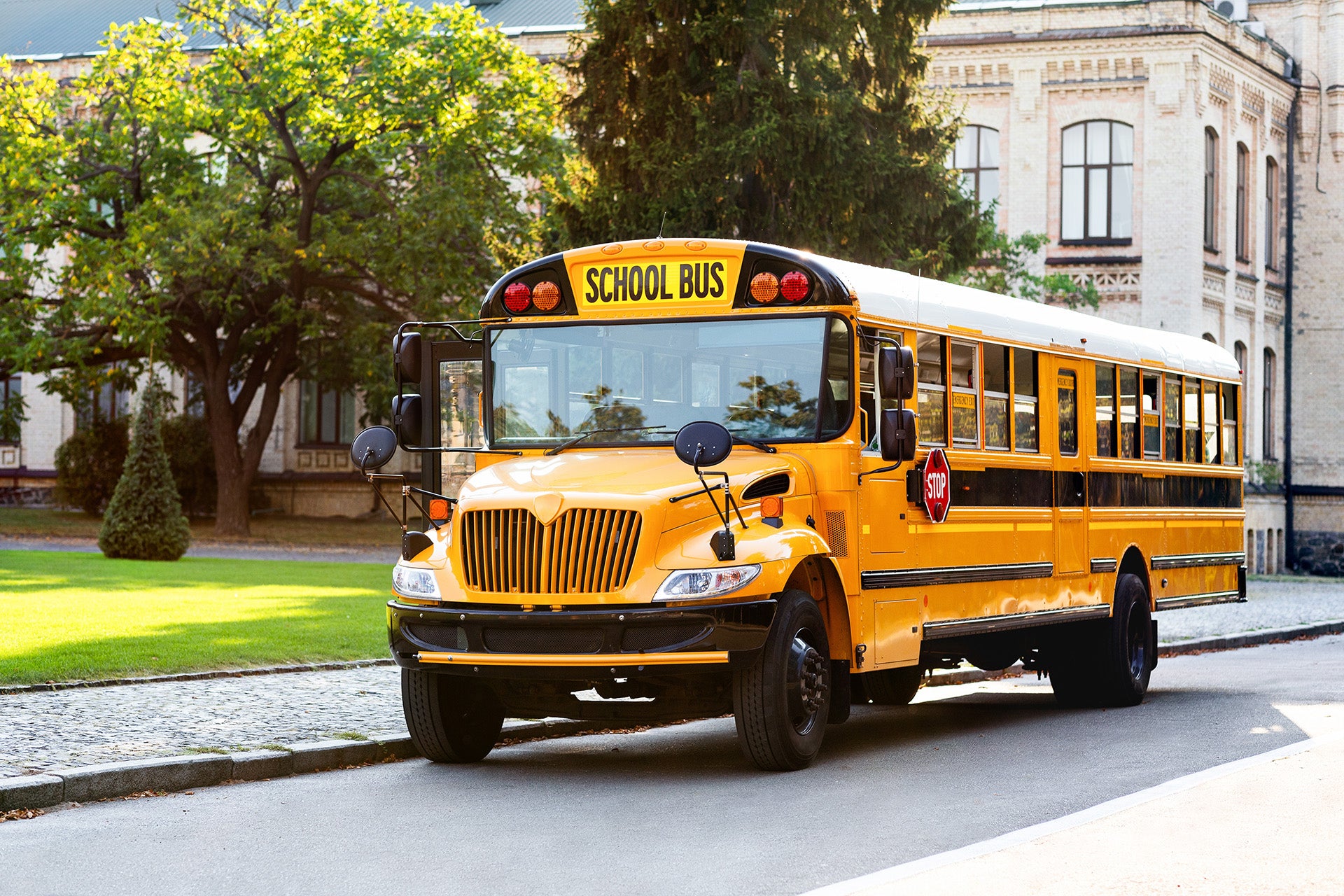
Since this article is being written shortly after the start of the new school year and before Halloween and in large part in an effort to attempt to protect our school age children coming and going from school and trick-or-treating, we should all remember to pay particular attention to school busses and the rules of the road. On an undivided highway, that is one without a median, traffic in
both directions must stop at least 20 feet from the stopped school bus that has its red lights flashing. You must not pass a school bus until the lights are turned off or the bus starts moving. Most school busses are equipped with the arm with a stop sign that comes out from the driver's side that reminds us not to pass. Sometimes people get impatient, thinking that all children have safely entered or exited the busses and crossed the road and then drive around the school bus. It is those situations that oftentimes cause very serious injury or death to children.
You should also stop for a school bus which is receiving or discharging students on school property or private property. If someone fails to follow this rule, the fine for passing a stopped school bus is a minimum of $50.00 and can be up to $200.00. I think that's even been raised in recent months.
While talking about fines, I think it is important that we all should be aware of the point system in West Virginia. The majority of states have point systems. In West Virginia and Ohio the Division of Motor Vehicles has a point system to identify and control drivers. The states maintain a continued record of your driving conduct from the day of your first conviction for a moving violation of a traffic law. In most states, the DMV will send you a letter of caution when you have six points on your record urging more careful driving and obedience of traffic laws. If you are unfortunate enough to reach 9 points, you will be required to complete a driving improvement questionnaire. If you go on to accumulate 12 points or more on your record, your driver's license is subject to suspension.
The violations that accumulate the most points - not counting DUI or driving without a license - are as follows:
1. Speeding over 80 mph in a 65 mph zone - 6 points
2. Speeding in excess of 75 mph in a 55 mph zone - 6 points
3. Speeding in a school zone - 6 points
4. Passing a stopped school bus - 6 points
5. Reckless driving - 6 points
It is important to know that most states are participants in the non-resident violator compact. This is an agreement among various states to allow motorists to accept a traffic citation for certain violations and proceed on their way regardless of whether the driver resides in that jurisdiction. Each member agrees to suspend a driver's license of its own citizen who failed to comply with the terms of the traffic violation committed in another state. You should also know that traffic violations received while driving in another state will most likely become part of your West Virginia driving record. Most states exchange driver violation information with each other and points will be assessed for out of state traffic violations. If you are convicted in another state and the offense is grounds for license suspension or revocation, your West Virginia driver's license may be suspended or revoked as well.
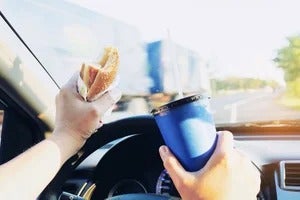
When I consider my own failure at times to act appropriately while driving, I recognize it was most often because of impatience or inattentiveness. It is reported that most bad driving habits result from laziness, impatience, inattention, arrogance and ignorance. If you find yourself exhibiting any of these bad driving habits you really need to work to eliminate these habits for the protection of yourself, your family and others. I think after having seen the hundreds if not thousands of people we have represented over the years at this law firm and seen the physical pain and grief suffered through the loss of lives, the money spent on medical bills, the lost wages that people suffer and the inability to do the things that they could formerly do, and the destruction of lives, it seems that it is a small price to pay to try to obey the laws.
Let's all work hard together on trying to be especially careful driving by school
busses and in places where children can be expected to be walking, playing, etc. We might not get to our destination quite as fast as we would like, but we may save a life and at the very least will feel better about ourselves.
Remember that Halloween is right around the corner and many kids act the way we did as kids. That can be a scary thought. We have to be the adults and protect our children from themselves.