Blog / In the Community

American Civil Justice System

It seems like there’s not a month that goes by that the American Civil Justice System is not under attack. If you think about it, it makes perfect sense because the American lawyer who practices in the American Civil Justice System is oftentimes the only voice that the people have to make sure that products are safe, that laws are enforced, that one’s property is protected and people are compensated when bankers, hospitals, doctors, trucking companies, nursing homes and others cause irreparable harm or death through their negligent acts. Truly when analyzing the American Justice System and looking at only one small segment, take the auto industry and automobile safety, you come to realize that the American trial lawyer has been responsible for seeing to it that seatbelts and airbags were placed in automobiles - that cars were designed to crush in such a way so as to avoid needlessly hurting the occupants in auto impacts, that gas tanks were placed appropriately so occupants would not be burned to death in automobile collisions. Automobile roofs have been made stronger so as to reduce the number of people that are seriously injured and killed when a vehicle rolls over during the course of a crash - that windshields and windows are made of glass that no longer breaks into pieces that can seriously injure and harm an occupant and that beams have been inserted on the sides of cars that lesson the danger to occupants from side crashes. In addition to the safety features that most people know about, the public may not know that there have been problems with gas tanks. As a matter of fact, General Motors could have fixed its gas tanks for $8.40 per car; but calculated that paying for the 500 fatal accidents would cost them only $2.40 per car. What do you think it chose to do? Unfortunately, several car manufacturers including General Motors and Ford, designed defective gas tank placement that resulted in fires and explosions from even minor collisions. As a result, gas tanks are now universally located within rigid frames thanks to the American lawyer and American Civil Justice System. Continuing on with issues concerning automobiles, the Ford engineers some time ago identified a problem with its (paddle style) handles which allow doors to accidentally open in collisions. Ford chose rather than to fix the design to cover up the problem until it was held accountable in our Civil Justice System. Although, as above mentioned, we now have automobiles with airbags that work to protect occupants in frontal collisions, this was a longtime coming! As a matter of fact, the manufacturers began developing airbag technology in the 1950s. But for one reason or another, were extremely slow installing the airbags. And unfortunately by 1988, some 38 years later, only two percent of the new cars manufactured in American came equipped with airbags. Due to the Civil Justice System, Courts found that manufacturers knew their cars were safer with airbags and many lives could have been saved had they been included. Favorable verdicts were entered and eventually, and fortunately for the consumer, manufacturers were forced to install airbags in all cars. Perhaps one of the most important items on any car is the tires. Unfortunately, tire manufacturers from Firestone to Goodyear tried to cover up problems with defective tires and because of that have been held accountable in our United States’ Courts. The Firestone defective tires caused over 270 deaths and the resulting litigation forced upon Firestone brought tires and their manufacturers under increased scrutiny. Tires are now much safer than even 10 years ago! Seats are also a safety issue in an automobile. I, myself, brought a Honda seat collapse case to trial in Ohio County, W.Va., Strope v. Honda. You see, General Motors was not the only automobile manufacturer that had a problem with the seats that were put into cars. The Japanese manufacturers also had the same problem and Judy Strope unfortunately was the victim of a seatback collapsing and a seatbelt not working that lead to her death. Fortunately, a jury in Ohio County, W.Va., found Honda responsible for the injuries and death and returned a multi-million dollar verdict that has played a role in forcing automobile manufacturers to beef up their weak seats! Continuing on with automobile safety concerns, many of you may remember the ignition switch issues that led to serious injuries and death. As early as 2001, General Motors knew their ignition switches used in its cars were defectively designed and could allow the ignition to slip from the run position to the accessory position while the car was in motion causing the engine to lose power and leave the driver unable to accurately steer or brake. General Motors, as a result of civil litigation, was forced to recall more than 2.6 million cars in an effort to try to fix this problem. Of course, as alluded to earlier, one of the most famous and most outrageous situations involved the Ford Pinto. The Ford Pinto became one of the most notorious examples of a corporation putting profits ahead of safety after court cases highlighted a design flaw that left the gas tank unprotected resulting in explosions even in minor rear end accidents. Litigation by the American trial lawyer revealed that Ford knew of the design problem and determined it could be fixed for as little as $11.00 per car but calculated it would be more profitable to sell the car as is allowing occupants to burn to death. Incredibly, the Pinto’s design and the seat in the Strope case met all government standards at that time and had the compliance with Federal Standards been a complete defense as those in the auto industry advocated, Ford could not have been held responsible for the many victims that the companies anticipated. It was the American lawyer, through the American Justice System, that spurred the adoption requirements for fuel tank performances in rear end collisions and stronger seat backs that has saved countless deaths and injuries. As you can see, we need a strong Civil Justice System, and my law firm, by fighting for justice for people injured because of bad tires, poorly designed fuel tank caps that led to five deaths, poorly designed roofs that caused occupants to die, seat belts and defective seats and a host of other product issues, has helped bring about the much needed safety measures to better automobile safety!

Posted in:

Related Posts

Two kids out trick-or-treating at night

No Boo-Boos! Keeping Everyone Safe This Halloween

It’s October! The scary season! A month of haunts, costumes, and candy, all leading up to the most chillingly fun holiday of the year: Halloween! Whether you’re a parent of kids who will be trick-or-treating or a homeowner handing out treats to the goblins who ring your doorbell, Halloween is a wonderful example of a holiday that’s fun for the adults as well as the kids. We hate to dampen the mood, but you need to be aware that Halloween can be legitimately scary for parents—and not the good kind of scary. Research by the Journal of the American Medical Association found that the risk of pedestrian fatalities is 43 percent greater on Halloween night than any other night of the year. The only things that should be scary this month are the costumes and the haunted houses! That’s why Halloween safety, whether your kids are trick-or-treating in Wheeling, Moundsville, St. Clairsville, or anywhere else in the Ohio Valley and southwest Pennsylvania, is so important. Here are some tips for keeping kids safe on Halloween. Safe Trick-or-Treating Most trick-or-treating occurs during twilight (sunset in Wheeling on Oct. 31 is around 6:20 p.m.) or early darkness. Although it won’t matter as much when Halloween falls on a weekend, rush hour at this time puts more cars on the road. Even when parents are accompanying their kids trick-or-treating, crossing streets and walking along roads that don’t have sidewalks increases the risk of something tragic happening. But that shouldn’t stop your family from trick-or-treating. Here are some things you can do to keep you and your kids safe on Halloween (or whichever day your town is scheduling trick-or-treating): Give flashlights to your kids to carry as they cross streets or walk along roads. Don’t rely on the lights on smartphones to be visible—they aren’t designed to make you visible. Small handheld flashlights can be easily pointed and are more easily seen by drivers. (Plus, if you stand on the sidewalk while your kids go to a door to get candy, you can shine your flashlight in their faces to remind them to say “thank you” if they forget …) Be extra visible by adding reflective strips to your kids’ costumes and giving them glow sticks to wear around their necks or wrists. Cross at crosswalks instead of the middle of the block. It’s tempting for kids to run back and forth across the street to go to a house where they see lights on, but drivers might not be as vigilant for pedestrians away from the corners, especially if kids are darting out behind parked cars. Encourage your kids to take off masks when walking along roads. You don’t want to take away from their great costumes, but masks can limit peripheral vision, which isn’t good when walking next to traffic. They can always put the mask back on when they ring the doorbell to sufficiently impress homeowners! Similarly, be extra aware if your child’s costume restricts any movement, such as a dress on a princess (and every year, there are plenty of princesses!) or a cloak on a Grim Reaper. Even without traffic, tripping over a curb can hurt—and Halloween is not the night you want to go to the emergency room. Remind them to watch their step and not run. Hold your kids’ smartphones so they aren’t tempted to be checking them while walking along roads and crossing streets. This advice extends to parents: Keep your phone in your pocket, only taking it out when you’re away from traffic. Take plenty of pictures—just when it is safe to do so. Older kids might want to trick-or-treat on their own, which is understandable, because what middle schooler wants their parents with them on Halloween? Reinforce all the Halloween safety rules already mentioned, and add a few: Give them a curfew to be back home. The later Halloween gets, say after 8 p.m., the fewer commuters on the roads, replaced by less careful teenagers and college students. Provide a firm curfew, and even offer to let their friends come over and watch a scary movie instead of being on the streets. Hold them to the same Halloween smartphone rules you’re following yourself: Phones should be pocketed when they are near traffic. Tell them it’s OK if they don’t answer your call or text right away—they should do so only when it’s safe. This may seem like a no-brainer (zombie pun intended!), but remind them not to go into the home or backyard of anyone they don’t know. Also, tell them to always stay with their group of friends and don’t split up. Halloween Safety for Drivers and Homeowners Halloween safety is everyone’s responsibility—not just trick-or-treaters and their parents. No one wants kids to get hurt on Halloween, and you don’t want to deal with the consequences if someone is injured by your vehicle or on your property. Here are some tips that can help keep everyone safe on the spookiest night of the year. Driving If you are driving anywhere near trick-or-treaters, slow down, turn your headlights on (even before it gets fully dark), and be extra vigilant on side streets, pulling into driveways, and even at crosswalks. Never assume those kids won’t run into the street, even if they are with their parents. And if you don’t need to drive anyplace during peak trick-or-treating hours, stay home. Your Home You want the front of your home to be as inviting as it can be for trick-or-treaters, but you also want it to be safe. For example, an orange porch light may be wonderfully eerie, but it also can make it more difficult to see as you climb stairs. Go back to a white light for a couple hours, keep your porch clear of obstacles (e.g., pumpkins should be off to the side), and keep any electrical cords off the walkway where someone could trip over them. Also, if you have any mechanical decorations that deliver jump scares, make sure they aren’t scaring anyone standing on your steps. Your Dog Some dogs are mellow when the doorbell rings dozens of times a night, and some will go nuts. Protective or agitated dogs may try sneaking out of the front door and could bite or knock down trick-or-treaters—and you could be liable for injuries. You know your pup best, but err on the side of caution: Consider keeping your dog(s) away from your front door, maybe in another room or in a crate, while you are handing out candy to trick-or-treaters. Or, set up shop outside, on your porch or driveway, so that your doorbell isn’t being constantly rung. ******************************** From all of us at Bordas & Bordas, have a safe and truly boo-tiful Halloween!

What to Do After a Truck Accident in West Virginia, Ohio and Pennsylvania

What to Do After a Truck Accident in West Virginia, Ohio and Pennsylvania A recent trucking accident on I-70 near Wheeling caused serious injuries and brought traffic to a standstill. These kinds of accidents are all too common in West Virginia, Ohio, and Pennsylvania, especially on major highways like I-70 and I-79. If you’re involved in a crash with a commercial truck, knowing what to do next is critical for your health and your legal rights. Protecting Yourself Legally and Medically If you’re involved in a truck accident: Call 911 immediately. Document the scene (photos, notes, witness names). Seek medical attention—even if injuries seem minor. Commercial trucking accidents are far more complicated than regular car crashes. The trucking company, driver, and even cargo loaders may all play a role in what happened. That’s why it’s so important to protect yourself early. Truck crashes often involve federal trucking regulations in addition to local laws. The Federal Motor Carrier Safety Administration (FMCSA) requires drivers to operate with “extreme caution” in hazardous conditions, a regulation often cited in legal cases. Don’t Navigate This Alone Trucking companies have their lawyers working to limit what they pay. Victims need someone in their corner who understands both state and federal laws across the tri-state region. An experienced attorney can help preserve evidence, negotiate with insurers, and ensure you’re treated fairly.  At Bordas & Bordas, we fight to protect victims and ensure they’re not taken advantage of during this complex process. Learn more about truck accident claims

Bordas and Bordas Attorneys celebrating 40 years of justice from 1985 to 2025 with the message "Fighting for Justice for 40 Years.

Fighting for Justice for 40 Years

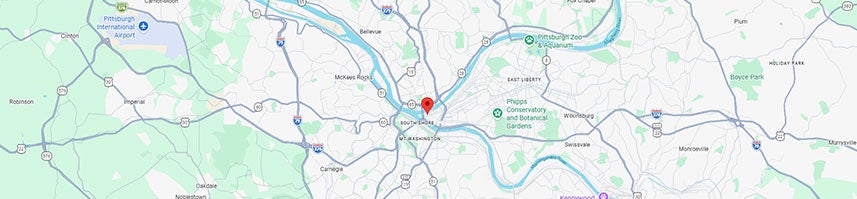
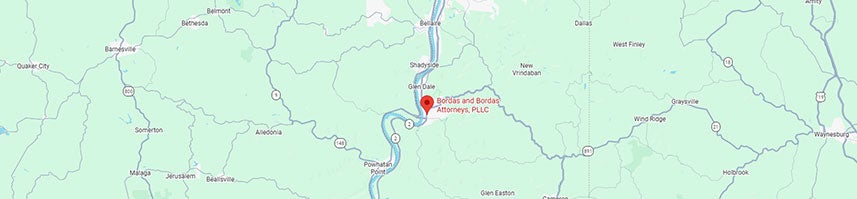
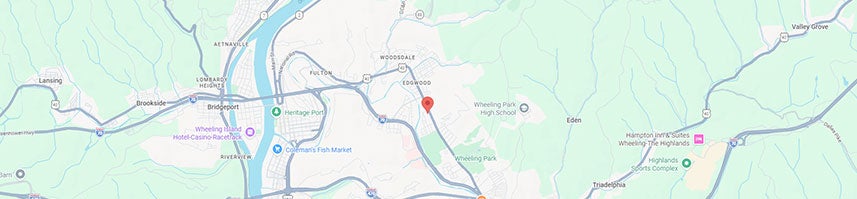
Fighting for Justice for 40 Years In 2025, Bordas & Bordas is proudly celebrating 40 years, a testament to our unwavering commitment to serving our community and fighting for justice. Since our founding in 1985 by Jim and Linda Bordas, we’ve grown from a small practice into one of the region’s premier personal injury law firms with offices in Pittsburgh, Pennsylvania, Wheeling and Moundsville, West Virginia, and St. Clairsville, Ohio. The story of Bordas & Bordas Attorneys PLLC began with a unique partnership. Linda, a former hospital pharmacist turned lawyer, and Jim, who has been described by many as a giant in the legal profession, combined their expertise and passion for justice to open the doors of Bordas & Bordas upon Linda’s graduation from law school in 1985. Their remarkable record, including never losing a trial together, fueled the firm’s early success. Linda’s medical background proved invaluable, particularly in medical malpractice cases, where she became a leading force, securing landmark verdicts and expanding patient rights. Jim spent his career fighting battles for his clients that others couldn’t or wouldn’t fight. For over four decades, he built a reputation of success through landmark jury verdicts and settlements. In 2000, the Bordas legacy continued with the addition of Jim and Linda’s oldest son, Jamie, who became the firm’s managing partner in 2005. Jim cherished working alongside Jamie, creating a strong bond, and ensuring the firm’s values would endure. Linda remains a partner at Bordas & Bordas and continues to provide guidance and advice as we continue to fight for justice. Our Core Values: The Shield of Bordas & Bordas Our logo, a shield with four quadrants and a central cross, symbolizes what we hold dear: Experience: Four decades of dedicated legal service. Family: A firm built on strong family values and lasting relationships. Community: A commitment to serving and giving back to our community. Results: A proven track record of securing substantial recoveries for our clients. Christian Values: The Cross in the center represents the moral compass that guides our work. Our Commitment to You A lot has changed in 40 years, but one thing remains the same: Our reputation for taking on any opponent in the courtroom. This is backed by years of success and record-breaking results, including numerous multi-million-dollar verdicts and settlements across a wide range of personal injury practice areas. We understand the challenges clients face, which is why our cases are handled on a contingency fee basis. This means clients pay no fee unless we secure a recovery for them. We offer: Free initial consultations. No retainer required. We advance all case expenses. Our work has garnered national attention, with features on programs like 60 Minutes, Inside Edition, and CNN, showcasing our dedication to seeking justice for our clients. Learn more about our results by clicking here. As we celebrate 40 years, we reaffirm our commitment to providing exceptional legal representation and upholding the values that have guided us since 1985. We are grateful for the trust our clients have placed in us and look forward to serving our community for many years to come.